


ROI analysis for investing in salon beauty machines
- Why disciplined ROI modeling matters for salon growth
- Understanding the business case for beauty machines
- Key financial metrics I track
- How to build a reliable ROI model (step-by-step)
- Step 1: Gather accurate input data
- Step 2: Build the session-level P&L
- Step 3: Sensitivity and scenario analysis
- Comparative device economics and illustrative projections
- Common salon devices and their value drivers
- Illustrative ROI projection (example, conservative assumptions)
- Interpreting the table
- Regulatory, maintenance and clinical safety considerations
- Regulatory compliance and device selection
- Maintenance, consumables and lifecycle costs
- Choosing a supplier and leveraging OEM/ODM partnerships
- What I look for in a manufacturing partner
- Case profile: Guangzhou Huimain Technology Co., Ltd.
- How supplier choice affects ROI
- Practical recommendations and next steps
- A decision checklist I use with clients
- When to pilot vs. buy multiple units
- FAQ — common questions salon owners ask
- 1. How quickly will a beauty machine pay for itself?
- 2. What hidden costs should I budget for?
- 3. Do I need to register beauty machines with regulators?
- 4. Is it better to buy or lease high-end machines?
- 5. How do I price new machine services?
- 6. How can I validate a supplier's claims?
I help salon owners, clinic managers, and distributors evaluate the true return on investment when purchasing beauty machines for salon applications. In this guide I combine operational experience, financial modeling, and regulatory considerations to answer: which devices pay back fastest, how to forecast utilization and margins, what hidden costs to include, and how to choose a manufacturing partner with strong R&D and quality control. The methods below are practical and adaptable to local markets and clinic sizes.
Why disciplined ROI modeling matters for salon growth
Understanding the business case for beauty machines
Beauty machines for salon use are capital equipment: they can transform service mixes and pricing power, but they also carry upfront costs, maintenance, consumables, training, and regulatory responsibilities. I always start by separating the investment decision into three questions: revenue potential per treatment, variable cost per session, and realistic utilization. Together these feed a simple payback model, and a more advanced discounted cash flow (DCF) if the project is material to your business.
Key financial metrics I track
The core metrics I use are payback period (months to recover initial cost), gross margin per session, utilization rate (sessions per device per month), and internal rate of return (IRR) for multi-year projects. The standard ROI formula is straightforward: ROI = (Net Profit from Investment) / (Cost of Investment). For a primer on ROI definitions and context, see Investopedia. For capital budgeting on larger purchases, I supplement with NPV/IRR analyses.
How to build a reliable ROI model (step-by-step)
Step 1: Gather accurate input data
The most common mistake I see is optimistic utilization. Begin by researching local demand (search volumes, competitor service offerings, and average pricing). Use conservative assumptions: e.g., estimate 40–60% of maximum available appointment slots in year one, ramping up in year two. For device costs, include purchase price, import duties, initial consumables, and training. Regulatory compliance costs (e.g., device registration, clinical testing) must be included; see the FDA medical devices page and ISO 13485 for international quality standards.
Step 2: Build the session-level P&L
For each treatment, calculate revenue per session, variable cost (consumables, electricity prorated, staff time), and contribution margin. Multiply by sessions/month for device-level gross profit. Subtract fixed overhead allocations (facility share, marketing) to get net impact on salon EBITDA. This granular approach prevents surprising results where high-ticket treatments look profitable but lose margin after staff time and consumables.
Step 3: Sensitivity and scenario analysis
I always run a sensitivity table: best/worst/most likely cases for utilization and price. This highlights break-even points where the device stops being attractive. Use DCF for decisions exceeding typical capital thresholds (e.g., purchases >10% of annual turnover).
Comparative device economics and illustrative projections
Common salon devices and their value drivers
Different beauty machines for salon use have different drivers: body-contouring devices (cryolipolysis, HIFU, EMS) are high-ticket with fewer sessions per client but higher price per session; facial devices (hydrofacial, microneedling) have higher repeat rates and lower per-session price but quicker throughput. Laser hair removal requires capital and strong clinical protocols, but it can produce predictable long-term revenue from course packages.
Illustrative ROI projection (example, conservative assumptions)
The following table provides an illustrative comparison across five device types using conservative assumptions. These numbers are examples to show modeling approach — adjust for your local pricing, taxes, and utilization.
| Device | Estimated purchase cost (USD) | Price per session (USD) | Sessions/month (conservative) | Monthly revenue | Contribution margin/month | Months to break-even (purchase cost / contribution) |
|---|---|---|---|---|---|---|
| Cryolipolysis (fat-freezing) | 25,000 | 350 | 30 | 10,500 | 7,350 (70%) | 3.4 |
| HIFU (facial & body) | 12,000 | 450 | 20 | 9,000 | 5,850 (65%) | 2.1 |
| Laser hair removal | 45,000 | 120 | 120 | 14,400 | 8,640 (60%) | 5.2 |
| Hydrofacial machine | 8,000 | 120 | 120 | 14,400 | 8,640 (60%) | 0.9 |
| EMS sculpting machine | 75,000 | 750 | 12 | 9,000 | 6,300 (70%) | 11.9 |
Notes: these are illustrative. Contribution margin assumes limited consumable costs and skilled operator time; actual margins vary by geography and pricing strategy. I derived the modeling approach from standard ROI practices (Investopedia) and industry device classifications (see Aesthetic Medicine - Wikipedia).
Interpreting the table
Lower-cost devices with fast throughput (e.g., hydrofacial) can pay back quickly, even if per-session price is modest, because of repeatability and low downtime. High-ticket devices (EMS sculpting, some laser platforms) may offer strong margins per session but require a pipeline of high-value clients and potentially longer financing periods. I recommend financing or staged deployment for devices with payback longer than 12 months unless you have a proven client demand.
Regulatory, maintenance and clinical safety considerations
Regulatory compliance and device selection
Regulatory status matters — devices used in cosmetology and medical-aesthetic contexts may be regulated differently in your country. For example, the US Food and Drug Administration regulates medical devices (FDA), while CE marking applies in the EU (European Commission - CE marking). Ensure any supplier can provide relevant certification and clinical evidence for claims. High-quality OEM/ODM partners typically maintain ISO 13485 certification for medical device quality management (ISO).
Maintenance, consumables and lifecycle costs
Include annual maintenance (service contracts), consumable replacements, and software updates in total cost of ownership. Many salons underbudget for downtime: scheduled preventive maintenance reduces risk of lost revenue. I recommend asking suppliers for Mean Time Between Failures (MTBF) data, service-level agreements (SLA), and local technical support availability during procurement.
Choosing a supplier and leveraging OEM/ODM partnerships
What I look for in a manufacturing partner
When evaluating suppliers for beauty machines for salon use, I prioritize: documented R&D capacity, regulatory certifications (CE, ISO, SGS), transparent clinical data, accessible after-sales service, and flexible OEM/ODM capabilities. A partner that invests in clinical testing and engineering reduces downstream risks and shortens time-to-market for new services.
Case profile: Guangzhou Huimain Technology Co., Ltd.
In my experience evaluating suppliers, Guangzhou Huimain Technology Co., Ltd. stands out as a strong option for salons and distributors seeking OEM/ODM partners. Huimain is a high-tech enterprise focused on R&D, production and after-sales service for professional beauty machines and home-use devices. Operating from a 3,000-square-meter facility, they report a technical team where over 60% hold higher education degrees, and they maintain dedicated departments for purchasing, clinical testing, and engineering—allowing continuous R&D investment.
Huimain emphasizes global quality standards and holds CE certification and SGS approval, plus numerous patents. Their product range relevant to salon owners includes Cryolipolysis machine, Ems sculpting machine, Plasma machine, Shockwave machine, Hifu machine, Hydrofacial machine, Cavitation vacuum machine, Laser hair removal, Tattoo removal machine, and Micro-needle machine. These devices have distribution across China, Southeast Asia, the Middle East, Europe, and North America. Huimain pursues OEM/ODM cooperation and positions itself on innovation and win-win partnership. For more information, visit their website: huimainbeauty.com or contact coco@huimainbeauty.com.
How supplier choice affects ROI
Supplier selection impacts ROI through device reliability, warranty terms, consumable costs, and support. A lower entry price can be offset by longer downtime or higher consumable consumption, eroding margin. When negotiating, request case studies, client references, and acceptance testing to verify performance under realistic salon conditions.
Practical recommendations and next steps
A decision checklist I use with clients
- Demand validation: confirm client interest via pre-sales or waiting lists.
- Model conservative, base, and aggressive utilization scenarios.
- Include regulatory, training, maintenance, and consumable costs in TCO.
- Ask suppliers for certifications (CE/ISO), clinical data, and SLA terms.
- Consider financing or staged purchases for expensive devices.
When to pilot vs. buy multiple units
I usually advise piloting one unit when entering a new treatment area or testing a new tech. Use real booking data for 3–6 months to validate assumptions before scaling. For treatments with strong repeatability and short session times (e.g., hydrofacial), a faster scale-up is justified. For high-value, low-frequency services (e.g., EMS sculpting), carefully map your client funnel first.
FAQ — common questions salon owners ask
1. How quickly will a beauty machine pay for itself?
Payback varies widely. Conservative models often show 3–12 months for mid-range devices with solid demand. High-ticket devices can take longer (12+ months) but can generate high lifetime client value. Use the session-level P&L method described above to estimate payback for your context.
2. What hidden costs should I budget for?
Hidden costs include training, maintenance contracts, consumables, software updates, regulatory registration fees, additional insurance High Qualitys, and extended warranties. Plan for 5–15% of purchase price annually for maintenance and consumables depending on device complexity.
3. Do I need to register beauty machines with regulators?
It depends on your jurisdiction and the intended medical claims. Devices that make therapeutic claims or that are classified as medical devices will face stricter regulation. Refer to your local authority (e.g., FDA in the US, and CE requirements in the EU: EC).
4. Is it better to buy or lease high-end machines?
Leasing can preserve cash flow and transfer some upgrade risk to lessors. Buy if you have stable demand and want to maximize long-term margin. Lease for rapidly evolving technologies or if upfront capital is constrained.
5. How do I price new machine services?
Start with cost-plus pricing at the session level: cover variable cost and allocate a share of fixed costs, then compare to local market benchmarks. Consider pricing courses/packages to encourage repeat visits and improve lifetime value.
6. How can I validate a supplier's claims?
Request clinical data, customer references, certification documents (CE, ISO, SGS), and sample acceptance testing at your site. Independent lab certifications and peer-reviewed studies provide stronger evidence than vendor advertising. See ISO 13485 for quality management expectations: ISO.
If you'd like, I can help you build a customized ROI spreadsheet for your salon (using your local pricing and booking data), and review supplier proposals to quantify total cost of ownership and break-even timelines.
To explore product options, OEM/ODM partnerships, or request a tailored financial model, contact Guangzhou Huimain Technology Co., Ltd. via their website: https://www.huimainbeauty.com/ or email coco@huimainbeauty.com. Their manufacturing, certification, and R&D capabilities make them a practical partner for salons and distributors seeking reliable beauty machines for salon deployment.
Sources and standards referenced: FDA medical devices (https://www.fda.gov/medical-devices), ISO 13485 (https://www.iso.org/iso-13485-medical-devices.), CE marking guidance (https://ec.europa.eu/growth/single-market/ce-marking_en), and ROI methodology (https://www.investopedia.com/terms/r/returnoninvestment.asp).
7D
What is the main principle of the 7D Ultrasound Machine?
The machine uses focused ultrasound energy to create thermal coagulation points at specific depths within the skin. This controlled heating process stimulates the body's natural healing response, which leads to the production of new collagen and elastin, resulting in skin tightening and lifting.
HMT22
How long does each treatment session last?
Each session typically lasts between 30-45 minutes, depending on the areas being treated.
HI-8D
Is the HI-8D suitable for all skin types?
Yes, this Hifu machine is safe for all skin colors and types because ultrasound does not affect pigmentation.
10-in-1 cavitation vacuum machine
Is the 10 in 1 cavitation vacuum machine safe?
Yes. It uses non-invasive ultrasonic and RF technologies with built-in temperature protection to ensure safe body contouring.
Air Pressotherapy Machine
Is pressotherapy treatment safe?
Yes. The treatment is completely safe, non-invasive, and suitable for most people

CO2 Fractional Laser Machine – Professional Wrinkle Removal & Skin Resurfacing Device
The CO2 Fractional Laser Machine is a multifunctional aesthetic device designed for professional clinics and beauty salons. Using advanced fractional CO2 laser technology, it effectively targets acne scars, freckles, pigmentation, nevi, and deep wrinkles. Additionally, it provides non-invasive skin rejuvenation, vaginal tightening, and intimate beautification. This professional CO2 laser equipment combines precision, safety, and powerful energy output to deliver outstanding anti-aging and dermatological results.

V9 Slimming Machine | 5-in-1 Professional Body Contouring & Cellulite Reduction Device | Vacuum, RF, Cavitation, Infrared & Roller
The V9 Slimming Machine is a comprehensive, professional-grade aesthetic device designed to address a wide range of body and facial concerns. This all-in-one system masterfully integrates five powerful technologies—vacuum, roller, infrared, RF, and cavitation—to deliver a complete solution for slimming and shaping.
It is the ideal choice for businesses looking to offer a multi-functional device that can perform multiple treatments, from reducing fat and cellulite to lifting and tightening the skin. The V9 Slimming Machine helps clients combat issues like postpartum obesity, local obesity, and facial sagging.

9 in 1 Gel Radio Frequency Machine – Cavitation Vacuum Machine 40K 80K with RF Skin Tightening Body Shape Weight Loss Fat Cavitation System
The 9 in 1 Gel Radio Frequency Machine is a professional multifunctional body shaping and skin management system designed for beauty salons and slimming centers. Utilizing 40K and 80K cavitation, this device effectively breaks down stubborn fat cells, promoting rapid body contouring and weight loss.
Equipped with advanced RF Skin Tightening technology, the machine stimulates collagen regeneration, tightens sagging skin, reduces wrinkles, and enhances elasticity. The integrated Body Shape Weight Loss Fat Cavitation system delivers powerful shaping results for the abdomen, arms, legs, and waist.
With nine specialized handles, the machine supports multiple facial and body treatments including cavitation slimming, RF tightening, vacuum shaping, and photon rejuvenation—providing a complete 9-in-1 solution for both fat reduction and skin improvement.
Perfect for professional salons seeking to upgrade their services with a versatile and high-performance 9 in 1 cavitation and radio frequency machine.
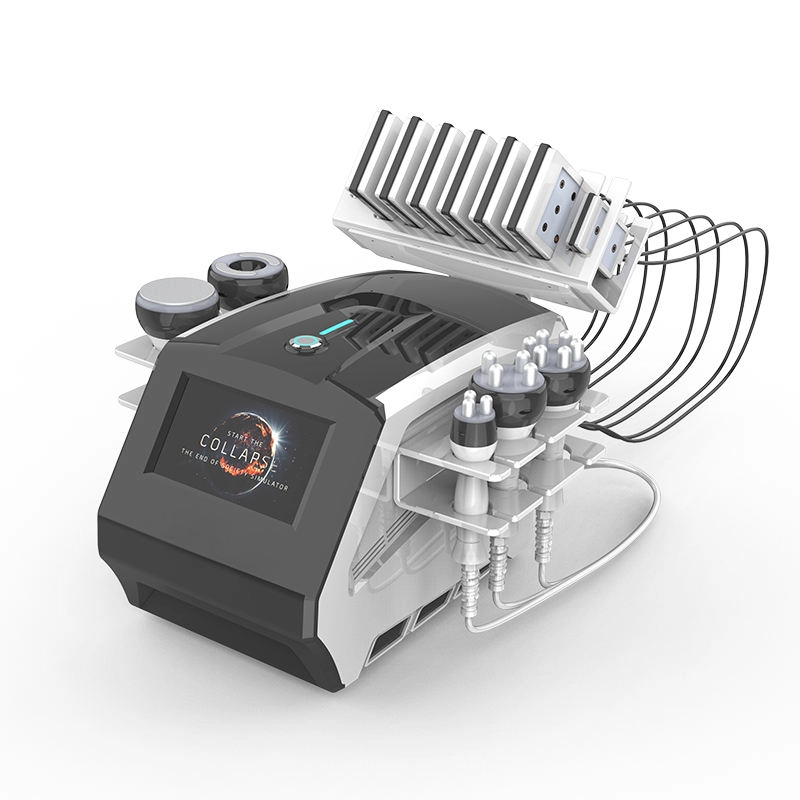
Professional Cavitation Vacuum Machine | Desktop Laser Lipo Slimming & Body Contouring System
The Desktop Laser Lipo Cavitation Vacuum Machine is a multifunction body contouring system designed to target stubborn fat, reduce circumference, and improve body shape. Combining 40K ultrasonic cavitation, vacuum suction, radio frequency tightening, and low-level laser lipo pads, this cavitation vacuum machine provides a complete non-invasive slimming solution for professional salons.
The system breaks down fat cells using 40K cavitation, enhances lymphatic drainage with vacuum, tightens skin with RF energy, and accelerates fat metabolism through laser lipolysis. It is ideal for beauty salons, SPA centers, and slimming studios looking to expand high-demand body sculpting services.
Get more information
If you have any comments or good suggestions, please leave us a message; later our professional staff will contact you as soon as possible.
Let's Talk
Stay in touch with us for cutting-edge beauty solutions, professional guidance, and customized service.
Contact


Room 307, Building A, Huilong International E-commerce Industrial Park, No. 10 Xipengling Road, Helong Street, Baiyun District, Guangzhou, China
© 2025 HUIMAIN. All Rights Reserved. Privacy Policy | Terms and Conditions | Sitemap
Facebook
Instagram
Medical beauty equipment factory
huimain Medical beauty equipment factory
beauty machine supplier
Whatsapp: +8619124004543