


Safety Standards and Certifications for Nd:YAG Devices
- Understanding laser‑tissue interaction and clinical risks
- How Nd:YAG lasers work and why safety matters
- Common clinical adverse events and root causes
- Laser classification and labeling
- Regulatory standards and certifications manufacturers must know
- FDA regulation and the 510(k) pathway
- CE marking and the EU Medical Device Regulation
- International standards: IEC, ISO, ANSI
- Design, testing, and quality management
- Risk management and IEC 62366 / ISO 14971
- Electrical and electromagnetic safety testing
- Performance verification and biocompatibility
- Best practices for clinics, distributors, and international sales
- Operator training and documented protocols
- Maintenance, servicing, and traceability
- International market entry and local requirements
- Standards vs. practical implementation: a quick comparison
- How a responsible OEM/ODM partner differentiates: Guangzhou Huimain case
- Practical checklist for purchasing or certifying an Nd:YAG system
- Frequently Asked Questions (FAQ)
- 1. Do Nd:YAG tattoo removal machines require FDA clearance?
- 2. What standards determine the safety class of a laser?
- 3. How important is ISO 13485 for an Nd:YAG device manufacturer?
- 4. Can clinics import non‑CE/non‑FDA devices for use?
- 5. What are the essential safety features I should expect on an nd yag laser tattoo removal machine?
- 6. Are there recommended clinical guidelines for tattoo removal?
- Contact and next steps
I write from years of hands-on experience with professional beauty machines and clinical lasers. In this article I summarize what manufacturers, clinic operators, and distributors must know about safety standards and certifications for Nd:YAG devices—especially the nd yag laser tattoo removal machine—to meet regulatory expectations, reduce clinical risk, and improve patient outcomes. I reference international standards and regulatory guidance so readers can verify sources directly.
Understanding laser‑tissue interaction and clinical risks
How Nd:YAG lasers work and why safety matters
Nd:YAG lasers (typically 1064 nm and frequency-doubled 532 nm) are widely used for tattoo removal because their wavelengths penetrate the skin and selectively target ink particles. Their photothermal and photoacoustic effects can fragment pigments, but they also pose risks: thermal injury, scarring, hypo- or hyperpigmentation, ocular damage, and accidental burns. Clinical protocols, device controls, and robust safety engineering reduce these risks when using an nd yag laser tattoo removal machine.
Common clinical adverse events and root causes
From my clinical consulting experience, most adverse events relate to incorrect fluence/spot size settings, inadequate cooling, improper technique, or lack of screening for contraindications. Operator training, well-documented user manuals, and built-in device interlocks are essential risk mitigations aligned with international safety standards.
Laser classification and labeling
Laser classification under IEC 60825 determines control measures and protective equipment. Most medical Nd:YAG systems are Class 4 lasers, the highest risk class, requiring engineering controls, administrative procedures, and personal protective equipment (PPE). Clear labeling and safety notices on the device and in clinical areas are non‑negotiable.
Regulatory standards and certifications manufacturers must know
FDA regulation and the 510(k) pathway
In the United States, medical lasers used for tattoo removal are regulated by the FDA. Many devices require premarket notification (510(k)) demonstrating substantial equivalence to a legally marketed predicate device. Manufacturers should engage the FDA early for classification questions and follow applicable guidance documents. For more on the 510(k) process, see FDA 510(k).
CE marking and the EU Medical Device Regulation
In the EU, laser systems intended as medical devices must comply with the CE requirements and, post‑MDR, meet conformity assessment routes appropriate to device class. Manufacturers must implement a technical file demonstrating compliance with applicable standards (e.g., IEC 60601 series, IEC 60825) and maintain a post-market surveillance plan.
International standards: IEC, ISO, ANSI
Key standards relevant to Nd:YAG devices include:
| Standard | Purpose | Applicability |
|---|---|---|
| IEC 60825 | Laser safety (classification, labeling, control measures) | All laser products, including medical lasers |
| IEC 60601-1 | Basic safety and essential performance of medical electrical equipment | Medical devices with electrical components |
| ISO 13485 | Quality management systems for medical devices | Manufacturers and suppliers |
| ANSI Z136.1 | Safe use of lasers (clinical and research settings) | Facilities and practitioners, especially in the US |
These standards are commonly cited by regulators. Implementing them helps demonstrate safety-by-design and supports regulatory submissions.
Design, testing, and quality management
Risk management and IEC 62366 / ISO 14971
Risk management per ISO 14971 is critical. I always advise manufacturers to document hazard analysis, risk controls, residual risk evaluation, and risk-benefit conclusions. Usability engineering (IEC 62366) ensures interfaces and warnings reduce user error—essential for complex devices like an nd yag laser tattoo removal machine.
Electrical and electromagnetic safety testing
Compliance with the IEC 60601 series (electrical safety, EMC) should be validated by accredited test labs. These tests protect against shock, fire, and electromagnetic interference that could alter laser output and cause unsafe exposures.
Performance verification and biocompatibility
Clinical performance claims must be supported by bench testing, preclinical studies, and, where required, clinical data. Materials contacting skin should be assessed for biocompatibility per ISO 10993 series. For laser-tissue interaction, peer-reviewed literature such as this review on tattoo removal (PubMed) can help define expected outcomes and adverse event rates.
Best practices for clinics, distributors, and international sales
Operator training and documented protocols
Even the most compliant nd yag laser tattoo removal machine can cause harm in untrained hands. I insist clinics implement competency-based training, standardized treatment protocols (fluence, spot size, cooling), and informed consent procedures. OSHA and local workplace safety regulations typically require laser safety officers (LSO) or equivalent oversight for Class 4 systems.
Maintenance, servicing, and traceability
Manufacturers should provide service manuals, recommended maintenance schedules, and parts traceability. A regulated service network with documented calibrations of fluence and pulse energy protects patients and reduces liability.
International market entry and local requirements
Different regions have specific requirements: FDA in the US, MDR/CE in EU, and varying national rules in Asia and the Middle East. Documentation, labeling language, and electrical certifications for local voltages may be required. Using an experienced regulatory partner or notified body streamlines market entry.
Standards vs. practical implementation: a quick comparison
| Requirement | Standard/Regulator | Practical implementation |
|---|---|---|
| Laser classification & control measures | IEC 60825 | Class 4 labeling, key switch, emission indicator, interlocks, protective eyewear |
| Electrical safety & EMC | IEC 60601 | Third-party lab testing and Certificate of Conformity |
| Quality system | ISO 13485 | Documented QMS, design control, CAPA, supplier control |
| Clinical evidence | Regulatory guidance (FDA, MDR) | Bench tests, clinical studies, publications |
How a responsible OEM/ODM partner differentiates: Guangzhou Huimain case
From my direct collaboration with manufacturers, I know the difference a capable OEM partner makes. Guangzhou Huimain Technology Co., Ltd. is a high-tech enterprise specializing in the research, development, production, and after-sales service of professional beauty machines and home-use devices. Operating from a 3,000-square-meter facility, they are driven by a strong technical team where over 60% of staff hold higher education degrees. Dedicated departments for purchasing, clinical testing, and engineering allow Huimain to increase investment in R&D continuously. They emphasize rigorous quality control and produce products that align with market demands.
Huimain's commitment to global standards is reflected in their CE certification, SGS approval, and numerous patents. Their products are distributed across China, Southeast Asia, the Middle East, Europe, and North America. Following OEM and ODM development routes, they can design and manufacture High Quality medical and beauty equipment for salons and distributors worldwide.
Major products include: Cryolipolysis machine, Ems sculpting machine, Plasma machine, Shockwave machine, Hifu machine, Hydrofacial machine, Cavitation vacuum machine, Laser hair removal, Tattoo removal machine, Micro needle machine. Their philosophy—innovation and win-win cooperation—aims to deliver verifiable quality and service. For more information, visit https://www.huimainbeauty.com/ or contact coco@huimainbeauty.com.
Practical checklist for purchasing or certifying an Nd:YAG system
- Verify regulatory clearances for your target market (FDA 510(k), CE/MDR, local approvals).
- Confirm device compliance with IEC 60825 and IEC 60601 series (ask for test reports).
- Review the manufacturer’s QMS certification (ISO 13485) and product change control history.
- Request bench and clinical data supporting performance and safety claims.
- Assess training programs, service network, and spare parts availability.
- Ensure supplied consumables and disposables meet biocompatibility and safety tests.
Frequently Asked Questions (FAQ)
1. Do Nd:YAG tattoo removal machines require FDA clearance?
Yes—medical Nd:YAG devices intended for tattoo removal sold in the U.S. typically require FDA review. Many are cleared via the 510(k) pathway. Manufacturers should consult the FDA medical lasers guidance and consider pre-submission interactions.
2. What standards determine the safety class of a laser?
IEC 60825 (Laser safety) specifies classification, labeling, and control measures. Most clinical Nd:YAG systems are Class 4 and must implement engineering and administrative controls accordingly.
3. How important is ISO 13485 for an Nd:YAG device manufacturer?
ISO 13485 documents a manufacturer’s quality management system specific to medical devices. It’s critical for regulatory submissions and demonstrates controlled design, production, and post-market processes.
4. Can clinics import non‑CE/non‑FDA devices for use?
Local laws vary. Some jurisdictions allow importation under specific exemptions, but liability and patient safety concerns remain. I advise clinics to use devices with recognized certifications and documented safety testing.
5. What are the essential safety features I should expect on an nd yag laser tattoo removal machine?
Expect key switch and password protection, emission indicators, interlocks, calibrated output verification, protective eyewear, cooling systems, and documented service/calibration records. The device manual should list required PPE and room controls.
6. Are there recommended clinical guidelines for tattoo removal?
Clinical protocols vary by pigment, skin type, and device. Peer-reviewed literature and professional societies provide guidance; review clinical studies and manufacturer-provided treatment protocols. I also recommend following local laser safety standards such as ANSI Z136.1 where applicable.
Contact and next steps
If you’re evaluating an nd yag laser tattoo removal machine for purchase or regulatory compliance, I recommend a structured audit: request technical files, test reports, QMS certificates, clinical evidence, and service agreements. For reliable OEM/ODM partnerships, consider contacting Guangzhou Huimain Technology Co., Ltd. directly: https://www.huimainbeauty.com/ or Email: coco@huimainbeauty.com. They offer a range of certified beauty machines and after-sales support that align with international standards.
I am available for consulting on device risk assessments, regulatory strategy, or clinic safety program development—contact me through the same Huimain channels for collaboration and product inquiries.
HMT82S-2
How long does each session take, and how often should it be done?
Each session takes around 30 minutes. We recommend 2 sessions per week, with a treatment course of 4–6 sessions, depending on individual goals and body condition.
MF5
Who can operate the MFFFACE Magnetic Face Machine?
It’s designed for professional use in beauty salons, clinics, and wellness centers, requiring basic operator training.
AS9006
Does the treatment hurt?
Treatments are generally painless. Clients may feel mild warmth or vibration during cavitation.
Onda B71台式冷波塑形仪
How many sessions are needed for fat reduction?
Most clients see visible results after 2–4 sessions, depending on treatment area and individual conditions.
OL-153
How often can treatments be performed?
Recommended once every 2–4 weeks depending on the client’s skin condition.

CO2 Fractional Laser Machine – Professional Wrinkle Removal & Skin Resurfacing Device
The CO2 Fractional Laser Machine is a multifunctional aesthetic device designed for professional clinics and beauty salons. Using advanced fractional CO2 laser technology, it effectively targets acne scars, freckles, pigmentation, nevi, and deep wrinkles. Additionally, it provides non-invasive skin rejuvenation, vaginal tightening, and intimate beautification. This professional CO2 laser equipment combines precision, safety, and powerful energy output to deliver outstanding anti-aging and dermatological results.

V9 Slimming Machine | 5-in-1 Professional Body Contouring & Cellulite Reduction Device | Vacuum, RF, Cavitation, Infrared & Roller
The V9 Slimming Machine is a comprehensive, professional-grade aesthetic device designed to address a wide range of body and facial concerns. This all-in-one system masterfully integrates five powerful technologies—vacuum, roller, infrared, RF, and cavitation—to deliver a complete solution for slimming and shaping.
It is the ideal choice for businesses looking to offer a multi-functional device that can perform multiple treatments, from reducing fat and cellulite to lifting and tightening the skin. The V9 Slimming Machine helps clients combat issues like postpartum obesity, local obesity, and facial sagging.
10 in 1 Cavitation Vacuum Machine – Professional Body Contouring & Skin Tightening System
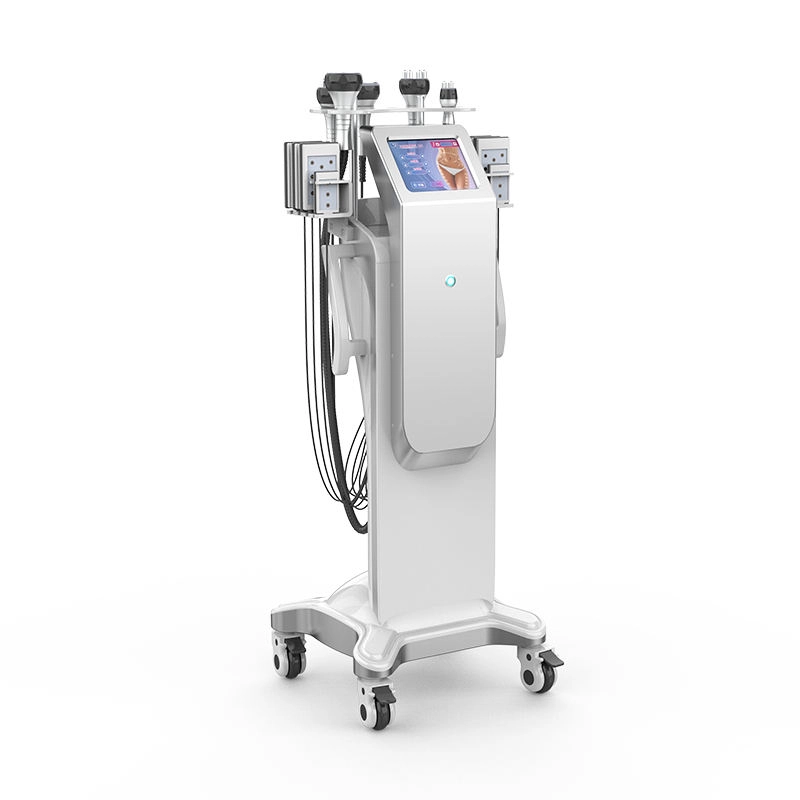
The 10 in 1 cavitation vacuum machine is a multifunctional professional body contouring device designed for fat reduction, cellulite smoothing, and skin tightening. Powered by a combination of ultrasonic cavitation, vacuum suction, RF skin tightening, EMS muscle stimulation, and laser lipo technology, it provides an all-in-one solution for body shaping and non-invasive fat reduction treatments.
This upgraded system features a 10.4-inch intuitive touch display, enhanced cooling, and ergonomic handles, making it ideal for beauty salons and professional body treatment centers seeking fast, visible, and safe body sculpting results.
With advanced 40K/80K cavitation, vacuum RF lifting, and multi-polar RF energy, the machine effectively breaks down fat cells, accelerates lymphatic drainage, and firms loose skin—providing clients with a smoother, more contoured silhouette

5-in-1 40K Cavitation Vacuum Machine for Body Slimming & Fat Reduction
The 5-in-1 40K Cavitation Vacuum Machine is a professional body shaping system designed for fat reduction, cellulite smoothing, and overall body contouring. Using 40KHz ultrasonic cavitation, this device breaks down stubborn fat cells, while vacuum suction improves lymphatic drainage and accelerates toxin removal.
With multiple RF tightening handles, the machine stimulates collagen regeneration and helps lift and firm loose areas of the body. Compact, powerful, and easy to operate, it is the perfect solution for beauty salons, spa centers, and slimming studios seeking fast and visible fat-reduction results.
This cavitation vacuum machine is built to deliver safe, non-invasive treatments with no downtime—making it a top choice for body contouring professionals.
Get more information
If you have any comments or good suggestions, please leave us a message; later our professional staff will contact you as soon as possible.
Let's Talk
Stay in touch with us for cutting-edge beauty solutions, professional guidance, and customized service.
Contact


Room 307, Building A, Huilong International E-commerce Industrial Park, No. 10 Xipengling Road, Helong Street, Baiyun District, Guangzhou, China
© 2025 HUIMAIN. All Rights Reserved. Privacy Policy | Terms and Conditions | Sitemap
Facebook
Instagram
Medical beauty equipment factory
huimain Medical beauty equipment factory
beauty machine supplier
Whatsapp: +8619124004543