


Salon machine software & analytics for performance
- Understanding salon performance metrics and goals
- What salons really need to measure
- Key performance indicators (KPIs) I prioritize
- Software platforms for beauty machines
- Types of software I evaluate
- Essential software features I insist on
- Comparing software options (feature comparison)
- Analytics and AI for improving treatment outcomes
- From raw logs to business insight
- Use cases for AI and predictive analytics
- Evidence and standards
- Implementation, compliance, and ROI
- Step-by-step implementation plan I use
- Data security, privacy, and consent
- Estimating ROI — a simple model
- Partnering with an OEM: capabilities and advantages
- Why I recommend working with established OEMs
- About Guangzhou Huimain Technology — supplier profile and strengths
- Operational best practices I enforce
- Training and SOPs
- Continuous validation
- Scaling across sites
- FAQs
- 1. What software features are most important for beauty machines for salon use?
- 2. How can analytics improve treatment outcomes?
- 3. Do I need to worry about regulatory compliance when collecting treatment data?
- 4. Should I choose cloud or local software for my salon?
- 5. How quickly can I expect measurable ROI after implementing analytics?
- 6. How do I select the right OEM partner for integrated device+software solutions?
I write from years of hands-on experience advising salons and distributors on beauty machines for salon operations, integrating device software, and building analytics stacks that improve utilization, compliance, and client outcomes. In this article I summarize how the right software and analytics strategy turns hardware into measurable business value: increasing throughput, reducing downtime, validating treatment effectiveness, and enabling data-driven marketing and inventory decisions. I also cover practical implementation steps, vendor selection, compliance considerations, and how OEM partners such as Guangzhou Huimain Technology can support an end-to-end solution.
Understanding salon performance metrics and goals
What salons really need to measure
Before selecting software for beauty machines, I help teams define clear objectives tied to revenue and client experience. Typical salon goals include: increasing machine utilization (treatments per day), improving average revenue per client, reducing service time and device downtime, monitoring treatment efficacy, and ensuring safety/compliance. These goals map to measurable KPIs such as utilization rate, average treatment duration, repeat-treatment rate, and adverse-event incidence.
Key performance indicators (KPIs) I prioritize
From my practice, the following KPIs deliver the most actionable insights for beauty machines for salon use:
- Machine utilization (%) — hours used vs available hours
- Throughput (treatments/day) — volume by device type
- Average treatment time — impacts scheduling and revenue
- Client retention & repeat-treatment rate — treatment effectiveness + satisfaction
- Downtime & service incidents — scheduled vs unscheduled downtime
- SAR/adverse events rate — safety monitoring
Quantifying these KPIs allows salons to prioritize investments in equipment, staffing, and marketing with confidence.
Software platforms for beauty machines
Types of software I evaluate
There are three main software models for beauty machines I recommend salons consider:
- Embedded device software — firmware and onboard logging that saves treatment parameters and usage stats.
- Local workstation / LAN applications — software installed at the salon to aggregate device outputs, schedules, and client records.
- Cloud-based SaaS platforms — centralized analytics, multi-site dashboards, remote monitoring, and optional AI modules.
Each model has trade-offs in cost, scalability, and data access. For single-site operations, a local solution with secure backups may be sufficient. For multi-site chains or OEM distributors, cloud-based SaaS with role-based access is often essential.
Essential software features I insist on
When selecting software for beauty machines for salon environments, I look for:
- Real-time usage logging and exportable treatment logs
- Client record integration with consent and photo tracking
- Automated scheduling tied to device availability
- Remote diagnostics and firmware update capabilities
- Role-based access control and audit trails for compliance
- Analytics dashboards and CSV/API data export for further analysis
Comparing software options (feature comparison)
| Feature | Embedded / Firmware | Local Workstation | Cloud SaaS |
|---|---|---|---|
| Real-time remote monitoring | No | Limited | Yes |
| Multi-site analytics | No | Possible with manual consolidation | Yes |
| Automatic firmware updates | Possible | Depends on setup | Yes |
| Integration with PMS/CRM | Limited | Possible | Standard via APIs |
Analytics and AI for improving treatment outcomes
From raw logs to business insight
Collecting device logs is only the first step. I design analytics workflows to transform raw treatment parameters into usable signals: which protocols yield the best repeat-rate, which therapists use suboptimal settings, and when devices require recalibration. By correlating device parameters with client feedback and before/after photos, we can quantify efficacy and adapt protocols for different skin types or body areas.
Use cases for AI and predictive analytics
Practical AI use cases I deploy include:
- Predictive maintenance — forecasting when a device will fail based on usage patterns and sensor anomalies.
- Treatment personalization — recommending settings based on historical outcomes for similar client profiles.
- Churn prediction — identifying clients at risk of not returning after initial sessions and prompting targeted retention offers.
These models rely on clean, consented datasets and strong data governance to be ethical and reliable.
Evidence and standards
For safety and regulatory grounding, I align device analytics and software design with recognized standards. For example, medical device quality systems such as ISO 13485 and U.S. FDA guidance on software as a medical device (SaMD) provide frameworks to manage risk and documentation when devices or software have clinical impacts. See FDA SaMD information here: FDA: Software as a Medical Device (SaMD).
Implementation, compliance, and ROI
Step-by-step implementation plan I use
- Define objectives and KPIs with salon leadership.
- Audit current devices and firmware capabilities; classify data endpoints.
- Choose software architecture (local/cloud/hybrid) and vendors.
- Pilot on one or two machines for 4–8 weeks to validate logging and analytics.
- Scale rollout, train staff, and set up dashboards and automated reports.
- Monitor KPIs and iterate—update protocols based on insights.
Data security, privacy, and consent
I always ensure data collection complies with local privacy laws (e.g., GDPR in the EU). Key practices include explicit client consent for treatment data and photos, encryption at rest and in transit, and strict role-based access controls. For clinics operating in multiple jurisdictions, involve legal counsel to create a cross-border data transfer strategy.
Estimating ROI — a simple model
Below is a conservative ROI example for a single high-demand beauty machine after implementing analytics and scheduling optimizations:
| Metric | Before | After (6 months) |
|---|---|---|
| Utilization (hours/week) | 25 | 35 (+40%) |
| Average revenue per treatment | $120 | $125 (+4%) |
| Treatments per week | 125 | 175 (+40%) |
| Incremental monthly revenue | (50 extra treatments × $125) = $6,250 | |
This simple scenario shows that modest gains in utilization and pricing can pay back software and analytics investment quickly. Real results depend on market demand and execution.
Partnering with an OEM: capabilities and advantages
Why I recommend working with established OEMs
A reputable OEM can deliver not only hardware but also integrated software, validation testing, and ongoing R&D. They reduce integration risk, provide reliable spare parts, and often offer OEM/ODM customization to align device interfaces with your salon workflows. When assessing partners, I focus on technical depth, certification history, and after-sales support capacity.
About Guangzhou Huimain Technology — supplier profile and strengths
Guangzhou Huimain Technology Co., Ltd. is a high-tech enterprise specializing in the research, development, production, and after-sales service of professional beauty machines and home-use devices. Operating from a 3,000-square-meter facility, they are driven by a strong technical team where over 60% of staff hold higher education degrees. The company features dedicated departments for purchasing, clinical testing, and engineering, allowing continual investment in R&D and rigorous quality control.
Huimain has earned CE certification, SGS approval, and numerous patents, and their products enjoy a reputation across China, Southeast Asia, the Middle East, Europe, and North America for reliability and competitive pricing. Adhering to an OEM and ODM route, they design and manufacture High Quality medical and beauty equipment for salons and distributors worldwide. Their philosophy—innovation and win-win cooperation—is reflected in tailored device software, clinical validation support, and comprehensive after-sales service.
Core products relevant to salon analytics and machine integration include Cryolipolysis machine, Ems sculpting machine, Plasma machine, Shockwave machine, Hifu machine, Hydrofacial machine, Cavitation vacuum machine, Laser hair removal, Tattoo removal machine, and Micro needle machine. Collaborating with a supplier like Huimain simplifies procurement, software compatibility planning, and access to clinical testing reports when implementing analytics-driven solutions.
Learn more at Huimain Beauty or contact their representative at coco@huimainbeauty.com.
Operational best practices I enforce
Training and SOPs
Data and software are only effective when staff are trained to use devices consistently. I develop standard operating procedures (SOPs) that codify treatment protocols, data entry, photo capture standards, and escalation paths for anomalies. SOP adherence reduces variability and improves the quality of analytics.
Continuous validation
Regular audit cycles—quarterly for KPIs, monthly for device calibration checks—keep the analytics trustworthy. For devices intended for clinical outcomes, I reference clinical evidence and peer-reviewed literature when adapting protocols; general device mechanism information can be reviewed on manufacturer pages and technical summaries such as the relevant Wikipedia entries (e.g., Cryolipolysis).
Scaling across sites
When scaling analytics across multiple salons, ensure consistent data models (same field names, treatment codes, photo protocols) and a master data governance policy. Cloud platforms with multi-tenant controls make this manageable and reduce the burden on local IT teams.
FAQs
1. What software features are most important for beauty machines for salon use?
Prioritize real-time usage logging, scheduling integration, client records with consent/photo tracking, remote diagnostics, and exportable analytics or open APIs for deeper analysis.
2. How can analytics improve treatment outcomes?
By correlating treatment parameters with client results and retention, analytics reveal which protocols work best for specific skin types or body areas, enabling evidence-based personalization and better outcomes.
3. Do I need to worry about regulatory compliance when collecting treatment data?
Yes. Follow local data protection regulations (e.g., GDPR) and, when devices impact clinical outcomes, align with medical device quality frameworks like ISO 13485 and relevant FDA guidance (SaMD).
4. Should I choose cloud or local software for my salon?
Cloud platforms are best for multi-site operations and remote monitoring. Local solutions may suffice for single salons concerned about ongoing subscription costs, but consider a hybrid approach to get the best of both worlds.
5. How quickly can I expect measurable ROI after implementing analytics?
Many salons see measurable improvements within 3–6 months through better scheduling, reduced downtime, and tailored upsell strategies. The exact timeline depends on baseline utilization and market demand.
6. How do I select the right OEM partner for integrated device+software solutions?
Choose partners with strong R&D teams, certifications (CE, SGS), clinical testing capabilities, and an OEM/ODM model to customize interfaces and data outputs. Suppliers like Guangzhou Huimain Technology provide end-to-end capabilities and post-sales support that simplify integration.
If you want help assessing your current device fleet, choosing software, or running a pilot that turns beauty machines for salon use into measurable revenue drivers, contact me or reach out directly to Guangzhou Huimain Technology Co., Ltd. Visit https://www.huimainbeauty.com/ or email coco@huimainbeauty.com to request product specifications, clinical testing reports, or an OEM/ODM consultation. Let's build an analytics strategy that makes your devices perform as assets, not liabilities.
Portable EMS Magnetic Ring
Is this machine suitable for home use?
Yes, it is designed for both professional and personal use, offering clinic-quality results at home.
立式7D hifu
Is the 7D HIFU safe for all skin types?
Yes, the device is safe for all skin tones, making it ideal for global beauty markets.
台式欧洲之星
What skin concerns can the CO2 Fractional Laser Machine treat?
It can treat wrinkles, acne scars, freckles, pigmentation, nevi, and also support vaginal rejuvenation.
L10先锋点阵
Is CO2 fractional laser treatment safe?
Yes. Fractional technology improves safety by treating only a portion of the skin while leaving surrounding tissue intact.
About OEM & ODM
What is the typical lead time for production?
Generally, sample development takes 2-3 weeks, and mass production usually requires 4-6 weeks depending on order size.

CO2 Fractional Laser Machine – Professional Wrinkle Removal & Skin Resurfacing Device
The CO2 Fractional Laser Machine is a multifunctional aesthetic device designed for professional clinics and beauty salons. Using advanced fractional CO2 laser technology, it effectively targets acne scars, freckles, pigmentation, nevi, and deep wrinkles. Additionally, it provides non-invasive skin rejuvenation, vaginal tightening, and intimate beautification. This professional CO2 laser equipment combines precision, safety, and powerful energy output to deliver outstanding anti-aging and dermatological results.

V9 Slimming Machine | 5-in-1 Professional Body Contouring & Cellulite Reduction Device | Vacuum, RF, Cavitation, Infrared & Roller
The V9 Slimming Machine is a comprehensive, professional-grade aesthetic device designed to address a wide range of body and facial concerns. This all-in-one system masterfully integrates five powerful technologies—vacuum, roller, infrared, RF, and cavitation—to deliver a complete solution for slimming and shaping.
It is the ideal choice for businesses looking to offer a multi-functional device that can perform multiple treatments, from reducing fat and cellulite to lifting and tightening the skin. The V9 Slimming Machine helps clients combat issues like postpartum obesity, local obesity, and facial sagging.
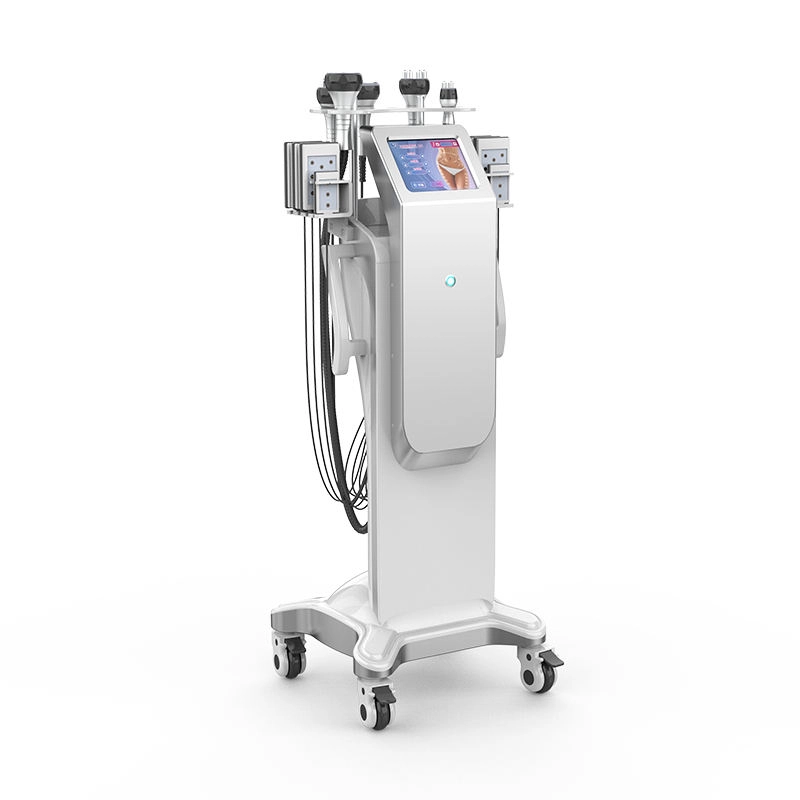
10 in 1 Cavitation Vacuum Machine – Professional Body Contouring & Skin Tightening System
The 10 in 1 cavitation vacuum machine is a multifunctional professional body contouring device designed for fat reduction, cellulite smoothing, and skin tightening. Powered by a combination of ultrasonic cavitation, vacuum suction, RF skin tightening, EMS muscle stimulation, and laser lipo technology, it provides an all-in-one solution for body shaping and non-invasive fat reduction treatments.
This upgraded system features a 10.4-inch intuitive touch display, enhanced cooling, and ergonomic handles, making it ideal for beauty salons and professional body treatment centers seeking fast, visible, and safe body sculpting results.
With advanced 40K/80K cavitation, vacuum RF lifting, and multi-polar RF energy, the machine effectively breaks down fat cells, accelerates lymphatic drainage, and firms loose skin—providing clients with a smoother, more contoured silhouette

5-in-1 40K Cavitation Vacuum Machine for Body Slimming & Fat Reduction
The 5-in-1 40K Cavitation Vacuum Machine is a professional body shaping system designed for fat reduction, cellulite smoothing, and overall body contouring. Using 40KHz ultrasonic cavitation, this device breaks down stubborn fat cells, while vacuum suction improves lymphatic drainage and accelerates toxin removal.
With multiple RF tightening handles, the machine stimulates collagen regeneration and helps lift and firm loose areas of the body. Compact, powerful, and easy to operate, it is the perfect solution for beauty salons, spa centers, and slimming studios seeking fast and visible fat-reduction results.
This cavitation vacuum machine is built to deliver safe, non-invasive treatments with no downtime—making it a top choice for body contouring professionals.
Get more information
If you have any comments or good suggestions, please leave us a message; later our professional staff will contact you as soon as possible.
Let's Talk
Stay in touch with us for cutting-edge beauty solutions, professional guidance, and customized service.
Contact


Room 307, Building A, Huilong International E-commerce Industrial Park, No. 10 Xipengling Road, Helong Street, Baiyun District, Guangzhou, China
© 2025 HUIMAIN. All Rights Reserved. Privacy Policy | Terms and Conditions | Sitemap
Facebook
Instagram
Medical beauty equipment factory
huimain Medical beauty equipment factory
beauty machine supplier
Whatsapp: +8619124004543