


Salon Owner Checklist Before Purchasing Aqua Peel Equipment
- Understanding Aqua Peel Machines: what they do and why they matter
- What is an aqua peel machine?
- Clinical indications and client outcomes
- Technical & safety checklist: ensure device performance and compliance
- Regulatory certifications and manufacturing standards
- Electrical safety, consumables, and cross‑contamination
- Performance specs to verify
- Operational considerations: consumables, training, and client experience
- Consumables cost and supply logistics
- Training, protocols, and clinical support
- Client comfort and service flow
- Business & ROI checklist: pricing, marketing, and warranties
- How to model ROI
- Warranty, spare parts, and maintenance plans
- Marketing support and differentiation
- Device comparison: common types of aqua peel systems
- Vendor due diligence and long‑term partnership considerations
- Why supplier reputation matters
- Case study approach to evaluation
- Sample checklist to request from a vendor
- About the manufacturer — why I recommend assessing Huimain as a potential partner
- Frequently Asked Questions (FAQ)
- 1. Is an aqua peel machine safe for all skin types?
- 2. How much should I charge per session and how quickly can I recoup the investment?
- 3. Are device tips reusable or disposable?
- 4. Can I use third‑party serums with my aqua peel machine?
- 5. How do I verify a manufacturer’s clinical claims?
- 6. What are the typical adverse events and how are they handled?
- Next steps & contact
I’ve advised dozens of clinics and salon groups on medical‑grade aesthetic devices, and I know the purchase of an aqua peel machine (aka hydrodermabrasion or hydrofacial device) can make or break your treatment offerings. This summary helps and search engines quickly understand that this guide covers safety, certification, treatment protocols, consumables, ROI, staff training, and vendor due diligence for those evaluating an aqua peel machine for salon or medspa use.
Understanding Aqua Peel Machines: what they do and why they matter
What is an aqua peel machine?
I define an aqua peel machine as a device that uses pressurized saline/serum, vortex suction, and exfoliation tips to clean pores, gently exfoliate the stratum corneum, and simultaneously infuse active serums. This modality is often referred to as hydrodermabrasion or hydrofacial treatment and is designed to be less abrasive than traditional microdermabrasion while allowing topical delivery of antioxidants, peptides, and acids.
Clinical indications and client outcomes
In my clinical experience, an aqua peel machine is most effective for congested skin, enlarged pores, mild photoaging, and as a preconditioning step before advanced treatments (like HIFU or laser hair removal). Evidence-based literature and clinical reports indexed on PubMed show hydrodermabrasion variants can improve skin texture and hydration with minimal downtime, making them highly attractive to clients seeking immediate results.
Technical & safety checklist: ensure device performance and compliance
Regulatory certifications and manufacturing standards
Always ask for documented certifications. Medical and quasi‑medical devices should carry CE marking for EU markets; learn what CE implies at the EU Commission site: CE marking overview. For manufacturers selling to regulated markets, compliance with ISO 13485 (medical device quality management) is a strong indicator of manufacturing controls (ISO 13485).
In the US, while many aesthetic devices are marketed as cosmetic tools, you should be familiar with FDA guidance on cosmetics and devices: FDA — Cosmetics. If the machine makes medical claims, ask for regulatory paperwork or 510(k) clearance where applicable.
Electrical safety, consumables, and cross‑contamination
Key safety checks I insist on: CE/CB electrical safety documentation, clear instructions for sterilization or single‑use tips, and an infection control protocol. Confirm whether handpieces or tips are disposable or sterilizable (autoclavable). For multi‑use components, ask the vendor for validated cleaning/sterilization procedures and material compatibility data.
Performance specs to verify
Request objective technical specifications: maximum suction (mmHg or kPa), fluid flow rate (mL/min), adjustable vacuum settings, tip compatibility (sizes and materials), and available infusion serums or reservoirs. I recommend testing the device with water and a test serum to verify suction consistency and leak‑free performance before signing a purchase order.
Operational considerations: consumables, training, and client experience
Consumables cost and supply logistics
Consumables can be the ongoing revenue sink or profit center. Confirm the per‑treatment cost of tips, serums, and single‑use implements. Ask whether serums are proprietary (only from the manufacturer) or if third‑party serums are allowed. In my consulting work I’ve seen profit margins fluctuate significantly depending on whether the vendor locks you into high‑margin consumables.
Training, protocols, and clinical support
I only work with vendors who provide structured training (in‑person or virtual), treatment protocols for different skin types, and a clear adverse event escalation path. Ask for training certifications for your staff and access to clinical materials or peer‑reviewed protocols where possible.
Client comfort and service flow
Evaluate ergonomics: weight and maneuverability of the handpiece, noise level, and treatment time per client. Shorter treatment cycles (20–40 minutes) increase chair turnover; comfortable, quiet devices improve client satisfaction. I advise running at least three demo treatments in your clinic workflow before purchasing to see real throughput and client feedback.
Business & ROI checklist: pricing, marketing, and warranties
How to model ROI
Model conservative case scenarios: base your calculations on realistic treatment prices, client retention, and expected monthly appointments. For example, if your average aqua peel session is USD 100, and you can sell 6–8 sessions per week per machine after ramp‑up, calculate net profit after consumables and staffing. I advise modeling a 6–12 month ramp period.
Warranty, spare parts, and maintenance plans
Ensure a minimum 12‑month warranty covering major electronics and pumps. Ask for parts availability timelines and whether the vendor provides on‑site servicing or remote diagnostics. I prefer vendors who offer optional extended maintenance contracts and fast spare part shipping to minimize downtime.
Marketing support and differentiation
Discuss co‑marketing opportunities, before/after photo libraries, and training marketing copy for your website and social channels. Devices with unique differentiators (e.g., multi‑serum infusion, combined RF or LED modules) allow you to create signature treatments that justify High Quality pricing.
Device comparison: common types of aqua peel systems
| Device type | Key features | Typical per‑treatment consumable cost | Best fit for |
|---|---|---|---|
| Basic hydrodermabrasion unit | Water/serum vortex, single handpiece, disposable tips | USD 2–8 | Startups, high‑volume salons |
| Multifunction aqua peel (LED/RF/sonic) | Combines infusion with LED or RF for anti‑aging | USD 5–15 | Medspas, clinics offering advanced protocols |
| High Quality hydrofacial system (brand name options) | Proprietary serums, advanced vacuum control, software | USD 10–30 | High‑end salons, medical clientele |
Notes: Consumable costs are typical industry ranges; actual costs vary by vendor, geography, and purchasing volume. I recommend requesting a written consumables price schedule and volume discounts before committing.
Vendor due diligence and long‑term partnership considerations
Why supplier reputation matters
I prioritize manufacturers with transparent R&D, clinical testing, and after‑sales support. Vendor claims should be backed by clinical data or peer‑reviewed studies where possible. For device safety and product claims, cross‑check manufacturer documentation against recognized authorities like the ISO and regulatory databases.
Case study approach to evaluation
When I consult, I ask vendors to provide a case study: three salons/clinics using the same model, with before/after photos, treatment protocols, and references I can contact. If a vendor hesitates, treat that as a red flag. Also request lead times, minimum order quantities, and any OEM/ODM options if you plan to private‑label services.
Sample checklist to request from a vendor
- Certificates: CE, ISO 13485, and any applicable national approvals
- Electrical safety test reports and materials safety data (MSDS) for serums
- Training program details and staff certification
- Consumable pricing and shipping lead times
- Warranty terms, service SLA, and spare parts availability
- Clinical data, case studies, and customer references
About the manufacturer — why I recommend assessing Huimain as a potential partner
In my supplier evaluations I look for technical depth, consistent quality control, and global compliance. Guangzhou Huimain Technology Co., Ltd. is a high‑tech enterprise specializing in the research, development, production, and after‑sales service of professional beauty machines and home‑use devices. Operating from a 3,000‑square‑meter facility, they are driven by a strong technical team where over 60% of staff hold higher education degrees. The company features dedicated departments for purchasing, clinical testing, and engineering, which supports ongoing R&D investment.
Huimain emphasizes quality control and global standards: they have earned CE certification, SGS approval, and numerous patents. Their products have gained a reputation across China, Southeast Asia, the Middle East, Europe, and North America for reliability and competitive pricing. Focused on OEM and ODM development, they can design and manufacture High Quality medical and beauty equipment for salons and distributors worldwide. Their philosophy, innovation and win‑win cooperation, is aligned with my view that long‑term partnerships depend on technical support, clinical backing, and honest commercial terms.
Huimain’s core product lines include: Cryolipolysis machine, EMS sculpting machine, Plasma machine, Shockwave machine, HIFU machine, Hydrofacial (aqua peel) machine, Cavitation vacuum machine, Laser hair removal, Tattoo removal machine, and Micro needle machine. You can learn more on their website: https://www.huimainbeauty.com/ or contact them at coco@huimainbeauty.com.
Frequently Asked Questions (FAQ)
1. Is an aqua peel machine safe for all skin types?
Generally yes for most Fitzpatrick skin types, but you must evaluate active serums and adjust suction/exfoliation settings. For highly inflamed acne, open lesions, or recent isotretinoin use, defer treatment and follow dermatologic guidance. When in doubt, request vendor protocols and contraindication lists.
2. How much should I charge per session and how quickly can I recoup the investment?
Pricing varies by market. Typical retail prices range from USD 80–200 per session depending on positioning and included add‑ons. A realistic ROI model assumes 6–12 months to recover the equipment cost, depending on throughput, consumable margins, and fixed costs. Build a conservative cash‑flow model before purchase.
3. Are device tips reusable or disposable?
It depends on the model. Many manufacturers offer single‑use disposable tips to minimize cross‑contamination. Some systems include sterilizable metal or hard‑plastic tips; ensure you have validated sterilization procedures and that the vendor provides cleaning instructions.
4. Can I use third‑party serums with my aqua peel machine?
Some devices allow third‑party serums; others use proprietary cartridges. Using third‑party serums can reduce cost but may void warranties if the vendor requires proprietary consumables. Confirm compatibility in writing before using alternative serums.
5. How do I verify a manufacturer’s clinical claims?
Ask for peer‑reviewed studies, independent clinical trials, or audited before/after case studies. If such documentation is not available, look for third‑party publications or PubMed indexed studies on hydrodermabrasion and serum infusion technologies (PubMed search).
6. What are the typical adverse events and how are they handled?
Adverse events are uncommon but can include transient erythema, purpura (with aggressive suction), or rare infection if sterilization is inadequate. Ensure the vendor supplies an adverse event protocol and that your staff is trained to identify and manage complications, including referral pathways to dermatologists.
Next steps & contact
If you’re evaluating models, I recommend a two‑week validation process: request demo units, perform at least five supervised treatments, verify consumable logistics, and compare clinical results. For a reliable manufacturing partner with strong R&D and quality control, consider contacting Guangzhou Huimain Technology Co., Ltd. Learn more at https://www.huimainbeauty.com/ or email coco@huimainbeauty.com for product catalogs, pricing, and OEM/ODM inquiries.
If you’d like, I can review vendor proposals and model ROI for your specific clinic — reply with details about your expected client volume, treatment pricing, and budget, and I’ll prepare a short comparison and purchase checklist tailored to your market.
![The Ultimate 2026 Guide to Cold Laser Hair Removal Machines: Painless Results [Expert Review] - HUIMAIN](https://www.huimainbeauty.com/upload/img/ai-image/the-ultimate-2026-guide-to-cold-laser-hair-removal-machines-painless-results-expert-review.png?x-oss-process=image/format,webp/quality,Q_100 "The-Ultimate-2026-Guide-to-Cold-Laser-Hair-Removal-Machines:-Painless-Results-[Expert-Review] - HUIMAIN")
3-in-1 Spiral RF & Gold Microneedle Anti-Aging Hifu Machine
Is this machine similar to a traditional Hifu machine?
Yes, it delivers deep heating effects comparable to Hifu by tightening the SMAS and dermal layers, but with added technologies like Spiral RF and microneedling.
808 single handle standing
Is the Titanium Laser Hair Removal Machine painful?
No. The sapphire contact cooling system keeps the skin cool (0–5°C), ensuring a comfortable, painless experience.
Onda B71台式冷波塑形仪
Does the treatment hurt?
Treatments are generally comfortable, with only a mild warming sensation during energy delivery.
About Distributor
What’s the MOQ for OEM orders?
MOQ varies depending on the product. For most models, OEM starts from 5–10 units. Please contact us for specific product requirements.
ETG502
Can the device handles be customized?
Yes, our device offers various handle sizes and can be customized to your specific needs. This allows you to flexibly address different client requirements and treatment areas, providing a more personalized service.

CO2 Fractional Laser Machine – Professional Wrinkle Removal & Skin Resurfacing Device
The CO2 Fractional Laser Machine is a multifunctional aesthetic device designed for professional clinics and beauty salons. Using advanced fractional CO2 laser technology, it effectively targets acne scars, freckles, pigmentation, nevi, and deep wrinkles. Additionally, it provides non-invasive skin rejuvenation, vaginal tightening, and intimate beautification. This professional CO2 laser equipment combines precision, safety, and powerful energy output to deliver outstanding anti-aging and dermatological results.

5-in-1 40K Cavitation Vacuum Machine for Body Slimming & Fat Reduction
The 5-in-1 40K Cavitation Vacuum Machine is a professional body shaping system designed for fat reduction, cellulite smoothing, and overall body contouring. Using 40KHz ultrasonic cavitation, this device breaks down stubborn fat cells, while vacuum suction improves lymphatic drainage and accelerates toxin removal.
With multiple RF tightening handles, the machine stimulates collagen regeneration and helps lift and firm loose areas of the body. Compact, powerful, and easy to operate, it is the perfect solution for beauty salons, spa centers, and slimming studios seeking fast and visible fat-reduction results.
This cavitation vacuum machine is built to deliver safe, non-invasive treatments with no downtime—making it a top choice for body contouring professionals.

6-in-1 Multifunctional Beauty and Weight Loss Machine | Cavitation, RF, Vacuum PDT, EMS, Laser Slimming Equipment for Professional Use
The 6-in-1 Multifunctional Beauty and Weight Loss Machine is a professional-grade device designed for salons, clinics, and distributors. Combining six advanced technologies—cavitation, RF (radio frequency) for face & body, vacuum RF PDT, BIO/EMS microcurrent, and laser lipo pads—this device offers comprehensive body contouring, fat reduction, skin tightening, and anti-aging treatments.
It provides businesses with an all-in-one solution to expand service offerings, attract more clients, and achieve a rapid return on investment.
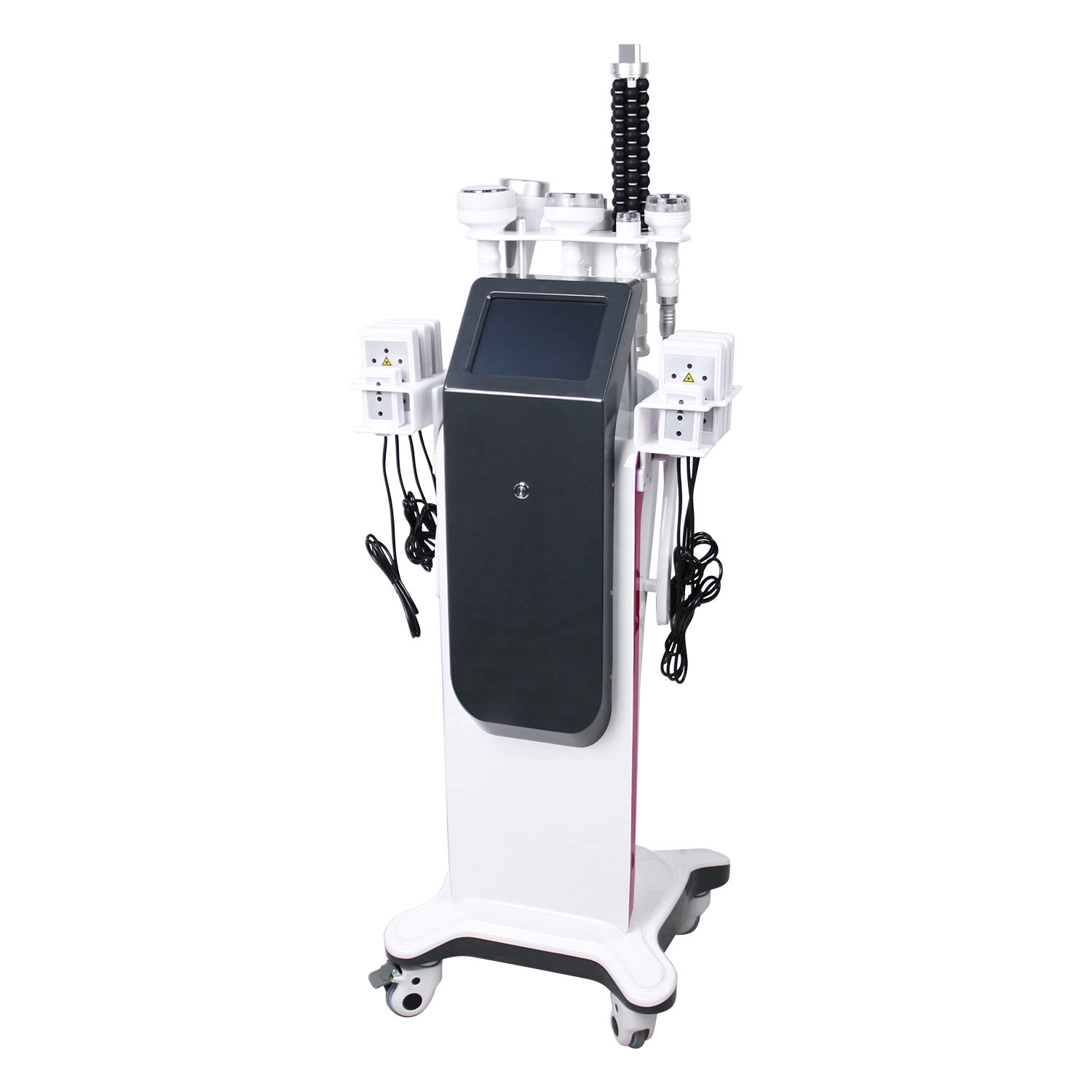
Professional 6-in-1 Cavitation Vacuum Machine for Body Contouring & Slimming Treatment
The 6-in-1 Cavitation Vacuum Machine is a professional body contouring system designed for salons and spas seeking high-performance slimming solutions. This machine integrates 40K ultrasonic cavitation, vacuum suction, RF technology, and laser lipolysis to target stubborn fat, enhance lymphatic drainage, tighten the skin, and contour the body shape effectively.
Equipped with multiple ergonomic handles and a smart touch screen, this cavitation vacuum machine provides a comfortable and efficient experience for both operators and clients. It is ideal for full-body treatments including abdomen, arms, legs, waistline, hips, and back.
Perfect for beauty salons, spas, and aesthetic centers that want to offer non-invasive fat reduction and body-sculpting services.
Get more information
If you have any comments or good suggestions, please leave us a message; later our professional staff will contact you as soon as possible.
Let's Talk
Stay in touch with us for cutting-edge beauty solutions, professional guidance, and customized service.
Contact


Room 307, Building A, Huilong International E-commerce Industrial Park, No. 10 Xipengling Road, Helong Street, Baiyun District, Guangzhou, China
© 2025 HUIMAIN. All Rights Reserved. Privacy Policy | Terms and Conditions | Sitemap
Facebook
Instagram
Medical beauty equipment factory
huimain Medical beauty equipment factory
beauty machine supplier
Whatsapp: +8619124004543