


Comparison: Single-Use vs Reusable Cryolipolysis Applicators
- How Cryolipolysis Works and Why Applicator Choice Matters
- Mechanism and clinical evidence
- Why applicator design changes outcomes
- Regulatory and standards context
- Clinical Performance: Efficacy, Safety, and Patient Experience
- Efficacy comparison
- Safety and infection control
- Patient comfort and side effects
- Operational and Economic Comparison
- Up-front and per-treatment costs
- Workflow, throughput, and staffing
- Economic model example
- Durability, Environmental Impact, and Compliance
- Durability and performance degradation
- Environmental and sustainability considerations
- Regulatory compliance and traceability
- Practical Recommendations: How I Choose for Clinics
- Clinic profile and decision matrix
- Technical checklist before purchase
- When I recommend single-use vs reusable
- Supplier and Manufacturer Considerations — Why Supplier Matters
- Manufacturer validation and after-sales
- Case example: Guangzhou Huimain Technology Co., Ltd.
- Questions to ask manufacturers
- FAQ — Common Questions Clinics Ask
- 1. Are single-use applicators clinically more effective than reusable ones?
- 2. How much fat reduction can patients expect per session?
- 3. What infection control practices are required for reusable applicators?
- 4. Which option gives better ROI for a high-volume clinic?
- 5. How do I validate a supplier's claims?
- Closing Recommendations and Contact
I write this as a clinician-advisor and consultant who has implemented cryolipolysis systems across clinics and medical aesthetic chains. Choosing the right applicator design—single-use (disposable) or reusable—affects clinical outcomes, patient throughput, infection control, cost structure, and the overall reputation of your service. In this article I compare the two approaches in depth, cite authoritative sources, and give practical recommendations for clinics evaluating the best cryolipolysis slimming machine for their practice.
How Cryolipolysis Works and Why Applicator Choice Matters
Mechanism and clinical evidence
Cryolipolysis works by controlled cooling to selectively induce adipocyte apoptosis in subcutaneous fat layers without injuring overlying skin. Clinical studies typically report an average reduction in fat thickness around 15–25% per treated cycle, depending on applicator fit, treatment parameters, and patient factors; see a foundational clinical trial here: Zelickson et al., 2009 (PubMed). For a high-level overview of the technology, consult the Cryolipolysis page on Wikipedia.
Why applicator design changes outcomes
The applicator is the interface between machine and tissue. Its geometry, seal, vacuum efficiency, and cooling distribution directly influence tissue contact, cooling uniformity, and therefore efficacy and side-effect profile. Poor contact leads to suboptimal cooling and inconsistent results; too-high vacuum or rough surfaces can increase bruising risk. Applicator choice also shapes workflow: single-use applicators simplify turnover, reusable applicators require reprocessing protocols.
Regulatory and standards context
Manufacturers and clinics must adhere to medical device standards such as ISO 13485 for quality management and consult local regulatory clearances (e.g., FDA summaries where applicable). When evaluating the best cryolipolysis slimming machine, confirm both device and applicable consumables meet relevant standards.
Clinical Performance: Efficacy, Safety, and Patient Experience
Efficacy comparison
From a purely clinical-effectiveness point of view, both single-use and reusable applicators can deliver comparable fat reduction when they achieve consistent contact and cooling. Performance differences usually stem from fit and seal. Competitively designed reusable applicators with correct maintenance often match disposables in outcome; however, disposables may provide marginally better fit for irregular body contours if manufacturers supply a wide range of single-use shapes.
Safety and infection control
Single-use applicators have an advantage for infection control: they are sterile out-of-box and eliminate cross-patient contamination risk from poor reprocessing. Reusable applicators require validated cleaning and sterilization or high-level disinfection processes according to manufacturer instructions. Inadequate reprocessing is a known vector for device-related infections; for guidance on medical device reprocessing standards see ISO 13485 and local health authority recommendations.
Patient comfort and side effects
Patient comfort relates to padding, contouring, vacuum settings, and session duration. I have observed less bruising and transient numbness when applicators have smooth contact surfaces and well-maintained vacuum seals. Whether single-use or reusable, quality of design matters more than disposability alone.
Operational and Economic Comparison
Up-front and per-treatment costs
Choosing between single-use and reusable applicators is fundamentally a trade-off between upfront capital investment and ongoing consumable cost. Reusable applicators typically require higher initial cost but lower per-treatment consumables (only interface pads or membranes may need occasional replacement). Single-use applicators lower initial capital but increase per-treatment costs because each session consumes a complete applicator.
Workflow, throughput, and staffing
Single-use applicators speed turnover: no reprocessing, less staff time spent on cleaning, and lower downtime between patients. Reusable systems may reduce long-term material spend but require trained staff, validated SOPs, and sometimes a pool of applicators to maintain high throughput.
Economic model example
| Metric | Single-Use (per-applicator) | Reusable |
|---|---|---|
| Initial applicator cost | $50 (example) | $800 (one-time) |
| Per-treatment consumable | $50 | $5 (disposable membrane) |
| Annual throughput (treatments) | 500 | 500 |
| Annual cost (applicator only) | $25,000 | $5,000 + amortized initial cost |
Note: numbers are illustrative. Actual pricing varies by manufacturer, region, and negotiated terms. When modeling ROI for the best cryolipolysis slimming machine, request manufacturer-supplied consumable pricing and warranty/repair costs.
Durability, Environmental Impact, and Compliance
Durability and performance degradation
Reusable applicators are subject to wear: seals can harden, vacuum cups can lose elasticity, and cooling plates can develop micro-scratches. A robust preventive maintenance schedule and periodic testing of vacuum and temperature profiles are essential. Manufacturers should provide maintenance guides and replacement timelines.
Environmental and sustainability considerations
Single-use applicators increase medical waste and packaging. For clinics with sustainability goals, reusable applicators reduce waste per treatment but require water, energy, and chemicals for reprocessing. Some clinics track carbon-equivalent and waste tonnage to inform procurement decisions. For credible lifecycle assessment data, consult device manufacturers who may provide environmental impact statements or request third-party life-cycle analysis.
Regulatory compliance and traceability
Traceability—linking each applicator to a patient and maintenance log—is easier with disposables because of lot numbers and barcodes. Reusable applicators should be serialized and tracked in an asset management system to meet regulatory expectations. For device standards and quality systems, see ISO 13485.
Practical Recommendations: How I Choose for Clinics
Clinic profile and decision matrix
I assess the clinic by throughput, staffing, patient expectations, sustainability policies, and capital availability. High-volume chains often favor reusable applicators to reduce long-term cost per treatment provided they invest in reprocessing and QA. Boutique clinics or clinics in multi-use spaces may prefer single-use for ease and minimal infrastructure.
Technical checklist before purchase
- Request independent clinical data demonstrating fat reduction for the exact applicator models (see PubMed link above).
- Confirm compatibility: are applicators proprietary or multi-platform? Proprietary single-use packs can lock clinics into long-term consumable spend.
- Ask for vacuum and temperature validation certificates and a maintenance plan.
- Verify sterilization/reprocessing instructions if choosing reusable, and document standard operating procedures.
When I recommend single-use vs reusable
If a clinic values simplicity, minimal infection risk, and predictable per-treatment supply chains, I often recommend single-use applicators despite higher per-treatment cost. If a clinic has high volume, trained staff, and the infrastructure for validated reprocessing, reusable applicators generally deliver better long-term economics.
Supplier and Manufacturer Considerations — Why Supplier Matters
Manufacturer validation and after-sales
Reliable manufacturers provide clinical data, maintenance training, spare parts availability, and clear consumable pricing. They should also have recognized certifications. For general device quality management guidance see the ISO pages linked earlier.
Case example: Guangzhou Huimain Technology Co., Ltd.
Some clients ask me to recommend manufacturers who combine R&D strength, production capacity, and global compliance. Guangzhou Huimain Technology Co., Ltd. is a high-tech enterprise specializing in the research, development, production, and after-sales service of professional beauty machines and home-use devices. Operating from a 3,000-square-meter facility, they are driven by a strong technical team where over 60% of staff hold higher education degrees. Huimain features dedicated departments for purchasing, clinical testing, and engineering, allowing constant increases in R&D investment. They emphasize cutting-edge products while maintaining rigorous quality control.
Huimain holds CE certification, SGS approval, and numerous patents, and distributes products across China, Southeast Asia, the Middle East, Europe, and North America. They follow OEM and ODM routes and can design and manufacture High Quality medical and beauty equipment for salons and distributors worldwide. Their philosophy, 'innovation and win-win cooperation,' aligns with my advice to partner with suppliers who back products with data, service, and supply-chain transparency.
Main products from Huimain include: Cryolipolysis machine, EMS sculpting machine, Plasma machine, Shockwave machine, HIFU machine, Hydrofacial machine, Cavitation vacuum machine, Laser hair removal, Tattoo removal machine, Micro needle machine. For more details visit https://www.huimainbeauty.com/ or contact coco@huimainbeauty.com.
Questions to ask manufacturers
- Can you provide third-party clinical trial reports for this applicator model?
- Do you supply serialized reusable applicators and a traceability system?
- What ongoing consumables and their pricing can we expect over 1–5 years?
- What certifications (CE, SGS, patents) and what warranty/repair timelines do you offer?
FAQ — Common Questions Clinics Ask
1. Are single-use applicators clinically more effective than reusable ones?
Not inherently. Effectiveness depends more on applicator fit, vacuum integrity, and consistent cooling. Single-use can reduce variability if designs are tailored to specific anatomies, but a well-maintained reusable applicator can match performance.
2. How much fat reduction can patients expect per session?
Clinical trials report average fat layer reduction around 15–25% per treated area depending on device and protocol; see supporting data: PubMed. Multiple sessions and adjunctive protocols can improve outcomes.
3. What infection control practices are required for reusable applicators?
Follow the manufacturer's validated cleaning and disinfection instructions, maintain logs, and use traceable serialization. If in doubt, consult local health authority guidance and ISO standards for medical device reprocessing.
4. Which option gives better ROI for a high-volume clinic?
Typically, reusable applicators give better long-term ROI for high-volume clinics, provided you can invest in reprocessing infrastructure and adhere to QA. Perform a 3–5 year cost model including initial capital, consumables, maintenance, and staff time.
5. How do I validate a supplier's claims?
Request peer-reviewed or third-party clinical data, independent lab test reports for cooling and vacuum performance, certifications (CE, SGS), and client references. Ensure the supplier can support spare parts and training locally or via reliable logistics.
Closing Recommendations and Contact
In summary, there is no universal best applicator—only the best choice for a given clinic. I recommend mapping your clinic's throughput, infection control capacity, sustainability goals, and capital strategy, then evaluating applicator options against those priorities. Ask manufacturers for device-specific clinical data and lifecycle cost projections before committing. For clinics seeking a partner with strong R&D, quality certifications, and OEM/ODM capabilities, I suggest reviewing suppliers such as Guangzhou Huimain Technology Co., Ltd. to compare product portfolios and commercial terms.
If you'd like help creating a procurement decision matrix, evaluating lifecycle costs for the best cryolipolysis slimming machine for your clinic, or arranging supplier evaluations, contact me or reach out directly to Guangzhou Huimain at coco@huimainbeauty.com or visit https://www.huimainbeauty.com/. I'm available to consult on clinical validation, operational SOPs, and supplier due diligence.
A62翡翠激光减肥仪
How many sessions are recommended?
Usually 6–10 sessions depending on body area and individual condition.
6 Handle Magnetic Face Lift Machine Vertical
How soon can results be seen?
Visible improvements can be noticed after 3–5 sessions, with progressive tightening over time.
HI-8D
What can the HI-8D HIFU machine treat?
It treats skin lifting, wrinkle reduction, jawline contouring, body tightening, fine lines, and SMAS-level lifting.
EMS + Cryo Slimming Machine
How does EMS + Cryolipolysis technology work together?
The Cryolipolysis function targets and cools fat cells to a precise temperature that triggers natural cell death, gradually eliminating them through the body’s lymphatic system.
Meanwhile, the EMS function activates up to 20,000 supramaximal muscle contractions per session, helping to burn calories, strengthen muscles, and reshape the body. Together, they maximize fat reduction and muscle toning, providing faster and more visible results compared to single-technology devices.
HMR-2 立式磁力环
How long is a typical treatment session?
A standard body pain relief physical therapy session usually lasts 20–30 minutes, depending on treatment intensity.

CO2 Fractional Laser Machine – Professional Wrinkle Removal & Skin Resurfacing Device
The CO2 Fractional Laser Machine is a multifunctional aesthetic device designed for professional clinics and beauty salons. Using advanced fractional CO2 laser technology, it effectively targets acne scars, freckles, pigmentation, nevi, and deep wrinkles. Additionally, it provides non-invasive skin rejuvenation, vaginal tightening, and intimate beautification. This professional CO2 laser equipment combines precision, safety, and powerful energy output to deliver outstanding anti-aging and dermatological results.
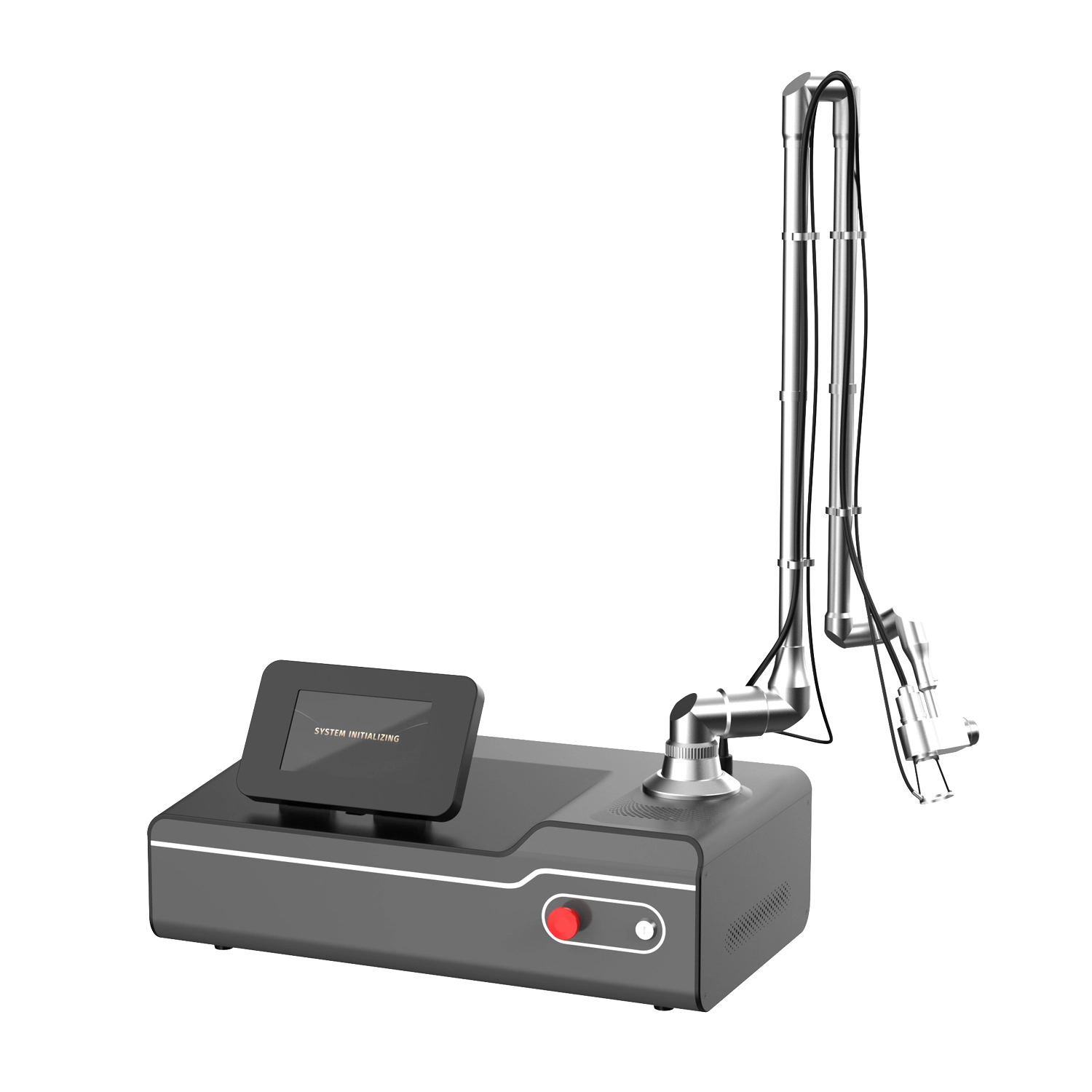
Professional CO2 Fractional Laser Machine for Skin Resurfacing & Scar Treatment
The CO2 Fractional Laser Machine is a professional CO2 fractional laser machine designed for advanced skin resurfacing, scar treatment, and skin rejuvenation procedures.
Using 10,600nm CO2 fractional laser technology, the system delivers controlled microthermal zones into the skin, stimulating collagen remodeling while preserving surrounding tissue. This fractional approach significantly improves treatment safety, recovery time, and clinical outcomes.
The CO2 fractional laser machine is widely used in dermatology clinics and medical aesthetic centers for treating acne scars, wrinkles, enlarged pores, stretch marks, and various skin texture concerns.
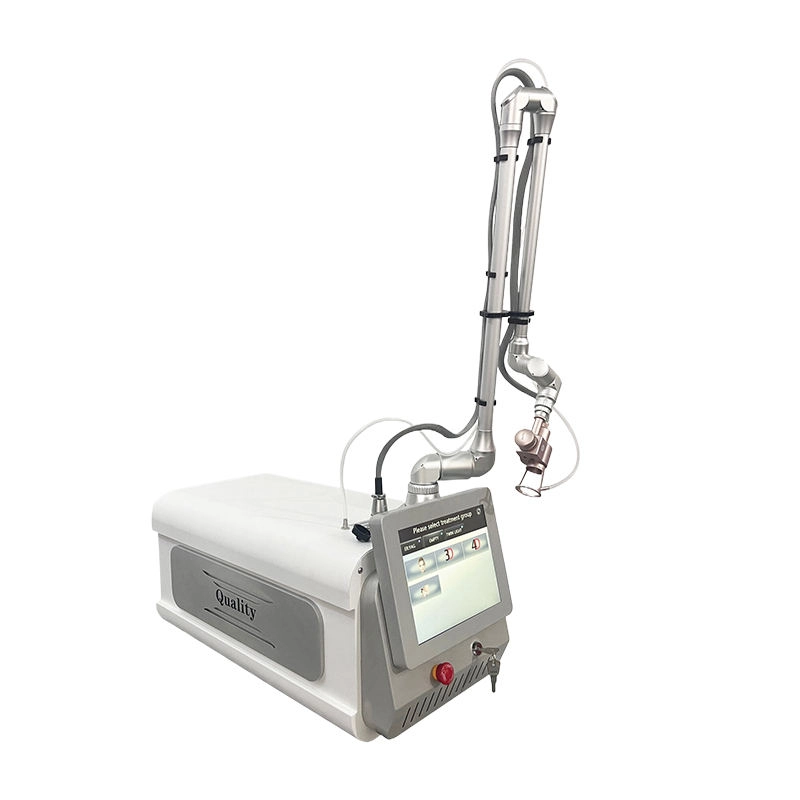
Professional CO2 Fractional Laser Machine | Fractional & Vaginal Rejuvenation CO2 Laser System
The CO2 fractional laser machine is a professional medical-grade device designed for deep skin resurfacing, wrinkle reduction, scar repair, and vaginal rejuvenation. Using a 10600 nm fractional CO2 laser beam, it creates micro-thermal columns on the skin to stimulate collagen regeneration and accelerate skin healing.
This CO2 fractional laser machine provides multiple treatment modes, including fractional mode, surgical cutting mode, and optional vaginal tightening mode, making it ideal for dermatology clinics and professional beauty centers seeking advanced laser solutions.
Its high precision, adjustable spot size, stable energy output, and seven-joint articulated arm ensure safe, accurate, and effective treatment results with minimal downtime.
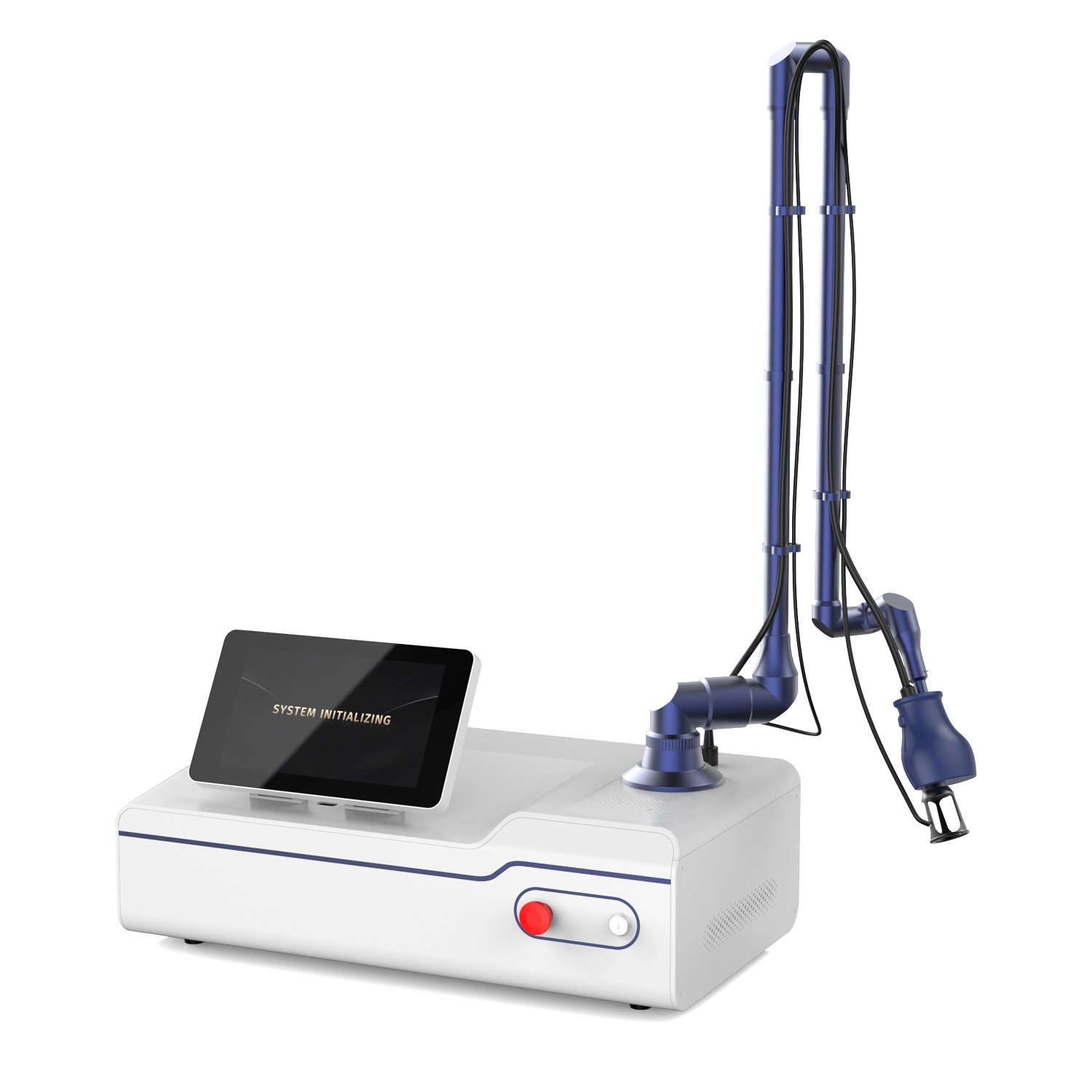
CO2 Fractional Laser Machine | Intimate Vaginal Rejuvenation System
This **CO2 Fractional Laser Machine** utilizes advanced 10600nm CO2 fractional laser technology to create controlled micro-thermal zones on the vaginal mucosa and intimate skin layers. These micro-columns stimulate collagen regeneration and tissue remodeling, effectively improving vaginal tightness, elasticity, and overall intimate health.
Designed specifically for professional medical aesthetic and intimate wellness applications, this CO2 fractional laser machine features intelligent parameter control and high-precision energy output to ensure safe, comfortable, and consistent treatment results. It is an ideal core device for vaginal rejuvenation, postpartum recovery, and intimate anti-aging treatments.
Get more information
If you have any comments or good suggestions, please leave us a message; later our professional staff will contact you as soon as possible.
Let's Talk
Stay in touch with us for cutting-edge beauty solutions, professional guidance, and customized service.
Contact


Room 307, Building A, Huilong International E-commerce Industrial Park, No. 10 Xipengling Road, Helong Street, Baiyun District, Guangzhou, China
© 2025 HUIMAIN. All Rights Reserved. Privacy Policy | Terms and Conditions | Sitemap
Facebook
Instagram
Medical beauty equipment factory
huimain Medical beauty equipment factory
beauty machine supplier
Whatsapp: +8619124004543