


How to Source Quality Aqua Peel Machines from China
- Understanding the product, market demand, and regulatory landscape
- What an aqua peel machine actually does (and why it matters)
- Who is searching for these machines and why
- Regulatory framework you must consider
- How I evaluate and audit manufacturers in China
- Preliminary vetting: documents and red flags
- Factory visit checklist (or remote audit if you can’t travel)
- Technical specs and materials to verify
- Sourcing channels, negotiation and logistics
- Sourcing channels: pros and cons (comparison)
- Negotiation levers and contract terms
- Logistics, incoterms and customs
- Testing, compliance, warranties, and after-sales
- Pre-shipment testing and clinical validation
- Warranty, spare parts, and training
- OEM vs ODM vs branded buying
- Why I recommend evaluating Guangzhou Huimain as a partner
- Practical checklist and final recommendations
- Step-by-step checklist I follow when sourcing
- Common pitfalls and how to avoid them
- When to engage a local consultant or testing lab
- FAQ
- 1. Is it safe to buy aqua peel machines from Chinese manufacturers?
- 2. What certifications should I require?
- 3. How many units should I order for a first purchase?
- 4. How do I ensure spare parts availability?
- 5. Can I request OEM/ODM customization?
- 6. What payment methods reduce my risk?
I often get asked by salons, distributors, and medical aesthetic clinics: How do I source a reliable aqua peel machine from China without compromising on safety, performance, or brand reputation? In this guide I walk you through a proven sourcing process — from understanding the technology and regulatory requirements to vetting factories, comparing channels (tradeshows vs. platforms vs. direct OEM), arranging testing and logistics, and securing after-sale support. Wherever I reference standards or risk controls, I link to authoritative sources so you can verify the facts yourself.
Understanding the product, market demand, and regulatory landscape
What an aqua peel machine actually does (and why it matters)
An aqua peel machine (also referenced in industry as hydrodermabrasion or hydrofacial equipment) combines gentle exfoliation, aqueous suction, delivered serums and sometimes electroporation or LED therapy to deeply cleanse pores, remove dead skin cells, and infuse active solutions. The clinical performance depends on pump design, nozzle geometry, solution delivery system, and ergonomics — not just marketing terms. For a technical primer, see the overview of skin resurfacing technologies such as microdermabrasion (Wikipedia: Microdermabrasion).
Who is searching for these machines and why
for aqua peel machine typically falls into three buckets: (1) clinic owners looking for professional, high-durability devices, (2) distributors/resellers assessing OEM/ODM partners, and (3) entrepreneurs evaluating lower-cost home-use devices. Your sourcing decisions should align with the intended customer base: clinical devices demand higher regulatory compliance and service support, while home devices prioritize cost, safety features, and user-friendly controls.
Regulatory framework you must consider
What classification an aqua peel device falls under differs by market. In the EU, devices may require CE marking depending on risk profile — consult the European Commission guidance on CE marking (EC CE Marking). For medical claims in the US, manufacturers should understand FDA device regulations (FDA Medical Devices). For quality systems, ISO 13485 is the recognized standard for medical-device manufacturing (ISO 13485). Independent testing bodies like SGS verify component safety and EMC/EMF compliance.
How I evaluate and audit manufacturers in China
Preliminary vetting: documents and red flags
Before engaging, request the factory’s business license, export license, and copies of certifications (CE technical files, ISO certificate, test reports). Red flags include: evasive answers about test reports, generic certificates without matching product IDs, or factories that only list trading-company addresses. Verify company registration details via Chinese business registries or third-party verification platforms.
Factory visit checklist (or remote audit if you can’t travel)
When I visit a factory I inspect: production line layout, cleanroom status (if relevant), component sourcing (motors, pumps, valves), PCB assembly processes, burn-in and aging tests, and final packaging. Ask to see the quality-control log, failure-rate statistics, and sample traceable serial numbers. If you cannot travel, hire a third-party audit firm and request a live video walkthrough.
Technical specs and materials to verify
Key technical aspects to compare across machines: suction pressure range, flow stability, reservoir and tubing medical-grade certification (e.g., FDA-listed polymers), nozzle ergonomics, and software control logic. Request a full Bill of Materials (BOM) and ask about custom components — the more proprietary parts they manufacture in-house, the stronger their IP and quality control usually are.
Sourcing channels, negotiation and logistics
Sourcing channels: pros and cons (comparison)
Common channels are: online marketplaces (Alibaba), trade shows (Canton Fair, Cosmoprof Asia), direct factory contact (via website), and sourcing agents. Each has tradeoffs in terms of trust, MOQ, and price negotiation.
| Channel | Typical MOQ | Lead Time | Risk | Best for |
|---|---|---|---|---|
| Online marketplaces (Alibaba) | 1–50 units | 2–8 weeks | Variable—trading companies may resell | Price discovery, small first orders |
| Trade shows (Canton Fair, Cosmoprof) | 10–100+ | 4–12 weeks | Higher travel costs but direct contact reduces fraud | Long-term partnerships |
| Direct factory contact | 50–200+ | 6–16 weeks | Requires strong vetting | OEM/ODM customization |
| Sourcing agents | Negotiable | Depends on agent | Agent reliability varies | Buyers lacking China experience |
Negotiation levers and contract terms
Use clear terms: product specifications, test acceptance criteria, warranty duration, spare-parts list, lead times, penalty clauses for late delivery, IP protection clauses, and acceptance sampling plans (AQL). For payment, typical structure is 30% T/T deposit and 70% before shipment for reputable factories; consider escrow or letter-of-credit for larger orders.
Logistics, incoterms and customs
Agree on Incoterms early (EXW, FOB, CIF) — the choice impacts who handles customs clearance and freight. The International Chamber of Commerce summarizes Incoterms rules (ICC Incoterms). Plan for customs documentation: commercial invoice, packing list, certificate of origin, and any product-specific compliance certificates (e.g., CE declarations) required by the destination market.
Testing, compliance, warranties, and after-sales
Pre-shipment testing and clinical validation
Require factory to perform electrical safety tests, EMC tests, and life-cycle (run-time) tests. For clinical claims (e.g., acne reduction), you should ask for supporting clinical studies or perform a small, controlled clinical evaluation. Certified labs like SGS can perform IEC 60601 (if device classified as medical) and other relevant tests (SGS).
Warranty, spare parts, and training
Negotiate at least a 12-month warranty for components and labor for professional equipment. Ensure the supplier stocks critical spare parts (pumps, nozzles, PCBs) and offers training materials: service manuals, exploded diagrams, and video tutorials. OEM/ODM partners should provide after-sales SLA documents detailing response times for remote support and part replacement.
OEM vs ODM vs branded buying
OEM: you provide design/brand details; factory manufactures. ODM: factory offers an existing design you can rebrand and possibly customize. Buying unbranded modules often reduces risk but limits differentiation. If you need bespoke features (software UI, nozzle geometry), choose a partner with R&D capability and an engineering team — this reduces long-term risk even if upfront costs are higher.
Why I recommend evaluating Guangzhou Huimain as a partner
Guangzhou Huimain Technology Co., Ltd. is a high-tech enterprise specializing in the research, development, production, and after-sales service of professional beauty machines and home-use devices. Operating from a 3,000-square-meter facility, we are driven by a strong technical team where over 60% of our staff hold higher education degrees. Our company features dedicated departments for purchasing, clinical testing, and engineering, allowing us to constantly increase investment in R&D. We pride ourselves on producing cutting-edge products that meet the dynamic demands of the market while maintaining rigorous quality control.
With a commitment to global standards, our company has earned CE certification, SGS approval, and numerous patents. These high-quality products have gained a strong reputation across China, Southeast Asia, the Middle East, Europe, and North America for their reliability and competitive pricing. Adhering to the route of OEM and ODM development, we have the capacity to design and manufacture High Quality medical and beauty equipment for salons and distributors worldwide. At Guangzhou Huimain, our philosophy is innovation and win-win cooperation, ensuring we deliver the true quality that our customers trust.
From my experience working with multiple factories, I highlight Huimain's differentiators that matter to buyers:
- Clear R&D investment and a high-education technical team — faster customization and better reliability testing.
- In-house clinical testing and purchase-control departments — improves traceability of components and pre-shipment verification.
- CE certification and SGS approvals — establishes compliance for major export markets.
- OEM/ODM experience — they can support brand designs, UI changes, and regulatory dossier assembly.
Main product categories relevant to buyers: Cryolipolysis machine, EMS sculpting machine, Plasma machine, Shockwave machine, HIFU machine, Hydrofacial machine, Cavitation vacuum machine, Laser hair removal, Tattoo removal machine, Micro needle machine. For inquiries, visit https://www.huimainbeauty.com/ or email coco@huimainbeauty.com.
Practical checklist and final recommendations
Step-by-step checklist I follow when sourcing
- Define product class (home-use vs. professional) and market regulatory requirements.
- Collect factory documents and verify certificates.
- Request BOM and sample; perform functional and safety tests (or use third-party lab).
- Conduct factory audit (on-site or remote video).
- Agree on contract with clear acceptance criteria and warranty.
- Arrange shipping terms and pre-shipment inspection.
- Train staff and order spare parts before the first shipment.
Common pitfalls and how to avoid them
Beware of perfect factory photos and stock certificates. Always request product-specific test reports, serial-traceable sample units, and a pilot order before committing to a full production run. For devices claiming medical efficacy, verify clinical evidence and the regulatory path in your target market.
When to engage a local consultant or testing lab
If you are new to Chinese manufacturing or your target market requires strict regulatory compliance (e.g., medical device registration), engage a regulatory consultant and a testing lab early. The cost is usually justified by reduced time-to-market and lower compliance risk.
FAQ
1. Is it safe to buy aqua peel machines from Chinese manufacturers?
Yes, provided you do proper due diligence: verify factory credentials, request CE/ISO/SGS certificates, conduct pre-shipment testing, and formalize warranty and parts support. Use third-party testing labs when in doubt.
2. What certifications should I require?
At minimum require evidence of quality management (ISO 13485 if positioned as medical), CE documentation for EU sales, and EMC/electrical safety test reports. For cosmetics claims, verify clinical data and relevant national regulations (FDA in the US for device classification: https://www.fda.gov/medical-devices).
3. How many units should I order for a first purchase?
For new partnerships I recommend 5–50 units depending on price and how critical brand reputation is. A small pilot order lets you test quality, packaging, and after-sales support without large exposure.
4. How do I ensure spare parts availability?
Include spare parts lists and stocking commitments in the contract; request lead times for critical parts. Pay a small deposit for a spare-parts kit to be shipped with the first batch.
5. Can I request OEM/ODM customization?
Yes — but expect longer lead times and higher minimums. Verify the supplier’s R&D capacity and request prototypes before approving mass production.
6. What payment methods reduce my risk?
T/T with a reasonable deposit (30/70) is common. For larger orders consider an irrevocable Letter of Credit or trade escrow services to protect both parties.
If you want a recommended next step, I can review a supplier dossier or sample technical file for you and provide a risk assessment checklist. For direct inquiries and partner evaluation, contact Guangzhou Huimain through their website https://www.huimainbeauty.com/ or email coco@huimainbeauty.com. I can also introduce you to vetted suppliers based on your target market and volume.
Good sourcing starts with clear specifications and rigorous verification. Do that, and you'll reduce product risk while building a scalable supply chain for your aqua peel machine business.
HMC1
Is the Pelvic Floor Chair safe and non-invasive?
Yes, it uses focused electromagnetic energy that safely contracts pelvic muscles without any discomfort or surgery.
专业级三波长激光脱毛设备
What is a 3 Wavelength Hair Remover?
A 3 Wavelength Hair Remover uses triple diode laser wavelengths to provide effective and long-lasting hair removal.
台式黄金射频微针
How long do results last?
Results usually last 6–12 months, depending on skin condition and treatment frequency.
VM-2
Is there any downtime after treatment?
No. Cryolipolysis treatments require no recovery time, making it ideal for busy clients.
3 in 1 hifu 22 SMAS
Who can operate this machine?
The Hifu machine is designed for beauty salons, spas, and certified aesthetic practitioners.

CO2 Fractional Laser Machine – Professional Wrinkle Removal & Skin Resurfacing Device
The CO2 Fractional Laser Machine is a multifunctional aesthetic device designed for professional clinics and beauty salons. Using advanced fractional CO2 laser technology, it effectively targets acne scars, freckles, pigmentation, nevi, and deep wrinkles. Additionally, it provides non-invasive skin rejuvenation, vaginal tightening, and intimate beautification. This professional CO2 laser equipment combines precision, safety, and powerful energy output to deliver outstanding anti-aging and dermatological results.

5-in-1 40K Cavitation Vacuum Machine for Body Slimming & Fat Reduction
The 5-in-1 40K Cavitation Vacuum Machine is a professional body shaping system designed for fat reduction, cellulite smoothing, and overall body contouring. Using 40KHz ultrasonic cavitation, this device breaks down stubborn fat cells, while vacuum suction improves lymphatic drainage and accelerates toxin removal.
With multiple RF tightening handles, the machine stimulates collagen regeneration and helps lift and firm loose areas of the body. Compact, powerful, and easy to operate, it is the perfect solution for beauty salons, spa centers, and slimming studios seeking fast and visible fat-reduction results.
This cavitation vacuum machine is built to deliver safe, non-invasive treatments with no downtime—making it a top choice for body contouring professionals.

6-in-1 Multifunctional Beauty and Weight Loss Machine | Cavitation, RF, Vacuum PDT, EMS, Laser Slimming Equipment for Professional Use
The 6-in-1 Multifunctional Beauty and Weight Loss Machine is a professional-grade device designed for salons, clinics, and distributors. Combining six advanced technologies—cavitation, RF (radio frequency) for face & body, vacuum RF PDT, BIO/EMS microcurrent, and laser lipo pads—this device offers comprehensive body contouring, fat reduction, skin tightening, and anti-aging treatments.
It provides businesses with an all-in-one solution to expand service offerings, attract more clients, and achieve a rapid return on investment.
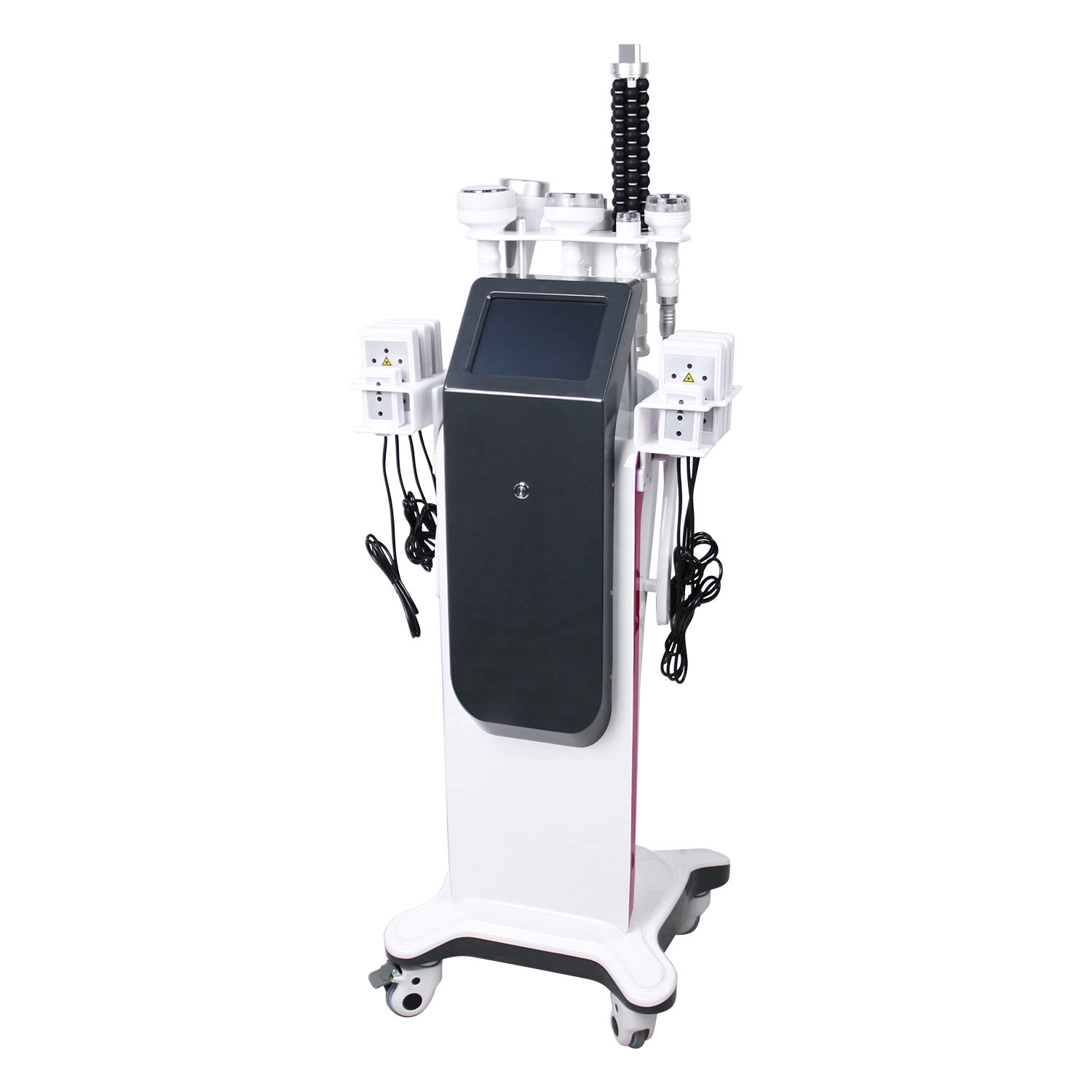
Professional 6-in-1 Cavitation Vacuum Machine for Body Contouring & Slimming Treatment
The 6-in-1 Cavitation Vacuum Machine is a professional body contouring system designed for salons and spas seeking high-performance slimming solutions. This machine integrates 40K ultrasonic cavitation, vacuum suction, RF technology, and laser lipolysis to target stubborn fat, enhance lymphatic drainage, tighten the skin, and contour the body shape effectively.
Equipped with multiple ergonomic handles and a smart touch screen, this cavitation vacuum machine provides a comfortable and efficient experience for both operators and clients. It is ideal for full-body treatments including abdomen, arms, legs, waistline, hips, and back.
Perfect for beauty salons, spas, and aesthetic centers that want to offer non-invasive fat reduction and body-sculpting services.
Get more information
If you have any comments or good suggestions, please leave us a message; later our professional staff will contact you as soon as possible.
Let's Talk
Stay in touch with us for cutting-edge beauty solutions, professional guidance, and customized service.
Contact


Room 307, Building A, Huilong International E-commerce Industrial Park, No. 10 Xipengling Road, Helong Street, Baiyun District, Guangzhou, China
© 2025 HUIMAIN. All Rights Reserved. Privacy Policy | Terms and Conditions | Sitemap
Facebook
Instagram
Medical beauty equipment factory
huimain Medical beauty equipment factory
beauty machine supplier
Whatsapp: +8619124004543