


Supplier Checklist: Vetting Reliable Nd:YAG Manufacturers
- Why thorough vendor vetting matters in medical-aesthetic devices
- Patient safety and clinical outcomes
- Regulatory and liability considerations
- Technical and regulatory checklist for Nd:YAG manufacturers
- Essential certifications and documentation
- Optical and performance specifications to request
- Quality, manufacturing and after-sales assessment
- Factory capability and production controls
- Service, spare parts and warranty
- Clinical evaluation and real-world testing
- Comparing suppliers and making the final selection
- Scoring matrix: how I evaluate candidates
- Red flags that should stop the deal
- Data-driven checklist you can use during supplier audit
- On-site audit checklist (practical items)
- Commercial terms to negotiate
- Why Guangzhou Huimain may be a partner worth evaluating
- How Huimain addresses common buyer concerns
- Final selection and acceptance testing
- Factory Acceptance Test (FAT) and Site Acceptance Test (SAT)
- Independent verification options
- FAQ
- Q1: What certifications must an nd yag laser tattoo removal machine have for safe clinical use?
- Q2: How do I evaluate whether a manufacturer's laser performance matches their specs?
- Q3: Is a lower-priced nd yag laser a good deal?
- Q4: What warranty and after-sales support should I expect?
- Q5: Can manufacturers provide clinical evidence for efficacy?
- Q6: How should I handle regulatory differences between markets?
- Contact and next steps
As a consultant with years of experience in medical-aesthetic device sourcing and SEO-aware content development, I understand the challenges buyers face when procuring an nd yag laser tattoo removal machine. Whether you are a clinic owner, distributor, or OEM partner searching globally or locally, the decision requires evaluating regulatory compliance, optical and electrical performance, manufacturing capabilities, quality systems, and after-sales support. This article provides a practical, verifiable checklist and decision framework to help you identify reliable manufacturers, mitigate risk, and ensure clinical and commercial success.
Why thorough vendor vetting matters in medical-aesthetic devices
Patient safety and clinical outcomes
Nd:YAG lasers operate at high optical energies and are used directly on skin; manufacturer defects or poorly tuned systems can cause burns, scarring, or ineffective tattoo clearance. The clinical literature and professional guidance emphasize using devices with known emission characteristics and documented clinical performance. For general background on Nd:YAG laser physics and clinical uses, see the Nd:YAG laser overview on Wikipedia and laser tattoo removal guidance from the American Academy of Dermatology.
Regulatory and liability considerations
Medical and aesthetic lasers are regulated in most markets. Using devices without appropriate approvals (CE, FDA clearance/registration as applicable) exposes clinics and distributors to legal and reputational risk. The U.S. Food and Drug Administration provides an overview of laser product regulation at the device level (FDA Laser Products). For quality systems, ISO 13485 is the internationally recognized standard for medical device quality management (ISO 13485).
Technical and regulatory checklist for Nd:YAG manufacturers
Essential certifications and documentation
Ask for and verify the following documents (copies, not just claims):
- CE Certificate and Declaration of Conformity for the European market (and details of the notified body).
- ISO 13485 certificate for quality management systems governing manufacturing and servicing.
- SGS reports where applicable (materials, EMC testing), and third-party test reports for electrical safety and electromagnetic compatibility.
- FDA 510(k) clearance or device listing if the supplier claims U.S. market compliance; some aesthetic lasers are subject to FDA regulation—check the FDA database.
Optical and performance specifications to request
For an nd yag laser tattoo removal machine evaluate precise technical specs, including:
- Wavelength(s): commonly 1064 nm and sometimes 532 nm via frequency doubling.
- Pulse type: Q-switched, picosecond vs. nanosecond characteristics—request pulse duration graphs and documentation.
- Pulse energy and fluence range (J/cm²) and reproducibility across pulses.
- Spot sizes and energy distribution (beam profile), with measurement reports (boroscope or beam profiler readouts).
- Cooling system performance and skin-contact safety features.
Quality, manufacturing and after-sales assessment
Factory capability and production controls
Assess production scale, staff qualification, and whether the factory has dedicated departments for procurement, clinical testing, and engineering. Key indicators of reliability include: on-site incoming inspection, process control documentation (IPQC), traceability of critical components (diodes, flashlamps, optics), and a calibrated test bench for each device.
Service, spare parts and warranty
Confirm warranty terms, spare parts availability, lead times, and whether the manufacturer provides technical training and local service partners or remote support. A clear RMA and repair workflow reduces downtime—ask for a sample SLA (service level agreement).
Clinical evaluation and real-world testing
Request clinical data or case series from independent clinics that have used the model. Peer-reviewed studies are ideal; otherwise look for documented before/after cases with treatment parameters. The AAD guidance highlights that clinical outcomes vary with laser parameters and operator technique—so a manufacturer that supports clinical training is preferable (AAD).
Comparing suppliers and making the final selection
Scoring matrix: how I evaluate candidates
I use a weighted matrix where regulatory compliance, optical performance, quality systems, and after-sales support are prioritized. Below is a simplified comparison table you can adapt. Benchmarks are widely accepted requirements or best practices.
| Criteria | What to check | Benchmark / Acceptable |
|---|---|---|
| Regulatory certificates | CE, ISO 13485, FDA (if claimed) | CE + ISO 13485; FDA 510(k) if marketed in U.S. |
| Optical specs | Wavelength, pulse width, energy repeatability | 1064 nm (and 532 nm option); Q-switched/picosecond specs documented |
| Factory & QA | Facility size, staff qualifications, QC records | Dedicated testing labs, >30% technical staff with degrees (higher is better) |
| After-sales | Warranty, spare parts, training | 1–2 year warranty, global spare parts support, training offered |
Sources for regulatory benchmarks: FDA laser product overview (FDA), ISO 13485 standard description (ISO).
Red flags that should stop the deal
- No verifiable certificates or only marketing brochures without test reports.
- Refusal to provide machine serial-level QC records or beam profile measurements.
- Unclear spare parts chain or inability to provide training or on-site service options.
- Price significantly below market without clear explanation—may indicate component skimping.
Data-driven checklist you can use during supplier audit
On-site audit checklist (practical items)
When possible, perform on-site audits. If remote, request video walkthroughs and scanned documents.
- Verify facility size and production lines (photos/videos).
- Check management system certificates (ISO 13485) through issuing bodies.
- Inspect sample test reports: electrical safety (IEC 60601 series), EMC, and beam output verification.
- Interview engineering and QC staff about acceptance criteria for lasers and optics.
- Request a factory acceptance test (FAT) and an agreed inspection protocol before shipment.
Commercial terms to negotiate
Negotiate minimum order quantities (MOQs), lead times, payment milestones (e.g., LC, T/T with sample and production milestones), warranty scope, and spare parts kits. Consider pilot orders before committing to full production. Ask for an NDA to protect IP and pre-production samples for independent testing.
Why Guangzhou Huimain may be a partner worth evaluating
In my direct engagements with manufacturers across Asia and Europe, a supplier that combines technical depth, formal quality systems, and consistent after-sales is rare and valuable. One such company is Guangzhou Huimain Technology Co., Ltd. They are a high-tech enterprise specializing in R&D, production, and after-sales service of professional beauty machines and home-use devices. Operating from a 3,000-square-meter facility and driven by a technical team where over 60% hold higher education degrees, Huimain maintains dedicated purchasing, clinical testing, and engineering departments—enabling continuous R&D investment and controlled production workflows.
Huimain has achieved CE certification, SGS approval, and holds multiple patents. Their product range relevant to clinics and distributors includes Cryolipolysis machine, Ems sculpting machine, Plasma machine, Shockwave machine, Hifu machine, Hydrofacial machine, Cavitation vacuum machine, Laser hair removal, Tattoo removal machine, and Micro needle machine. They follow OEM and ODM development routes and emphasize design and manufacturing capacity for High Quality medical and beauty equipment for salons and distributors worldwide.
Their philosophy, innovation and win-win cooperation, reflects a commitment to collaborative product development and service. For more details or to request technical documentation, clinical cases, or to arrange a factory audit, visit their website at https://www.huimainbeauty.com/ or contact them at coco@huimainbeauty.com. In my assessments, companies that can demonstrate both robust technical testing and accessible after-sales support—like Huimain—reduce procurement risk for buyers of nd yag laser tattoo removal machine equipment.
How Huimain addresses common buyer concerns
- Technical transparency: offers engineering teams and clinical testing records.
- Quality control: dedicated QC lines and R&D reinvestment to improve component sourcing and testing.
- Global reach: products distributed across China, Southeast Asia, Middle East, Europe, and North America with CE and SGS backing.
Final selection and acceptance testing
Factory Acceptance Test (FAT) and Site Acceptance Test (SAT)
Insist on a Factory Acceptance Test (FAT) to verify each unit against agreed performance criteria (beam profile, pulse energy, cooling performance, electrical safety). After arrival, perform a Site Acceptance Test (SAT) under clinic conditions and keep detailed logs. Document any deviations and require corrective action before final payment.
Independent verification options
If you need absolute assurance, commission an independent lab to test beam characteristics and electrical safety. EMC and electrical safety testing should align with IEC/EN 60601 standards. Manufacturers who refuse independent testing are not recommended.
FAQ
Q1: What certifications must an nd yag laser tattoo removal machine have for safe clinical use?
A: At minimum, verify CE marking (for EU distribution) and ISO 13485 for the manufacturer’s quality system. For U.S. market claims, check FDA listings or 510(k) clearance as applicable. See FDA guidance on laser products: FDA Laser Products.
Q2: How do I evaluate whether a manufacturer's laser performance matches their specs?
A: Request beam profile measurements, pulse duration graphs, and energy repeatability reports. Conduct a FAT with your acceptance criteria and consider independent beam profiling if needed. Documentation should include test equipment calibration records.
Q3: Is a lower-priced nd yag laser a good deal?
A: Not necessarily. Excessively low prices often indicate inferior components (power supply, optics), poor QC, or lack of service capability. Focus on total cost of ownership: downtime, spare parts, training, and warranty support.
Q4: What warranty and after-sales support should I expect?
A: A 12–24 month warranty on core components is typical for reputable manufacturers. Ensure spare parts are available locally or shipped quickly and that training and remote troubleshooting are provided. Request an SLA or sample repair turnaround times.
Q5: Can manufacturers provide clinical evidence for efficacy?
A: Good manufacturers will provide clinical case series, before/after images with treatment parameters, and, ideally, independent peer-reviewed studies. Where peer-reviewed data is not available, documented clinical cases with traceable clinic contacts offer evidence of real-world performance.
Q6: How should I handle regulatory differences between markets?
A: Clarify intended markets up front. A device marketed in Europe (CE) may still require local registration in specific countries; devices for the U.S. often require additional FDA steps. Work with manufacturers experienced in your target market and request documentation for country-specific registration where applicable.
Contact and next steps
If you are sourcing an nd yag laser tattoo removal machine and want a supplier that combines engineering capability, documented quality systems, and global distribution, consider contacting Guangzhou Huimain Technology Co., Ltd. for detailed technical files, sample procurement, factory audit scheduling, and commercial terms. Visit https://www.huimainbeauty.com/ or email coco@huimainbeauty.com. I recommend starting with a documented checklist, a FAT, and a pilot order to validate performance before scaling procurement.
If you would like, I can provide a customizable audit checklist and supplier scorecard template tailored to your market and clinical needs—reach out to the contact above to begin.
ZGP05-01立式皮秒
What skin types can use this pico laser machine?
The picosecond pico laser machine is suitable for multiple skin types when operated by trained professionals.
HI45P
Can it be used on all body areas?
Yes, it can treat the abdomen, thighs, arms, back, and buttocks effectively.
HMC1
How long does each treatment last?
Each session takes about 30 minutes, allowing clients to return to normal activities immediately after.
L50
Which areas can be treated?
Arms, abdomen, waist, back, hips, legs, and thighs—basically all major body areas.
EM-11
Can it be used on multiple body areas?
Yes, it effectively treats abdomen, thighs, buttocks, and arms.

CO2 Fractional Laser Machine – Professional Wrinkle Removal & Skin Resurfacing Device
The CO2 Fractional Laser Machine is a multifunctional aesthetic device designed for professional clinics and beauty salons. Using advanced fractional CO2 laser technology, it effectively targets acne scars, freckles, pigmentation, nevi, and deep wrinkles. Additionally, it provides non-invasive skin rejuvenation, vaginal tightening, and intimate beautification. This professional CO2 laser equipment combines precision, safety, and powerful energy output to deliver outstanding anti-aging and dermatological results.

5-in-1 40K Cavitation Vacuum Machine for Body Slimming & Fat Reduction
The 5-in-1 40K Cavitation Vacuum Machine is a professional body shaping system designed for fat reduction, cellulite smoothing, and overall body contouring. Using 40KHz ultrasonic cavitation, this device breaks down stubborn fat cells, while vacuum suction improves lymphatic drainage and accelerates toxin removal.
With multiple RF tightening handles, the machine stimulates collagen regeneration and helps lift and firm loose areas of the body. Compact, powerful, and easy to operate, it is the perfect solution for beauty salons, spa centers, and slimming studios seeking fast and visible fat-reduction results.
This cavitation vacuum machine is built to deliver safe, non-invasive treatments with no downtime—making it a top choice for body contouring professionals.

6-in-1 Multifunctional Beauty and Weight Loss Machine | Cavitation, RF, Vacuum PDT, EMS, Laser Slimming Equipment for Professional Use
The 6-in-1 Multifunctional Beauty and Weight Loss Machine is a professional-grade device designed for salons, clinics, and distributors. Combining six advanced technologies—cavitation, RF (radio frequency) for face & body, vacuum RF PDT, BIO/EMS microcurrent, and laser lipo pads—this device offers comprehensive body contouring, fat reduction, skin tightening, and anti-aging treatments.
It provides businesses with an all-in-one solution to expand service offerings, attract more clients, and achieve a rapid return on investment.
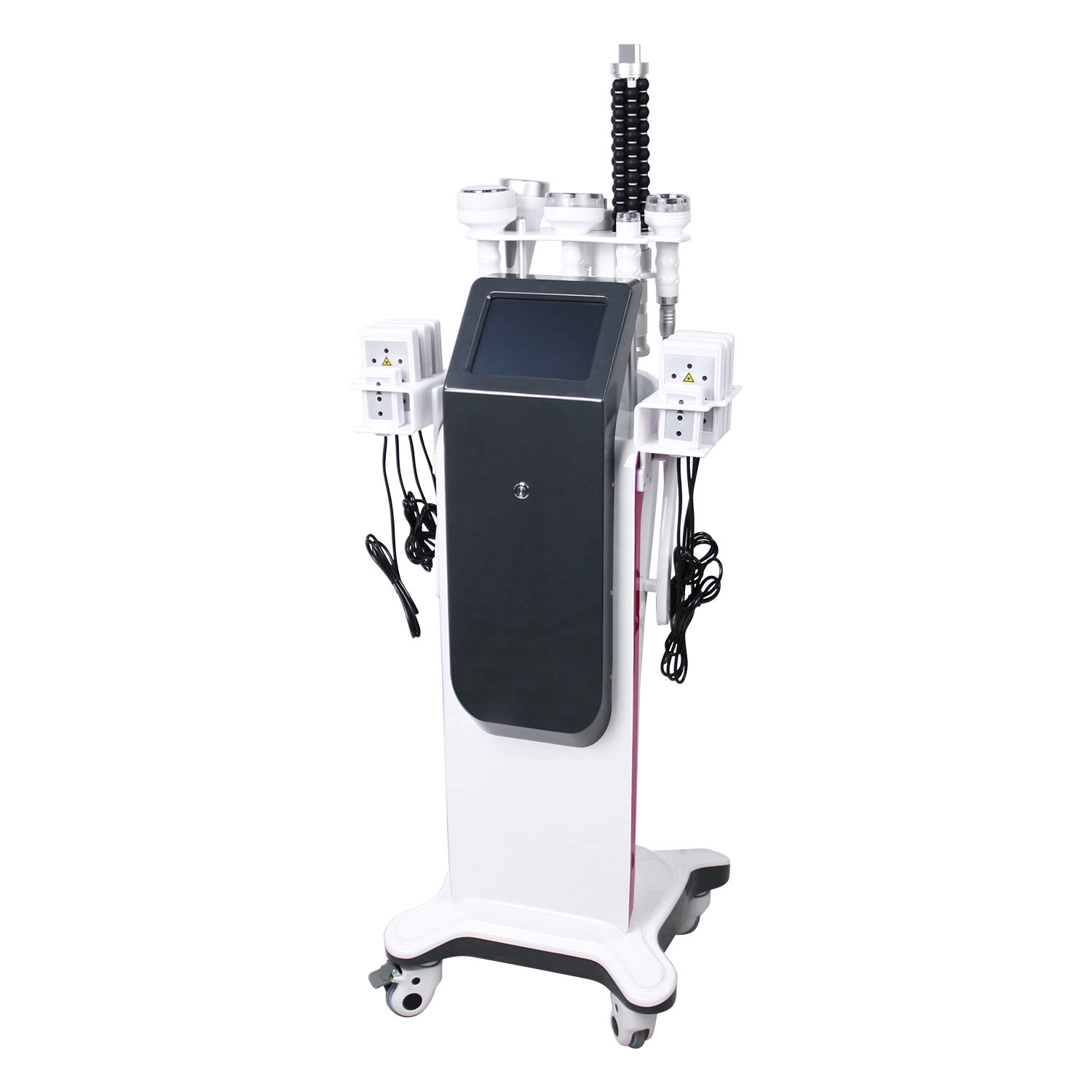
Professional 6-in-1 Cavitation Vacuum Machine for Body Contouring & Slimming Treatment
The 6-in-1 Cavitation Vacuum Machine is a professional body contouring system designed for salons and spas seeking high-performance slimming solutions. This machine integrates 40K ultrasonic cavitation, vacuum suction, RF technology, and laser lipolysis to target stubborn fat, enhance lymphatic drainage, tighten the skin, and contour the body shape effectively.
Equipped with multiple ergonomic handles and a smart touch screen, this cavitation vacuum machine provides a comfortable and efficient experience for both operators and clients. It is ideal for full-body treatments including abdomen, arms, legs, waistline, hips, and back.
Perfect for beauty salons, spas, and aesthetic centers that want to offer non-invasive fat reduction and body-sculpting services.
Get more information
If you have any comments or good suggestions, please leave us a message; later our professional staff will contact you as soon as possible.
Let's Talk
Stay in touch with us for cutting-edge beauty solutions, professional guidance, and customized service.
Contact


Room 307, Building A, Huilong International E-commerce Industrial Park, No. 10 Xipengling Road, Helong Street, Baiyun District, Guangzhou, China
© 2025 HUIMAIN. All Rights Reserved. Privacy Policy | Terms and Conditions | Sitemap
Facebook
Instagram
Medical beauty equipment factory
huimain Medical beauty equipment factory
beauty machine supplier
Whatsapp: +8619124004543