


Supplier Checklist: Verifying Cryolipolysis Manufacturer Claims
- Understanding Cryolipolysis Technology
- Mechanism of action and clinical rationale
- Clinical evidence and where to look
- Regulatory context and cleared indications
- Evaluating Manufacturer Claims
- Common marketing claims to scrutinize
- How to verify safety and certification claims
- Interpreting performance specifications
- Technical Verification Checklist
- Factory audit: documentation and observable evidence
- Clinical testing and reproducibility
- Post-sale support, consumables, and spare parts
- Checklist table: Key criteria to verify
- Comparing Machines: Practical Specification Matrix
- Why I Recommend Rigorous Verification Before Purchase
- Risk mitigation and patient safety
- Commercial durability and total cost of ownership
- Data-driven purchasing decisions
- About Guangzhou Huimain Technology Co., Ltd. — Why they may be a strong supplier choice
- Company profile and technical strength
- Certifications, patents, and global reach
- Product lines, OEM/ODM capability, and services
- FAQ — Common Questions When Verifying Cryolipolipolysis Manufacturers
- 1. How can I verify a CE certificate is genuine?
- 2. Does FDA clearance apply internationally?
- 3. What objective measurements should I require in clinical data?
- 4. Are cheaper machines acceptable for busy clinics?
- 5. How important is an on-site or virtual factory audit?
- 6. What should be included in a purchase agreement to protect my clinic?
When sourcing the best cryolipolysis slimming machine for clinics, salons, or distribution, I always start with a targeted, verifiable supplier checklist that balances clinical safety, engineering reliability, and commercial value. This article helps procurement teams and clinical directors separate marketing from measurable performance by combining regulatory references, clinical evidence, factory-audit recommendations, and a practical technical verification checklist you can use during supplier evaluation and post-purchase validation.
Understanding Cryolipolysis Technology
Mechanism of action and clinical rationale
I begin by revisiting how cryolipolysis works so that technical and clinical claims can be meaningfully evaluated. Cryolipolysis uses controlled cooling to induce adipocyte apoptosis without damaging surrounding tissues. This is widely described in clinical literature and summarized in the cryolipolysis article on Wikipedia, which cites primary literature and historical context for the technique.
Clinical evidence and where to look
Marketing often cites clinical studies—but I always ask for primary sources: peer-reviewed publications, prospective controlled trials, or registry data. Systematic reviews and clinical summaries are useful; for example, expert reviews indexed on PubMed provide aggregated safety and efficacy data that you can consult: see a representative review at PubMed. When a manufacturer claims equivalent outcomes to established devices, request the exact study protocol, patient baseline characteristics, and follow-up photos and measurements.
Regulatory context and cleared indications
Different markets have different regulatory expectations. In the EU, CE marking demonstrates conformity with applicable directives for medical devices—more details at the European Commission's CE guidance: ec.europa.eu. For medical-grade devices, ISO 13485 is the recognized quality management standard: ISO 13485. In the U.S., the FDA maintains device clearance and approval records; consult general device guidance at FDA Device Approvals. I always verify whether the device model in question has specific clearances or recognized equivalence to cleared devices.
Evaluating Manufacturer Claims
Common marketing claims to scrutinize
Manufacturers commonly claim faster treatment times, better fat-reduction percentages, non-freezing technologies, or superiority versus branded competitors. I approach each claim with these questions: Was the claim derived from independent clinical trials? Were measurements objective (e.g., ultrasound or caliper) or subjective (photos only)? Are comparisons head-to-head or versus historical controls? Ask for raw data or anonymized patient-level results when possible.
How to verify safety and certification claims
Certificate images can be doctored, so I verify directly via issuing bodies: check CE documentation and the Notified Body number, request the manufacturer’s Declaration of Conformity, and confirm ISO 13485 certification with the registrar. For third-party testing (e.g., safety, EMC), I look for test reports from recognized labs such as SGS (sgs.com) and for electrical safety ERC/IEC standards (e.g., IEC 60601 series for medical electrical equipment). Request test report numbers, test lab contact details, and date ranges—authentic reports will include these and be traceable.
Interpreting performance specifications
Technical specs can be intentionally vague. I focus on measurable parameters: cooling temperature range, cooling delivery method (thermoelectric vs. circulating coolant), applicator contact surface temperature stability, suction strength (if vacuum-assisted), treatment cycle duration, and safety interlocks (skin temperature sensors, automatic shutoffs). A robust device supplies repeatable setpoints with documented tolerances (e.g., -10°C ±1°C at applicator surface for 30 minutes).
Technical Verification Checklist
Factory audit: documentation and observable evidence
During a factory visit (or virtual audit) I verify:
- Facility layout and dedicated production lines for medical devices.
- Evidence of functional departments: R&D, quality control, clinical testing, and after-sales service teams.
- Records: design history files, BOMs, traceability logs, supplier qualification files, and calibration records for test equipment.
Ask to see sample test logs for devices run from the same production batch as the units you will purchase.
Clinical testing and reproducibility
I request clinical data that include objective measurements (e.g., ultrasound fat layer thickness, body circumference reduction measured at standardized anatomical points, or validated patient-reported outcome measures). Where possible, request anonymized pre/post datasets, and confirm the number of subjects, inclusion/exclusion criteria, and follow-up duration. If the manufacturer performed only single-center studies with small samples, treat claims cautiously.
Post-sale support, consumables, and spare parts
Commercially important verification points include spare-part availability, training programs, warranty terms, mean time between failures (MTBF) data, and consumable lifespan. I always negotiate service-level agreements (SLAs) for critical markets and confirm local spare parts warehousing or fast shipment capabilities.
Checklist table: Key criteria to verify
| Verification Item | Why it matters | What to request |
|---|---|---|
| Regulatory certificates | Confirms compliance and market access | CE Declaration of Conformity, ISO 13485 certificate, test report numbers |
| Clinical evidence | Shows efficacy and safety | Peer-reviewed papers, clinical trial reports, anonymized datasets |
| Technical specs & test logs | Demonstrates reproducibility and performance | Cooling curves, temperature stability logs, electrical safety tests |
| Factory capabilities | Indicates quality and supply reliability | Photos of production lines, QC procedures, headcount and qualifications |
| After-sales support | Impacts total cost of ownership | Warranty terms, spare parts list, training & SLA |
Comparing Machines: Practical Specification Matrix
Below I provide a practical comparison template you can use when evaluating prospective suppliers. Replace placeholders with supplier responses and check for traceable evidence.
| Feature / Metric | Typical acceptable range / indicator | Supplier A response | Supplier B response | >Supplier C (Guangzhou Huimain) response |
|---|---|---|---|---|
| Applicator cooling temperature | -5°C to -10°C surface (stable) | Provide data | Provide data | See test reports |
| Temperature stability tolerance | ±1°C over treatment cycle | Provide log | Provide log | Included |
| Power supply & EM compatibility | IEC/EN/EMC test reports | Report number | Report number | Report number |
| Clinical evidence | Independent clinical studies or multicenter trials | Citation | Citation | Clinical data & trials |
| Certifications | CE, ISO 13485 preferred; FDA if targeting U.S. | List certs | List certs | CE, SGS, patents, ISO (as provided) |
Note: the right-hand columns should contain links to documents or report numbers that you can verify with the issuing organization.
Why I Recommend Rigorous Verification Before Purchase
Risk mitigation and patient safety
When clinics purchase devices claiming to be the best cryolipolysis slimming machine, they implicitly accept responsibility for patient safety and clinical outcomes. I prioritize evidence that a device maintains controlled, repeatable cooling profiles and includes redundant safety mechanisms (skin temperature sensors, automatic power cutoffs). This reduces iatrogenic injury risk and clinic liability.
Commercial durability and total cost of ownership
Initial price rarely reflects lifetime cost. I analyze mean time to repair, consumable costs (applicators, gel pads), and training expenses. A slightly higher upfront cost can be justified by longer warranty, local service, and affordable spare parts. Verify these points in the supplier contract and request penalties for delayed shipments if the volume is significant.
Data-driven purchasing decisions
I always recommend a small pilot purchase (1–3 units) with contract terms that allow return or credit if the devices do not meet contractually specified performance metrics during a test period. Define acceptance criteria quantitatively (e.g., temperature stability ±1°C, documented reduction in fat layer by ultrasound at 12 weeks in X% of subjects) and include them in the purchase agreement.
About Guangzhou Huimain Technology Co., Ltd. — Why they may be a strong supplier choice
Company profile and technical strength
Guangzhou Huimain Technology Co., Ltd. is a high-tech enterprise specializing in the research, development, production, and after-sales service of professional beauty machines and home-use devices. Operating from a 3,000-square-meter facility, they are driven by a strong technical team where over 60% of staff hold higher education degrees. The company features dedicated departments for purchasing, clinical testing, and engineering, allowing continuous investment in R&D and iterative product improvement.
Certifications, patents, and global reach
Huimain has earned CE certification and SGS approval and holds numerous patents, indicating an emphasis on regulatory compliance and product innovation. Their products have gained a reputation across China, Southeast Asia, the Middle East, Europe, and North America for reliability and competitive pricing. For guidance on CE marking and conformity, see the European Commission’s CE guidance here: ec.europa.eu; for ISO standard context, see ISO 13485.
Product lines, OEM/ODM capability, and services
Huimain offers a portfolio including Cryolipolysis machines, EMS sculpting machines, Plasma machines, Shockwave machines, HIFU, Hydrofacial, Cavitation vacuum machines, Laser hair removal, Tattoo removal machines, and Microneedle devices. They follow an OEM and ODM route, able to design and manufacture medical and beauty equipment for salons and distributors worldwide. Their on-site clinical testing capability is particularly helpful if you require evidence packages tied to devices built for HUIMAIN.
If you want to evaluate Guangzhou Huimain as a supplier, request their R&D credentials, clinical reports, CE and SGS documents, factory audit records, and sample test logs for the produced cryolipolysis units. You can find more at their website: https://www.huimainbeauty.com/ or contact their representative at coco@huimainbeauty.com.
FAQ — Common Questions When Verifying Cryolipolipolysis Manufacturers
1. How can I verify a CE certificate is genuine?
Ask for the manufacturer’s Declaration of Conformity, the Notified Body name and certificate number, and the scope of the certificate. Verify with the Notified Body and confirm that the certificate covers the specific product model. You can find CE guidance at the European Commission site: ec.europa.eu.
2. Does FDA clearance apply internationally?
FDA clearance is specific to the U.S. market and the cleared device model. If a manufacturer claims FDA clearance, request the exact 510(k) number and product model, then verify via FDA’s public records: FDA Device Approvals. Clearance for one model or configuration does not automatically cover other similar-looking models.
3. What objective measurements should I require in clinical data?
I require objective endpoints such as ultrasound-measured fat-layer thickness, standardized circumference measurements, or validated patient-reported outcomes. Photographs alone are insufficient unless standardized (fixed camera distance, lighting, and blinded assessor).
4. Are cheaper machines acceptable for busy clinics?
Not necessarily. Lower upfront cost may mean higher downtime, scarce spare parts, or weaker safety features. Balance purchase price with warranty, local service availability, and consumable costs. Include performance acceptance criteria in the purchase contract.
5. How important is an on-site or virtual factory audit?
Very important. A factory audit verifies production capabilities, quality processes, and documentation control. If an on-site visit is impractical, request a live virtual tour and evidence of production logs, QC reports, and staff qualifications.
6. What should be included in a purchase agreement to protect my clinic?
Include clear acceptance criteria tied to measurable performance (temperature stability logs, treatment effectiveness thresholds during a pilot), warranty terms, timelines for spare parts, and penalties for non-conformance or delayed shipments. Define training and documentation deliverables.
If you want help applying this checklist to supplier proposals or want me to review certificates and clinical evidence on your behalf, I can provide a detailed document review or supplier audit service. For product inquiries or to review Guangzhou Huimain’s product range and certifications, visit https://www.huimainbeauty.com/ or email coco@huimainbeauty.com.
Ready to move from evaluation to verification? Contact me for a tailored supplier-audit checklist, a contract-ready acceptance criteria template, or an evidence-review service to ensure you source the best cryolipolysis slimming machine for your business.
HI45P
How many sessions are needed to see results?
Most clients notice visible results after 4–6 sessions, depending on body type and lifestyle.
立式7D hifu
How is 7D HIFU different from a micro needle machine?
7D HIFU targets deeper layers like the SMAS for lifting, while a micro needle machine improves skin texture on the dermal level. Many clinics use both together for combined results.
HI-8D
What can the HI-8D HIFU machine treat?
It treats skin lifting, wrinkle reduction, jawline contouring, body tightening, fine lines, and SMAS-level lifting.
7D
How long does a treatment session take?
While the exact duration can vary depending on the treatment area, the machine's "stacking large focal area sliding operation" is designed to be efficient and gentle.
Magnetic Facial Lifting Machine
What are the main benefits for my clients?
Clients can expect to see a reduction in wrinkles and an increase in facial firmness and lifting. The treatment also improves skin evenness and gives the face a more youthful and natural appearance.

CO2 Fractional Laser Machine – Professional Wrinkle Removal & Skin Resurfacing Device
The CO2 Fractional Laser Machine is a multifunctional aesthetic device designed for professional clinics and beauty salons. Using advanced fractional CO2 laser technology, it effectively targets acne scars, freckles, pigmentation, nevi, and deep wrinkles. Additionally, it provides non-invasive skin rejuvenation, vaginal tightening, and intimate beautification. This professional CO2 laser equipment combines precision, safety, and powerful energy output to deliver outstanding anti-aging and dermatological results.
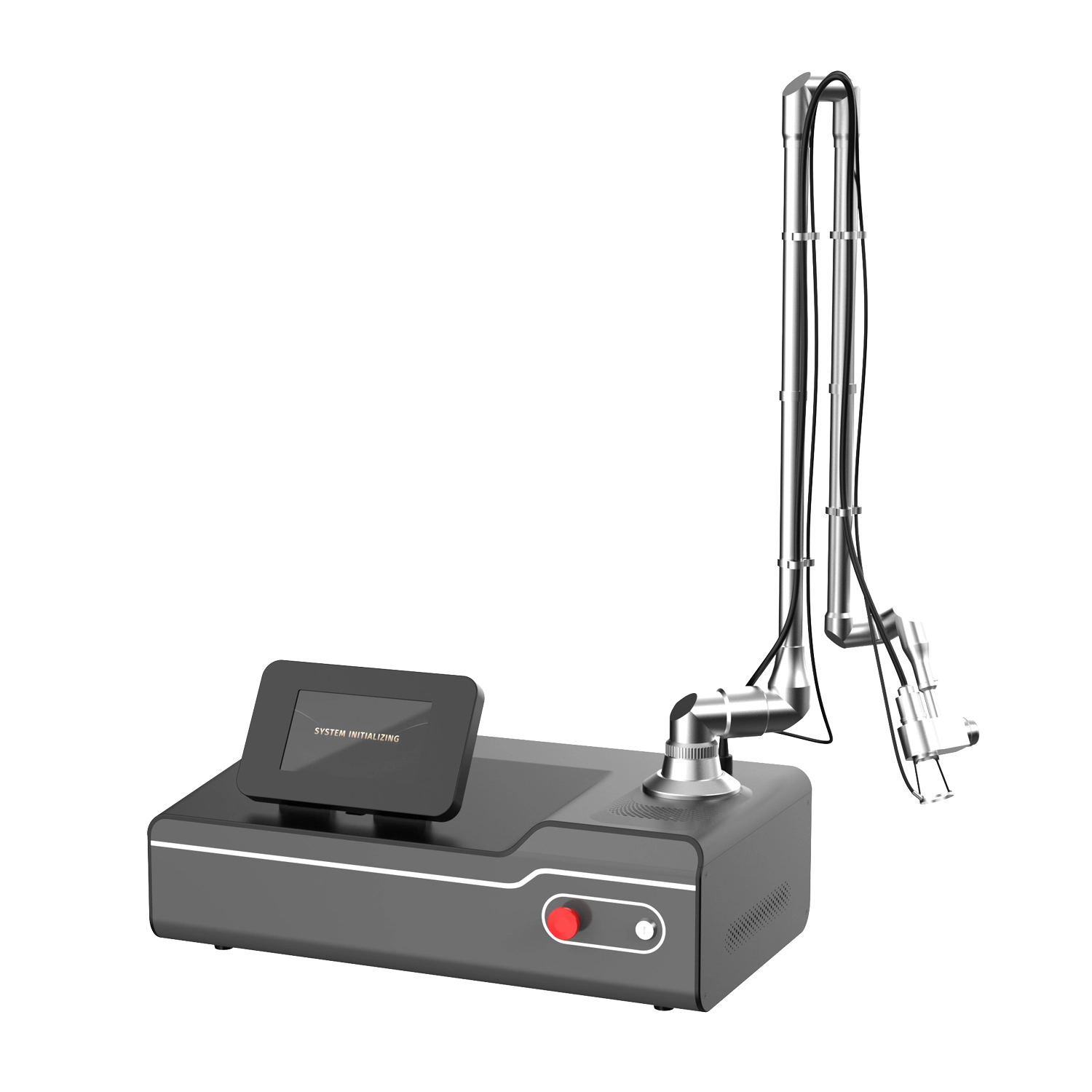
Professional CO2 Fractional Laser Machine for Skin Resurfacing & Scar Treatment
The CO2 Fractional Laser Machine is a professional CO2 fractional laser machine designed for advanced skin resurfacing, scar treatment, and skin rejuvenation procedures.
Using 10,600nm CO2 fractional laser technology, the system delivers controlled microthermal zones into the skin, stimulating collagen remodeling while preserving surrounding tissue. This fractional approach significantly improves treatment safety, recovery time, and clinical outcomes.
The CO2 fractional laser machine is widely used in dermatology clinics and medical aesthetic centers for treating acne scars, wrinkles, enlarged pores, stretch marks, and various skin texture concerns.
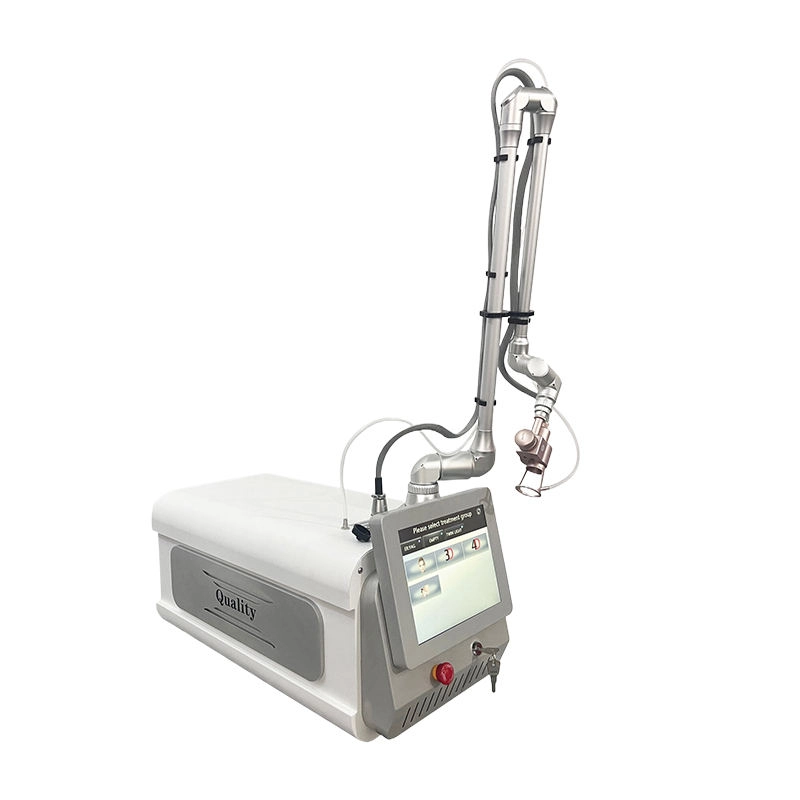
Professional CO2 Fractional Laser Machine | Fractional & Vaginal Rejuvenation CO2 Laser System
The CO2 fractional laser machine is a professional medical-grade device designed for deep skin resurfacing, wrinkle reduction, scar repair, and vaginal rejuvenation. Using a 10600 nm fractional CO2 laser beam, it creates micro-thermal columns on the skin to stimulate collagen regeneration and accelerate skin healing.
This CO2 fractional laser machine provides multiple treatment modes, including fractional mode, surgical cutting mode, and optional vaginal tightening mode, making it ideal for dermatology clinics and professional beauty centers seeking advanced laser solutions.
Its high precision, adjustable spot size, stable energy output, and seven-joint articulated arm ensure safe, accurate, and effective treatment results with minimal downtime.
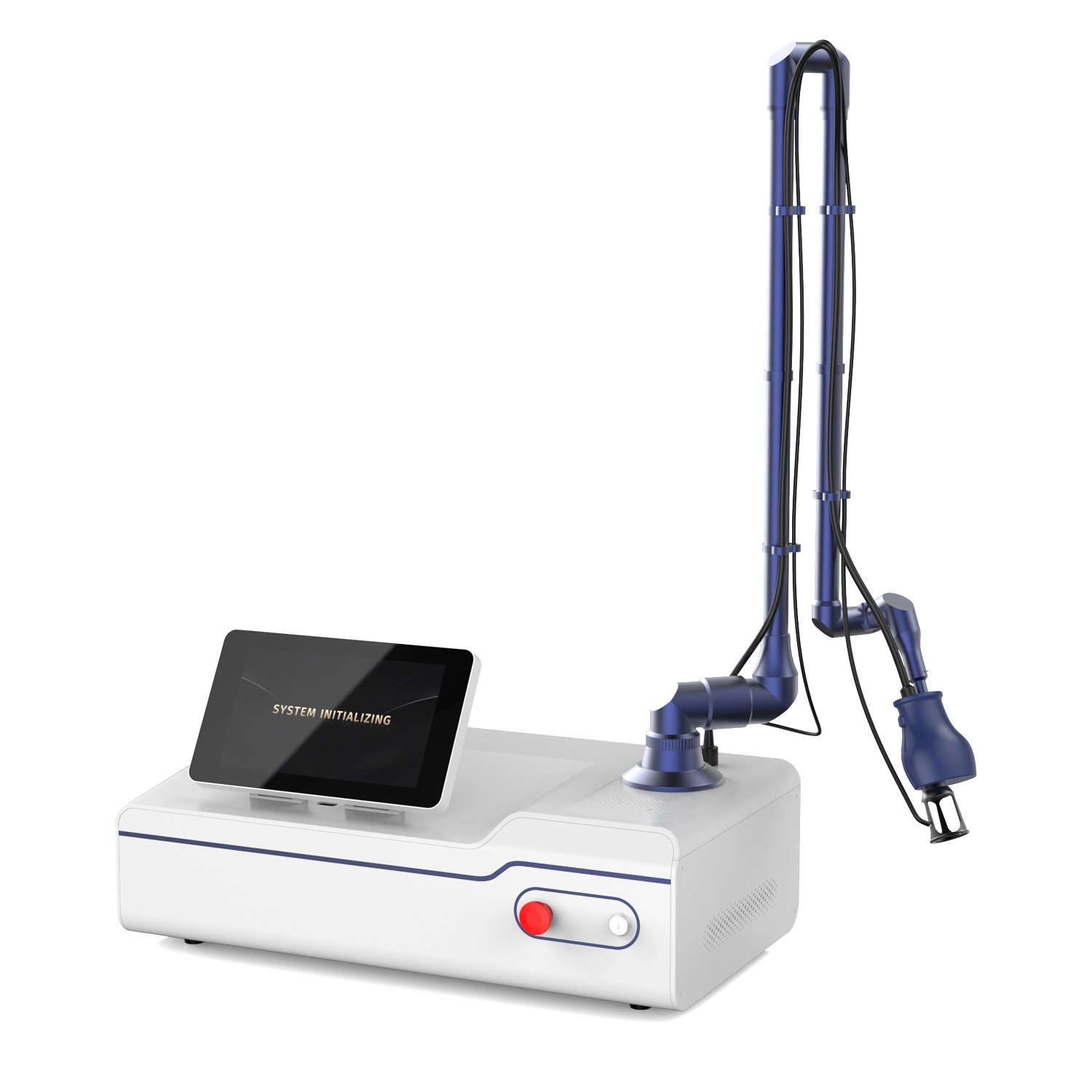
CO2 Fractional Laser Machine | Intimate Vaginal Rejuvenation System
This **CO2 Fractional Laser Machine** utilizes advanced 10600nm CO2 fractional laser technology to create controlled micro-thermal zones on the vaginal mucosa and intimate skin layers. These micro-columns stimulate collagen regeneration and tissue remodeling, effectively improving vaginal tightness, elasticity, and overall intimate health.
Designed specifically for professional medical aesthetic and intimate wellness applications, this CO2 fractional laser machine features intelligent parameter control and high-precision energy output to ensure safe, comfortable, and consistent treatment results. It is an ideal core device for vaginal rejuvenation, postpartum recovery, and intimate anti-aging treatments.
Get more information
If you have any comments or good suggestions, please leave us a message; later our professional staff will contact you as soon as possible.
Let's Talk
Stay in touch with us for cutting-edge beauty solutions, professional guidance, and customized service.
Contact


Room 307, Building A, Huilong International E-commerce Industrial Park, No. 10 Xipengling Road, Helong Street, Baiyun District, Guangzhou, China
© 2025 HUIMAIN. All Rights Reserved. Privacy Policy | Terms and Conditions | Sitemap
Facebook
Instagram
Medical beauty equipment factory
huimain Medical beauty equipment factory
beauty machine supplier
Whatsapp: +8619124004543