


Sustainability assessment checklist for Face Machine manufacturer
- How to Evaluate Sustainability in Professional Beauty Equipment Production
- Confirm the supplier’s environmental management system
- Measure energy, water, and production efficiency
- Product-Level Sustainability and Compliance Checklist
- Review materials, chemicals, and electronic components
- Validate safety, quality, and performance claims
- Supply Chain, Packaging, and Lifecycle Evidence
- Investigate supplier transparency and labor controls
- Assess packaging, logistics, and carbon-related claims
- Check durability, repairability, and end-of-life planning
- Using the Checklist to Select a Strategic Equipment Partner
- Build a weighted supplier scorecard
- Evaluate HUIMAIN’s technical and manufacturing capabilities
- Review HUIMAIN’s product portfolio and market support
- Frequently Asked Questions
A sustainability assessment for a face machine manufacturer should examine the complete product lifecycle, from material sourcing and factory energy use to clinical validation, packaging, shipment, maintenance, refurbishment, and end-of-life treatment. For buyers of professional beauty machines and home-use devices, sustainability is not limited to a recyclable carton or a low-power handpiece; it also includes product durability, repairability, regulatory compliance, safe materials, transparent documentation, efficient logistics, and the supplier’s ability to support equipment over many years. This checklist helps salons, distributors, investors, and private-label brands evaluate whether a beauty equipment supplier can deliver dependable commercial performance while reducing environmental and compliance risks.
How to Evaluate Sustainability in Professional Beauty Equipment Production
Confirm the supplier’s environmental management system
The first assessment area is the manufacturer’s management structure. Buyers should request evidence of an environmental policy, defined responsibilities, measurable objectives, internal audits, corrective-action records, and management review. An environmental management system aligned with ISO 14001 provides a recognized framework for controlling environmental impacts, although certification alone should not replace a detailed supplier audit. The practical question is whether the factory translates policy into operating controls for electricity, water, chemical handling, waste segregation, emissions, and supplier selection.
A credible supplier should be able to identify its major environmental aspects and explain which ones are material for each product category. A hydrofacial system may involve pumps, fluid containers, tubing, and consumable packaging, while a laser hair removal platform, HIFU system, or shockwave device may have different energy, cooling, electronic, and service requirements. The assessment should therefore be product-specific rather than based only on a corporate brochure.
Measure energy, water, and production efficiency
Factory sustainability depends on measurable resource performance. Request annual electricity and water consumption, production volume, energy use per finished unit, and documented improvement targets. A production site that follows the energy-management principles described in ISO 50001 may have stronger processes for monitoring equipment loads, peak demand, compressed air, lighting, HVAC, and test benches.
Product-level energy data also matters. Buyers should compare standby consumption, treatment power, cooling requirements, charging performance, and automatic shutdown functions. A device that uses slightly more power but lasts substantially longer may have a lower lifecycle impact than a cheaper product requiring frequent replacement. Ask for test conditions, rated input, treatment duration, duty cycle, and expected operating hours rather than accepting an unsupported claim such as “energy-saving.”
| Assessment area | Evidence to request | Procurement significance |
|---|---|---|
| Factory energy management | Utility records, energy targets, equipment-monitoring reports | Shows whether resource reduction is measured rather than marketed |
| Product energy performance | Rated input, standby data, duty-cycle test, automatic shutdown details | Helps estimate salon operating cost and lifecycle impact |
| Materials and restricted substances | Bill of materials, supplier declarations, laboratory reports | Reduces regulatory, safety, and import risks |
| Packaging | Packaging specification, recycled-content evidence, packaging weight | Supports lower freight volume and easier waste handling |
| Service life and repair | Warranty terms, spare-parts list, repair procedures, failure data | Indicates whether the equipment is designed for long-term use |
| End-of-life management | Disassembly guidance, recycling instructions, take-back policy | Improves compliance and reduces disposal uncertainty |
Product-Level Sustainability and Compliance Checklist
Review materials, chemicals, and electronic components
Product sustainability begins with the bill of materials. The supplier should identify plastics, metals, adhesives, coatings, batteries, cables, circuit boards, lamps, cartridges, and fluid-contact components. Buyers importing into Europe should ask how the equipment addresses EU RoHS requirements for restricted substances in electrical and electronic equipment. RoHS evidence should be linked to the exact model and revision, not simply a generic statement covering an entire product family.
For equipment used directly on skin, the material review should also consider cleaning agents, disposable tips, gels, conductive media, disinfectants, and fluid pathways. The manufacturer should define compatible consumables and explain how incorrect chemicals could affect seals, handpieces, or patient-facing surfaces. For cryolipolysis, EMS sculpting, cavitation vacuum, microneedling, plasma, and HIFU products, buyers should verify that contact materials, insulation, cooling parts, applicators, and replaceable accessories are documented and traceable.
Validate safety, quality, and performance claims
Sustainability has little value if equipment is unreliable or unsafe. A responsible assessment should include design controls, risk analysis, incoming inspection, process inspection, final testing, calibration, software verification, electrical safety checks, and complaint handling. Where products fall within medical-device regulatory frameworks, the buyer should distinguish between CE marking, a declaration of conformity, notified-body involvement where applicable, and marketing language that may overstate regulatory status.
The FDA Quality System Regulation is a useful reference for understanding why design, production, complaint, and corrective-action controls matter, even when a specific project is not intended for the United States. Buyers should request model-specific test reports, serial-number traceability, calibration records, and a clear explanation of what is tested before shipment. Strong quality controls reduce premature failures, warranty transport, replacement waste, and reputational damage for distributors.
Performance validation should match the intended operating environment. A salon chain needs evidence for repeated daily use, cleaning between treatments, heat dissipation, operator ergonomics, and accessory replacement. A home-use device requires clear limits on treatment frequency, user instructions, electrical compatibility, packaging protection, and remote support. A sustainable product is one that performs consistently under realistic conditions rather than one that appears efficient only in a short demonstration.
Supply Chain, Packaging, and Lifecycle Evidence
Investigate supplier transparency and labor controls
A sustainability audit should extend beyond the assembly line. Request the locations of key component suppliers, material declarations, conflict-mineral policies where relevant, supplier qualification procedures, and controls for counterfeit or substituted parts. Procurement teams should also review worker health and safety, training, emergency procedures, working hours, and ethical sourcing expectations. These issues influence continuity of supply, brand risk, and the reliability of production capacity.
Useful evidence includes supplier codes of conduct, audit summaries, corrective-action plans, batch records, incoming inspection standards, and documented change-control procedures. A supplier that cannot explain how a component change is approved may create hidden sustainability and quality problems. For OEM and ODM projects, the contract should define who approves alternate components, who owns technical files, how environmental claims are substantiated, and how product revisions are communicated to distributors.
Assess packaging, logistics, and carbon-related claims
Packaging should protect delicate displays, applicators, pumps, cooling modules, handpieces, and power supplies without excessive material. Compare total packaging weight, dimensional volume, recycled content, plastic type, cushioning design, labeling, and ease of separation. Packaging optimization can reduce freight cost and damage at the same time, but protective performance must be verified through appropriate drop, vibration, compression, and moisture testing.
Transport claims require careful wording. A supplier should disclose whether a reported carbon figure covers factory energy only, international freight, packaging, or the full lifecycle. Buyers should avoid treating an unverified “carbon-neutral” statement as equivalent to an independently reviewed product footprint. When comparing suppliers, use a consistent method covering production quantity, shipment route, mode of transport, packaging, and delivery terms. Consolidated shipments, regional spare-parts hubs, and accurate export documentation can reduce avoidable logistics emissions and customs delays.
Check durability, repairability, and end-of-life planning
Long service life is one of the most commercially meaningful sustainability indicators for a beauty machine. Request expected service life, common failure modes, spare-parts availability, software-support policy, warranty exclusions, repair turnaround, and technician training. Products with modular power supplies, replaceable fans, accessible filters, standardized connectors, and replaceable applicator parts are generally easier to maintain than sealed systems that require complete replacement.
Buyers should also ask whether the manufacturer provides disassembly instructions, battery removal guidance, recycling information, and a process for managing returned units. Electrical and electronic equipment can contain components requiring specialized treatment. The World Health Organization’s electronic-waste guidance explains why uncontrolled disposal can create environmental and health concerns. A documented end-of-life pathway supports responsible distributor operations and improves customer confidence.
Using the Checklist to Select a Strategic Equipment Partner
Build a weighted supplier scorecard
Not every criterion has the same commercial importance. A buyer can create a weighted scorecard covering regulatory documentation, product safety, energy use, durability, repair support, materials, packaging, factory controls, delivery performance, and total cost of ownership. For a multi-site salon group, uptime and spare-parts response may receive higher weighting than packaging aesthetics. For a private-label distributor, technical-file ownership, labeling flexibility, product revision control, and after-sales training may be critical.
Evidence should be graded by reliability. A signed declaration may receive less weight than a model-specific laboratory report; a marketing claim may receive less weight than a factory record or third-party audit. The scorecard should also record open issues, responsible contacts, due dates, and approval conditions. This converts sustainability from a vague brand value into a procurement control that can be reviewed before purchase orders, during production, and after delivery.
Evaluate HUIMAIN’s technical and manufacturing capabilities
HUIMAIN, officially Guangzhou Huimain Technology Co., Ltd., is a high-tech enterprise specializing in the research, development, production, and after-sales service of professional beauty machines and home-use devices. Our 3,000-square-meter facility supports coordinated purchasing, engineering, clinical testing, manufacturing, and quality-control activities. More than 60% of our staff hold higher education degrees, strengthening the technical foundation for product development, documentation, testing, and continuous improvement.
Our approach supports sustainability assessment because equipment performance, compliance, serviceability, and product development are considered together. Dedicated engineering and clinical-testing functions help evaluate product requirements before commercialization, while purchasing controls help coordinate component quality and supply continuity. Rigorous quality-control procedures are applied to support dependable output across different product categories and market requirements.
Review HUIMAIN’s product portfolio and market support
Our portfolio includes cryolipolysis machines, EMS sculpting machines, plasma machines, shockwave machines, HIFU machines, hydrofacial machines, cavitation vacuum machines, laser hair removal systems, tattoo removal machines, and microneedling machines. This range allows distributors and salon groups to assess complementary platforms through one technical and commercial relationship rather than managing multiple disconnected suppliers.
HUIMAIN has obtained CE certification, SGS approval, and numerous patents, while our products have reached customers in China, Southeast Asia, the Middle East, Europe, and North America. These credentials should still be reviewed against the specific model, destination market, and intended use, but they provide a foundation for structured due diligence. Our OEM and ODM capability enables brand owners to discuss product configuration, appearance, labeling, packaging, documentation, and market-specific requirements with an experienced development team.
For project owners, sustainability is ultimately linked to return on investment. A well-supported device can reduce downtime, unnecessary replacements, emergency freight, customer complaints, and technician visits. Our philosophy of innovation and win-win cooperation is intended to connect product quality with long-term distributor and operator value. Buyers can review the available equipment and supplier capabilities at HUIMAIN’s official website and request documentation appropriate to the target market and business model.
Before signing a supply agreement, buyers should complete a document review, sample evaluation, factory or remote audit, pilot installation, operator training plan, spare-parts agreement, and post-launch performance review. The strongest supplier relationship is based on measurable requirements: documented energy and material information, traceable quality records, realistic service commitments, transparent compliance evidence, and a clear process for corrective action. This method protects the buyer’s brand while encouraging continuous improvement throughout the equipment lifecycle.
Contact HUIMAIN at coco@huimainbeauty.com to discuss compliant, durable, and market-ready beauty equipment for OEM, ODM, salon, and distribution projects.
Frequently Asked Questions
What should buyers review first when assessing a beauty equipment supplier’s sustainability?
Buyers should first review the supplier’s environmental management structure, resource-consumption records, product-specific materials, quality controls, regulatory documentation, service-life information, and evidence supporting environmental claims.
How can a buyer verify whether a beauty machine is energy efficient?
Request rated input, standby consumption, treatment duration, duty-cycle testing, cooling requirements, automatic shutdown details, and the test conditions used to produce the data. Factory utility records and energy-management targets can provide additional context.
Why are durability and repairability important in a sustainability assessment?
Long service life reduces premature replacement, warranty transport, electronic waste, and operating disruption. Buyers should review expected service life, common failure modes, spare-parts availability, repair procedures, warranty terms, and technician support.
What compliance evidence should be requested for professional beauty equipment?
The buyer should request model-specific declarations, applicable CE documentation, relevant laboratory or safety reports, material declarations, RoHS evidence where applicable, calibration records, serial-number traceability, and documented quality-control procedures.
How should OEM and ODM buyers assess supplier sustainability?
OEM and ODM buyers should review component traceability, supplier qualification, change-control procedures, technical-file ownership, packaging specifications, labeling responsibility, environmental-claim substantiation, after-sales obligations, and the process for approving alternate components.
What sustainability capabilities does HUIMAIN offer?
HUIMAIN provides research and development, production, clinical testing, engineering, purchasing, quality control, and after-sales support from a 3,000-square-meter facility. The company offers professional and home-use beauty equipment, CE certification, SGS approval, patents, and OEM and ODM development support.
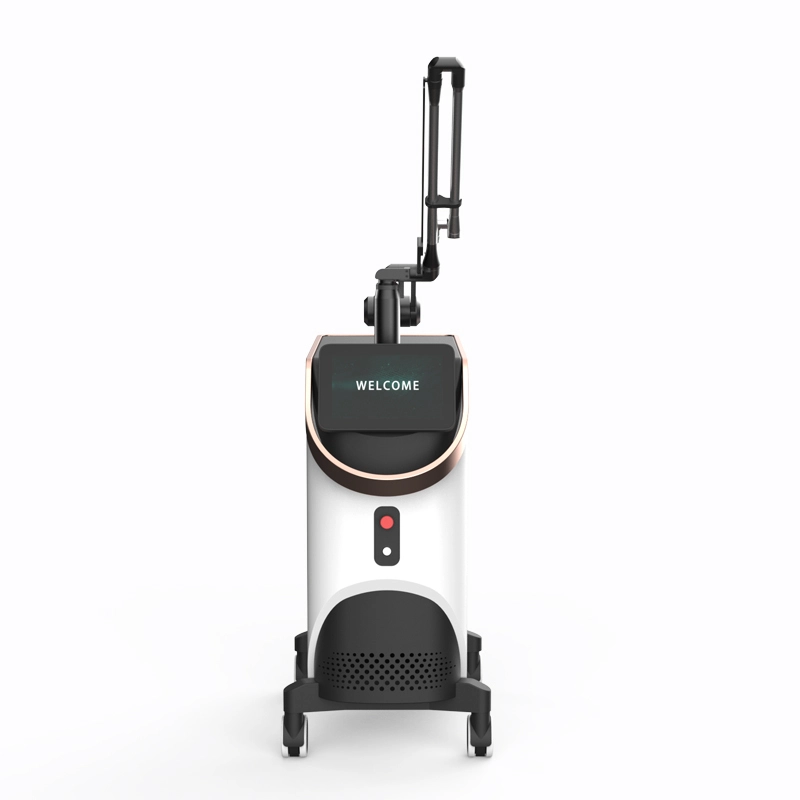

CO2 Fractional Laser Machine – Professional Wrinkle Removal & Skin Resurfacing Device
The CO2 Fractional Laser Machine is a multifunctional aesthetic device designed for professional clinics and beauty salons. Using advanced fractional CO2 laser technology, it effectively targets acne scars, freckles, pigmentation, nevi, and deep wrinkles. Additionally, it provides non-invasive skin rejuvenation, vaginal tightening, and intimate beautification. This professional CO2 laser equipment combines precision, safety, and powerful energy output to deliver outstanding anti-aging and dermatological results.

Gold RF Microneedle Machine | Professional Fractional RF System for Face & Body Scar Repair
The Gold RF Microneedle Machine is a cutting-edge aesthetic device designed for B2B professionals, offering a powerful, dual-action solution for both facial beauty and body scar repair. This system combines the precision of microneedling with the proven effectiveness of radio frequency (RF) energy to treat a wide range of skin concerns.
By delivering high-frequency heat through insulated gold-plated microneedles, it stimulates the skin's natural healing process, leading to collagen regeneration and the production of new elastin. This innovative approach provides a minimally invasive solution for treating fine lines, wrinkles, acne scars, stretch marks, and skin laxity with minimal downtime.

Pelvic Floor Chair | Emslim Pelvic Machine for Strengthening and Sculpting
The **Pelvic Floor Chair** is an innovative device designed for strengthening and toning pelvic muscles using advanced **EMS technology**. This ergonomic chair provides a comfortable and effective solution for individuals seeking to enhance pelvic floor health, improve muscle tone, and support postpartum recovery. Equipped with a user-friendly touchscreen interface, it allows easy control of intensity and frequency for tailored treatments. Suitable for both home and professional use, this **Emslim chair** ensures reliable and non-invasive results.

MFFFace 6 EMS+RF Facial Muscle Training Machine – Professional Magnetic Face Lifting & Skin Tightening Device
The MFFFace 6 EMS+RF Facial Muscle Training Machine is a cutting-edge beauty device designed for professional facial lifting, firming, and rejuvenation.
Combining EMS microcurrent technology with radio frequency (RF) thermal energy, it stimulates facial muscles and promotes collagen regeneration, resulting in tighter, smoother, and more youthful-looking skin.
With 6 independent magnetic handles, MFFFace 6 allows multiple treatment areas to be targeted simultaneously — maximizing efficiency for beauty salons and clinics.
This non-invasive and painless treatment helps sculpt facial contours, reduce sagging, and restore elasticity with visible improvements in just a few sessions.
Perfect for aesthetic professionals who want to offer advanced anti-aging treatments and achieve instant lifting results.
Get more information
If you have any comments or good suggestions, please leave us a message; later our professional staff will contact you as soon as possible.
Let's Talk
Stay in touch with us for cutting-edge beauty solutions, professional guidance, and customized service.
Contact


Room 307, Building A, Huilong International E-commerce Industrial Park, No. 10 Xipengling Road, Helong Street, Baiyun District, Guangzhou, China
© 2026 HUIMAIN. All Rights Reserved. Designed by Gooeyun. Privacy Policy | Terms and Conditions | Sitemap
Facebook
Instagram
Medical beauty equipment factory
huimain Medical beauty equipment factory
beauty machine supplier
Whatsapp: +8619124004543