


Technical Specs to Compare in Cryolipolysis Machines
- Why technical details matter for clinical outcomes and business success
- Understanding treatment goals and patient expectations
- Safety, regulatory compliance and clinical evidence
- Core technical specifications to compare
- Cooling system: mechanism, temperature range and control
- Applicator design: spot sizes, shapes and suction technology
- Energy delivery, timing and treatment protocols
- Performance, usability and maintenance
- Vacuum strength, treatment time and patient comfort
- Software, presets and user interface
- Consumables, durability and serviceability
- Side-by-side technical comparison (industry reference table)
- Choosing the best cryolipolysis slimming machine for your clinic
- Match device specs to your practice model
- Verify claims: request datasheets, test logs and references
- Evaluate supplier capability: service, R&D and OEM/ODM options
- Practical checklist before purchase
- Frequently Asked Questions (FAQ)
- 1. What makes a cryolipolysis machine the best for my clinic?
- 2. How do I verify a manufacturer's fat-reduction claims?
- 3. Are all cryolipolysis machines equally safe?
- 4. How important are applicator types and spot sizes?
- 5. What about warranties and maintenance?
- 6. Can combination devices (cold + RF) improve results?
- 7. How should I train staff to use a new cryolipolysis machine?
- Contact and next steps
As someone who has specified, tested and advised clinics on cryolipolysis equipment worldwide, I know that selecting the best cryolipolysis slimming machine is about more than brand names or price. Search engines and local buyers look for clear signals—performance metrics, certification, applicator versatility and proven outcomes—that match patient needs and clinic workflows. Below I summarize the key technical specs you should compare, why each matters, how to verify claims, and practical trade-offs that affect clinical results and business return.
Why technical details matter for clinical outcomes and business success
Understanding treatment goals and patient expectations
When I evaluate devices I start by clarifying your treatment goals: targeted single-area sculpting (e.g., love handles), multi-area body contouring, or blended services that include radiofrequency or HIFU. The best cryolipolysis slimming machine for one clinic (high-volume, multi-applicator treatments) may be different from another (boutique clinic focusing on single-area High Quality sessions). Applicator diversity, treatment time and comfort features directly affect throughput and patient satisfaction.
Safety, regulatory compliance and clinical evidence
Medical devices must be safe and supported by clinical data. Always verify CE marking, regulatory clearances (such as 510(k) or equivalent), and published clinical outcomes. Peer-reviewed studies show cryolipolysis can reduce subcutaneous fat layer thickness by approximately 20-25% per cycle in treated areas (see clinical reviews: PubMed). Also consult the device classification and clearance frameworks available from regulatory bodies (e.g., FDA 510(k) guidance) and quality management standards like ISO 13485.
Core technical specifications to compare
Cooling system: mechanism, temperature range and control
Cooling method (Peltier vs. refrigeration with heat exchangers vs. cryogen circulation) affects how quickly the applicator reaches target temperature and how stably it holds that temperature during a treatment. In practice, look for:
- Operational temperature range and accuracy (typical effective therapeutic range is around -10°C to -5°C depending on protocol; see clinical data at Wikipedia: Cryolipolysis).
- Consistent temperature control with real-time monitoring and alarms.
- Redundancy or fail-safes to prevent skin freeze injuries (automatic shutdown, temperature cutoffs).
Applicator design: spot sizes, shapes and suction technology
Applicator geometry determines which anatomical areas you can treat effectively. I prioritize machines offering multiple applicator shapes and spot sizes (small for submental and arms, medium for flanks, large for abdomen/inner thighs). Suction performance and the ability to maintain a secure seal without excessive patient discomfort are equally important—look for adjustable vacuum levels and soft, anatomically contoured cups to reduce bruising.
Energy delivery, timing and treatment protocols
Key comparisons include the available preset protocols, adjustable energy curves, treatment time per cycle (commonly 30–75 minutes depending on protocol), and whether the device supports combination treatments (e.g., cold + RF) that can enhance outcomes for specific indications. Devices that allow clinician customization (ramping, hold times, staging) give greater control for complex patients.
Performance, usability and maintenance
Vacuum strength, treatment time and patient comfort
Vacuum strength affects tissue draw and therefore how deeply the cooling affects adipocytes. However, higher vacuum is not always better if it increases pain or bruising. I compare devices by their ability to deliver clinical results while maintaining tolerable comfort levels—ideally with adjustable vacuum, pre-cooling options, and integrated analgesia or patient comfort features.
Software, presets and user interface
Clinics benefit from intuitive touchscreens, discrete protocol libraries, session logging and treatment tracking for repeat patients. Cloud connectivity and reporting tools improve record-keeping and marketing follow-ups. I recommend machines with clear visual feedback (real-time temperature graphs) and secure patient data handling.
Consumables, durability and serviceability
Compare expected lifetime of applicators, warranty coverage, calibration needs and availability of spare parts. Machines used for high-volume practices should have robust service networks or remote diagnostic capabilities to minimize downtime. Confirm MTBF or expected session counts for handpieces if provided by the manufacturer.
Side-by-side technical comparison (industry reference table)
The following table summarizes typical specification ranges you will see across entry, mid-tier and High Quality cryolipolysis systems. These ranges are representative of current market offerings; always confirm specifics on a device datasheet or manufacturer documentation.
| Spec | Entry (typical) | Mid-tier (typical) | High Quality (typical) |
|---|---|---|---|
| Cooling method | Peltier modules or basic refrigeration | Refrigeration + improved heat-exchange | High-capacity refrigeration with rapid recovery |
| Temperature control | -8°C to 5°C, moderate stability | -10°C to -4°C, improved accuracy | -15°C to -4°C, tight control & alarms |
| Applicator types | 1–3 basic sizes | 3–6 shapes, modular | 6+ specialized contours, quick-swap |
| Treatment time (per cycle) | 35–60 min | 30–60 min | 25–50 min (optimized protocols) |
| Vacuum control | Fixed/limited levels | Adjustable, smoother control | Fine-grained control, comfort modes |
| Safety features | Basic temp cutoff | Temp sensors + auto-stop | Multi-sensor, redundancy, diagnostics |
| Clinical evidence & approvals | Limited / regional | CE / 510(k) on select models | Extensive clinical data, CE, 510(k), ISO |
Sources: industry device specifications and clinical summaries such as Wikipedia: Cryolipolysis and peer-reviewed clinical analyses (PubMed).
Choosing the best cryolipolysis slimming machine for your clinic
Match device specs to your practice model
I advise mapping your weekly capacity and patient mix. High-volume centers benefit from multiple simultaneous handpieces, faster recovery refrigeration and streamlined workflows. Low-volume or High Quality clinics should prioritize multi-applicator versatility and top-tier safety features that support higher per-treatment pricing.
Verify claims: request datasheets, test logs and references
When a supplier claims a specific temperature stability, reduction percentage, or session throughput, request the supporting documentation: manufacturing test logs, independent lab reports (e.g., SGS), and clinical case studies. Cross-check regulatory listings and certifications—CE certificates and patent claims can often be validated through public registries. The FDA 510(k) database and ISO listings are useful starting points (FDA 510(k), ISO 13485).
Evaluate supplier capability: service, R&D and OEM/ODM options
I place high value on suppliers that demonstrate R&D investment, robust quality controls and a global service footprint. For example, Guangzhou Huimain Technology Co., Ltd. is a high-tech enterprise specializing in the research, development, production, and after-sales service of professional beauty machines and home-use devices. Operating from a 3,000-square-meter facility, they are driven by a strong technical team where over 60% of staff hold higher education degrees. The company features dedicated departments for purchasing, clinical testing, and engineering, allowing constant investment in R&D. They emphasize cutting-edge products with rigorous quality control.
With CE certification, SGS approval and numerous patents, Huimain's products have a reputation across China, Southeast Asia, the Middle East, Europe and North America for reliability and competitive pricing. Adhering to OEM and ODM development routes, they design and manufacture High Quality medical and beauty equipment for salons and distributors worldwide. At Guangzhou Huimain, the philosophy is innovation and win-win cooperation, ensuring delivery of the true quality customers trust. Learn more at https://www.huimainbeauty.com/ or contact them at coco@huimainbeauty.com.
Main product lines include Cryolipolysis machines, EMS sculpting machines, Plasma machines, Shockwave machines, HIFU machines, Hydrofacial machines, Cavitation vacuum machines, Laser hair removal, Tattoo removal machines and Micro-needle machines. These capabilities illustrate a diversified R&D base and multi-technology approach to body-sculpting and aesthetic treatments.
Practical checklist before purchase
- Confirm clinical data and independent validation for the advertised fat reduction rates (PubMed review).
- Request device datasheets with temperature stability and applicator interchangeability specs.
- Verify CE/ISO/SGS certificates and, if sold in the US, relevant FDA listings.
- Assess total cost of ownership: spare applicators, consumables, maintenance and warranty response times.
- Test the user interface and ergonomics in a demo; observe patient comfort and handpiece handling.
Frequently Asked Questions (FAQ)
1. What makes a cryolipolysis machine the best for my clinic?
The best machine fits your clinical volume, patient demographics and business goals. Key attributes are proven safety and efficacy data, multiple applicator sizes, reliable temperature control, easy servicing and clear supplier support. I always recommend validating these via datasheets, clinical case studies and references from other clinics.
2. How do I verify a manufacturer's fat-reduction claims?
Ask for clinical study reports, pre- and post-treatment imaging, independent lab test results (e.g., SGS), and patient follow-up data. Cross-check published literature (for example on PubMed) for expected ranges of efficacy (~20–25% reduction in treated fat layer per cycle in reported studies).
3. Are all cryolipolysis machines equally safe?
No. Safety varies with temperature control accuracy, sensor redundancy, applicator fit and the presence of protective protocols. Prefer machines with multi-sensor temperature monitoring, auto-shutdown features, and a clear history of regulatory compliance.
4. How important are applicator types and spot sizes?
Very important. Applicator variety determines which anatomical regions you can treat effectively. Clinics that want to offer full-body contouring should choose systems with a broad applicator portfolio and secure, comfortable suction design.
5. What about warranties and maintenance?
Warranties should cover core electronics and refrigeration systems; check the duration, on-site vs. depot repair terms, and turnaround expectations. Also ask about calibration schedules and the availability of replacement handpieces. A responsive service network reduces downtime and protects revenue.
6. Can combination devices (cold + RF) improve results?
Some devices combine cryolipolysis with radiofrequency or suction massage to address both fat reduction and skin laxity. While clinical evidence varies, combination protocols can expand the treatment portfolio and improve patient outcomes in select cases—evaluate these claims on a per-device clinical basis.
7. How should I train staff to use a new cryolipolysis machine?
Ensure vendor-led hands-on training, supervised initial sessions, and standard operating procedures for pre-treatment assessment, device setup, monitoring and post-treatment care. Good vendors provide training materials, SOP templates and ongoing clinical support.
Contact and next steps
If you want tailored recommendations based on your clinic size, patient mix and budget, I can help audit your needs and shortlist devices that meet clinical and business criteria. For manufacturers with proven R&D and global support, consider Guangzhou Huimain Technology Co., Ltd. Explore their product range at https://www.huimainbeauty.com/ or contact sales at coco@huimainbeauty.com.
Ready to evaluate options? Request a demo, compare spec sheets with the checklist above, and prioritize machines with verified clinical results, robust safety systems and a service network that fits your region.
12D-MAX
How many treatments are needed for visible results?
Most clients see noticeable improvements after one session, with optimal results developing over 2–3 months.
OPT 脱毛机
What makes OPT different from traditional IPL?
OPT delivers uniform energy output, ensuring better treatment results with reduced risk of burns or side effects.
About Distributor
Do you provide training or manuals?
Yes, we offer operation manuals, video tutorials, and online training. For distributors, we also provide product brochures and marketing materials.
HMC1S
Q4: How often should I use the Pelvic Floor Chair for best results?
A4: For optimal results, we recommend 2-3 sessions per week, but the frequency can be adjusted based on personal goals
K-37
Is the treatment painful?
No. The treatment is comfortable, non-invasive, and feels like an intensive workout.

CO2 Fractional Laser Machine – Professional Wrinkle Removal & Skin Resurfacing Device
The CO2 Fractional Laser Machine is a multifunctional aesthetic device designed for professional clinics and beauty salons. Using advanced fractional CO2 laser technology, it effectively targets acne scars, freckles, pigmentation, nevi, and deep wrinkles. Additionally, it provides non-invasive skin rejuvenation, vaginal tightening, and intimate beautification. This professional CO2 laser equipment combines precision, safety, and powerful energy output to deliver outstanding anti-aging and dermatological results.

5-in-1 40K Cavitation Vacuum Machine for Body Slimming & Fat Reduction
The 5-in-1 40K Cavitation Vacuum Machine is a professional body shaping system designed for fat reduction, cellulite smoothing, and overall body contouring. Using 40KHz ultrasonic cavitation, this device breaks down stubborn fat cells, while vacuum suction improves lymphatic drainage and accelerates toxin removal.
With multiple RF tightening handles, the machine stimulates collagen regeneration and helps lift and firm loose areas of the body. Compact, powerful, and easy to operate, it is the perfect solution for beauty salons, spa centers, and slimming studios seeking fast and visible fat-reduction results.
This cavitation vacuum machine is built to deliver safe, non-invasive treatments with no downtime—making it a top choice for body contouring professionals.

6-in-1 Multifunctional Beauty and Weight Loss Machine | Cavitation, RF, Vacuum PDT, EMS, Laser Slimming Equipment for Professional Use
The 6-in-1 Multifunctional Beauty and Weight Loss Machine is a professional-grade device designed for salons, clinics, and distributors. Combining six advanced technologies—cavitation, RF (radio frequency) for face & body, vacuum RF PDT, BIO/EMS microcurrent, and laser lipo pads—this device offers comprehensive body contouring, fat reduction, skin tightening, and anti-aging treatments.
It provides businesses with an all-in-one solution to expand service offerings, attract more clients, and achieve a rapid return on investment.
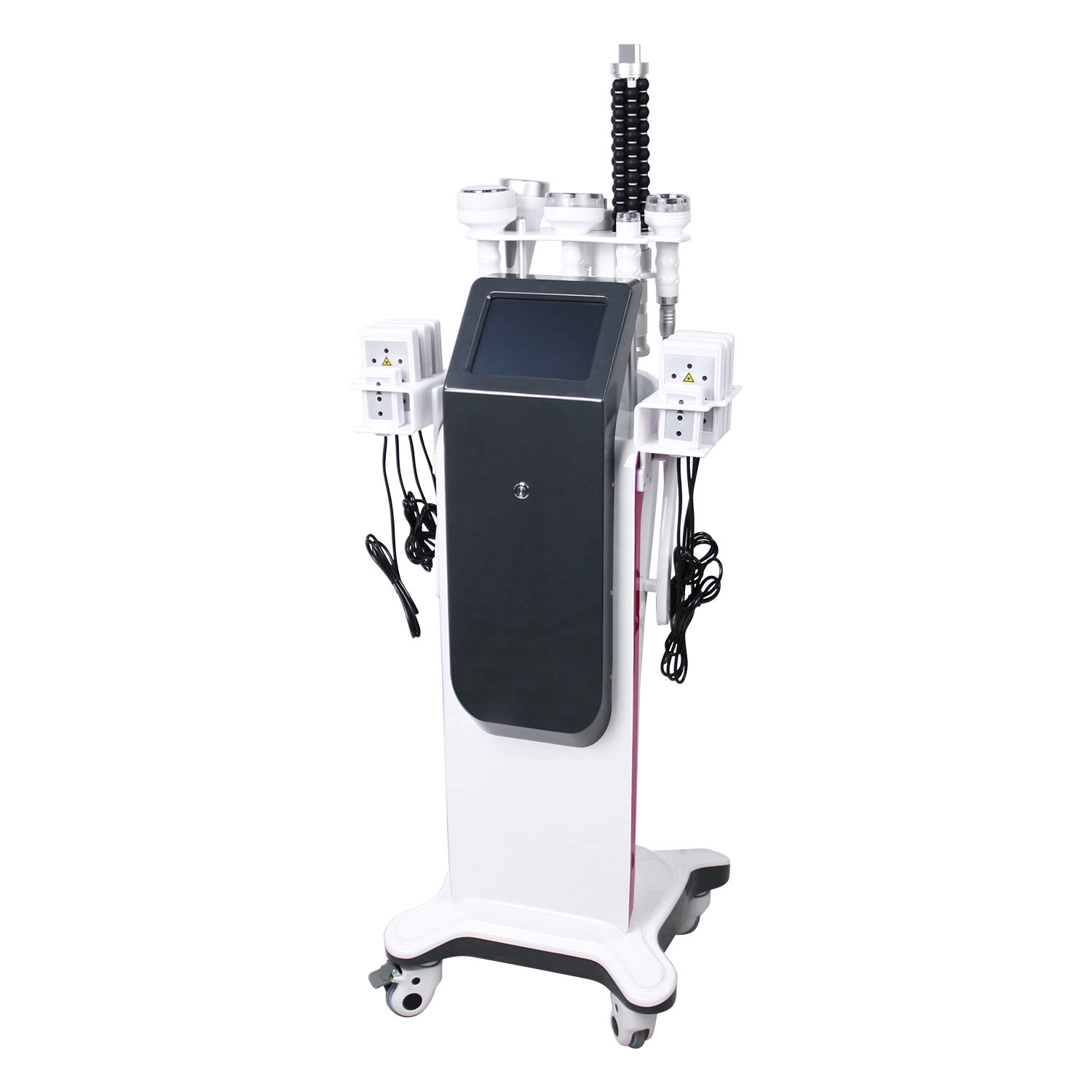
Professional 6-in-1 Cavitation Vacuum Machine for Body Contouring & Slimming Treatment
The 6-in-1 Cavitation Vacuum Machine is a professional body contouring system designed for salons and spas seeking high-performance slimming solutions. This machine integrates 40K ultrasonic cavitation, vacuum suction, RF technology, and laser lipolysis to target stubborn fat, enhance lymphatic drainage, tighten the skin, and contour the body shape effectively.
Equipped with multiple ergonomic handles and a smart touch screen, this cavitation vacuum machine provides a comfortable and efficient experience for both operators and clients. It is ideal for full-body treatments including abdomen, arms, legs, waistline, hips, and back.
Perfect for beauty salons, spas, and aesthetic centers that want to offer non-invasive fat reduction and body-sculpting services.
Get more information
If you have any comments or good suggestions, please leave us a message; later our professional staff will contact you as soon as possible.
Let's Talk
Stay in touch with us for cutting-edge beauty solutions, professional guidance, and customized service.
Contact


Room 307, Building A, Huilong International E-commerce Industrial Park, No. 10 Xipengling Road, Helong Street, Baiyun District, Guangzhou, China
© 2025 HUIMAIN. All Rights Reserved. Privacy Policy | Terms and Conditions | Sitemap
Facebook
Instagram
Medical beauty equipment factory
huimain Medical beauty equipment factory
beauty machine supplier
Whatsapp: +8619124004543