


The Real Cost of Ownership: Diode Laser Hair Removal Machine Price vs. Maintenance Fees in 2026
- What Determines the True Diode Laser Hair Removal Machine Price?
- Key Takeaways: Understanding Total Cost of Ownership (TCO)
- Upfront Costs: Factory Sticker Price vs. Real Investment
- The Hidden Maintenance Fees You Cannot Ignore
- Common Mistakes When Buying a Diode Laser (Expert Tips)
- How 2026 Technology Impacts Maintenance Costs
- Conclusion
- How much does a professional diode laser machine cost?
- How often do I need to replace the diode laser handpiece?
- Are monthly maintenance contracts worth the price?
- What is the most expensive maintenance part on a diode laser?
- How does spot size affect the machine's price?
- Can I buy a cheap diode laser from overseas to save money?
- How much should a clinic budget annually for laser maintenance?
- Does AI technology reduce diode laser maintenance costs?
Investing in a professional laser hair removal machine is a significant financial decision that dictates the future success of your aesthetic clinic. The global medical spa market is expanding at an unprecedented rate, and clients are constantly demanding faster, more comfortable, and highly effective treatments. For medspa owners, offering top-tier services is no longer optional—it is a baseline requirement to remain competitive. However, navigating the complex landscape of aesthetic device procurement can be daunting. While the initial sticker price might capture your immediate attention, calculating the total cost of ownership aesthetic lasers require over a 5 to 10-year lifespan is the only accurate way to ensure long-term profitability.
In 2026, advancing smart technologies, changing FDA regulations, and shifting patient expectations mean that smart buyers must look far beyond the initial purchase. This comprehensive guide meticulously breaks down the real cost of owning a diode laser, comparing upfront prices with the hidden maintenance fees that can either make or break your bottom line.
What Determines the True Diode Laser Hair Removal Machine Price?
The true diode laser hair removal machine price is determined by combining the initial upfront capital investment—typically ranging from $10,000 to over $50,000—with the ongoing, long-term maintenance fees required to keep the device operating safely and efficiently.
When evaluating a new machine for your aesthetic practice, you must look at the complete financial picture over a multi-year horizon. The upfront cost is heavily influenced by the manufacturer's brand reputation, the quality of the internal laser source, and the overall power output of the machine. However, as reported by the American Med Spa Association, high-quality medical aesthetic technology can cost a premium, making it critical to factor in return on investment, efficacy, and service records rather than just focusing on the initial price tag. A machine that costs slightly more upfront but features a superior build quality will often save you thousands of dollars in emergency repairs over its lifetime.
To accurately assess the actual price of your investment, consider these key components:
- Initial Capital Investment: The raw cost of purchasing the hardware, including proprietary software licenses, user interfaces, and base handpieces.
- Operating Consumables: Daily and monthly clinical supplies needed to run the treatments safely, such as ultrasound gel and sanitation wipes.
- Preventative Maintenance: Routine, scheduled servicing of the cooling systems and internal electronics to prevent catastrophic failure and ensure legal compliance.
- Replacement Parts: The eventual, inevitable replacement of degrading hardware components like the internal laser bar stack and water filters.
Key Takeaways: Understanding Total Cost of Ownership (TCO)
Total Cost of Ownership (TCO) is the comprehensive financial estimate of a machine's direct and indirect costs over its entire lifespan, revealing that the initial factory sticker price generally accounts for only about 60% of your total aesthetic investment.
Understanding your TCO is the ultimate key to unlocking a strong professional laser hair removal ROI. When clinic owners ignore the long-term operational costs, they often find their profit margins consumed by unexpected repairs, part replacements, and extended downtime. According to the Mayo Clinic, laser hair removal targets the pigment in hair follicles, requiring precise, multiple sessions spaced weeks apart and periodic maintenance treatments to ensure long-term efficacy. If your machine is suddenly out of service due to poor maintenance, strict patient treatment schedules are severely disrupted, leading to canceled appointments, frustrated clients, and permanently lost revenue. Calculating TCO ensures you set your treatment prices accurately to cover these hidden operational costs.
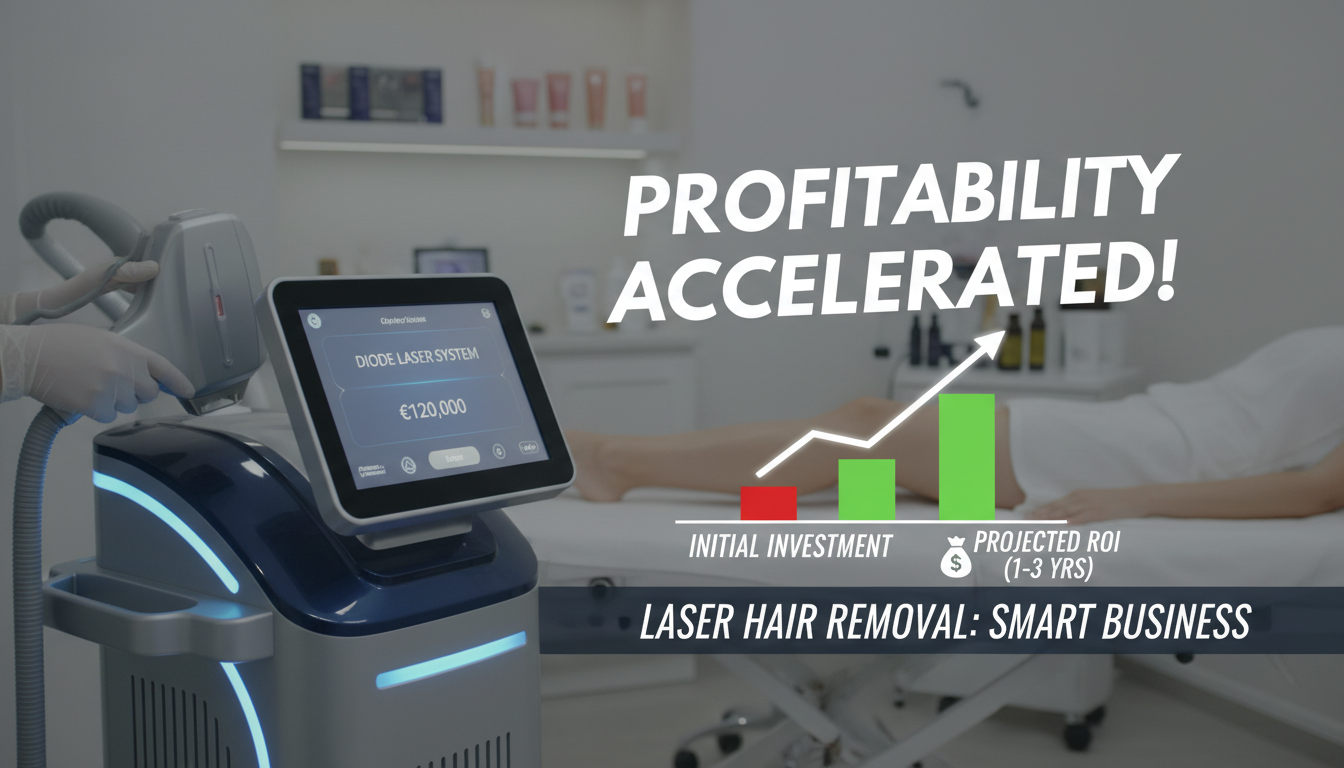
Keep these essential takeaways in mind when planning your budget:
- Sticker Price is Just the Beginning: Expect to spend an additional 40% of the initial purchase price on maintenance and servicing over the machine's operational life.
- Handpiece Lifespans Matter: The longevity of your laser handpiece and its maximum rated shot count heavily dictate your operational costs and replacement frequency.
- Cooling Systems are Critical: Routine maintenance on Thermo-Electric Cooling (TEC) systems prevents the most expensive hardware failures, such as burned-out diodes.
- Downtime is Expensive: Indirect costs, such as the revenue lost when a machine is broken, must be heavily factored into your comprehensive TCO calculations.
Upfront Costs: Factory Sticker Price vs. Real Investment
The real upfront investment for a diode laser encompasses the base machine price, international shipping logistics, import taxes, medical compliance certifications, and installation fees, meaning the final bill will always exceed the manufacturer's base factory sticker price.
Clinic owners must strategically budget for these immediate, unavoidable costs. Entry-level portable units may seem incredibly affordable at first glance, but high-end vertical clinic stations equipped with robust internal cooling, larger spot sizes, and high power output will naturally demand a significantly larger capital outlay. To manage these substantial expenses without draining critical cash reserves, many business owners turn to medspa laser machine financing, which allows for manageable monthly payments while the machine immediately generates patient revenue. Financing often includes tax benefits and preserves working capital for marketing and staff expansion.
When calculating your initial real investment, ensure you meticulously account for:
- Base Machine Costs: The significant price difference between standard portable units and premium high-wattage vertical clinic stations designed for continuous, high-volume use.
- Hidden Logistics: The added cost of international freight shipping, customs duties, insurance during transit, and professional white-glove delivery and installation at your clinic.
- Compliance Premiums: The financial premium associated with FDA clearance and CE medical certifications, which guarantee patient safety, clinical efficacy, and legal operation within your jurisdiction.
- Training and Certification: The mandatory cost of initial staff training and ongoing clinical education to ensure safe, effective, and consistent patient outcomes.
The Hidden Maintenance Fees You Cannot Ignore
Hidden maintenance fees represent the ongoing operational expenses required to keep your laser functioning safely over a decade, primarily consisting of inevitable handpiece replacements, routine consumable restocking, and annual specialized technician service contracts required by warranty terms.
Ignoring these baseline expenses is a fast track to severe financial trouble. Regular diode laser maintenance fees are not optional; they are a necessary, legally required part of operating a Class II medical device. The American Society of Plastic Surgeons notes that because lasers rely on highly concentrated light to penetrate follicles, careful maintenance of both the treatment schedule and the equipment is necessary to provide significant, safe hair reduction. Without routine calibration and internal component checks, your laser may underperform, yield poor clinical results, or, worse, cause severe patient burns and permanent scarring.
Be prepared to budget for the following long-term operational costs:
- Handpiece and Laser Bar Replacement: Budgeting thousands of dollars for necessary replacements once your handpiece reaches its strict 20 to 40 million shot count limit.
- Routine Consumables: The monthly, unavoidable costs of replacing deionized water filters, buying disposable protective patient eyewear, and stocking conductive cooling gels.
- Service Contracts: Evaluating the necessity of paying for annual technician visits, preventative calibration, software updates, and extended warranty protections.
- Emergency Repairs: Setting aside a dedicated emergency fund for unexpected hardware failures, such as motherboard glitches, touchscreen breakages, or power supply blowouts.
Common Mistakes When Buying a Diode Laser (Expert Tips)
The most common mistake when purchasing a diode laser is selecting a machine based solely on an artificially low upfront price, while entirely ignoring the costly reality of zero after-sales support, expensive replacement parts, and poor device warranties.
Many first-time clinic buyers fall into the dangerous trap of purchasing heavily discounted equipment from overseas suppliers who completely vanish after the initial sale is finalized. While the initial 808nm diode laser equipment cost might look like an incredible steal, the total lack of local technician support means that a relatively minor mechanical breakdown can result in weeks—or even months—of clinic downtime. This operational downtime actively destroys your profit margins, angers your scheduled patients, and heavily damages your clinic's local reputation.
To vigorously protect your financial investment, avoid these critical purchasing errors:
- Falling for Artificial Prices: Do not trust direct-from-factory prices that conveniently omit warranties or promise unrealistic lifetime lifespans without providing reliable, legally binding after-sales support.
- Ignoring Cooling Maintenance: Failing to regularly change deionized water filters or ignoring the TEC cooling system will inevitably lead to completely burned-out laser modules.
- Underestimating Clinic Downtime: Forgetting to calculate the true financial and reputational impact of lost patient appointments caused by delayed spare parts shipping from overseas.
- Skipping FDA Clearance: Purchasing non-compliant, uncertified machines that open your medical spa up to severe legal liabilities, insurance cancellations, and patient lawsuits.
How 2026 Technology Impacts Maintenance Costs
In 2026, advanced technology drastically reduces maintenance costs by integrating AI predictive diagnostics, utilizing extended-lifespan premium laser bars, and deploying smart cooling algorithms that proactively minimize internal component wear and tear before catastrophic failures occur.
The landscape of aesthetic technology has profoundly evolved over the last few years. Modern diode lasers are no longer just basic light-emitting tools; they are highly sophisticated, internet-connected computers. The deep integration of Artificial Intelligence means that the machine can actively self-monitor its water flow, ambient temperature, and electrical output in real time. This proactive, data-driven approach effectively prevents the cascade of hardware failures that typically plague older, less intelligent models, ultimately lowering your lifetime maintenance burden and increasing your overall clinical efficiency.
Here is exactly how 2026 technical innovations are actively saving modern clinics money:
- AI Predictive Maintenance: Intelligent diagnostic software constantly analyzes system health, flagging failing parts and alerting operators to minor issues before they cause a complete, catastrophic system shutdown.
- Extended Lifespan Laser Bars: A widespread industry shift toward premium, USA-manufactured Coherent laser bars that drastically delay the need for expensive handpiece replacements, effectively doubling the standard shot count limit.
- Smart Cooling Algorithms: Continuous software updates that dynamically optimize water flow and Thermo-Electric Cooling (TEC) based on real-time room temperature, significantly reducing mechanical wear and tear on internal pumps and radiators.
- Remote Troubleshooting: Wi-Fi enabled devices allow manufacturer technicians to log in remotely, diagnosing software glitches and recalibrating the machine without requiring a costly in-person service visit.
Conclusion
Ultimately, meticulously balancing the initial diode laser hair removal machine price with all anticipated long-term maintenance fees is the only reliable way to accurately calculate your true return on investment and ensure your clinic's long-term profitability. By carefully evaluating both the upfront sticker price and the hidden, ongoing costs of clinical consumables, handpiece replacements, and annual service contracts, you can make a financially sound, future-proof business decision. Always insist on requesting a complete, highly detailed Total Cost of Ownership (TCO) projection from your equipment manufacturer before signing any binding purchase agreement. Taking these proactive steps will protect your clinic from unexpected expenses and guarantee that your new aesthetic device remains a powerful revenue generator for years to come.
Contact us today for a personalized quote and a transparent TCO analysis tailored to your aesthetic clinic's needs.
How much does a professional diode laser machine cost?
Professional diode laser machines generally cost between $10,000 for high-quality entry-level models to over $50,000 for advanced medical-grade systems with smart features.
How often do I need to replace the diode laser handpiece?
Most professional diode handpieces are rated for 20 million to 40 million shots. Depending on patient volume, this usually requires a replacement every 1 to 3 years.
Are monthly maintenance contracts worth the price?
Yes, maintenance contracts often cover routine filter changes, calibration, and emergency repairs, ultimately preventing unexpected, high-cost hardware failures.
What is the most expensive maintenance part on a diode laser?
The laser bar stack inside the handpiece is the most expensive component to replace, often costing several thousand dollars.
How does spot size affect the machine's price?
Machines with larger spot sizes require higher energy output and more robust cooling systems, which increases both the upfront manufacturing cost and the final price.
Can I buy a cheap diode laser from overseas to save money?
While the upfront cost is lower, cheap overseas models often lack local technical support, FDA clearance, and durability, resulting in a much higher Total Cost of Ownership.
How much should a clinic budget annually for laser maintenance?
A safe estimate is to budget approximately 10% to 15% of the machine's original purchase price annually to cover consumables, preventative maintenance, and minor repairs.
Does AI technology reduce diode laser maintenance costs?
Yes, modern 2026 models with AI diagnostics can optimize internal cooling and alert operators to minor issues before they turn into costly permanent damage.
L10先锋点阵
What is a CO2 fractional laser machine?
A CO2 fractional laser machine uses 10,600nm laser energy to create microthermal zones for skin resurfacing and collagen regeneration.
Can beauty salons use a CO2 fractional laser machine?
Usage depends on local regulations. It is commonly used in dermatology clinics and medical aesthetic centers.
808 single handle standing
What skin types can use this machine?
It is safe for all Fitzpatrick skin types I–VI, including dark and sensitive skin.
JHF-51
Are treatment parameters adjustable for different clients?
Yes, energy intensity, depth and treatment modes are fully adjustable to meet individual client needs.
JHF-61
What cartridges or depths are available?
Face, body, and vaginal HIFU cartridges with multiple optional depths for customized treatment

CO2 Fractional Laser Machine – Professional Wrinkle Removal & Skin Resurfacing Device
The CO2 Fractional Laser Machine is a multifunctional aesthetic device designed for professional clinics and beauty salons. Using advanced fractional CO2 laser technology, it effectively targets acne scars, freckles, pigmentation, nevi, and deep wrinkles. Additionally, it provides non-invasive skin rejuvenation, vaginal tightening, and intimate beautification. This professional CO2 laser equipment combines precision, safety, and powerful energy output to deliver outstanding anti-aging and dermatological results.

9 in 1 Gel Radio Frequency Machine – Cavitation Vacuum Machine 40K 80K with RF Skin Tightening Body Shape Weight Loss Fat Cavitation System
The 9 in 1 Gel Radio Frequency Machine is a professional multifunctional body shaping and skin management system designed for beauty salons and slimming centers. Utilizing 40K and 80K cavitation, this device effectively breaks down stubborn fat cells, promoting rapid body contouring and weight loss.
Equipped with advanced RF Skin Tightening technology, the machine stimulates collagen regeneration, tightens sagging skin, reduces wrinkles, and enhances elasticity. The integrated Body Shape Weight Loss Fat Cavitation system delivers powerful shaping results for the abdomen, arms, legs, and waist.
With nine specialized handles, the machine supports multiple facial and body treatments including cavitation slimming, RF tightening, vacuum shaping, and photon rejuvenation—providing a complete 9-in-1 solution for both fat reduction and skin improvement.
Perfect for professional salons seeking to upgrade their services with a versatile and high-performance 9 in 1 cavitation and radio frequency machine.

5-in-1 40K Cavitation Vacuum Machine for Body Slimming & Fat Reduction
The 5-in-1 40K Cavitation Vacuum Machine is a professional body shaping system designed for fat reduction, cellulite smoothing, and overall body contouring. Using 40KHz ultrasonic cavitation, this device breaks down stubborn fat cells, while vacuum suction improves lymphatic drainage and accelerates toxin removal.
With multiple RF tightening handles, the machine stimulates collagen regeneration and helps lift and firm loose areas of the body. Compact, powerful, and easy to operate, it is the perfect solution for beauty salons, spa centers, and slimming studios seeking fast and visible fat-reduction results.
This cavitation vacuum machine is built to deliver safe, non-invasive treatments with no downtime—making it a top choice for body contouring professionals.

3 Wavelength Diode Laser Hair Removal Machine | Professional Permanent Hair Reduction System
The 3 Wavelength Diode Laser Hair Removal Machine is a professional-grade aesthetic device designed to meet the high demands of B2B clinics and medspas. This advanced system combines three powerful laser wavelengths—755 nm, 808 nm, and 1064 nm—into a single device.
This multi-wavelength approach allows for superior hair removal efficiency across a wide range of hair colors and skin types, from light to dark. It provides a permanent and effective solution for hair reduction, making it a valuable investment for any aesthetic practice.
Get more information
If you have any comments or good suggestions, please leave us a message; later our professional staff will contact you as soon as possible.
Let's Talk
Stay in touch with us for cutting-edge beauty solutions, professional guidance, and customized service.
Contact


Room 307, Building A, Huilong International E-commerce Industrial Park, No. 10 Xipengling Road, Helong Street, Baiyun District, Guangzhou, China
© 2025 HUIMAIN. All Rights Reserved. Privacy Policy | Terms and Conditions | Sitemap
Facebook
Instagram
Medical beauty equipment factory
huimain Medical beauty equipment factory
beauty machine supplier
Whatsapp: +8619124004543