


Top 10 CO2 Fractional Laser Features Buyers Must Compare
- Why careful comparison of resurfacing lasers matters
- Clinical outcomes and patient safety
- Regulatory and commercial implications
- Top 10 features buyers must compare
- 1. Laser wavelength and true CO2 emission
- 2. Pulse modes, peak power and pulse width control
- 3. Fractional density, spot size and scanning patterns
- 4. Energy calibration, real-time monitoring and accuracy
- 5. Cooling systems and built-in safety
- 6. User interface, treatment presets and training support
- 7. Handpieces, ergonomics and footprint
- 8. Clinical evidence, peer-reviewed data and indications
- 9. Serviceability, warranty and consumables cost
- 10. Regulatory status, certifications and supplier transparency
- How to validate vendor claims: a practical checklist
- Clinical validation steps
- Regulatory and technical validation
- Feature comparison table
- Operational tips: implementation and patient selection
- Patient selection and informed consent
- Training, protocols and documentation
- Pricing strategy and ROI
- Why supplier selection matters: manufacturer capabilities and trust
- Frequently Asked Questions (FAQ)
- 1. What is the difference between a co₂ fractional laser machine and ablative full-field CO2?
- 2. Are CO2 fractional lasers safe for darker skin types?
- 3. How do I verify a supplier's clinical claims?
- 4. What maintenance and consumables costs should I expect?
- 5. How do upgrades and software revisions affect my purchase?
- 6. How quickly can I expect to see results and what is typical downtime?
I write this guide from years of hands-on consulting with clinics, distributors and OEM partners in the aesthetic device market. If you are evaluating a co₂ fractional laser machine—whether for a busy dermatology practice, a medical spa or a distribution channel in EMEA, SEA or North America—this article lays out the objective criteria I use to compare systems, validate claims, and align purchases with clinical goals and local regulation.
Why careful comparison of resurfacing lasers matters
Clinical outcomes and patient safety
Fractional CO2 technology combines micro-ablative columns with surrounding intact tissue to accelerate healing and stimulate collagen remodeling. That basic principle is well-established in the literature (see classic description of fractional photothermolysis: Manstein et al., 2004), and it means small differences in pulse shaping, density control or cooling can produce measurable differences in downtime, complication rates and aesthetic outcomes.
Regulatory and commercial implications
Lasers intended for medical use are regulated in many jurisdictions. The U.S. Food and Drug Administration provides device-specific guidance for laser products and accessories (FDA - Lasers), and manufacturers following quality management standards such as ISO 13485 are easier to import and maintain in regulated markets. As a buyer, I always verify device clearance, labelling and traceability before purchase.
Top 10 features buyers must compare
1. Laser wavelength and true CO2 emission
CO2 lasers operate at 10,600 nm; this wavelength has high water absorption and strong ablation capability. Confirm the device emits true CO2 at 10,600 nm rather than other mid-IR or combined sources. Wavelength fidelity affects ablation depth, thermal spread and clinical indications (e.g., deep rhytidectomy vs fine texture improvement).
2. Pulse modes, peak power and pulse width control
Pulse shaping (e.g., continuous wave vs ultrapulse vs superpulse) determines thermal relaxation between microbeams and the ratio of ablation to coagulation. Devices with adjustable pulse width and high peak power provide clinicians with finer control over tissue effect—translating into predictable depth and minimized collateral damage.
3. Fractional density, spot size and scanning patterns
Fractional density (percentage of skin treated per pass), spot size and available scanning patterns (random, stacked, hexagonal, patterned) change how energy distributes across the treatment zone. For melasma-prone or darker skin types, I prioritize systems offering low-density options and customizable patterns to minimize PIH (post-inflammatory hyperpigmentation).
4. Energy calibration, real-time monitoring and accuracy
Look for devices with calibrated energy meters, internal diagnostics and real-time feedback. Independent meter calibration reduces variability between handpieces and over the lifetime of the device—directly impacting reproducibility and clinical study comparability.
5. Cooling systems and built-in safety
Active cooling (contact cooling, cryogen or dynamic airflow) reduces epidermal overheating and patient discomfort. Equally important are safety interlocks, emergency stop functions, and thermal sensors that prevent accidental over-treatment. Safety systems are a key differentiator when comparing brands.
6. User interface, treatment presets and training support
Efficient workflows stem from intuitive UIs, pre-programmed treatment protocols, and on-device documentation. I value suppliers that include thorough clinical protocols and hands-on training—especially for complex modalities like deep fractional resurfacing.
7. Handpieces, ergonomics and footprint
Handpiece weight, cooling at the tip, and the device footprint affect clinic throughput and operator fatigue. Some manufacturers offer interchangeable handpieces for different spot sizes—this flexibility can reduce the need to own multiple platforms.
8. Clinical evidence, peer-reviewed data and indications
Prioritize devices that provide peer-reviewed clinical data on endpoints relevant to your patient base (e.g., scar improvement, wrinkle reduction, ablative resurfacing outcomes). Industry societies such as the American Society for Laser Medicine and Surgery (ASLMS) publish guidance and consensus statements that help interpret claims.
9. Serviceability, warranty and consumables cost
Total cost of ownership includes warranty scope, mean time between failures (MTBF), local service presence and per-treatment consumables (tips, lenses, disposables). I always run a three-to-five-year cost model when advising buyers.
10. Regulatory status, certifications and supplier transparency
Devices certified to CE, cleared by FDA or supported by ISO 13485 processes are easier to integrate into regulated clinics. Confirm the supplier provides documentation, EUDAMED info (where applicable) and a clear post-market surveillance plan.
How to validate vendor claims: a practical checklist
Clinical validation steps
I recommend the following validation sequence before purchase:
- Request peer-reviewed studies that specifically reference the claimed model or its exact optical parameters.
- Observe an on-site or remote live demonstration with standardized endpoints (e.g., depth of ablation, coagulation zone width measured histologically or via optical coherence tomography).
- Ask for references from clinics that perform the same indications you intend to offer.
Regulatory and technical validation
Check device documentation: CE Declaration, technical file excerpts, IFU (Instructions for Use), calibration certificates and software revision logs. For the U.S. market, confirm 510(k) clearance or an applicable FDA pathway via FDA resources.
Feature comparison table
| Feature | What to measure | Desirable/Minimum | How I verify |
|---|---|---|---|
| Wavelength | 10,600 nm emission | True CO2 (10,600 nm) | Manufacturer spec, spectral analysis report |
| Pulse modes | Adjustable pulse width, peak power | Ultrapulse or equivalent modes | On-device demo, oscilloscope/pulse trace |
| Fractional control | Density %, spot sizes | 0.5–30% density range; multiple spot sizes | UI screenshots, treatment logs |
| Cooling & safety | Cooling method, sensors | Active cooling + thermal interlock | Service manual, safety certs |
| Clinical data | Peer-reviewed outcomes | ≥1 independent clinical study | PDFs of studies, PubMed links |
| Serviceability | Local support, spare parts | Local authorized service partner | Service SLA, spare parts list |
These verification steps align with established clinical practice and device quality recommendations; industry guidance from organizations such as the ASLMS and regulator frameworks like the FDA should inform final acceptance testing.
Operational tips: implementation and patient selection
Patient selection and informed consent
Not every patient is an ideal candidate for aggressive fractional CO2. Fitzpatrick skin types IV–VI carry higher risk of PIH; in my clinics we use conservative settings, test spots and ensure strict pre- and post-care (e.g., antiviral prophylaxis where indicated). Documented informed consent must mention downtime, expected erythema, crusting and rare risks such as scarring or pigment changes.
Training, protocols and documentation
Standardized treatment protocols, photographic documentation and audited outcomes are non-negotiable. I insist suppliers provide a training curriculum and at least one proctored case during commissioning. Clinical governance reduces complication rates and improves patient satisfaction.
Pricing strategy and ROI
Calculate ROI using realistic throughput: typical fractional CO2 treatment times, recovery appointment frequency and pricing per session. Factor in consumables, service contracts and expected lifetime. I build conservative models (70% utilization) to avoid overoptimistic payback projections.
Why supplier selection matters: manufacturer capabilities and trust
In the latter stages of vendor selection, I shift focus from feature lists to the manufacturer's R&D strength, quality control and after-sales network. A capable technical team shortens time-to-market for new indications and provides faster root-cause resolution for rare technical issues.
About Guangzhou Huimain Technology Co., Ltd.
Guangzhou Huimain Technology Co., Ltd. is a high-tech enterprise specializing in the research, development, production, and after-sales service of professional beauty machines and home-use devices. Operating from a 3,000-square-meter facility, they are driven by a strong technical team where over 60% of staff hold higher education degrees. Huimain features dedicated departments for purchasing, clinical testing, and engineering, allowing continuous investment in R&D. They emphasize cutting-edge products with rigorous quality control.
With a commitment to global standards, Huimain has earned CE certification, SGS approval, and multiple patents. Their devices have established a reputation across China, Southeast Asia, the Middle East, Europe, and North America for reliability and competitive pricing. Operating under OEM and ODM models, they can design and manufacture High Quality medical and beauty equipment for salons and distributors worldwide. At Guangzhou Huimain, the philosophy is innovation and win-win cooperation, focused on delivering trusted quality.
Core products include Cryolipolysis machine, Ems sculpting machine, Plasma machine, Shockwave machine, HIFU machine, Hydrofacial machine, Cavitation vacuum machine, Laser hair removal, Tattoo removal machine, and Micro needle machine. For co₂ fractional laser machine buyers, Huimain's strengths are their manufacturing scale, R&D depth and certifications that facilitate global distribution.
To evaluate Huimain or request a sample device demo, visit their site: https://www.huimainbeauty.com/ or contact their sales directly at coco@huimainbeauty.com. I have visited their R&D and clinical testing facilities and found their documentation and post-sale structure consistent with what I expect from an internationally competitive supplier.
Frequently Asked Questions (FAQ)
1. What is the difference between a co₂ fractional laser machine and ablative full-field CO2?
Fractional CO2 treats a portion of the skin surface with microscopic columns, leaving surrounding tissue intact to speed healing; full-field ablative CO2 removes the entire epidermal layer in the treated zone, producing deeper but longer downtime. Fractional approaches balance efficacy and recovery and are often preferred for wrinkle reduction and scar remodeling. See foundational literature on fractional photothermolysis: Manstein et al.
2. Are CO2 fractional lasers safe for darker skin types?
They can be used on darker skin, but with increased caution. Key mitigations include lower densities, test spots, robust pre/post-care (bleaching agents or retinoids as appropriate), and choosing devices with fine control over pulse parameters. I recommend reviewing peer-reviewed outcomes on similar populations before implementation and starting with conservative settings.
3. How do I verify a supplier's clinical claims?
Request peer-reviewed articles tied to the exact model, independent clinical audits, and references from experienced clinics. Verify regulatory documents (CE, 510(k) where applicable), calibration certificates and ask for a device acceptance test protocol to run at delivery.
4. What maintenance and consumables costs should I expect?
Costs vary: consumable tips, handpiece repairs and occasional laser tube replacement are typical. Ask the supplier for a five-year consumables and service cost estimate. Factor in annual preventive maintenance and potential travel costs for on-site service if local support is limited.
5. How do upgrades and software revisions affect my purchase?
Software-driven platforms can add new protocols via updates. Clarify the supplier's policy on software upgrades (cost, compatibility, validation) and request release notes for major revisions. Ensure your purchase contract addresses backward compatibility and validation support for clinic audits.
6. How quickly can I expect to see results and what is typical downtime?
Visible collagen remodeling can continue for months post-treatment, but initial improvements in texture and lines are often seen within 4–12 weeks. Downtime depends on settings: low-density resurfacing may cause 3–7 days of erythema/crusting; aggressive resurfacing can require two weeks or more. Clinical evidence and treatment logs are the best predictors for your patient cohort.
If you want tailored advice for your clinic or distribution strategy—whether validating a co₂ fractional laser machine spec sheet, running an ROI model, or arranging a factory demo—I can help. For direct inquiries or to request Huimain product details and demos, contact Guangzhou Huimain Technology Co., Ltd. at coco@huimainbeauty.com or visit huimainbeauty.com.
HMT 22
Is this machine suitable for beauty salons and distributors?
Yes, this 2 in 1 EMS Cryo Slimming Machine is designed specifically for professional salons, clinics, and B2B distributors looking to expand their body contouring services.
HMT 42 R
How is this different from other body sculpting machines or Emsculpt Neo machine for sale?
Compared to standard machines, this model combines EMS + RF technology, delivering stronger results in fat burning, muscle building, and skin tightening—all at a more competitive price than many Emsculpt Neo machines for sale.
ZGP03 (台式皮秒)
Can this machine treat different tattoo colors?
Yes, the Nd YAG Picosecond Laser supports multiple wavelengths for black, blue, red, and other pigment colors.
7D
How long does a treatment session take?
While the exact duration can vary depending on the treatment area, the machine's "stacking large focal area sliding operation" is designed to be efficient and gentle.
JHF-51
What is the benefit of privacy detection technology?
Privacy detection improves treatment safety and discretion, especially for intimate and sensitive procedures.

CO2 Fractional Laser Machine – Professional Wrinkle Removal & Skin Resurfacing Device
The CO2 Fractional Laser Machine is a multifunctional aesthetic device designed for professional clinics and beauty salons. Using advanced fractional CO2 laser technology, it effectively targets acne scars, freckles, pigmentation, nevi, and deep wrinkles. Additionally, it provides non-invasive skin rejuvenation, vaginal tightening, and intimate beautification. This professional CO2 laser equipment combines precision, safety, and powerful energy output to deliver outstanding anti-aging and dermatological results.
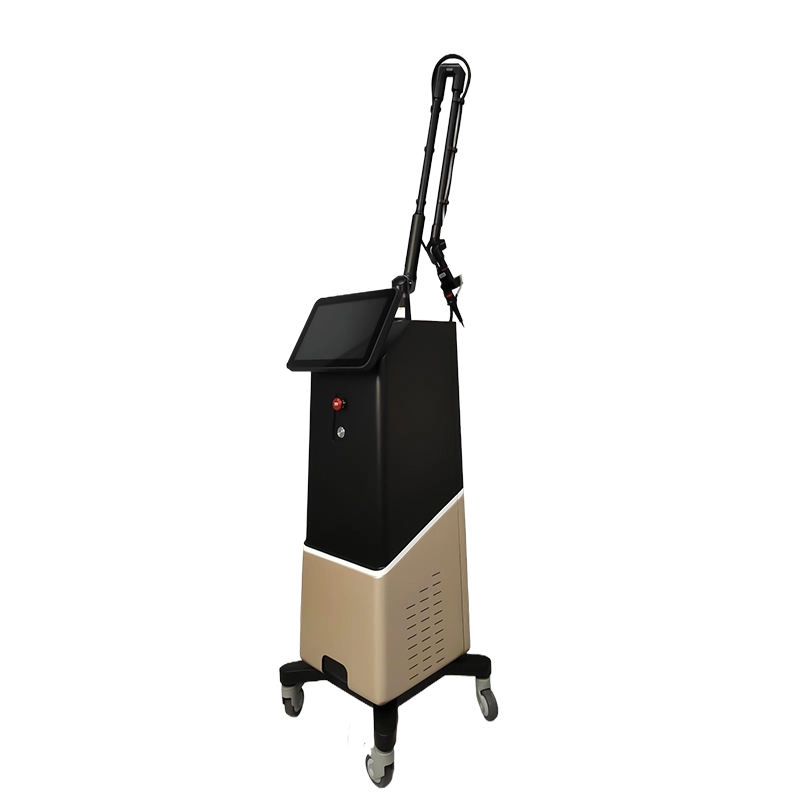
CO2 Fractional Laser Machine for Advanced Skin Resurfacing & Scar Removal
The CO2 fractional laser machine is designed to address a variety of skin concerns, offering treatments for acne scars, pigmentation, wrinkles, and overall skin texture. Utilizing advanced CO2 fractional laser technology, it delivers highly precise and controlled laser energy to promote collagen production and skin rejuvenation. This machine is ideal for professional use in beauty salons, medical spas, and aesthetic clinics. It features a user-friendly touchscreen interface, adjustable settings for customizable treatments, and a built-in cooling system to ensure comfort during use.

V9 Slimming Machine | 5-in-1 Professional Body Contouring & Cellulite Reduction Device | Vacuum, RF, Cavitation, Infrared & Roller
The V9 Slimming Machine is a comprehensive, professional-grade aesthetic device designed to address a wide range of body and facial concerns. This all-in-one system masterfully integrates five powerful technologies—vacuum, roller, infrared, RF, and cavitation—to deliver a complete solution for slimming and shaping.
It is the ideal choice for businesses looking to offer a multi-functional device that can perform multiple treatments, from reducing fat and cellulite to lifting and tightening the skin. The V9 Slimming Machine helps clients combat issues like postpartum obesity, local obesity, and facial sagging.

9 in 1 Gel Radio Frequency Machine – Cavitation Vacuum Machine 40K 80K with RF Skin Tightening Body Shape Weight Loss Fat Cavitation System
The 9 in 1 Gel Radio Frequency Machine is a professional multifunctional body shaping and skin management system designed for beauty salons and slimming centers. Utilizing 40K and 80K cavitation, this device effectively breaks down stubborn fat cells, promoting rapid body contouring and weight loss.
Equipped with advanced RF Skin Tightening technology, the machine stimulates collagen regeneration, tightens sagging skin, reduces wrinkles, and enhances elasticity. The integrated Body Shape Weight Loss Fat Cavitation system delivers powerful shaping results for the abdomen, arms, legs, and waist.
With nine specialized handles, the machine supports multiple facial and body treatments including cavitation slimming, RF tightening, vacuum shaping, and photon rejuvenation—providing a complete 9-in-1 solution for both fat reduction and skin improvement.
Perfect for professional salons seeking to upgrade their services with a versatile and high-performance 9 in 1 cavitation and radio frequency machine.
Get more information
If you have any comments or good suggestions, please leave us a message; later our professional staff will contact you as soon as possible.
Let's Talk
Stay in touch with us for cutting-edge beauty solutions, professional guidance, and customized service.
Contact


Room 307, Building A, Huilong International E-commerce Industrial Park, No. 10 Xipengling Road, Helong Street, Baiyun District, Guangzhou, China
© 2025 HUIMAIN. All Rights Reserved. Privacy Policy | Terms and Conditions | Sitemap
Facebook
Instagram
Medical beauty equipment factory
huimain Medical beauty equipment factory
beauty machine supplier
Whatsapp: +8619124004543