


Top HIFU Machine Features to Look For
- Essential Checklist for Choosing HIFU Devices
- What HIFU Machines Do and What Clinical Evidence Supports Them
- Why scientific evidence and certifications matter for HIFU Machines
- Core Technical Features to Prioritize in HIFU Machines
- 1. Treatment depth cartridges and focal points (mm)
- 2. Adjustable energy (mJ/mm2) and shot control
- 3. Frequency (MHz) and focal zone size
- 4. Real-time imaging or guidance (Ultrasound imaging)
- 5. Cooling, patient comfort, and ergonomics
- 6. Software, treatment presets and logging
- 7. Shot count, consumable life and operating cost
- 8. Safety systems and fail-safes
- 9. Training, clinical support and documentation
- Feature Comparison Table: What to Expect and Why It Matters
- Operational, Commercial and Regulatory Considerations for HIFU Machines
- Service, warranty and parts availability
- Regulatory compliance and clinical validation
- Training, proctoring and marketing support
- Cost-Benefit Analysis: Balancing Price and Value for HIFU Machines
- Choosing a Reliable Manufacturer: What to Verify
- Supplier Profile: Guangzhou Huimain Technology Co., Ltd.
- Practical Buying Checklist Before Signing a Purchase Order for HIFU Machines
- Summary and Recommendation
- Frequently Asked Questions (FAQ)
- 1. Are HIFU Machines safe for all skin types?
- 2. How many treatments are typically required to see results?
- 3. What is the expected downtime and side-effect profile?
- 4. How do I compare consumable costs between HIFU Machines?
- 5. Can HIFU Machines treat body fat as well as facial skin?
- 6. What training should my staff receive before using an HIFU Machine?
- Contact & Demo
- References
Essential Checklist for Choosing HIFU Devices
High-intensity focused ultrasound (HIFU) has become a mainstream non-invasive option for skin tightening, lifting and selective fat reduction. Whether you run a dermatology clinic, medical spa, or aesthetic equipment procurement team, selecting the right HIFU machine requires more than price comparison — it demands understanding of core device features, clinical evidence, operational costs, and supplier capabilities. This article explains the top HIFU machine features to look for, why they matter, and how to evaluate vendors so you can make a safe, evidence-based purchase.
What HIFU Machines Do and What Clinical Evidence Supports Them
HIFU Machines focus ultrasound energy at controlled depths to produce precise thermal coagulation points in soft tissue, stimulating neocollagenesis and tissue remodeling. Clinically, HIFU is used in: facial skin tightening and lifting, neck/jowl treatments, and select body contouring applications. Evidence varies by indication; randomized controlled trials and systematic reviews show consistent short- to mid-term improvement in laxity and contour, while long-term outcomes and comparative superiority versus other energy modalities depend on device parameters and operator technique (see references).
Why scientific evidence and certifications matter for HIFU Machines
Because HIFU delivers focused thermal energy, safety and predictable outcomes depend on device engineering, real-time control, and clinical validation. Look for peer-reviewed studies, independent clinical trials, and regulatory approvals (CE, FDA clearance where applicable) that match the intended use and treatment profile of the machine you plan to buy.
Core Technical Features to Prioritize in HIFU Machines
Below are the technical features that most strongly affect safety, efficacy, and usability. Each feature is explained with practical takeaways for purchasers.
1. Treatment depth cartridges and focal points (mm)
Why it matters: The therapeutic effect is depth-dependent. Typical facial HIFU treatments use cartridges targeting 1.5 mm, 3.0 mm, and 4.5 mm depths (superficial dermis to SMAS). Body and fat-targeting HIFU often use deeper and larger focal points (6–13 mm) for adipose disruption.
What to check: Ensure the machine offers interchangeable cartridges covering the clinical depths you need and that cartridges are manufactured with consistent quality and tested energy output. A wide depth range increases versatility across face and body applications.
2. Adjustable energy (mJ/mm2) and shot control
Why it matters: Adjustable energy allows customization per patient skin type, area treated, tolerance, and clinical goals. Precise shot control (energy per shot, shot density, interval) ensures reproducible outcomes.
What to check: The interface should permit fine-grained energy adjustments and show delivered energy metrics. Look for machines with internal safety limits to prevent accidental over-delivery.
3. Frequency (MHz) and focal zone size
Why it matters: Frequency affects focal precision and penetration. Higher frequency gives finer focal zones (better for superficial targets), lower frequency penetrates deeper (better for subcutaneous fat). The focal zone size (width and length) influences treatment uniformity and comfort.
What to check: Choose devices with matched frequency and cartridge design for the claims they make. Request technical specs (focal zone dimensions) and third-party testing when possible.
4. Real-time imaging or guidance (Ultrasound imaging)
Why it matters: Integrated ultrasound imaging provides visualization of tissue layers, enabling accurate depth placement and safer treatments. Machines without imaging are reliant on operator anatomy knowledge and mark-based guidance, which increases variability.
What to check: If your practice treats medically complex patients or wants maximal safety, prioritize HIFU Machines with real-time imaging and image freeze/capture functions. Confirm image quality and learning curve.
5. Cooling, patient comfort, and ergonomics
Why it matters: Built-in cooling (contact cooling or cooling tips) reduces epidermal discomfort and risk of burns, improving tolerability and enabling higher energies safely. Handpiece ergonomics affect precision and operator fatigue.
What to check: Evaluate handpiece weight, cable flexibility, cooling type and effectiveness, and whether disposable tips are needed. Check maintenance schedules for cooling systems.
6. Software, treatment presets and logging
Why it matters: Good software speeds setup, reduces operator errors, and helps standardize protocols (presets for different areas). Treatment logs and exportable data support clinical documentation and quality control.
What to check: Look for a clear touchscreen UI, customizable presets, session logs, and software update support. Confirm whether device software is locked by region or language.
7. Shot count, consumable life and operating cost
Why it matters: Consumables (cartridges or tips) contribute substantially to per-treatment cost. Shot count per cartridge and the cost per shot determine profitability and pricing strategy.
What to check: Ask suppliers for typical shots per cartridge, warranty replacements, and bulk pricing. Do a cost-per-treatment calculation based on your average shot usage.
8. Safety systems and fail-safes
Why it matters: Automated temperature monitors, power cutoffs, and physical interlocks limit adverse events and liability risk.
What to check: Confirm the presence of overheat protection, energy delivery cutoffs, alarm systems, and service diagnostics. Insist on a clear incident reporting and spare-parts policy.
9. Training, clinical support and documentation
Why it matters: HIFU outcomes are operator-dependent. Manufacturer training, clinical protocols, and on-site proctoring improve quality and patient safety.
What to check: Prefer vendors that offer hands-on training, online modules, clinical literature, and proctored first cases. Verify language and regional support availability.
Feature Comparison Table: What to Expect and Why It Matters
| Feature | How It Impacts Outcomes | Purchasing Checklist |
|---|---|---|
| Depth cartridges (1.5–13 mm) | Determines which tissue layers are treated (dermis, SMAS, fat) | Confirm depths match intended indications; verify cartridge QC |
| Adjustable energy & shot density | Enables customization and reproducibility | Test UI; request energy delivery reports; safety limits |
| Real-time imaging | Increases placement accuracy and safety | Prefer devices with integrated ultrasound imaging |
| Cooling & ergonomics | Improves patient comfort and operator precision | Try handpiece; check cooling performance data |
| Consumable life / cost | Affects treatment economics and pricing | Calculate cost per treatment; ask about warranties |
| Regulatory certification & clinical data | Supports safety claims and market legitimacy | Request CE/FDA documentation and clinical studies |
Operational, Commercial and Regulatory Considerations for HIFU Machines
Service, warranty and parts availability
Downtime directly impacts revenue. Ensure the supplier has regional technical support, spare parts inventory, and clear warranty terms. Define Service Level Agreements (SLAs) for response time and parts replacement.
Regulatory compliance and clinical validation
Check for CE marking for Europe, local medical device registration (e.g., NMPA in China), and FDA clearance/510(k) if the device will be marketed in the US with specific medical claims. Clinical evidence should align with your intended use. Always ask for device-specific clinical trial summaries and adverse event records from the manufacturer.
Training, proctoring and marketing support
Good vendors provide initial clinical training, marketing collateral, before/after libraries (with consent), and guidance on aftercare protocols to maximize patient satisfaction. This reduces your risk and speeds time-to-profitability.
Cost-Benefit Analysis: Balancing Price and Value for HIFU Machines
Price is important, but the right economic calculation includes capital cost, consumable cost, maintenance, training, and expected patient throughput. A higher-spec machine with imaging and durable cartridges may produce better outcomes, higher patient retention, and improved margins over time.
Practical step: create a 3-year TCO (total cost of ownership) model comparing at least three devices, factoring device price, consumables, warranty extensions, expected treatments per month, and average revenue per treatment.
Choosing a Reliable Manufacturer: What to Verify
Supplier credibility is central. Verify the company’s manufacturing footprint, R&D capability, workforce qualifications, quality systems (ISO 13485), independent certifications (CE, SGS), patent portfolio, customer references, and export footprint. Request references from clinics that use the device and, if possible, arrange a site visit or a live demonstration on consenting volunteers.
Supplier Profile: Guangzhou Huimain Technology Co., Ltd.
Guangzhou Huimain Technology Co., Ltd. is a high-tech manufacturer specializing in beauty machines and home-use device series, with capabilities across R&D, production, sales, and after-sales service. The company operates a 3,000 m2 facility and employs a technically capable team — over 20% hold bachelor’s degrees and more than 40% have junior college diplomas. Huimain combines a strong technical development department, experienced engineers, R&D personnel, purchasing, clinical testing, and after-sales teams to support its product line.
Key competitive strengths:
- Ongoing investment in R&D and a patent portfolio that supports product differentiation.
- International approvals including CE and SGS validation, with products sold across China, Southeast Asia, the Middle East, Europe and North America.
- OEM and ODM production capabilities, enabling custom device development for clinics and salon chains.
- Comprehensive after-sales and clinical support packages for buyer confidence.
Main products relevant to clinics include: Cryolipolysis machine, EMS sculpting machine, Plasma machine, Shockwave machine, HIFU machine, Hydrofacial machine, Cavitation vacuum machine, Laser hair removal, Tattoo removal machine, and Micro needle machine. Huimain positions itself on innovation and win-win cooperation, emphasizing the production of high-quality devices that match market demand and client feedback.
Practical Buying Checklist Before Signing a Purchase Order for HIFU Machines
- Confirm device depths, energy range, and imaging capabilities match your treatment mix.
- Request device-level clinical evidence and adverse-event summaries.
- Calculate 3-year TCO including consumables and expected throughput.
- Verify certifications (CE/FDA/NMPA) and quality management systems (ISO).
- Confirm on-site training, warranty terms, spare parts lead times and local support.
- Run a live demo or trial and obtain sample before/after images with patient consent.
- Negotiate pricing on consumables and multi-unit purchases; clarify OEM/ODM options if customization is needed.
Summary and Recommendation
Choosing the right HIFU Machines requires balancing technical performance, clinical evidence, operational economics, and supplier reliability. Prioritize devices with appropriate depth cartridges, adjustable energy delivery, strong safety systems, real-time imaging if possible, and a vendor that offers strong training and after-sales support. Manufacturers like Guangzhou Huimain Technology Co., Ltd. combine R&D capability, certifications and diverse product lines that may meet clinic and salon needs — but always validate clinical data and run a proof-of-concept in your practice.
If you would like personalized guidance on selecting HIFU Machines for your clinic, or to view product specifications and pricing, contact Guangzhou Huimain Technology Co., Ltd. or request a demo to evaluate performance in person.
Frequently Asked Questions (FAQ)
1. Are HIFU Machines safe for all skin types?
HIFU can be used across most skin types because energy is focused below the epidermis. However, individual risk factors (thin skin, active infection, severe photoaging, implanted devices) may contraindicate treatment. Devices with integrated imaging and adjustable energy improve safety. Always perform a medical consultation and patch testing where appropriate.
2. How many treatments are typically required to see results?
For facial lifting, many patients notice some immediate tightening due to tissue contraction, with progressive improvement over 2–6 months as collagen remodels. Often a single full-face session can be effective, but some clinics offer touch-ups or combination therapies depending on patient goals.
3. What is the expected downtime and side-effect profile?
Downtime is generally minimal. Common transient side effects include redness, tenderness, mild swelling, and occasional focal numbness. Rare complications include burn or prolonged nerve injury, usually associated with incorrect energy settings or poor technique — underlining the importance of operator training.
4. How do I compare consumable costs between HIFU Machines?
Calculate cost per shot by dividing cartridge cost by the shots per cartridge, then multiply by the average shots used per treatment area. Include shipping, customs, and expected replacement rates. Ask vendors for empirical shot-use data from similar clinics.
5. Can HIFU Machines treat body fat as well as facial skin?
Yes — but body HIFU for fat reduction uses different focal depths and higher energy to target adipose tissue. Confirm the device offers body-specific cartridges and has clinical data for body contouring. Treatment protocols, pain management, and safety considerations differ from facial use.
6. What training should my staff receive before using an HIFU Machine?
Training should include device theory, hands-on supervised treatments, safety procedures, patient selection, post-treatment care, and management of complications. Ideally, vendors provide proctored first cases and ongoing clinical support.
Contact & Demo
To view product catalogs, arrange a live demo, or request quotations for HIFU Machines and other aesthetic devices (Cryolipolysis, EMS sculpting, Laser hair removal, etc.), contact Guangzhou Huimain Technology Co., Ltd. Their combined R&D strength, certifications and OEM/ODM services make them a viable supplier for clinics seeking long-term partnerships. Request clinical protocols and CE/SGS documentation prior to purchase.
References
- Wikipedia — High-intensity focused ultrasound. https://en.wikipedia.org/wiki/High-intensity_focused_ultrasound (accessed 2025-12-14)
- U.S. Food & Drug Administration — Ultrasound Products. https://www.fda.gov/radiation-emitting-products/medical-imaging/ultrasound-products (accessed 2025-12-14)
- European Commission — CE marking. https://ec.europa.eu/growth/single-market/ce-marking/ (accessed 2025-12-14)
- PubMed search results for HIFU skin tightening and facial rejuvenation. https://pubmed.ncbi.nlm.nih.gov/?term=HIFU+skin+tightening (accessed 2025-12-14)
- Grand View Research — High Intensity Focused Ultrasound Market Overview (industry report summary). https://www.grandviewresearch.com/industry-analysis/high-intensity-focused-ultrasound-hifu-market (accessed 2025-12-14)
HI45P
Who can use this device?
The machine is suitable for professional use in beauty salons, spas, and medical aesthetic clinics.
TLD-1
Is the Mantis Knife HIFU Machine suitable for salons and clinics?
Yes, this HIFU machine is ideal for beauty salons, medical aesthetic clinics, and SPA centers.
KLS
How long is the recovery period?
The fractional ablation and mild coagulation delivered by the RF energy result in a minimally invasive treatment. This typically means a very short recovery period compared to more aggressive procedures.
JHF-61
How long do facial and vaginal HIFU results last?
Typically 12–18 months depending on individual conditions and treatment programs.
QY-BT410 奇云台式脱毛仪
Does the machine have a cooling system?
Yes, it features a structure cooling system with sapphire contact cooling.

CO2 Fractional Laser Machine – Professional Wrinkle Removal & Skin Resurfacing Device
The CO2 Fractional Laser Machine is a multifunctional aesthetic device designed for professional clinics and beauty salons. Using advanced fractional CO2 laser technology, it effectively targets acne scars, freckles, pigmentation, nevi, and deep wrinkles. Additionally, it provides non-invasive skin rejuvenation, vaginal tightening, and intimate beautification. This professional CO2 laser equipment combines precision, safety, and powerful energy output to deliver outstanding anti-aging and dermatological results.

5-in-1 40K Cavitation Vacuum Machine for Body Slimming & Fat Reduction
The 5-in-1 40K Cavitation Vacuum Machine is a professional body shaping system designed for fat reduction, cellulite smoothing, and overall body contouring. Using 40KHz ultrasonic cavitation, this device breaks down stubborn fat cells, while vacuum suction improves lymphatic drainage and accelerates toxin removal.
With multiple RF tightening handles, the machine stimulates collagen regeneration and helps lift and firm loose areas of the body. Compact, powerful, and easy to operate, it is the perfect solution for beauty salons, spa centers, and slimming studios seeking fast and visible fat-reduction results.
This cavitation vacuum machine is built to deliver safe, non-invasive treatments with no downtime—making it a top choice for body contouring professionals.

6-in-1 Multifunctional Beauty and Weight Loss Machine | Cavitation, RF, Vacuum PDT, EMS, Laser Slimming Equipment for Professional Use
The 6-in-1 Multifunctional Beauty and Weight Loss Machine is a professional-grade device designed for salons, clinics, and distributors. Combining six advanced technologies—cavitation, RF (radio frequency) for face & body, vacuum RF PDT, BIO/EMS microcurrent, and laser lipo pads—this device offers comprehensive body contouring, fat reduction, skin tightening, and anti-aging treatments.
It provides businesses with an all-in-one solution to expand service offerings, attract more clients, and achieve a rapid return on investment.
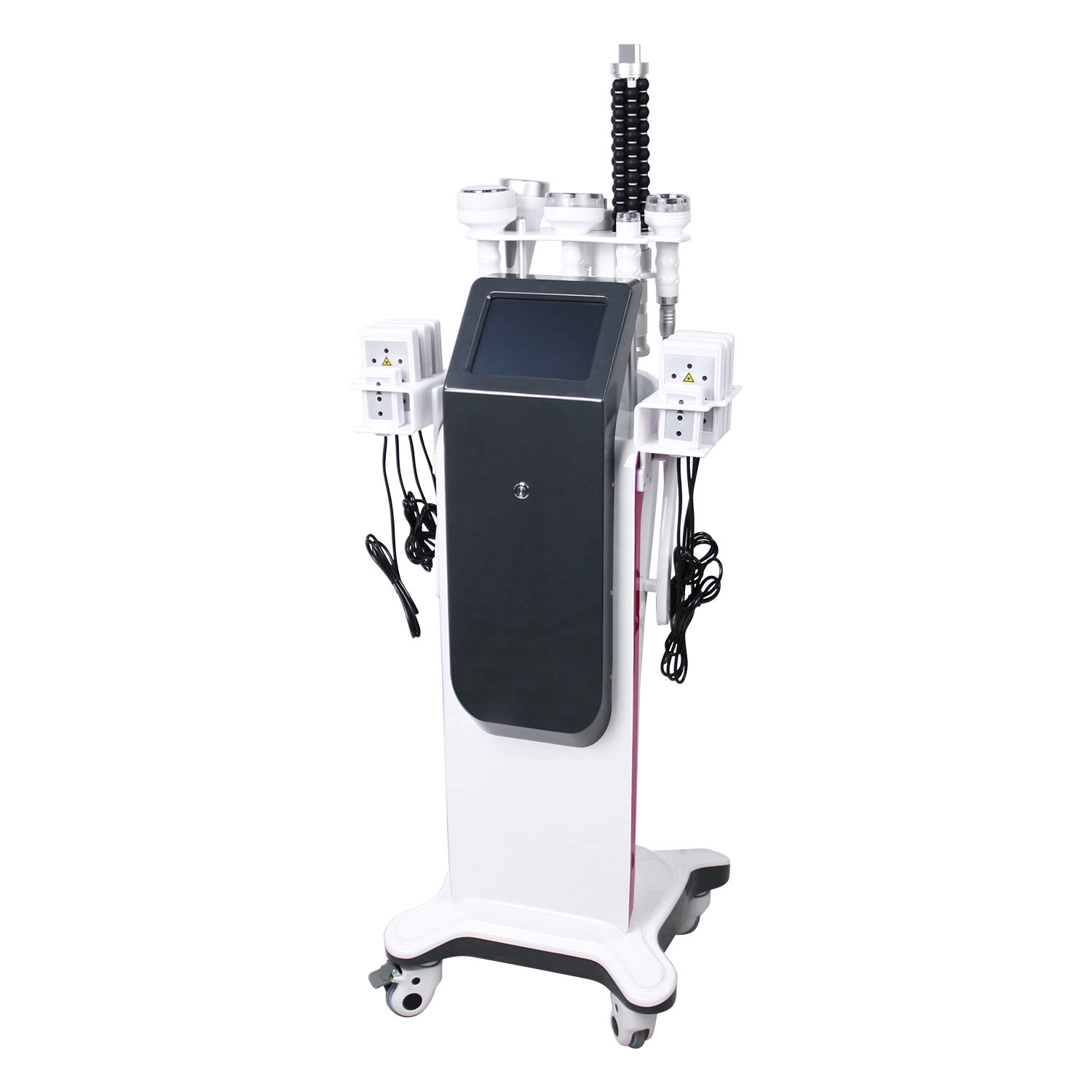
Professional 6-in-1 Cavitation Vacuum Machine for Body Contouring & Slimming Treatment
The 6-in-1 Cavitation Vacuum Machine is a professional body contouring system designed for salons and spas seeking high-performance slimming solutions. This machine integrates 40K ultrasonic cavitation, vacuum suction, RF technology, and laser lipolysis to target stubborn fat, enhance lymphatic drainage, tighten the skin, and contour the body shape effectively.
Equipped with multiple ergonomic handles and a smart touch screen, this cavitation vacuum machine provides a comfortable and efficient experience for both operators and clients. It is ideal for full-body treatments including abdomen, arms, legs, waistline, hips, and back.
Perfect for beauty salons, spas, and aesthetic centers that want to offer non-invasive fat reduction and body-sculpting services.
Get more information
If you have any comments or good suggestions, please leave us a message; later our professional staff will contact you as soon as possible.
Let's Talk
Stay in touch with us for cutting-edge beauty solutions, professional guidance, and customized service.
Contact


Room 307, Building A, Huilong International E-commerce Industrial Park, No. 10 Xipengling Road, Helong Street, Baiyun District, Guangzhou, China
© 2025 HUIMAIN. All Rights Reserved. Privacy Policy | Terms and Conditions | Sitemap
Facebook
Instagram
Medical beauty equipment factory
huimain Medical beauty equipment factory
beauty machine supplier
Whatsapp: +8619124004543