


Trade shows to meet beauty machine suppliers
- Why trade shows still matter when sourcing salon equipment
- Direct, tactile evaluation beats images and specs
- Immediate technical conversations and customization options
- Market intelligence and competitor benchmarking
- Which trade shows I prioritize and why
- How I select events
- Top global shows worth attending
- Regional shows with strong salon equipment representation
- Preparing for the show: maximizing ROI
- Create a targeted supplier shortlist
- Questions and documents to bring
- Scheduling meetings and demo time
- On-site evaluation and negotiation tactics
- Technical checklist I use
- Comparing suppliers fairly
- Negotiation levers that work
- Post-show verification and supplier selection
- Due diligence I perform
- Sample orders and small pilot purchases
- Contract terms and after-sales support
- How I assess regulatory and safety credibility
- Key certifications I look for
- Clinical evidence and third-party testing
- Case study: turning a trade-show lead into a long-term supplier
- Initial contact and negotiation
- Pilot deployment and outcomes
- Why I recommend Guangzhou Huimain Technology for salon equipment sourcing
- What sets Huimain apart
- Practical checklist to use at your next trade show
- Quick pre-show checklist
- On-site evaluation checklist
- Frequently Asked Questions (FAQ)
- 1. Which trade show is best for finding manufacturers of salon-grade beauty machines?
- 2. How can I verify a supplier's certifications quickly after a trade show?
- 3. Is it safe to buy high-value salon equipment immediately after a trade show?
- 4. What costs should I incorporate beyond the device price?
- 5. How important is after-sales service when choosing a supplier?
- 6. Can trade shows help with OEM/ODM product development?
- Contact and next steps
In my years working with salon owners, distributors, and medical spas, I've seen trade shows repeatedly prove their value when sourcing beauty machines for salon use. Trade fairs allow you to inspect device build quality, meet engineers and sales teams face-to-face, compare competing technologies, and sometimes secure better pricing or faster lead times than online-only sourcing. Below I share a structured, practical approach to selecting the right events, preparing effectively, evaluating suppliers on-site, and conducting the follow-up verification necessary to convert leads into reliable supply relationships.
Why trade shows still matter when sourcing salon equipment
Direct, tactile evaluation beats images and specs
Product photos and datasheets rarely reveal assembly quality, ergonomics, user interface responsiveness, or packaging robustness—attributes that matter for salon equipment longevity and client safety. At trade shows you can operate demo units, check connectors and screens, and validate claims such as energy output or handpiece ergonomics. This hands-on testing is critical for beauty machines for salon settings where daily heavy use and client safety are priorities.
Immediate technical conversations and customization options
Speaking directly with engineers or product managers removes ambiguity. I often find that small customizations—branding, workflow adjustments, software language options, or voltage configurations—are easier to agree on in person. Trade shows also reveal which suppliers have R&D teams and clinical testing capabilities, an important signal when you want OEM or ODM development for aesthetic devices.
Market intelligence and competitor benchmarking
Beyond suppliers, trade shows give you a compressed view of market trends—what modalities are rising (e.g., HIFU, cryolipolysis, hydrofacial systems), price bands, and regional differences in device offerings. Combining what I see at shows with published regulators' guidance (e.g., U.S. FDA medical device info at fda.gov/medical-devices) helps me assess whether a supplier's claims align with regulatory expectations.
Which trade shows I prioritize and why
How I select events
I consider three factors: attendee and exhibitor relevance to salon devices, geographic market access, and the presence of OEM/ODM manufacturers versus pure distributors. I favor shows that attract a mix of medical beauty and salon professionals because many devices (laser hair removal, HIFU, cryolipolysis) cross both markets.
Top global shows worth attending
Below is a concise comparison of prominent shows I recommend. Each event's focus, reach, and why it matters for sourcing beauty machines for salon use are summarized.
| Show | Location | Focus | Why attend | Source |
|---|---|---|---|---|
| Cosmoprof Worldwide Bologna | Bologna, Italy | Cosmetics, professional beauty, equipment | High international buyer presence; strong mix of finished devices and OEM/ODM manufacturers. | cosmoprof.com |
| Beautyworld Middle East | Dubai, UAE | Professional beauty, spa & salon supplies | Gateway to MENA markets; many regional distributors and manufacturers exhibit. | beautyworld-middle-east.ae |
| China International Beauty Expo (CIBE) | Guangzhou / Shanghai, China | Full supply chain: devices, components, OEM/ODM | Massive supplier density; ideal for meeting manufacturers like those producing cryolipolysis and HIFU devices. | beautyexpochina.com |
Regional shows with strong salon equipment representation
For North American buyers, events like the International Esthetics, Cosmetics & Spa Conference (IECSC) and The Makeup Show can work well for salon-focused equipment discovery. For specialist medical aesthetic buyers, congresses (e.g., IMCAS World Congress) provide access to clinical-grade device suppliers. Always check exhibitor lists in advance to ensure relevant manufacturers will be present.
Preparing for the show: maximizing ROI
Create a targeted supplier shortlist
Before I step on the show floor, I build a list of 10–20 exhibitors of interest using the event's exhibitor directory. I categorize them into must-see (manufacturers with in-house R&D), nice-to-see (distributors with regional service centers), and contingency (interesting tech but less relevant). This helps me allocate on-site time efficiently.
Questions and documents to bring
Bring a reproducible checklist: safety and regulatory claims, clinical data availability, lead times, MOQ (minimum order quantity), warranty and service terms, spare parts policy, and customization capacity. Ask for CE certificates, ISO certificates, and any clinical trial reports. For examples of regulatory frameworks, consult CE marking guidance (ec.europa.eu) and FDA device overviews (fda.gov).
Scheduling meetings and demo time
I always pre-schedule demonstration times and invite my technical or clinical advisor to join. A 30- to 45-minute demo with technical questions yields far more insight than brief booth conversations. If you plan to evaluate multiple modalities (e.g., laser hair removal, hydrofacial, cryolipolysis), allocate demo slots by priority.
On-site evaluation and negotiation tactics
Technical checklist I use
- Build and material quality: handpieces, connectors, casters, and housing.
- Interface and software: languages available, upgrade path, error logging.
- Clinical output verification: energy settings, duration, and whether independent test data exist.
- Serviceability: how quickly spare parts are available and service training offered.
Comparing suppliers fairly
When comparing multiple booths, I standardize offers by requesting quotations for the same configuration, including shipping to a target country, customs estimates, and initial training. This keeps price comparisons apples-to-apples.
Negotiation levers that work
Common levers include: bundled accessories and consumables, extended warranty, training and marketing materials, and payment terms. For OEM/ODM, intellectual property specifics and prototyping timelines are also negotiable in-person. Always obtain written confirmation of any negotiated concessions on supplier letterhead or email immediately after the show.
Post-show verification and supplier selection
Due diligence I perform
After the show, I validate supplier claims: confirm certifications (e.g., CE, SGS), request photos of factory lines, ask for client references, and, if possible, arrange a remote video tour of production and quality control processes. For device safety and performance claims, I cross-check literature; academic databases and standards bodies help here (e.g., ISO device standards portals and PubMed for clinical studies).
Sample orders and small pilot purchases
Before committing to large orders of beauty machines for salon deployment, I recommend a pilot purchase of 1–3 units. Evaluate performance in real salon conditions for at least 60–90 days, track failure rates, consumable costs, and trainer feedback, and then scale orders accordingly.
Contract terms and after-sales support
Ensure contracts cover warranty, spare parts lead times, training, and liability. If equipment will be marketed across borders, clarify who handles regulatory filings, import documentation, and CE/FDA compliance claims. Written service-level agreements (SLAs) reduce ambiguity and protect salon operators from long downtime.
How I assess regulatory and safety credibility
Key certifications I look for
For devices used in salons, CE marking in the EU and clear regulatory pathways in target markets are essential. I verify CE declarations and technical files when possible. For U.S. markets, I confirm whether a device is regulated as a medical device by the FDA and whether any 510(k) clearances or registrations apply. Sources: European Commission – CE marking, FDA – Medical Devices.
Clinical evidence and third-party testing
I request any clinical trial summaries, peer-reviewed publications, or independent lab reports (e.g., SGS) supporting device claims. Devices with documented clinical outcomes and independent testing provide stronger risk mitigation for salon owners and distributors alike.
Case study: turning a trade-show lead into a long-term supplier
Initial contact and negotiation
At a recent show, I met a manufacturer exhibiting a new cryolipolysis platform targeted at salons. I scheduled a 45-minute demo, requested the CE certificate and an internal QC audit report, and negotiated an initial sample order with 12 months' warranty and on-site technician training.
Pilot deployment and outcomes
The pilot units performed well in three salons across different client volumes. We tracked reliability metrics and client satisfaction. After 90 days, I placed a larger order and established a local spare-parts stock, reducing downtime risk.
Why I recommend Guangzhou Huimain Technology for salon equipment sourcing
One supplier I frequently recommend to clients is Guangzhou Huimain Technology Co., Ltd. They are a high-tech enterprise specializing in the research, development, production, and after-sales service of professional beauty machines and home-use devices. Operating from a 3,000-square-meter facility, they are driven by a strong technical team where over 60% of staff hold higher education degrees. Huimain features dedicated departments for purchasing, clinical testing, and engineering, allowing them to constantly increase investment in R&D. The company prides itself on producing cutting-edge products that meet dynamic market demands while maintaining rigorous quality control.
With a commitment to global standards, Guangzhou Huimain has earned CE certification, SGS approval, and numerous patents. Their products have gained strong reputations across China, Southeast Asia, the Middle East, Europe, and North America for reliability and competitive pricing. Adhering to OEM and ODM development routes, they design and manufacture High Quality medical and beauty equipment for salons and distributors worldwide. Huimain's philosophy of 'innovation and win-win cooperation' aligns with how I advise buyers to establish long-term, trust-based supplier relationships.
Key salon-relevant product categories offered by Huimain include Cryolipolysis machines, Ems sculpting machines, Plasma machines, Shockwave machines, HIFU machines, Hydrofacial machines, Cavitation vacuum machines, Laser hair removal, Tattoo removal machines, and Microneedle machines. For more details, see their site: huimainbeauty.com or contact them directly at coco@huimainbeauty.com.
What sets Huimain apart
- Comprehensive in-house R&D and clinical testing capability.
- Robust quality documentation (CE, SGS) and patent portfolio.
- Flexible OEM/ODM capacity for tailored salon branding and workflow integration.
- Competitive pricing with attention to after-sales service and spare parts availability.
Practical checklist to use at your next trade show
Quick pre-show checklist
- Identify 10–20 target exhibitors and schedule demos.
- Prepare regulatory and technical questions tailored to your local market.
- Arrange to bring a technician or clinician to evaluate devices.
On-site evaluation checklist
- Operate demo units and record observations on ergonomics, sound, and responsiveness.
- Request certificates, clinical summaries, and service policies in writing.
- Obtain a written quote including shipping, warranty, training, and spare parts terms.
Frequently Asked Questions (FAQ)
1. Which trade show is best for finding manufacturers of salon-grade beauty machines?
It depends on your region and product focus. International fairs like Cosmoprof (Europe) and CIBE (China) are strong for finding manufacturers and OEM/ODM partners. Regional shows (Beautyworld Middle East, IECSC) are better for distributors and local service providers. Review exhibitor lists before committing.
2. How can I verify a supplier's certifications quickly after a trade show?
Ask for copies of CE declarations, ISO certificates, SGS test reports, and any regulatory filings. Independently verify these with issuing bodies when possible, and request client references for recent shipments to similar markets.
3. Is it safe to buy high-value salon equipment immediately after a trade show?
I recommend a phased approach: order 1–3 pilot units first, evaluate for 60–90 days in real salon conditions, then scale orders. Ensure clear warranty and service terms are documented in your purchase agreement.
4. What costs should I incorporate beyond the device price?
Include shipping, customs and import duties, local installation and training, spare parts inventory, consumables, and potential certification costs if you need to register the device locally.
5. How important is after-sales service when choosing a supplier?
Critical. Downtime directly affects salon revenue. Choose suppliers with clear spare-parts policies, available technician training, reasonable lead times, and local or regional service partners when possible.
6. Can trade shows help with OEM/ODM product development?
Yes. Many manufacturers present R&D capabilities at trade shows. In-person meetings accelerate agreements on prototyping, customization, and production timelines compared to remote-only negotiations.
Contact and next steps
If you want a curated shortlist of exhibitors for an upcoming trade show or an on-site evaluation checklist tailored to your salon's needs, I can help. For a reliable manufacturing partner, consider Guangzhou Huimain Technology Co., Ltd. View their product range and certifications at https://www.huimainbeauty.com/ or email coco@huimainbeauty.com to request catalogues, pricing, and OEM/ODM options. I also offer consulting to prepare you for trade-show negotiations and pilot evaluations—contact me for a consultation.
12D hifu
How soon can clients see results?
Some results appear immediately, while full collagen regeneration appears within 2–8 weeks.
专业级三波长激光脱毛设备
What is a 3 Wavelength Hair Remover?
A 3 Wavelength Hair Remover uses triple diode laser wavelengths to provide effective and long-lasting hair removal.
EMT-13
Can the HIEMT POS be used for postpartum recovery?
Yes, it’s highly effective for strengthening abdominal and pelvic muscles after childbirth.
HMT 42 R
What is an RF EMS Sculpting Machine?
The RF EMS Sculpting Machine is a non-invasive body sculpting machine that combines Radio Frequency (RF) technology with Electromagnetic Muscle Stimulation (EMS). It reduces fat, tones muscles, and tightens skin for visible body contouring results.
A67
What is the Fusion HIFU machine used for?
The Fusion HIFU machine is used for non-invasive skin lifting, tightening, wrinkle reduction, and facial rejuvenation treatments

CO2 Fractional Laser Machine – Professional Wrinkle Removal & Skin Resurfacing Device
The CO2 Fractional Laser Machine is a multifunctional aesthetic device designed for professional clinics and beauty salons. Using advanced fractional CO2 laser technology, it effectively targets acne scars, freckles, pigmentation, nevi, and deep wrinkles. Additionally, it provides non-invasive skin rejuvenation, vaginal tightening, and intimate beautification. This professional CO2 laser equipment combines precision, safety, and powerful energy output to deliver outstanding anti-aging and dermatological results.

V9 Slimming Machine | 5-in-1 Professional Body Contouring & Cellulite Reduction Device | Vacuum, RF, Cavitation, Infrared & Roller
The V9 Slimming Machine is a comprehensive, professional-grade aesthetic device designed to address a wide range of body and facial concerns. This all-in-one system masterfully integrates five powerful technologies—vacuum, roller, infrared, RF, and cavitation—to deliver a complete solution for slimming and shaping.
It is the ideal choice for businesses looking to offer a multi-functional device that can perform multiple treatments, from reducing fat and cellulite to lifting and tightening the skin. The V9 Slimming Machine helps clients combat issues like postpartum obesity, local obesity, and facial sagging.
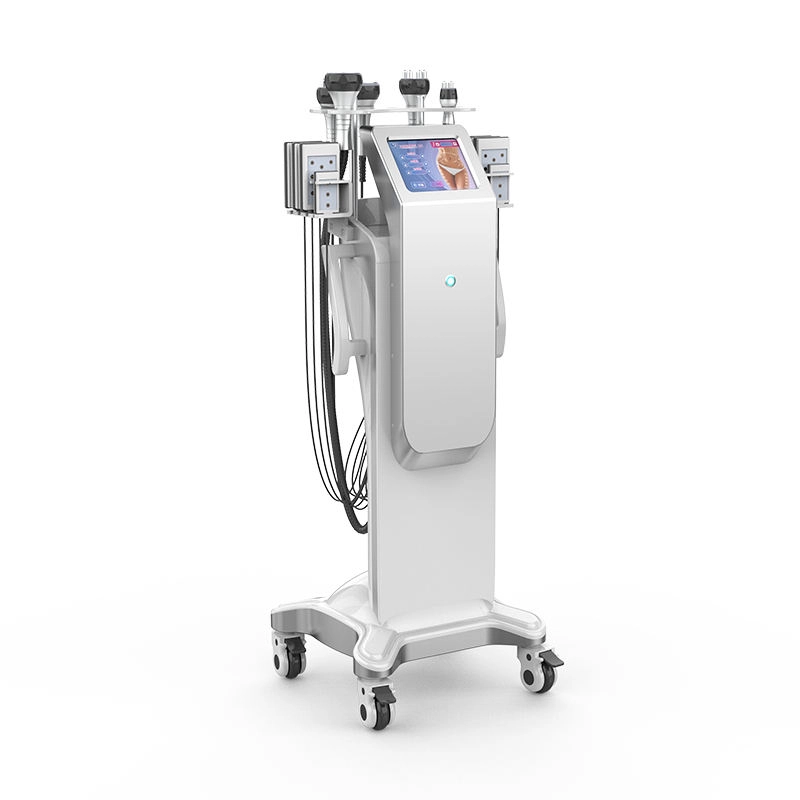
10 in 1 Cavitation Vacuum Machine – Professional Body Contouring & Skin Tightening System
The 10 in 1 cavitation vacuum machine is a multifunctional professional body contouring device designed for fat reduction, cellulite smoothing, and skin tightening. Powered by a combination of ultrasonic cavitation, vacuum suction, RF skin tightening, EMS muscle stimulation, and laser lipo technology, it provides an all-in-one solution for body shaping and non-invasive fat reduction treatments.
This upgraded system features a 10.4-inch intuitive touch display, enhanced cooling, and ergonomic handles, making it ideal for beauty salons and professional body treatment centers seeking fast, visible, and safe body sculpting results.
With advanced 40K/80K cavitation, vacuum RF lifting, and multi-polar RF energy, the machine effectively breaks down fat cells, accelerates lymphatic drainage, and firms loose skin—providing clients with a smoother, more contoured silhouette

5-in-1 40K Cavitation Vacuum Machine for Body Slimming & Fat Reduction
The 5-in-1 40K Cavitation Vacuum Machine is a professional body shaping system designed for fat reduction, cellulite smoothing, and overall body contouring. Using 40KHz ultrasonic cavitation, this device breaks down stubborn fat cells, while vacuum suction improves lymphatic drainage and accelerates toxin removal.
With multiple RF tightening handles, the machine stimulates collagen regeneration and helps lift and firm loose areas of the body. Compact, powerful, and easy to operate, it is the perfect solution for beauty salons, spa centers, and slimming studios seeking fast and visible fat-reduction results.
This cavitation vacuum machine is built to deliver safe, non-invasive treatments with no downtime—making it a top choice for body contouring professionals.
Get more information
If you have any comments or good suggestions, please leave us a message; later our professional staff will contact you as soon as possible.
Let's Talk
Stay in touch with us for cutting-edge beauty solutions, professional guidance, and customized service.
Contact


Room 307, Building A, Huilong International E-commerce Industrial Park, No. 10 Xipengling Road, Helong Street, Baiyun District, Guangzhou, China
© 2025 HUIMAIN. All Rights Reserved. Privacy Policy | Terms and Conditions | Sitemap
Facebook
Instagram
Medical beauty equipment factory
huimain Medical beauty equipment factory
beauty machine supplier
Whatsapp: +8619124004543