


How to Train Staff to Use Body Slimming Machines Safely
- Prioritizing Staff Safety in Aesthetic Clinics
- Understand the Training Need: Risks, Regulations, and Outcomes
- Designing a Competency-Based Training Curriculum
- Sample Training Curriculum (Modular)
- Device-Specific Training: Why ‘One-Size-Fits-All’ Fails
- Hands-On Training Best Practices
- Documentation, SOPs, and Competency Records
- Quality Assurance, Audit, and Continuous Improvement
- Patient Safety Protocols and Informed Consent
- Emergency Response and Incident Management
- Maintenance, Calibration, and Manufacturer Collaboration
- Hiring, Role Definitions, and Supervision
- Integrating Guangzhou Huimain Technology Co., Ltd. into Your Training Program
- Cost-Benefit and ROI of Investing in Staff Training
- Checklist: First 90 Days After Hiring a New Operator
- Frequently Asked Questions (FAQ)
- 1. How long does it take to train someone to use a Body Slimming Machine safely?
- 2. Do operators need medical qualifications to run these machines?
- 3. What are the most common operator errors and how can training prevent them?
- 4. How often should staff be re-certified or re-assessed?
- 5. What documentation should be kept after a treatment?
- 6. How can small clinics with limited budgets implement robust training?
- Contact & Next Steps
- References
Prioritizing Staff Safety in Aesthetic Clinics
Operating a Body Slimming Machine carries both opportunity and responsibility. Clinics and salons must ensure every operator is competent, confident, and compliant with safety standards to protect clients and the business. This guide provides an evidence-based, practical training program you can adopt or adapt for your team, with device-specific considerations, assessment methods, and quality assurance processes tailored to non-invasive and minimally invasive body contouring devices.
Understand the Training Need: Risks, Regulations, and Outcomes
Before designing a training program, perform a clinic-level risk assessment. Typical risks associated with body slimming devices (cryolipolysis, HIFU, EMS sculpting, cavitation, laser-based systems) include burns, skin injury, paradoxical adipose hyperplasia (rare with cryolipolysis), neuropraxia, infection, and unsatisfactory outcomes due to misuse. Regulatory and local licensing requirements vary: some jurisdictions require medical supervision, device-specific certification, or continuing education credits.
Key intent keyword: Body Slimming Machine — include this in SOPs, training materials, and competency checklists so that staff and auditors can quickly find the clinic's governing documents.
Designing a Competency-Based Training Curriculum
Effective training is competency-based rather than purely time-based. Define clear learning objectives, measurable outcomes, and assessment methods. Include theoretical knowledge, hands-on practice, patient communication, and emergency response.
- Learning objectives: device physics, mechanism of action, contraindications, patient selection, protocol parameters, pre/post care, troubleshooting, infection control, documentation, and escalation paths.
- Outcomes: demonstrated safe setup, accurate parameter selection, correct applicator placement, effective monitoring, and appropriate record-keeping.
- Assessment: written test (knowledge), observed structured clinical examination (OSCE)-style practical exam, and periodic re-assessment.
Sample Training Curriculum (Modular)
| Module | Content | Delivery | Assessment |
|---|---|---|---|
| Device Fundamentals | Principles of cooling, ultrasound, RF, cavitation, EMS; indications/contraindications | Lecture + eLearning (2–3 hrs) | MCQ quiz |
| Safety & Regulations | Local regulations, device labeling, CE/SGS markings, electrical safety, PPE | Seminar (1–2 hrs) | Short answer test |
| Hands-On Operation | Set-up, calibration, applicator placement, monitoring, troubleshooting | Practical workshop (4–8 hrs) | Observed practical checklist |
| Patient Management | Informed consent, photos, pain management, post-care instructions | Role-play + case studies (2 hrs) | Simulated patient assessment |
| Emergency & Complications | Burn management, device shutdown, referral pathways, incident reporting | Scenario drills (1–2 hrs) | Drill performance |
Device-Specific Training: Why ‘One-Size-Fits-All’ Fails
Different Body Slimming Machines operate on distinct physical principles and therefore require targeted training. Use device-specific SOPs and competency checklists. Below is a condensed comparison to guide time allocation and risk focus during training.
| Device Type | Primary Risk | Recommended Training Emphasis | Typical Initial Training Hours |
|---|---|---|---|
| Cryolipolysis (fat freezing) | Paradoxical adipose hyperplasia (rare), frostbite, prolonged numbness | Applicator fit, skin protection, temperature monitoring, patient selection | 6–10 hrs |
| HIFU (High Intensity Focused Ultrasound) | Thermal burns, deep tissue injury | Focal depth settings, energy calibration, probe control, skin surveillance | 8–12 hrs |
| EMS / Emsculpting | Muscle strain, contraindicated in pacemaker patients | Contraindication screening, intensity titration, electrode placement | 4–6 hrs |
| Cavitation / RF | Burns, inconsistent results | Motion technique, depth/energy parameters, probe maintenance | 4–8 hrs |
| Laser-based (hair/tattoo removal) | Ocular/skin burns, pigment changes | Wavelength knowledge, protective eyewear, patch testing | 8–16 hrs + supervised treatments |
Hands-On Training Best Practices
Hands-on sessions should use benign practice models initially (phantoms or mannequins), then progress to supervised live-client treatments. Use a graded supervision model: observe → assist → perform under supervision → independent practice after sign-off. Maintain trainer-to-trainee ratios of no more than 1:4 for practical workshops to ensure quality feedback.
Documentation, SOPs, and Competency Records
Document every training event, assessment, and sign-off. Maintain an individual competency file for each operator including:
- Training dates and modules completed
- Assessment scores and practical checklists
- Device-specific sign-offs and expiration dates for recertification
- Incident reports and corrective actions
Well-organized documentation not only supports quality but helps with regulatory inspections, insurance, and risk management.
Quality Assurance, Audit, and Continuous Improvement
Implement periodic audits: monthly peer reviews of a sample of treatment records, quarterly device maintenance checks, and annual competency re-assessments. Define KPIs such as adverse event rate, patient satisfaction, re-treatment rate, and operator error incidents. Use these metrics to refine training content.
Patient Safety Protocols and Informed Consent
Training must emphasize informed consent and shared decision-making. Operators should be able to explain:
- Expected outcomes and realistic timeframes
- Common side effects and rare but serious risks
- Pre- and post-treatment instructions
- Alternative options
Use templated consent forms tailored to each Body Slimming Machine, and require documented verbal counseling recorded in the patient file.
Emergency Response and Incident Management
Operators should be trained to recognize adverse signs (intense pain, blistering, breathing difficulty) and enact emergency protocols: stop treatment, remove applicator, apply first aid, escalate to medical personnel, document incident, and notify manufacturer if device malfunction is suspected. Conduct mock drills at least twice a year.
Maintenance, Calibration, and Manufacturer Collaboration
Device safety is tightly linked to maintenance. Train staff on daily pre-use checks and schedule preventive maintenance with the manufacturer or certified service provider. Keep a maintenance log with serial numbers, calibration dates, and service notes.
Maintain active communication lines with the device manufacturer (or supplier) for updates, training refreshers, and firmware changes. If your supplier provides certification or on-site trainer support (as many manufacturers do), incorporate these into your training calendar.
Hiring, Role Definitions, and Supervision
Define roles: operator, clinical supervisor (nurse/physician as required by local law), technical maintenance person, and administrative person responsible for paperwork. Ensure hiring criteria include basic medical knowledge, demonstrated manual dexterity, good communication skills, and willingness to pursue continuous training.
Integrating Guangzhou Huimain Technology Co., Ltd. into Your Training Program
When sourcing Body Slimming Machine equipment or OEM/ODM solutions, partnering with a reliable manufacturer simplifies training and support. Guangzhou Huimain Technology Co., Ltd. is a high-tech beauty machine enterprise covering R&D, production, sales, and after-sale service. Their strengths relevant to clinic training programs include:
- Facility and human resources: 3,000 sqm factory, with >20% holding bachelor degrees and >40% with junior college degrees, a strong R&D division, and experienced engineers.
- Technical and clinical support: professional purchasing, clinical test, and after-sale service departments to support device validation and training needs.
- Quality credentials: CE and SGS approvals, and multiple patents, indicating commitment to compliance and innovation.
- Global footprint: products distributed across China, Southeast Asia, Middle East, Europe, and North America with positive customer feedback.
- OEM/ODM capacity: customized design and production of medical and beauty machines for salons and clinics.
Huimain’s main product lines that you may train staff on include: Cryolipolysis machine, EMS sculpting machine, Plasma machine, Shockwave machine, HIFU machine, Hydrofacial machine, Cavitation vacuum machine, Laser hair removal, Tattoo removal machine, and Micro-needle machine. Their emphasis on R&D and after-sale service means clinics can often get device-specific training materials, clinical test data, and trainer support—useful inputs when creating your competency checklists and SOPs.
Cost-Benefit and ROI of Investing in Staff Training
Investing in proper training reduces adverse events, increases patient satisfaction and retention, and protects against legal and reputational risks. Track ROI through metrics: reduction in adverse incidents, higher conversion of consultations to treatments, and increased average treatment per client. Training costs often pay back in reduced liability and improved revenue per treatment.
Checklist: First 90 Days After Hiring a New Operator
- Day 0–7: Complete device fundamentals eLearning and safety module.
- Week 2: Hands-on workshop and supervised practice on models.
- Week 3–4: Assist live treatments and document supervised sessions (minimum 5–10 observed cases per device type).
- Day 30: Practical competency assessment and sign-off.
- Day 60–90: First QA audit and patient outcome review; remedial training as needed.
Frequently Asked Questions (FAQ)
1. How long does it take to train someone to use a Body Slimming Machine safely?
Training time varies by device. Basic competency for lower-risk devices (EMS, cavitation) can be achieved in 8–20 hours including hands-on practice. Higher-risk or complex devices (HIFU, laser systems) typically require 12–40 hours plus supervised clinical cases and periodic re-assessment.
2. Do operators need medical qualifications to run these machines?
Requirements depend on local regulation and device classification. Some devices are restricted to licensed medical practitioners in certain jurisdictions; others are permitted for trained non-medical operators under clinical supervision. Always verify local laws and manufacturer recommendations.
3. What are the most common operator errors and how can training prevent them?
Common errors include improper applicator placement, incorrect energy/parameter settings, inadequate skin protection, and poor patient selection. Structured training with checklists, supervised practice, and competency assessments reduces these errors significantly.
4. How often should staff be re-certified or re-assessed?
At minimum, perform annual re-assessments. Re-certify whenever there is a major device firmware update, a change in clinical protocols, or after any significant adverse event or complaint.
5. What documentation should be kept after a treatment?
Document patient consent, pre/post photographs, device serial number and settings, applicator used, operator name, any adverse events, and aftercare instructions. Maintain these records for the duration required by law and for internal QA.
6. How can small clinics with limited budgets implement robust training?
Use a blended approach: manufacturer eLearning, group workshops, peer mentoring, and periodic external trainer visits. Prioritize high-risk devices first and leverage manufacturer support agreements for initial training.
Contact & Next Steps
If you are evaluating Body Slimming Machine suppliers or want a turnkey training program, consider partnering with a manufacturer that offers product-level training and after-sale support. Guangzhou Huimain Technology Co., Ltd. provides R&D-backed devices, quality certifications, and OEM/ODM services to clinics and salons worldwide. For product catalogs, training packages, or to arrange onsite training, contact the supplier directly or visit their website to review machines like Cryolipolysis, EMS sculpting, HIFU, Laser hair removal, and more.
For tailored training programs, product demos, or quotations, contact Guangzhou Huimain Technology Co., Ltd. to arrange clinical testing and operator training that match your clinic’s needs.
References
- U.S. Food & Drug Administration (FDA) – Medical Devices. https://www.fda.gov/medical-devices (accessed 2025-11-01)
- Occupational Safety and Health Administration (OSHA) – Training requirements. https://www.osha.gov/training (accessed 2025-11-01)
- International Society of Aesthetic Plastic Surgery (ISAPS) – Global Statistics. https://www.isaps.org/medical-professionals/isaps-global-statistics/ (accessed 2025-10-15)
- Systematic reviews and clinical reports on noninvasive body contouring safety — peer-reviewed literature indexed at PubMed. Example resource: PubMed Central and related clinical reviews (searchable at https://pubmed.ncbi.nlm.nih.gov/) (accessed 2025-10-20)
- CE Marking information — European Commission: https://ec.europa.eu/growth/single-market/ce-marking/ (accessed 2025-09-10)
- SGS — Product testing and certification background: https://www.sgs.com/ (accessed 2025-09-10)
2-in-1 Diode Laser
Can this machine remove tattoos of all colors?
The picosecond laser effectively removes black, blue, and dark-colored tattoos. Light-colored tattoos may require more sessions.
JHF-51
Can this HIFU machine be used for both facial and body treatments?
Yes, it supports facial lifting, body contouring, fat reduction and vaginal tightening.
emsculpt machine
Is the emsculpt machine safe for all clients?
Yes, it is non-invasive and safe. However, it is not recommended for pregnant women or clients with metal implants.
JLM-36
How long does a treatment session take?
Treatment sessions typically last 30-60 minutes depending on the area being treated.
6 Handle Magnetic Face Lift Machine Vertical
Is the treatment painful?
No, the procedure is non-invasive and painless, offering a comfortable treatment experience.

CO2 Fractional Laser Machine – Professional Wrinkle Removal & Skin Resurfacing Device
The CO2 Fractional Laser Machine is a multifunctional aesthetic device designed for professional clinics and beauty salons. Using advanced fractional CO2 laser technology, it effectively targets acne scars, freckles, pigmentation, nevi, and deep wrinkles. Additionally, it provides non-invasive skin rejuvenation, vaginal tightening, and intimate beautification. This professional CO2 laser equipment combines precision, safety, and powerful energy output to deliver outstanding anti-aging and dermatological results.

5-in-1 40K Cavitation Vacuum Machine for Body Slimming & Fat Reduction
The 5-in-1 40K Cavitation Vacuum Machine is a professional body shaping system designed for fat reduction, cellulite smoothing, and overall body contouring. Using 40KHz ultrasonic cavitation, this device breaks down stubborn fat cells, while vacuum suction improves lymphatic drainage and accelerates toxin removal.
With multiple RF tightening handles, the machine stimulates collagen regeneration and helps lift and firm loose areas of the body. Compact, powerful, and easy to operate, it is the perfect solution for beauty salons, spa centers, and slimming studios seeking fast and visible fat-reduction results.
This cavitation vacuum machine is built to deliver safe, non-invasive treatments with no downtime—making it a top choice for body contouring professionals.

6-in-1 Multifunctional Beauty and Weight Loss Machine | Cavitation, RF, Vacuum PDT, EMS, Laser Slimming Equipment for Professional Use
The 6-in-1 Multifunctional Beauty and Weight Loss Machine is a professional-grade device designed for salons, clinics, and distributors. Combining six advanced technologies—cavitation, RF (radio frequency) for face & body, vacuum RF PDT, BIO/EMS microcurrent, and laser lipo pads—this device offers comprehensive body contouring, fat reduction, skin tightening, and anti-aging treatments.
It provides businesses with an all-in-one solution to expand service offerings, attract more clients, and achieve a rapid return on investment.
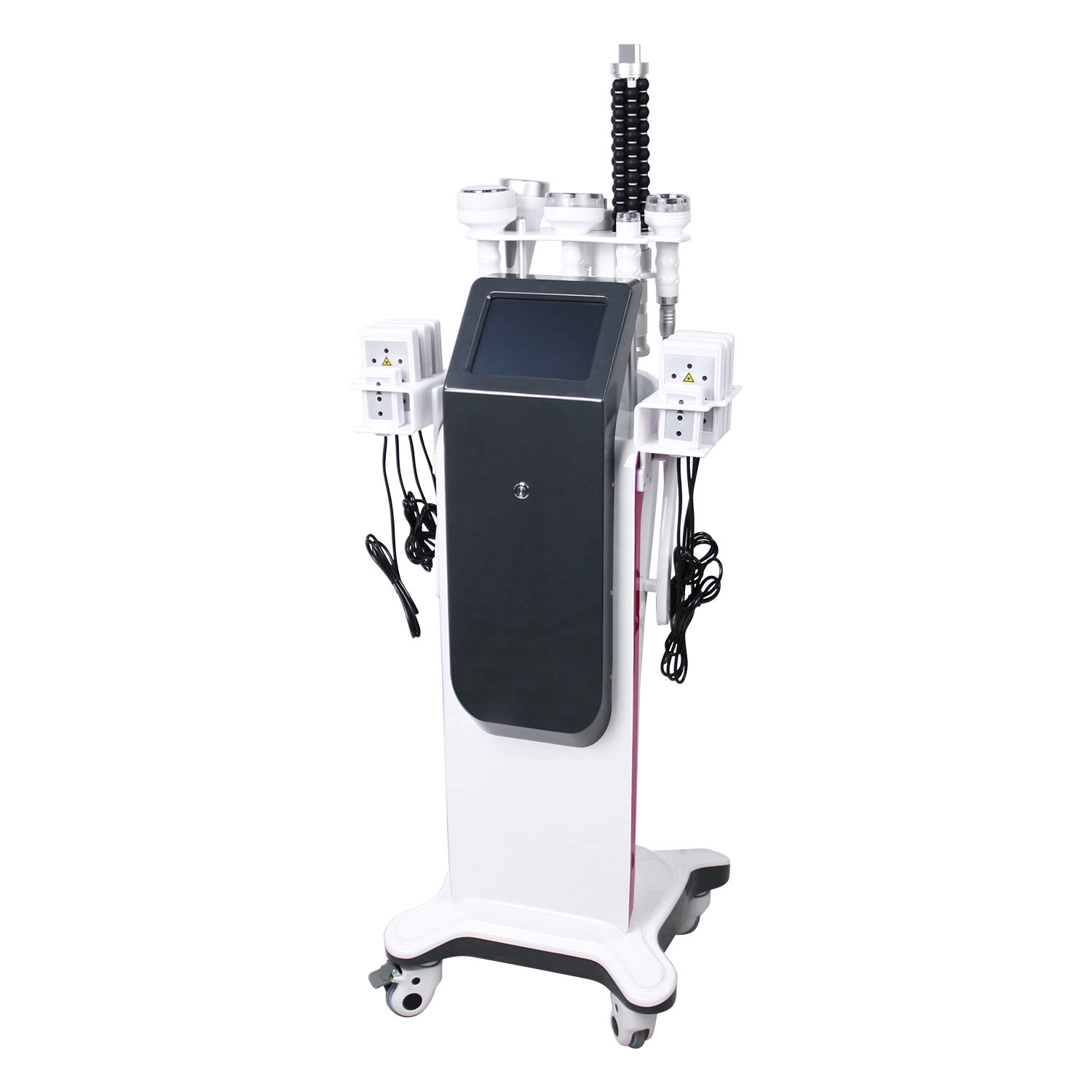
Professional 6-in-1 Cavitation Vacuum Machine for Body Contouring & Slimming Treatment
The 6-in-1 Cavitation Vacuum Machine is a professional body contouring system designed for salons and spas seeking high-performance slimming solutions. This machine integrates 40K ultrasonic cavitation, vacuum suction, RF technology, and laser lipolysis to target stubborn fat, enhance lymphatic drainage, tighten the skin, and contour the body shape effectively.
Equipped with multiple ergonomic handles and a smart touch screen, this cavitation vacuum machine provides a comfortable and efficient experience for both operators and clients. It is ideal for full-body treatments including abdomen, arms, legs, waistline, hips, and back.
Perfect for beauty salons, spas, and aesthetic centers that want to offer non-invasive fat reduction and body-sculpting services.
Get more information
If you have any comments or good suggestions, please leave us a message; later our professional staff will contact you as soon as possible.
Let's Talk
Stay in touch with us for cutting-edge beauty solutions, professional guidance, and customized service.
Contact


Room 307, Building A, Huilong International E-commerce Industrial Park, No. 10 Xipengling Road, Helong Street, Baiyun District, Guangzhou, China
© 2025 HUIMAIN. All Rights Reserved. Privacy Policy | Terms and Conditions | Sitemap
Facebook
Instagram
Medical beauty equipment factory
huimain Medical beauty equipment factory
beauty machine supplier
Whatsapp: +8619124004543