


Training Courses for Operating Aqua Peel Machines
- Why structured professional training matters
- Patient safety and infection control
- Device mechanics, settings and safe parameter selection
- Regulatory and legal considerations
- Core curriculum for aqua peel machine operator training
- Module 1 — Fundamentals: skin science, indications and contraindications
- Module 2 — Hands-on operation, protocols and treatment planning
- Module 3 — Post-treatment care and complication management
- Recommended curriculum table
- Assessment, certification and maintaining competence
- Competency-based assessments
- Continuing education and quality assurance
- Record keeping, SOPs and legal documentation
- Implementing training in clinics, academies and distributor networks
- Train-the-trainer programs and OEM partnerships
- Clinical testing, validation and data-driven practice
- Supplier selection: what to evaluate
- About Guangzhou Huimain Technology Co., Ltd. — partner profile and advantages
- Practical tips for running successful training courses
- Use blended learning—combine eLearning with hands-on labs
- Simulators and staged patients
- Metrics and continuous improvement
- Frequently Asked Questions (FAQ)
- 1. How many hours of training are necessary to operate an aqua peel machine safely?
- 2. Are aqua peel machines considered medical devices?
- 3. What infection-control measures must be taught?
- 4. How can clinics measure the effectiveness of training?
- 5. What should be included in a train-the-trainer agreement with a supplier?
- 6. Is certification from the device manufacturer sufficient?
This article provides a data-driven, practice-oriented roadmap for training operators of aqua peel machines (hydrodermabrasion/hydrofacial-style systems). It summarizes core competencies, curriculum modules, safety and infection-control protocols, assessment standards, and vendor selection criteria that clinics, training academies, and distributors should apply to ensure effective, safe, and compliant treatments. The guidance here references international device and infection-control standards and shows how structured training reduces adverse events, increases client satisfaction, and supports clinic revenue growth.
Why structured professional training matters
Patient safety and infection control
Aqua peel treatments use a combination of vacuum extraction, saline or serum infusion, and mechanical exfoliation. Because these modalities contact skin and may mobilize fluids and debris, training must emphasize cross-contamination prevention, disinfection, and appropriate use of consumables and single-use parts. For infection-control best practices, reference CDC guidance on disinfection and sterilization in healthcare settings: CDC: Disinfection and Sterilization Guidelines. Practically, training must include cleaning protocols, selection of EPA-registered disinfectants, contact times, and documentation requirements.
Device mechanics, settings and safe parameter selection
Operators need a solid grasp of the aqua peel machine's technical components: vacuum suction, fluid delivery rates, tip designs, pump systems, and optional adjuncts like LED therapy or ultrasonic infusion. Understanding how parameter changes affect tissue interaction prevents burns, excessive erythema, or inadequate results. Training should combine didactic sessions (device physics, mechanism of action, contraindications) with hands-on calibration exercises and device troubleshooting flowsheets.
Regulatory and legal considerations
Classification of beauty devices varies by market. Some countries treat advanced devices as medical devices requiring quality systems (for example, ISO 13485: ISO 13485), while others regulate under cosmetics or consumer devices. Training must include local regulatory basics and documentation best practices to protect clinics and manufacturers from compliance issues. Additionally, clear informed-consent protocols and complication-consent checklists are essential legal controls.
Core curriculum for aqua peel machine operator training
Module 1 — Fundamentals: skin science, indications and contraindications
Operators need to recognize skin types (Fitzpatrick scale), common indications (congested skin, mild photoaging, enlarged pores, superficial hyperpigmentation), and contraindications (active infections, isotretinoin use, open wounds). Training materials should cite dermatology references and evidence summaries when discussing expected outcomes and limitations of hydrodermabrasion compared with other modalities such as chemical peels or microdermabrasion (Microdermabrasion overview).
Module 2 — Hands-on operation, protocols and treatment planning
This module covers start-up checks, cartridge/tip selection, serum selection and mixing (if applicable), suction and infusion settings by indication and skin type, sequencing (cleansing, exfoliation, extraction, infusion, finishing), and adjuncts (LED, ultrasound). Role-play and supervised live treatments should form the core of practical hours. Emphasize standardized protocols and individualized adjustments for sensitive or reactive skin.
Module 3 — Post-treatment care and complication management
Post-treatment instruction includes immediate aftercare (soothing serums, SPF application), timelines for downtime (usually minimal), recognition of adverse events (prolonged erythema, infection, post-inflammatory hyperpigmentation), and steps for escalation to medical provider. Include algorithms for antibiotic referral when necessary and guidance aligned with dermatologic best practice.
Recommended curriculum table
The table below is a practical template training providers can adapt. It describes typical module durations, competency goals, and assessment methods.
| Module | Approx. Duration | Learning Outcomes | Assessment |
|---|---|---|---|
| Skin science & indications | 3 hours | Identify skin types, indications, contraindications | MCQ quiz |
| Device mechanics & safety | 4 hours | Understand components, maintenance, and emergency shutoff | Practical checklist |
| Hands-on treatments | 6–12 hours (supervised) | Perform full treatments on volunteers/simulators | Direct observation + logbook |
| Post-care & complications | 2 hours | Manage common side effects and referrals | Case-study assessment |
| Infection control & documentation | 2 hours | Apply CDC disinfection guidance and SOP writing | Practical competence sign-off |
Assessment, certification and maintaining competence
Competency-based assessments
Competency assessments should combine theory (written exams), observed structured clinical examinations (OSCE-style practicals), and a minimum number of supervised treatments logged in a portfolio. A typical threshold for certification might be 10–20 supervised procedures, depending on local regulations and complexity of device features.
Continuing education and quality assurance
Ongoing competence can be ensured through periodic refresher courses, adverse-event reviews, and peer audits. Clinics should track outcome metrics such as patient satisfaction scores, complication rates, and repeat-treatment intervals. These quality indicators align with standard medical-device quality systems like ISO 13485 (ISO 13485), which emphasize post-market surveillance and corrective actions.
Record keeping, SOPs and legal documentation
Training must teach how to create and maintain SOPs, device maintenance logs, informed-consent templates, and incident-report forms. This paperwork is both a clinical safety tool and a legal protective mechanism. For clinics operating across jurisdictions, include basic regulatory summaries tailored to local law and any reporting obligations to health authorities.
Implementing training in clinics, academies and distributor networks
Train-the-trainer programs and OEM partnerships
For scale, implement 'train-the-trainer' models where OEMs or experienced clinicians certify in-house educators. Well-designed OEM training reduces variance in treatment outcomes and supports brand credibility. When evaluating OEM training, verify whether the supplier provides training materials, hands-on support, clinical testing data, and after-sales warranty and parts supply.
Clinical testing, validation and data-driven practice
Before rolling out training, run pilot treatments under clinical supervision to validate protocols. Collect simple pre/post outcome measures (photography, standardized scales for pore size, texture, and patient-reported outcomes). If publishing or marketing claims are made, ensure those claims are supported by evidence; for general device background see the HydraFacial overview: HydraFacial.
Supplier selection: what to evaluate
Choose suppliers who provide: clear technical documentation, CE or relevant certification, evidence of quality management, spare-part availability, warranty and after-sales training support. Look for partners who run structured clinical testing and can support localized training in the operator's language.
About Guangzhou Huimain Technology Co., Ltd. — partner profile and advantages
Guangzhou Huimain Technology Co., Ltd. is a high-tech enterprise specializing in the research, development, production, and after-sales service of professional beauty machines and home-use devices. Operating from a 3,000-square-meter facility, Huimain is driven by a strong technical team where over 60% of staff hold higher education degrees. The company features dedicated departments for purchasing, clinical testing, and engineering, allowing continuous R&D investment and rigorous quality control.
With CE certification, SGS approval, and multiple patents, Huimain's devices have gained strong market presence across China, Southeast Asia, the Middle East, Europe, and North America. Their OEM/ODM capabilities enable customized design and manufacturing of High Quality medical and beauty equipment for salons and distributors worldwide. Key product lines include Cryolipolysis machines, EMS sculpting machines, Plasma devices, Shockwave systems, HIFU machines, Hydrofacial/aqua peel machines, Cavitation vacuum systems, Laser hair removal, Tattoo removal units, and Microneedling devices.
Why consider Huimain as a training & supply partner:
- Integrated R&D and clinical testing departments support evidence-based protocol development.
- Comprehensive after-sales and spare-parts network reduces downtime and supports training continuity.
- OEM/ODM flexibility enables branded training packages and localized manuals in multiple languages.
- Certifications (CE, SGS) and patents demonstrate adherence to international quality benchmarks.
Practical tips for running successful training courses
Use blended learning—combine eLearning with hands-on labs
Deliver theoretical content via online modules to maximize hands-on lab time. Pre-course eLearning reduces classroom hours and improves knowledge retention during practical sessions. Include video demonstrations of procedures, device maintenance, and disinfection steps.
Simulators and staged patients
When possible, use skin phantoms and volunteer models before live patient treatments. This staged approach allows trainees to master device handling, tip angulation, and suction modulation before real clinical exposure.
Metrics and continuous improvement
Track trainee outcomes such as time-to-competence, complication rates, and client satisfaction post-procedure. Use this data to refine curricula, update SOPs, and inform suppliers about design improvements that reduce operator error.
Frequently Asked Questions (FAQ)
1. How many hours of training are necessary to operate an aqua peel machine safely?
Minimum recommended classroom + practical time is approximately 15–25 hours, including 6–12 hours of supervised hands-on treatments. Exact requirements depend on machine complexity and local regulations; competency should be assessed by practical checklists and a logged portfolio.
2. Are aqua peel machines considered medical devices?
Classification varies by jurisdiction. Some advanced systems with therapeutic claims may be regulated as medical devices; check local authorities. For broad regulatory frameworks, see ISO 13485: ISO 13485.
3. What infection-control measures must be taught?
Teach pre- and post-treatment cleaning, disinfection of reusable parts, use of single-use tips where applicable, PPE use, and safe handling of serums. Follow CDC guidance on disinfection and sterilization: CDC.
4. How can clinics measure the effectiveness of training?
Use objective measures such as complication rates, patient satisfaction surveys, repeat-treatment rates, and time-to-competence metrics recorded in trainee portfolios. Audits and peer reviews further validate outcomes.
5. What should be included in a train-the-trainer agreement with a supplier?
Include scope of training, number of master trainers, curriculum content, training materials, on-site support duration, evaluation metrics, and warranty/after-sales terms. Ensure language localization and access to replacement parts and SOP updates.
6. Is certification from the device manufacturer sufficient?
Manufacturer certification is valuable but should be complemented by local regulatory compliance, clinic-level SOPs, and evidence of continuing education. Independent third-party accreditation or alignment with recognized standards strengthens credibility.
Ready to establish a robust training program or source reliable aqua peel machines? Contact Guangzhou Huimain Technology Co., Ltd. for product information, OEM/ODM training packages, clinical testing support, and after-sales services: https://www.huimainbeauty.com/ | Email: coco@huimainbeauty.com
6 Handle Magnetic Face Lift Machine Vertical
Who can use this machine?
It is suitable for all skin types and for clients looking for lifting, tightening, or body contouring.
Portable EMS RF Body Sculpting Machine
How soon can results be seen?
Most users notice visible improvements after 4–6 sessions with regular use.
About Distributor
Do you provide training or manuals?
Yes, we offer operation manuals, video tutorials, and online training. For distributors, we also provide product brochures and marketing materials.
HF-61
How often should I use the Hydrafacial Machine for optimal results?
For best results, use the Hydrafacial machine once a week or as recommended by a skincare professional, depending on your skin type and goals.
HMT22
How long does each treatment session last?
Each session typically lasts between 30-45 minutes, depending on the areas being treated.

CO2 Fractional Laser Machine – Professional Wrinkle Removal & Skin Resurfacing Device
The CO2 Fractional Laser Machine is a multifunctional aesthetic device designed for professional clinics and beauty salons. Using advanced fractional CO2 laser technology, it effectively targets acne scars, freckles, pigmentation, nevi, and deep wrinkles. Additionally, it provides non-invasive skin rejuvenation, vaginal tightening, and intimate beautification. This professional CO2 laser equipment combines precision, safety, and powerful energy output to deliver outstanding anti-aging and dermatological results.

5-in-1 40K Cavitation Vacuum Machine for Body Slimming & Fat Reduction
The 5-in-1 40K Cavitation Vacuum Machine is a professional body shaping system designed for fat reduction, cellulite smoothing, and overall body contouring. Using 40KHz ultrasonic cavitation, this device breaks down stubborn fat cells, while vacuum suction improves lymphatic drainage and accelerates toxin removal.
With multiple RF tightening handles, the machine stimulates collagen regeneration and helps lift and firm loose areas of the body. Compact, powerful, and easy to operate, it is the perfect solution for beauty salons, spa centers, and slimming studios seeking fast and visible fat-reduction results.
This cavitation vacuum machine is built to deliver safe, non-invasive treatments with no downtime—making it a top choice for body contouring professionals.

6-in-1 Multifunctional Beauty and Weight Loss Machine | Cavitation, RF, Vacuum PDT, EMS, Laser Slimming Equipment for Professional Use
The 6-in-1 Multifunctional Beauty and Weight Loss Machine is a professional-grade device designed for salons, clinics, and distributors. Combining six advanced technologies—cavitation, RF (radio frequency) for face & body, vacuum RF PDT, BIO/EMS microcurrent, and laser lipo pads—this device offers comprehensive body contouring, fat reduction, skin tightening, and anti-aging treatments.
It provides businesses with an all-in-one solution to expand service offerings, attract more clients, and achieve a rapid return on investment.
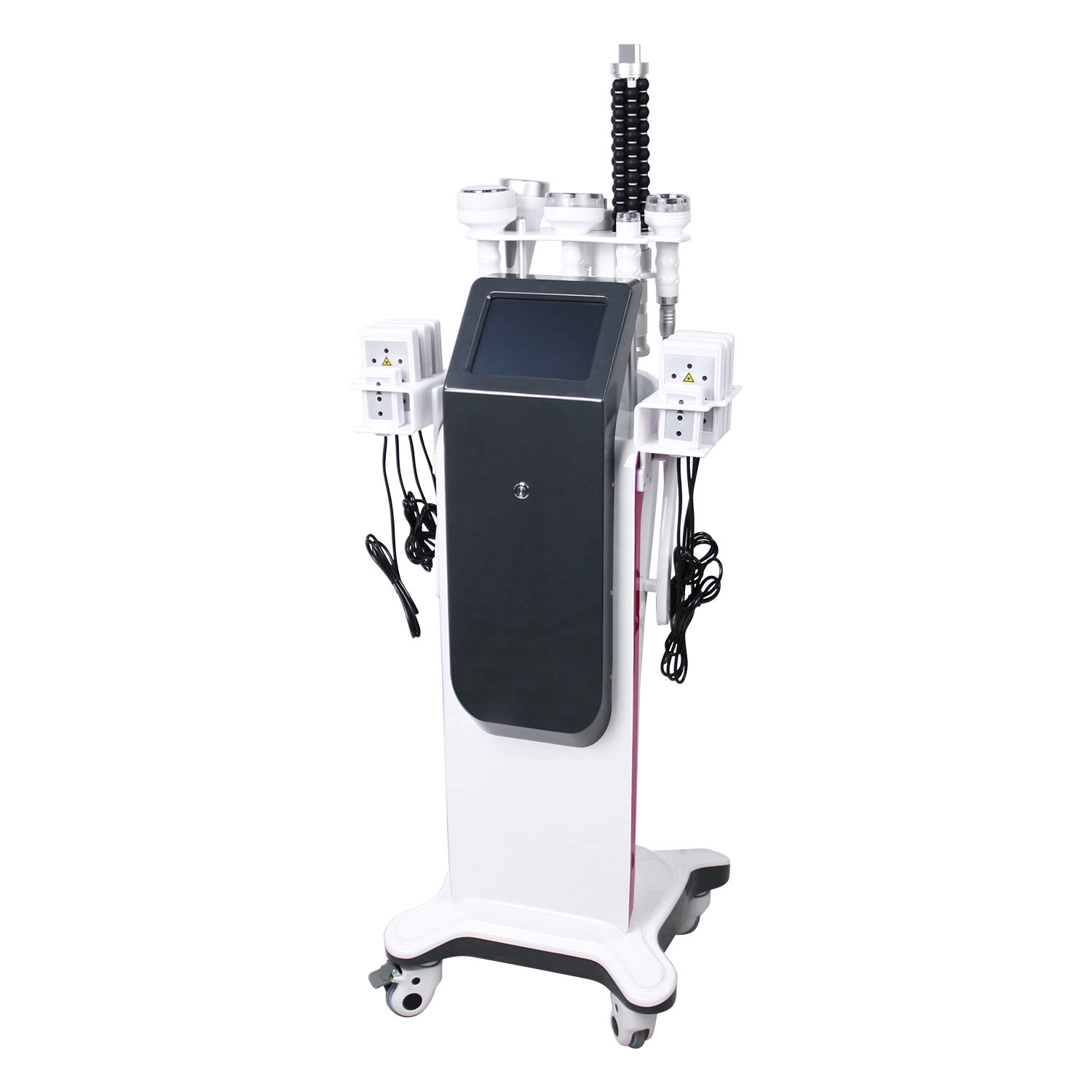
Professional 6-in-1 Cavitation Vacuum Machine for Body Contouring & Slimming Treatment
The 6-in-1 Cavitation Vacuum Machine is a professional body contouring system designed for salons and spas seeking high-performance slimming solutions. This machine integrates 40K ultrasonic cavitation, vacuum suction, RF technology, and laser lipolysis to target stubborn fat, enhance lymphatic drainage, tighten the skin, and contour the body shape effectively.
Equipped with multiple ergonomic handles and a smart touch screen, this cavitation vacuum machine provides a comfortable and efficient experience for both operators and clients. It is ideal for full-body treatments including abdomen, arms, legs, waistline, hips, and back.
Perfect for beauty salons, spas, and aesthetic centers that want to offer non-invasive fat reduction and body-sculpting services.
Get more information
If you have any comments or good suggestions, please leave us a message; later our professional staff will contact you as soon as possible.
Let's Talk
Stay in touch with us for cutting-edge beauty solutions, professional guidance, and customized service.
Contact


Room 307, Building A, Huilong International E-commerce Industrial Park, No. 10 Xipengling Road, Helong Street, Baiyun District, Guangzhou, China
© 2025 HUIMAIN. All Rights Reserved. Privacy Policy | Terms and Conditions | Sitemap
Facebook
Instagram
Medical beauty equipment factory
huimain Medical beauty equipment factory
beauty machine supplier
Whatsapp: +8619124004543