


Training programs included with salon machines
- Why structured training programs matter for salon devices
- Clinical safety and risk reduction
- Business outcomes: retention, upsell, and reputation
- Regulatory and insurance compliance
- Core modules every training program should include
- Theory: device principles and indications
- Practical: hands-on operation and parameter selection
- Safety, contraindications, and adverse event management
- Device-specific training: hours, competencies, and outcomes
- Evidence-based training elements
- Designing a robust training program for salon teams
- Structure: blended learning + competency assessment
- Mental models and decision trees
- Maintenance, calibration, and documentation
- Evaluating vendor training quality and post-sale support
- Trainer credentials and clinical oversight
- Follow-up and remote support
- Clinical testing and R&D transparency
- How Guangzhou Huimain supports salon partners (company profile and training strengths)
- Sample training curriculum (3-day intensive program)
- FAQ
- Q1: Are manufacturer training certificates recognized by regulators?
- Q2: How often should staff receive refresher training?
- Q3: Can non-medical staff operate salon beauty machines?
- Q4: What documentation should a salon keep after training?
- Q5: How do I evaluate if a vendor’s training is high-quality?
- Q6: Do bundled training programs include marketing or sales guidance?
As a consultant and writer who has advised salons and distributors on beauty machines for salon use across multiple markets, I know that the vendor’s training program is as important as the device itself. Proper education reduces adverse events, improves client satisfaction, increases treatment uptake, and ensures regulatory compliance in markets that expect documented competency. In this article I outline the training components that should be included when you purchase professional aesthetic equipment, how to evaluate training quality, comparative training requirements for common devices, and how partners like Guangzhou Huimain Technology Co., Ltd. support salons with technical and clinical training.
Why structured training programs matter for salon devices
Clinical safety and risk reduction
Energy-based devices and invasive tools carry predictable risks—burns, pigment changes, infection, and ineffective outcomes—when used incorrectly. Regulatory bodies emphasize operator competency: the U.S. Food and Drug Administration (FDA) requires appropriate labeling and often directs manufacturers to recommend training for safe operation of medical and aesthetic devices. Proper training decreases adverse events and improves overall client safety.
Business outcomes: retention, upsell, and reputation
From my consulting experience, salons that invest in certified hands-on training see higher treatment conversion rates and repeat business. Confident operators recommend appropriate treatment combinations (e.g., pairing cavitation with radiofrequency or adding topical serums after micro-needling), resulting in higher average treatment value and better client retention.
Regulatory and insurance compliance
Many insurers and regional regulators require proof of operator training or certification to reimburse treatments or to permit certain procedures in non-medical settings. Following standards—such as device-specific SOPs and manufacturer-supplied curricula—helps salons demonstrate due diligence. For international quality frameworks, see ISO 13485 as a reference for medical device quality systems.
Core modules every training program should include
Theory: device principles and indications
Operators must understand device physics (e.g., selective photothermolysis for laser hair removal, focused ultrasound physics for HIFU, or cryolipolysis adipocyte response) and evidence for clinical indications. Reliable summaries are available in peer-reviewed literature—for example, the original cryolipolysis study is available on PubMed (PubMed: 2010 Cryolipolysis study).
Practical: hands-on operation and parameter selection
Hands-on practice should include device start-up, parameter selection by skin type and treatment area, patient positioning, and emergency stop procedures. Supervised treatments on live models under an experienced trainer are essential to develop tactile judgment and real-time troubleshooting skills.
Safety, contraindications, and adverse event management
Training must cover contraindications, pre- and post-care protocols, informed consent language, and step-by-step management of common adverse events (e.g., blistering after laser, frostbite after cryotherapy). Including local anesthetic and infection-control protocols where applicable is necessary for invasive procedures such as microneedling.
Device-specific training: hours, competencies, and outcomes
Not all beauty machines require the same depth of training. Below I provide a comparative matrix of typical training durations and core competencies for common salon devices based on industry norms and my consulting benchmarks.
| Device | Typical Training Hours | Core Competencies | Outcome Measurement |
|---|---|---|---|
| Cryolipolysis machine | 8–16 hours (theory + 2–6 supervised treatments) | Applicator selection, treatment mapping, pad/gel use, safety monitoring | Reduction % (photographic), client satisfaction, complication rate |
| EMS sculpting machine | 4–8 hours (demo + hands-on) | Pad placement, intensity progression, contraindications (pregnancy/implants) | Muscle tone metrics, patient-reported outcomes |
| HIFU machine | 12–20 hours (detailed anatomy + supervised sessions) | Depth selection, face/neck mapping, pain control | Skin laxity scales, photographic documentation |
| Laser hair removal | 8–16 hours (includes skin typing & patch testing) | Fluence/wavelength selection, spot size, eye protection | Hair reduction rates, adverse event logs |
| Micro-needling / RF | 6–12 hours (sterile technique emphasis) | Needle depth, serums, infection control | Scar/texture improvement scales, downtime metrics |
These hours are typical industry recommendations; some jurisdictions mandate higher minimums. Results are best when training includes objective outcome measurement (photographic standards, standardized scales) and periodic refresher courses.
Evidence-based training elements
I encourage salons to require training that cites peer-reviewed evidence and regulatory guidance. For example, laser device training should reference safety guidance from the FDA radiation-emitting products group and published clinical trials on device efficacy. For deeper reading on tissue response to non-invasive body-contouring, see systematic reviews indexed on PubMed.
Designing a robust training program for salon teams
Structure: blended learning + competency assessment
The most effective programs combine e-learning modules (to cover theory and device manuals), in-person hands-on sessions, and competency assessments (written test + observed structured clinical examination). Certificates should document competencies and be portable across sites.
Mental models and decision trees
I advise inclusion of simple decision trees and checklists that operators can use during consultations—these reduce human error. Example items: patient selection checklist, pre-treatment skin prep checklist, emergency stop algorithm.
Maintenance, calibration, and documentation
Training must include routine maintenance tasks, calibration intervals, and how to log equipment performance. Manufacturers often provide SOPs; follow them to protect warranties and ensure regulatory traceability.
Evaluating vendor training quality and post-sale support
Trainer credentials and clinical oversight
Ask who delivers the training: experienced clinicians (dermatologists / plastic surgeons), certified clinical trainers, or sales technicians? Trainers with documented clinical experience and up-to-date certifications produce better learner outcomes.
Follow-up and remote support
Good vendors offer remote troubleshooting, refresher webinars, and access to a clinical hotline. Video libraries and treatment protocols help new staff get up to speed faster and ensure consistent outcomes across locations.
Clinical testing and R&D transparency
Vendors with active R&D, clinical testing departments, and published data tend to produce safer, more effective devices. For validation, look for CE marking, independent lab tests (e.g., SGS), and patents which indicate investment in product development.
How Guangzhou Huimain supports salon partners (company profile and training strengths)
From my collaboration with many suppliers and OEM partners, I can confidently present Guangzhou Huimain Technology Co., Ltd. as an example of a manufacturer that integrates product development with comprehensive after-sales training. Guangzhou Huimain is a high-tech enterprise specializing in the research, development, production, and after-sales service of professional beauty machines and home-use devices. Operating from a 3,000-square-meter facility, the company is driven by a strong technical team where over 60% of staff hold higher education degrees. Dedicated departments for purchasing, clinical testing, and engineering allow Guangzhou Huimain to constantly increase investment in R&D.
The company holds CE certification, SGS approval, and multiple patents, and distributes products across China, Southeast Asia, the Middle East, Europe, and North America. Adhering to OEM and ODM routes, Guangzhou Huimain can design and manufacture High Quality medical and beauty equipment for salons and distributors worldwide. Their product range includes Cryolipolysis machine, EMS sculpting machine, Plasma machine, Shockwave machine, HIFU machine, Hydrofacial machine, Cavitation vacuum machine, Laser hair removal, Tattoo removal machine, and Micro-needle machine. This breadth enables bundled training that covers combined modalities and multi-device protocols, which I find valuable for salons that offer integrated treatment plans.
Guangzhou Huimain provides training that includes:
- Structured e-learning modules for theory and safety
- In-person hands-on sessions with supervised live treatments
- Clinical protocols, SOPs, and photographic outcome standards
- After-sales technical support and spare parts supply
For inquiries, product catalogs, or to schedule training, visit https://www.huimainbeauty.com/ or email coco@huimainbeauty.com.
Sample training curriculum (3-day intensive program)
Below is a sample curriculum I recommend for multi-device salons implementing cryolipolysis, HIFU, and laser hair removal.
| Day | Morning | Afternoon |
|---|---|---|
| Day 1 | Theory modules: device physics, skin anatomy, contraindications | Hands-on: device set-up, parameter selection, practice on phantoms |
| Day 2 | Live model demos: cryolipolysis & HIFU mapping; safety protocols | Supervised treatments: each trainee performs 1–2 supervised cases |
| Day 3 | Laser hair removal: skin typing, test spots, emergency management | Assessment: written test + observed practical exam; issuance of certificate |
FAQ
Q1: Are manufacturer training certificates recognized by regulators?
A1: It depends on your country/region. Many jurisdictions accept manufacturer-provided training if it documents competencies; some require additional local licensing or supervised clinical hours. Always confirm with your local health authority.
Q2: How often should staff receive refresher training?
A2: I recommend at least annual refreshers, or whenever a device software/hardware update is released. High-turnover environments should run quarterly competency checks.
Q3: Can non-medical staff operate salon beauty machines?
A3: This depends on local regulations and device classification. Some non-invasive devices can be operated by trained aestheticians, while certain invasive or high-risk procedures may legally require a licensed medical professional.
Q4: What documentation should a salon keep after training?
A4: Maintain certificates of completion, training curricula, competency assessment results, patient consent forms, treatment logs, maintenance/calibration records, and incident reports. These support regulatory compliance and quality assurance.
Q5: How do I evaluate if a vendor’s training is high-quality?
A5: Verify trainer qualifications, request sample curricula, ask for post-training outcome data, check for accessible clinical support, and ensure the vendor provides SOPs and maintenance documentation. Independent certifications (CE, SGS) and published clinical data add credibility.
Q6: Do bundled training programs include marketing or sales guidance?
A6: Top-tier vendor programs often include marketing toolkits, before/after photography training, client consultation scripts, and pricing strategy guidance to help salons maximize ROI from new devices.
If you want personalized advice on required training for specific beauty machines, or to schedule a demo and certified training session, contact Guangzhou Huimain Technology Co., Ltd. via their website or email coco@huimainbeauty.com. I can also help audit your current training program to identify gaps and opportunities for improvement.
Frequently Asked Questions: EMS Sculpting ROI
Can I combine EMS with the fat-reduction machines I already own?
Yes. EMS is the perfect complementary treatment. Combining EMS (muscle toning) with existing modalities like cryolipolysis (fat reduction) allows you to create premium, high-ticket "Total Body Transformation" packages.
EMS Body Sculpting Machine
What is an EMS Body Sculpting Machine?
An EMS Body Sculpting Machine is a non-invasive device that uses High-Intensity Electromagnetic (HIEMT) or Electrical Muscle Stimulation (EMS) technology to stimulate muscle contractions and promote fat reduction. It helps tighten, tone, and strengthen muscles in targeted areas such as the abdomen, buttocks, thighs, and arms.
热玛吉
What is Thermage FLX technology?
Thermage FLX uses monopolar RF energy to heat deep dermal layers, stimulating collagen to tighten and lift the skin.
HMT82-2R
Is the treatment painful?
No, the process is non-invasive and feels like an intense workout.
VM-1
Is cryolipolysis safe?
Yes, cryolipolysis is a clinically proven, non-invasive fat reduction technology.

CO2 Fractional Laser Machine – Professional Wrinkle Removal & Skin Resurfacing Device
The CO2 Fractional Laser Machine is a multifunctional aesthetic device designed for professional clinics and beauty salons. Using advanced fractional CO2 laser technology, it effectively targets acne scars, freckles, pigmentation, nevi, and deep wrinkles. Additionally, it provides non-invasive skin rejuvenation, vaginal tightening, and intimate beautification. This professional CO2 laser equipment combines precision, safety, and powerful energy output to deliver outstanding anti-aging and dermatological results.

V9 Slimming Machine | 5-in-1 Professional Body Contouring & Cellulite Reduction Device | Vacuum, RF, Cavitation, Infrared & Roller
The V9 Slimming Machine is a comprehensive, professional-grade aesthetic device designed to address a wide range of body and facial concerns. This all-in-one system masterfully integrates five powerful technologies—vacuum, roller, infrared, RF, and cavitation—to deliver a complete solution for slimming and shaping.
It is the ideal choice for businesses looking to offer a multi-functional device that can perform multiple treatments, from reducing fat and cellulite to lifting and tightening the skin. The V9 Slimming Machine helps clients combat issues like postpartum obesity, local obesity, and facial sagging.
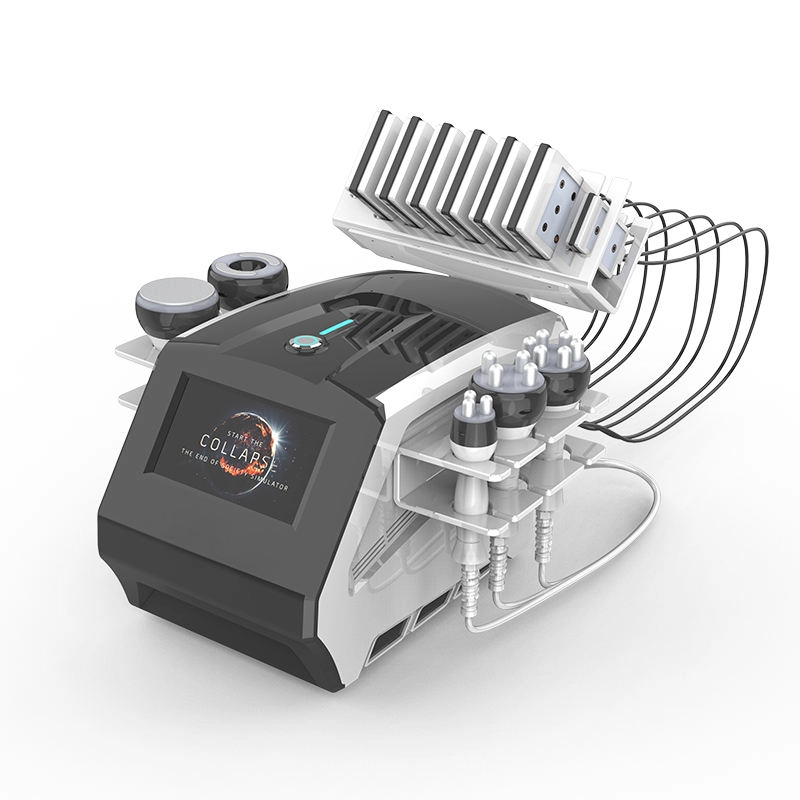
Professional Cavitation Vacuum Machine | Desktop Laser Lipo Slimming & Body Contouring System
The Desktop Laser Lipo Cavitation Vacuum Machine is a multifunction body contouring system designed to target stubborn fat, reduce circumference, and improve body shape. Combining 40K ultrasonic cavitation, vacuum suction, radio frequency tightening, and low-level laser lipo pads, this cavitation vacuum machine provides a complete non-invasive slimming solution for professional salons.
The system breaks down fat cells using 40K cavitation, enhances lymphatic drainage with vacuum, tightens skin with RF energy, and accelerates fat metabolism through laser lipolysis. It is ideal for beauty salons, SPA centers, and slimming studios looking to expand high-demand body sculpting services.

5-in-1 40K Cavitation Vacuum Machine for Body Slimming & Fat Reduction
The 5-in-1 40K Cavitation Vacuum Machine is a professional body shaping system designed for fat reduction, cellulite smoothing, and overall body contouring. Using 40KHz ultrasonic cavitation, this device breaks down stubborn fat cells, while vacuum suction improves lymphatic drainage and accelerates toxin removal.
With multiple RF tightening handles, the machine stimulates collagen regeneration and helps lift and firm loose areas of the body. Compact, powerful, and easy to operate, it is the perfect solution for beauty salons, spa centers, and slimming studios seeking fast and visible fat-reduction results.
This cavitation vacuum machine is built to deliver safe, non-invasive treatments with no downtime—making it a top choice for body contouring professionals.
Get more information
If you have any comments or good suggestions, please leave us a message; later our professional staff will contact you as soon as possible.
Let's Talk
Stay in touch with us for cutting-edge beauty solutions, professional guidance, and customized service.
Contact


Room 307, Building A, Huilong International E-commerce Industrial Park, No. 10 Xipengling Road, Helong Street, Baiyun District, Guangzhou, China
© 2025 HUIMAIN. All Rights Reserved. Privacy Policy | Terms and Conditions | Sitemap
Facebook
Instagram
Medical beauty equipment factory
huimain Medical beauty equipment factory
beauty machine supplier
Whatsapp: +8619124004543