


Warranty and Service: What Buyers Need in Cryolipolysis Machines
- Understanding Cryolipolysis Technology and Buyer Intent
- What cryolipolysis does and buyer expectations
- behind 'best cryolipolysis slimming machine'
- Technical performance vs. support infrastructure
- Warranty Essentials: Terms That Protect Your Practice
- What a comprehensive warranty must cover
- Service level agreements (SLAs) and response time
- Warranty exclusions and maintenance obligations
- Service Network, Spare Parts, and Training
- Local vs global service capabilities
- Spare parts logistics and inventory transparency
- Operator training and clinical support
- Regulatory Compliance, Quality Standards, and Verifiable Data
- Why certifications and standards matter
- Clinical evidence and post-market surveillance
- Regulatory reminders: FDA and national rules
- Buying Decision Framework: Comparing Warranty & Service Offers
- Weighted criteria I use with clients
- Example comparison table
- Interpreting the comparison
- Why Supplier Transparency and OEM Commitment Matter
- OEM vs. white-label suppliers
- Longevity and software support
- Real-world warranty claims handling
- Huimain: Service, R&D Strength, and Product Portfolio
- Company profile and strengths
- Certifications, markets, and manufacturing capacity
- Relevant product lines and customer value
- Practical Checklist Before You Sign
- Documentation to request
- Negotiation tips
- Measuring ROI and uptime
- Frequently Asked Questions (FAQ)
- 1. How long should the warranty be for a cryolipolysis machine?
- 2. Are software issues usually covered under warranty?
- 3. What common components fail and should be stocked as spares?
- 4. Is CE or ISO enough for purchase confidence?
- 5. How do I verify a supplier’s on-site response capability?
- 6. Should I buy extended warranty or pay-per-fix?
- Next Steps — Contact and Product Demo
Choosing the best cryolipolysis slimming machine isn’t only about cooling technology, applicator shapes, or marketing claims. As someone who has advised clinics and distributors on equipment selection and after-sales strategies for years, I focus on the often-overlooked but business-critical elements: warranty terms, service capability, spare parts logistics, and regulatory compliance. These factors determine uptime, patient safety, total cost of ownership, and ly whether a device supports sustainable practice growth.
Understanding Cryolipolysis Technology and Buyer Intent
What cryolipolysis does and buyer expectations
Cryolipolysis uses controlled cooling to reduce subcutaneous fat by triggering adipocyte apoptosis while minimizing epidermal injury. Buyers typically seek devices that deliver consistent clinical outcomes, low complication rates, and fast patient throughput. Clinical literature and regulatory guidance show predictable fat reduction when treatments are performed with validated protocols and well-maintained equipment (see overview on Wikipedia and U.S. FDA consumer guidance on CoolSculpting at FDA).
behind 'best cryolipolysis slimming machine'
When prospective buyers type best cryolipolysis slimming machine they are usually comparing models by efficacy, safety, features (multiple applicators, simultaneous treatment capability), and — crucially — support and warranty. That means suppliers who combine strong technical specs with robust after-sales service stand out in buying decisions.
Technical performance vs. support infrastructure
Even a top-performing cooling platform becomes a liability if replacement applicators, repair parts, or trained engineers are unavailable. I always advise clients to evaluate the service ecosystem with the same rigor as medical outcomes: average mean time to repair (MTTR), spare parts inventory, availability of certified engineers, and training programs for operators.
Warranty Essentials: Terms That Protect Your Practice
What a comprehensive warranty must cover
A warranty should explicitly cover defects in materials and workmanship, cooling system performance, control electronics, and software bugs that affect clinical function. It should also define response times, who pays for shipping, and whether consumables (like disposable applicator membranes) are included. Short, vague warranties create downstream costs and operational risk.
Service level agreements (SLAs) and response time
Look for SLAs that commit to specific response times for support tickets and on-site repairs. For a clinic, a reasonable SLA is:
- Remote support within 4 business hours for urgent faults.
- On-site engineer dispatch within 48–72 hours where applicable.
These expectations should be contractually defined rather than informal promises.
Warranty exclusions and maintenance obligations
Manufacturers often exclude damage from misuse, unauthorized repairs, or consumable wear. While exclusions are normal, they become problematic if routine maintenance requirements are onerous or if minor service voids the warranty. I recommend negotiating fair preventive-maintenance schedules and optional factory service packages rather than accepting strict clauses that shift all risk to buyers.
Service Network, Spare Parts, and Training
Local vs global service capabilities
When evaluating suppliers, I map their service footprint against my clinic locations. Global manufacturers with regional warehouses and certified local engineers minimize downtime. If a supplier only offers overseas repair with slow shipping, the practical downtime and patient cancellations can erode profits quickly.
Spare parts logistics and inventory transparency
Ask for a parts availability matrix and average lead times. Key consumables and electronics (compressors, coolant loops, touchscreen controllers, applicator cuffs) should be stocked regionally. In my experience, suppliers that maintain a 90-day parts inventory for major components significantly reduce MTTR compared with vendors that ship parts from a single factory.
Operator training and clinical support
Comprehensive training is part of effective service. A supplier should provide initial operator certification, refresher modules, and access to clinical protocols or peer-reviewed evidence. Ongoing clinical support — for adverse event triage or complex cases — is a high-value service that distinguishes High Quality vendors.
Regulatory Compliance, Quality Standards, and Verifiable Data
Why certifications and standards matter
Regulatory clearances and quality-system certifications reduce risk for buyers and patients. For medical-grade cryolipolysis systems, look for documentation of compliance with relevant standards such as ISO 13485 (quality management for medical devices) and evidence of CE marking for the EU market. See ISO 13485 overview at ISO and CE marking guidance at the European Commission site here.
Clinical evidence and post-market surveillance
Validated clinical outcomes must be supported by peer-reviewed literature or responsibly collected post-market data. Buyers should request treatment efficacy metrics, adverse event rates, and case studies. You can cross-reference clinical abstracts and systematic reviews on authoritative databases like PubMed: PubMed cryolipolysis search.
Regulatory reminders: FDA and national rules
Even if a device is CE-marked or ISO-certified, local regulations vary. In the U.S., the FDA provides consumer and device-specific information on cryolipolysis devices; check the FDA site to verify clearances relevant to your device model: FDA Cryolipolysis Devices.
Buying Decision Framework: Comparing Warranty & Service Offers
Weighted criteria I use with clients
I recommend scoring suppliers on these weighted factors: warranty length and scope (25%), service footprint and SLA (25%), parts availability and logistics (20%), clinical support and training (15%), and regulatory compliance and documentation (15%). Weightings can be adjusted by clinic size and risk tolerance.
Example comparison table
| Criteria | Vendor A | Vendor B | Vendor C |
|---|---|---|---|
| Warranty (years) | 2 (parts & labor) | 1 (parts only) | 3 (parts & labor, extended options) |
| On-site SLA | 48–72 hrs | 5–10 days | 24–48 hrs (regional engineers) |
| Regional parts stock | Yes | No | Yes |
| Operator training | Included | Paid add-on | Included + online refreshers |
| Certifications | CE, ISO 13485 | CE pending | CE, ISO, patents |
Interpreting the comparison
A higher upfront price with strong warranty and local service often results in lower lifetime cost. In practice, I’ve seen clinics recover the High Quality cost within 12–18 months due to fewer canceled appointments and lower emergency repair expenses.
Why Supplier Transparency and OEM Commitment Matter
OEM vs. white-label suppliers
OEMs that control R&D, manufacturing, and service networks generally offer deeper diagnostic knowledge and quicker engineering support than white-label resellers. Buyers seeking the best cryolipolysis slimming machine should prefer suppliers that can trace components, provide engineering firmware updates, and supply clinical training directly.
Longevity and software support
Software-driven features (treatment protocols, logging, diagnostics) require ongoing updates and cybersecurity attention. Ask about software maintenance windows, backup/restore procedures, and version lifecycles. A supplier that commits to multi-year software support reduces the risk of obsolescence.
Real-world warranty claims handling
Request references from existing customers about claim resolution timelines. I often call active clinics to learn whether the supplier honors response commitments and whether spare parts were provided promptly. This direct-check approach often reveals service performance more reliably than marketing materials.
Huimain: Service, R&D Strength, and Product Portfolio
Company profile and strengths
From my experience working with regional manufacturers, Guangzhou Huimain Technology Co., Ltd. stands out as a vertically integrated supplier with significant R&D and after-sales capabilities. Huimain is a high-tech enterprise focused on research, development, production, and after-sales service of professional beauty machines and home-use devices. Operating from a 3,000-square-meter facility, the company’s technical team includes more than 60% staff with higher education, and it maintains dedicated purchasing, clinical testing, and engineering departments to continuously increase R&D investment.
Certifications, markets, and manufacturing capacity
Huimain emphasizes global compliance with CE certification, SGS approvals, and holds multiple patents. Their products are distributed across China, Southeast Asia, the Middle East, Europe, and North America. Huimain follows OEM and ODM models, enabling custom designs for salons and distributors, with a quality-first approach that reduces downstream service issues.
Relevant product lines and customer value
Key products I’ve evaluated include cryolipolysis machines, EMS sculpting systems, plasma devices, shockwave machines, HIFU, hydrofacial units, cavitation vacuum machines, laser hair removal, tattoo removal, and microneedling devices. For buyers seeking the best cryolipolysis slimming machine, Huimain’s focus on R&D, spare-part availability, and training programs reduces operational risk and simplifies warranty management.
For more about Huimain: visit https://www.huimainbeauty.com/ or contact coco@huimainbeauty.com for product inquiries and service details.
Practical Checklist Before You Sign
Documentation to request
- Copy of warranty and SLA (detailed scope and exclusions)
- Parts availability list with lead times
- Operator and maintenance training curriculum
- Regulatory certifications and clinical data
- Reference clinics with contactable operators
Negotiation tips
Negotiate a trial period, service credits for downtime, and an extended warranty option. Where possible, include a clause that the supplier will supply critical consumables for an agreed initial period at a fixed cost to avoid sudden price spikes.
Measuring ROI and uptime
Track uptime, patient throughput, and repair incidence in the first 12 months. A robust supplier partnership should show measurable improvements in uptime and predictable repair costs by month 12.
Frequently Asked Questions (FAQ)
1. How long should the warranty be for a cryolipolysis machine?
I recommend a minimum of 2 years covering parts and labor, with extended options available. Shorter warranties often shift cost risk to the buyer.
2. Are software issues usually covered under warranty?
Major software defects affecting clinical function should be covered. Ask whether updates, bug fixes, and performance patches are part of the standard warranty or require a maintenance contract.
3. What common components fail and should be stocked as spares?
Common items include applicator seals and membranes, cooling compressors, pumps, control boards, and touchscreens. Ensure regional availability for these parts to reduce downtime.
4. Is CE or ISO enough for purchase confidence?
CE marking and ISO 13485 compliance are important indicators of quality, but local regulatory clearances and clinical data are also necessary. Verify documentation and post-market surveillance records for the specific model.
5. How do I verify a supplier’s on-site response capability?
Request SLA documents, regional engineer lists, and recent repair case studies. Call provided clinic references to confirm real-world response times.
6. Should I buy extended warranty or pay-per-fix?
Extended warranties typically give cost predictability and faster repairs; pay-per-fix can be cheaper in very low-utilization settings but carries the risk of sudden high repair costs. I usually recommend extended coverage for devices used frequently in clinics.
Next Steps — Contact and Product Demo
If you’re evaluating suppliers for the best cryolipolysis slimming machine, I encourage you to prepare the documentation checklist above and request a formal SLA. For suppliers who combine strong R&D, visible certification, and robust after-sales service, the lifetime value can outweigh modest upfront High Qualitys.
To explore devices, warranty options, and customized service packages, contact Guangzhou Huimain Technology Co., Ltd. at coco@huimainbeauty.com or visit https://www.huimainbeauty.com/. I work directly with clinics and distributors to map technical needs to supplier SLAs and can help you interpret contract terms before purchase.
Portable EMS RF Body Sculpting Machine
Is the EMS RF body sculpting treatment safe?
Yes, it’s non-invasive and uses clinically tested technologies for safe, effective body contouring.
HMT 22
What is the difference between EMS and Cryo in this machine?
EMS builds muscle through electromagnetic stimulation, while Cryo freezes and eliminates fat cells for long-term fat reduction.
3 in 1 808+Pico+DPL
How long is the treatment result for hair removal?
Most clients achieve long-term or permanent results after 6–8 sessions.
HMC1
How many sessions are needed for visible results?
Most clients notice improvement after 4–6 sessions, with optimal results after 8 sessions.
HF-61
Is the Hydrafacial Machine safe for sensitive skin?
Yes, it is safe for all skin types, including sensitive skin, as it uses non-invasive technologies.

CO2 Fractional Laser Machine – Professional Wrinkle Removal & Skin Resurfacing Device
The CO2 Fractional Laser Machine is a multifunctional aesthetic device designed for professional clinics and beauty salons. Using advanced fractional CO2 laser technology, it effectively targets acne scars, freckles, pigmentation, nevi, and deep wrinkles. Additionally, it provides non-invasive skin rejuvenation, vaginal tightening, and intimate beautification. This professional CO2 laser equipment combines precision, safety, and powerful energy output to deliver outstanding anti-aging and dermatological results.
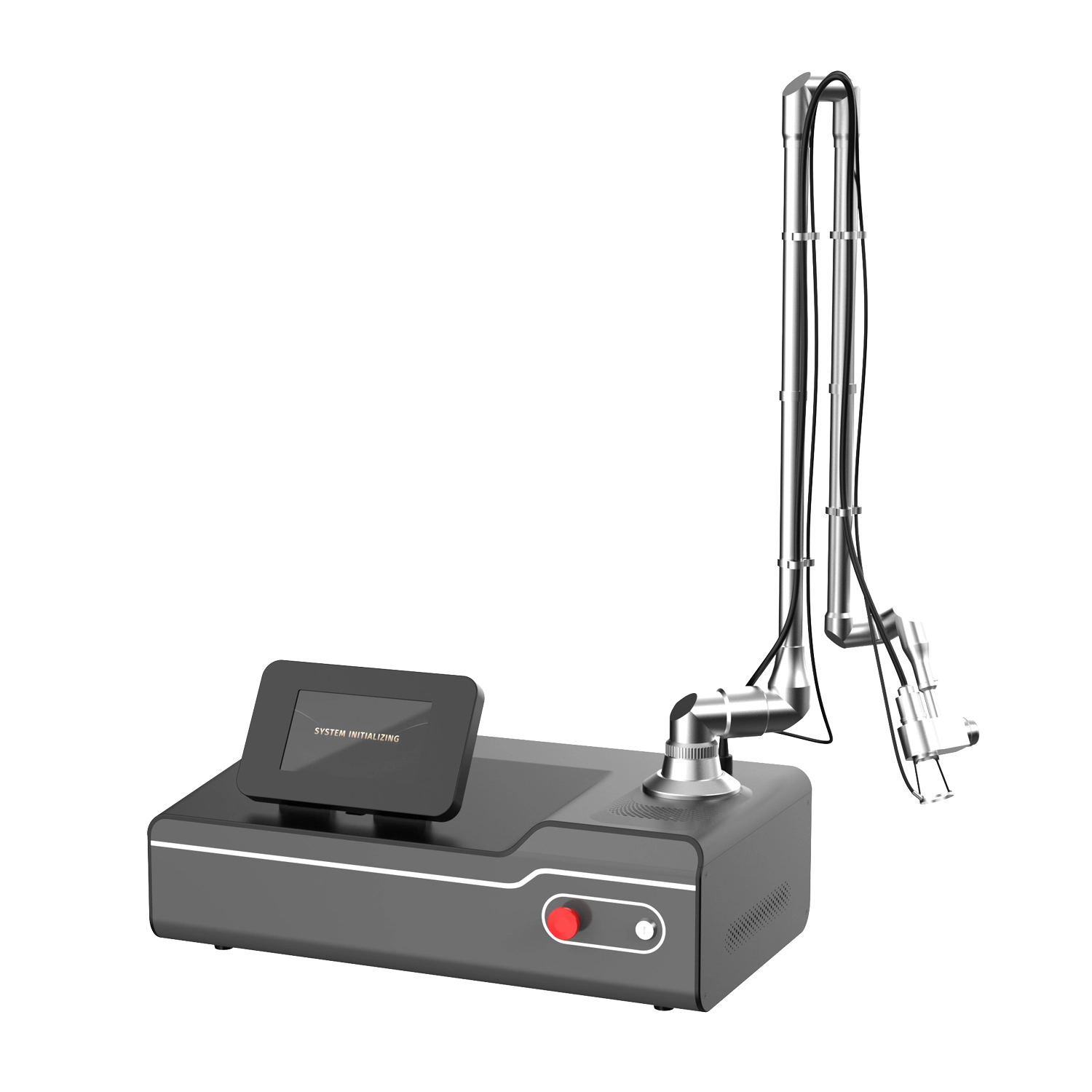
Professional CO2 Fractional Laser Machine for Skin Resurfacing & Scar Treatment
The CO2 Fractional Laser Machine is a professional CO2 fractional laser machine designed for advanced skin resurfacing, scar treatment, and skin rejuvenation procedures.
Using 10,600nm CO2 fractional laser technology, the system delivers controlled microthermal zones into the skin, stimulating collagen remodeling while preserving surrounding tissue. This fractional approach significantly improves treatment safety, recovery time, and clinical outcomes.
The CO2 fractional laser machine is widely used in dermatology clinics and medical aesthetic centers for treating acne scars, wrinkles, enlarged pores, stretch marks, and various skin texture concerns.
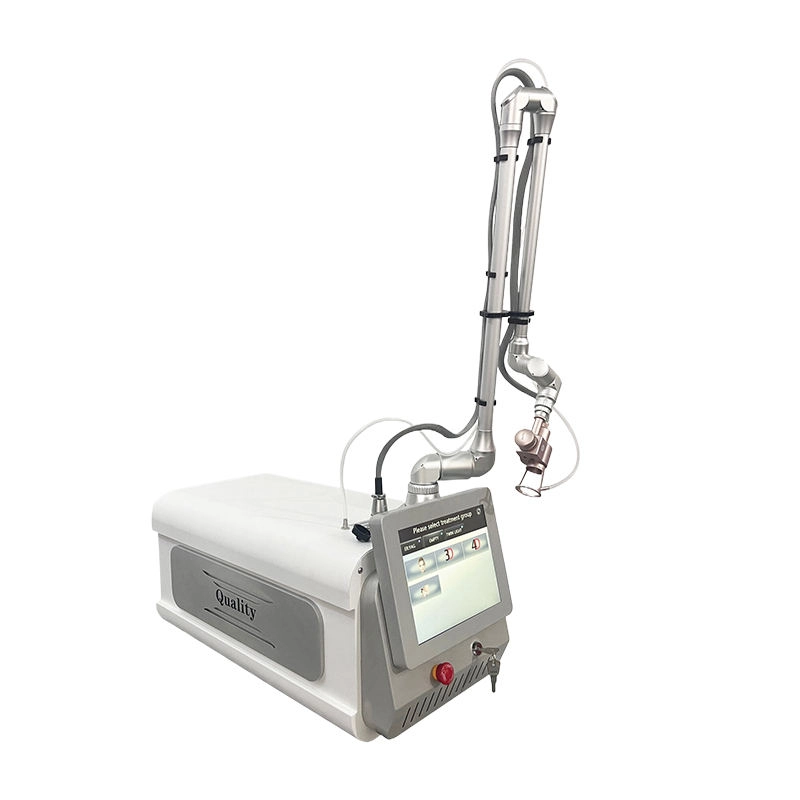
Professional CO2 Fractional Laser Machine | Fractional & Vaginal Rejuvenation CO2 Laser System
The CO2 fractional laser machine is a professional medical-grade device designed for deep skin resurfacing, wrinkle reduction, scar repair, and vaginal rejuvenation. Using a 10600 nm fractional CO2 laser beam, it creates micro-thermal columns on the skin to stimulate collagen regeneration and accelerate skin healing.
This CO2 fractional laser machine provides multiple treatment modes, including fractional mode, surgical cutting mode, and optional vaginal tightening mode, making it ideal for dermatology clinics and professional beauty centers seeking advanced laser solutions.
Its high precision, adjustable spot size, stable energy output, and seven-joint articulated arm ensure safe, accurate, and effective treatment results with minimal downtime.
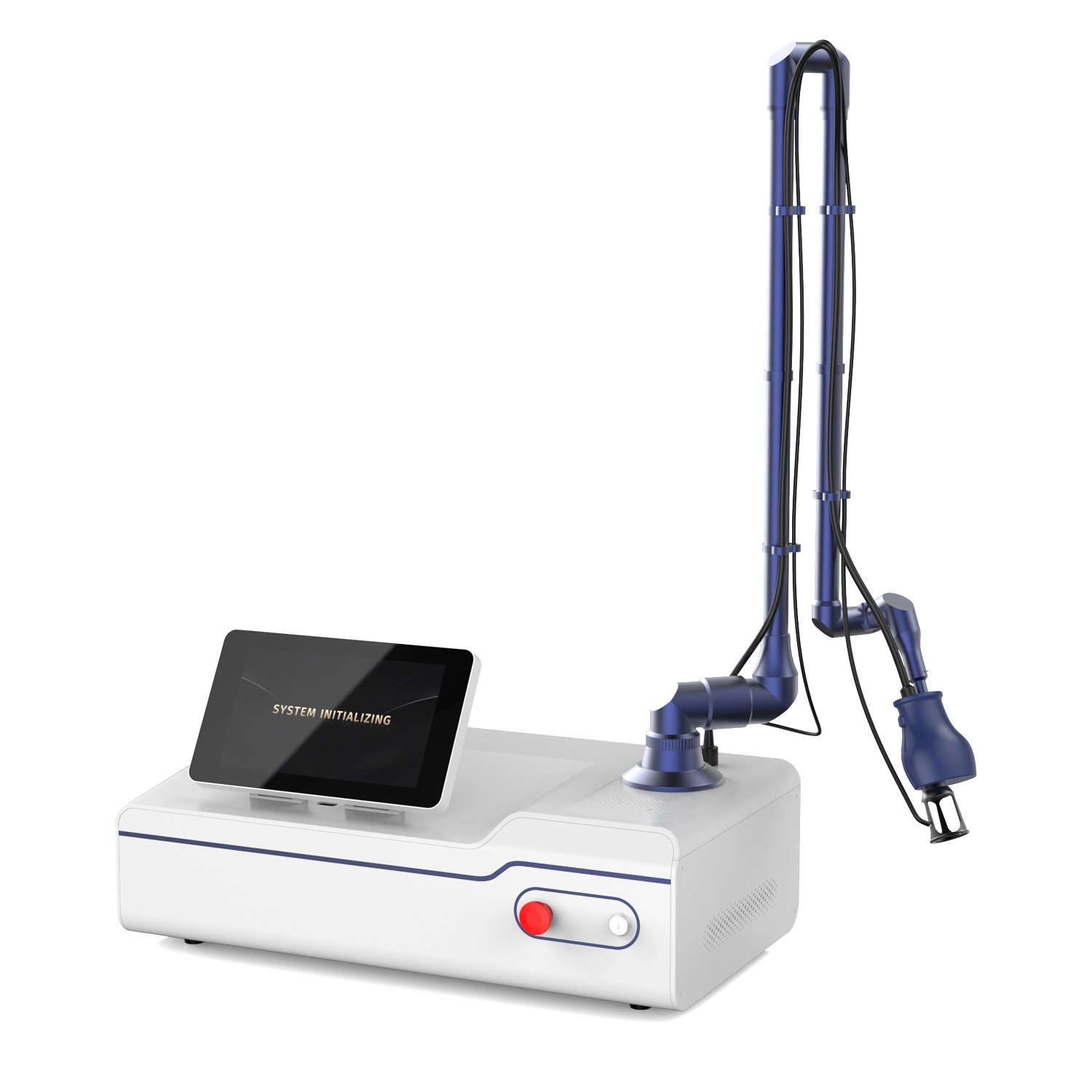
CO2 Fractional Laser Machine | Intimate Vaginal Rejuvenation System
This **CO2 Fractional Laser Machine** utilizes advanced 10600nm CO2 fractional laser technology to create controlled micro-thermal zones on the vaginal mucosa and intimate skin layers. These micro-columns stimulate collagen regeneration and tissue remodeling, effectively improving vaginal tightness, elasticity, and overall intimate health.
Designed specifically for professional medical aesthetic and intimate wellness applications, this CO2 fractional laser machine features intelligent parameter control and high-precision energy output to ensure safe, comfortable, and consistent treatment results. It is an ideal core device for vaginal rejuvenation, postpartum recovery, and intimate anti-aging treatments.
Get more information
If you have any comments or good suggestions, please leave us a message; later our professional staff will contact you as soon as possible.
Let's Talk
Stay in touch with us for cutting-edge beauty solutions, professional guidance, and customized service.
Contact


Room 307, Building A, Huilong International E-commerce Industrial Park, No. 10 Xipengling Road, Helong Street, Baiyun District, Guangzhou, China
© 2025 HUIMAIN. All Rights Reserved. Privacy Policy | Terms and Conditions | Sitemap
Facebook
Instagram
Medical beauty equipment factory
huimain Medical beauty equipment factory
beauty machine supplier
Whatsapp: +8619124004543