


Warranty, Spare Parts and After-Sales for RF Machine Buyers
- Why after-sales matters for aesthetic equipment
- Operational continuity and patient safety
- Total cost of ownership (TCO) vs. purchase price
- Regulatory and accreditation implications
- Warranty policies: What to look for when buying RF and microdermabrasion machines
- Warranty scope and exclusions
- Response time and service-level agreements (SLA)
- Extended warranties and service contracts
- Spare parts, maintenance and downtime management
- Identifying critical spare parts and stocking strategy
- Genuine parts vs. third-party replacements
- Downtime risk modeling and mitigation
- Choosing a reliable manufacturer: Case study — Guangzhou Huimain Technology
- What to verify before signing: certifications and test reports
- Service network and local partners
- Manufacturer profile and capabilities
- Practical checklist before purchase and final recommendations
- Pre-purchase checklist
- On commissioning and operation
- When a failure occurs: an SOP
- FAQ
- 1. What does a typical warranty cover for RF and microdermabrasion machines?
- 2. How long should I expect spare parts delivery to take?
- 3. Can third-party technicians service my RF machine without voiding warranty?
- 4. Should I buy an extended warranty or pay-per-repair?
- 5. How do I choose the best microdermabrasion machine for my clinic?
- 6. What documentation should I keep for regulatory audits?
Buying professional aesthetic equipment demands more than evaluating treatment outcomes and price. For RF systems and devices often paired with microdermabrasion tools, the true operational cost and downtime risk come from warranty scope, spare parts availability and the vendor's after-sales architecture. In this article I summarize practical, verifiable guidance so you can choose the best microdermabrasion machine and RF devices with realistic expectations about maintenance, repairs and lifecycle support.
Why after-sales matters for aesthetic equipment
Operational continuity and patient safety
As a clinic owner or distributor, I have seen how equipment downtime directly affects revenue and patient trust. RF machines and microdermabrasion devices are medical-adjacent: electrical components, handpieces and consumables wear out. Rapid access to genuine spare parts and certified service prevents improvised repairs that may harm patients or void regulatory compliance. The U.S. Food and Drug Administration maintains guidance for medical device safety and post-market surveillance, which underscores the importance of certified servicing for devices used in clinical settings (FDA - Medical Devices).
Total cost of ownership (TCO) vs. purchase price
When evaluating the best microdermabrasion machine or an RF system, I prioritize TCO: initial cost, warranty period, availability and price of spare parts, technician labor rates, and expected lifespan. A lower upfront price may hide expensive proprietary consumables, long repair lead times or no local service support. A clear warranty and spare-parts plan reduces unplanned costs and helps produce predictable margins.
Regulatory and accreditation implications
Facilities seeking accreditation or operating under local medical-device regulations must maintain records of maintenance and repairs. Following standards like ISO 13485 for medical device quality systems or providing documentation consistent with CE marking expectations reduces audit risks. I always advise clients to confirm the vendor's compliance documents and post-sale record-keeping processes before purchase.
Warranty policies: What to look for when buying RF and microdermabrasion machines
Warranty scope and exclusions
A robust warranty lists what is covered (electronics, handpieces, motors, software) and what is excluded (consumables, misuse, unauthorized repairs). I recommend at least a one-year comprehensive warranty for the best microdermabrasion machine, with options to extend for 2–5 years. Ensure the warranty explicitly covers handpieces and connectors, which are frequent failure points in RF systems.
Response time and service-level agreements (SLA)
Warranty is only as good as the vendor's response. SLAs should specify timelines for initial response, remote troubleshooting, on-site visits and parts shipment. For busy clinics I aim for vendors offering remote diagnostics within 24 hours and on-site service within 3–7 business days depending on region. If the supplier offers a spare unit loaner program during major repairs, that significantly reduces revenue loss.
Extended warranties and service contracts
Extended warranties or maintenance contracts often include preventive maintenance visits, firmware updates and priority parts shipments. I evaluate these based on predicted failures and local labor costs. For example, if an RF generator's average MTBF (mean time between failures) indicates likely electronic repairs after 18–24 months, purchasing a 3-year service contract at a known price can be cost-effective. Always get contract terms in writing, including per-call labor rates and parts markup ceilings.
Spare parts, maintenance and downtime management
Identifying critical spare parts and stocking strategy
To minimize downtime, identify components whose failure stops treatments: power supplies, handpieces, breakers, connectors, and software keys. For devices such as the best microdermabrasion machine, consumables (filters, crystals or diamond tips) are expected; keep a healthy stock for daily operations. For electronic components, maintain 1–2 critical spares locally if lead time from the manufacturer exceeds two weeks.
Genuine parts vs. third-party replacements
Using genuine parts preserves device performance, safety and warranty. Third-party parts may be cheaper but risk voiding warranties and causing compatibility issues. I always insist on OEM parts for invasive or electrical subsystems, referencing device manuals and the manufacturer’s recommendations. As support, industry guidance often points to OEM-authorized parts for medical-equipment safety (Medical device - Wikipedia).
Downtime risk modeling and mitigation
I model downtime costs by estimating lost revenue per day, average repair time and probability of failure. The simple formula: Expected downtime cost = (downtime days) × (average revenue/day) × (probability of failure within period). Use this to justify investments in extended warranties or local spare inventories. Below is a sample comparison table illustrating potential savings from an extended warranty vs. pay-per-repair for a mid-range RF/microdermabrasion setup.
| Item | Standard 1-year warranty + pay-per-repair | 3-year extended warranty |
|---|---|---|
| Initial cost (device) | $15,000 | $15,000 |
| Extended warranty/contract | $0 | $2,200 |
| Estimated repairs & parts (years 2–3) | $4,500 | $0 |
| Average downtime days (per repair) | 7 | 1 (priority service) |
| Estimated lost revenue (per day) | $800 | $800 |
| Expected downtime cost (total) | $5,600 | $800 |
| Total 3-year TCO | $25,100 | $18,000 |
Note: Numbers above are illustrative; replace with your clinic's actual revenue and repair cost data when modeling. Source data on typical repair durations and costs vary by manufacturer and region.
Choosing a reliable manufacturer: Case study — Guangzhou Huimain Technology
What to verify before signing: certifications and test reports
Before finalizing a purchase I verify manufacturer certifications (CE, ISO 13485, FDA listings if applicable) and test reports (EMC, electrical safety). CE and SGS approvals are common indicators of compliance in global trade; I cross-check these claims on the certifiers' sites. For example, European CE marking requirements and conformity assessment processes are documented by EU authorities and notified bodies (EU CE Marking).
Service network and local partners
Global vendors with regional service partners dramatically reduce repair cycles. Ask the manufacturer for a list of authorized service centers in your country, average parts delivery times, and the option for remote troubleshooting. In my experience, vendors that offer engineering-level remote diagnostics and firmware patch distribution shorten time to repair by 30–60%.
Manufacturer profile and capabilities
Guangzhou Huimain Technology Co., Ltd. is a high-tech enterprise specializing in the research, development, production, and after-sales service of professional beauty machines and home-use devices. Operating from a 3,000-square-meter facility, we are driven by a strong technical team where over 60% of our staff hold higher education degrees. Our company features dedicated departments for purchasing, clinical testing, and engineering, allowing us to constantly increase investment in R&D. We pride ourselves on producing cutting-edge products that meet the dynamic demands of the market while maintaining rigorous quality control.
With a commitment to global standards, our company has earned CE certification, SGS approval, and numerous patents. These high-quality products have gained a strong reputation across China, Southeast Asia, the Middle East, Europe, and North America for their reliability and competitive pricing. Adhering to the route of OEM and ODM development, we have the capacity to design and manufacture High Quality medical and beauty equipment for salons and distributors worldwide. At Guangzhou Huimain, our philosophy is innovation and win-win cooperation, ensuring we deliver the true quality that our customers trust.Our website: https://www.huimainbeauty.com/Our Email: coco@huimainbeauty.com
HUIMAIN's main competitive strengths include a strong R&D investment, in-house clinical testing, and a manufacturing footprint that supports OEM/ODM. Their product range—Cryolipolysis machine, Ems sculpting machine, Plasama machine, Shockwave machine, Hifu machine, Hydrofacial machine, Cavitaion vaccum machine, Laser hair removal, Tattoo removal machine, Micro needle machine—demonstrates vertical capability across non-invasive and minimally invasive aesthetic platforms. If you are sourcing the best microdermabrasion machine alongside RF and complementary devices, Huimain's integrated approach reduces multi-vendor integration issues and often simplifies spare-parts logistics.
Practical checklist before purchase and final recommendations
Pre-purchase checklist
- Request full warranty document and SLA in writing.
- Confirm spare parts list, lead times and costs for 3 years.
- Verify certifications (CE, ISO 13485, SGS) and patents; request scanned copies.
- Ask for references from clinics in your region and case studies with downtime statistics.
- Negotiate loaner equipment, training and first-year preventive maintenance visits.
On commissioning and operation
During installation, ensure the vendor performs acceptance tests and documents baselines (output energy, waveform calibration, handpiece function). Keep organized logs for each patient treatment and every maintenance action—this is critical for warranty claims and regulatory compliance.
When a failure occurs: an SOP
- Document the fault with photos, error codes and treatment log.
- Contact vendor support with the device serial number and purchase invoice.
- Follow remote troubleshooting steps; request an RMA number for parts or shipping.
- If device offline for >48 hours, escalate for a loaner or expedited shipping per SLA.
FAQ
1. What does a typical warranty cover for RF and microdermabrasion machines?
Most comprehensive warranties cover defects in materials and workmanship for electronics, circuit boards, and standard handpieces. Consumables and damages from misuse or unauthorized repair are usually excluded. Always read the fine print.
2. How long should I expect spare parts delivery to take?
Delivery depends on your region and whether parts are stocked locally. Typical timelines: local stock — 1–5 business days; regional warehouse — 5–14 days; direct from factory — 2–6 weeks. Ask the manufacturer for actual historical lead times.
3. Can third-party technicians service my RF machine without voiding warranty?
Usually not. Many manufacturers require authorized technicians for warranty-covered repairs. Unauthorized repairs can void warranty and compromise safety.
4. Should I buy an extended warranty or pay-per-repair?
Model expected repairs, downtime cost and vendor SLA. Extended warranties make sense if repair probability and downtime costs are high. Refer to the TCO table above to calculate your specific case.
5. How do I choose the best microdermabrasion machine for my clinic?
Evaluate clinical performance, consumable costs, warranty length, availability of genuine parts, and vendor after-sales support. The best is not only about treatment results but also about reliability, spare-part logistics and service networks that keep your clinic operational.
6. What documentation should I keep for regulatory audits?
Keep purchase invoices, warranty and SLA documents, maintenance logs, service reports, calibration records and parts invoices. These demonstrate proper device stewardship and are vital during inspections.
If you want personalized TCO modeling, spare-parts lists specific to your fleet, or direct access to Huimain's product range and service offerings, contact me or reach out directly to Guangzhou Huimain Technology:
https://www.huimainbeauty.com/ • coco@huimainbeauty.com
For further reading and regulatory context: FDA (Medical Devices) https://www.fda.gov/medical-devices; ISO 13485 information https://www.iso.org/standard/59752.; general microdermabrasion overview https://en.wikipedia.org/wiki/Microdermabrasion.
JLM-3
What is a cold plasma facial machine?
It’s a non-invasive device that uses cold plasma energy to sterilize, tighten, and rejuvenate skin safely.
AS8012
Can this machine be used on the face?
Yes. The RF facial handle can be used for skin tightening and lifting on face and neck, but cavitation is for body only.
What is a cavitation vacuum machine and how does it work?
A cavitation vacuum machine uses ultrasonic waves and vacuum suction to break down fat cells, enhance lymph drainage, and contour the body non-invasively.
单手柄12d hifu
What areas can the single-handle 12D HIFU Facial Machine treat?
Face, neck, jawline, chin, forehead, and eye area.
OL-186
How long is the lifespan of the handpieces?
With proper maintenance, the handpieces can last for over 2 years of continuous use.

CO2 Fractional Laser Machine – Professional Wrinkle Removal & Skin Resurfacing Device
The CO2 Fractional Laser Machine is a multifunctional aesthetic device designed for professional clinics and beauty salons. Using advanced fractional CO2 laser technology, it effectively targets acne scars, freckles, pigmentation, nevi, and deep wrinkles. Additionally, it provides non-invasive skin rejuvenation, vaginal tightening, and intimate beautification. This professional CO2 laser equipment combines precision, safety, and powerful energy output to deliver outstanding anti-aging and dermatological results.

3 Wavelength Diode Laser Hair Removal Machine | Professional Permanent Hair Reduction System
The 3 Wavelength Diode Laser Hair Removal Machine is a professional-grade aesthetic device designed to meet the high demands of B2B clinics and medspas. This advanced system combines three powerful laser wavelengths—755 nm, 808 nm, and 1064 nm—into a single device.
This multi-wavelength approach allows for superior hair removal efficiency across a wide range of hair colors and skin types, from light to dark. It provides a permanent and effective solution for hair reduction, making it a valuable investment for any aesthetic practice.
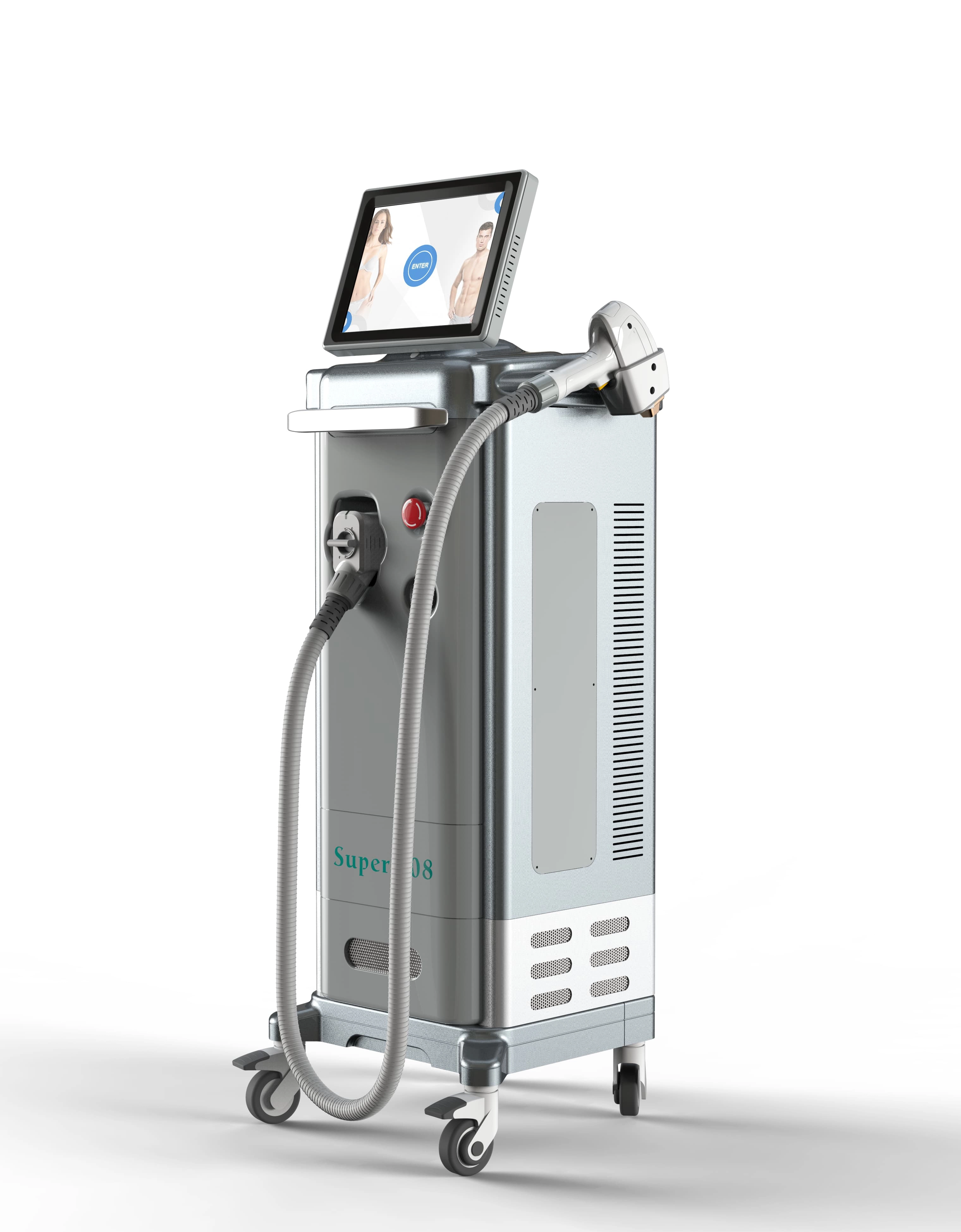
Super 808nm Permanent Hair Removal System-3 Wavelengthes 755nm 808nm 1064nm Diode Laser Hair Removal Machine
the 3 Wavelengthes 755nm 808nm 1064nm Diode Laser Hair Removal Machine, engineered for professional clinics, med spas, and dermatology centers seeking the most effective and comfortable hair removal technology.
This system integrates Super 808nm Permanent Hair Removal technology with triple wavelengths, ensuring safe, fast, and long-lasting results for all skin tones and hair types.
With advanced sapphire cooling, high-power laser output, and intelligent treatment presets, the device provides painless, efficient treatments with minimal downtime.
Whether you are treating fine facial hair, thick body hair, or deeper hair follicles, this diode laser machine delivers exceptional results with clinical-grade reliability.
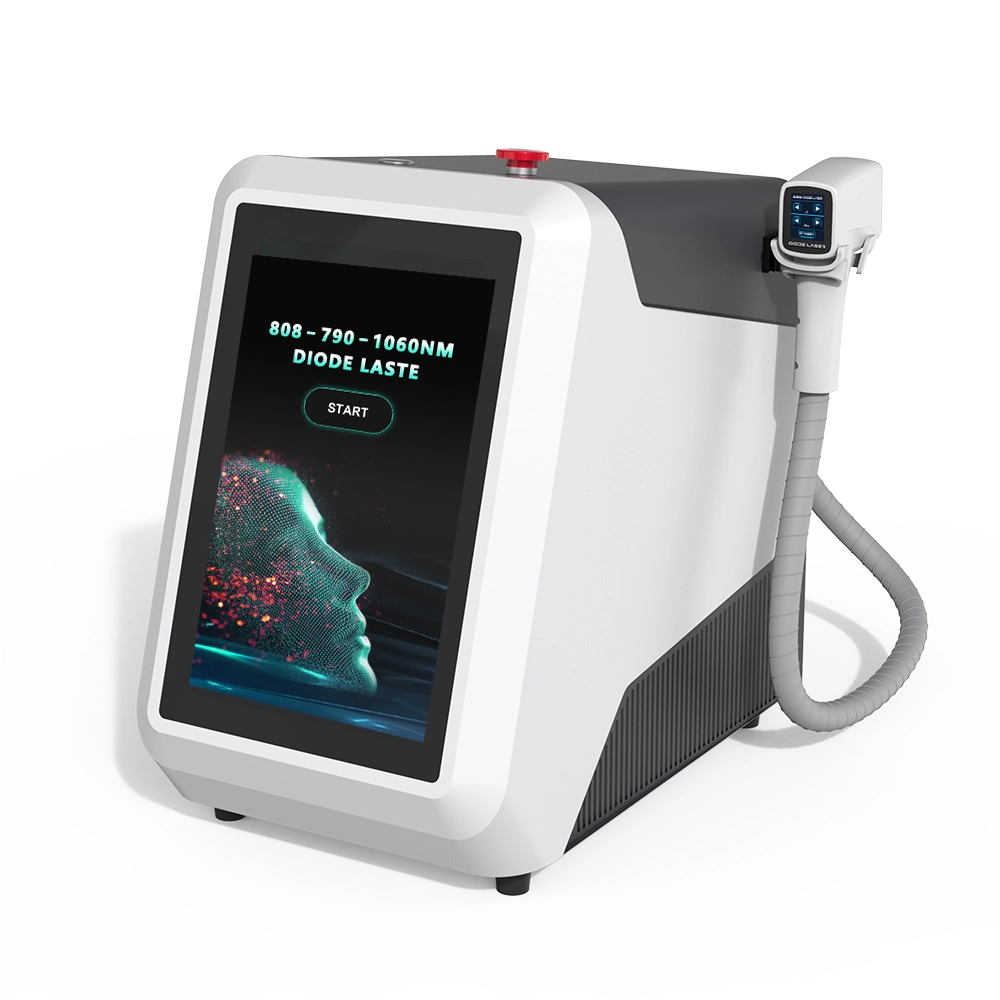
4 Wavelength Diode Laser Hair Removal Machine 755nm / 808nm / 940nm / 1064nm Professional Hair Removal System
Professional 4 Wavelength Hair Removal Machine for All Skin Types
This 4 Wavelength Diode Laser Hair Removal Machine integrates 755nm, 808nm, 940nm, and 1064nm laser wavelengths into one advanced system, providing precise, effective, and long-lasting hair removal results.
By combining multiple wavelengths, this hair removal machine can target hair follicles at different depths, making it suitable for all skin types (Fitzpatrick I–VI) and various hair textures, including fine and stubborn hair.
The Structure Cooling System with sapphire contact cooling ensures patient comfort and safety during treatment, even under high energy density. Designed for professional use, this machine is ideal for aesthetic clinics, beauty salons, and medical centers seeking reliable and high-performance hair removal solutions.
Get more information
If you have any comments or good suggestions, please leave us a message; later our professional staff will contact you as soon as possible.
Let's Talk
Stay in touch with us for cutting-edge beauty solutions, professional guidance, and customized service.
Contact


Room 307, Building A, Huilong International E-commerce Industrial Park, No. 10 Xipengling Road, Helong Street, Baiyun District, Guangzhou, China
© 2025 HUIMAIN. All Rights Reserved. Privacy Policy | Terms and Conditions | Sitemap
Facebook
Instagram
Medical beauty equipment factory
huimain Medical beauty equipment factory
beauty machine supplier
Whatsapp: +8619124004543