


What Are HIFU Machines? A Beginner's Guide
- Understanding Focused Ultrasound in Aesthetic Medicine
- What Are HIFU Machines? (Definition and Core Components)
- How HIFU Machines Work: Mechanism of Action
- Clinical Evidence and Efficacy of HIFU Machines
- Common Treatment Areas and Indications for HIFU Machines
- Safety, Side Effects and Contraindications for HIFU Machines
- Comparing HIFU Machines with Other Non-surgical Devices
- Choosing the Right HIFU Machine: Key Technical and Commercial Considerations
- Practical Treatment Expectations: What Patients Should Know
- Regulatory Landscape and Clinical Evidence: What to Verify
- Cost Considerations and Return-on-Investment (ROI) for Clinic Buyers
- Why Manufacturer Support and R&D Matter: Case Example — Guangzhou Huimain Technology Co., Ltd.
- Comparing Top Technical Differentiators Across HIFU Machine Suppliers
- Buying Checklist: How to Evaluate an HIFU Machine Offer
- Real-World Tips for Clinic Implementation
- FAQs (Frequently Asked Questions)
- 1. How long does a HIFU treatment take?
- 2. Are HIFU Machines painful?
- 3. How many sessions will I need?
- 4. Can HIFU Machines treat deep fat?
- 5. Is HIFU safe for all skin tones?
- 6. How do I choose between HIFU Machines and other skin-tightening devices?
- Contact and Product Inquiry (CTA)
- References and Further Reading
Understanding Focused Ultrasound in Aesthetic Medicine
What this article covers: a practical, evidence-based introduction to HIFU machines for skin and body applications, written for clinic owners, procurement managers, and informed consumers. You will learn how HIFU machines work, who is a good candidate, what results to expect, safety and regulation considerations, key differences compared with other non-surgical devices, and how to evaluate suppliers and OEM/ODM partners like Guangzhou Huimain Technology.
What Are HIFU Machines? (Definition and Core Components)
HIFU machines (High-Intensity Focused Ultrasound machines) are medical/aesthetic devices that deliver focused ultrasound energy into targeted tissue volumes beneath the skin surface. Unlike diagnostic ultrasound, HIFU concentrates energy at a focal point to produce controlled thermal coagulation zones, stimulating collagen remodelling and tissue tightening without cutting the skin. Typical HIFU Machines include a generator, a handheld transducer (or multiple cartridges/transducers for different depths), cooling systems, and a control/monitoring interface.
How HIFU Machines Work: Mechanism of Action
HIFU devices convert electrical energy into acoustic (ultrasound) energy and focus it at precise subdermal depths (commonly 1.5 mm, 3.0 mm, 4.5 mm for facial treatments; deeper cartridges exist for body fat applications). At the focal point the temperature rapidly rises (typically 60–70°C), creating microthermal coagulation points (MTCPs). The controlled injury triggers a localized wound-healing response, increasing neocollagenesis and elastin remodeling, leading to skin tightening and lift over 2–6 months.
Clinical Evidence and Efficacy of HIFU Machines
Clinical studies and systematic reviews indicate that HIFU can produce measurable improvements in skin laxity and facial contouring, particularly for mild to moderate sagging. Results depend on device parameters, practitioner technique, and patient characteristics (age, skin thickness, degree of laxity). Typical improvement timelines: initial tightening within 1–3 months, with collagen maturation and peak results around 3–6 months; some patients report results lasting 12–24 months.
Important: Not all devices or treatment protocols are equivalent. FDA-cleared devices (e.g., Ultherapy) have peer-reviewed clinical data supporting specific treatment claims; many other HIFU Machines vary in energy, focal depth, and quality control.
Common Treatment Areas and Indications for HIFU Machines
- Face: forehead/brow, midface, jawline, submental (double-chin)
- Neck: skin tightening and platysma area lifting
- Body: localized fat reduction and skin tightening (abdominal, thigh, arms) depending on device and cartridges
- Medical uses (outside aesthetics): focused ultrasound has separate protocols for oncology and uterine fibroids—distinct from cosmetic HIFU Machines
Safety, Side Effects and Contraindications for HIFU Machines
Common transient side effects include mild to moderate discomfort during treatment, temporary redness, swelling, tingling, or bruising. Rare but reported complications include prolonged pain, numbness, or superficial burns when energy settings and technique are inappropriate. Contraindications typically include pregnancy, active infections in the treatment area, open wounds, implanted electronic devices near treatment site, or certain systemic conditions. Proper patient selection and trained operators are essential.
Comparing HIFU Machines with Other Non-surgical Devices
For clinics and buyers, understanding how HIFU compares with RF, lasers, microneedling, and injectables helps align device purchases with market demand. The table below summarizes key differences.
| Modality | Mechanism | Typical Indications | Downtime | Typical Longevity |
|---|---|---|---|---|
| HIFU Machines | Focused ultrasound thermal coagulation at precise depths | Skin tightening, lifting, limited body contouring | Minimal–none (mild swelling/erythema) | 6–24 months (variable) |
| Radiofrequency (RF) | Electrical energy heating dermis/subdermis (monopolar/bipolar) | Skin tightening, collagen stimulation | Minimal–none | 6–18 months |
| Fractional Lasers | Ablative/non-ablative light energy creating microthermal zones | Texture, scarring, pigmentation, tightening | Moderate (several days to weeks) | Months–years depending on device |
| Injectables (fillers, neuromodulators) | Biologic/material augmentation or muscle modulation | Volume, wrinkle reduction, lift (immediate) | Minimal–few days | 3–24 months (product-dependent) |
Sources and systematic reviews indicate HIFU is particularly valuable for patients seeking non-invasive lifting without filler or surgery—but it is not a replacement for surgical facelift in advanced laxity cases.
Choosing the Right HIFU Machine: Key Technical and Commercial Considerations
When evaluating HIFU Machines for a clinic or distribution, evaluate:
- Energy output and focal depth options (1.5/3.0/4.5 mm for face; deeper for fat reduction)
- Cartridge quality, number of shots per cartridge, and per-shot consistency
- Safety features and real-time monitoring (e.g., ultrasound imaging guidance vs. non-imaging handpieces)
- Clinical evidence and regulatory clearances for intended indications
- Training, warranty, after-sale service and consumable costs
- CE/ISO/SGS certifications and any patents or clinical proof supplied by manufacturer
Practical Treatment Expectations: What Patients Should Know
Real-world counseling points for clinicians using HIFU Machines:
- Set realistic expectations: best for mild–moderate laxity; improvement not immediate and will develop over months.
- Treatment discomfort varies—topical anesthetic or analgesics may be used.
- Most patients return to normal activities right away.
- Repeat sessions or combination therapies (e.g., RF, injectables) can enhance outcomes.
Regulatory Landscape and Clinical Evidence: What to Verify
Before purchasing or recommending a HIFU machine, verify:
- Regulatory approvals relevant to your market (e.g., CE marking for EU, 510(k) or clearance status in the U.S.).
- Clinical studies or peer-reviewed publications on the specific device or comparable technology.
- Quality management systems (ISO 13485) and third-party testing (SGS).
Authorized manufacturer documentation and accessible clinical evidence improve device trustworthiness and patient safety.
Cost Considerations and Return-on-Investment (ROI) for Clinic Buyers
Costs vary widely: entry-level HIFU Machines (lower energy, fewer cartridges, limited warranty) can be priced lower, while established, clinically validated systems command High Quality pricing. Consider consumable cartridge costs per treatment, expected patient throughput, and marketing positioning. A properly marketed HIFU service can have favorable margins due to relatively low per-treatment consumables (compared with injectables) and strong demand for non-surgical lift options.
Why Manufacturer Support and R&D Matter: Case Example — Guangzhou Huimain Technology Co., Ltd.
When selecting HIFU Machines and other beauty equipment, partnering with a manufacturer that offers robust R&D, reliable production, thorough testing, and post-sale service reduces risk. Guangzhou Huimain Technology Co., Ltd. is a high-tech company specializing in beauty machines and home-use machine series, with capabilities in R&D, production, sales, and after-sale service. Key facts about Huimain:
- Facility: ~3000 square meters production area.
- Human resources: >20% bachelor’s degrees and >40% junior college degrees among staff; experienced engineers and technical R&D team.
- Departments: PE experts, professional purchasing, clinical testing, and after-sale service teams.
- Quality & certification: CE certificate, SGS approval, and multiple product patents.
- Market footprint: products sell globally—China, Southeast Asia, Middle East, Europe, North America—acclaimed for quality and price.
- Business model: OEM and ODM for medical and beauty machines; capacity to design and manufacture devices for clinics and salons.
Huimain’s main product categories include Cryolipolysis machines, EMS sculpting machines, Plasma machines, Shockwave machines, HIFU machines, Hydrofacial machines, Cavitation & Vacuum machines, Laser hair removal, Tattoo removal machines, and Microneedle devices. Their stated philosophy: innovate technology and pursue win-win cooperation, producing high-quality beauty machines validated by clients and markets.
Comparing Top Technical Differentiators Across HIFU Machine Suppliers
When comparing suppliers like Huimain and competitors, focus on:
- Cartridge longevity and per-shot consistency (affects cost per treatment).
- Imaging guidance availability (devices with ultrasound imaging enable more precise targeting).
- Energy calibration and safety interlocks to reduce adverse events.
- Clinical validation, white papers, and independent testing.
- After-sales responsiveness and spare parts availability.
Buying Checklist: How to Evaluate an HIFU Machine Offer
- Request regulatory documentation (CE/ISO/SGS) and clinical studies related to the device.
- Ask for sample treatment videos and before/after images with consistent documentation protocols.
- Test device ergonomics, cartridge change procedure and per-shot count.
- Confirm warranty scope, training support, and spare-parts SLA (service level agreement).
- Calculate TCO (total cost of ownership) including consumables, maintenance, and expected revenue per treatment.
Real-World Tips for Clinic Implementation
- Invest in staff training (device settings, pain management, handling complications).
- Create standardized treatment protocols for common indications (face, neck, body) and set up photography standards for outcome tracking.
- Combine HIFU with complementary services (skin care, fillers) to offer staged treatment plans.
- Educate patients on realistic timelines and follow-up schedules.
FAQs (Frequently Asked Questions)
1. How long does a HIFU treatment take?
Typical facial HIFU treatments last 30–90 minutes depending on treated zones and device throughput. Body sessions (e.g., abdominal fat reduction) may take longer.
2. Are HIFU Machines painful?
Discomfort varies by patient and settings. Many patients experience prickling or heat sensations during shots; topical analgesics, oral analgesia, or device parameter adjustment can improve comfort.
3. How many sessions will I need?
Many patients achieve noticeable improvement after a single session, but some may benefit from 1–2 repeat sessions spaced months apart or combination therapy.
4. Can HIFU Machines treat deep fat?
Certain HIFU devices with deeper transducers are used for localized fat reduction. Ensure the device is designed and validated for body fat applications—facial HIFU cartridges are not interchangeable for deep fat treatment.
5. Is HIFU safe for all skin tones?
Because HIFU primarily uses ultrasound (not light), it is generally safe across skin types and tones with a lower risk of pigmentation changes compared with some lasers. Still, individual risk assessment is essential.
6. How do I choose between HIFU Machines and other skin-tightening devices?
Choice depends on patient needs (degree of laxity), desired downtime, clinic positioning, and budget. HIFU is a strong option for non-surgical lift with minimal downtime; RF and lasers have complementary roles.
Contact and Product Inquiry (CTA)
If you are evaluating HIFU Machines for clinic integration or distribution, contact Guangzhou Huimain Technology Co., Ltd. for product specs, certifications, clinical data, OEM/ODM options, and after-sale service packages. Request a demo, clinical sample data, and a commercial proposal to assess ROI for your market. For product catalogues and direct inquiries, please reach out to Huimain sales and technical teams via their official channels.
References and Further Reading
- High-intensity focused ultrasound — Wikipedia. https://en.wikipedia.org/wiki/High-intensity_focused_ultrasound (accessed 2025-12-13).
- PubMed search: HIFU skin tightening studies. https://pubmed.ncbi.nlm.nih.gov/?term=hifu+skin+tightening (accessed 2025-12-13).
- Ultherapy — official information on focused ultrasound for skin lifting. https://www.ultherapy.com/ (accessed 2025-12-13).
- American Society for Dermatologic Surgery — informational resources on non-invasive skin tightening (search). https://www.asds.net/ (accessed 2025-12-13).
- Guangzhou Huimain Technology Co., Ltd. — company profile and product lines (manufacturer-provided materials; verify directly with the company for updates).
Note: Always verify local regulatory status and clinical evidence for any specific HIFU machine model before purchase or clinical use.
JHF-61
Can beginners operate this HIFU machine?
Yes. The touch-screen interface is simple, and training materials can be provided.
HMT82S-2
Is it difficult to operate? Do I need trained staff?
Not at all. The device features a smart touchscreen interface with intuitive settings. It’s easy to learn and operate even without medical background. Remote training support is available.
12D-MAX
Can this HIFU machine be used on both face and body?
Yes, the dual-handle design allows precise treatment on facial areas and larger body zones.
12D hifu
How soon can clients see results?
Some results appear immediately, while full collagen regeneration appears within 2–8 weeks.
EM-11
What makes it better than other body contouring machines?
Its HIFEM power up to 7 Tesla, dual-handle design, and smart cooling system deliver faster, safer, and more visible results.

CO2 Fractional Laser Machine – Professional Wrinkle Removal & Skin Resurfacing Device
The CO2 Fractional Laser Machine is a multifunctional aesthetic device designed for professional clinics and beauty salons. Using advanced fractional CO2 laser technology, it effectively targets acne scars, freckles, pigmentation, nevi, and deep wrinkles. Additionally, it provides non-invasive skin rejuvenation, vaginal tightening, and intimate beautification. This professional CO2 laser equipment combines precision, safety, and powerful energy output to deliver outstanding anti-aging and dermatological results.

5-in-1 40K Cavitation Vacuum Machine for Body Slimming & Fat Reduction
The 5-in-1 40K Cavitation Vacuum Machine is a professional body shaping system designed for fat reduction, cellulite smoothing, and overall body contouring. Using 40KHz ultrasonic cavitation, this device breaks down stubborn fat cells, while vacuum suction improves lymphatic drainage and accelerates toxin removal.
With multiple RF tightening handles, the machine stimulates collagen regeneration and helps lift and firm loose areas of the body. Compact, powerful, and easy to operate, it is the perfect solution for beauty salons, spa centers, and slimming studios seeking fast and visible fat-reduction results.
This cavitation vacuum machine is built to deliver safe, non-invasive treatments with no downtime—making it a top choice for body contouring professionals.

6-in-1 Multifunctional Beauty and Weight Loss Machine | Cavitation, RF, Vacuum PDT, EMS, Laser Slimming Equipment for Professional Use
The 6-in-1 Multifunctional Beauty and Weight Loss Machine is a professional-grade device designed for salons, clinics, and distributors. Combining six advanced technologies—cavitation, RF (radio frequency) for face & body, vacuum RF PDT, BIO/EMS microcurrent, and laser lipo pads—this device offers comprehensive body contouring, fat reduction, skin tightening, and anti-aging treatments.
It provides businesses with an all-in-one solution to expand service offerings, attract more clients, and achieve a rapid return on investment.
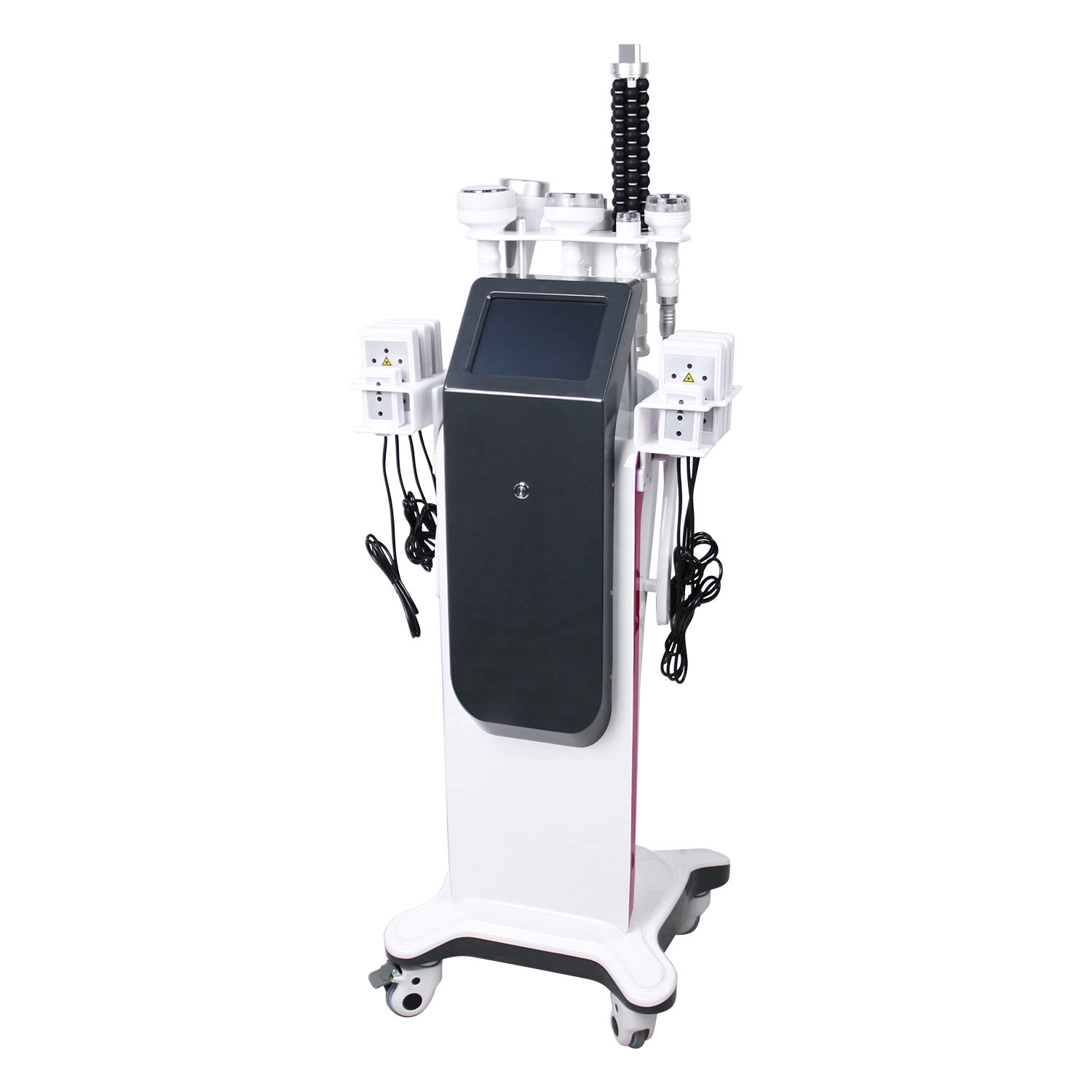
Professional 6-in-1 Cavitation Vacuum Machine for Body Contouring & Slimming Treatment
The 6-in-1 Cavitation Vacuum Machine is a professional body contouring system designed for salons and spas seeking high-performance slimming solutions. This machine integrates 40K ultrasonic cavitation, vacuum suction, RF technology, and laser lipolysis to target stubborn fat, enhance lymphatic drainage, tighten the skin, and contour the body shape effectively.
Equipped with multiple ergonomic handles and a smart touch screen, this cavitation vacuum machine provides a comfortable and efficient experience for both operators and clients. It is ideal for full-body treatments including abdomen, arms, legs, waistline, hips, and back.
Perfect for beauty salons, spas, and aesthetic centers that want to offer non-invasive fat reduction and body-sculpting services.
Get more information
If you have any comments or good suggestions, please leave us a message; later our professional staff will contact you as soon as possible.
Let's Talk
Stay in touch with us for cutting-edge beauty solutions, professional guidance, and customized service.
Contact


Room 307, Building A, Huilong International E-commerce Industrial Park, No. 10 Xipengling Road, Helong Street, Baiyun District, Guangzhou, China
© 2025 HUIMAIN. All Rights Reserved. Privacy Policy | Terms and Conditions | Sitemap
Facebook
Instagram
Medical beauty equipment factory
huimain Medical beauty equipment factory
beauty machine supplier
Whatsapp: +8619124004543