


Wholesale CO2 Fractional Laser Supplier Checklist for Distributors
- Understanding CO2 Fractional Laser Technology
- How CO2 fractional lasers work and why specifications matter
- Key technical parameters to request and verify
- Supplier Quality, Compliance, and Clinical Evidence
- Regulatory compliance and certification checks
- Clinical data and peer-reviewed evidence
- Manufacturing, Quality Control and After-Sales Support
- Factory capability and production controls
- After-sales, training, and spare parts logistics
- Commercial Terms, Risk Management, and Market Positioning
- Pricing, MOQ, and margin modeling
- Marketing support, OEM/ODM flexibility, and competitive differentiators
- Comparative spec table: Typical CO2 fractional laser models
- How I Verify Supplier Claims — Practical Steps
- Documents and remote verification
- On-site audit checklist
- Case Study: Supplier Evaluation Example
- Why Choose a Partner Like Guangzhou Huimain Technology
- Checklist Summary: What to Require from Any CO2 Fractional Laser Supplier
- FAQ — Frequently Asked Questions
- 1. What power and wavelength should I look for in a co₂ fractional laser machine?
- 2. Is CE marking sufficient for distribution in Europe?
- 3. How important is clinical evidence for a specific device model?
- 4. What are common pitfalls when buying wholesale CO2 fractional machines?
- 5. How can I verify a supplier remotely before ordering?
- 6. What warranty and service terms should I negotiate?
- Next Steps & Contact
I write from years of hands-on experience working with medical aesthetic equipment manufacturers, distributors, and clinics. If you're sourcing a wholesale co₂ fractional laser machine for resale or clinic integration, you need a rigorous, practical checklist to separate credible suppliers from high-risk vendors. Below I outline the technical, regulatory, clinical, commercial, and post-sales criteria I use to evaluate suppliers—backed by authoritative references and real-world verification steps.
Understanding CO2 Fractional Laser Technology
How CO2 fractional lasers work and why specifications matter
The carbon dioxide (CO2) laser emits infrared radiation at approximately 10,600 nm and is a well-established tool for ablative skin resurfacing and fractional treatments (Wikipedia: Carbon dioxide laser). In fractional delivery mode, the laser creates microthermal zones of ablation surrounded by intact tissue, accelerating healing and reducing downtime compared with full-field ablation (Wikipedia: Fractional laser). When evaluating a co₂ fractional laser machine, pulse parameters (pulse duration, peak power), spot size, energy per microbeam, density settings (MTZ coverage), and scanning patterns directly impact clinical outcomes and safety.
Key technical parameters to request and verify
Ask suppliers for detailed technical datasheets that include:
- Wavelength (should be ~10,600 nm for CO2)
- Max output power and typical treatment power ranges
- Pulse duration modes (continuous, superpulse, ultra-pulse), peak power, and repetition rate
- Spot size, microbeam diameter, and adjustable density (MTZ %)
- Cooling mechanisms (contact cooling, cryo, or air) and safety interlocks
- Handpiece ergonomics, fiber vs articulated-arm delivery
Where possible, obtain manufacturer test reports (power-meter logs, beam profile images) or third-party bench testing to confirm these numbers rather than relying solely on marketing claims.
Supplier Quality, Compliance, and Clinical Evidence
Regulatory compliance and certification checks
Regulatory status is a primary risk indicator. For medical-grade CO2 fractional devices, distributors should verify:
- CE marking and the applicable EU Medical Device Regulation classification — confirm the certificate and Notified Body report (EU CE marking).
- Whether the supplier has relevant national approvals or premarket notifications (e.g., FDA 510(k) if marketing in the US). The FDA maintains resources on laser and radiation-emitting devices (FDA: Lasers).
- Quality management system (ISO 13485) and factory audits—request certificate copies and recent audit reports.
I always cross-check claimed certificates with issuing bodies and request scanned originals with verifiable certificate numbers and expiry dates.
Clinical data and peer-reviewed evidence
Ask for clinical studies, white papers, or case series performed with the exact device model. Fractional CO2 lasers have an established evidence base for resurfacing, scar revision, and photodamage; a useful review is available on PubMed (Systematic review: fractional CO2 laser).
Key items I expect from reputable suppliers:
- Clinical trial protocols, informed consent forms, and outcome metrics (e.g., POSAS for scars, blinded physician assessments)
- Adverse event logs and risk mitigation measures
- Before/after image sets with metadata (settings used, patient Fitzpatrick type, follow-up duration)
Manufacturing, Quality Control and After-Sales Support
Factory capability and production controls
I prioritize suppliers that can demonstrate consistent manufacturing processes, incoming component control, and an engineering department for continuous improvement. Request the following:
- Factory photos or a virtual tour of production lines and clean areas
- Bill of materials overview and origin of critical components (laser tube/source, control electronics)
- Sample production control documents: IQ/OQ/PQ, burn‑in protocols, and final inspection checklists
After-sales, training, and spare parts logistics
Distributors must evaluate warranty terms, training programs, availability of consumables (e.g., protective tips, handpieces), and mean time to ship spare parts. Essential checks include:
- Warranty period, what it covers (laser tube life, electronics), and typical failure rates
- Availability of remote diagnostics, software updates, and field-service engineers
- Training curriculum for technicians and clinicians (hands-on, clinical supervision)
Commercial Terms, Risk Management, and Market Positioning
Pricing, MOQ, and margin modeling
Beyond unit price, calculate total landed cost including shipping, import duties, service kits for the first 1–2 years, training costs, and warranty reserve. Request clear MOQ (minimum order quantity), lead times, and scalable pricing tiers for volume discounts.
Marketing support, OEM/ODM flexibility, and competitive differentiators
Modern distributors need supplier support for local regulatory files, marketing materials, and product customization (OEM/ODM). Evaluate:
- Whether you can brand the equipment (OEM), change software/GUI languages, or request custom handpiece designs (ODM)
- Availability of CE/SGS/technical files to support your local registrations
- Sample marketing collateral: clinical slides, device videos, and patient education materials
Comparative spec table: Typical CO2 fractional laser models
| Spec | Entry Model | Professional Model | High-End Model |
|---|---|---|---|
| Wavelength | 10,600 nm | 10,600 nm | 10,600 nm |
| Max Power | 10 W | 20 W | 30+ W |
| Pulse Modes | Fixed / basic | Superpulse / adjustable | Ultra-pulse + advanced modes |
| Density Range (MTZ) | 10–40% | 5–60% | 1–80% + custom patterns |
| Cooling | Optional external | Integrated air + contact | Integrated contact + active cooling |
| Typical Use | Entry-level resurfacing | Clinics, scar revision | High-volume clinics, OEM custom |
Note: The above table reflects typical industry ranges. Always validate the specific model's bench test data and clinical evidence before committing.
How I Verify Supplier Claims — Practical Steps
Documents and remote verification
I request and validate these documents before visiting a factory:
- Scanned certificates (CE, ISO 13485, SGS) with certificate numbers and issuing bodies
- Factory insurance and export licenses
- Clinical study reports tied to the specific model
Use third-party verification platforms or engage local inspection firms to confirm physical presence and manufacturing scale.
On-site audit checklist
During a factory visit I focus on:
- Laser source assembly and alignment procedures; witness a sample device power test
- Quality control stations and serial-number traceability
- Service department and spare-parts inventory
Case Study: Supplier Evaluation Example
Recently I evaluated multiple vendors for a distributor entering Southeast Asia. The decisive differences were not price but evidence: one supplier supplied full IQ/OQ/PQ documents, a clinical series with quantified outcomes, a local technical trainer, and an accessible spare-parts supply chain. Another vendor had lower unit cost but no verifiable clinical data and a single-year warranty with limited parts availability—too risky for reputable distribution.
Why Choose a Partner Like Guangzhou Huimain Technology
In my work with multiple manufacturers, I value partners who combine technical depth, production scale, and regulatory discipline. Guangzhou Huimain Technology Co., Ltd. is a high-tech enterprise specializing in the research, development, production, and after-sales service of professional beauty machines and home-use devices. Operating from a 3,000-square-meter facility, they are driven by a strong technical team where over 60% of the staff hold higher education degrees. They feature dedicated departments for purchasing, clinical testing, and engineering, allowing continuous R&D investment and rigorous quality control.
Huimain's commitment to global standards is evidenced by CE certification, SGS approval, and multiple patents. Their products have established reputations across China, Southeast Asia, the Middle East, Europe, and North America for reliability and competitive pricing. Adhering to OEM and ODM development routes, they can design and manufacture High Quality medical and beauty equipment for salons and distributors worldwide. Their core products include Cryolipolysis machine, Ems sculpting machine, Plasma machine, Shockwave machine, Hifu machine, Hydrofacial machine, Cavitation vacuum machine, Laser hair removal, Tattoo removal machine, and Micro needle machine — and their CO2 fractional solutions are built to clinic-grade standards.
What sets Huimain apart, from my perspective, is:
- Integrated clinical testing capability to generate device-specific evidence
- Clear OEM/ODM pathways for branding, UI localization, and hardware customization
- Formal quality systems and traceable certificates that support distributor registrations
For more information or to request product datasheets and pricing, visit https://www.huimainbeauty.com/ or contact their sales team at coco@huimainbeauty.com.
Checklist Summary: What to Require from Any CO2 Fractional Laser Supplier
- Complete technical datasheet with test evidence (wavelength, power, pulse modes, spot size)
- Regulatory certificates (CE/ISO) and, where applicable, national approvals
- Clinical data tied to the specific model and adverse event history
- Factory audit evidence, IQ/OQ/PQ documentation, and traceability systems
- Clear warranty, local training, spare-parts logistics, and service SLA
- OEM/ODM support for branding and regulatory file transfer
- Transparent commercial terms: MOQ, lead times, spare-parts pricing, and payment terms
FAQ — Frequently Asked Questions
1. What power and wavelength should I look for in a co₂ fractional laser machine?
Look for a true CO2 wavelength at ~10,600 nm. Power varies by model and intended use: professional clinic units commonly range from 10 W to 30+ W. Verify power with manufacturer test logs and ensure pulse modes (superpulse/ultrapulse) are available for controlled ablation and thermal coagulation (source).
2. Is CE marking sufficient for distribution in Europe?
CE marking is necessary but not always sufficient. Confirm that the device's technical file matches the model you intend to sell and verify the Notified Body certificate. Local regulatory nuances and device classification under MDR may require additional documentation.
3. How important is clinical evidence for a specific device model?
Very important. Clinical outcome data should match the specific device model and settings. Studies conducted on different hardware or unverified “equivalent” models are not adequate for risk assessment. See systematic reviews for expected outcomes and safety profiles (PubMed review).
4. What are common pitfalls when buying wholesale CO2 fractional machines?
Common pitfalls include accepting unverifiable certificates, lack of spare parts, insufficient training, and no local technical support. Also beware of vendors who substitute critical components without notifying buyers, altering device performance and regulatory status.
5. How can I verify a supplier remotely before ordering?
Request certificate scans with numbers, third-party factory inspection reports, a live demonstration of a device power test, and references from other distributors or clinics. Use escrow or letter-of-credit terms for large orders to reduce payment risk.
6. What warranty and service terms should I negotiate?
Negotiate at least 1–2 years warranty for core components (laser source, electronics), clear SLAs for spare-part shipment, and training packages for clinical staff and technicians. Ensure availability of consumables and preventative maintenance plans.
Next Steps & Contact
If you need a supplier that combines product quality, regulatory readiness, and OEM/ODM flexibility, I recommend evaluating Guangzhou Huimain Technology Co., Ltd. for your wholesale co₂ fractional laser machine needs. Request product dossiers, factory audit reports, and clinical evidence directly from their team at coco@huimainbeauty.com or visit https://www.huimainbeauty.com/. I’m available to consult on supplier evaluation, technical due diligence, or to review documentation—contact the supplier and ask for a virtual audit if an in-person visit is not feasible.
JLM-3
Can the cold plasma therapy machine be used with other beauty devices?
Yes, it can complement laser, RF, or LED therapy for enhanced results.
JLM-36
Is the 4D HIFU Facial Machine safe for all skin types?
Yes, the HIFU technology is safe for all skin types. Energy intensity can be adjusted to cater to different skin needs.
VM-1
Who is this cryolipolysis machine suitable for?
It is suitable for clinics, slimming centers, beauty salons, and professional aesthetic practitioners.
3 in 1 hifu 22 SMAS
How many sessions are needed?
Most clients see results after one session. Maintenance is recommended every 6–12 months.
A71立式冷波
How does Coolwave technology help with skin tightening?
Coolwave energy stimulates collagen remodeling, improving skin firmness and elasticity.

CO2 Fractional Laser Machine – Professional Wrinkle Removal & Skin Resurfacing Device
The CO2 Fractional Laser Machine is a multifunctional aesthetic device designed for professional clinics and beauty salons. Using advanced fractional CO2 laser technology, it effectively targets acne scars, freckles, pigmentation, nevi, and deep wrinkles. Additionally, it provides non-invasive skin rejuvenation, vaginal tightening, and intimate beautification. This professional CO2 laser equipment combines precision, safety, and powerful energy output to deliver outstanding anti-aging and dermatological results.
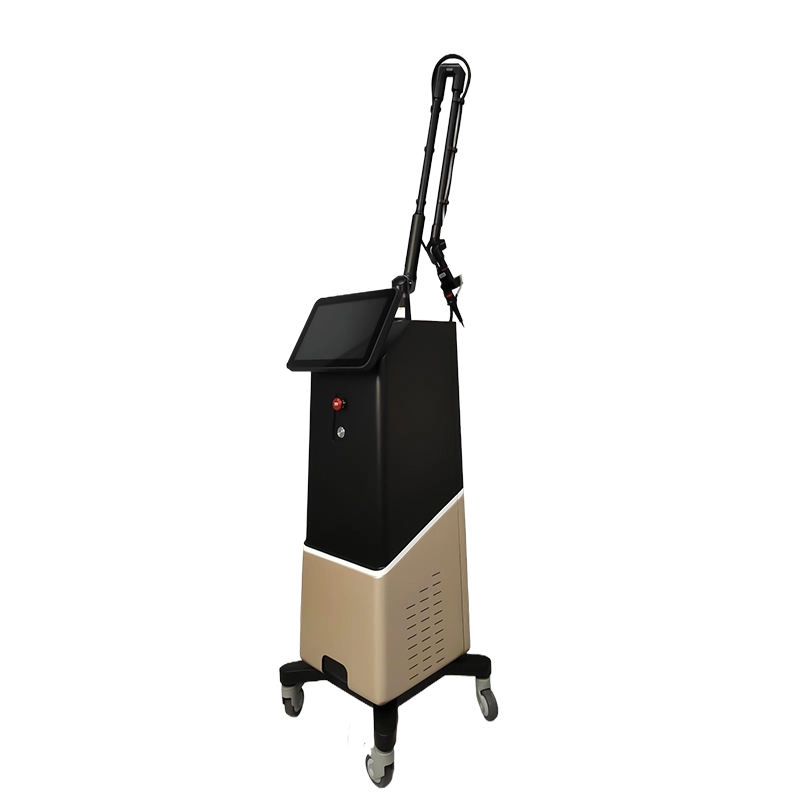
CO2 Fractional Laser Machine for Advanced Skin Resurfacing & Scar Removal
The CO2 fractional laser machine is designed to address a variety of skin concerns, offering treatments for acne scars, pigmentation, wrinkles, and overall skin texture. Utilizing advanced CO2 fractional laser technology, it delivers highly precise and controlled laser energy to promote collagen production and skin rejuvenation. This machine is ideal for professional use in beauty salons, medical spas, and aesthetic clinics. It features a user-friendly touchscreen interface, adjustable settings for customizable treatments, and a built-in cooling system to ensure comfort during use.

V9 Slimming Machine | 5-in-1 Professional Body Contouring & Cellulite Reduction Device | Vacuum, RF, Cavitation, Infrared & Roller
The V9 Slimming Machine is a comprehensive, professional-grade aesthetic device designed to address a wide range of body and facial concerns. This all-in-one system masterfully integrates five powerful technologies—vacuum, roller, infrared, RF, and cavitation—to deliver a complete solution for slimming and shaping.
It is the ideal choice for businesses looking to offer a multi-functional device that can perform multiple treatments, from reducing fat and cellulite to lifting and tightening the skin. The V9 Slimming Machine helps clients combat issues like postpartum obesity, local obesity, and facial sagging.

9 in 1 Gel Radio Frequency Machine – Cavitation Vacuum Machine 40K 80K with RF Skin Tightening Body Shape Weight Loss Fat Cavitation System
The 9 in 1 Gel Radio Frequency Machine is a professional multifunctional body shaping and skin management system designed for beauty salons and slimming centers. Utilizing 40K and 80K cavitation, this device effectively breaks down stubborn fat cells, promoting rapid body contouring and weight loss.
Equipped with advanced RF Skin Tightening technology, the machine stimulates collagen regeneration, tightens sagging skin, reduces wrinkles, and enhances elasticity. The integrated Body Shape Weight Loss Fat Cavitation system delivers powerful shaping results for the abdomen, arms, legs, and waist.
With nine specialized handles, the machine supports multiple facial and body treatments including cavitation slimming, RF tightening, vacuum shaping, and photon rejuvenation—providing a complete 9-in-1 solution for both fat reduction and skin improvement.
Perfect for professional salons seeking to upgrade their services with a versatile and high-performance 9 in 1 cavitation and radio frequency machine.
Get more information
If you have any comments or good suggestions, please leave us a message; later our professional staff will contact you as soon as possible.
Let's Talk
Stay in touch with us for cutting-edge beauty solutions, professional guidance, and customized service.
Contact


Room 307, Building A, Huilong International E-commerce Industrial Park, No. 10 Xipengling Road, Helong Street, Baiyun District, Guangzhou, China
© 2025 HUIMAIN. All Rights Reserved. Privacy Policy | Terms and Conditions | Sitemap
Facebook
Instagram
Medical beauty equipment factory
huimain Medical beauty equipment factory
beauty machine supplier
Whatsapp: +8619124004543