


Wholesale Cryolipolysis Machine Price: What to Expect
- Understanding Cryolipolysis: Science, Safety, and Market Context
- How cryolipolysis works and why device quality matters
- Clinical evidence and regulatory landscape
- Market trends influencing wholesale pricing
- Wholesale Pricing Explained
- Key price drivers
- Typical wholesale price ranges
- How volume, OEM/ODM and customization affect price
- How to Choose a Wholesale Cryolipolysis Machine
- Validating supplier claims and certifications
- Evaluating total cost of ownership and ROI
- Service, training, and spare parts
- Supplier Comparison and Risk Mitigation
- Comparative feature matrix
- Common pitfalls and how I mitigate them
- Legal and clinical risk assessment
- Guangzhou Huimain Technology: Capabilities, Products, and Why It Matters
- Company profile and technical strengths
- Certifications, product range and international reach
- OEM/ODM, after‑sales service and competitive edge
- Practical Buying Checklist
- Pre‑purchase due diligence
- Operational and marketing considerations
- Negotiation tips
- FAQ — Wholesale Cryolipolysis Machine Price: Common Questions
- 1. What is the minimum wholesale price I should expect for a working cryolipolysis machine?
- 2. Does CE certification mean the device is safe and effective?
- 3. How many handles do I need for a profitable clinic?
- 4. How long before I see a return on investment?
- 5. Can I get OEM branded devices at wholesale rates?
- 6. What are the main risks when buying the cheapest option?
As someone who has advised clinics, distributors, and OEMs in the non‑invasive body‑contouring sector for over a decade, I often get the same question: how much should you expect to pay for a wholesale cryolipolysis machine? In this article I explain the technical, regulatory, and commercial factors that determine price, give realistic wholesale ranges, compare features, and show how to assess suppliers so you purchase a machine that protects your patients, your reputation, and your bottom line. I also explain why certifications like CE and third‑party testing (e.g., SGS) affect cost and resale value. For clinical context and safety evidence, see the peer‑reviewed literature such as the review on cryolipolysis outcomes and safety on PubMed Central (ncbi.nlm.nih.gov/pmc/articles/PMC3784260/) and the overview on cryolipolysis on Wikipedia (wikipedia.org/wiki/Cryolipolysis).
Understanding Cryolipolysis: Science, Safety, and Market Context
How cryolipolysis works and why device quality matters
Cryolipolysis—commonly called fat freezing—induces selective apoptosis of adipocytes by controlled cooling. The controlled cooling profile, vacuum applicator design, and temperature monitoring determine efficacy and risk of adverse events (e.g., paradoxical adipose hyperplasia). Device components such as multiple applicator sizes, precise thermistors, and programmed cooling curves materially affect outcomes and therefore price.
Clinical evidence and regulatory landscape
Clinical studies report consistent reductions in subcutaneous fat thickness with well‑designed cryolipolysis systems (PubMed Central). However, regulatory clearances differ by market. For instance, devices marketed as medical products in the EU/UK/US typically need conformity assessment or clearance pathways; CE marking is required for many European markets (ec.europa.eu/ce-marking), and FDA clearance history for specific technologies (e.g., CoolSculpting by Zeltiq) is publicly documented. Certified components, validated software, and clinical testing push manufacturing costs up but reduce legal and clinical risk.
Market trends influencing wholesale pricing
The global body‑contouring device market has been expanding, driven by rising demand for noninvasive treatments. Market research by firms such as Grand View Research highlights growth in the body contouring devices market (grandviewresearch.com), which increases supplier activity and variation in price tiers—from low‑cost import machines to High Quality, clinically validated systems. Economies of scale, OEM/ODM relationships, and geographic supply chains also shape wholesale pricing.
Wholesale Pricing Explained
Key price drivers
When evaluating wholesale cryolipolysis machine prices, consider these drivers:
- Number of handles/applicators (single vs. multi‑handle systems)
- Cooling technology and temperature control precision
- Software features (preset protocols, treatment logging, touchscreen UI)
- Safety features (real‑time temperature sensors, auto‑stop, alarm systems)
- Regulatory status and clinical testing (CE, FDA clearance, clinical trials)
- After‑sales service, warranty, and local technical support
- OEM/ODM customization and private‑label options
Typical wholesale price ranges
Below I present typical wholesale price bands for cryolipolysis devices. These are benchmark ranges based on industry sourcing, supplier catalogs, and market reports. Your actual price will depend on order quantity, customization, and included services.
| Category | Typical Wholesale Price (USD) | Typical Buyers | Notes |
|---|---|---|---|
| Entry‑level single‑handle devices | $2,000 – $6,000 | Small clinics, spas, startups | Lower build quality, limited safety redundancy, often no major regulatory clearance |
| Multi‑handle mid‑range systems (2–4 handles) | $6,000 – $15,000 | Medium clinics, distributors | Better sensors, more protocols, possible CE |
| High Quality clinical devices (4+ handles, validated) | $15,000 – $40,000+ | Hospitals, large clinics, branded chains | High‑grade components, clinical validation, CE/FDA status, strong warranty/support |
Source context: these ranges are consistent with industry supplier listings and market analyses; for broader market growth data see Grand View Research.
How volume, OEM/ODM and customization affect price
Wholesale pricing can drop substantially with higher minimum order quantities (MOQs) and longer contracts. OEM and ODM agreements that include design work, branding, or custom protocols add development costs but can be amortized over larger runs. I typically advise distributors to model total landed cost (unit price + shipping + duties + certification + local service setup) rather than unit price alone.
How to Choose a Wholesale Cryolipolysis Machine
Validating supplier claims and certifications
Ask suppliers for verifiable documentation: CE certificates, SGS test reports, patent documentation, clinical trial summaries, and a list of references. For CE, consult the EU guidance (CE marking). SGS reports verify material and electrical safety (sgs.com). If a supplier claims US regulatory clearance, request the FDA 510(k) or de novo decision number.
Evaluating total cost of ownership and ROI
Calculate ROI using realistic throughput estimates, average treatment price, and machine uptime. For example, a mid‑range multi‑handle system might cost $10,000 wholesale. If you charge $700 per treatment and average 8 treatments weekly, payback can occur within months if utilization is high. Factor in consumables, maintenance contracts, and marketing costs.
Service, training, and spare parts
After‑sales service is often underestimated. Machines require spare applicators, replacement gaskets, and occasional electronic servicing. Prefer suppliers who provide training (both clinical protocol and technical maintenance), spare parts availability, and clearly defined warranty terms.
Supplier Comparison and Risk Mitigation
Comparative feature matrix
Below is a simplified comparison matrix you can use when vetting suppliers. Customize weightings based on what matters most to your practice (e.g., clinical evidence vs. price).
| Feature / Supplier | Supplier A (Low Cost) | Supplier B (Mid Range) | Supplier C (High Quality) |
|---|---|---|---|
| Price (wholesale est.) | $3,500 | $9,000 | $25,000 |
| Handles | 1–2 | 2–4 | 4–6 |
| Certifications | Basic safety reports | CE, SGS tests | CE, FDA/FDA‑cleared components, clinical trials |
| Warranty & Support | 6–12 months, limited | 1–2 years, regional support | 2+ years, global network |
| OEM/ODM | Limited | Available | Full customization |
Common pitfalls and how I mitigate them
From my consulting work, the common pitfalls are: underestimating certification timelines, buying on price alone, and failing to verify spare parts availability. Mitigation steps: require sample testing, negotiate pilot orders, and include contract clauses for spare parts lead times and technical training.
Legal and clinical risk assessment
Check local medical device regulations—some countries treat cryolipolysis as a medical device requiring a licensed practitioner to operate. Documented informed consent and standardized protocols help defend your practice in the event of an adverse event. For regulatory basics, review relevant standards and regional guidance; for EU CE marking see ec.europa.eu.
Guangzhou Huimain Technology: Capabilities, Products, and Why It Matters
Company profile and technical strengths
Guangzhou Huimain Technology Co., Ltd. is a high‑tech enterprise specializing in research, development, production, and after‑sales service of professional beauty machines and home‑use devices. Operating from a 3,000‑square‑meter facility, the company is driven by a strong technical team where over 60% of staff hold higher education degrees. Dedicated departments for purchasing, clinical testing, and engineering allow continuous R&D investment and quality control. This organizational structure reduces production risk and shortens new product development cycles—an important advantage when buying wholesale equipment.
Certifications, product range and international reach
Huimain emphasizes global standards: the company has earned CE certification, SGS approval, and multiple patents. Their product suite includes Cryolipolysis machines, EMS sculpting machines, Plasma machines, Shockwave machines, HIFU machines, Hydrofacial systems, Cavitation vacuum machines, Laser hair removal, Tattoo removal machines, and Microneedle devices. These products are distributed across China, Southeast Asia, the Middle East, Europe, and North America. For buyers this means access to a broad product ecosystem and potential bundled deals for clinics seeking multiple device modalities.
OEM/ODM, after‑sales service and competitive edge
Huimain follows an OEM/ODM development route and can design and manufacture High Quality medical and beauty equipment for salons and distributors worldwide. Their competitive strengths lie in technical R&D, rigorous quality control, and localized after‑sales arrangements supported by formal test labs. I’ve found suppliers with in‑house clinical testing and engineering departments typically deliver more reliable machines and faster spare parts turnaround. To contact or view products directly, visit Huimain Beauty or email coco@huimainbeauty.com.
Practical Buying Checklist
Pre‑purchase due diligence
- Request CE/SGS/test reports and clinical summaries.
- Ask for references from clinics in your region.
- Insist on a clear spare parts list, lead times, and warranty terms.
Operational and marketing considerations
- Train staff on standardized protocols and informed consent documentation.
- Bundle services (e.g., cryolipolysis + cavitation + RF) to improve utilization.
- Track outcomes and adverse events to inform ROI and marketing claims.
Negotiation tips
Negotiate MOQs, pilot orders, payment terms, and inclusion of consumables or training. A phased approach—start with one unit, validate demand, then scale—often reduces capital risk.
FAQ — Wholesale Cryolipolysis Machine Price: Common Questions
1. What is the minimum wholesale price I should expect for a working cryolipolysis machine?
Expect entry‑level wholesale prices starting around $2,000–$3,000, but these often lack robust safety redundancy and certifications. For clinically reliable systems I recommend budgeting $6,000+.
2. Does CE certification mean the device is safe and effective?
CE indicates conformity to EU safety directives but does not guarantee clinical effectiveness for every indication. Look for clinical data and independent test reports (e.g., SGS) to complement CE marking. See EU CE guidance (ec.europa.eu).
3. How many handles do I need for a profitable clinic?
More handles increase throughput and flexibility; a 2–4 handle system often balances cost and utilization for medium clinics. Larger practices may prefer 4+ handles for simultaneous treatments across rooms or patients.
4. How long before I see a return on investment?
ROI depends on treatment price, utilization, and operating costs. With moderate utilization (6–10 treatments/week) and treatment prices of $500–$800, a mid‑range machine can pay for itself in a few months to a year.
5. Can I get OEM branded devices at wholesale rates?
Yes. Many manufacturers, including Guangzhou Huimain, offer OEM/ODM services. OEM customization increases unit cost but can be negotiated down with larger MOQs and long‑term commitments.
6. What are the main risks when buying the cheapest option?
Main risks include poor durability, lack of certification, unreliable temperature control (increasing complication risk), and poor spare parts support. These often cost more long‑term than a slightly higher initial investment.
If you want targeted advice for your clinic or distribution plans, or to request a product catalog and MOQ/pricing from a reputable manufacturer, contact Guangzhou Huimain Technology Co., Ltd. Visit https://www.huimainbeauty.com/ or email coco@huimainbeauty.com to get quotes, clinical testing reports, and OEM/ODM options.
I hope this guide helps you evaluate wholesale cryolipolysis machine pricing with more confidence. If you'd like a custom cost model or a supplier vetting checklist tailored to your country and expected volumes, I can prepare that for you.
14 in 1
Is the treatment safe for all skin types?
Yes, the non-invasive nature of the machine makes it suitable for a wide range of skin types, as it is needle-free and does not cause trauma to the skin.
EM-11
Can it be used on multiple body areas?
Yes, it effectively treats abdomen, thighs, buttocks, and arms.
HMT82S-2
Who is this device suitable for?
It's ideal for people looking to reduce fat, tone muscles, and shape their body. Especially effective for postpartum recovery, sedentary individuals, fitness enthusiasts, or those needing localized sculpting. Safe for most body types and skin tones.
EMT-13
Is the HIEMT POS treatment painful?
No, the treatment is non-invasive and painless. You will feel intense muscle contractions similar to a workout.
JLM-4
Is the EMS Face Machine safe for all skin types?
Yes, the EMS and RF energies are non-invasive and safe for all skin types.

CO2 Fractional Laser Machine – Professional Wrinkle Removal & Skin Resurfacing Device
The CO2 Fractional Laser Machine is a multifunctional aesthetic device designed for professional clinics and beauty salons. Using advanced fractional CO2 laser technology, it effectively targets acne scars, freckles, pigmentation, nevi, and deep wrinkles. Additionally, it provides non-invasive skin rejuvenation, vaginal tightening, and intimate beautification. This professional CO2 laser equipment combines precision, safety, and powerful energy output to deliver outstanding anti-aging and dermatological results.
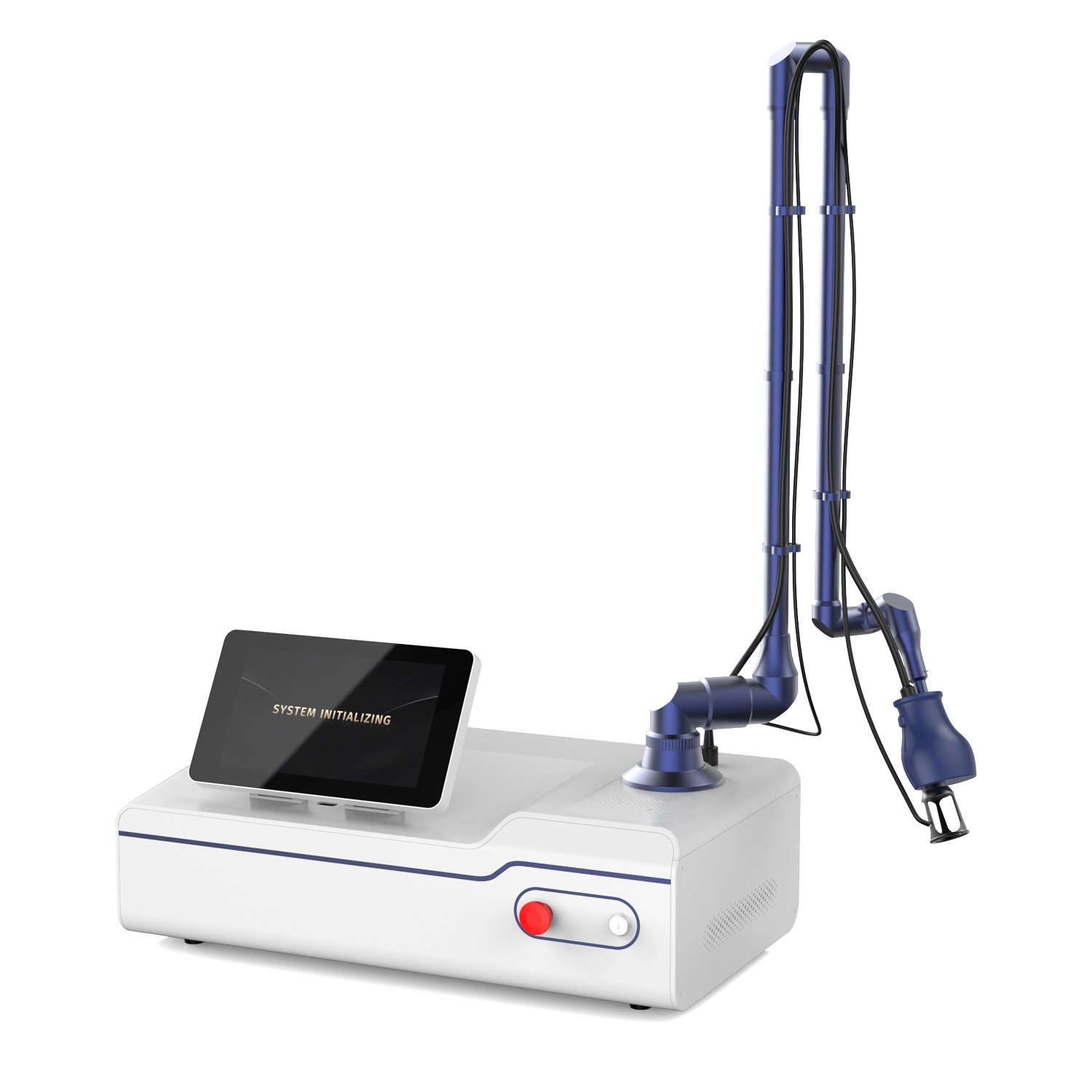
CO2 Fractional Laser Machine | Intimate Vaginal Rejuvenation System
This **CO2 Fractional Laser Machine** utilizes advanced 10600nm CO2 fractional laser technology to create controlled micro-thermal zones on the vaginal mucosa and intimate skin layers. These micro-columns stimulate collagen regeneration and tissue remodeling, effectively improving vaginal tightness, elasticity, and overall intimate health.
Designed specifically for professional medical aesthetic and intimate wellness applications, this CO2 fractional laser machine features intelligent parameter control and high-precision energy output to ensure safe, comfortable, and consistent treatment results. It is an ideal core device for vaginal rejuvenation, postpartum recovery, and intimate anti-aging treatments.
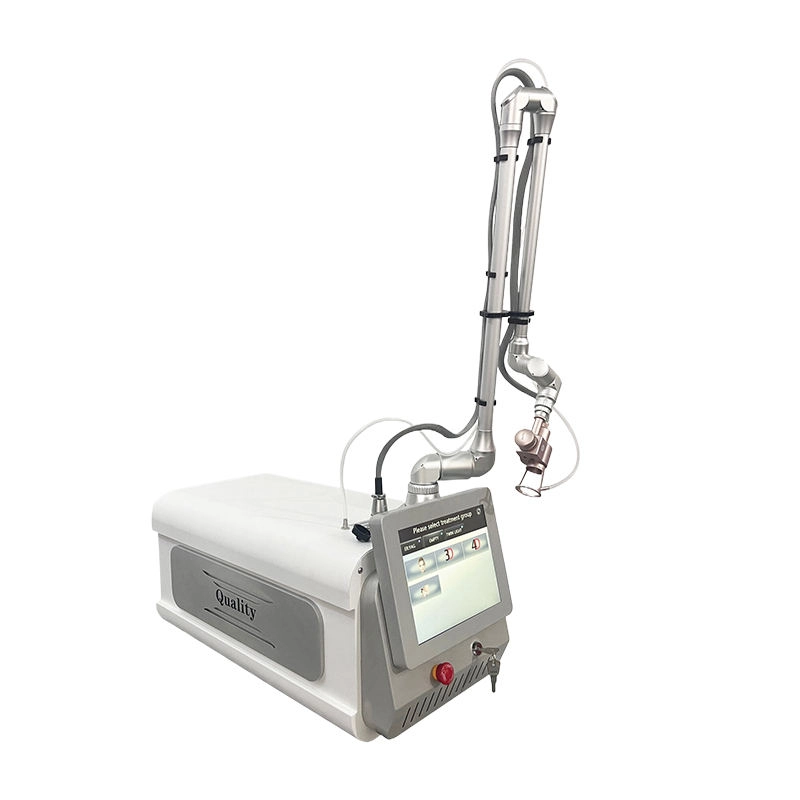
Professional CO2 Fractional Laser Machine | Fractional & Vaginal Rejuvenation CO2 Laser System
The CO2 fractional laser machine is a professional medical-grade device designed for deep skin resurfacing, wrinkle reduction, scar repair, and vaginal rejuvenation. Using a 10600 nm fractional CO2 laser beam, it creates micro-thermal columns on the skin to stimulate collagen regeneration and accelerate skin healing.
This CO2 fractional laser machine provides multiple treatment modes, including fractional mode, surgical cutting mode, and optional vaginal tightening mode, making it ideal for dermatology clinics and professional beauty centers seeking advanced laser solutions.
Its high precision, adjustable spot size, stable energy output, and seven-joint articulated arm ensure safe, accurate, and effective treatment results with minimal downtime.
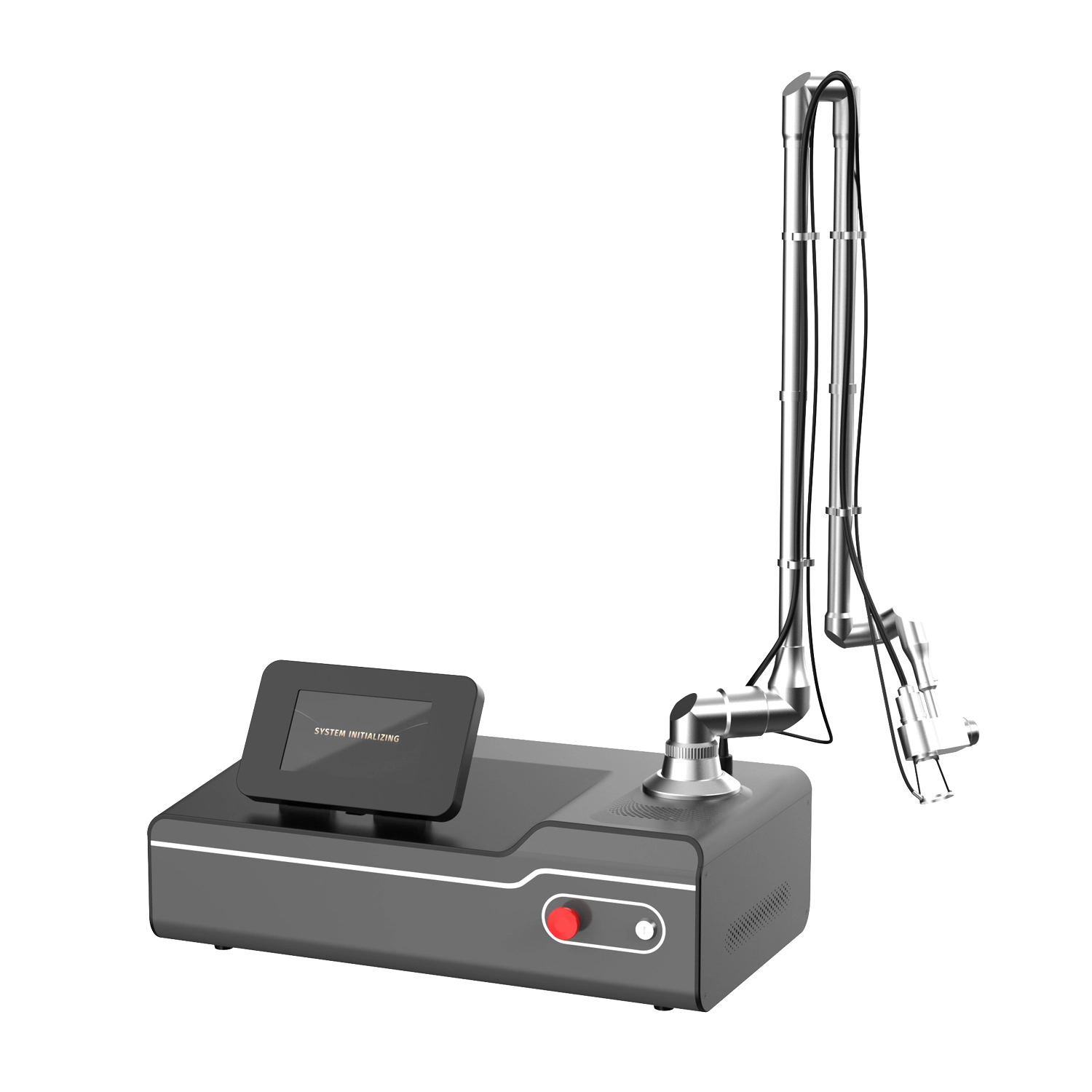
Professional CO2 Fractional Laser Machine for Skin Resurfacing & Scar Treatment
The CO2 Fractional Laser Machine is a professional CO2 fractional laser machine designed for advanced skin resurfacing, scar treatment, and skin rejuvenation procedures.
Using 10,600nm CO2 fractional laser technology, the system delivers controlled microthermal zones into the skin, stimulating collagen remodeling while preserving surrounding tissue. This fractional approach significantly improves treatment safety, recovery time, and clinical outcomes.
The CO2 fractional laser machine is widely used in dermatology clinics and medical aesthetic centers for treating acne scars, wrinkles, enlarged pores, stretch marks, and various skin texture concerns.
Get more information
If you have any comments or good suggestions, please leave us a message; later our professional staff will contact you as soon as possible.
Let's Talk
Stay in touch with us for cutting-edge beauty solutions, professional guidance, and customized service.
Contact


Room 307, Building A, Huilong International E-commerce Industrial Park, No. 10 Xipengling Road, Helong Street, Baiyun District, Guangzhou, China
© 2025 HUIMAIN. All Rights Reserved. Privacy Policy | Terms and Conditions | Sitemap
Facebook
Instagram
Medical beauty equipment factory
huimain Medical beauty equipment factory
beauty machine supplier
Whatsapp: +8619124004543