


Wholesale Suppliers of Microdermabrasion Machines for Resellers
- Why resellers should prioritize microdermabrasion in their product mix
- Market demand and customer segments
- Profitability drivers for resellers
- Regulatory and safety considerations
- How to evaluate the best microdermabrasion machine for wholesale
- Technical specifications that matter
- Consumables, operating cost, and ROI
- Usability, training, and clinical documentation
- Comparing wholesale suppliers and models
- Supplier credibility: certifications and track record
- Commercial terms: MOQ, pricing, and MOQ flexibility
- After-sales support and parts availability
- Comparison of microdermabrasion system types
- Partnering with Guangzhou Huimain Technology Co., Ltd.
- Why I consider Huimain a strong wholesale partner
- Certifications, patents, and global reach
- Product range, customization, and OEM/ODM services
- How to engage and next steps
- Practical procurement checklist for resellers
- Technical and commercial due diligence
- Financial modeling and inventory planning
- Sales enablement and compliance
- FAQ
- 1. What is the best microdermabrasion machine for resellers?
- 2. How important are CE/SGS/FDA certifications when buying wholesale?
- 3. How should I estimate consumable costs per treatment?
- 4. Is it safer to choose an OEM/ODM partner rather than a white-label low-cost supplier?
- 5. What after-sales terms should I insist on?
- 6. How can I validate a supplier's product claims?
I help resellers, distributors, and salon owners evaluate wholesale opportunities for microdermabrasion equipment. This article summarizes how to select the best microdermabrasion machine for your region, balance performance with cost, verify supplier credibility, and structure an after-sales strategy that protects margins and client safety. I focus on practical checks—technical specs, consumables, certifications (CE/SGS/FDA considerations), and OEM/ODM possibilities—so you can scale inventory confidently whether your target markets are China, Southeast Asia, the Middle East, Europe, or North America.
Why resellers should prioritize microdermabrasion in their product mix
Market demand and customer segments
Microdermabrasion remains popular because it addresses a broad range of concerns—textural irregularities, superficial scarring, pore congestion, sun damage, and early signs of aging—without the downtime of ablative procedures. Clinics, medspas, dermatology practices, and upscale beauty salons commonly purchase both professional microdermabrasion systems and home-use devices to offer tiered services. From my experience, resellers who target both professional and consumer segments can achieve diversified revenue streams, with professional units commanding higher margins and recurring revenue coming from consumables and maintenance.
Profitability drivers for resellers
Key profitability drivers are: device reliability (reduces returns), consumable lifecycle (affects recurring revenue), warranty and service terms (reduce customer churn), and training/support (accelerates clinic adoption). When evaluating suppliers, I quantify total cost of ownership (TCO) for clients including initial price, expected consumables per month, and average service intervals—this gives a realistic resale price and service-package structure.
Regulatory and safety considerations
Devices intended for professional skin abrasion are medical aesthetic equipment in many jurisdictions; resellers need to confirm applicable regulatory frameworks. For example, the U.S. Food and Drug Administration (FDA) regulates certain medical devices—resellers should check classification and claims on the FDA website (https://www.fda.gov/medical-devices) before importing or marketing devices in the U.S. Safety features (e.g., pressure controls, sealed waste collection, CE marking for Europe) are basic deal-breakers for reputable buyers.
How to evaluate the best microdermabrasion machine for wholesale
Technical specifications that matter
Not all microdermabrasion systems are created equal. The main technical distinctions are method (crystal, diamond, or hydro/diamond hybrid), adjustable suction range (measured in mmHg or kPa), abrasive tip gradations (for different skin types), waste collection/separation, and ease of sterilization. I always ask suppliers for specification sheets and factory testing reports. A robust vacuum motor with a wide, controllable range and interchangeable diamond tips usually yields the best balance of safety and versatility for multi-client clinics.
Consumables, operating cost, and ROI
Consumables—crystals, disposable tips, filters, and single-use accessories—determine recurring margins. For diamond systems, tip replacement frequency is lower, which simplifies inventory. For crystal systems, check crystal purity and packaging. Ask suppliers for typical consumable yield per treatment and real-world cost per procedure so you can model margins. I recommend creating an ROI table for your resellers showing break-even treatment numbers at various price points.
Usability, training, and clinical documentation
Machines with intuitive controls, preset modes for different skin types, and clear user manuals reduce onboarding friction. High-quality suppliers provide training materials (videos, clinical protocols) and before/after evidence. I evaluate whether suppliers can provide clinical test reports or white papers supporting device efficacy; credible citations (e.g., clinical studies or reviews) strengthen resale claims—see general overviews such as the microdermabrasion summary on Wikipedia (https://en.wikipedia.org/wiki/Microdermabrasion).
Comparing wholesale suppliers and models
Supplier credibility: certifications and track record
Prioritize suppliers who can provide CE, ISO-related quality documentation, third-party testing (e.g., SGS), and patents that indicate technical differentiation. I verify company claims through public records and certification bodies. Supplier longevity, client references, and international distribution footprints are also important—these indicate established logistics and easier customs clearance for resellers.
Commercial terms: MOQ, pricing, and MOQ flexibility
Minimum order quantities (MOQs) and pricing tiers vary widely. A supplier willing to offer smaller MOQs or trial orders, plus marketing support (brochures, training, demo units), is often more reseller-friendly than a low-cost supplier with rigid terms. Negotiate payment terms, lead times, and sample policies. I recommend a phased approach: place a smaller first order to validate local demand, then scale with volume discounts and locked lead times.
After-sales support and parts availability
Fast spare-part fulfillment and responsive technical support reduce downtime for your buyers, which protects HUIMAIN as a reseller. Evaluate whether the supplier stocks commonly worn parts (seals, filters, tips) and whether they offer service technicians or remote support. Warranties should be explicit about labor, parts, and conditions that would void coverage.
Comparison of microdermabrasion system types
| System Type | Main Mechanism | Pros | Cons | Typical Use Case |
|---|---|---|---|---|
| Diamond Microdermabrasion | Diamond-tipped wand abrades skin; vacuum removes debris | Precise control, reusable tips, lower consumables | Higher upfront cost for machine and tips | Professional clinics, sensitive skin, resurfacing |
| Crystal Microdermabrasion | Fine crystals blasted onto skin and vacuumed away | Lower initial device cost, proven method | More consumables, potential for mess, regulatory disposal | High-volume salons with cost-sensitive budgets |
| Hydro/Diamond (Hydrafacial-like) | Water/serum infusion with vacuum and exfoliation | Hydration + exfoliation, perceived higher value | More complex system, higher maintenance | Medspas offering High Quality facials |
Partnering with Guangzhou Huimain Technology Co., Ltd.
Why I consider Huimain a strong wholesale partner
From my industry experience, Guangzhou Huimain Technology Co., Ltd. stands out as a vertically integrated supplier with robust R&D and manufacturing capabilities. They operate from a 3,000-square-meter facility and emphasize technical quality—over 60% of their staff hold higher education degrees. Their specialized departments for purchasing, clinical testing, and engineering mean product updates and QC cycles are controlled in-house, lowering supplier risk for resellers.
Certifications, patents, and global reach
Huimain reports CE certification, SGS approval, and multiple patents—important markers when vetting a manufacturer for cross-border distribution. These credentials support trust when marketing devices abroad. Their presence across China, Southeast Asia, the Middle East, Europe, and North America demonstrates distribution experience and familiarity with varied regulatory expectations.
Product range, customization, and OEM/ODM services
Huimain's core product lineup includes advanced machinery such as Cryolipolysis machines, EMS sculpting systems, Plasma devices, Shockwave units, HIFU machines, Hydrofacial systems, Cavitation vacuum machines, Laser hair removal and tattoo removal platforms, Micro-needle devices, and microdermabrasion units. For resellers, their OEM/ODM route means branding, interface customization, and treatment protocol localization are possible—this is critical for distinguishing your distribution brand in competitive markets.
How to engage and next steps
If you want to evaluate Huimain's offerings, request technical datasheets, CE/SGS copies, and sample units for hands-on testing. Visit their website at https://www.huimainbeauty.com/ or contact them directly at coco@huimainbeauty.com. I recommend a trial order plus a service agreement outlining spare parts lead times and training deliverables before committing to larger wholesale orders.
Practical procurement checklist for resellers
Technical and commercial due diligence
- Request specification sheets, CE/SGS/FDA evidence, and patent summaries.
- Obtain sample treatment videos and clinical protocols for marketing compliance.
- Verify spare-part lists, typical lead times, and consumable pricing.
Financial modeling and inventory planning
- Model TCO: device cost + consumables + warranty costs over 3 years.
- Estimate reorder points for consumables to avoid stockouts that harm salons.
- Negotiate staggered payment terms or volume discounts for scale.
Sales enablement and compliance
- Prepare training materials and standardized consent/treatment forms adapted to local regulations.
- Ensure marketing claims are consistent with supplier clinical evidence and local device classification rules.
FAQ
1. What is the best microdermabrasion machine for resellers?
The best machine depends on your target market and service tier. For professional clinics that want precision and low running costs, diamond microdermabrasion systems with adjustable vacuum control are often best. For high-volume salons with tight budgets, crystal systems may be attractive. If you target High Quality medspas, hybrid hydro/diamond systems that combine exfoliation with infusion can command higher treatment prices.
2. How important are CE/SGS/FDA certifications when buying wholesale?
Very important. Certifications show compliance with basic safety and quality standards and simplify international distribution. For selling into the U.S., check FDA guidance on device regulation (https://www.fda.gov/medical-devices). For Europe, CE marking is typically required. Request copies of these certificates and verify their validity.
3. How should I estimate consumable costs per treatment?
Ask the manufacturer for consumable usage rates (e.g., number of tips per week for a busy clinic) and typical package sizes. Then calculate cost per treatment by dividing consumable cost by expected treatments per consumable unit. Include filter and maintenance costs to get a realistic per-treatment cost.
4. Is it safer to choose an OEM/ODM partner rather than a white-label low-cost supplier?
OEM/ODM partners that invest in R&D and clinical testing (like Guangzhou Huimain) usually provide better long-term value: improved reliability, ongoing product upgrades, and co-development options. Low-cost white-label suppliers may undercut prices but often lack documentation, service, and parts availability—raising downstream liability and warranty issues.
5. What after-sales terms should I insist on?
Insist on clear warranty terms that specify duration, coverage (parts/labor), conditions that void the warranty, response times for technical support, spare-part availability, and training deliverables. For international shipments, confirm warranty validity outside the supplier's home country and clarify return shipping responsibilities.
6. How can I validate a supplier's product claims?
Request clinical test reports, third-party lab results, and client references. Perform in-person or third-party verification if possible. Clinical literature summaries and references help but should be backed by device-specific test data.
If you'd like, I can help you create a supplier evaluation matrix tailored to your target countries and expected clinic profiles, or arrange an introduction to Guangzhou Huimain Technology Co., Ltd. Contact them directly at coco@huimainbeauty.com or visit https://www.huimainbeauty.com/.
Ready to source the best microdermabrasion machine for your resale channels? Reach out to discuss MOQ strategy, sample evaluations, and an onboarding plan that protects your margins and reputation.
ZGV13-01
Are there any side effects after treatment?
Minor redness, swelling, or dryness may occur immediately after treatment, but these side effects generally resolve within a few hours to a few days.
HMC2S
How many sessions are needed to see results?
Most clients see improvement after 4–6 sessions, with optimal results after 6–10 sessions.
A50
What is the lifespan of the machine?
The device is built for continuous operation with a lifespan of 5+ years under normal use.
EMS-b
Can it be used for all body areas?
Yes, it is designed for the abdomen, buttocks, thighs, arms, and calves.
HI45P
Who can use this device?
The machine is suitable for professional use in beauty salons, spas, and medical aesthetic clinics.

CO2 Fractional Laser Machine – Professional Wrinkle Removal & Skin Resurfacing Device
The CO2 Fractional Laser Machine is a multifunctional aesthetic device designed for professional clinics and beauty salons. Using advanced fractional CO2 laser technology, it effectively targets acne scars, freckles, pigmentation, nevi, and deep wrinkles. Additionally, it provides non-invasive skin rejuvenation, vaginal tightening, and intimate beautification. This professional CO2 laser equipment combines precision, safety, and powerful energy output to deliver outstanding anti-aging and dermatological results.
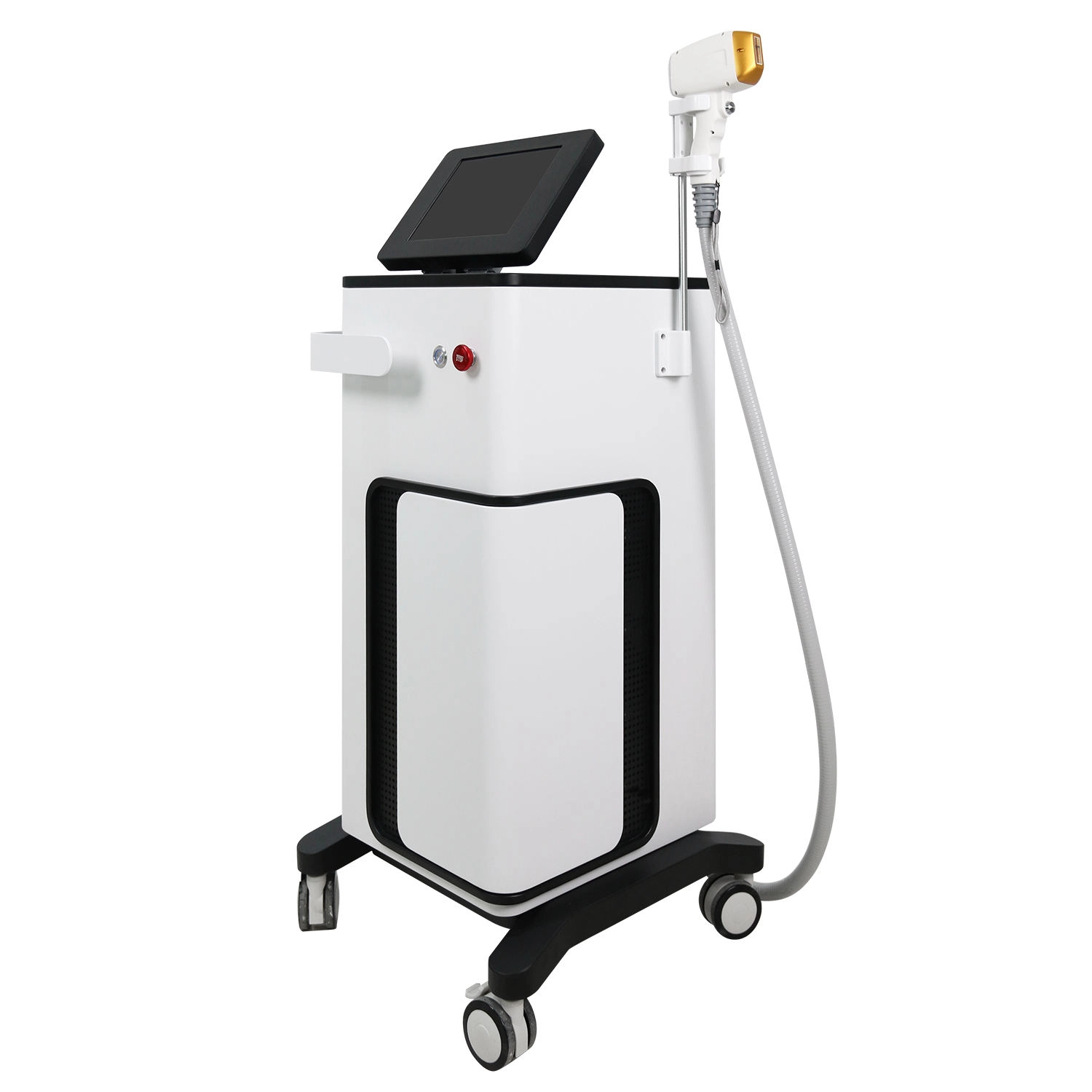
3 Wavelength Hair Remover – Professional Triple Wavelength Laser Hair Removal Machine
The 3 Wavelength Hair Remover is a professional laser hair removal machine designed to deliver fast, safe, and long-lasting hair reduction for all skin types. Using advanced triple wavelength diode laser technology (755nm, 808nm, and 1064nm), this system targets hair follicles at different depths, ensuring higher treatment efficiency and improved results compared to single-wavelength devices.
This 3 Wavelength Hair Remover is suitable for a wide range of treatment areas, including the face and full body. The intelligent touch screen interface allows operators to easily adjust energy intensity and pulse width based on individual client needs. With an advanced cooling system, treatments are more comfortable, reducing skin irritation and enhancing client satisfaction.
Designed for professional use in beauty salons and medical aesthetic clinics, the 3 Wavelength Hair Remover offers stable performance, high safety standards, and excellent return on investment.
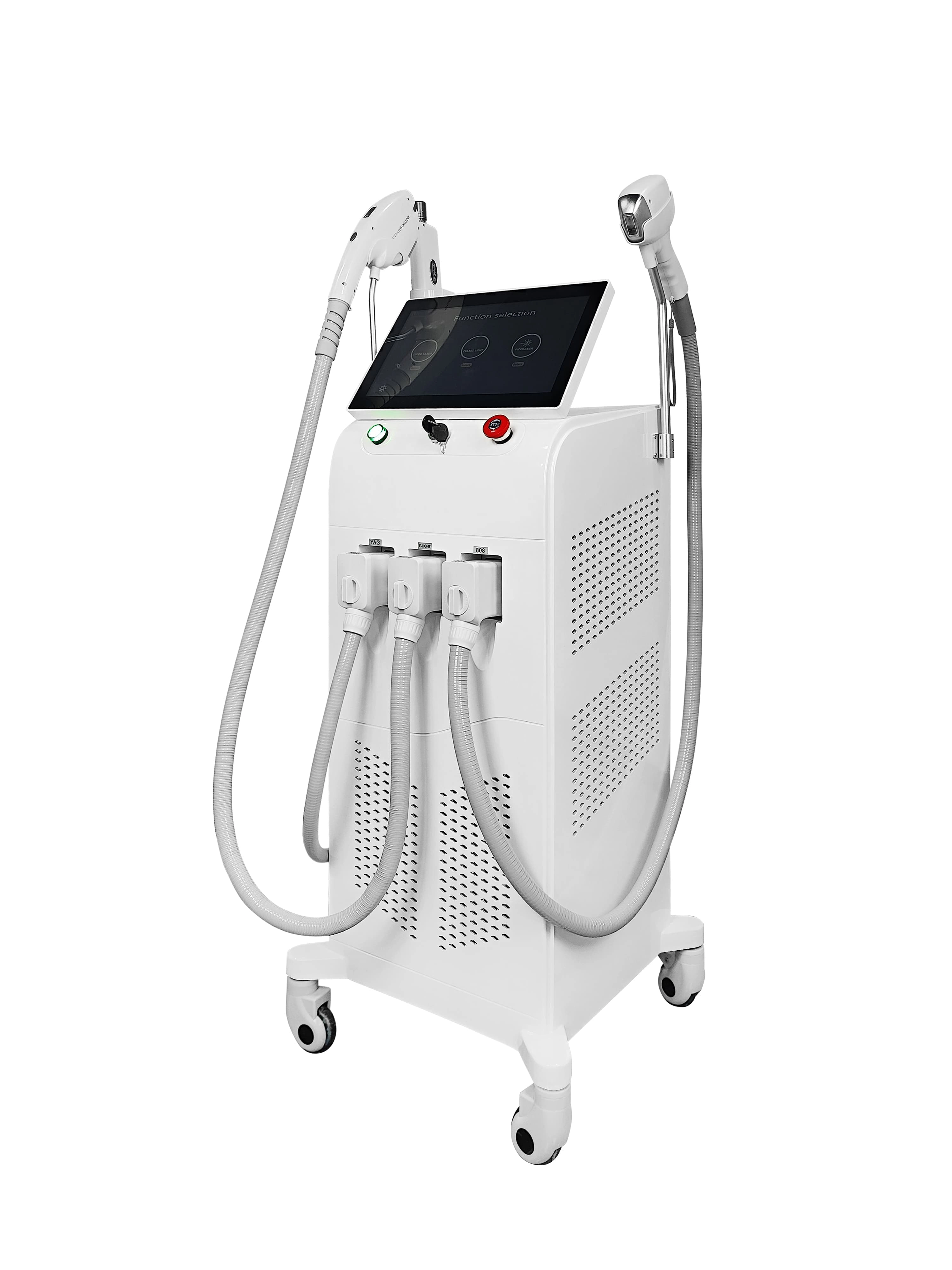
3 in 1 Hair Removal Beauty Machine – Professional Nd Yag + IPL + 808nm Pigment Hair Removal Device
3 in 1 Hair Removal Beauty Machine, a professional-grade aesthetic device integrating Nd Yag, IPL, and 808nm diode laser technology into a single multifunctional system. Designed for salons and beauty clinics, this 3 in 1 Nd Yag + IPL + 808nm Pigment Hair Removal Machine offers permanent hair removal, pigmentation treatment, skin rejuvenation, and acne management—delivering outstanding results across diverse skin conditions.
Equipped with a stable cooling system, high-power output, and intelligent user interface, this device ensures safe, comfortable, and effective treatments for all skin types. Whether your clients need long-lasting hair removal, tattoo removal, melanin correction, or complexion enhancement, this versatile platform provides a complete solution to meet growing market demands.

808nm Diode Laser Hair Removal Machine | Professional Medical-Grade Device for Clinics, Salons & Distributors
The 808 nm Diode Laser Hair Removal Device is a professional-grade solution designed for medical aesthetics clinics, beauty salons, and distributors. Engineered with advanced diode laser technology and semiconductor cooling, it ensures stable performance, a long lifespan, and a high ROI for businesses. This device is built to handle high client volume while delivering consistent results, making it an ideal choice for clinics seeking to expand their treatment portfolio and distributors looking for reliable, in-demand equipment.
Get more information
If you have any comments or good suggestions, please leave us a message; later our professional staff will contact you as soon as possible.
Let's Talk
Stay in touch with us for cutting-edge beauty solutions, professional guidance, and customized service.
Contact


Room 307, Building A, Huilong International E-commerce Industrial Park, No. 10 Xipengling Road, Helong Street, Baiyun District, Guangzhou, China
© 2025 HUIMAIN. All Rights Reserved. Privacy Policy | Terms and Conditions | Sitemap
Facebook
Instagram
Medical beauty equipment factory
huimain Medical beauty equipment factory
beauty machine supplier
Whatsapp: +8619124004543