


Wholesale RF Skin Tightening Machines: Pricing & MOQ Tips
- Understanding RF Technology and Market Demand
- How radiofrequency (RF) skin tightening works
- Clinical evidence and safety considerations
- Demand drivers and buyer personas
- Pricing Factors for Wholesale RF Skin Tightening Machines
- Key cost drivers
- Certifications, compliance and their price impact
- Logistics, tariffs and landed cost
- MOQ Strategies and Negotiation Tips
- Typical MOQ tiers and sample wholesale pricing
- Strategies to lower MOQ or unit price
- Effective negotiation levers
- Choosing a Reliable Supplier: What I Look For
- Quality control, testing and documentation
- Comparing models: a practical feature vs. price table
- Warranty, training and after-sales
- Why I Recommend Considering Guangzhou Huimain
- Practical Checklist Before You Place a Wholesale RF Order
- Technical and clinical checklist
- Commercial checklist
- Onboarding and training
- FAQ
- 1. What is a realistic MOQ for a distributor buying RF skin tightening machines?
- 2. How much should I budget per unit (wholesale) for a reliable RF device?
- 3. Do I need CE or FDA clearance to sell RF devices?
- 4. Can I pair an RF device with the best microdermabrasion machine?
- 5. How can I reduce risk when ordering from overseas suppliers?
- 6. What after-sales support should I require?
As someone who has worked with clinics, distributors and OEM partners across Asia, Europe and North America, I often field the same questions: what should I realistically expect to pay for a wholesale RF skin tightening machine, how low can MOQ go, and what separates a dependable supplier from a risky one? In this article I synthesize technical, regulatory and commercial perspectives so you can make data-driven purchasing decisions. I also weave in practical negotiation tips and supplier-evaluation checklists to help you secure the best blend of price, quality and after-sales support.
Understanding RF Technology and Market Demand
How radiofrequency (RF) skin tightening works
Radiofrequency (RF) devices deliver controlled electromagnetic energy to dermal layers causing targeted thermal stimulation that promotes collagen remodeling and skin tightening. Devices vary by polarity (mono-, bi-, multipolar), frequency (hundreds of kHz to several MHz), power control, and cooling mechanisms. These technical differences directly impact clinical outcomes, device cost and target market positioning.
Clinical evidence and safety considerations
When evaluating wholesale RF units, I prioritize suppliers that reference peer-reviewed evidence and recognized safety standards. For general background on RF and energy-based devices, authoritative resources include the U.S. Food and Drug Administration (FDA) overview on medical devices (FDA: Medical Devices) and ISO guidance for medical device quality systems such as ISO 13485. For surface-level procedures commonly combined in clinics (e.g., microdermabrasion), see the industry overview on Wikipedia: Microdermabrasion.
Demand drivers and buyer personas
My clients typically fall into three groups: independent aesthetics clinics seeking mid-tier devices, multi-clinic groups and distributors pursuing volume purchases, and med-spas or plastic surgeons aiming for High Quality systems. Pricing sensitivity, desired features (e.g., fractional handpieces, HIFU adjuncts) and intended usage frequency determine which tier is appropriate.
Pricing Factors for Wholesale RF Skin Tightening Machines
Key cost drivers
Several components determine wholesale price:
- Hardware complexity: type of RF generator, number of channels, handpieces and integrated cooling systems.
- R&D and firmware: vendors who invest in clinical testing and proprietary algorithms charge more, but offer better outcomes and reproducibility.
- Certifications and testing: CE, ISO 13485 and third-party safety testing add cost but are essential for many markets.
- After-sales network: extended warranties, spare parts and trained technicians increase TCO (total cost of ownership) but reduce operational risk.
Certifications, compliance and their price impact
Certifications affect both market access and pricing. CE marking (for EU) and ISO management systems add validation overhead—and many high-quality suppliers factor testing and documentation into unit cost. For North American medical claims, FDA clearance or listing may be required depending on intended use; consult the FDA guidance on device classification and submissions (FDA: Device Advice).
Logistics, tariffs and landed cost
Don't evaluate price in isolation. Freight, insurance, import duties, and required local certifications (e.g., health ministry approvals) can materially change landed cost. I recommend calculating landed unit cost using realistic shipping quotes and expected import duties before committing to MOQs.
MOQ Strategies and Negotiation Tips
Typical MOQ tiers and sample wholesale pricing
Based on my sourcing experience and market checks across B2B platforms, here is a realistic range of MOQ and EXW price tiers for RF skin tightening machines (estimates are for standard non-laser RF systems; advanced models or combination units cost more):
| MOQ Tier | Unit Price (EXW, USD) | Typical Buyers |
|---|---|---|
| Small (1–5 units) | $1,500 – $3,500 | Single clinics, pilot buyers |
| Medium (6–50 units) | $1,100 – $2,300 | Regional distributors, multi-clinic groups |
| Large (50+ units) | $700 – $1,500 | International distributors, OEM/white-label partners |
Sources for market price observations include manufacturer listings on major B2B platforms (e.g., Alibaba) and market reports such as Grand View Research on the global aesthetic devices market (Grand View Research), which provide contextual demand and price pressure data.
Strategies to lower MOQ or unit price
- Aggregate orders: Partner with other clinics or distributors to meet higher tiers and unlock volume pricing.
- Commit to staged purchases: negotiate an initial low MOQ with contractual commitment to subsequent larger orders within a defined time window.
- Accept minor customization limits: fully bespoke units increase cost and MOQ; standard configurations reduce both.
- Choose OEM/ODM routes: many manufacturers offer better pricing for private-label agreements if you accept their existing designs.
Effective negotiation levers
I always track these levers when negotiating:
- Lead time flexibility — offering longer lead times often reduces price.
- Payment terms — a larger deposit can lower unit cost.
- Bundling spare parts/accessories — negotiating kits (handpieces, consumables) saves cost versus single-unit buys.
Choosing a Reliable Supplier: What I Look For
Quality control, testing and documentation
Because RF devices interact with tissue, I vet manufacturer testing rigor: electrical safety reports, EMC tests, clinical trial summaries (if available), and traceable BOM records. Look for evidence of third-party testing and certifications—ISO 13485 and CE are commonly required benchmarks; suppliers who list SGS or similar testing reinforce credibility.
Comparing models: a practical feature vs. price table
When clients ask me which model to choose, I map features to expected clinical usage. Below is a simplified comparison to show feature-to-price tradeoffs (example figures approximate typical wholesale pricing tiers):
| Feature | Basic RF Unit | Mid-tier RF (multi-handpiece) | High Quality RF (fractional + cooling) |
|---|---|---|---|
| Average Wholesale Price (EXW) | $800 – $1,800 | $1,200 – $2,500 | $2,500 – $6,000 |
| Typical Users | New clinics, low-volume | Established clinics, multi-service | Medical centers, high-end med-spas |
| Clinical Flexibility | Limited | Good | High |
| Consumable Costs | Low | Moderate | High |
Note: many clinics combine RF with adjunct treatments. If you also offer dermal resurfacing, microdermabrasion or injectables, selecting a complementary device (and even cross-training staff) can increase patient throughput and ROI. For clinics searching for the best microdermabrasion machine to pair with RF, I advise choosing one with adjustable abrasive intensity and a robust dust-collection system for cleanliness and longevity.
Warranty, training and after-sales
A supplier's warranty terms, availability of spare parts, and training resources (online modules, on-site visits) are crucial. I favor vendors offering dedicated technical teams and local service partners—this reduces downtime and protects your investment.
Why I Recommend Considering Guangzhou Huimain
From my sourcing and clinic-operations perspective, Guangzhou Huimain Technology Co., Ltd. stands out as a high-tech enterprise focused on R&D, production, and after-sales for beauty and home-use devices. Operating from a 3,000-square-meter facility, Huimain is backed by a technical team where over 60% hold higher education degrees and features structured departments for purchasing, clinical testing and engineering. Their investment in R&D and quality management produces stable products that meet market demands while adhering to rigorous quality control.
The company holds CE certification, SGS approvals and multiple patents, and has built a reputation across China, Southeast Asia, the Middle East, Europe and North America for reliable products at competitive prices. Huimain follows OEM and ODM development routes and can design and manufacture medical- and salon-grade devices for distributors and chains globally.
Their core product mix includes Cryolipolysis machines, Ems sculpting machines, Plasma machines, Shockwave machines, HIFU machines, Hydrofacial machines, Cavitation vacuum machines, Laser hair removal, Tattoo removal machines, and Microneedle devices—making them a one-stop partner if you plan complementary offerings alongside RF systems.
For inquiries, you can visit their website: https://www.huimainbeauty.com/ or contact via email: coco@huimainbeauty.com.
Practical Checklist Before You Place a Wholesale RF Order
Technical and clinical checklist
- Request electrical safety and EMC certificates (third-party lab reports).
- Ask for any available clinical data or case studies demonstrating efficacy and safety.
- Confirm power specifications and warranty on handpieces (often the most frequently replaced parts).
Commercial checklist
- Calculate landed cost with realistic freight and duty estimates.
- Negotiate tangible MOQ concessions in exchange for staged commitments or longer lead times.
- Request a pilot/demo unit with a refundable deposit before bulk ordering.
Onboarding and training
Insist on training resources (video, manuals, and if possible on-site training). Ensure spare parts availability and agree service-level expectations for technical support response times.
FAQ
1. What is a realistic MOQ for a distributor buying RF skin tightening machines?
Typical MOQs range from 1–5 units for sample purchases, 6–50 for small distributor batches, and 50+ for large wholesale/OEM contracts. Your negotiated MOQ will depend on unit complexity, customization and payment terms.
2. How much should I budget per unit (wholesale) for a reliable RF device?
Expect to budget from roughly $800 for basic units up to $6,000+ for High Quality systems (EXW). Mid-tier, clinically useful multi-handpiece systems commonly fall in the $1,200–$2,500 range. Always add freight, taxes and certification costs to calculate landed cost.
3. Do I need CE or FDA clearance to sell RF devices?
CE marking is typically required for sales in the EU. For the U.S., FDA requirements depend on intended use and device classification; many energy-based aesthetic devices are subject to FDA regulation. Consult the FDA's device advice pages (FDA: Device Advice) and seek local regulatory guidance.
4. Can I pair an RF device with the best microdermabrasion machine?
Yes—pairing RF with microdermabrasion can enhance outcomes by improving topical product penetration and prepping skin. If searching for the best microdermabrasion machine to pair with RF, prioritize adjustable intensity, easy maintenance and strong dust capture.
5. How can I reduce risk when ordering from overseas suppliers?
Order a sample/pilot unit first, verify third-party testing documents, ask for references, sign clear agreements on warranties and spare parts, and use escrow or staged payments until you confirm product quality.
6. What after-sales support should I require?
Require documented technical support SLAs, availability of spare parts (handpieces, fuses, connectors), training materials, and options for in-country service partners or remote troubleshooting.
If you’d like personalized recommendations based on your clinic size, budget and target market, I can evaluate your requirements and propose models and MOQ strategies. Contact Guangzhou Huimain Technology Co., Ltd. to discuss OEM/ODM options or request samples: https://www.huimainbeauty.com/ or email coco@huimainbeauty.com.
HMT72R
What are the benefits of the optional seat-type handle?
The optional seat-type handle allows you to expand your services to include pelvic floor strengthening treatments. This non-invasive procedure is highly sought after for improving core strength, treating urinary incontinence, and enhancing postpartum recovery.
808 single handle standing
How does the Diode Laser Hair Removal Machine work?
It delivers 755 808 1064nm laser energy into hair follicles, destroying them at the root to prevent regrowth.
ulthra超声刀
Does HIFU treatment cause pain or downtime?
Most clients experience minimal discomfort. There is no downtime, and normal activities can resume immediately.
2 IN 1 808+Picosecond
What is the advantage of the 2 in 1 Tattoo Removal Pico Laser & 808nm Diode Laser Machine?
It combines picosecond tattoo removal and diode permanent hair removal in one system, providing multiple services while reducing cost and space consumption.
EMS + Cryo Slimming Machine
Is the treatment safe?
Yes, the EMS + Cryo Slimming Machine uses FDA-approved and CE-certified technologies. Cryolipolysis precisely controls cooling temperature to protect skin and nerves, while EMS current is biocompatible and comfortable. Most users only experience mild cooling or tingling sensations, with no downtime or recovery needed.

CO2 Fractional Laser Machine – Professional Wrinkle Removal & Skin Resurfacing Device
The CO2 Fractional Laser Machine is a multifunctional aesthetic device designed for professional clinics and beauty salons. Using advanced fractional CO2 laser technology, it effectively targets acne scars, freckles, pigmentation, nevi, and deep wrinkles. Additionally, it provides non-invasive skin rejuvenation, vaginal tightening, and intimate beautification. This professional CO2 laser equipment combines precision, safety, and powerful energy output to deliver outstanding anti-aging and dermatological results.
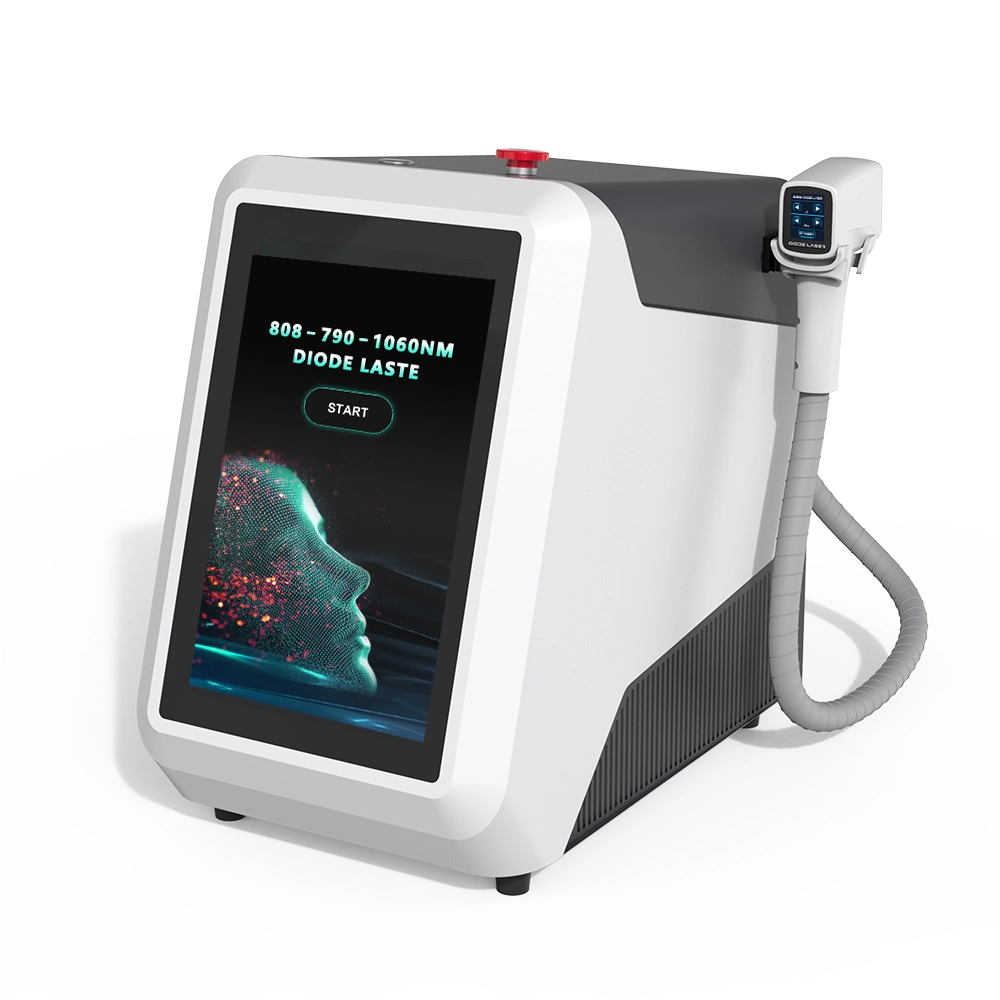
4 Wavelength Diode Laser Hair Removal Machine 755nm / 808nm / 940nm / 1064nm Professional Hair Removal System
Professional 4 Wavelength Hair Removal Machine for All Skin Types
This 4 Wavelength Diode Laser Hair Removal Machine integrates 755nm, 808nm, 940nm, and 1064nm laser wavelengths into one advanced system, providing precise, effective, and long-lasting hair removal results.
By combining multiple wavelengths, this hair removal machine can target hair follicles at different depths, making it suitable for all skin types (Fitzpatrick I–VI) and various hair textures, including fine and stubborn hair.
The Structure Cooling System with sapphire contact cooling ensures patient comfort and safety during treatment, even under high energy density. Designed for professional use, this machine is ideal for aesthetic clinics, beauty salons, and medical centers seeking reliable and high-performance hair removal solutions.

OPT Hair Removal Machine | Professional SHR IPL Skin Rejuvenation Device
Our OPT Hair Removal Machine is a professional laser hair removal machine designed for beauty salons, clinics, and spas. Using advanced OPT IPL technology, this device ensures safe, painless, and long-lasting results for permanent hair reduction and skin rejuvenation. Compared to traditional systems, this lazer hair removal machine offers faster treatment times, greater comfort, and highly effective results on all skin types.
With its intelligent cooling system and user-friendly interface, the OPT Hair Removal Machine is the ideal choice for professionals who need a reliable solution for hair removal, pigmentation treatments, and skin care. Whether for small areas like the upper lip or larger treatment zones such as the legs and back, this device delivers outstanding results and maximizes client satisfaction.
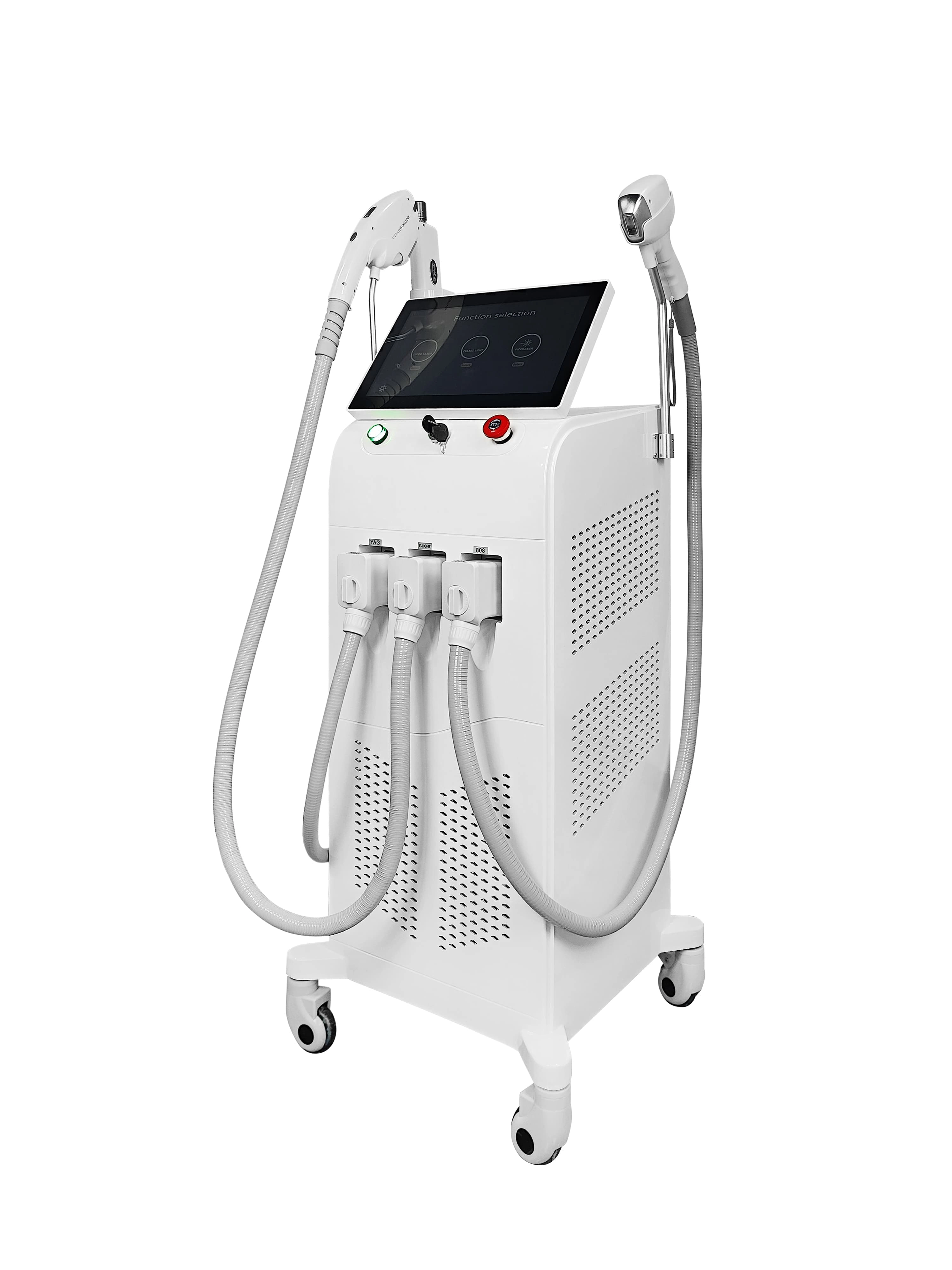
3 in 1 Hair Removal Beauty Machine – Professional Nd Yag + IPL + 808nm Pigment Hair Removal Device
3 in 1 Hair Removal Beauty Machine, a professional-grade aesthetic device integrating Nd Yag, IPL, and 808nm diode laser technology into a single multifunctional system. Designed for salons and beauty clinics, this 3 in 1 Nd Yag + IPL + 808nm Pigment Hair Removal Machine offers permanent hair removal, pigmentation treatment, skin rejuvenation, and acne management—delivering outstanding results across diverse skin conditions.
Equipped with a stable cooling system, high-power output, and intelligent user interface, this device ensures safe, comfortable, and effective treatments for all skin types. Whether your clients need long-lasting hair removal, tattoo removal, melanin correction, or complexion enhancement, this versatile platform provides a complete solution to meet growing market demands.
Get more information
If you have any comments or good suggestions, please leave us a message; later our professional staff will contact you as soon as possible.
Let's Talk
Stay in touch with us for cutting-edge beauty solutions, professional guidance, and customized service.
Contact


Room 307, Building A, Huilong International E-commerce Industrial Park, No. 10 Xipengling Road, Helong Street, Baiyun District, Guangzhou, China
© 2025 HUIMAIN. All Rights Reserved. Privacy Policy | Terms and Conditions | Sitemap
Facebook
Instagram
Medical beauty equipment factory
huimain Medical beauty equipment factory
beauty machine supplier
Whatsapp: +8619124004543