


The B2B Buyer’s Guide to beauty machines | HUIMAIN Ultimate Insights
- The B2B Buyer’s Guide to beauty machines | HUIMAIN Insights
- Why invest in beauty machines now?
- Key market trends and buyer intent
- Types of beauty machines and who buys them
- How to evaluate suppliers for B2B purchases
- 1. Technical and manufacturing capability
- 2. Regulatory certifications & clinical evidence
- 3. OEM/ODM & customization capabilities
- 4. After-sales service, training, and spare parts
- Pricing, ROI expectations and financing
- Procurement checklist for B2B buyers
- Why choose Guangzhou Huimain Technology Co., Ltd. as your partner?
- Case scenario: How a salon chain evaluates HUIMAIN for multi-site deployment
- Conclusion
The B2B Buyer’s Guide to beauty machines | HUIMAIN Insights
As demand for professional and home-use beauty machines continues to rise worldwide, B2B buyers — including clinic owners, salon chains, distributors, and medical spas — need a reliable framework to choose devices that deliver performance, safety, and long-term profitability. This guide explains market drivers, device types, supplier evaluation criteria, pricing expectations, ROI considerations, and a practical procurement checklist. It concludes with why Guangzhou Huimain Technology Co., Ltd. is positioned to be your OEM/ODM partner for beauty machines.
Why invest in beauty machines now?
Beauty machines remain a high-growth segment of the aesthetic and personal-care industry. Demand is driven by an aging global population, increased disposable income in emerging markets, and consumer preference for non-surgical aesthetic treatments. Home-use devices also accelerated after the COVID-19 pandemic as consumers sought salon-quality results at home.
Key market trends and buyer intent
- Rising demand for non-invasive and minimally invasive procedures — clinics and med spas invest in lasers, RF, HIFU, and cryolipolysis systems.
- Growth of multi-functional platforms — buyers prefer devices that perform multiple treatments to maximize utilization and ROI.
- Home-use devices — retailers and e-commerce distributors expand portfolios of FDA-cleared or CE-marked home devices to capture at-home beauty spending.
- Regulatory scrutiny and clinical evidence — B2B buyers increasingly require robust safety data and certifications to protect end-users and clinic reputations.
Types of beauty machines and who buys them
Understanding device categories helps B2B buyers match technology to business models and customer needs. Below is a practical comparison table showing common professional and home-use devices, typical buyers, primary indications, and approximate price ranges (USD).
| Device Type | Primary Buyers | Common Uses | Typical Price Range (USD) |
|---|---|---|---|
| Medical/clinical lasers (CO2, YAG) | Hospitals, dermatology clinics, medical spas | Skin resurfacing, scar removal, tattoo removal | $10,000 – $200,000 |
| IPL (Intense Pulsed Light) | Salons, med spas, dermatologists | Hair removal, pigmentation, vascular lesions | $2,000 – $40,000 |
| RF (Radio Frequency) & Microneedling RF | Salons, clinics, aesthetics centers | Skin tightening, wrinkle reduction | $1,000 – $60,000 |
| HIFU (High-Intensity Focused Ultrasound) | Medical spas, aesthetic clinics | Non-surgical lifting and tightening | $5,000 – $60,000 |
| Cryolipolysis (fat freezing) | Body contouring clinics, med spas | Fat reduction | $8,000 – $60,000 |
| Microdermabrasion & Hydrafacial-style devices | Salons, skin clinics | Exfoliation, deep cleansing | $800 – $20,000 |
| Home-use beauty devices (laser/IPL, RF) | Retailers, e-commerce sellers, clinics (retail product lines) | Hair reduction, skin rejuvenation | $50 – $800 |
Note: Price ranges vary by brand, features, clinical validation, and country of manufacture. Professional devices often include training, warranties, and consumable costs.
How to evaluate suppliers for B2B purchases
Choosing the right supplier is as important as choosing the right technology. B2B buyers should perform a structured evaluation covering technical quality, regulatory compliance, clinical evidence, manufacturing capability, and after-sales support.
1. Technical and manufacturing capability
- R&D strength: Look for suppliers with dedicated research teams and ongoing product development. This ensures timely upgrades and responsiveness to market trends.
- Production scale and quality control: Factory size, staff education levels, and QC systems indicate reliability. For example, facilities of several thousand square meters, certified quality systems, and experienced engineers reduce the risk of production quality issues.
2. Regulatory certifications & clinical evidence
- Essential certifications: CE marking for EU markets, FDA clearance/510(k) where required, and supplier laboratory testing (e.g., SGS) for electrical safety and emissions.
- Clinical trials and peer-reviewed evidence: Suppliers that invest in clinical testing provide better safety and efficacy guarantees — critical for medical and professional devices.
3. OEM/ODM & customization capabilities
B2B buyers often need branding, software localization, and hardware adjustments. Evaluate whether the supplier provides true OEM/ODM services: design, tooling, firmware customization, packaging, and documentation in target languages.
4. After-sales service, training, and spare parts
Quality after-sale service minimizes downtime and protects reputation. Check for:
- Local or regional service centers and available spare parts
- Training programs for technicians and operators (on-site or virtual)
- Clear warranty terms and consumable supply chains
Pricing, ROI expectations and financing
When buying beauty machines, B2B purchasers should model revenue per treatment, expected utilization rate, consumables cost, and financing options. The table below gives simplified ROI examples to help planning (estimates depend on market and region).
| Device | Avg Purchase Cost (USD) | Avg Price per Session (USD) | Estimated Sessions per Month | Approx. Payback (Months) |
|---|---|---|---|---|
| IPL Machine | $20,000 | $150 | 80 | ~17 |
| HIFU Device | $25,000 | $800 | 10 | ~31 |
| RF Platform | $15,000 | $200 | 60 | ~13 |
| Home-use Device (Bulk Retail) | $10 per unit (OEM cost) | $150 retail | Dependent on sales volume | Weeks to months (depending on stock turnover) |
Notes: Payback assumes gross margin without accounting for operational expenses, marketing, or financing costs. Buyers should run a detailed P&L for precise ROI timing.
Procurement checklist for B2B buyers
- Define clinical indications and target customer segments (medical vs cosmetic vs retail).
- Verify supplier certifications (CE, FDA where applicable, ISO 13485 if medical).
- Request sample devices or factory audit reports and clinical evidence (papers, trial summaries).
- Confirm OEM/ODM scope: branding, software language, manuals, packaging, and MOQ.
- Agree on training, warranty, spare parts availability, and SLA for repairs.
- Negotiate payment terms, shipping, customs documentation, and after-sale KPIs.
- Plan for marketing support: demo videos, product sheets, and before/after images that comply with local advertising rules.
Why choose Guangzhou Huimain Technology Co., Ltd. as your partner?
Guangzhou Huimain Technology Co., Ltd. is a high-tech company focused on professional beauty machines and home-use device series. Their capabilities and track record align with what B2B buyers need:
- R&D and production strength: Operating from a facility of about 3,000 square meters with a technical development team and experienced engineers, the company invests continuously in product innovation and new market-driven products.
- Qualified staff: Over 20% of staff hold bachelor’s degrees and more than 40% have junior college degrees, supporting strong technical and production quality.
- Comprehensive departments: Professional purchasing and clinical test departments, plus robust after-sale service, ensure product reliability and market support.
- Regulatory approvals and IP: HUIMAIN products hold CE and SGS approvals and several patents, indicating compliance and proprietary technology — useful for both distribution and OEM/ODM partnership.
- Global reach: Products sold across China, Southeast Asia, the Middle East, Europe, and North America, with positive customer feedback on quality and pricing.
- OEM/ODM focus: HUIMAIN emphasizes customized development for medical and beauty machines, supporting salon brands and distributors to launch their own-branded products.
Case scenario: How a salon chain evaluates HUIMAIN for multi-site deployment
A 10-site salon chain needs a multi-functional platform for skin tightening and hair removal. Evaluation steps using HUIMAIN’s offerings:
- Technical demo & trial: Arrange a demo unit to test efficacy and patient comfort across locations.
- Clinical evidence: Review HUIMAIN’s clinical summaries and CE documentation for device safety and performance.
- Customization: Negotiate OEM branding and localized manuals for technicians in the chain's language.
- Training & service: Secure on-site training for lead technicians and a spare-parts kit for faster repairs.
- Financial terms: Agree on staggered delivery, volume discounts, and extended warranty to reduce upfront capital risk.
Following these steps, the salon chain can standardize protocols and accelerate ROI while reducing operational risk.
Conclusion
Buying beauty machines for B2B purposes requires balancing clinical performance, regulatory compliance, supplier reliability, and clear ROI modeling. Prioritize suppliers with strong R&D, verifiable clinical data, certifications (CE/FDA as applicable), and reliable after-sales infrastructure. Guangzhou Huimain Technology Co., Ltd. is well-positioned as an OEM/ODM partner with certified products, patent portfolio, R&D commitment, and global distribution experience — making them a practical choice for clinics, salons, and distributors seeking dependable beauty machines.
- Industry market reports and trend analyses from Grand View Research and Fortune Business Insights on aesthetic and beauty devices (market sizing and growth drivers).
- Statista market summaries and retail channel analyses for beauty and personal-care devices.
- Regulatory guidance from EU MDR/CE marking and U.S. FDA medical device classification overviews.
- Clinical publications and white papers on lasers, IPL, RF, HIFU, and cryolipolysis (peer-reviewed journals and conference proceedings).
- Company-provided information and certifications from Guangzhou Huimain Technology Co., Ltd.
Note: Always request the latest certificates, clinical data, and factory information directly from suppliers before finalizing procurement.
FAQs:
What are the must-have certifications when buying beauty machines for a clinic?CE marking is essential for EU distribution; ISO 13485 demonstrates a medical device quality management system; FDA clearance (where applicable) is required for devices marketed in the U.S. Additionally, third-party lab testing (e.g., SGS) and supplier-provided clinical reports help validate safety and performance.
How do I decide between single-purpose vs multi-functional beauty machines?Consider utilization rates and treatment mix. Single-purpose devices may outperform when demand is high for a specific treatment (e.g., laser hair removal), while multi-functional platforms increase flexibility and machine utilization across varied client needs. Compute ROI scenarios for both approaches before buying.
What typical warranty and service levels should I expect?Standard warranties range from 12 to 24 months for hardware. Ensure the supplier provides clear service-level agreements for repairs, spare parts lead times, and options for extended warranty or on-site technical support. Training for operators and technicians is also critical.
Can a supplier provide OEM/ODM services for branding and packaging?Yes — many manufacturers, including experienced providers like Guangzhou Huimain Technology Co., Ltd., offer OEM/ODM services including hardware customization, software localization, branding, and packaging solutions. Confirm minimum order quantities, lead times, and design approval processes.
How to validate clinical effectiveness before purchasing?Request clinical trial summaries, before/after documentation, third-party study results, and if possible, arrange a live demo on volunteer patients or test subjects. Verify that studies were conducted ethically and with sufficient sample size and follow-up.
How do home-use devices differ from professional machines in terms of regulation?Home-use devices are typically classified with lower power limits and are designed for layperson safety. They may require different regulatory pathways (e.g., general consumer product safety versus medical device clearance). Ensure the device has relevant consumer safety certifications and, for some markets, specific medical clearances if medical claims are made.
JLM-36
Is the 4D HIFU Facial Machine safe for all skin types?
Yes, the HIFU technology is safe for all skin types. Energy intensity can be adjusted to cater to different skin needs.
台式黄金射频微针
Is RF microneedling painful?
Mild discomfort may occur, but most clients tolerate treatments well. Numbing cream can be applied for added comfort.
B58 台式深度微晶8+冰锤
Is this device for professional use only?
Yes. This Micro needle machine is designed for trained professionals in salons and clinics.
TLD-1
Is this HIFU machine painful?
No, the Mantis Knife HIFU Machine is designed for painless and comfortable treatments.
C5
Do I need professional training to operate the CO2 fractional laser machine?
Yes. This is a medical-grade laser, and operators should receive certified training before treatment.

CO2 Fractional Laser Machine – Professional Wrinkle Removal & Skin Resurfacing Device
The CO2 Fractional Laser Machine is a multifunctional aesthetic device designed for professional clinics and beauty salons. Using advanced fractional CO2 laser technology, it effectively targets acne scars, freckles, pigmentation, nevi, and deep wrinkles. Additionally, it provides non-invasive skin rejuvenation, vaginal tightening, and intimate beautification. This professional CO2 laser equipment combines precision, safety, and powerful energy output to deliver outstanding anti-aging and dermatological results.

5-in-1 40K Cavitation Vacuum Machine for Body Slimming & Fat Reduction
The 5-in-1 40K Cavitation Vacuum Machine is a professional body shaping system designed for fat reduction, cellulite smoothing, and overall body contouring. Using 40KHz ultrasonic cavitation, this device breaks down stubborn fat cells, while vacuum suction improves lymphatic drainage and accelerates toxin removal.
With multiple RF tightening handles, the machine stimulates collagen regeneration and helps lift and firm loose areas of the body. Compact, powerful, and easy to operate, it is the perfect solution for beauty salons, spa centers, and slimming studios seeking fast and visible fat-reduction results.
This cavitation vacuum machine is built to deliver safe, non-invasive treatments with no downtime—making it a top choice for body contouring professionals.

6-in-1 Multifunctional Beauty and Weight Loss Machine | Cavitation, RF, Vacuum PDT, EMS, Laser Slimming Equipment for Professional Use
The 6-in-1 Multifunctional Beauty and Weight Loss Machine is a professional-grade device designed for salons, clinics, and distributors. Combining six advanced technologies—cavitation, RF (radio frequency) for face & body, vacuum RF PDT, BIO/EMS microcurrent, and laser lipo pads—this device offers comprehensive body contouring, fat reduction, skin tightening, and anti-aging treatments.
It provides businesses with an all-in-one solution to expand service offerings, attract more clients, and achieve a rapid return on investment.
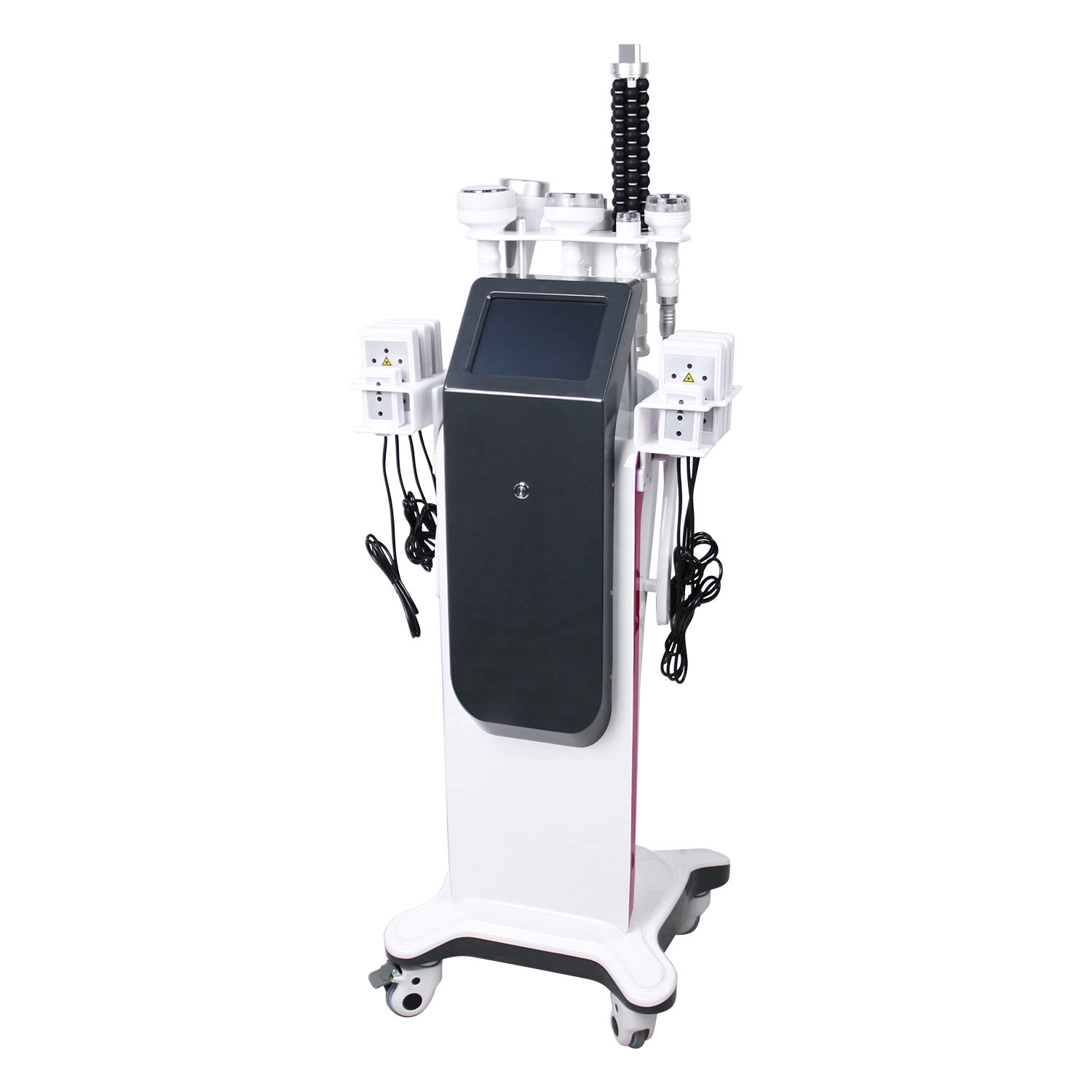
Professional 6-in-1 Cavitation Vacuum Machine for Body Contouring & Slimming Treatment
The 6-in-1 Cavitation Vacuum Machine is a professional body contouring system designed for salons and spas seeking high-performance slimming solutions. This machine integrates 40K ultrasonic cavitation, vacuum suction, RF technology, and laser lipolysis to target stubborn fat, enhance lymphatic drainage, tighten the skin, and contour the body shape effectively.
Equipped with multiple ergonomic handles and a smart touch screen, this cavitation vacuum machine provides a comfortable and efficient experience for both operators and clients. It is ideal for full-body treatments including abdomen, arms, legs, waistline, hips, and back.
Perfect for beauty salons, spas, and aesthetic centers that want to offer non-invasive fat reduction and body-sculpting services.
Get more information
If you have any comments or good suggestions, please leave us a message; later our professional staff will contact you as soon as possible.
Let's Talk
Stay in touch with us for cutting-edge beauty solutions, professional guidance, and customized service.
Contact


Room 307, Building A, Huilong International E-commerce Industrial Park, No. 10 Xipengling Road, Helong Street, Baiyun District, Guangzhou, China
© 2025 HUIMAIN. All Rights Reserved. Privacy Policy | Terms and Conditions | Sitemap
Facebook
Instagram
Medical beauty equipment factory
huimain Medical beauty equipment factory
beauty machine supplier
Whatsapp: +8619124004543