


- Why Buyers Focus on 360 Cryolipolysis Machine Factories
- What a Good Multifunction Cryolipolysis Machine Should Mean for a Buyer
- How to Tell Whether a Supplier Is a Real Factory
- The Most Important Criteria When Comparing 360 Cryolipolysis Machine Factories
- 1. Product Stability
- 2. Applicator Design and Practical Use
- 3. User Interface and Operator Learning Curve
- 4. After-Sales Support
- 5. Export Experience and Packaging
- How to Compare Machines, Not Just Suppliers
- Treatment Efficiency
- Business Fit
- Service Scope
- Why OEM/ODM Support Matters More Than Many Buyers Expect
- Pricing Logic: Why the Cheapest Quote Can Be the Most Expensive Choice
- Common Mistakes Buyers Make When Choosing 360 Cryolipolysis Machine Factories
- Red Flags to Watch for During Supplier Evaluation
- Which Buyers Need Which Type of Factory Partner
- What to Ask Before Requesting a Final Quotation
- The Real Goal: Lower Risk and Better Long-Term Value
- 8. Conclusion
- 9. FAQ Section
360 Cryolipolysis Machine Factories: How to Compare Manufacturers, Machines, and OEM Options Before You Buy
If you are comparing 360 cryolipolysis machine factories, you are probably already beyond the basic research stage. The real question is no longer what cryolipolysis is, but which factory can provide a machine that is stable, commercially practical, and reliable enough for long-term business use.
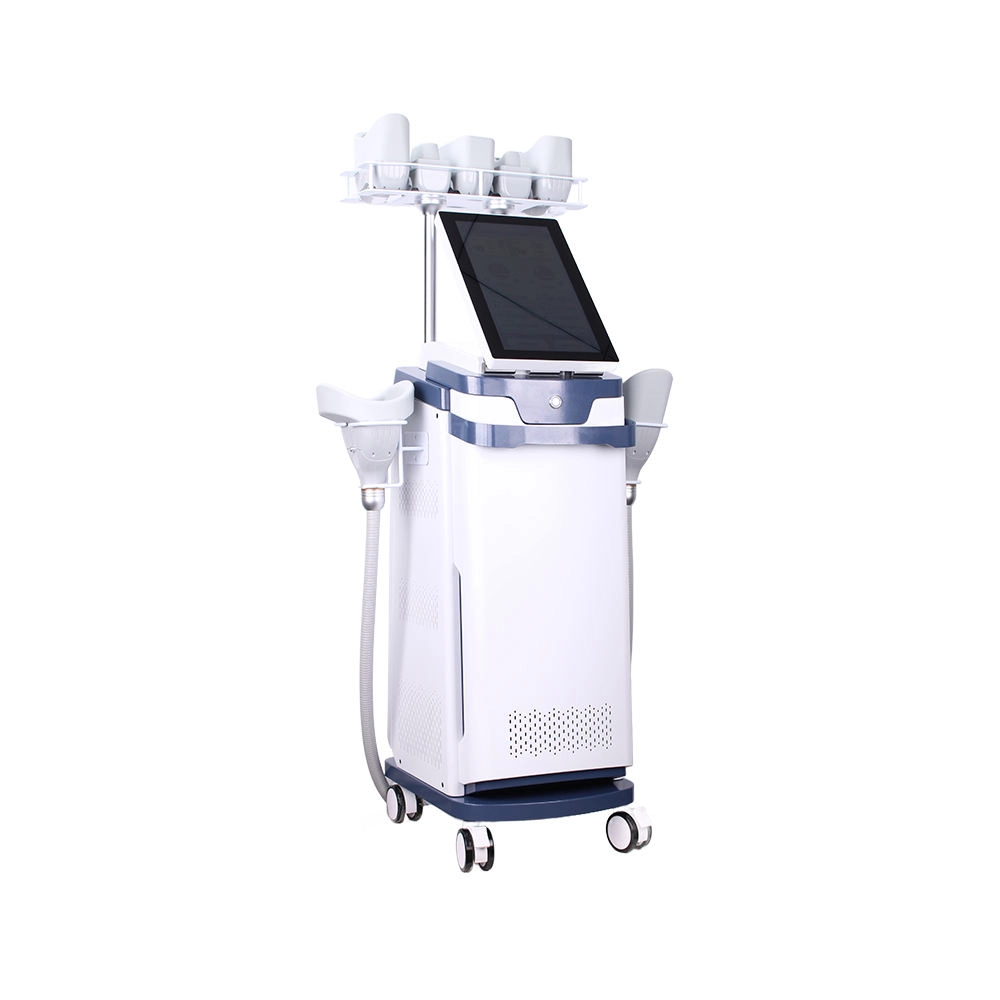
For distributors, clinic owners, salon operators, and OEM buyers, this decision is rarely about appearance alone. Many machines may look similar in product photos, but the real differences often show up in applicator quality, cooling consistency, user interface design, production control, packaging, training, and after-sales support. These factors directly affect treatment workflow, customer satisfaction, and repeat purchase confidence.
That is why evaluating 360 cryolipolysis machine manufacturers requires more than comparing quotations. A lower price may look attractive at first, but if the supplier cannot provide stable quality, spare parts, clear training, or OEM support, the real cost can become much higher after the machine arrives.
In this guide, we will look at how buyers can compare multifunction cryolipolysis machine suppliers more professionally, what to check before requesting a quotation, and how to choose a cryolipolysis fat freeze machine that fits your business model rather than just your budget.
Why Buyers Focus on 360 Cryolipolysis Machine Factories
There is a reason the search term is not just “cryolipolysis machine” but “360 cryolipolysis machine factories.” Buyers at this stage are no longer browsing casually. They want a supplier that can manufacture consistently, customize when needed, and support the machine beyond delivery.
A trader may still be useful in some cases, especially if the buyer needs mixed product sourcing or small, flexible orders. But for many professional buyers, working directly with 360 cryolipolysis machine manufacturers offers clearer advantages: better control over specifications, more direct technical communication, stronger OEM/ODM possibilities, and usually more reliable spare-parts support.
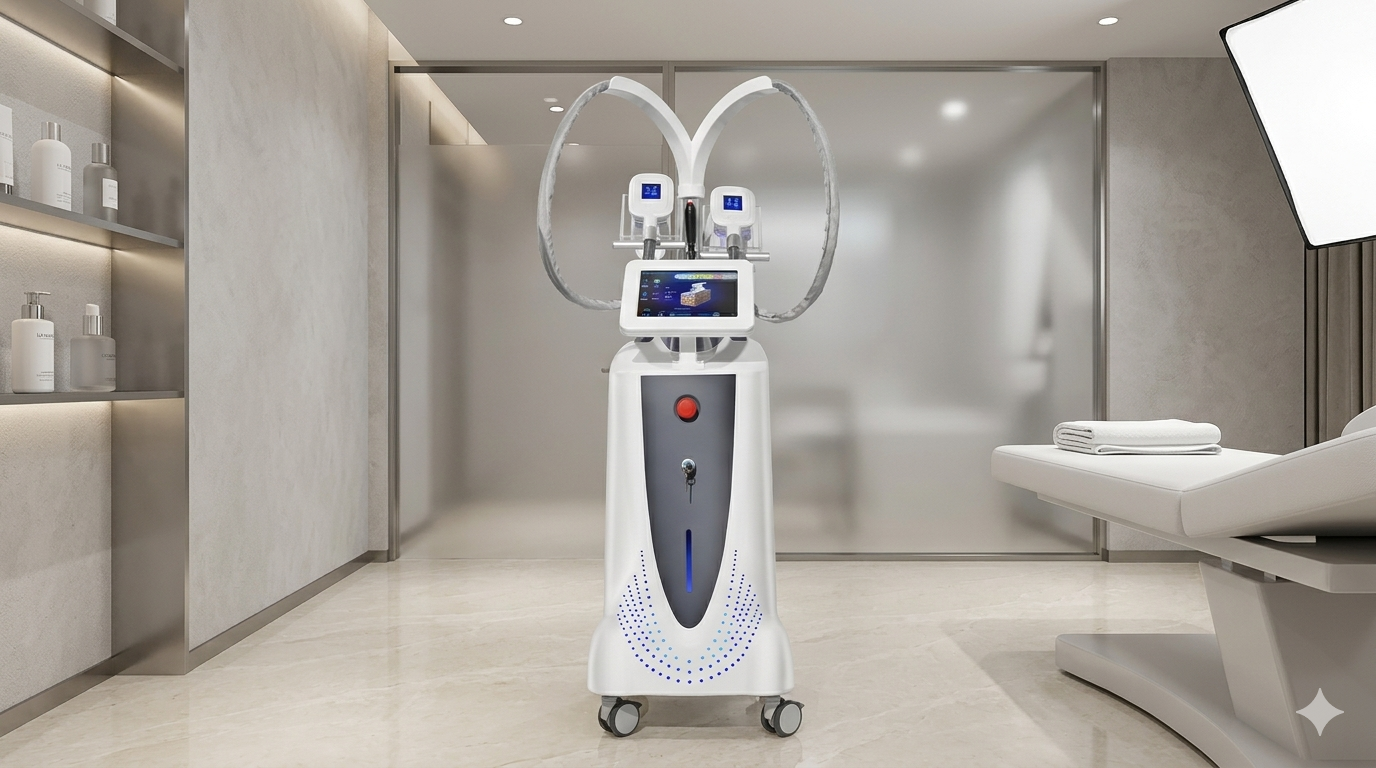
This becomes even more important with a multifunction cryolipolysis machine because the product is not just a simple shell with a screen. Buyers often need to evaluate multiple connected factors, such as applicator design, cooling performance, interface logic, handpiece durability, consumable compatibility, shipment protection, and technical training. A factory that truly understands these points can reduce long-term business risk in ways that are not visible in a price list.
What a Good Multifunction Cryolipolysis Machine Should Mean for a Buyer
Many suppliers use the word “multifunction,” but buyers should define it in practical business terms. A good multifunction machine is not simply one with a longer feature list. It is one that improves treatment flexibility, operator convenience, and commercial usability.
From a buyer’s perspective, a strong cryolipolysis fat freeze machine should be evaluated by questions like these:
- Does it support efficient treatment flow for popular body areas?
- Is the system easy for staff to learn and repeat with consistency?
- Are the applicators designed for different treatment needs rather than just looking different on paper?
- Does the interface reduce mistakes during operation?
- Can the supplier explain the machine clearly, not just send a brochure?
For clinics and salons, the most important issue is often not how many selling words appear in the catalog, but whether the machine can fit into real daily treatment work. For distributors, the key question is broader: can the product be sold repeatedly with low complaint risk and acceptable after-sales burden?
That is why evaluating 360 cryolipolysis machine factories should always include both machine performance logic and factory support logic. The best-looking unit is not always the best business choice if training is weak, documentation is poor, or spare-part response is slow.
How to Tell Whether a Supplier Is a Real Factory
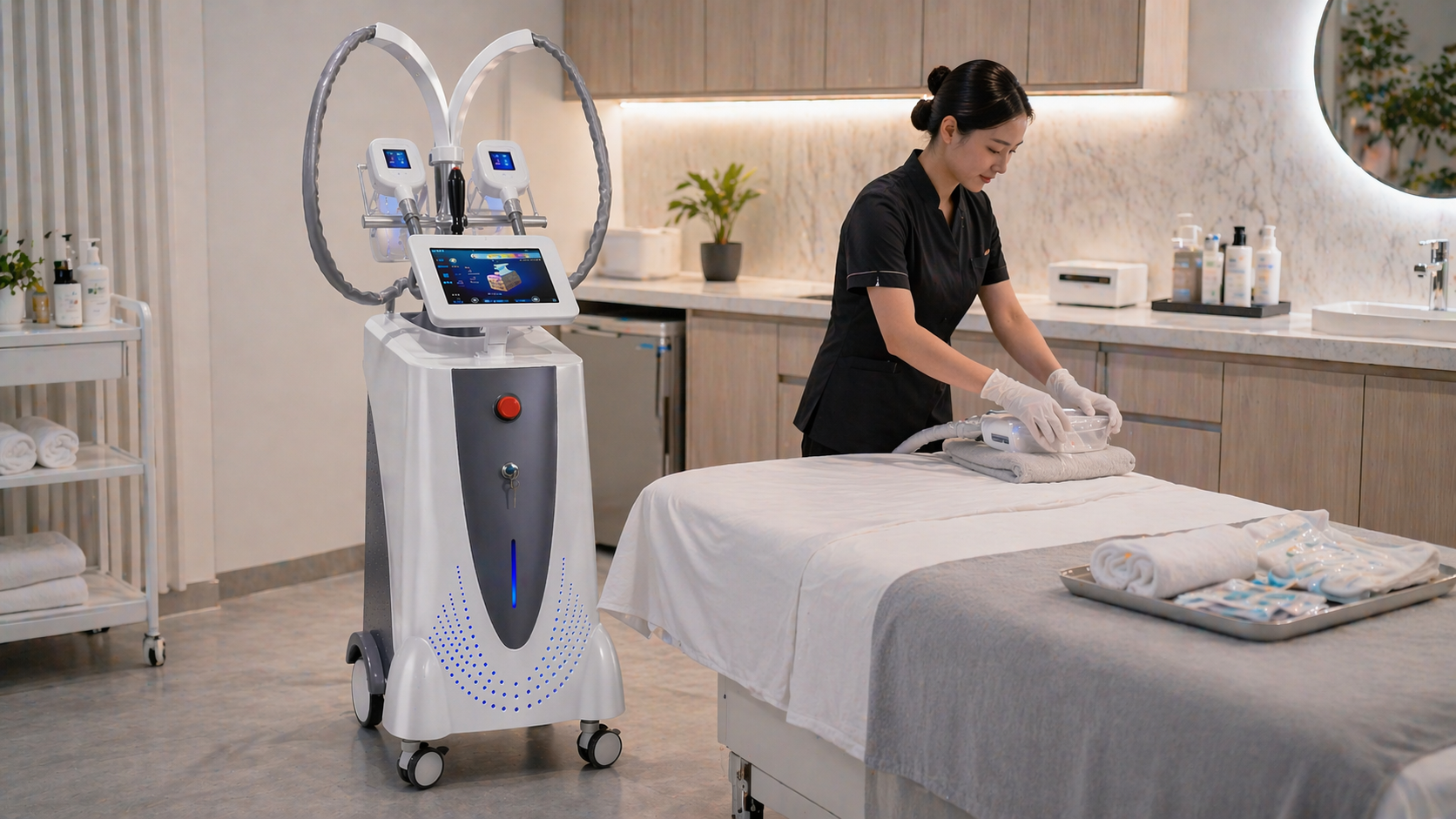
One of the first tasks when comparing 360 cryolipolysis machine manufacturers is to verify whether the company is actually producing the equipment or mainly reselling it.
A real factory should usually be able to provide evidence beyond polished marketing images. Buyers should look for:
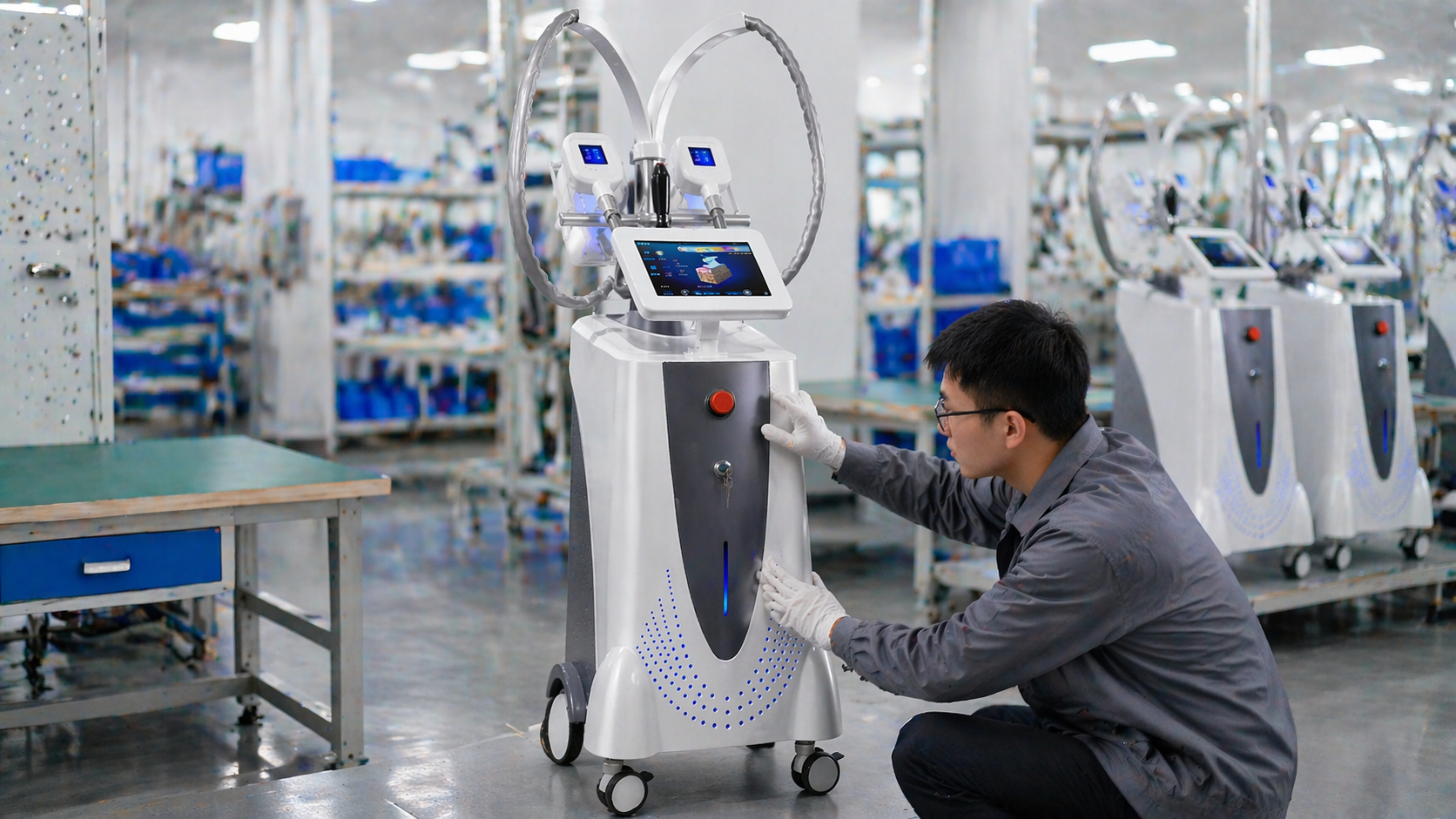
- production workshop photos or videos
- assembly process visibility
- quality inspection steps
- packaging area and export preparation
- engineering or technical team communication
- model customization discussion that goes beyond logo printing
- consistency across machine details, not random product styles from many unrelated categories
A serious factory can usually explain how its machine is assembled, how components are tested, how software versions are managed, and how replacement parts are handled. A non-manufacturing seller may avoid these topics or answer only at a surface level.
A simple and effective sourcing step is to ask the supplier to show a current production video, a packaging video, and a live demonstration of the exact model you are considering. This often reveals more than a catalog. It also helps you judge whether the supplier truly knows the machine or is simply forwarding information from somewhere else.
If your business plans include branding, market differentiation, or repeat orders, this verification step matters even more. Buyers interested in private label growth should ask very early whether the supplier’s OEM/ODM process includes housing adjustments, interface branding, packaging customization, manual support, and accessory labeling.
The Most Important Criteria When Comparing 360 Cryolipolysis Machine Factories
Not every buyer uses the same checklist, but the strongest factory comparisons usually include the following areas.
1. Product Stability
The first issue is always machine stability. A beautiful design does not help if the machine causes frequent downtime or inconsistent treatment experience. Buyers should ask what quality control process is followed before shipment. Even if you are not an engineer, you can still evaluate whether the supplier has a serious testing mindset.
Look for clear answers about:
- pre-shipment testing
- operating stability checks
- screen and software testing
- applicator connection checks
- cooling system checks
- packaging protection before export
A trustworthy answer is usually specific. Vague promises such as “our quality is very good” are not enough.
2. Applicator Design and Practical Use
A 360 cryolipolysis fat freeze machine is often judged heavily by its applicators. Buyers need to compare whether the applicator setup makes sense for their market. Ask whether the applicators are suitable for common treatment zones, whether the supplier can explain target use scenarios clearly, and whether the machine supports efficient workflow for busy beauty businesses.
For example, a salon focused on body contouring efficiency may care about handle configuration and treatment flow. A distributor may care more about how easy it is to explain the machine advantages to local customers.
3. User Interface and Operator Learning Curve
A machine can lose value quickly if staff need excessive time to learn it or if the interface creates confusion. An intuitive touchscreen, clear controls, and simple parameter setting structure are important commercial advantages. This is especially true if you sell to clinics or salon groups that need new staff training over time.
Before ordering, ask the supplier for a real operating video, not just a cosmetic promo video. You want to see how the interface behaves in normal use.
4. After-Sales Support
Many buyers underestimate after-sales until the first issue appears. When comparing 360 cryolipolysis machine factories, ask:
- What is the warranty period?
- How are replacement parts supplied?
- Is remote technical support available?
- Are training videos or operation guides included?
- How fast is average response time after shipment?
- Can the supplier support your local distributor or technician?
A lower initial price is less attractive if after-sales support is weak. For distributors especially, this can become a hidden cost that damages customer trust.
5. Export Experience and Packaging
Factories with export experience usually understand that a machine is not finished when assembly ends. It must also survive transport, customs handling, warehouse movement, and final installation.
Ask how the machine is packed, whether the supplier uses export-standard protective packaging, and whether branding materials or OEM labels are included correctly. A professional supplier should be able to discuss voltage options, packaging dimensions, shipping protection, and basic documentation without confusion.
How to Compare Machines, Not Just Suppliers
Even among real 360 cryolipolysis machine manufacturers, machine comparison still matters. Two factories may both be legitimate, yet their models may serve different business goals.
A smart comparison should include the following:
Treatment Efficiency
If you run a clinic or salon, efficiency affects room turnover, staff scheduling, and customer satisfaction. Ask how many handles can work in a practical workflow, how quickly staff can switch between treatment areas, and whether the machine setup supports consistent daily operation.
Business Fit
Not every multifunction cryolipolysis machine is ideal for every buyer. A premium clinic may prioritize appearance, treatment comfort, interface polish, and brand presentation. A distributor may prioritize model versatility, price structure, training simplicity, and complaint prevention. A wholesaler may care about repeatability across batches.
Your best machine is the one that matches your business model, not the one with the longest feature sheet.
Service Scope
Some buyers want a pure cryolipolysis fat freeze machine for focused positioning. Others prefer a multifunction platform because it helps broaden service menus and improve equipment utilization. Neither choice is automatically right or wrong. The better choice depends on your pricing strategy, target customer profile, and team capability.
If you are unsure, ask the supplier to compare two or three configurations side by side. A reliable factory should be able to explain which model is more suitable for salon owners, which works better for distributors, and which is better for OEM/private label projects.
This is also a natural point to request a full model comparison sheet before quotation. It helps reduce confusion later and makes supplier evaluation more objective.
Why OEM/ODM Support Matters More Than Many Buyers Expect
For importers, distributors, and growing beauty brands, OEM/ODM is often more than a logo issue. It affects positioning, resale value, customer trust, and long-term differentiation.
When speaking with 360 cryolipolysis machine factories, ask what level of customization is actually possible. Some suppliers offer only basic logo placement. Others can support interface branding, housing color adaptation, packaging design, user manual customization, accessory labeling, and market-specific presentation.
If your goal is to build brand identity rather than sell a generic product, these details matter. A buyer who plans ahead can also ask whether future batch consistency will be maintained for the same branded model. That reduces confusion in the market and helps protect distributor relationships.
OEM/ODM discussions should happen early, not after every technical choice is already locked. It is much easier to align product, branding, packaging, and documentation from the beginning than to revise everything later.
Pricing Logic: Why the Cheapest Quote Can Be the Most Expensive Choice
In beauty equipment sourcing, the lowest factory price often attracts attention first. But professional buyers know that machine cost is only one part of total purchasing value.
When comparing quotes from 360 cryolipolysis machine manufacturers, separate price into layers:
- machine cost
- included accessories
- training and support
- spare-parts availability
- packaging quality
- branding or customization cost
- warranty value
- complaint risk
- reorder consistency
A cheaper cryolipolysis fat freeze machine can become more expensive if it creates operator complaints, unstable performance, weak packaging, or difficult after-sales communication. On the other hand, a slightly higher quote may offer stronger support, better model consistency, and lower long-term service burden.
That is why experienced buyers do not ask only, “What is your best price?” They ask, “What is included, what is tested, what is supported, and what risk does this price remove?”
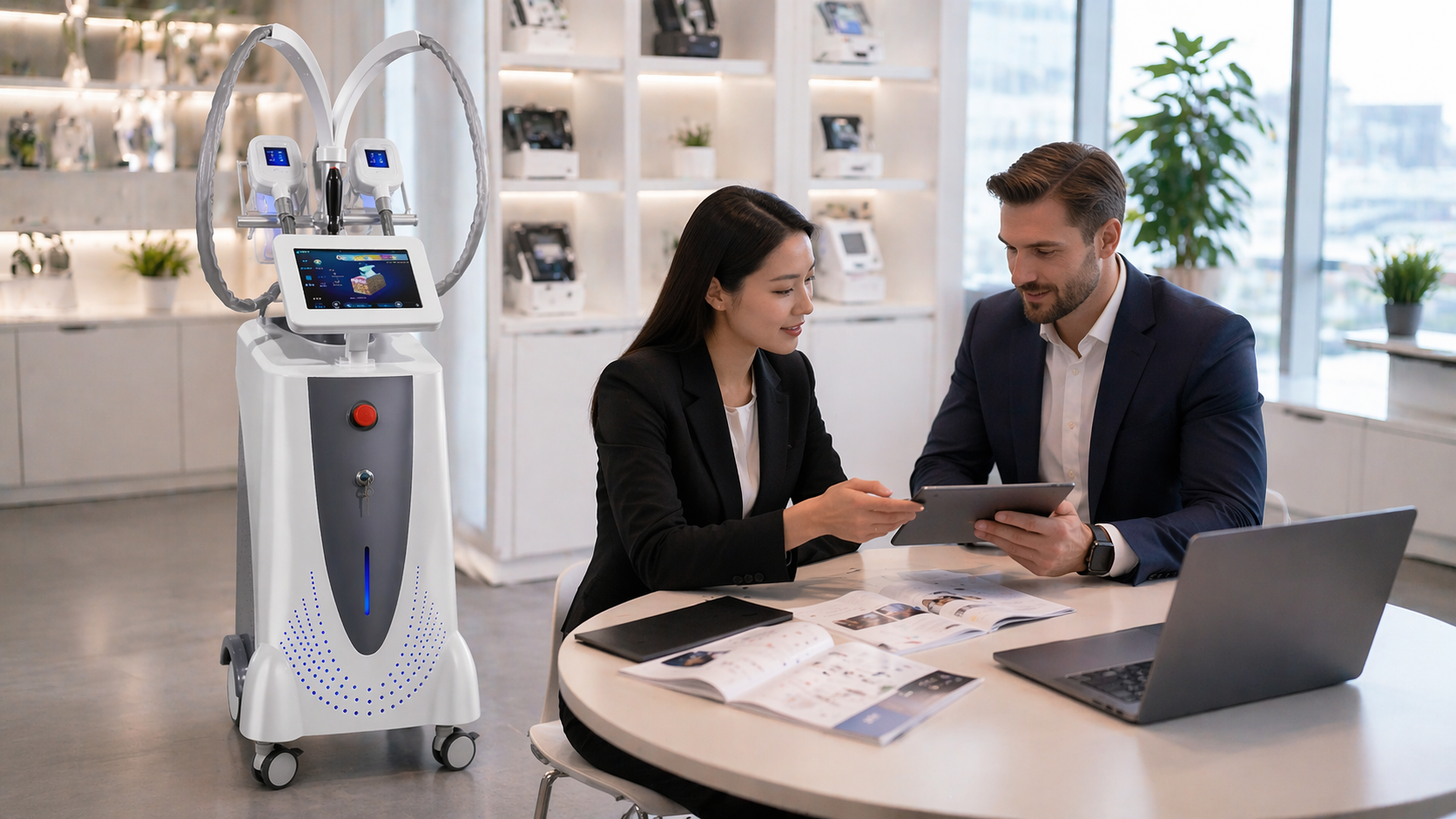
If you are comparing several factories, request quotations in the same format so you can compare them fairly. Ask each supplier to list configuration, accessories, warranty, OEM options, packaging, lead time, and after-sales scope. This one step makes supplier screening much easier.
Common Mistakes Buyers Make When Choosing 360 Cryolipolysis Machine Factories
The first mistake is choosing based mainly on photos. Many machines look similar online. Visual similarity does not guarantee the same production quality, support level, or parts consistency.
The second mistake is focusing too much on feature count. More functions do not automatically create more business value. A multifunction cryolipolysis machine only helps if the extra functions are relevant, usable, and properly supported.
The third mistake is delaying after-sales questions. Buyers sometimes assume support will be discussed later. In reality, after-sales strength should influence supplier selection from the beginning.
The fourth mistake is ignoring documentation quality. A factory that communicates poorly before the order often does not become easier after shipment. Clear replies, organized quotations, and structured product explanations are all part of supplier quality.
The fifth mistake is skipping OEM/ODM discussion until the end. If branding matters to your business, bring it up early.
The sixth mistake is not asking for proof of real production capability. This is especially important when choosing among 360 cryolipolysis machine factories rather than general trading companies.
Red Flags to Watch for During Supplier Evaluation
Professional buyers should become alert when they see patterns like these:
- inconsistent model details between photos, videos, and quotations
- unclear answers about production or testing
- reluctance to provide live machine demonstration
- vague warranty terms
- no clear spare-parts policy
- overpromising lead times without details
- weak communication about packaging or export handling
- no structured response to OEM/ODM questions
- heavy pressure to order quickly before proper evaluation
A serious supplier does not need to rush a buyer into confusion. Strong factories usually welcome clear questions because good buyers are also good long-term customers.
Which Buyers Need Which Type of Factory Partner
Not all buyers need the same factory relationship.
A clinic owner usually needs stable machine performance, training simplicity, and reliable after-sales support.
A salon owner may prioritize ease of operation, attractive design, practical treatment versatility, and a model that fits service upselling.
A distributor needs repeatability, lower complaint risk, marketing support, product explanation clarity, and consistent spare-part access.
A wholesaler or importer often needs stronger price structure, batch consistency, packaging reliability, and scalable OEM/ODM options.
A private label buyer needs a factory that understands branding beyond logo printing and can support long-term product identity.
Knowing your business type helps you compare 360 cryolipolysis machine manufacturers more accurately. The right supplier for a single-location salon may not be the right one for a distributor building a regional product line.
What to Ask Before Requesting a Final Quotation
Before you make a final shortlist, ask each supplier these practical questions:
- Are you a direct factory for this 360 cryolipolysis machine model?
- Can you provide a current machine operation video for the exact model quoted?
- What configuration and accessories are included?
- What warranty and after-sales support are included?
- What OEM/ODM options are available?
- What packaging method is used for export?
- What is the production lead time for standard and customized orders?
- How are spare parts supplied after shipment?
- Can you provide training materials for operators or distributors?
- What is the recommended model if my business is a salon, clinic, or distribution company?
These questions are practical, not complicated. But together they give a much clearer picture of factory quality than marketing language alone.
For buyers who want to move carefully, this is the right stage to request a detailed catalog, a configuration comparison, or an OEM discussion based on your target market. That approach feels natural because it is part of normal supplier screening, not hard selling.
The Real Goal: Lower Risk and Better Long-Term Value
The best outcome when evaluating 360 cryolipolysis machine factories is not simply finding a machine you can buy. It is finding a factory relationship that supports your business after the machine arrives.
That means choosing a supplier that can communicate clearly, provide a suitable multifunction cryolipolysis machine, support your branding or distribution strategy, and reduce operational uncertainty. A professional buying decision should balance machine performance, factory capability, service response, and long-term commercial value.
In other words, the best cryolipolysis fat freeze machine supplier is not just the one that can ship. It is the one that can still support you when you need product consistency, technical answers, reorder confidence, and business growth.
8. Conclusion
Searching for 360 cryolipolysis machine factories is really about finding the right manufacturing partner, not just finding a product photo that looks acceptable. Strong buyers compare more than price. They compare factory authenticity, machine configuration, training support, OEM/ODM flexibility, packaging, and after-sales reliability.
If you are evaluating several 360 cryolipolysis machine manufacturers, build your shortlist around business fit rather than feature count alone. A well-matched multifunction cryolipolysis machine can support treatment efficiency, customer confidence, and repeat business much better than a low-cost model chosen without proper review.
The most practical next step is to request a detailed model comparison, confirm what is included in the quotation, and discuss whether standard supply or OEM/ODM is the better route for your market. That gives you a clearer path to choosing a cryolipolysis fat freeze machine with lower sourcing risk and better long-term value.
9. FAQ Section
1. What is the difference between 360 cryolipolysis machine factories and trading companies?
A factory typically has more direct control over production, customization, quality checks, and spare-parts supply. A trading company may offer convenience, but buyers looking for stable repeat orders or OEM/ODM often prefer direct 360 cryolipolysis machine factories.
2. How can I verify real 360 cryolipolysis machine manufacturers?
Ask for workshop videos, live machine demonstrations, packaging videos, and clear answers about testing, lead time, and customization. Real 360 cryolipolysis machine manufacturers can usually explain the product and production process in much more detail.
3. Is a multifunction cryolipolysis machine always a better choice?
Not always. A multifunction cryolipolysis machine is valuable when the added functions support your service menu and daily workflow. If your business needs a more focused positioning, a simpler configuration may be a better fit.
4. What should be included in a cryolipolysis fat freeze machine quotation?
A professional quotation should include machine configuration, applicators, accessories, warranty, packaging, lead time, voltage options, OEM/ODM scope if needed, and after-sales support details.
5. Why do prices vary so much between 360 cryolipolysis machine factories?
Price differences can come from configuration, included accessories, support level, packaging quality, warranty scope, customization, and overall production standards. The lowest quote is not always the best business value.
6. Can 360 cryolipolysis machine manufacturers support OEM or private label orders?
Many can, but the level of support varies. Some offer only logo placement, while others can support interface branding, packaging, manuals, and broader OEM/ODM development.
7. What matters most when choosing a cryolipolysis fat freeze machine for distribution?
Distributors should focus on product stability, complaint prevention, training clarity, spare-parts support, reorder consistency, and whether the supplier can support long-term business growth.
A50
What is the lifespan of the machine?
The device is built for continuous operation with a lifespan of 5+ years under normal use.
X5 pro
What skin conditions can the X5 Pro AI Skin Image Analyzer detect?
It analyzes pores, wrinkles, pigmentation, redness, moisture, oil balance, and overall skin health.
L10先锋点阵
Can beauty salons use a CO2 fractional laser machine?
Usage depends on local regulations. It is commonly used in dermatology clinics and medical aesthetic centers.
Air Pressotherapy Machine
How often should I use the air pressotherapy machine?
2–3 sessions per week are recommended for the best slimming and detox results.
KLS
What types of skin conditions can this machine treat?
This device is highly effective for a wide range of conditions, including fine lines and wrinkles, large pores, acne scars, skin laxity, and stretch marks. It can also be used for general skin rejuvenation, scar removal, and acne treatment.


Get more information
If you have any comments or good suggestions, please leave us a message; later our professional staff will contact you as soon as possible.
Let's Talk
Stay in touch with us for cutting-edge beauty solutions, professional guidance, and customized service.
Contact


Room 307, Building A, Huilong International E-commerce Industrial Park, No. 10 Xipengling Road, Helong Street, Baiyun District, Guangzhou, China
© 2025 HUIMAIN. All Rights Reserved. Privacy Policy | Terms and Conditions | Sitemap
Facebook
Instagram
Medical beauty equipment factory
huimain Medical beauty equipment factory
beauty machine supplier
Whatsapp: +8619124004543