


- Introduction: Elevating Your Practice with Professional HIFU Technology
- Understanding Professional HIFU: Beyond the Basics
- The Science of Thermal Coagulation Points (TCPs)
- Professional vs. Home-Use Devices
- Why Your Clinic Needs a Professional HIFU Machine
- Types of Professional HIFU Technologies & Generations
- Micro-Focused Ultrasound (MFU) vs. Macro-Focused Ultrasound
- Technology Evolution: From 3D to 9D and MPT
- Essential Features to Look for in a Professional HIFU Machine
- Top Professional HIFU Machines: An In-Depth Comparison for 2026
- The Professional's Buying Guide: What Clinics Must Consider
- Integrating HIFU into Your Clinic: Best Practices & Protocols
- The Future of Professional HIFU Technology
- Conclusion: Making Your Informed Choice
- Frequently Asked Questions
- What is the average cost of a professional HIFU machine for a clinic?
- How long do professional HIFU machines typically last, and what's the warranty?
- What kind of training is required to operate a professional HIFU machine?
- Are professional HIFU machines FDA-approved or CE-marked?
- What is the ROI for investing in a professional HIFU machine for a clinic?
- Can professional HIFU machines treat both face and body?
- How do professional HIFU machines compare to other skin tightening treatments like RF or lasers?
- References
The Definitive Guide to Professional HIFU Machines: Choosing the Best for Your Clinic in 2026
This authoritative guide assists aesthetic clinic owners in selecting the optimal professional HIFU machine for 2026. It explores the science of SMAS targeting, compares leading technologies (MFU vs. Macro-Focused), analyzes ROI, and offers expert insights on regulatory compliance and manufacturer selection.
Introduction: Elevating Your Practice with Professional HIFU Technology
In the rapidly expanding landscape of aesthetic medicine, non-surgical skin tightening has emerged as a cornerstone service for modern clinics. As we move into 2026, the demand for non-invasive facelifts and body contouring continues to surge, driven by patients seeking significant results with minimal downtime. For aesthetic professionals, investing in a professional High-Intensity Focused Ultrasound (HIFU) machine is no longer just an option—it is a strategic necessity.
This guide serves as a definitive resource for clinic owners and practitioners. We will navigate the complexities of HIFU technology, distinguishing between valid medical efficacy and marketing hype. Drawing upon deep industry experience—including insights from Guangzhou Huimain Technology Co., Ltd., a high-tech leader in beauty machine R&D and OEM manufacturing—we will provide the technical precision and business acumen required to make an informed investment that maximizes your Return on Investment (ROI) and patient satisfaction.
Understanding Professional HIFU: Beyond the Basics
To select the best equipment, one must first master the underlying science. High-Intensity Focused Ultrasound (HIFU) is not merely "sound waves"; it is a precise medical application of acoustic energy.
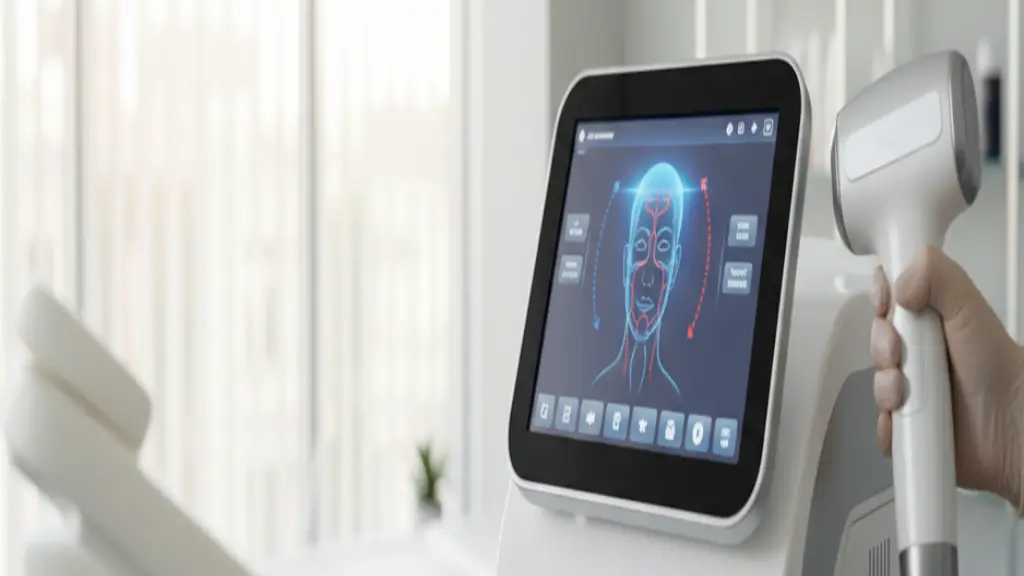
The Science of Thermal Coagulation Points (TCPs)
Unlike laser or radiofrequency (RF) devices that treat the skin from the outside in (or bulk heat the dermis), professional HIFU machines bypass the epidermis completely. They focus ultrasound energy at precise depths—typically 1.5mm, 3.0mm, and 4.5mm for the face—to target the Superficial Musculoaponeurotic System (SMAS). This is the same fibrous layer tightened during a surgical facelift.
According to studies indexed by the National Institutes of Health (NIH), the focal point of the ultrasound beam creates Thermal Coagulation Points (TCPs) where tissue temperatures instantly reach 60°C to 70°C. This specific temperature range is critical; as stated in medical literature, it is the threshold required to denature collagen fibers, initiating immediate contraction and stimulating a long-term wound-healing response known as neocollagenesis.
Professional vs. Home-Use Devices
The distinction here is vital. While home-use devices scatter weak energy superficially, professional machines, such as those engineered by HUIMAIN, deliver stable, high-peak power capable of penetrating to the SMAS and subcutaneous fat layers (up to 13mm for body) without causing surface burns. This depth control is what separates clinical results from consumer-grade disappointments.
Why Your Clinic Needs a Professional HIFU Machine
Integrating a high-caliber HIFU system offers a multi-faceted value proposition:
- Competitive Advantage: Offering the "non-surgical facelift" attracts a demographic hesitant about surgery but dissatisfied with topical treatments.
- High ROI Potential: Treatment sessions command premium pricing due to their efficacy and longevity (results lasting 12-24 months).
- Versatility: Modern systems treat periorbital wrinkles, nasolabial folds, double chins, and body adiposity (fat pockets) in a single platform.
- Patient Retention: The cumulative improvement over 3-6 months encourages follow-up visits and cross-selling with other modalities like fillers or RF microneedling.
Types of Professional HIFU Technologies & Generations
The terminology in the HIFU market can be overwhelming. Here is a technical breakdown to clarify the options:
Micro-Focused Ultrasound (MFU) vs. Macro-Focused Ultrasound
- MFU (Micro-Focused): Delivers concentrated energy to a small focal point. This is the gold standard for skin lifting and tightening (Face/Neck) as it creates precise coagulation zones in the SMAS.
- Macro-Focused (DFU): Uses a larger focal area to deliver energy into subcutaneous fat layers. This is essential for body contouring (e.g., abdomen, thighs) to permanently destroy adipocytes (fat cells) while tightening the skin.
Technology Evolution: From 3D to 9D and MPT
- Traditional Dot/Line Cartridges (3D/4D): These systems lay down a single line of dots. While effective, they are slower.
- 7D HIFU (Dual-Engine Systems): Often referring to machines utilizing smaller, more slender cartridges (like the 2.0mm eye probe) and faster shot speeds. The term "7D" typically highlights the machine's ability to treat 7 specific depths (1.5, 2.0, 3.0, 4.5, 6.0, 9.0, 13.0mm).
- Ultraformer MPT (Micro-Pulsed Technology): The latest evolution, offering a "dot" mode and a "linear" mode (MP mode) that delivers energy 2.5x faster, significantly reducing patient discomfort and treatment time.
- 9D/12D HIFU: Caution is advised here. As noted in various industry comparisons, higher numbers (9D, 12D) are often marketing terms for multi-line cartridges (shooting 11-12 lines at once). While they cover area quickly, precision must be verified.
HUIMAIN's Approach: As a manufacturer with strong R&D capabilities, HUIMAIN focuses on integrating these advanced "Micro" and "Macro" focusing technologies into robust platforms that offer both precision for the face and power for the body, avoiding empty marketing gimmicks in favor of clinical performance.
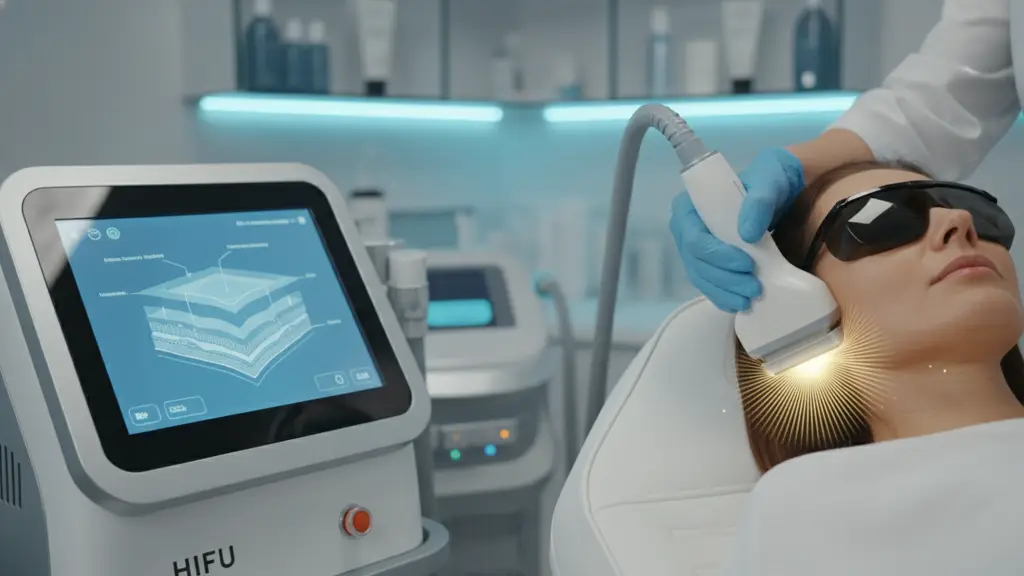
Essential Features to Look for in a Professional HIFU Machine
When evaluating a purchase, prioritize these technical specifications:
- Energy Stability: The machine must deliver consistent energy (Joules) from the first shot to the last. Inconsistent power leads to "tiger striping" or ineffective treatments.
- Cartridge Variety: Ensure the system includes a 2.0mm cartridge (essential for treating delicate eye areas) and macro-focused body cartridges (6.0mm, 9.0mm, 13.0mm).
- Shot Speed: Faster repetition rates reduce treatment time, allowing for higher patient throughput.
- Engineered Safety: Look for systems with contact sensors that prevent shots unless the transducer is flush with the skin.
- Build Quality & Certifications: Trustworthy manufacturers like HUIMAIN adhere to CE and SGS approval standards. Their 3000-square-meter facility and dedicated clinical test department ensure that every unit undergoes rigorous quality control before shipping.
Top Professional HIFU Machines: An In-Depth Comparison for 2026
|
Feature |
Ultherapy |
Ultraformer III / MPT |
Huimain / OEM Solutions |
Generic 9D/12D HIFU |
|
Technology |
MFU with Visualization |
MFU + Macro-Focused |
MFU + Macro (Customizable) |
Multi-Line HIFU |
|
Best For |
Precision Lifting (Face) |
Face & Body Contouring |
Versatile Clinic Workhorse |
Fast Body Coverage |
|
Pain Level |
High |
Low to Moderate |
Moderate |
Low |
|
Cost |
$$$$ (High Consumables) |
$$$ (Moderate) |
$$ (Best Value/ROI) |
$ (Variable Quality) |
|
Key Strength |
Real-time Ultrasound Imaging |
MPT Mode (Fast & Painless) |
Customization (OEM/ODM) |
Low Initial Cost |
Analysis:
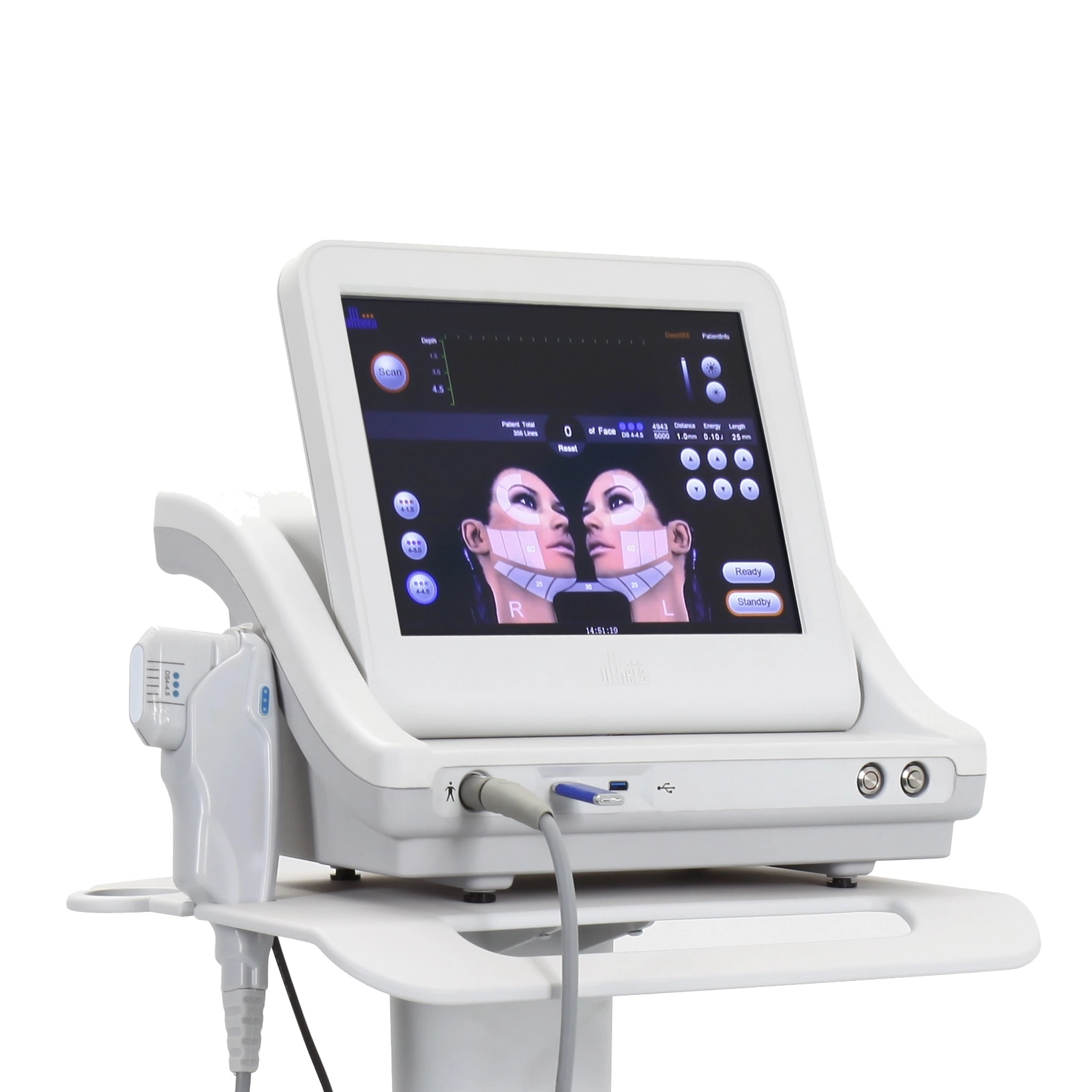
- Ultherapy remains the only FDA-cleared device for lifting with real-time imaging (DeepSEE), but its high consumable cost and pain level can be barriers.
- Ultraformer MPT is rapidly becoming a favorite for its speed and "MP" linear mode which aids in fat reduction and tightening simultaneously.
- HUIMAIN (OEM/ODM): For clinics looking to build their own brand or secure high-spec technology without the markup of major Western brands, working with an established manufacturer like HUIMAIN offers a strategic advantage. Their ability to design custom chassis and software allows clinics to differentiate themselves.
The Professional's Buying Guide: What Clinics Must Consider
1. Regulatory Compliance Ensure the device meets the regulations of your region. In Europe, a CE Mark is non-negotiable. In the US, look for FDA clearance. As stated in FDA databases, devices must be cleared for specific indications like "lifting the eyebrow" or "improving lines."
2. Return on Investment (ROI) Calculate the "Cost Per Shot." If a cartridge costs $1,000 and offers 20,000 shots, your cost is low. However, if a branded system charges $2,000 for 2,000 lines, your margins shrink.
- Tip: HUIMAIN's focus on "good price and high quality" often provides a faster break-even point due to lower consumable costs.
3. After-Sales Service & Training A machine is only as good as the support behind it. HUIMAIN emphasizes its professional after-sales service department and experienced engineers. You need a partner who can troubleshoot remotely or ship spare parts instantly to prevent downtime.
Integrating HIFU into Your Clinic: Best Practices & Protocols
- Consultation: Manage expectations. HIFU is not a surgical facelift. It is best for mild to moderate laxity.
- Mapping: Mark the "danger zones" (marginal mandibular nerve, temporal branch) to avoid nerve injury.
- Combination Therapies: For optimal results, combine HIFU (deep foundation) with RF Microneedling (surface texture) or Bio-stimulators. This "sandwich" approach maximizes collagen production.
The Future of Professional HIFU Technology
Looking ahead, we see the integration of AI-driven diagnostics, where the machine suggests energy levels based on skin impedance. Furthermore, the line between medical and aesthetic use will blur, with manufacturers like HUIMAIN investing in new product development to treat medical dermatology conditions alongside cosmetic concerns.
Conclusion: Making Your Informed Choice
Choosing a professional HIFU machine is a balance of clinical efficacy, safety, and financial viability. Whether you opt for a premium brand name or a high-performance OEM solution from a manufacturer like Guangzhou Huimain Technology, the key is due diligence. Prioritize systems with proven depth accuracy, stable energy output, and robust regulatory approvals (CE/SGS) to ensure your clinic delivers the transformative results your patients expect.
Frequently Asked Questions
What is the average cost of a professional HIFU machine for a clinic?
Professional HIFU machine costs vary widely. Entry-level imported systems can range from $5,000 to $15,000. Mid-range professional systems typically cost between $20,000 and $50,000. Premium, top-tier systems like Ultherapy or Ultraformer MPT can exceed $80,000 to $100,000. It is crucial to factor in the ongoing cost of replacement cartridges when calculating the total cost of ownership.
How long do professional HIFU machines typically last, and what's the warranty?
A high-quality professional HIFU machine is built to last 5 to 10 years with proper maintenance. Standard warranties are typically 1-2 years. Manufacturers like HUIMAIN often provide dedicated after-sales support to ensure longevity. The handpieces and cartridges are consumables and will need periodic replacement based on usage volume.
What kind of training is required to operate a professional HIFU machine?
Operators should be licensed aestheticians or medical professionals (depending on local laws). Comprehensive training is essential and should cover facial anatomy (specifically nerve locations), treatment protocols, contraindications, and hands-on practice. Reputable manufacturers and distributors always provide detailed operational training.
Are professional HIFU machines FDA-approved or CE-marked?
Not all machines are created equal. Top-tier devices like Ultherapy have FDA clearance. Many high-quality international devices hold the CE Mark (Conformité Européenne), indicating they meet strict EU safety and health requirements. Always ask the manufacturer, such as HUIMAIN, for copies of their CE and SGS certificates before purchasing.
What is the ROI for investing in a professional HIFU machine for a clinic?
HIFU treatments have a high profit margin. A typical face and neck treatment can retail for $800 to $2,500, while the consumable cost (cartridge shots) might only be $50-$150 per patient. With efficient marketing, many clinics achieve a positive ROI within 3 to 6 months.
Can professional HIFU machines treat both face and body?
Yes. Modern professional systems are versatile. They use 1.5mm, 3.0mm, and 4.5mm cartridges for facial lifting and tightening, and deeper macro-focused cartridges (6.0mm, 9.0mm, 13.0mm) to target stubborn fat and tighten skin on the body (abdomen, arms, thighs).
How do professional HIFU machines compare to other skin tightening treatments like RF or lasers?
HIFU is unique because it penetrates deeper than RF or lasers, reaching the SMAS layer (4.5mm) to provide a "lifting" effect. RF (Radiofrequency) typically treats the dermis for "tightening" and volumizing. Lasers generally treat the skin surface for texture and pigmentation. HIFU is often considered the most effective non-invasive option for structural lifting.
References
- National Institutes of Health (NIH): High-Intensity Focused Ultrasound Increases Collagen and Elastin Fiber Synthesis
- National Institutes of Health (NIH): Noninvasive Skin Tightening: Focus on New Ultrasound Techniques
- U.S. Food and Drug Administration (FDA): Ulthera System - K180623
- Journal of Cutaneous and Aesthetic Surgery: Microfocused Ultrasound for Skin Tightening
- ResearchGate: Microfocussed vs. macrofocussed ultrasound for body contouring
About Support Service
What certifications do your products have?
Our machines are certified with CE, SGS, and comply with international safety standards. Some models hold utility/design patents.
A67
Is this HIFU machine suitable for beauty salons?
Absolutely. The Fusion HIFU machine is designed for professional salons, clinics, and distributors.
OL-164
What is the difference between a hydro facial machine and a traditional facial steamer?
A hydro facial machine deeply cleanses pores and infuses serums using hydro dermabrasion, while a steamer only opens pores without exfoliation or serum delivery.
ZGP03 (台式皮秒)
Is this device suitable for pigment treatment on the face?
Yes, its precise energy control makes it ideal for facial pigment treatment with minimal skin damage.
OPT 脱毛机
Does the treatment hurt?
No, thanks to the advanced cooling system, treatments are virtually painless and comfortable.

Get more information
If you have any comments or good suggestions, please leave us a message; later our professional staff will contact you as soon as possible.
Let's Talk
Stay in touch with us for cutting-edge beauty solutions, professional guidance, and customized service.
Contact


Room 307, Building A, Huilong International E-commerce Industrial Park, No. 10 Xipengling Road, Helong Street, Baiyun District, Guangzhou, China
© 2025 HUIMAIN. All Rights Reserved. Privacy Policy | Terms and Conditions | Sitemap
Facebook
Instagram
Medical beauty equipment factory
huimain Medical beauty equipment factory
beauty machine supplier
Whatsapp: +8619124004543