


- Understanding the Pelvic Floor: Anatomy and Function
- The Science Behind Pelvic Floor Tightening Devices
- Types of Pelvic Floor Devices: Which is the Best?
- 1. Smart Biofeedback Trainers (The Best for Guided Learning)
- 2. Electrical Muscle Stimulation (EMS/NMES) Devices (The Best for Severe Weakness)
- 3. Vaginal Weights and Cones (The Best for Natural Resistance)
- 4. External Pelvic Floor Trainers (The Best for Non-Invasive Use)
- Key Factors to Consider When Evaluating a Device
- How to Maximize Results with Your Pelvic Floor Device
- Frequently Asked Questions (FAQs)
- Conclusion: Empowering Your Pelvic Health Journey
What is the Best Device for Tightening the Pelvic Floor? | Complete Guide
Pelvic floor health, once a silent struggle linked to aging or childbirth, is now a focal point of modern wellness. For those dealing with urinary incontinence or muscle laxity, finding the best device for tightening the pelvic floor is essential. While manual Kegels are beneficial, nearly a third of individuals perform them incorrectly—often bearing down rather than lifting—which can inadvertently worsen pelvic weakness.
This is where specialized technology intervenes. Modern pelvic floor tightening devices have revolutionized personal healthcare by providing guided, measurable, and scientifically backed methods to rebuild muscle tone. This comprehensive guide breaks down the science of pelvic dysfunction, analyzes the leading device categories on the market, and offers a professional framework to help you choose the ideal solution tailored to your specific anatomical needs and long-term health goals.
Understanding the Pelvic Floor: Anatomy and Function
Before determining the best device, it is crucial to understand what the pelvic floor actually is and why it requires tightening in the first place.
The Anatomy of the Pelvic Floor The pelvic floor is a complex, hammock-like structure composed of muscles, ligaments, and connective tissues that stretch from the pubic bone at the front to the tailbone (coccyx) at the back. These muscles serve several critical functions in the human body:
-
Support: They hold the pelvic organs—including the bladder, uterus, and bowel—securely in their correct anatomical positions.
-
Sphincter Control: They control the opening and closing of the urethra, vagina, and anus, preventing accidental leakage of urine or feces.
-
Sexual Function: Strong pelvic floor muscles contribute significantly to arousal and the intensity of orgasms.
-
Core Stability: They work in tandem with the abdominal and back muscles to stabilize the spine and pelvis during movement.
Common Causes of Pelvic Floor Weakness Pelvic floor dysfunction does not happen overnight. It is typically the result of accumulated stress or specific life events. The most common culprits include:
-
Pregnancy and Childbirth: The immense weight of a growing baby places prolonged strain on the pelvic floor. Furthermore, vaginal delivery can stretch and occasionally tear these muscles and surrounding nerves.
-
Menopause and Aging: As women enter menopause, the natural decline in estrogen levels causes muscles and tissues to lose their elasticity and strength, leading to a weakened pelvic floor.
-
High-Impact Exercises: Chronic heavy lifting, intense jumping, or running without proper core engagement can exert excessive downward pressure on the pelvic organs.
-
Chronic Health Conditions: Persistent coughing (often due to smoking or asthma), chronic constipation (which requires frequent straining), and obesity all contribute to long-term pelvic floor degradation.
When these muscles become overly stretched or weakened, the "hammock" sags. This leads to issues such as Stress Urinary Incontinence (SUI)—leaking when you laugh, cough, or sneeze—and Urge Urinary Incontinence (UUI), which is an overwhelming need to urinate immediately.
The Science Behind Pelvic Floor Tightening Devices
Why use a device instead of simply doing traditional Kegels? The answer lies in neuromuscular feedback and targeted resistance.
When you go to the gym to strengthen your biceps, you do not just flex your arm in the air; you pick up a dumbbell to provide resistance. Furthermore, you look in the mirror to ensure your form is correct. Pelvic floor devices provide both the "dumbbell" (resistance/stimulation) and the "mirror" (biofeedback) for muscles you cannot physically see.
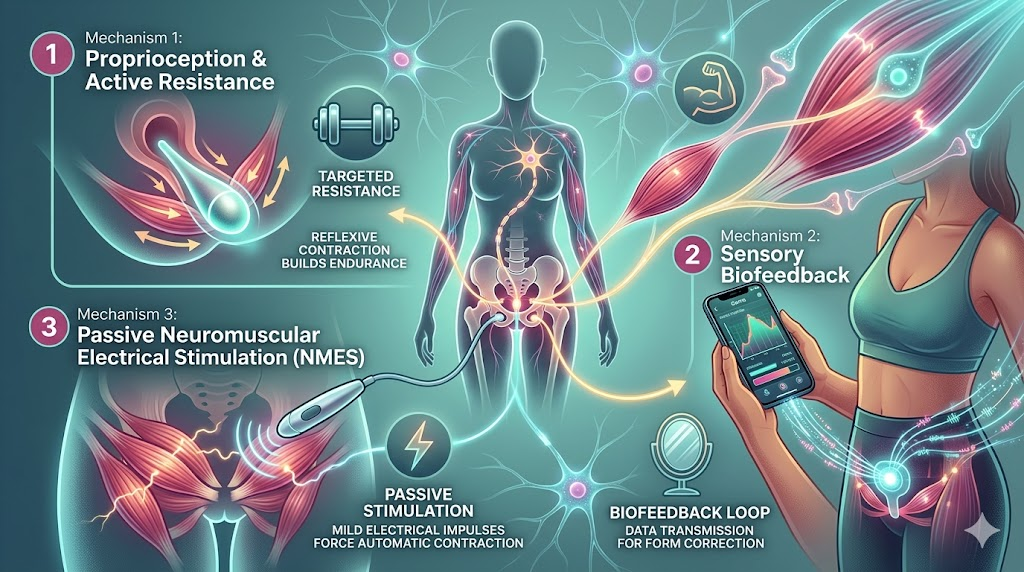
There are broadly three scientific mechanisms that these devices utilize:
-
Proprioception and Active Resistance: By inserting a physical object (like a weight) into the vagina, the pelvic floor muscles reflexively contract to keep the object from falling out. This builds endurance.
-
Sensory Biofeedback: Advanced sensors detect the microscopic electrical signals or physical pressure of your muscle contractions, transmitting that data to a screen or app. This ensures you are flexing the correct muscles and not substituting with your abs or glutes.
-
Passive Neuromuscular Electrical Stimulation (NMES): For those whose muscles are too weak to contract voluntarily, mild electrical impulses are used to stimulate the motor nerves, forcing the pelvic floor muscles to contract and relax automatically.
Types of Pelvic Floor Devices: Which is the Best?
There is no single "best" device for everyone; the ideal choice depends on your baseline strength, your primary symptoms, and your technological comfort level. Here is an in-depth breakdown of the four main categories of pelvic floor tightening devices available today.
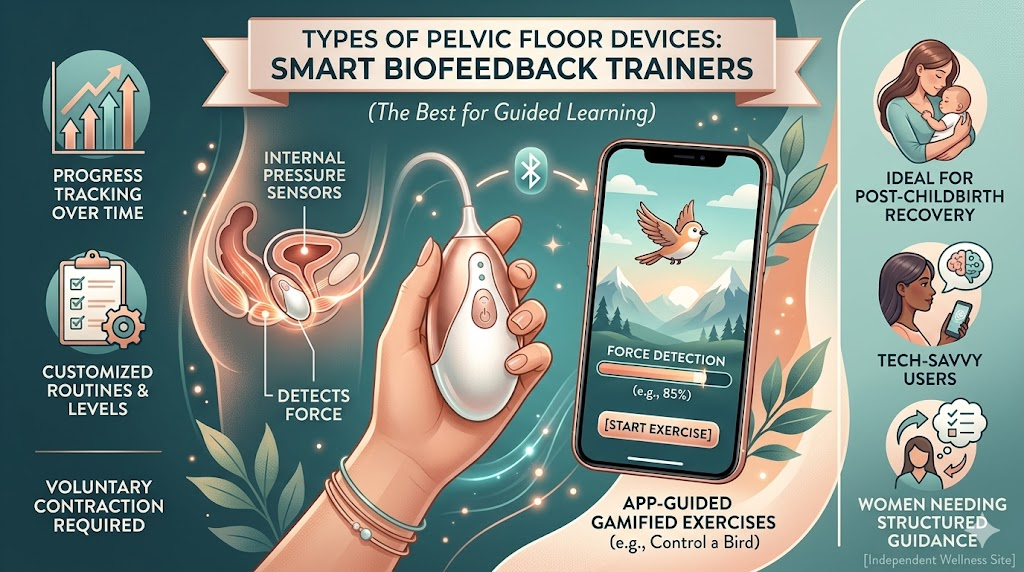
1. Smart Biofeedback Trainers (The Best for Guided Learning)
Smart Kegel trainers are highly advanced, usually egg-shaped or curved silicone devices equipped with internal pressure or force sensors. They pair via Bluetooth to a smartphone application.
-
How They Work: Once inserted, the app guides you through a series of exercises (often gamified, like making a bird fly on the screen by squeezing your pelvic muscles). The sensors detect the exact force of your contraction in real-time.
-
Pros: They completely eliminate the guesswork. The app tracks your progress over time, sets customized routines based on your strength level, and ensures you are actively improving. The gamification aspect significantly increases user consistency and motivation.
-
Cons: They require a smartphone and active participation. They also rely on the user having at least a baseline ability to perform a voluntary contraction.
-
Who is it best for? Women who are unsure if they are doing Kegels correctly, tech-savvy users, and those recovering from childbirth who need structured, progressive rehabilitation.
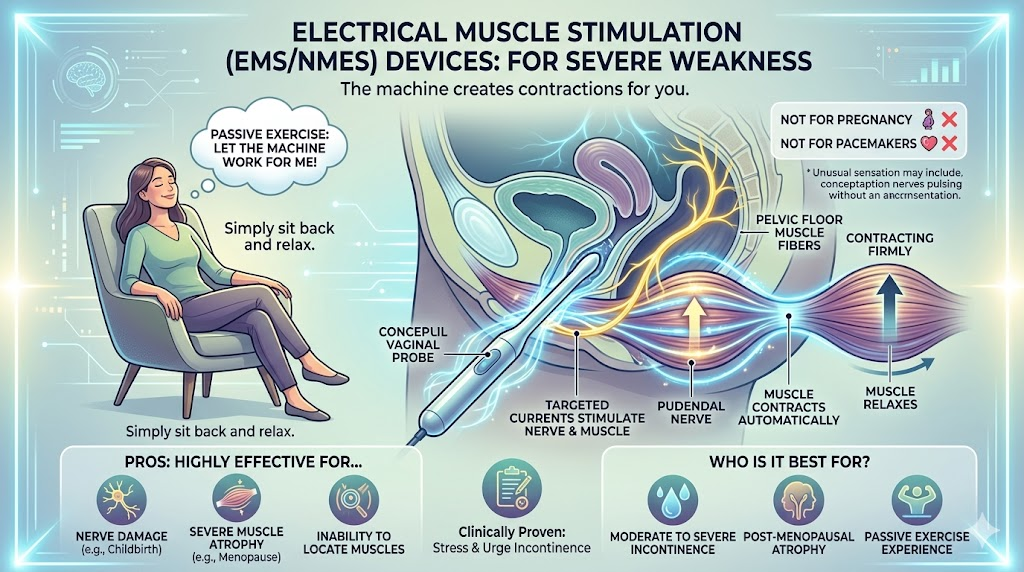
2. Electrical Muscle Stimulation (EMS/NMES) Devices (The Best for Severe Weakness)
EMS or NMES devices look similar to biofeedback probes but function very differently. Instead of reading your contractions, they create the contractions for you.
-
How They Work: The vaginal probe emits gentle, targeted electrical currents that stimulate the pudendal nerve and local muscle fibers. This causes the pelvic floor to contract firmly and then relax. The user simply sits back and lets the machine do the work.
-
Pros: Highly effective for women who have suffered nerve damage during childbirth, women going through menopause with severe muscle atrophy, or those who literally cannot "find" their pelvic floor muscles to flex them voluntarily. They are clinically proven to treat both stress and urge incontinence.
-
Cons: Some users find the sensation of electrical stimulation unusual or slightly uncomfortable at first. They must not be used during pregnancy or by individuals with pacemakers.
-
Who is it best for? Individuals with moderate to severe incontinence, post-menopausal women experiencing significant atrophy, or those who want a completely passive exercise experience.
3. Vaginal Weights and Cones (The Best for Natural Resistance)
This is the most traditional and simplest form of device-assisted pelvic floor training. They usually come in a set of progressively heavier silicone-coated weights.
-
How They Work: You insert a light weight into the vagina and go about your daily activities for 15 to 20 minutes. Gravity tries to pull the weight down, and your pelvic floor muscles must subtly, continuously contract to hold it in place. As you get stronger, you graduate to heavier weights.
-
Pros: They are relatively inexpensive, do not require batteries or smartphones, and are incredibly easy to clean. They build excellent muscular endurance because they require sustained contractions.
-
Cons: There is no digital feedback to tell you if you are progressing other than moving up to the next weight. If a user's muscles are exceptionally weak, even the lightest weight might fall out, leading to frustration.
-
Who is it best for? Budget-conscious consumers, women who prefer a natural and low-tech approach, and those looking to build sustained muscular endurance for high-impact sports.
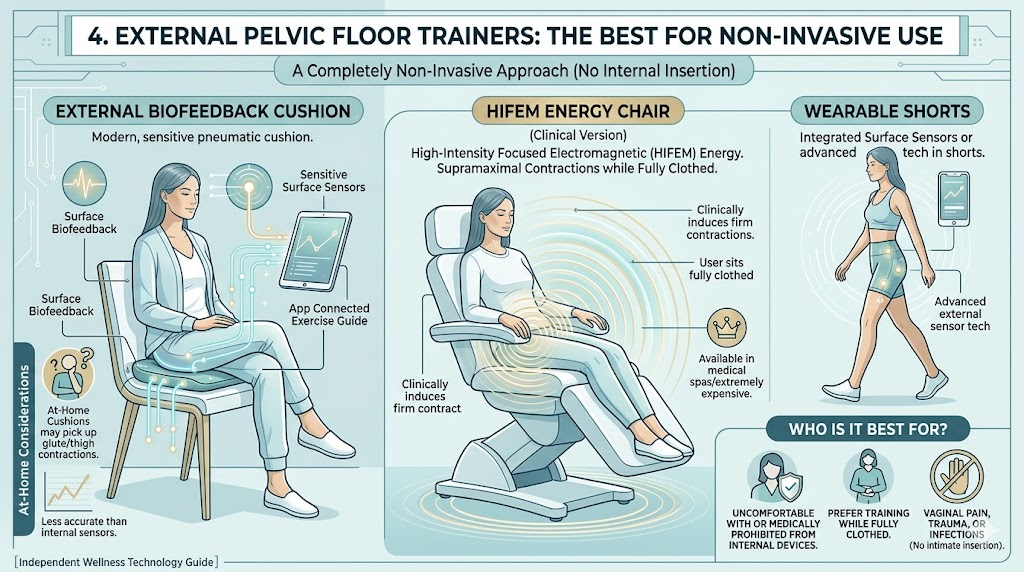
4. External Pelvic Floor Trainers (The Best for Non-Invasive Use)
Not all pelvic floor devices require internal insertion. Recent advancements have introduced external smart cushions and wearable shorts that utilize either surface sensors or electromagnetic technology.
-
How They Work: Some external devices use surface biofeedback (you sit on a highly sensitive pneumatic cushion connected to an app). High-end clinical versions use High-Intensity Focused Electromagnetic (HIFEM) energy to induce supramaximal contractions while the user sits fully clothed on a chair.
-
Pros: Completely non-invasive. There is no need for intimate insertion, making them highly accessible for users with vaginal pain, trauma, or infections.
-
Cons: At-home external biofeedback cushions can sometimes be less accurate than internal sensors, as they may pick up glute or thigh contractions. HIFEM chairs are generally only available in medical spas and are extremely expensive.
-
Who is it best for? Users who are uncomfortable with or medically prohibited from using internal devices, and those who want the convenience of training while fully clothed.
Key Factors to Consider When Evaluating a Device
Choosing the right pelvic floor tightening device requires careful consideration of several crucial elements to ensure safety, efficacy, and comfort.
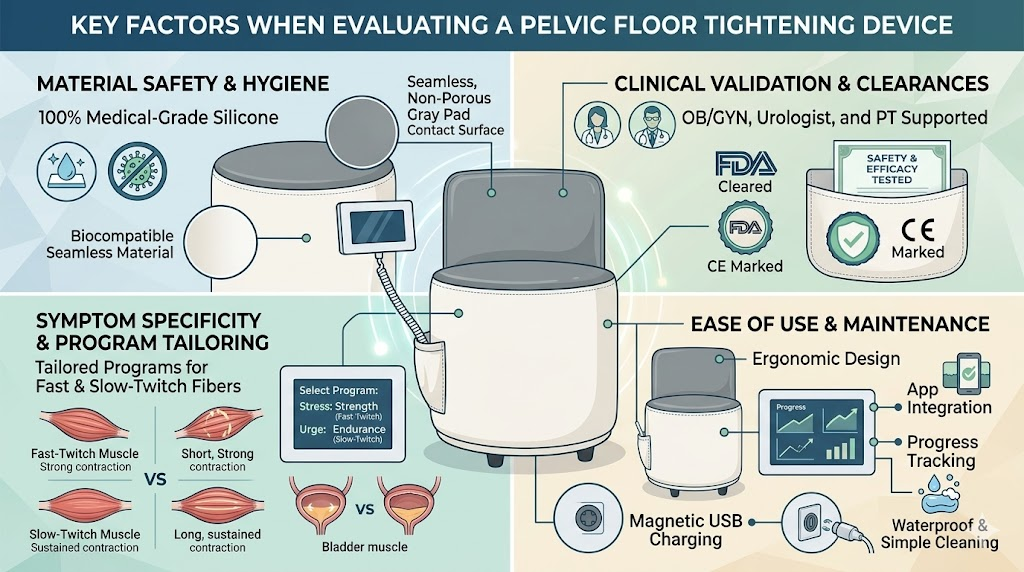
1. Material Safety and Hygiene Because these devices are used internally, material safety is non-negotiable. The device must be made from 100% medical-grade, biocompatible silicone. It should be non-porous to prevent bacterial buildup, free of phthalates, BPA-free, and hypoallergenic. Devices with seamless designs are vastly superior because they do not have crevices where bacteria can hide.
2. Clinical Validation and Clearances Look for devices that are backed by medical professionals—such as gynecologists, urologists, and pelvic floor physical therapists. Furthermore, check if the device has regulatory clearances, such as FDA clearance in the United States or CE marking in Europe. These certifications guarantee that the device has undergone rigorous safety and efficacy testing.
3. Specificity of Your Symptoms If your primary issue is Stress Urinary Incontinence (leaking when coughing), you need a device that builds fast-twitch muscle fibers (strength). If your issue is Urge Incontinence (overactive bladder), you need a device that helps calm the nerves and build slow-twitch fibers (endurance). Many smart biofeedback and EMS devices have specific programs tailored to these different types of fibers.
4. Ease of Use and Maintenance A device is only effective if you actually use it. If the app is glitchy, if the device is difficult to insert, or if it is a nightmare to clean, it will end up sitting in a drawer. Opt for devices with ergonomic designs, intuitive user interfaces, magnetic USB charging (which makes them completely waterproof), and simple cleaning protocols (usually just warm water and antibacterial soap).
How to Maximize Results with Your Pelvic Floor Device
Purchasing the best device is only the first step. To truly tighten and rehabilitate your pelvic floor, you must integrate the device into a holistic wellness routine.
-
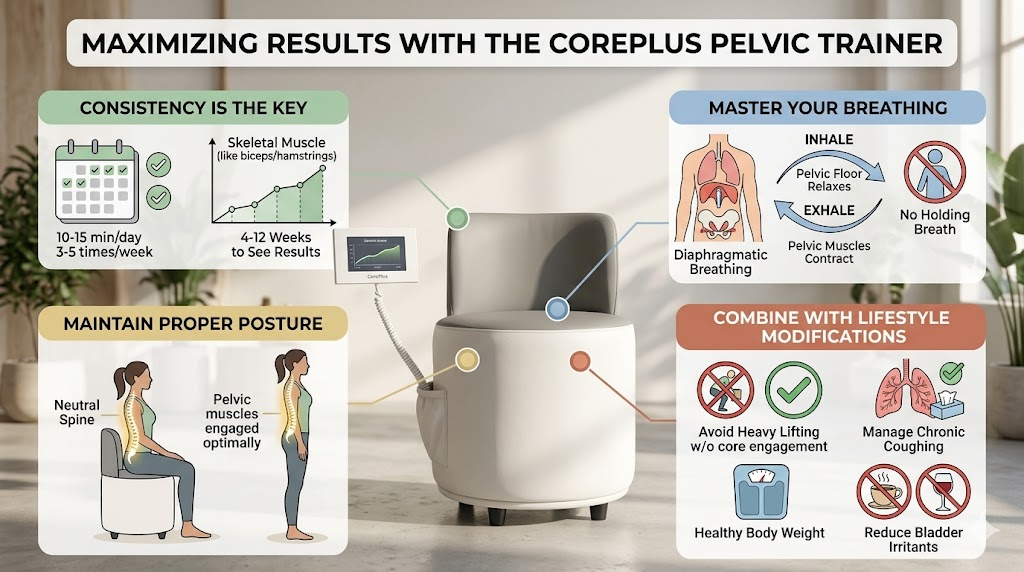
Consistency is the Ultimate Key: The pelvic floor consists of skeletal muscles, just like your biceps or hamstrings. You will not see results after one session. Clinical studies indicate that users must use their device for 10 to 15 minutes a day, 3 to 5 times a week, for at least 4 to 12 weeks to see a significant reduction in symptoms.
-
Master Your Breathing: Never hold your breath while using a pelvic floor trainer. Holding your breath increases intra-abdominal pressure, pushing down on the pelvic floor and counteracting the exercise. Practice diaphragmatic breathing: inhale deeply as the pelvic floor relaxes, and exhale slowly as you contract the muscles around the device.
-
Maintain Proper Posture: Posture heavily influences pelvic floor dynamics. Whether you are using the device lying down, sitting, or standing, ensure your spine is in a neutral position to allow the pelvic muscles to engage optimally.
-
Combine with Lifestyle Modifications: To protect your tightening progress, avoid heavy lifting without proper core engagement, manage chronic coughing, maintain a healthy body weight, and reduce bladder irritants like excessive caffeine and alcohol.
Frequently Asked Questions (FAQs)
Q1: How long does it take to see results from a pelvic floor device?
A: While every body is different, most clinical studies show that users begin to notice an improvement in bladder control and vaginal tone within 3 to 4 weeks of consistent use. Maximum results, especially for severe muscle laxity or incontinence, typically take about 12 weeks of dedicated training.
Q2: Are pelvic floor tightening devices safe to use?
A: Yes, when purchased from reputable manufacturers and used according to the instructions, these devices are incredibly safe. Ensure you select a device made of medical-grade silicone. However, you should not use EMS devices if you have a pacemaker. Internal devices should not be used for 6 weeks postpartum or if you have an active pelvic infection.
Q3: Can I use these devices while pregnant?
A: Internal biofeedback devices and weights can sometimes be used during healthy, low-risk pregnancies to maintain tone, but only under the strict guidance of your obstetrician. However, Electrical Muscle Stimulation (EMS/NMES) devices must NEVER be used during pregnancy.
Q4: Will my pelvic floor weaken again if I stop using the device?
A: Yes. Just as your arm muscles will lose strength if you stop lifting weights, your pelvic floor requires ongoing maintenance. Once you achieve your initial tightening goals after the first few months, you can transition to a "maintenance phase," reducing usage to just 1 or 2 times a week to sustain the strength.
Q5: Is it normal to feel sore after using a pelvic floor trainer?
A: Mild muscle fatigue or a feeling of "heaviness" after the first few sessions is completely normal; it means the muscles have been worked. However, you should never experience sharp pain or cramping. If you do, you may be overworking the muscles or using too high an EMS setting. Reduce the intensity and give your muscles a rest day.
Conclusion: Empowering Your Pelvic Health Journey
The question of "What is the best device for tightening the pelvic floor?" ultimately comes down to your personal health profile. If you desire visual guidance and motivation, a Smart Biofeedback device is your perfect match. If you are struggling with severe weakness and need the device to do the heavy lifting, an EMS stimulator is the medical standard. If you prefer low-tech, natural resistance, vaginal weights are a tried-and-true solution.
Remember, suffering in silence from pelvic floor dysfunction is no longer necessary. By investing in the right technology and committing to a consistent routine, you can rebuild your foundational strength, eliminate embarrassing leaks, and reclaim your confidence and comfort.
Ready to take control of your core wellness? Do not let a weakened pelvic floor dictate your lifestyle any longer. Explore our premium selection of clinically validated, highly effective pelvic floor tightening devices designed to meet your specific needs. [Click here to browse our top-rated pelvic floor trainers today and start your journey toward a stronger, more confident you!]



OL-164
Is the hydro facial machine suitable for sensitive skin?
Yes, the OL-164 uses a gentle water and oxygen system that suits even sensitive skin types.
10-in-1 cavitation vacuum machine
Is the 10 in 1 cavitation vacuum machine safe?
Yes. It uses non-invasive ultrasonic and RF technologies with built-in temperature protection to ensure safe body contouring.
OL-153
How often can treatments be performed?
Recommended once every 2–4 weeks depending on the client’s skin condition.
台式黄金射频微针
How many sessions are required?
A typical treatment plan recommends 3–5 sessions spaced 3–4 weeks apart.
808 single handle standing
How many sessions are needed for permanent results?
Most clients require 6–8 sessions, depending on hair type, density, and area.


Get more information
If you have any comments or good suggestions, please leave us a message; later our professional staff will contact you as soon as possible.
Let's Talk
Stay in touch with us for cutting-edge beauty solutions, professional guidance, and customized service.
Contact


Room 307, Building A, Huilong International E-commerce Industrial Park, No. 10 Xipengling Road, Helong Street, Baiyun District, Guangzhou, China
© 2025 HUIMAIN. All Rights Reserved. Privacy Policy | Terms and Conditions | Sitemap
Facebook
Instagram
Medical beauty equipment factory
huimain Medical beauty equipment factory
beauty machine supplier
Whatsapp: +8619124004543