


Tips for buy rf machine portable from China
- Introduction: Why choose an rf machine portable from China
- Understand the rf machine portable: key features and technology
- What a portable RF machine does
- Common technical specifications to check
- Tip 1 — Verify certifications and clinical safety for rf machine portable
- Tip 2 — Evaluate supplier capabilities and R&D strength
- Tip 3 — Inspect product testing, clinical evidence, and patents
- Tip 4 — Quality control and factory visits for rf machine portable
- Tip 5 — OEM/ODM customization and private-label options
- Tip 6 — Balance price with total value, not just unit cost
- Tip 7 — After-sales service, training, and spare parts
- Tip 8 — Shipping, lead times, and international trade logistics
- Tip 9 — Sample policy, pilot testing, and acceptance criteria
- Comparison table: Common specs and buyer expectations for rf machine portable
- Tip 10 — Contracts, IP protection, and payment security
- How Guangzhou Huimain Technology supports buyers of rf machine portable
- Step-by-step buying process for an rf machine portable
- Step 1: Requirement specification
- Step 2: Supplier shortlisting and document requests
- Step 3: Sample approval and pilot run
- Step 4: Production, QC, and pre-shipment inspection
- Step 5: Shipping, certification handover, and after-sales setup
- Practical checklist before you sign the purchase order
- Conclusion: Buy smart, prioritize safety and support
- Frequently Asked Questions
Introduction: Why choose an rf machine portable from China
Portable radiofrequency devices (rf machine portable) have become popular for clinics, salons, and home-use channels because they are cost-efficient, convenient, and increasingly effective. China has grown into a major manufacturing center for beauty machines, offering competitive prices, rapid product development, and flexible OEM/ODM services. As you consider buying an rf machine portable from China, this article gives step-by-step, SEO-friendly guidance to help you reduce risk, evaluate suppliers, and choose a device that fits your clinical, retail, or private-label needs.
Understand the rf machine portable: key features and technology
Before you buy an rf machine portable, understand what differentiates models on the market. A clear understanding helps you ask the right supplier questions and evaluate samples.
What a portable RF machine does
An rf machine portable delivers radiofrequency energy to skin tissues to stimulate collagen remodeling, tighten skin, and improve contour. Typical commercial units target facial rejuvenation, wrinkle reduction, body tightening, and localized fat reduction when combined with other technologies.
Common technical specifications to check
When assessing an rf machine portable, verify frequency (kHz or MHz), power output (W), pulse modes (continuous / pulsed), handpiece design, energy delivery uniformity, and built-in safety systems (temperature sensors, automatic cut-offs). These specifications directly affect clinical outcomes and safety.
Tip 1 — Verify certifications and clinical safety for rf machine portable
Certifications prove regulatory compliance and help you sell and use devices in target markets. For products from China, the most-requested certificates include CE for Europe and international testing reports (SGS) for material and electrical safety. If you plan to distribute in the U.S., check whether a device requires FDA clearance or must meet local medical device rules.
Tip 2 — Evaluate supplier capabilities and R&D strength
A strong supplier should be able to explain product R&D, quality control, and clinical testing. Look for companies with in-house engineering teams, patents, and experience producing both professional and home-use rf machine portable units. A factory footprint, documented personnel qualifications, and case studies of prior OEM/ODM projects are strong indicators of capability.
Tip 3 — Inspect product testing, clinical evidence, and patents
Request clinical test summaries, safety test reports (electrical safety, EMC, biocompatibility if applicable), and copies of patents. Clinical evidence (small-scale trials, before/after photos with documented protocols) helps judge efficacy. Independent lab testing from recognized labs like SGS increases confidence in device safety.
Tip 4 — Quality control and factory visits for rf machine portable
On-site audits or third-party factory inspections verify production processes, quality management (e.g., ISO systems), and final checks. Check production layout, assembly lines, aging tests, and QC sampling procedures. If a visit isn’t possible, ask for recent factory audit reports, production photos, and video walk-throughs.
Tip 5 — OEM/ODM customization and private-label options
If you want to differentiate in your market, choose a manufacturer that offers OEM/ODM services for rf machine portable devices. Confirm design flexibility: user interface language, software settings, branding (logo, packaging), and accessories. Discuss minimum order quantities (MOQ) for custom builds and the timeline for tooling and prototyping.
Tip 6 — Balance price with total value, not just unit cost
Lowest price often hides long-term costs such as higher failure rates, warranty claims, and regulatory delays. Evaluate warranty terms, spare-parts availability, expected lifetime, and after-sales support. A slightly higher unit price from a reputable supplier often produces lower total cost of ownership.
Tip 7 — After-sales service, training, and spare parts
Reliable after-sales support is critical for rf machine portable devices. Confirm warranty length, response times for technical support, availability of replacement handpieces and consumables, and whether the supplier offers training materials (videos, manuals) or in-person training for clinical staff.
Tip 8 — Shipping, lead times, and international trade logistics
Discuss shipping options (air vs. sea), lead times, packaging standards for fragile devices, and export documentation. Verify Incoterms (FOB, CIF, DDP) in the sales contract so you know who bears shipping risk and import clearance responsibilities. Longer lead times may apply for custom OEM runs; confirm production schedules before committing.
Tip 9 — Sample policy, pilot testing, and acceptance criteria
Always request a production sample or pilot batch of the rf machine portable to evaluate performance and user experience. Define acceptance criteria in writing (performance, appearance, safety tests). A clear sample approval step prevents costly disputes later.
Comparison table: Common specs and buyer expectations for rf machine portable
| Feature | Entry-level | Professional portable | High-end / Medical-style |
|---|---|---|---|
| Typical frequency | 0.5–1 MHz | 1–2 MHz | 1–6 MHz with variable modes |
| Power output | Low (safe for home) | Medium (clinic use) | Higher, adjustable for clinical protocols |
| Modes | Single mode | Multiple modes (continuous/pulsed) | Advanced modes, temperature feedback |
| Safety features | Basic cut-off | Temperature sensor, overcurrent protection | Real-time monitoring, clinical-grade sensors |
| Certification commonly available | CE (sometimes) | CE, SGS test reports | CE, FDA clearance or clinical trial data |
Tip 10 — Contracts, IP protection, and payment security
Use clear contracts that specify IP ownership, non-disclosure, product specifications, penalties for defects, and warranty obligations. Protect HUIMAIN with trademarks in target markets. For payment security, prefer trade terms that balance risk, such as a deposit with balance after inspection or use of a reputable escrow or letter-of-credit for larger orders.
How Guangzhou Huimain Technology supports buyers of rf machine portable
Guangzhou Huimain Technology Co., Ltd. is a high-tech company specializing in beauty machines and home-use device series, covering R&D, production, sales, and after-sale service. The company occupies 3000 square meters and has a strong technical development department with many experienced engineers. Huimain emphasizes OEM/ODM: it can design products, configure software/UI in multiple languages, and provide CE and SGS documentation. Their combined focus on R&D, patents, and quality control positions them to support international resellers and clinics that need reliable rf machine portable supply and effective after-sales service.
Step-by-step buying process for an rf machine portable
Follow these steps to minimize risk and shorten procurement cycles:
Step 1: Requirement specification
Define target use (home vs. clinic), desired treatment modalities, certification requirements for your market, expected MOQ, and budget.
Step 2: Supplier shortlisting and document requests
Request company profile, factory photos, CE/SGS reports, patent lists, clinical evidence, warranty terms, and references from other customers. Shortlist suppliers based on transparency and documented capability.
Step 3: Sample approval and pilot run
Order a sample for hands-on testing and marketing photography. Approve a pilot batch if performance meets acceptance criteria.
Step 4: Production, QC, and pre-shipment inspection
Agree on production schedule, arrange inspections (third party if needed), and confirm final testing criteria. Maintain communication channels for updates.
Step 5: Shipping, certification handover, and after-sales setup
Finalize shipping terms, obtain required export documents, prepare user manuals and training resources, and set up spare-parts and service agreements.
Practical checklist before you sign the purchase order
Use this checklist to avoid common pitfalls when buying an rf machine portable:
- Verify CE/SGS and request copies of test reports
- Confirm whether FDA or other local approvals are required
- Request clinical or user-evidence for efficacy
- Get written warranty, spare-parts lead times, and service SLA
- Approve final sample and document acceptance criteria
- Clarify OEM/ODM customization fees and MOQ
- Agree on payment terms, Incoterms, and delivery schedule
- Ensure IP clauses and confidentiality agreements are in place
Conclusion: Buy smart, prioritize safety and support
Buying an rf machine portable from China offers price competitiveness and customization—but success depends on careful supplier selection, documentation, and quality assurance. Prioritize certified products, transparent R&D and testing, clear OEM/ODM processes, and strong after-sales service. Suppliers like Guangzhou Huimain Technology highlight how a strong R&D team, relevant certifications, and global experience can reduce buying risk for clinics, salons, and distributors.
Use the tips, checklist, and step-by-step process above to negotiate better terms, ensure compliance, and build a scalable supply relationship for rf machine portable products.
Sources:
- European Commission — Guidance on CE marking and medical device requirements
- U.S. Food and Drug Administration (FDA) — Information on energy-based aesthetic devices and regulatory considerations
- SGS — Standards and testing services for electrical safety and product compliance
- Industry market reports from recognized research firms (e.g., Grand View Research, Allied Market Research) on growth trends in aesthetic devices
- Company materials and certification claims typically requested from manufacturers during procurement
Frequently Asked Questions
What certifications should I insist on when buying an rf machine portable?Ask at minimum for CE documentation and independent safety test reports such as SGS; if you sell in the U.S., determine whether FDA clearance or compliance is required for your intended use.
How can I verify a Chinese supplier’s factory and quality processes?Request recent factory audit reports, production photos, and third-party inspection records; if possible, perform an on-site audit or hire a third-party inspection company to verify QC processes and assembly lines.
What is a realistic lead time for OEM rf machine portable orders?For standard stock models, lead times can be 2–6 weeks; for OEM/ODM custom runs, expect 8–16 weeks depending on tooling, certification, and production capacity.
Should I choose the cheapest rf machine portable option?No. Lowest upfront price can mean higher failure rates and poor support. Balance price with certifications, warranty, spare-part availability, and supplier reputation to lower total cost of ownership.
How can I protect intellectual property when working with a Chinese manufacturer?Use NDAs, clearly define IP ownership in contracts, register trademarks in target markets, and consider limiting disclosure of core proprietary algorithms or specifications until a trusted relationship is established.
What warranty and after-sales services should I require?Request at least 12 months warranty, clear spare-parts pricing and lead times, technical training materials, remote support, and an SLA for response times. For large orders, negotiate extended warranty options.
Is clinical evidence necessary for purchasing an rf machine portable?Yes — clinical evidence or well-documented user studies help substantiate claims and reduce legal and reputational risk. Request before/after documentation and treatment protocols used in tests.
Can Guangzhou Huimain provide OEM/ODM and test reports for rf machine portable orders?Yes. Guangzhou Huimain Technology specializes in OEM/ODM for beauty machines, holds CE and SGS approvals, invests in R&D, and can support sample development, certification documentation, and after-sales service for international buyers.
Massage Device RF + Inner Ball Roller
Is there any downtime after treatment?
No downtime — clients can return to daily activities immediately after the session.
V9
How does the 5-in-1 technology work to reduce fat?
The V9 machine uses a combination of technologies. Cavitation technology helps to break down fat cells, while the Vacuum and Roller functions assist in massaging and mobilizing the fat and promoting lymphatic drainage. The RF and Infrared components further support this by heating the fat layer to enhance the fat reduction process.
HMT22
How does the EMS + Cryo machine work?
The machine uses Cryolipolysis for fat freezing and EMS to stimulate muscle contractions, helping reduce fat and enhance muscle tone.
JLM-36
How often should treatments be performed?
For optimal results, treatments are typically performed every 4-6 weeks, depending on the client’s skin condition.
2 in 1
How does the Cold Hammer handle benefit the treatment?
The Cold Hammer releases ice power by a physiological cooling principle. This causes blood vessels to narrow and pores to tighten, and it also strengthens collagen fibers. It is particularly effective at reducing skin redness, swelling, and pain after the RF microneedling treatment.

CO2 Fractional Laser Machine – Professional Wrinkle Removal & Skin Resurfacing Device
The CO2 Fractional Laser Machine is a multifunctional aesthetic device designed for professional clinics and beauty salons. Using advanced fractional CO2 laser technology, it effectively targets acne scars, freckles, pigmentation, nevi, and deep wrinkles. Additionally, it provides non-invasive skin rejuvenation, vaginal tightening, and intimate beautification. This professional CO2 laser equipment combines precision, safety, and powerful energy output to deliver outstanding anti-aging and dermatological results.

5-in-1 40K Cavitation Vacuum Machine for Body Slimming & Fat Reduction
The 5-in-1 40K Cavitation Vacuum Machine is a professional body shaping system designed for fat reduction, cellulite smoothing, and overall body contouring. Using 40KHz ultrasonic cavitation, this device breaks down stubborn fat cells, while vacuum suction improves lymphatic drainage and accelerates toxin removal.
With multiple RF tightening handles, the machine stimulates collagen regeneration and helps lift and firm loose areas of the body. Compact, powerful, and easy to operate, it is the perfect solution for beauty salons, spa centers, and slimming studios seeking fast and visible fat-reduction results.
This cavitation vacuum machine is built to deliver safe, non-invasive treatments with no downtime—making it a top choice for body contouring professionals.

6-in-1 Multifunctional Beauty and Weight Loss Machine | Cavitation, RF, Vacuum PDT, EMS, Laser Slimming Equipment for Professional Use
The 6-in-1 Multifunctional Beauty and Weight Loss Machine is a professional-grade device designed for salons, clinics, and distributors. Combining six advanced technologies—cavitation, RF (radio frequency) for face & body, vacuum RF PDT, BIO/EMS microcurrent, and laser lipo pads—this device offers comprehensive body contouring, fat reduction, skin tightening, and anti-aging treatments.
It provides businesses with an all-in-one solution to expand service offerings, attract more clients, and achieve a rapid return on investment.
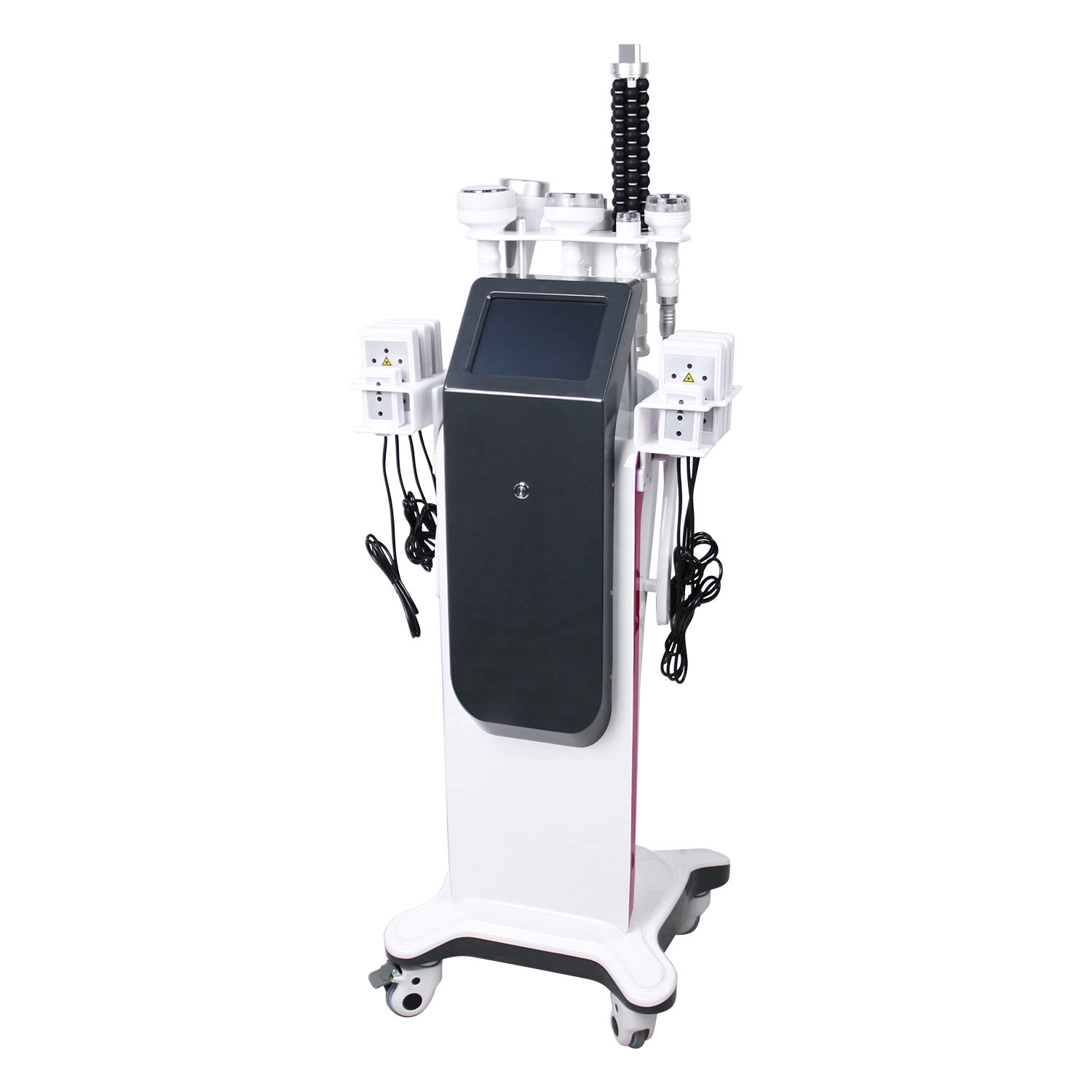
Professional 6-in-1 Cavitation Vacuum Machine for Body Contouring & Slimming Treatment
The 6-in-1 Cavitation Vacuum Machine is a professional body contouring system designed for salons and spas seeking high-performance slimming solutions. This machine integrates 40K ultrasonic cavitation, vacuum suction, RF technology, and laser lipolysis to target stubborn fat, enhance lymphatic drainage, tighten the skin, and contour the body shape effectively.
Equipped with multiple ergonomic handles and a smart touch screen, this cavitation vacuum machine provides a comfortable and efficient experience for both operators and clients. It is ideal for full-body treatments including abdomen, arms, legs, waistline, hips, and back.
Perfect for beauty salons, spas, and aesthetic centers that want to offer non-invasive fat reduction and body-sculpting services.
Get more information
If you have any comments or good suggestions, please leave us a message; later our professional staff will contact you as soon as possible.
Let's Talk
Stay in touch with us for cutting-edge beauty solutions, professional guidance, and customized service.
Contact


Room 307, Building A, Huilong International E-commerce Industrial Park, No. 10 Xipengling Road, Helong Street, Baiyun District, Guangzhou, China
© 2025 HUIMAIN. All Rights Reserved. Privacy Policy | Terms and Conditions | Sitemap
Facebook
Instagram
Medical beauty equipment factory
huimain Medical beauty equipment factory
beauty machine supplier
Whatsapp: +8619124004543