


Eficiencia energética y costos operativos de la máquina de plasma frío
- Cómo la energía influye en la economía de los dispositivos de belleza
- Fundamentos de potencia y energía para dispositivos de plasma frío
- Características eléctricas típicas y cómo se traducen en costos
- Patrones de uso típicos y escenarios energéticos realistas
- Comparación de costos energéticos y operativos: Plasma frío vs. alternativas
- ¿Por qué comparar modalidades?
- Comparación ilustrativa de costos de energía y por tratamiento
- Factores operativos más allá de la potencia bruta: factores de costos ocultos
- Consumibles, mantenimiento y amortización
- El flujo de trabajo, el rendimiento y el impacto de la mano de obra en la rentabilidad
- Estrategias de diseño y adquisición para maximizar la eficiencia energética
- Opciones técnicas que reducen el consumo de energía
- Mejores prácticas operativas
- Cálculos de estudios de caso y ejemplos prácticos de presupuestación
- Ejemplo A: Plasma frío portátil para clínica pequeña
- Ejemplo B: Plataforma de plasma clínico de múltiples cabezales
- Orientación regulatoria, de certificación y de medición
- Por qué son importantes los datos medidos y certificados
- Consejos de medición para clínicas y fabricantes de equipos originales
- Guangzhou Huimain Technology Co., Ltd.: perspectiva práctica de los socios OEM
- Capacidades de la empresa y relevancia para el diseño de productos energéticamente eficientes
- Puntos fuertes del producto, ventajas OEM/ODM y principales líneas de productos
- Lista de verificación de implementación: comprar y operar para lograr un costo total bajo
- Antes de comprar
- Después de la compra
- Preguntas frecuentes (FAQ)
- 1. ¿Cuánto suele añadir un tratamiento de plasma frío a mi factura de electricidad?
- 2. ¿Son las máquinas de plasma frío más eficientes energéticamente que los láseres o HIFU?
- 3. ¿Qué debo preguntar a los fabricantes sobre el rendimiento energético?
- 4. ¿Pueden las actualizaciones de firmware o software del dispositivo mejorar la eficiencia energética?
- 5. ¿Cómo calculo el costo operativo real de una máquina de plasma frío?
- 6. ¿Se requiere ventilación especial o control ambiental que afecte el costo operativo?
- Contacto y consultas sobre productos
- Referencias y fuentes autorizadas
Cómo la energía influye en la economía de los dispositivos de belleza
Las máquinas de plasma frío se utilizan cada vez más en dermatología, estética y dispositivos médicos debido a sus efectos antimicrobianos, cicatrizantes y de rejuvenecimiento cutáneo. Para los gerentes de clínicas, fabricantes de equipos originales (OEM) y equipos de compras, comprender el consumo energético real y los factores que influyen en los costes operativos es fundamental para presupuestar con precisión, comparar tecnologías y optimizar los flujos de trabajo. Este artículo ofrece una visión práctica y basada en la evidencia de los perfiles energéticos, los cálculos de costes y las estrategias de eficiencia para las máquinas de plasma frío, combinando los detalles técnicos con recomendaciones prácticas.
Fundamentos de potencia y energía para dispositivos de plasma frío
Características eléctricas típicas y cómo se traducen en costos
Los dispositivos de plasma frío utilizados en clínicas estéticas varían ampliamente en diseño (descarga de barrera dieléctrica, chorros de plasma, sistemas basados en corona), y su consumo instantáneo de energía suele oscilar entre un solo dígito de vatios (para dispositivos portátiles de baja potencia) y varios cientos de vatios para unidades clínicas de sobremesa o de múltiples cabezales. La mayoría de los dispositivos de plasma frío para uso doméstico o estético operan en la banda de 5 a 200 W; las plataformas de tratamiento industriales o combinadas pueden alcanzar picos de potencia más altos durante ciclos de trabajo cortos.
El costo operativo se determina por la energía (kWh) consumida y el precio local de la electricidad. Energía por sesión = potencia del dispositivo (kW) × duración del tratamiento (horas) × factor de ciclo de trabajo (si es pulsado). Ejemplo de fórmula: Costo por sesión = potencia (kW) × duración (h) × precio de la electricidad (USD/kWh).
Patrones de uso típicos y escenarios energéticos realistas
Las sesiones clínicas varían: un tratamiento facial específico puede durar entre 10 y 20 minutos; los ciclos de tratamiento de heridas o esterilización pueden durar entre 5 y 30 minutos por zona; las aplicaciones corporales multizona pueden extenderse hasta 30 y 60 minutos. Los sistemas de plasma frío suelen funcionar con pulsos (ciclos de trabajo del 10 al 50 %), lo que reduce el consumo promedio de energía en comparación con la potencia nominal continua. Al calcular los costos, considere la energía en espera y los sistemas auxiliares (pantallas táctiles, bombas, ventiladores) que añaden un consumo de referencia.
Comparación de costos energéticos y operativos: Plasma frío vs. alternativas
¿Por qué comparar modalidades?
Las clínicas suelen elegir entre plasma, radiofrecuencia (RF), láser, HIFU o crioterapia para indicaciones similares. El consumo energético y el coste por tratamiento son solo una parte de la selección: la eficacia del tratamiento, los consumibles, la amortización del equipo, el mantenimiento y el número de pacientes también son importantes. Esta sección se centra en los costes operativos energéticos para proporcionar una base comparable.
Comparación ilustrativa de costos de energía y por tratamiento
La siguiente tabla presenta los rangos de potencia típicos y un ejemplo práctico del coste energético por tratamiento, utilizando un precio de la electricidad estimado. Estos valores son ejemplos realistas y comparables con los del fabricante; los dispositivos reales y las tarifas eléctricas regionales pueden variar.
| Modalidad | Consumo de energía típico (W) | Ejemplo de tiempo de tratamiento | Energía por tratamiento (kWh) | Costo por tratamiento (USD) a $0,15/kWh* |
|---|---|---|---|---|
| Plasma frío (portátil/clínico) | 10–200 W | 15 minutos (0,25 horas) | 0,0025–0,05 kWh (suponiendo un rendimiento medio del 50 %) | $0.0004–$0.0075 |
| Dispositivo de radiofrecuencia (estético) | 50–500 W | 20 minutos (0,333 horas) | 0,017–0,167 kWh | $0.003–$0.025 |
| Láser de diodo (depilación) | 200–2000 W (pulsado) | 15 minutos | 0,05–0,5 kWh | $0.0075–$0.075 |
| HIFU | 500–2000 W (pulsos cortos) | 30 minutos | 0,25–1,0 kWh | $0.037–$0.15 |
*Precio de electricidad estimado: $0.15/kWh (las tarifas residenciales/comerciales promedio en EE. UU. varían); consulte las referencias. Las estimaciones de energía utilizan supuestos y ciclos de trabajo conservadores; consulte las hojas de datos del dispositivo para obtener un presupuesto preciso.
Factores operativos más allá de la potencia bruta: factores de costos ocultos
Consumibles, mantenimiento y amortización
El costo de la energía suele representar una pequeña fracción del gasto total por tratamiento en muchos dispositivos. Los factores que aumentan el costo incluyen los aplicadores desechables, el reemplazo periódico de electrodos/suministros de gas, la calibración y el mantenimiento, y la amortización de capital. En el caso de los dispositivos de plasma frío, la vida útil de los electrodos, los materiales dieléctricos y los componentes de manejo de gases (si se utilizan gases de alimentación) pueden añadir costos recurrentes. Incluya estos factores en los cálculos por tratamiento junto con la energía eléctrica.
El flujo de trabajo, el rendimiento y el impacto de la mano de obra en la rentabilidad
Los tratamientos más rápidos con resultados clínicos equivalentes aumentan los ingresos por hora y diluyen los costos fijos (capital y mano de obra). El plasma frío suele permitir procedimientos cortos y repetibles que pueden programarse consecutivamente; sin embargo, el tiempo de preparación, la preparación previa y posterior al procedimiento y la documentación pueden consumir demasiado tiempo en la sala. Considere rediseñar los flujos de trabajo de la clínica para minimizar los periodos de inactividad y utilizar modos de bajo consumo (en espera o a plena potencia) sin comprometer la disponibilidad.
Estrategias de diseño y adquisición para maximizar la eficiencia energética
Opciones técnicas que reducen el consumo de energía
Las decisiones clave para mejorar la eficiencia incluyen la selección de generadores de plasma con electrónica de alto voltaje optimizada (controladores MOSFET/IGBT modernos), control inteligente de pulsos/forma de onda (que reduce la potencia promedio), una buena gestión térmica para evitar el funcionamiento innecesario de ventiladores y bombas, y diseños modulares que alimentan únicamente el cabezal de tratamiento activo. Busque dispositivos con especificaciones de energía medida por tratamiento e informes de pruebas independientes.
Mejores prácticas operativas
- Utilice protocolos de tratamiento que logren resultados clínicos con el mínimo tiempo de exposición requerido; valide la eficacia durante la puesta en servicio.
- Implementar un mantenimiento programado para preservar el rendimiento de los electrodos y evitar ineficiencias energéticas causadas por componentes degradados.
- Eduque al personal para que utilice el modo de espera de bajo consumo en lugar de apagados totales si los tiempos de calentamiento causan repetidos consumos de alta potencia; por el contrario, utilice el apagado total durante largos períodos de inactividad.
- Si es posible, realice un seguimiento del consumo de energía (medidores inteligentes o telemetría del dispositivo) para identificar valores atípicos y optimizar la programación.
Cálculos de estudios de caso y ejemplos prácticos de presupuestación
Ejemplo A: Plasma frío portátil para clínica pequeña
Supuestos: dispositivo con potencia pico nominal de 50 W, ciclo de trabajo promedio del 40 % durante el tratamiento, tratamiento de 15 minutos, precio de la electricidad $0,15/kWh.
Energía por tratamiento = 0,05 kW × 0,25 h × 0,4 = 0,005 kWh. Costo por tratamiento = 0,005 × $0,15 = $0,00075 (aproximadamente 0,08 centavos). Incluso después de considerar los equipos de reserva y auxiliares, el costo energético por tratamiento se mantiene por debajo de $0,05 en la mayoría de los casos, una cantidad insignificante en comparación con los consumibles o el tiempo del personal.
Ejemplo B: Plataforma de plasma clínico de múltiples cabezales
Supuestos: consumo promedio total de la plataforma 500 W durante sesiones multiárea activas, sesión de 30 minutos, ciclo de trabajo 60 %, electricidad $0,15/kWh.
Energía = 0,5 kW × 0,5 h × 0,6 = 0,15 kWh. Costo = 0,15 × $0,15 = $0,0225 por sesión (aproximadamente 2,25 céntimos). Añada el mantenimiento y el reemplazo de electrodos para obtener el costo operativo total por sesión.
Orientación regulatoria, de certificación y de medición
Por qué son importantes los datos medidos y certificados
Los fabricantes que proporcionan informes de rendimiento CE, SGS o de terceros brindan mayor confianza a los equipos de compras. Los certificados no certifican directamente la eficiencia energética, pero los informes de laboratorio y los métodos de prueba IEC/ISO pueden validar el consumo eléctrico, la seguridad y la compatibilidad electromagnética. Siempre que sea posible, solicite datos de energía medida por tratamiento en condiciones clínicas representativas.
Consejos de medición para clínicas y fabricantes de equipos originales
- Mida in situ con un medidor de potencia RMS real en múltiples tratamientos típicos para capturar ciclos de trabajo.
- Graba los modos de espera, calentamiento y activo por separado.
- Correlacione los intervalos de reemplazo de consumibles con las horas de funcionamiento eléctrico para calcular el costo del ciclo de vida por tratamiento.
Guangzhou Huimain Technology Co., Ltd.: perspectiva práctica de los socios OEM
Capacidades de la empresa y relevancia para el diseño de productos energéticamente eficientes
Guangzhou Huimain Technology Co., Ltd. es una empresa de alta tecnología especializada en máquinas de belleza y series de uso doméstico, con amplias capacidades de I+D, producción, ventas y servicio posventa. La empresa ocupa una superficie de 3000 metros cuadrados y cuenta con un sólido equipo técnico: más del 20 % posee licenciatura y más del 40 % posee estudios universitarios de primer ciclo. Los ingenieros experimentados de Huimain, los expertos en pruebas de rendimiento, el departamento de pruebas clínicas y el equipo de servicio posventa respaldan un sólido desarrollo de productos y la gestión del ciclo de vida.
Gracias a su continua inversión en I+D y patentes, Huimain puede diseñar plataformas de plasma frío que incorporan electrónica de potencia moderna, formas de onda inteligentes y arquitecturas modulares, elementos cruciales para minimizar el consumo de energía y mantener la eficacia clínica. Sus certificaciones CE y SGS indican su cumplimiento con las normas internacionales, y su presencia global (Sudeste Asiático, Oriente Medio, Europa y Norteamérica) demuestra su viabilidad comercial.
Puntos fuertes del producto, ventajas OEM/ODM y principales líneas de productos
Huimain se adhiere a las estrategias OEM y ODM para diseñar y producir máquinas médicas y de belleza de alta calidad. Sus principales líneas de productos incluyen:
- máquinas de criolipólisis
- Máquinas de escultura EMS
- Máquinas de plasma (plasma frío)
- Máquinas de ondas de choque
- Máquinas HIFU
- Máquinas hidrofaciales
- máquinas de vacío de cavitación
- Depilación láser
- Máquinas para eliminar tatuajes
- Máquinas de microagujas
Las ventajas competitivas de Huimain incluyen una inversión enfocada en I+D, equipos de ingeniería experimentados, certificaciones CE/SGS y múltiples patentes. Para las clínicas que buscan plataformas de plasma frío energéticamente eficientes, Huimain puede optimizar la forma de onda, los controladores eficientes y los diseños modulares para reducir el consumo promedio y preservar los resultados clínicos.
Lista de verificación de implementación: comprar y operar para lograr un costo total bajo
Antes de comprar
- Solicite al fabricante datos medidos de energía por tratamiento y consumo en espera.
- Solicite informes de pruebas independientes, certificados CE/SGS y referencias de clínicas que utilizan el dispositivo.
- Evaluar los cronogramas de consumibles (vida útil de electrodos, reemplazos dieléctricos) e incluirlos en el TCO.
Después de la compra
- Instalar un medidor de energía durante los primeros 3 meses para validar los patrones de consumo esperados.
- Capacite al personal sobre flujos de trabajo eficientes y modos de energía del dispositivo.
- Programe el mantenimiento preventivo para mantener la eficiencia y el rendimiento clínico.
Preguntas frecuentes (FAQ)
1. ¿Cuánto suele añadir un tratamiento de plasma frío a mi factura de electricidad?
En la mayoría de los casos, muy poco. Un solo procedimiento de plasma frío de 10 a 30 minutos suele consumir bastante menos de 0,2 kWh, por lo que el coste directo de la electricidad por tratamiento suele ser de unos pocos céntimos o menos, dependiendo de las tarifas locales de electricidad. Los consumibles y el coste amortizado del dispositivo suelen ser los principales gastos por tratamiento.
2. ¿Son las máquinas de plasma frío más eficientes energéticamente que los láseres o HIFU?
En general, sí para muchas indicaciones. Los dispositivos de plasma frío suelen requerir una potencia continua mucho menor y se benefician del funcionamiento pulsado. Sin embargo, la eficiencia debe sopesarse con la eficacia del tratamiento y el número de sesiones necesarias. Evalúe el coste por resultado, no solo las cifras brutas de potencia.
3. ¿Qué debo preguntar a los fabricantes sobre el rendimiento energético?
Solicite información sobre la energía medida por tratamiento en condiciones clínicas típicas, el consumo de energía en modo de espera, el comportamiento del ciclo de trabajo e informes de pruebas independientes. También pregunte sobre la vida útil de los electrodos, los consumibles y los intervalos de mantenimiento recomendados.
4. ¿Pueden las actualizaciones de firmware o software del dispositivo mejorar la eficiencia energética?
Sí. Las actualizaciones de firmware que perfeccionan la sincronización de pulsos, los ciclos de trabajo o las formas de onda pueden reducir el consumo promedio de energía sin afectar el rendimiento clínico. Verifique las políticas de actualización y si estas se incluyen en el servicio posventa.
5. ¿Cómo calculo el costo operativo real de una máquina de plasma frío?
Incluya la electricidad (potencia × horas × precio), los consumibles, el mantenimiento, los contratos de servicio, la capacitación y la amortización del dispositivo durante su vida útil prevista. Realice un seguimiento de las métricas de uso real para calcular con precisión el coste por tratamiento.
6. ¿Se requiere ventilación especial o control ambiental que afecte el costo operativo?
La mayoría de los dispositivos de plasma frío de baja temperatura generan un calor insignificante, pero garantizan una ventilación adecuada para la comodidad del operador y la eliminación de cualquier subproducto de la reacción. En instalaciones con una medición estricta de HVAC, la necesidad de ventilación adicional puede influir en los costos operativos; evalúe este factor al momento de la compra.
Contacto y consultas sobre productos
Si está evaluando soluciones de plasma frío energéticamente eficientes o buscando socios OEM/ODM, Guangzhou Huimain Technology Co., Ltd. puede ayudarle a diseñar, probar y suministrar plataformas adaptadas a los flujos de trabajo clínicos y a los presupuestos energéticos. Contacte con el equipo de ventas y técnico para obtener las especificaciones del producto, los datos de energía medidos y la adquisición de muestras; solicite directamente catálogos de productos e informes clínicos.
Referencias y fuentes autorizadas
- Administración de Información Energética de EE. UU. (EIA) – Datos y precios de la electricidad. https://www.eia.gov/ (consultado el 10/01/2026). Ofrece precios promedio de la electricidad a nivel nacional y regional, utilizados como ejemplos de costos.
- PubMed Central – Resultados de la búsqueda de plasma atmosférico frío (colección de artículos y revisiones arbitradas). https://www.ncbi.nlm.nih.gov/pmc/?term=cold+atmospheric+plasma (consultado el 10/01/2026). Útil para obtener información sobre aplicaciones médicas y estéticas, tipos de dispositivos y características de potencia reportadas.
- Directorios de normas IEC e ISO: para obtener orientación sobre seguridad y medición de equipos electromédicos. https://www.iso.org/ y https://www.iec.ch/ (consultado el 10/01/2026). Para consultar el contexto de conformidad y métodos de prueba al solicitar datos de energía medida a los fabricantes.
- Información de la empresa proporcionada por Guangzhou Huimain Technology Co., Ltd., documentación interna y referencias de certificación (CE, SGS, avisos de patentes de productos) como se resume en el artículo (proporcionado por la empresa). (consultado el 10 de enero de 2026).
máquina de criolipólisis
¿Cuántos tratamientos se requieren?
La mayoría de los clientes ven resultados después de 1 a 3 sesiones, y los resultados óptimos generalmente se logran después de 8 a 12 semanas.
Máquina de adelgazamiento EMS + crioterapia
¿Cómo funcionan juntas las tecnologías EMS y criolipólisis?
ElCriolipólisisSu función consiste en actuar sobre las células grasas y enfriarlas a una temperatura precisa que desencadena la muerte celular natural, eliminándolas gradualmente a través del sistema linfático del cuerpo.
Mientras tanto, elFunción EMSActiva hasta 20 000 contracciones musculares supramáximas por sesión, lo que ayuda a quemar calorías, fortalecer los músculos y tonificar el cuerpo. En conjunto, maximizan la reducción de grasa y la tonificación muscular, proporcionando resultados más rápidos y visibles en comparación con los dispositivos de tecnología única.
OL-153
¿Se puede utilizar con diferentes serums o soluciones?
Sí, admite múltiples sueros a base de agua compatibles para tratamientos de cuidado de la piel personalizados.
台式欧洲之星
¿Es doloroso el tratamiento con láser fraccionado de CO2?
Los pacientes pueden sentir una leve molestia, pero los sistemas de enfriamiento y las opciones de adormecimiento la hacen muy tolerable.
HMT12R
¿Este dispositivo es apto para todo tipo de cuerpos?
Este dispositivo es más efectivo para personas que están cerca de su peso ideal pero tienen grasa localizada persistente y desean mayor definición muscular. No está diseñado como una solución para la pérdida de peso en personas obesas. Es fundamental una consulta personalizada para determinar si es adecuado para usted.

Máquina de plasma frío de escritorio para el cuidado de la piel | Dispositivo facial profesional de iones fríos para el acné y el rejuvenecimiento de la piel
ElDispositivo de plasma frío para la pieles un profesionalmáquina facial de plasma fríoDiseñado para purificar, sanar y rejuvenecer profundamente la piel. Utilizando innovadores...tecnología de plasma fríoEste dispositivo elimina eficazmente las bacterias que causan el acné, promueve la regeneración celular y reduce la inflamación; todo ello de forma completamente no invasiva e indolora.
Estemáquina de plasma fríoEs ideal para salones de belleza, spas médicos y clínicas de cuidado de la piel que buscan ofrecer tratamientos faciales de alta calidad, como eliminación de acné, antienvejecimiento, esterilización cutánea y recuperación post-láser. Es apto para todo tipo de piel, ayudando a los clientes a lograr una piel más suave, luminosa y saludable.
Eldispositivo de belleza de plasma fríoCombina energía de plasma ionizado avanzada con tecnología de control inteligente para brindar resultados rápidos, seguros y visibles en la piel.

Máquina láser fraccional de CO2: dispositivo profesional para la eliminación de arrugas y el rejuvenecimiento de la piel
El equipo láser fraccional de CO2 es un dispositivo estético multifuncional diseñado para clínicas profesionales y salones de belleza. Gracias a su avanzada tecnología láser fraccional de CO2, trata eficazmente cicatrices de acné, pecas, pigmentación, nevos y arrugas profundas. Además, proporciona rejuvenecimiento cutáneo no invasivo, reafirmación vaginal y embellecimiento íntimo. Este equipo láser de CO2 profesional combina precisión, seguridad y una potente energía para ofrecer resultados antienvejecimiento y dermatológicos excepcionales.

Máquina láser de diodo 2 en 1 de 808 nm para depilación y rejuvenecimiento de la piel
NuestroMáquina láser de diodo 2 en 1 + láser de picosegundosCombina la avanzada tecnología láser de diodo de 808 nm con potentes funciones láser de picosegundos, lo que la convierte en una solución integral para clínicas y salones de belleza profesionales. El láser de diodo garantiza...depilación permanentecon alta eficiencia, mientras que el láser de picosegundos está diseñado paraTratamiento de pigmentación, eliminación de tatuajes, reducción de cicatrices de acné y rejuvenecimiento de la piel..
Con longitudes de onda duales (808 nm + 1064 nm/755 nm), este dispositivo proporciona tratamientos precisos, seguros y cómodos para todo tipo de piel.
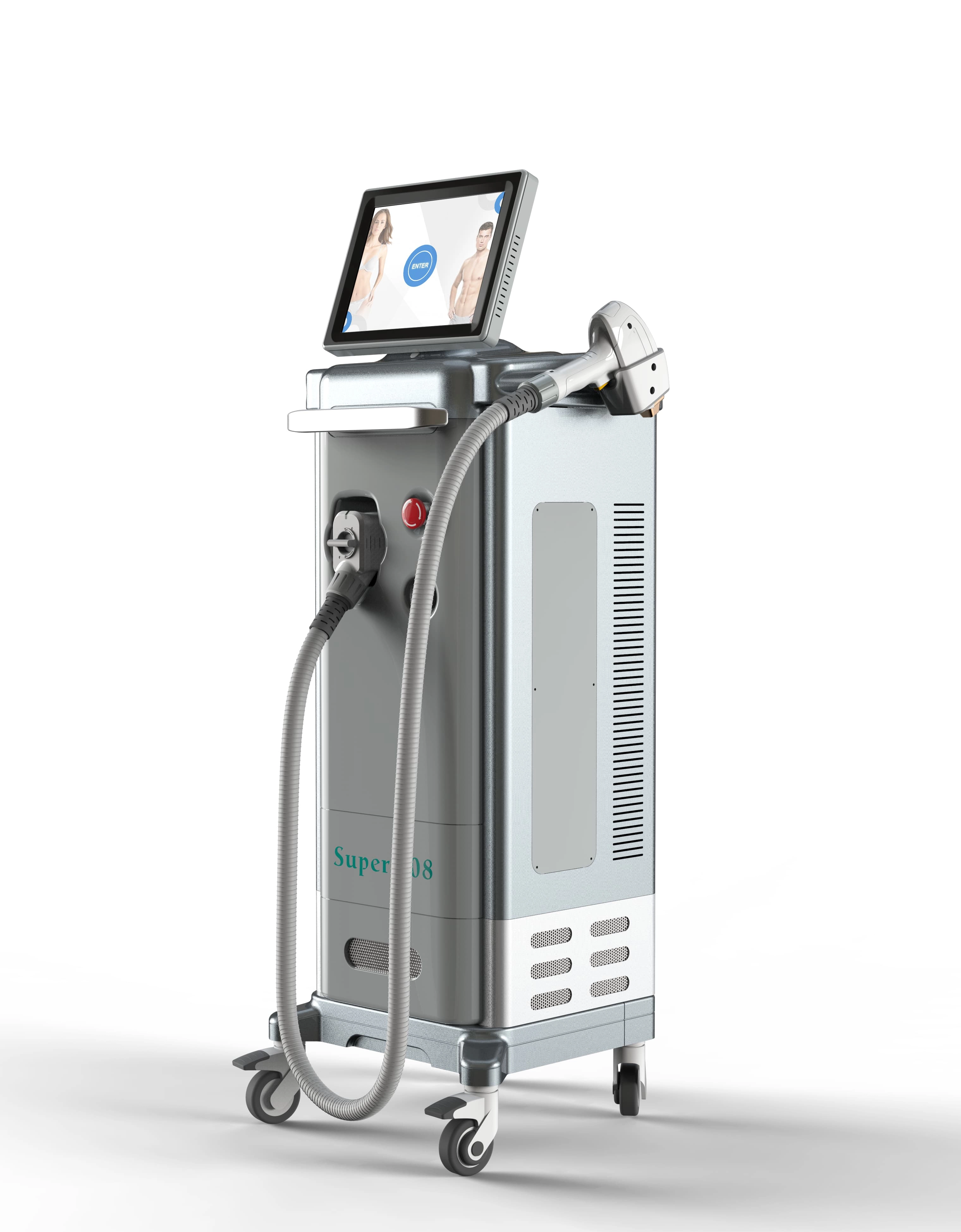
Sistema de depilación permanente Super 808 nm: máquina de depilación láser de diodo de 3 longitudes de onda: 755 nm, 808 nm y 1064 nm
elMáquina de depilación láser de diodo con 3 longitudes de onda: 755 nm, 808 nm y 1064 nmDiseñado para clínicas profesionales, spas médicos y centros de dermatología que buscan la tecnología de depilación más efectiva y cómoda.
Este sistema integraDepilación permanente Super 808nmTecnología con triple longitud de onda, que garantiza resultados seguros, rápidos y duraderos para todos los tonos de piel y tipos de cabello.
Con avanzadorefrigeración de zafiro, salida láser de alta potencia y ajustes preestablecidos de tratamiento inteligentes, el dispositivo proporciona tratamientos indoloros y eficientes con un tiempo de inactividad mínimo.
Ya sea que esté tratando vello facial fino, vello corporal grueso o folículos pilosos más profundos, esta máquina láser de diodo ofrece resultados excepcionales con confiabilidad de grado clínico.
Obtenga más información
Si tiene algún comentario o buena sugerencia, déjenos un mensaje; nuestro personal profesional se comunicará con usted lo antes posible.
Hablemos
Manténgase en contacto con nosotros para obtener soluciones de belleza de vanguardia, orientación profesional y un servicio personalizado.
Contacto


Sala 307, Edificio A, Parque Industrial de Comercio Electrónico Internacional Huilong, n.° 10, Xipengling Road, Helong Street, distrito de Baiyun, Cantón, China
© 2025 HUIMAIN. Todos los derechos reservados.política de privacidad|Términos y condiciones|Mapa del sitio
Facebook
Instagram
Fábrica de equipos de belleza médica
Fábrica de equipos de belleza médica Huimain
proveedor de máquinas de belleza
WhatsApp: +8619124004543