


Cumplimiento normativo de las máquinas de plasma frío por región
- Panorama regulatorio global para dispositivos de plasma estético
- Por qué es importante la clasificación
- Normas internacionales clave que informan el cumplimiento
- Requisitos regulatorios regionales: panorama comparativo
- Interpretación de la clasificación según el uso previsto
- Implicaciones prácticas de cumplimiento
- Ruta regulatoria: lista de verificación paso a paso para fabricantes
- 1. Definir el uso previsto y los mercados objetivo
- 2. Realizar análisis de brechas de estándares y gestión de riesgos
- 3. Elaborar el expediente técnico/dossier de diseño
- 4. Implementar un SGC y pruebas previas a la comercialización
- 5. Interactuar con los organismos notificados/reguladores desde el principio
- 6. Planificar las obligaciones posteriores a la comercialización
- Evidencia clínica, pruebas y dificultades típicas
- Qué esperan los reguladores de los datos clínicos
- Errores comunes y cómo evitarlos
- Consideraciones sobre plazos y costes
- Estrategias prácticas para la entrada al mercado multirregional
- Secuencia recomendada de entrada al mercado
- Asociación, fabricación por contrato y representación local
- Etiquetado, instrucciones de uso y gestión de reclamaciones
- Cómo Guangzhou Huimain Technology apoya el cumplimiento global
- Fortalezas en I+D, fabricación y cumplimiento
- Líneas de productos y ventajas competitivas
- Cómo Huimain puede ayudar a las vías regulatorias
- Preguntas frecuentes
- 1. ¿Todas las máquinas de plasma frío están reguladas como dispositivos médicos?
- 2. ¿Qué estándares internacionales debo priorizar?
- 3. ¿Cuántos datos clínicos se necesitan?
- 4. ¿Puede la certificación CE acelerar el acceso a otros mercados?
- 5. ¿Cuáles son las obligaciones comunes posteriores a la comercialización?
- 6. ¿Cómo puedo reducir el tiempo de comercialización?
- Contacto y consultas sobre productos
- Referencias
Panorama regulatorio global para dispositivos de plasma estético
Las máquinas de plasma frío se encuentran en la intersección de los tratamientos estéticos y la regulación de los dispositivos médicos. Ya sea que se comercialicen para la cicatrización de heridas, el rejuvenecimiento de la piel o con fines cosméticos, su proceso regulatorio depende del uso previsto, el perfil de riesgo, el diseño del dispositivo y las reivindicaciones. Esta sección ofrece una breve comparación regional y sus implicaciones prácticas para fabricantes y distribuidores.
Por qué es importante la clasificación
La clasificación regulatoria determina la vía de evaluación de la conformidad, la profundidad de la documentación, las expectativas de evidencia clínica y las obligaciones poscomercialización. Un dispositivo etiquetado para tratamiento médico casi siempre está sujeto a controles más estrictos que uno presentado exclusivamente para uso cosmético, no terapéutico.
Normas internacionales clave que informan el cumplimiento
Los fabricantes suelen tener que demostrar el cumplimiento de normas de calidad y seguridad como ISO 13485 (SGC), ISO 14971 (gestión de riesgos), IEC 60601 (seguridad eléctrica para equipos electromédicos), IEC 62304 (ciclo de vida del software para dispositivos médicos) y las normas de compatibilidad electromagnética (CEM) pertinentes (p. ej., IEC 60601-1-2). Estas normas suelen ser solicitadas por organismos reguladores y notificados.
Requisitos regulatorios regionales: panorama comparativo
A continuación se presenta una comparación concisa de los principales regímenes regulatorios. Utilice la tabla como lista de verificación inicial; las obligaciones detalladas dependen de las especificaciones y las reivindicaciones del dispositivo.
| Región | Regulador | Clasificación típica | Requisitos clave | Cronología típica |
|---|---|---|---|---|
| Estados Unidos | Administración de Alimentos y Medicamentos (CDRH) | Clase II (510(k)) o Clase II/III (De Novo/PMA) según el riesgo y las reclamaciones | Presentación 510(k) o De Novo/PMA; pueden requerirse datos clínicos; QMS (21 CFR 820); etiquetado; informes de MDV | 6 a 18 meses (510(k) más rápido; PMA más largo) |
| unión Europea | MDR (UE 2017/745), Organismos notificados | Clase IIa/IIb/III según el uso previsto y la invasividad | Evaluación de la conformidad mediante organismo notificado, expediente técnico, evaluación/informe clínico (MDR), ISO 13485, vigilancia poscomercialización | 3 a 12 meses o más según la capacidad y la clase del NB |
| Reino Unido | MHRA (UKCA) | Similar a la transición posterior al MDR de la UE; se requiere el marcado UKCA | Evaluación de conformidad con las normas del Reino Unido; existen disposiciones transitorias para los titulares de la CE de la UE | Varía; similar a la UE |
| Porcelana | NMPA (anteriormente CFDA) | Clase II/III para dispositivos médicos; vía cosmética no médica para reivindicaciones no terapéuticas | Expediente de registro (documentación técnica), pruebas locales, evaluación clínica; pruebas del dispositivo en laboratorios designados por la NMPA; a menudo se requiere un agente local | 6–18 meses |
| Australia | TGA | Clase IIa/IIb/III | Evaluación de conformidad, inclusión en ARTG, evidencia clínica, QMS; puede depender de evidencia CE/FDA para algunas rutas | 3–12 meses |
| Canadá | Salud Canadá | Clase II/III/IV | Licencia (MDL), evidencia de seguridad/eficacia, QMS; la Clase II a menudo requiere solo licencia del dispositivo | 3–12 meses |
| Japón | PMDA / MHLW | Clase II/III/IV | Vías de aprobación o certificación; a menudo se requieren datos clínicos locales; expediente en japonés | 6–18 meses |
| Corea | MFDS | Clase II/III/IV | Dossier técnico, pruebas de rendimiento locales, posibles datos clínicos; etiquetado coreano | 6–12 meses |
Las fuentes y los requisitos específicos pueden cambiar; verifique siempre con los reguladores locales o un consultor regulatorio para su dispositivo y sus reclamos.
Interpretación de la clasificación según el uso previsto
Ejemplos: Si un dispositivo de plasma frío afirma tener propiedades cicatrizantes o bactericidas, los organismos reguladores podrían considerarlo un dispositivo médico con una clasificación superior. Si solo afirma tener efectos cosméticos en la superficie de la piel sin afirmaciones terapéuticas, podría regularse como un dispositivo cosmético o de bajo riesgo en algunos mercados. Sin embargo, los fabricantes deben asegurarse de que las afirmaciones, el etiquetado y los materiales de marketing reflejen dicha clasificación para evitar medidas de control.
Implicaciones prácticas de cumplimiento
Clasificación más alta → evidencia clínica más sólida, sistema de fabricación regulado y mayor tiempo de comercialización. Inicie la determinación de la clasificación con anticipación y planifique los programas clínicos y de pruebas en consecuencia.
Ruta regulatoria: lista de verificación paso a paso para fabricantes
A continuación se muestra una hoja de ruta práctica y viable para preparar una máquina de plasma frío para los mercados internacionales.
1. Definir el uso previsto y los mercados objetivo
Mapee las afirmaciones (terapéuticas vs. cosméticas), el usuario (profesional vs. doméstico), los países de destino y los canales de distribución. Esto determina las regulaciones y estándares aplicables.
2. Realizar análisis de brechas de estándares y gestión de riesgos
Realice un análisis de riesgos basado en la norma ISO 14971 e identifique las normas aplicables (serie IEC 60601, compatibilidad electromagnética, biocompatibilidad ISO 10993 si hay contacto con tejidos, normas de software si existe software de control). Cree un plan de remediación de deficiencias.
3. Elaborar el expediente técnico/dossier de diseño
Incluya la descripción del dispositivo, los planos de diseño, el expediente de gestión de riesgos, los informes de verificación/validación, los informes de pruebas eléctricas y de compatibilidad electromagnética (EMC), los estudios de usabilidad/factores humanos y la evidencia clínica. Para la UE, prepare un informe de evaluación clínica según el Anexo XIV del MDR.
4. Implementar un SGC y pruebas previas a la comercialización
Los reguladores y organismos notificados suelen solicitar un SGC conforme a la norma ISO 13485. Realice pruebas de biocompatibilidad, seguridad eléctrica, compatibilidad electromagnética (CEM) y rendimiento en laboratorios acreditados. Documente la trazabilidad y los controles de los proveedores.
5. Interactuar con los organismos notificados/reguladores desde el principio
En el caso de la UE/Reino Unido, las reuniones previas a la presentación con los organismos notificados pueden agilizar la revisión. En el caso de la FDA, una reunión previa a la presentación (Pre-Sub) puede aclarar las expectativas sobre los datos. En el caso de China, es necesario planificar con antelación los requisitos locales de pruebas y registro.
6. Planificar las obligaciones posteriores a la comercialización
Establecer sistemas de vigilancia (Información sobre Dispositivos Médicos MDR/EE. UU.), seguimiento clínico poscomercialización (PMCF) para la UE, gestión de quejas y procedimientos de retirada de productos. Determinar la representación local y las traducciones del etiquetado.
Evidencia clínica, pruebas y dificultades típicas
La evidencia clínica y de rendimiento suele ser el factor decisivo entre la aprobación y el rechazo. Esta sección destaca lo que los organismos reguladores suelen buscar y los errores frecuentes.
Qué esperan los reguladores de los datos clínicos
Se esperan estudios controlados en humanos que demuestren la seguridad y el efecto previsto, en consonancia con las afirmaciones. Para afirmaciones cosméticas de bajo riesgo, la evidencia de laboratorio y la bibliografía a veces pueden ser suficientes, pero las autoridades exigen cada vez más datos de seguridad en condiciones reales, especialmente para dispositivos basados en energía.
Errores comunes y cómo evitarlos
- Subestimación de la clasificación: busque orientación formal lo antes posible.
- Afirmaciones y evidencia mal alineadas: asegúrese de que las afirmaciones reflejen el nivel de evidencia disponible.
- Pruebas insuficientes: las pruebas de EMC, de corriente de fuga y de biocompatibilidad con frecuencia causan demoras.
- Errores de idioma y etiquetado: traduzca correctamente las etiquetas y las instrucciones de uso e incluya los símbolos requeridos por la normativa.
Consideraciones sobre plazos y costes
Los costos varían considerablemente según el tipo de dispositivo, las necesidades de prueba y los ensayos clínicos. Los desembolsos típicos incluyen honorarios de laboratorio (de varios miles a decenas de miles de dólares estadounidenses), honorarios de presentación ante organismos notificados o autoridades regulatorias, y presupuestos de estudios clínicos (de decenas a cientos de miles de dólares estadounidenses). Prevea un tiempo de contingencia para las iteraciones solicitadas por las autoridades regulatorias.
Estrategias prácticas para la entrada al mercado multirregional
Los fabricantes que buscan escalar a nivel internacional deberían considerar enfoques armonizados y una entrada al mercado por etapas.
Secuencia recomendada de entrada al mercado
- Comience con los mercados que se alinean con su nivel de evidencia (por ejemplo, los mercados que aceptan CE como base pueden ser más rápidos).
- Utilice la norma CE/ISO 13485 como palanca para otros mercados (por ejemplo, Australia y Canadá aceptan evidencia de jurisdicciones reconocidas).
- Planificar los requisitos de pruebas y traducción locales para los mercados de APAC (China, Japón, Corea).
Asociación, fabricación por contrato y representación local
Seleccione socios de fabricación con sistemas ISO 13485 comprobados y un historial de dispositivos documentado y probado. Designe representantes autorizados o agentes locales cuando sea necesario (por ejemplo, Registro de la UE, agente de registro local en China, persona responsable del Reino Unido).
Etiquetado, instrucciones de uso y gestión de reclamaciones
Asegúrese de que las instrucciones de uso, los materiales promocionales y los sitios web coincidan con las afirmaciones aprobadas. Exagerar los beneficios terapéuticos es un factor frecuente en las acciones de control. Proporcione documentación de capacitación clara para los dispositivos profesionales y un etiquetado y seguridad rigurosos para los dispositivos de uso doméstico.
Cómo Guangzhou Huimain Technology apoya el cumplimiento global
Guangzhou Huimain Technology Co., Ltd. es una empresa de alta tecnología especializada en máquinas de belleza y máquinas de uso doméstico. La empresa se especializa en investigación y desarrollo, producción, ventas y servicio posventa. Huimain cuenta con unas instalaciones de 3000 m²; más del 20% de su personal tiene licenciatura y más del 40% tiene estudios universitarios de primer ciclo. La empresa cuenta con un sólido departamento de desarrollo técnico con ingenieros experimentados, expertos en ingeniería eléctrica, un departamento de compras profesional, un departamento de pruebas clínicas y un sólido equipo de servicio posventa.
Fortalezas en I+D, fabricación y cumplimiento
Con una sólida capacidad de I+D, Huimain invierte continuamente en el desarrollo de nuevos productos según la demanda del mercado. La empresa cuenta con la certificación CE y la aprobación de SGS, y ha obtenido varias patentes. Sus productos se venden a nivel mundial en China, el Sudeste Asiático, Oriente Medio, Europa y Norteamérica. Huimain se centra en la fabricación de equipos originales (OEM) y originales (ODM) para máquinas de belleza y medicina, con la capacidad de diseñar y producir unidades de alta calidad a medida para clientes de salones de belleza y clínicas.
Líneas de productos y ventajas competitivas
Productos clave: Máquina de criolipólisis, máquina de esculpido EMS, máquina de plasma, máquina de ondas de choque, máquina HIFU, máquina hidrofacial, máquina de cavitación al vacío, depilación láser, máquina de eliminación de tatuajes, máquina de microagujas. Huimain prioriza la innovación tecnológica, los precios competitivos, el control de calidad y la cooperación beneficiosa para ambas partes. Para los fabricantes que buscan socios que ya dominen las pruebas CE, SGS y los diseños patentados, Huimain ofrece soporte integral desde el diseño hasta el servicio posventa.
Cómo Huimain puede ayudar a las vías regulatorias
El departamento de pruebas clínicas de Huimain y sus ingenieros experimentados pueden respaldar las pruebas de rendimiento, la documentación de archivos técnicos y el rediseño iterativo para cumplir con las normas IEC/ISO. Su experiencia con CE y SGS ayuda a acelerar la evaluación de la conformidad, mientras que las capacidades OEM/ODM permiten un etiquetado personalizado, instrucciones de uso y la localización de idiomas para cumplir con los requisitos regionales.
Preguntas frecuentes
1. ¿Todas las máquinas de plasma frío están reguladas como dispositivos médicos?
No siempre. La clasificación depende del uso previsto y las reivindicaciones. Los dispositivos que afirman tener efectos terapéuticos (p. ej., cicatrización de heridas, control de infecciones) suelen considerarse dispositivos médicos. Los dispositivos con afirmaciones puramente cosméticas sin intención médica pueden estar regulados como cosméticos o dispositivos de bajo riesgo en algunas jurisdicciones, pero los fabricantes deben armonizar las reivindicaciones con la evidencia que las respalda.
2. ¿Qué estándares internacionales debo priorizar?
Comience con las normas ISO 13485 (SGC), ISO 14971 (gestión de riesgos), IEC 60601 (seguridad eléctrica), IEC 62304 (software) e ISO 10993 para biocompatibilidad, cuando corresponda. Estas normas son comúnmente requeridas o esperadas por los organismos reguladores y notificados.
3. ¿Cuántos datos clínicos se necesitan?
Depende de la clase de riesgo y las reivindicaciones. Para reivindicaciones médicas, podrían requerirse ensayos clínicos de alto nivel o estudios controlados. Para reivindicaciones cosméticas de bajo riesgo, podrían ser suficientes las pruebas de laboratorio, la bibliografía y los datos de seguridad en condiciones reales. Siempre consulte las expectativas con el organismo regulador o notificado de destino.
4. ¿Puede la certificación CE acelerar el acceso a otros mercados?
Sí. Las normas CE (MDR) e ISO 13485 están reconocidas por numerosos organismos reguladores y pueden aplicarse en mercados como Australia y Canadá, lo que reduce la duplicación. Sin embargo, mercados como China, Japón y EE. UU. tienen requisitos adicionales y específicos.
5. ¿Cuáles son las obligaciones comunes posteriores a la comercialización?
Se prevén sistemas de vigilancia para la notificación de eventos adversos, actualizaciones periódicas de seguridad (p. ej., EU PMS/PMCF), gestión de quejas, retiradas de productos del mercado y seguimiento de dispositivos para algunas clases. Mantener un sistema de respuesta a incidentes y acciones correctivas.
6. ¿Cómo puedo reducir el tiempo de comercialización?
Planifique la estrategia regulatoria con anticipación, alinee las reclamaciones con su evidencia, utilice estándares armonizados, involucre a los organismos/reguladores notificados de manera temprana y aproveche las certificaciones existentes (ISO 13485, CE) como base para otros mercados.
Contacto y consultas sobre productos
Para consultas regulatorias, asociaciones OEM/ODM o para ver las especificaciones de productos (criolipólisis, escultura EMS, plasma, ondas de choque, HIFU, hidrofacial, vacío de cavitación, eliminación de láser/tatuajes, máquinas de microagujas), comuníquese con Guangzhou Huimain Technology Co., Ltd. Nuestro equipo puede ayudar a evaluar las rutas regulatorias, preparar archivos técnicos y respaldar las pruebas de rendimiento y la localización.
Referencias
- Administración de Alimentos y Medicamentos de los Estados Unidos (FDA) – Dispositivos médicos. https://www.fda.gov/medical-devices (consultado el 10/01/2026)
- Parlamento Europeo y del Consejo – Reglamento (UE) 2017/745 (MDR). https://eur-lex.europa.eu/eli/reg/2017/745/oj (consultado el 10/01/2026)
- MHRA (Reino Unido) – Dispositivos médicos: orientación y regulación. https://www.gov.uk/government/organisations/medicines-and-healthcare-products-regulatory-agency (consultado el 10/01/2026)
- NMPA (Administración Nacional de Productos Médicos de China). http://www.nmpa.gov.cn/ (consultado el 10 de enero de 2026)
- Administración de Productos Terapéuticos (TGA) – Australia. https://www.tga.gov.au/ (consultado el 10/01/2026)
- Salud Canadá – Dispositivos médicos. https://www.canada.ca/en/health-canada/services/drugs-health-products/medical-devices. (Consultado el 10/01/2026)
- Agencia de Productos Farmacéuticos y Dispositivos Médicos (PMDA) – Japón. https://www.pmda.go.jp/english/ (consultado el 10/01/2026)
- Ministerio de Seguridad de Alimentos y Medicamentos (MFDS) – Corea. https://www.mfds.go.kr/eng/index.do (consultado el 10/01/2026)
- ISO 13485 — Dispositivos médicos — Sistemas de gestión de calidad. https://www.iso.org/standard/59752. (Consultado el 10/01/2026)
- ISO 14971 — Dispositivos médicos — Gestión de riesgos. https://www.iso.org/standard/72704. (Consultado el 10/01/2026)
- Serie IEC 60601 — Normas de seguridad para equipos electromédicos (Comisión Electrotécnica Internacional). https://www.iec.ch/ (consultado el 10/01/2026)
Máquina para esculpir EMS-落地页
¿Esta máquina de escultura EMS es adecuada para clínicas o distribuidores?
Sí. Nuestra serie de máquinas de esculpido EMS está diseñada específicamente para clientes B2B, incluyendo clínicas estéticas, centros de belleza y distribuidores. Ofrecemos tanto el uso directo en clínicas como la colaboración a largo plazo en la distribución.
Onda B71台式冷波塑形仪
¿Duele el tratamiento?
Los tratamientos son generalmente cómodos, con sólo una leve sensación de calor durante la administración de energía.
OL-186
¿Cuál es la vida útil de las piezas de mano?
Con un mantenimiento adecuado, las piezas de mano pueden durar más de 2 años de uso continuo.
ultrahra超声刀
¿Cuánto duran los resultados?
Los resultados pueden durar12–18 meses, dependiendo de las condiciones individuales de la piel y los factores del estilo de vida.
7D
¿Cuál es el principio fundamental del aparato de ultrasonido 7D?
La máquina utiliza energía ultrasónica focalizada para crear puntos de coagulación térmica a profundidades específicas de la piel. Este proceso de calentamiento controlado estimula la respuesta curativa natural del cuerpo, lo que conlleva la producción de nuevo colágeno y elastina, dando como resultado un efecto tensor y reafirmante en la piel.

Máquina de plasma frío de escritorio para el cuidado de la piel | Dispositivo facial profesional de iones fríos para el acné y el rejuvenecimiento de la piel
ElDispositivo de plasma frío para la pieles un profesionalmáquina facial de plasma fríoDiseñado para purificar, sanar y rejuvenecer profundamente la piel. Utilizando innovadores...tecnología de plasma fríoEste dispositivo elimina eficazmente las bacterias que causan el acné, promueve la regeneración celular y reduce la inflamación; todo ello de forma completamente no invasiva e indolora.
Estemáquina de plasma fríoEs ideal para salones de belleza, spas médicos y clínicas de cuidado de la piel que buscan ofrecer tratamientos faciales de alta calidad, como eliminación de acné, antienvejecimiento, esterilización cutánea y recuperación post-láser. Es apto para todo tipo de piel, ayudando a los clientes a lograr una piel más suave, luminosa y saludable.
Eldispositivo de belleza de plasma fríoCombina energía de plasma ionizado avanzada con tecnología de control inteligente para brindar resultados rápidos, seguros y visibles en la piel.

Máquina láser fraccional de CO2: dispositivo profesional para la eliminación de arrugas y el rejuvenecimiento de la piel
El equipo láser fraccional de CO2 es un dispositivo estético multifuncional diseñado para clínicas profesionales y salones de belleza. Gracias a su avanzada tecnología láser fraccional de CO2, trata eficazmente cicatrices de acné, pecas, pigmentación, nevos y arrugas profundas. Además, proporciona rejuvenecimiento cutáneo no invasivo, reafirmación vaginal y embellecimiento íntimo. Este equipo láser de CO2 profesional combina precisión, seguridad y una potente energía para ofrecer resultados antienvejecimiento y dermatológicos excepcionales.
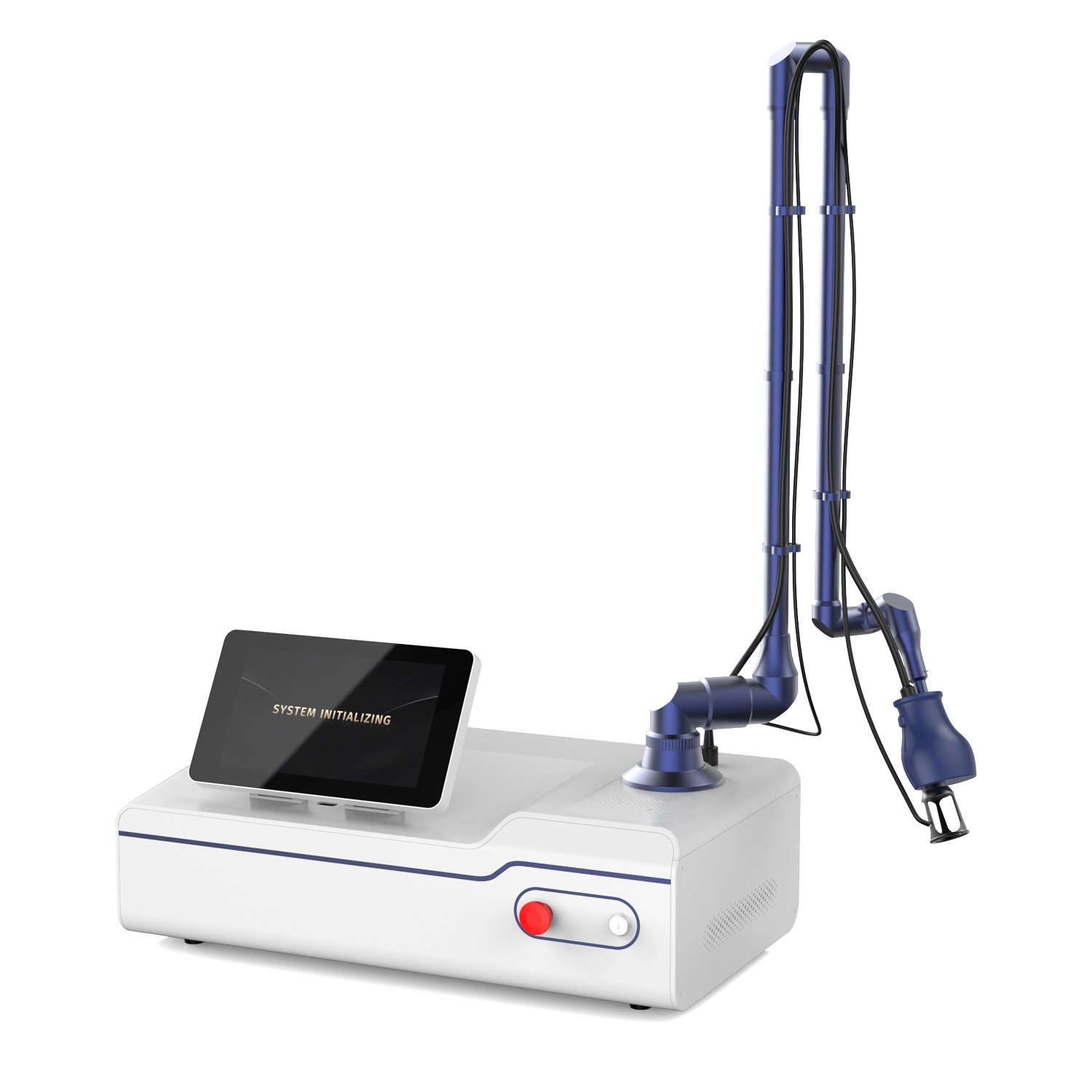
Láser fraccional de CO2 | Sistema de rejuvenecimiento vaginal íntimo
Esta **Máquina Láser Fraccionada de CO2** utiliza tecnología avanzada de láser fraccional de CO2 de 10600 nm para crear microzonas térmicas controladas en la mucosa vaginal y las capas íntimas de la piel. Estas microcolumnas estimulan la regeneración de colágeno y la remodelación tisular, mejorando eficazmente la firmeza y elasticidad vaginal, así como la salud íntima en general.
Diseñado específicamente para aplicaciones profesionales de medicina estética y bienestar íntimo, este equipo láser fraccional de CO2 cuenta con un control inteligente de parámetros y una salida de energía de alta precisión para garantizar resultados de tratamiento seguros, cómodos y consistentes. Es un dispositivo esencial ideal para el rejuvenecimiento vaginal, la recuperación posparto y los tratamientos antienvejecimiento íntimo.
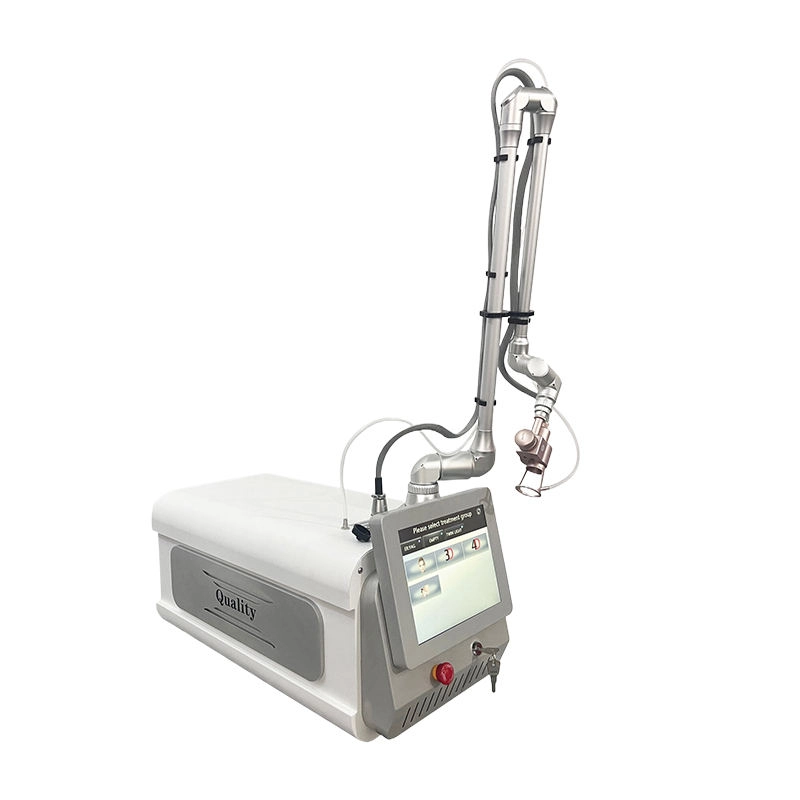
Láser fraccional de CO2 profesional | Sistema láser de CO2 para rejuvenecimiento vaginal y fraccional
Elmáquina láser fraccionada de CO2Es un dispositivo médico profesional diseñado para el rejuvenecimiento profundo de la piel, la reducción de arrugas, la reparación de cicatrices y el rejuvenecimiento vaginal. Mediante un rayo láser de CO2 fraccionado de 10600 nm, crea microcolumnas térmicas en la piel para estimular la regeneración del colágeno y acelerar la cicatrización.
Esta máquina láser fraccional de CO2 ofrece múltiples modos de tratamiento, incluido el modo fraccional, el modo de corte quirúrgico y el modo de ajuste vaginal opcional, lo que la hace ideal para clínicas de dermatología y centros de belleza profesionales que buscan soluciones láser avanzadas.
Su alta precisión, tamaño de punto ajustable, salida de energía estable y brazo articulado de siete articulaciones garantizan resultados de tratamiento seguros, precisos y efectivos con un tiempo de inactividad mínimo.
Obtenga más información
Si tiene algún comentario o buena sugerencia, déjenos un mensaje; nuestro personal profesional se comunicará con usted lo antes posible.
Hablemos
Manténgase en contacto con nosotros para obtener soluciones de belleza de vanguardia, orientación profesional y un servicio personalizado.
Contacto


Sala 307, Edificio A, Parque Industrial de Comercio Electrónico Internacional Huilong, n.° 10, Xipengling Road, Helong Street, distrito de Baiyun, Cantón, China
© 2025 HUIMAIN. Todos los derechos reservados.política de privacidad|Términos y condiciones|Mapa del sitio
Facebook
Instagram
Fábrica de equipos de belleza médica
Fábrica de equipos de belleza médica Huimain
proveedor de máquinas de belleza
WhatsApp: +8619124004543