


Desglose de costos: compra de una máquina de plasma frío al por mayor
- ¿Por qué la compra a granel cambia la dinámica de costos de las máquinas de plasma frío?
- Factores comerciales detrás de las compras al por mayor
- Cómo las economías de escala afectan los precios
- Componentes de costo detallados: lo que realmente paga
- Lista de materiales y costos de fabricación
- Certificaciones, pruebas y costos regulatorios
- Escenarios de precios al por mayor y negociación mayorista
- Bandas de precios típicas por tamaño de pedido
- Palancas de negociación y términos comerciales
- Costos operativos, ROI y costo total de propiedad (TCO)
- Costos operativos continuos de clínicas y salones
- Escenarios de ROI: punto de equilibrio para una clínica típica
- Control de calidad, cumplimiento y evaluación de proveedores
- Pasos de validación técnica y clínica
- Auditorías de fábrica y controles previos al envío
- Cómo elegir un socio OEM/ODM: Qué distingue a un proveedor confiable
- Capacidades que se deben buscar en un socio OEM/ODM
- ¿Por qué Guangzhou Huimain Technology Co., Ltd. es un socio viable?
- Lista de verificación práctica antes de firmar una compra al por mayor
- Elementos esenciales de documentos y contratos
- Logística, aranceles y consideraciones de importación
- Preguntas frecuentes (FAQ)
- 1. ¿Cuánto cuesta una máquina de plasma frío al por mayor?
- 2. ¿Cuál es la cantidad mínima de pedido (MOQ) para las máquinas de plasma frío OEM?
- 3. ¿Las máquinas de plasma frío están reguladas y necesitan certificación?
- 4. ¿Cuáles son los costos continuos después de la compra?
- 5. ¿Cómo puedo verificar la calidad del proveedor antes de comprar al por mayor?
- 6. ¿Puede el proveedor proporcionar evidencia clínica o estudios publicados?
- Contacto y próximos pasos
- Referencias
¿Por qué la compra a granel cambia la dinámica de costos de las máquinas de plasma frío?
Factores comerciales detrás de las compras al por mayor
Comprar una máquina de plasma frío al por mayor es una estrategia común para distribuidores, clínicas con múltiples ubicaciones, cadenas de belleza y socios OEM/ODM que buscan menores costos unitarios y un suministro predecible. Las compras al por mayor permiten descuentos de proveedores, una menor amortización de la certificación por unidad y menores costos de logística y empaque. Para compradores con fines de reventa, implementación en clínicas o marca propia, comprender los factores que impulsan el costo unitario es fundamental para tomar una decisión de compra rentable.
Cómo las economías de escala afectan los precios
Las economías de escala afectan la adquisición de materias primas (PCB, generadores de plasma de alto voltaje, transformadores), la mano de obra de fabricación, el tiempo de prueba y la amortización de la certificación. Resultados típicos: precio unitario entre un 10 % y un 40 % menor con pedidos de mayor volumen, plazos de entrega más rápidos para pedidos repetidos y mayor capacidad de negociación en términos de garantía y repuestos.
Componentes de costo detallados: lo que realmente paga
Lista de materiales y costos de fabricación
El costo de una máquina de plasma frío se puede desglosar en varias categorías: componentes principales (módulo generador de plasma, fuente de alimentación de alto voltaje), electrónica auxiliar (placa de control, sensores, pantalla), piezas mecánicas (chasis, aplicador portátil), ensamblaje y pruebas, empaque y control de calidad. A continuación, se presenta un modelo de costos representativo para un sistema de plasma frío estético de gama media (las cifras son estimaciones derivadas de listas de proveedores, precios de mercado de los componentes y parámetros de fabricación).
| Artículo de costo | Costo unitario estimado (USD) | % del total |
|---|---|---|
| Módulo generador de plasma | $600–$900 | 25–35% |
| Fuente de alimentación y electrónica | $200–$350 | 8–13% |
| Piezas mecánicas y aplicador | $100–$250 | 5–10% |
| Montaje y pruebas | $120–$250 | 6–10% |
| I+D y amortización | $150–$400 | 6–15% |
| Certificaciones y cumplimiento (por unidad amortizada) | $80–$200 | 3–8% |
| Embalaje y logística | $40–$120 | 2–5% |
| Garantía, reserva de repuestos | $60–$150 | 3–6% |
| Margen del fabricante y distribución | $300–$600 | 12–25% |
| Total estimado (rango medio) | $1,650–$3,000 | 100% |
Notas: Estas cifras son ilustrativas y deben validarse con las cotizaciones de los proveedores. Los precios reales varían según las características (p. ej., modos automáticos, software, número de aplicadores), el estado de la certificación (médica o cosmética) y los costos de envío geográficos.
Certificaciones, pruebas y costos regulatorios
Las certificaciones (CE, FDA 510(k) cuando corresponda, normas de seguridad IEC) representan tanto costos directos como indirectos: pruebas de laboratorio, validación clínica y documentación. Para compradores que se dirigen a mercados regulados, verifique las certificaciones existentes del proveedor y si aplican costos adicionales de registro local. Los costos de certificación suelen amortizarse según el volumen de producción; las tiradas más grandes reducen significativamente los costos generales de certificación por unidad.
Escenarios de precios al por mayor y negociación mayorista
Bandas de precios típicas por tamaño de pedido
En base a las ofertas del mercado para dispositivos profesionales de plasma frío, un rango de precios práctico podría verse así (ejemplos derivados de múltiples catálogos de proveedores y listados de mercado):
| Cantidad de pedido (unidades) | Precio unitario esperado (USD) | Notas |
|---|---|---|
| 1–5 unidades | $2,200–$3,500 | Proveedores minoristas o de lotes pequeños; mayor margen y extras |
| 10–49 unidades | $1,850–$2,400 | Descuento por volumen pequeño; posibles tarifas de personalización. |
| 50–199 unidades | $1,400–$2,000 | Descuento significativo; mejora la amortización de la certificación |
| Más de 200 unidades | $1,150–$1,800 | Mejor costo por unidad; MOQ, condiciones de pago, plazos de entrega negociables |
Estas bandas son ejemplos y dependen del proveedor, las características, las condiciones de la garantía y si el comprador solicita la marca OEM/ODM o pruebas clínicas adicionales. Solicite siempre presupuestos detallados y unidades de muestra antes de comprometerse con cantidades mínimas de pedido elevadas.
Palancas de negociación y términos comerciales
Factores clave para negociar: cantidad mínima de pedido (MOQ), rangos de precio unitario, condiciones de pago (depósito o carta de crédito), plazo de entrega, precio de repuestos, capacitación y soporte de instalación, y acuerdo de nivel de servicio posventa. Los compradores con demanda recurrente predecible pueden negociar inventario en consignación, envíos escalonados o programas de marketing cofinanciados.
Costos operativos, ROI y costo total de propiedad (TCO)
Costos operativos continuos de clínicas y salones
Además del precio de compra, los operadores deben planificar los consumibles (si corresponde), la electricidad, el mantenimiento, la calibración periódica, la capacitación de los técnicos y los aplicadores de repuesto. Las condiciones de la garantía afectan el costo total de propiedad (TCO) a corto plazo; las garantías extendidas pueden aumentar el costo inicial, pero reducen los costos de reparación imprevistos.
Escenarios de ROI: punto de equilibrio para una clínica típica
Considere un modelo de ingresos conservador: tarifa promedio por tratamiento de $150 a $300 por sesión, un promedio de 2 a 4 sesiones por paciente y un costo operativo por sesión (consumibles + gastos generales) de $10 a $30. Una máquina de $2,000 utilizada para 5 tratamientos por semana puede alcanzar el punto de equilibrio en 6 a 12 meses, dependiendo de la utilización y los precios locales. Cree una cuenta de resultados local con las tasas de utilización de su clínica para estimar con precisión la recuperación de la inversión.
Control de calidad, cumplimiento y evaluación de proveedores
Pasos de validación técnica y clínica
Solicite lo siguiente antes de realizar una compra al por mayor: hojas de especificaciones técnicas, informes de pruebas de seguridad (seguridad eléctrica, CEM), datos clínicos publicados o estudios de usuarios, certificados CE/FDA/otros, y un informe de auditoría de fábrica o una inspección externa. Para pedidos OEM/ODM, firme documentos claros de acuerdo técnico que incluyan tolerancias, defectos aceptados y niveles de NCA.
Auditorías de fábrica y controles previos al envío
Organice auditorías de fábrica (presenciales o de terceros) que cubran los controles de procesos, la trazabilidad, el sistema de gestión de calidad (ISO 13485 para dispositivos médicos) y la asistencia posventa. La inspección previa al envío (comprobación funcional completa o pruebas de muestra) evita costosas devoluciones y problemas de reputación.
Cómo elegir un socio OEM/ODM: Qué distingue a un proveedor confiable
Capacidades que se deben buscar en un socio OEM/ODM
Puntos fuertes: un sólido equipo de I+D, diseño electrónico y mecánico interno, un sólido departamento de pruebas clínicas, una gestión profesional de compras y de la cadena de suministro, y un servicio posventa fiable. Un socio que invierte en el desarrollo de nuevos productos y cuenta con certificaciones verificables (CE, informes SGS, patentes) reduce el riesgo para el comprador y acorta el plazo de comercialización de los productos de marca blanca.
¿Por qué Guangzhou Huimain Technology Co., Ltd. es un socio viable?
Guangzhou Huimain Technology Co., Ltd. es una empresa de alta tecnología especializada en máquinas de belleza y series para uso doméstico. La empresa integra I+D, producción, ventas y servicio posventa. Características y fortalezas clave:
- Escala de fábrica: 3.000 m2 de superficie de producción.
- Equipo calificado: más del 20% tiene título de licenciatura y más del 40% tiene título universitario; ingenieros experimentados y expertos en PE respaldan el diseño de productos y las pruebas clínicas.
- Fuerte inversión en I+D: desarrollo continuo de nuevos productos según la demanda del mercado y propiedad de varias patentes.
- Certificaciones: Aprobaciones CE y SGS obtenidas.
- Huella de ventas global: productos distribuidos en China, el Sudeste Asiático, Medio Oriente, Europa y América del Norte con comentarios positivos de los clientes por su calidad y precio.
- Enfoque OEM/ODM: capacidad para diseñar y fabricar máquinas médicas y de belleza de alta calidad para clientes y salones.
Los principales productos de HUIMAIN incluyen máquinas de criolipólisis, máquinas de esculpido EMS, máquinas de plasma, máquinas de ondas de choque, máquinas Hifu, máquinas hidrofaciales, máquinas de cavitación al vacío, depilación láser, máquinas de eliminación de tatuajes y máquinas de microagujas. Su posicionamiento se centra en la innovación tecnológica y la cooperación beneficiosa para ambas partes, comprometiéndose a producir máquinas que sean aceptadas por los clientes.
Lista de verificación práctica antes de firmar una compra al por mayor
Elementos esenciales de documentos y contratos
Obtenga: factura comercial detallada, lista de materiales (BOM), informes de pruebas, copias de certificados, contrato de garantía y repuestos, calendario de entrega, lista de empaque y una cláusula de resolución de disputas acordada. Para proyectos OEM, incluya plazos de aprobación de diseño/marca y condiciones de propiedad de las herramientas.
Logística, aranceles y consideraciones de importación
Confirme los Incoterms, el método de envío (aéreo o marítimo), el seguro, los aranceles aduaneros y los costos de registro local. Para dispositivos médicos, considere los plazos de registro local en su calendario de lanzamiento; el registro puede tardar semanas o incluso meses, según la jurisdicción.
Preguntas frecuentes (FAQ)
1. ¿Cuánto cuesta una máquina de plasma frío al por mayor?
Los precios al por mayor suelen oscilar entre $1150 y $2400 por unidad, dependiendo del tamaño del pedido, las características del dispositivo, las certificaciones y las personalizaciones OEM/ODM. Los pedidos pequeños (de 1 a 10 unidades) suelen ser más caros por unidad que los pedidos grandes (más de 50 unidades).
2. ¿Cuál es la cantidad mínima de pedido (MOQ) para las máquinas de plasma frío OEM?
Los pedidos mínimos varían según el proveedor. Algunas fábricas aceptan pedidos mínimos de tan solo 10 a 50 unidades para modelos básicos, mientras que los proyectos OEM/ODM completos con carcasas o marca personalizada pueden requerir entre 50 y 200 unidades. Consulte con el proveedor sobre los pedidos mínimos y los envíos escalonados.
3. ¿Las máquinas de plasma frío están reguladas y necesitan certificación?
Sí. Dependiendo del uso previsto (cosmético o médico), los dispositivos pueden requerir el marcado CE, la autorización de la FDA/510(k) u otros registros locales de dispositivos médicos. Solicite a los proveedores certificados e informes de pruebas, y confirme si se requieren aprobaciones locales adicionales en su mercado objetivo.
4. ¿Cuáles son los costos continuos después de la compra?
Los costos continuos incluyen consumibles (si los hay), mantenimiento, aplicadores de repuesto, servicio técnico, electricidad y calibración periódica o actualizaciones de software. La garantía y la disponibilidad de servicio local afectan significativamente el costo total de propiedad (TCO).
5. ¿Cómo puedo verificar la calidad del proveedor antes de comprar al por mayor?
Solicite informes de auditoría de fábrica u organice inspecciones de terceros, solicite certificados de sistema de calidad ISO (ISO 13485), verifique referencias, obtenga unidades de muestra para evaluación en la clínica y revise los datos clínicos y los informes de seguridad proporcionados por el fabricante.
6. ¿Puede el proveedor proporcionar evidencia clínica o estudios publicados?
Los proveedores de confianza deben proporcionar informes técnicos, informes clínicos o enlaces a estudios revisados por pares que validen la seguridad y eficacia del dispositivo. Las publicaciones clínicas independientes y las pruebas de terceros aumentan la credibilidad.
Contacto y próximos pasos
Si planea comprar máquinas de plasma frío al por mayor, solicite presupuestos detallados, pida muestras y programe una auditoría de fábrica o una inspección externa. Para la colaboración OEM/ODM, prepare su informe técnico y los volúmenes previstos para obtener plazos de entrega y costos de herramientas precisos.
Para consultas, cotizaciones o para ver las líneas de productos y capacidades de HUIMAIN (máquina de criolipólisis, máquina de esculpido Ems, máquina de plasma, máquina de ondas de choque, máquina Hifu, máquina hidrofacial, máquina de vacío de cavitación, depilación láser, máquina de eliminación de tatuajes, máquina de microagujas), comuníquese con Guangzhou Huimain Technology Co., Ltd. Nuestro equipo puede proporcionar listas de materiales detalladas, copias de certificación, unidades de muestra y propuestas OEM/ODM.
Referencias
- Revisión sobre plasma atmosférico frío y dermatología, PubMed Central. https://www.ncbi.nlm.nih.gov/pmc/ (busque “cold atmospheric plasma dermatology” para revisiones revisadas por pares) — consultado el 8 de enero de 2026.
- Información sobre el marcado CE (Comisión Europea): https://ec.europa.eu/growth/single-market/ce-marking/ — consultado el 8 de enero de 2026.
- FDA de EE. UU. — Dispositivos médicos: https://www.fda.gov/medical-devices — consultado el 8 de enero de 2026.
- SGS – servicios de pruebas y certificación de productos (información de la empresa): https://www.sgs.com/ — consultado el 8 de enero de 2026.
- Listados de productos y catálogos de proveedores de Alibaba para “máquina de plasma frío” (referencia de precios de mercado): https://www.alibaba.com/trade/search?SearchText=cold+plasma+machine — consultado el 8 de enero de 2026.
- Guía general sobre costos y calidad en la fabricación de dispositivos — ISO (descripción general de las normas de dispositivos médicos): https://www.iso.org/iso-13485-medical-devices. — consultado el 8 de enero de 2026.
Nota: Las cifras de costos de este artículo son estimaciones basadas en cotizaciones de mercado, información de proveedores y estructuras típicas de costos de fabricación. Siempre verifique los costos con presupuestos escritos y revise la documentación antes de realizar un pedido al por mayor.
Depilación láser de diodo de 3 longitudes de onda de 808 nm
¿Cuántas sesiones son necesarias para obtener resultados permanentes?
Normalmente se necesitan entre 6 y 8 sesiones, dependiendo de la densidad y el grosor del cabello.
Acerca del distribuidor
¿Ofrecen precios de distribuidor o exclusividad regional?
Sí. Ofrecemos precios escalonados para distribuidores y negociamos derechos regionales exclusivos en función del volumen de pedidos y el potencial del mercado.
专业级三波长激光脱毛设备
¿Este depilador es adecuado para todo tipo de piel?
Sí, las longitudes de onda de 755 nm, 808 nm y 1064 nm lo hacen adecuado para todos los tonos de piel.
G8按摩仪
¿La máquina de belleza vertical G8 es apta para todo tipo de pieles?
Sí, la máquina es apta para la mayoría de los tipos de piel, pero se recomienda realizar una prueba de parche antes del primer tratamiento para asegurar su idoneidad.
HMT 22
¿El tratamiento es seguro y no invasivo?
Sí, la máquina utiliza tecnologías de electroestimulación muscular (EMS) y criolipólisis clínicamente probadas que son no invasivas, indoloras y seguras.

Máquina de plasma frío de escritorio para el cuidado de la piel | Dispositivo facial profesional de iones fríos para el acné y el rejuvenecimiento de la piel
ElDispositivo de plasma frío para la pieles un profesionalmáquina facial de plasma fríoDiseñado para purificar, sanar y rejuvenecer profundamente la piel. Utilizando innovadores...tecnología de plasma fríoEste dispositivo elimina eficazmente las bacterias que causan el acné, promueve la regeneración celular y reduce la inflamación; todo ello de forma completamente no invasiva e indolora.
Estemáquina de plasma fríoEs ideal para salones de belleza, spas médicos y clínicas de cuidado de la piel que buscan ofrecer tratamientos faciales de alta calidad, como eliminación de acné, antienvejecimiento, esterilización cutánea y recuperación post-láser. Es apto para todo tipo de piel, ayudando a los clientes a lograr una piel más suave, luminosa y saludable.
Eldispositivo de belleza de plasma fríoCombina energía de plasma ionizado avanzada con tecnología de control inteligente para brindar resultados rápidos, seguros y visibles en la piel.

Máquina láser fraccional de CO2: dispositivo profesional para la eliminación de arrugas y el rejuvenecimiento de la piel
El equipo láser fraccional de CO2 es un dispositivo estético multifuncional diseñado para clínicas profesionales y salones de belleza. Gracias a su avanzada tecnología láser fraccional de CO2, trata eficazmente cicatrices de acné, pecas, pigmentación, nevos y arrugas profundas. Además, proporciona rejuvenecimiento cutáneo no invasivo, reafirmación vaginal y embellecimiento íntimo. Este equipo láser de CO2 profesional combina precisión, seguridad y una potente energía para ofrecer resultados antienvejecimiento y dermatológicos excepcionales.
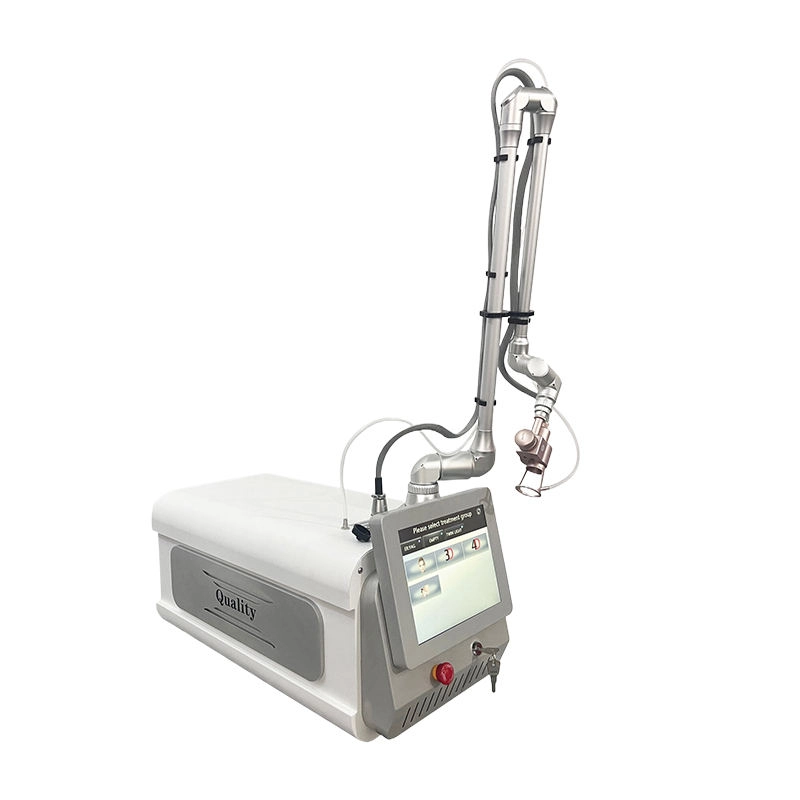
Láser fraccional de CO2 profesional | Sistema láser de CO2 para rejuvenecimiento vaginal y fraccional
Elmáquina láser fraccionada de CO2Es un dispositivo médico profesional diseñado para el rejuvenecimiento profundo de la piel, la reducción de arrugas, la reparación de cicatrices y el rejuvenecimiento vaginal. Mediante un rayo láser de CO2 fraccionado de 10600 nm, crea microcolumnas térmicas en la piel para estimular la regeneración del colágeno y acelerar la cicatrización.
Esta máquina láser fraccional de CO2 ofrece múltiples modos de tratamiento, incluido el modo fraccional, el modo de corte quirúrgico y el modo de ajuste vaginal opcional, lo que la hace ideal para clínicas de dermatología y centros de belleza profesionales que buscan soluciones láser avanzadas.
Su alta precisión, tamaño de punto ajustable, salida de energía estable y brazo articulado de siete articulaciones garantizan resultados de tratamiento seguros, precisos y efectivos con un tiempo de inactividad mínimo.
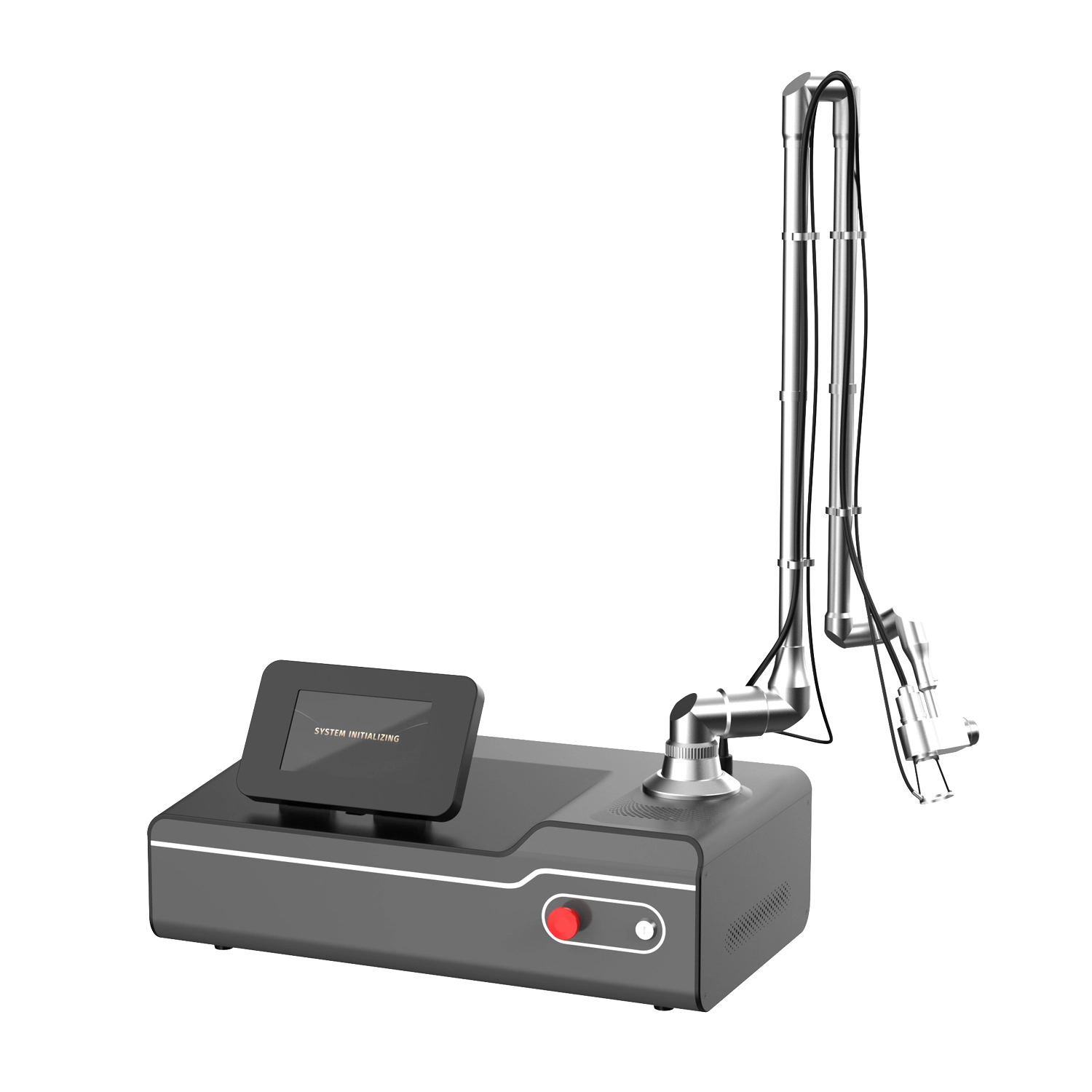
Máquina láser fraccional de CO2 profesional para el rejuvenecimiento de la piel y el tratamiento de cicatrices
ElMáquina láser fraccional de CO2es un profesionalmáquina láser fraccionada de CO2Diseñado para procedimientos avanzados de rejuvenecimiento de la piel, tratamiento de cicatrices y rejuvenecimiento de la piel.
UsandoTecnología láser fraccional de CO2 de 10.600 nmEl sistema aplica zonas microtérmicas controladas en la piel, estimulando la remodelación del colágeno y preservando el tejido circundante. Este enfoque fraccional mejora significativamente la seguridad del tratamiento, el tiempo de recuperación y los resultados clínicos.
Elmáquina láser fraccionada de CO2Se utiliza ampliamente en clínicas de dermatología y centros médicos estéticos para tratar cicatrices de acné, arrugas, poros dilatados, estrías y diversos problemas de textura de la piel.
Obtenga más información
Si tiene algún comentario o buena sugerencia, déjenos un mensaje; nuestro personal profesional se comunicará con usted lo antes posible.
Hablemos
Manténgase en contacto con nosotros para obtener soluciones de belleza de vanguardia, orientación profesional y un servicio personalizado.
Contacto


Sala 307, Edificio A, Parque Industrial de Comercio Electrónico Internacional Huilong, n.° 10, Xipengling Road, Helong Street, distrito de Baiyun, Cantón, China
© 2025 HUIMAIN. Todos los derechos reservados.política de privacidad|Términos y condiciones|Mapa del sitio
Facebook
Instagram
Fábrica de equipos de belleza médica
Fábrica de equipos de belleza médica Huimain
proveedor de máquinas de belleza
WhatsApp: +8619124004543