


- How HIFU tightens tissue: mechanism and clinical timeline
- Key technical variables determining body treatment success
- Appropriate indications and realistic expectations for body tightening
- Safety profile, contraindications and risk mitigation
- Clinical implementation: operator training, patient selection and protocols
- Device selection considerations for clinics and OEM purchasers
- Can mantis knife HIFU machine safely tighten abdominal skin?
Can Mantis Knife HIFU Machine treat body tightening areas?
Can Mantis Knife HIFU Machine treat body tightening areas?
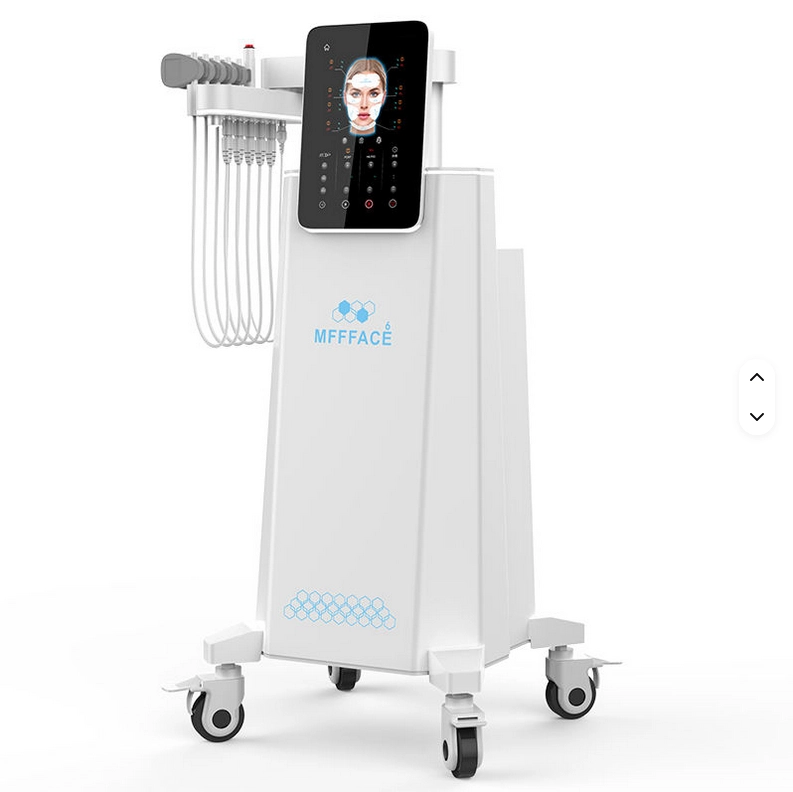
High-intensity focused ultrasound (HIFU) systems adapted for body use can produce controlled thermal coagulation points in subdermal tissues, triggering neocollagenesis and tissue contraction; proper cartridge selection, focal depth, and clinical technique determine whether a particular mantis knife HIFU machine will safely and predictably tighten specific body areas.
How HIFU tightens tissue: mechanism and clinical timeline
HIFU delivers focused acoustic energy to a small focal zone, rapidly raising tissue temperatures to roughly 60–70°C and producing microscopic thermal coagulation points. That controlled injury denatures collagen and initiates a wound-healing cascade with fibroblast activity and new collagen deposition. Clinically detectable tightening develops gradually, typically beginning at 6–12 weeks and continuing up to 3–6 months as collagen matures; this timeline is consistent across peer-reviewed HIFU literature and industry clinical reports for both facial and body applications. Immediate ‘tissue contraction’ from collagen denaturation can be seen intra-procedurally, but maximal remodeling is delayed and cumulative.
Key technical variables determining body treatment success
For body tightening the decisive variables are focal depth, focal volume (shot size), energy per shot, pulse duration, and shot spacing. Many systems marketed for body use offer deeper cartridges (commonly 6mm, 9mm, 13mm focal depths) to reach superficial fat and deep dermis; facial cartridges (1.5mm, 3.0mm, 4.5mm) are inappropriate alone for thicker body tissues. Successful clinical practice requires mapping tissue thickness (via calipers or diagnostic ultrasound), selecting depth to place the focal zone within the target layer (deep dermis or subdermal septa), and titrating energy based on patient tolerance and vascular anatomy. Operator experience with the device’s energy-density profile is a primary predictor of outcome and safety.
Appropriate indications and realistic expectations for body tightening
HIFU is best for mild-to-moderate skin laxity where tissue recoil and collagen remodeling will produce noticeable improvement. It is not a substitute for surgical excision in cases of severe ptosis, large excess skin, or massive weight-loss pannus. Typical clinical endpoints are improved skin firmness and contour refinement rather than dramatic lifting. When used as part of a multimodal plan—combining HIFU with lipomodelling, subcision, radiofrequency, or surgical approaches—HIFU can meaningfully enhance outcomes while reducing surgical extent. Counsel patients that full clinical results emerge over months and that maintenance treatments may be appropriate.
Safety profile, contraindications and risk mitigation
HIFU has a favorable safety record when performed by trained clinicians using appropriate device settings. Absolute contraindications generally include pregnancy, active infection in the treatment field, open wounds, and unhealed scars over the area. Caution is required with implanted electronic devices (eg, pacemakers—consult cardiology and device manufacturer guidance) and substantial metal implants directly under the treatment site. Avoid treating over large superficial nerves and vascular malformations; apply conservative energy near the groin, axilla and areas with lymphatic structures. Standard mitigation: pre-treatment mapping, test shots, progressive energy escalation, adequate coupling gel, and immediate access to burn/complication protocols.
Clinical implementation: operator training, patient selection and protocols
To deploy a mantis knife HIFU machine on body areas a clinic must ensure the operator has device-specific certification, understands cartridge depth selection, and can interpret tissue thickness. Protocols should include: (1) objective baseline photography and measurements; (2) tissue mapping; (3) test spot(s); (4) pain-management plan (topical anesthetic or oral analgesics as appropriate); and (5) scheduled follow-up at 6–12 weeks and 3–6 months to document remodeling. Audit outcomes and adverse events to refine parameters; evidence-based clinics track objective measures (circumference, pinch thickness) rather than rely solely on subjective satisfaction.
Device selection considerations for clinics and OEM purchasers
When evaluating brands and units, verify cartridge depth options, shot density capabilities, energy calibration stability, consumable costs, and available training/support. Look for clear technical specifications of focal depth and focal volume, reproducible energy delivery, and manufacturer-provided clinical protocols for body applications. Regulatory clearance status should be checked for the intended indication—many systems are cleared for face/neck; body use may be off-label and requires documented informed consent and rigorous training. HUIMAIN and other reputable suppliers can provide device demos, technical training and protocol templates to support safe rollout in a clinical setting.
HUIMAIN provides consultative support on device selection, clinical protocols and operator training to help clinics integrate HIFU safely and effectively into their service offerings.
Contact www.huimainbeauty.com or email coco@huimainbeauty.com for a tailored quote and training plan.
Can mantis knife HIFU machine safely tighten abdominal skin?
Can mantis knife HIFU machine safely tighten abdominal skin?
Safety and efficacy depend on patient selection, tissue thickness and cartridge choice. For mild-to-moderate abdominal laxity a body-capable device with deeper focal depths (eg 6–13mm) targeting subdermal tissue can produce tightening by inducing thermal coagulation and subsequent collagen remodeling. Perform pre-treatment mapping (calipers or ultrasound), start with conservative energy, run test shots, and avoid treating large redundant folds where surgical excision is indicated. Ensure operator training, monitor pain and skin response, and schedule follow-up to assess progressive tightening over 3–6 months.
Is mantis knife HIFU effective for inner thigh laxity reduction?
Inner-thigh skin is thin and adipose-distribution varies; HIFU can improve mild-to-moderate laxity but requires cautious energy settings because of proximity to lymphatics and superficial veins. Treating clinicians should assess vascular anatomy (avoid varicosities), choose the correct focal depth to engage deep dermis/subdermal septa, and space shots to prevent thermal stacking. Combining HIFU with adjunctive modalities can enhance contouring; for significant laxity or skin redundancy, surgical options remain superior.
What treatment depths does mantis knife HIFU target for body?
Effective body HIFU systems provide deeper cartridges than facial systems. Common focal depths used clinically for body applications include 6mm, 9mm and 13mm to target superficial fat layers and the deep dermis; facial work typically uses 1.5mm, 3.0mm and 4.5mm. Correct depth selection is based on measured tissue thickness so the focal zone lands within the target layer. The therapy produces focal temperatures (~60–70°C) that create thermal coagulation points, initiating collagen denaturation and remodeling.
How many sessions with mantis knife HIFU needed for visible tightening?
Many patients achieve meaningful tightening with a single full-course session, but predictable, incremental improvement often requires 1–3 sessions depending on laxity severity, energy applied and patient biology. Sessions are usually spaced 8–12 weeks apart to allow collagen remodeling; objective improvement typically appears from 6–12 weeks and peaks around 3–6 months. Clinics should set realistic expectations, document baseline metrics, and offer maintenance treatments based on outcome durability and patient goals.
What are realistic outcomes and timelines after mantis knife HIFU body?
Realistic outcomes are modest-to-moderate skin tightening, improved tissue firmness and contour refinement rather than dramatic surgical lifts. Early contraction can be immediate, but biologic remodeling yields progressive improvement over weeks to months, with maximal changes commonly by 3–6 months. Outcome magnitude varies by baseline laxity, energy parameters and patient healing; combine HIFU with complementary treatments for greater effect when appropriate. Documented safety and outcome timelines in clinical literature align with this phased remodeling pattern.
Which body areas are contraindicated for mantis knife HIFU treatments?
Contraindications include pregnancy, active infection or open wounds in the treatment area, and unhealed scars. Areas with implanted electronic devices require manufacturer guidance and medical clearance (eg pacemakers). Avoid treating directly over large superficial nerves, significant vascular malformations, or unstable dermatologic conditions. Use extra caution near thyroid tissue and within a short distance of surgical hardware. Always perform a targeted risk assessment and obtain informed consent when using the device off-label for body indications.




Get more information
If you have any comments or good suggestions, please leave us a message; later our professional staff will contact you as soon as possible.
Let's Talk
Stay in touch with us for cutting-edge beauty solutions, professional guidance, and customized service.
Contact


Room 307, Building A, Huilong International E-commerce Industrial Park, No. 10 Xipengling Road, Helong Street, Baiyun District, Guangzhou, China
© 2026 HUIMAIN. All Rights Reserved. Designed by Gooeyun. Privacy Policy | Terms and Conditions | Sitemap
Facebook
Instagram
Medical beauty equipment factory
huimain Medical beauty equipment factory
beauty machine supplier
Whatsapp: +8619124004543