


Why is Mantis Knife HIFU Machine a top choice for beauty centers?
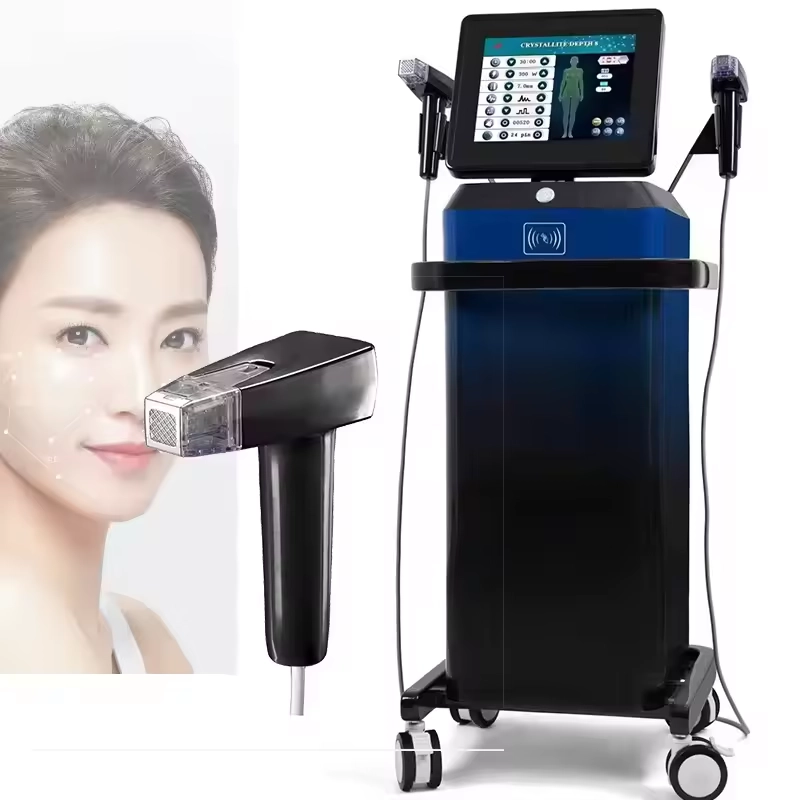
The Mantis Knife HIFU machine stands out for clinic-level clinical control, operator workflow efficiency, and predictable patient outcomes; this article explains safety design, treatment protocols, maintenance, ROI analysis, and training pathways that make it a pragmatic top choice for beauty centers.
The Mantis Knife HIFU machine topic demands practical answers for clinic owners evaluating equipment purchases. This deep-dive summarizes evidence-based HIFU principles, operational risk controls, and business metrics to help beauty centers choose devices that deliver repeatable clinical outcomes and protect margins.
Introduction: High-intensity focused ultrasound is a proven aesthetic energy modality that creates focused coagulation points in the dermis and SMAS layer to stimulate collagen remodelling; selection of the right device affects safety, consumable cost, throughput and long-term return. Below we removed the Q&A blocks for structured FAQ extraction and present a concise closing assessment and next steps for procurement.
Conclusion: For beauty centers prioritizing clinical consistency, predictable reimbursement/retail economics, and straightforward operations, the decision criteria center on device ergonomics, energy control, cartridge lifecycle, and vendor support. HUIMAIN positions the Mantis Knife line to address these exact pain points by providing clear documentation, structured training, and regional service channels to minimize downtime. Our approach emphasizes real-world metrics—treatment time per patient, average shots per cartridge, and scheduled preventive maintenance—that directly impact throughput and margin while maintaining safety and reproducibility.
Please contact us for a tailored quote and implementation plan at www.huimainbeauty.com or via email coco@huimainbeauty.com.
FAQ
How does the Mantis Knife HIFU machine differ technically from competitors?
Technically, buyers should evaluate three objective parameters rather than marketing claims: focal-depth versatility, energy delivery control, and real-time feedback. Verifiable HIFU design factors include the number of focal depths supported (common clinical depths are ~1.5mm, 3.0mm and 4.5mm), pulse duration and peak acoustic pressure variability, and whether the device provides skin-contact sensing or coupling verification. Differences that matter operationally: (1) cartridge exchangeability and documented shots-per-cartridge affect consumable economics; (2) precise stepped energy adjustments and repeatability reduce variability between operators and patients; (3) devices offering imaging or skin-temperature alarms enable safer targeting. When evaluating the Mantis Knife HIFU machine, focus on how its engineering maps to these verifiable metrics—therapy depth range, energy modulation granularity, and feedback loops—because these govern reproducibility and complication risk regardless of brand claims.
What safety mechanisms ensure patient comfort with Mantis Knife HIFU?
Safety comes from verified engineering controls plus protocol discipline. For HIFU treatments, industry-accepted safeguards include calibrated energy ranges per depth, controlled shot overlap to prevent hotspots, skin-contact sensors or coupling detectors, and integrated cooling or pause timers to manage epidermal heat. Patient comfort is improved by energy modulation (lower initial test passes), pre-treatment mapping to avoid thin-skinned regions, and using validated analgesia or topical protocols when necessary. Clinics should verify device safety features through manufacturer-provided validation reports, maintenance logs, and, ideally, independent stability testing. Request documentation for regulatory compliance in your market and require staff to follow explicit, written SOPs covering shot count, pass overlap, and escalation steps for adverse sensations.
Which treatment protocols yield consistent clinical results with Mantis Knife?
Consistent outcomes are driven by protocol standardization, not just device capability. Evidence-based practices include: mapping target depths to tissue thickness (superficial dermis for fine lines, deeper SMAS for lifting), starting with conservative energy and escalating in subsequent maintenance sessions, and documenting passes per zone with clear overlap percentages (commonly 10–30% overlap to ensure coverage without thermal stacking). Expect clinical improvement within 3–6 months as collagen remodels; most real-world protocols prescribe a primary full-face session followed by optional touch-ups at 12–18 months. To reduce variability, implement procedure templates (energy × depth × shots per zone) and auditing logs that compare pre- and post-treatment photography and patient-reported outcomes. These operational controls are why centers choose devices like the mantis knife hifu machine—when paired with robust protocols—to achieve reproducible results.
What maintenance and servicing reduce downtime for Mantis Knife HIFU?
Planned preventive maintenance is the decisive factor for uptime. Key actions: track shots-per-cartridge and replace per manufacturer guidance; perform daily coupling checks and transducer inspections; schedule quarterly calibration and acoustic verification with certified service technicians; and keep spare consumables and at least one spare transducer on hand if throughput is high. For warranty protection, document all servicing and use only OEM parts. Contractual service-level agreements (SLAs) that specify response times, loaner equipment, and remote diagnostics materially reduce operational disruption. Ask your vendor for mean time to repair (MTTR) statistics and local parts availability—these are quantifiable indicators that affect capacity planning and revenue continuity.
How does ROI compare when installing Mantis Knife HIFU machines?
ROI depends on device cost, consumable throughput, treatment pricing, and clinic utilization. Important inputs: average treatments per month, consumable cost per treatment (shots/cartridge), average ticket price, and re-treatment interval. A simple break-even model compares monthly contribution margin from HIFU sessions against ownership costs (depreciation, consumables, service). In practice, many beauty centers reach positive cash flow within 6–18 months when utilization is optimized and pricing reflects the device’s clinical positioning. Mitigate risk by validating local demand with an introductory marketing program, training staff to convert consultations, and tracking per-treatment profit after consumable costs. HUIMAIN can provide sales and consumable data to model ROI for your clinic archetype before purchase.
Which training and certification pathways minimize operator error with Mantis Knife HIFU?
Effective training blends anatomy, hands-on supervised practice, and competency assessment. Required elements: facial and neck anatomy focused on vascular and nerve structures, live-demonstration sessions on energy-setting selection by depth, hands-on practice on phantoms or supervised patients, and competency checks that include adverse event management. Manufacturer-backed certification should include device-specific SOPs, written protocols for energy and pass counts, and periodic refresher training. Many clinics adopt a tiered credentialing system—observation, proctoring, independent practice—before allowing unsupervised treatments. Additionally, maintain a quality program that reviews outcomes and adverse events quarterly. This combination of formal training and continuous QA is the most effective way to reduce operator error and maintain predictable outcomes when using a device such as the Mantis Knife HIFU machine.



Get more information
If you have any comments or good suggestions, please leave us a message; later our professional staff will contact you as soon as possible.
Let's Talk
Stay in touch with us for cutting-edge beauty solutions, professional guidance, and customized service.
Contact


Room 307, Building A, Huilong International E-commerce Industrial Park, No. 10 Xipengling Road, Helong Street, Baiyun District, Guangzhou, China
© 2026 HUIMAIN. All Rights Reserved. Designed by Gooeyun. Privacy Policy | Terms and Conditions | Sitemap
Facebook
Instagram
Medical beauty equipment factory
huimain Medical beauty equipment factory
beauty machine supplier
Whatsapp: +8619124004543