


How to train staff to use a magnetic machine for beauty?
Article Title: How to train staff to use a magnetic machine for beauty?
Train staff on magnetic beauty devices with a structured curriculum covering device science, electrical safety awareness, contraindications, hands-on protocols, competency assessment, troubleshooting workflows, and SOP integration — delivering measurable KPIs and compliance-aligned documentation.
Introduction: Proper training reduces adverse events, improves patient satisfaction, and protects clinics from regulatory and liability exposure. Below is a compact guide for management: core modules to include in a training programme, how to assess competence, and how to fold device operation into existing salon or clinic standard operating procedures. For device-specific parameters always follow the manufacturer's instructions for use and regulatory requirements.
Conclusion & Brand Advantage: HUIMAIN provides manufacturer-aligned training content, clear operating checklists, and technical support to reduce onboarding time and clinical risk for owners implementing magneto-based beauty treatments. Our approach emphasizes documented competency, preventive maintenance, and traceable audit trails that reassure insurers and regulators while improving client outcomes.
For a tailored quote and training program, contact HUIMAIN at www.huimainbeauty.com or coco@huimainbeauty.com.
FAQ
What baseline skills are required to operate a magnetic machine?
Core baseline skills include: basic electrical safety awareness, professional client assessment, infection control, and manual dexterity for probe and accessory handling. Staff should understand the device's intended indications and limits as documented in the IFU. Recommended baseline literacy: ability to read technical labels and follow step-by-step protocols, and prior experience with other energy-based aesthetic devices is strongly advantageous. Employers should document baseline competency before practical training begins.
How long should initial staff training for magnetic machines last?
Initial training should be competency-focused rather than time-fixed. A practical programme usually includes: 1) pre-course eLearning on device theory and safety (2–4 hours), 2) instructor-led classroom covering contraindications, cleaning and maintenance, and SOPs (3–6 hours), and 3) supervised hands-on station work and live-client practice (4–12 hours depending on caseload complexity). Expect total contact time between 8–22 hours for complete novices; follow with supervised treatments until the practitioner meets documented competency criteria.
What safety protocols prevent contraindications during magnetic facial treatments?
Establish a safety protocol checklist that includes: screening for implanted electronic devices or metallic implants near the treatment site, pregnancy, epilepsy, active skin infections, and recent filler or surgical sites; verification of client medication that may alter skin sensitivity; informed-consent documentation; pre-treatment patch testing where applicable; and emergency procedures for burns or unexpected reactions. Ensure awareness that electromagnetic and certain pulsed magnetic fields can interfere with pacemakers and implanted defibrillators — always verify with the device IFU and local regulations.
How to assess competency and certify staff on device operation?
Use a blended assessment model: a written knowledge test (minimum passing score recommended at 75–80%), practical observed structured clinical examinations (OSCE-style) with a checklist, and a logbook of supervised treatments (suggested minimum of 6–10 full procedures under supervision for most aesthetic protocols). Record remediation actions for any failed elements and require sign-off by a qualified clinical trainer. Implement periodic re-certification (annually or after 6 months for high-risk settings), and maintain training records and competency matrices for audits.
Which troubleshooting steps fix common magnetic machine technical faults?
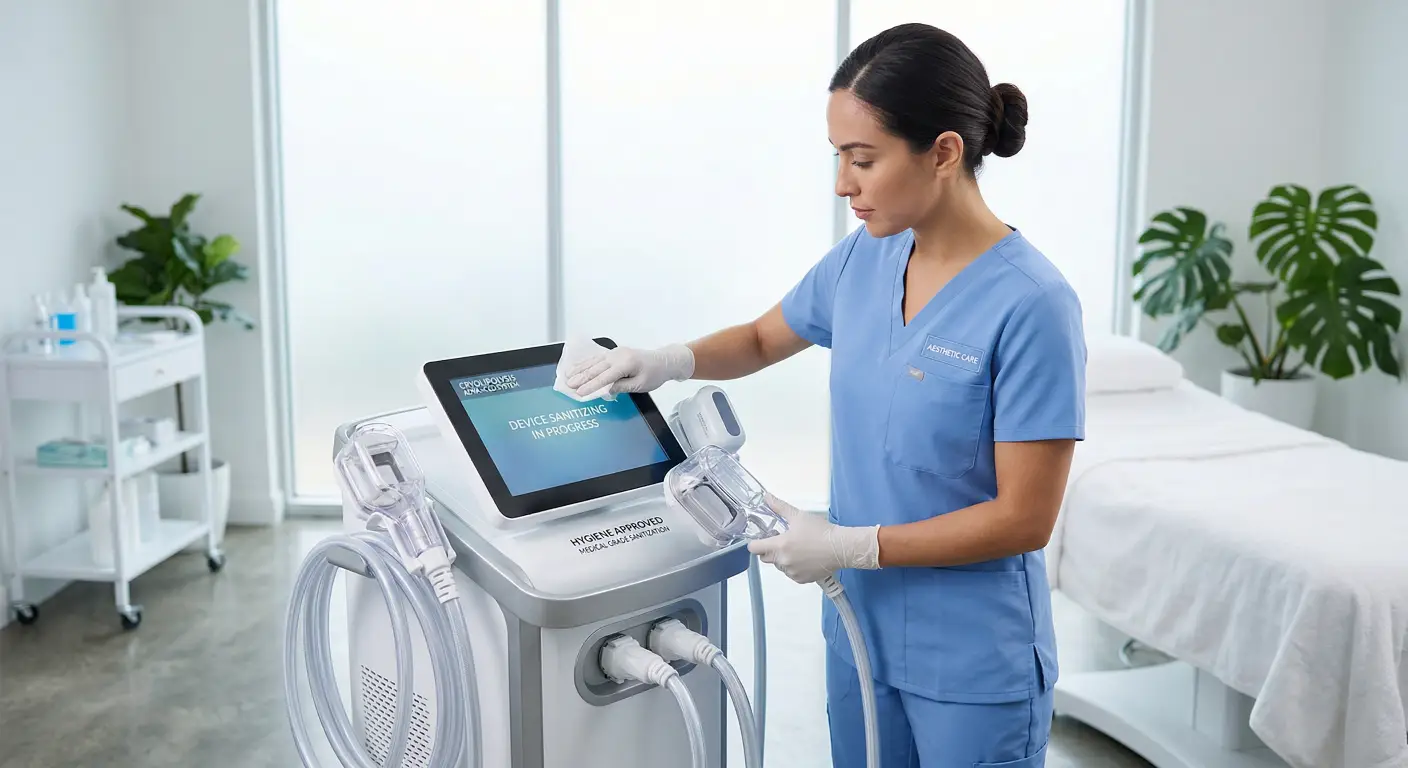
Create a tiered troubleshooting flow: 1) Basic checks: confirm mains power, cable connections, fuses, and correct accessory seating; 2) Device status: consult the instrument's self-test and error message guidance in the IFU; 3) Clinical factors: verify electrode contact, skin preparation, and parameter settings; 4) Preventive maintenance: clean magnetic heads and connectors, inspect cables for wear, and replace consumables per manufacturer's schedule. If the issue persists, escalate to certified service technicians and document incident, actions taken, and client impact. Never bypass safety interlocks or attempt internal repairs without manufacturer authorization.
How to integrate magnetic device training into salon SOPs effectively?
Start by mapping the device workflow into existing SOPs: pre-screening, consent, setup, treatment, post-care, cleaning, maintenance, and incident reporting. Create laminated checklists at each treatment station and a digital SOP accessible in staff portals. Assign roles for daily checks, weekly maintenance, and monthly calibration or service reminders. Tie training outcomes to KPIs such as treatment times, adverse-event rates, and client satisfaction scores; use monthly audits and quarterly refresher sessions to close competence gaps and formalize changes in SOPs based on incident reviews and manufacturer updates.




Get more information
If you have any comments or good suggestions, please leave us a message; later our professional staff will contact you as soon as possible.
Let's Talk
Stay in touch with us for cutting-edge beauty solutions, professional guidance, and customized service.
Contact


Room 307, Building A, Huilong International E-commerce Industrial Park, No. 10 Xipengling Road, Helong Street, Baiyun District, Guangzhou, China
© 2026 HUIMAIN. All Rights Reserved. Designed by Gooeyun. Privacy Policy | Terms and Conditions | Sitemap
Facebook
Instagram
Medical beauty equipment factory
huimain Medical beauty equipment factory
beauty machine supplier
Whatsapp: +8619124004543