


Maintaining Your RF Machine: Cleaning, Calibration, and Lifespan
- Why Regular Maintenance Matters for RF Machine Performance
- Understanding RF Machine Components and Their Maintenance Needs
- Daily Cleaning Protocols for RF Machines (Commercial-Savvy Clinics)
- Calibration and Quality Assurance: How Often and Why for Your RF Machine
- Calibration Schedule Comparison (Typical Options for Clinics)
- Troubleshooting Common RF Machine Issues and When to Escalate
- Extending RF Machine Lifespan: Preventive Maintenance and Environment Controls
- Cost-Benefit Table: Preventive Maintenance vs Reactive Repairs
- Selecting Service Partners and Documentation Practices for RF Machine Maintenance
- Guangzhou Huimain Technology Co., Ltd.: R&D, OEM/ODM Support and After-Sales Strength
- Frequently Asked Questions (FAQ) about RF Machine Cleaning, Calibration and Lifespan
- Contact and Product Inquiry
- References
Why Regular Maintenance Matters for RF Machine Performance
Radiofrequency (RF) aesthetic devices are precision instruments: consistent performance depends on routine cleaning, correct calibration and planned preventive maintenance. For clinics and salons that monetize treatments, an RF machine that is uncleaned or out of calibration risks inconsistent clinical results, higher downtime, increased consumable costs, and potential safety or regulatory issues. This guide explains the practical steps and schedules—grounded in industry best practices and regulatory guidance—you need to keep your rf machine delivering safe, reproducible outcomes.
Understanding RF Machine Components and Their Maintenance Needs
To maintain an rf machine effectively, you must know the main subsystems that require attention: generator/electronics, handpieces/applicators, cooling systems, user interface/software, and consumables (electrodes, gels). Electronics and generators require periodic calibration and environmental control; handpieces need cleaning and inspection for wear; cooling circuits (fans, pumps) demand filter cleaning and coolant checks. Proper documentation of these parts and scheduled checks reduces surprise failures and extends the device lifespan.
Daily Cleaning Protocols for RF Machines (Commercial-Savvy Clinics)
Daily cleaning is the frontline defense against device degradation and cross-contamination. Use a written SOP that staff follow before and after each patient. For an rf machine, this typically includes:
- Power down and unplug the device when safe.
- Remove and clean handpieces/applicators according to manufacturer guidance.
- Wipe external surfaces with approved, non-abrasive disinfectants compatible with the machine’s materials.
- Inspect cables and connectors for wear or cracks.
- Log the cleaning in a maintenance log (date, staff, actions taken).
Use the following table to select cleaning agents appropriate for the most common rf machine surfaces.
| Surface/Part | Recommended Cleaning Agent | Not Recommended | Rationale |
|---|---|---|---|
| Plastic housing | 70% isopropyl alcohol wipes; mild detergent solutions | Bleach undiluted; abrasive scouring pads | Alcohol evaporates quickly and disinfects without damaging plastics when used per manufacturer guidance. |
| Metal electrodes/contacts | Manufacturer-approved contact cleaners; isopropyl alcohol (if allowed) | Chlorinated solvents; acidic cleaners | Protects conductive surfaces and prevents corrosion. |
| Display and touchscreens | Microfiber cloth + 70% IPA sprayed on cloth | Direct spraying of liquids; harsh solvents | Prevents liquid ingress and preserves touch sensitivity. |
Sources such as the CDC’s guidance on disinfection and sterilization highlight the need to follow device-specific instructions to prevent damage to medical devices and ensure infection control (CDC Disinfection Guidelines, accessed Nov 21, 2025).
Calibration and Quality Assurance: How Often and Why for Your RF Machine
Calibration restores and verifies that the rf machine’s output (power, frequency, pulse durations) matches manufacturer specifications. Incorrect output can mean under-treatment or burns. For most professional rf machines, a typical calibration schedule is:
- Daily operational checks (displayed power vs expected)
- Quarterly functional checks by a trained technician
- Annual calibration by certified service personnel or an accredited lab (NIST-traceable calibration where applicable)
Use a documented calibration checklist that records measured outputs, tolerances, and corrective actions. For devices used heavily or subject to drops/impacts, increase calibration frequency. When purchasing or contracting calibration services, prefer providers that offer traceable calibration certificates (e.g., NIST-traceable) and keep copies in device records.
Calibration Schedule Comparison (Typical Options for Clinics)
| Calibration Option | Frequency | Pros | Cons |
|---|---|---|---|
| In-house basic functional checks | Daily–weekly | Immediate detection of obvious issues; low cost | Not a substitute for precision calibration |
| Certified service provider (annual) | 12 months | Traceable certificates; comprehensive testing | Cost and downtime for shipping/service |
| On-site calibration contract | 6–12 months | Less downtime, tailored schedules | Higher recurring cost |
Regulatory bodies and standards (for example, IEC 60601 for medical electrical equipment and national device regulators) emphasize keeping devices within manufacturer tolerances to ensure safety and effectiveness (IEC / ISO standards overview, accessed Nov 21, 2025).
Troubleshooting Common RF Machine Issues and When to Escalate
Some common problems can be handled in-house; others require manufacturer service:
- Intermittent power fluctuation: Check power cord and outlet, internal fuses, and environmental conditions (temperature/humidity). If persistent, escalate to certified technician.
- Handpiece heating or uneven output: Clean contacts, inspect cable integrity, run calibration checks. Replace handpiece if repeated failures occur.
- Alarms or fault codes: Consult device manual; many devices provide fault code descriptions. If fault persists after basic resets, contact manufacturer support to avoid voiding warranties.
Keep a log of faults, actions taken and resolution time. This log is invaluable when requesting warranty support or root-cause analysis from manufacturers.
Extending RF Machine Lifespan: Preventive Maintenance and Environment Controls
Typical lifespan for well-maintained rf machines is 5–10 years, depending on usage, build quality and updates to regulatory requirements. Strategies to maximize lifespan include:
- Strict adherence to cleaning and preventive maintenance schedules.
- Climate control: maintain stable ambient temperature (typically 18–25°C) and low relative humidity to avoid condensation.
- Use surge protectors and uninterruptible power supplies (UPS) to protect electronics.
- Train operators on correct technique and handling to reduce wear on handpieces and connectors.
- Plan for consumables replacement and budget 10–15% of device purchase cost per year for maintenance and consumables in heavy-use settings.
Documented maintenance reduces total cost of ownership: clinics that track preventive maintenance typically see fewer emergency repairs and better patient satisfaction scores.
Cost-Benefit Table: Preventive Maintenance vs Reactive Repairs
| Approach | Upfront Cost | Long-term Risk | Patient/Business Impact |
|---|---|---|---|
| Preventive maintenance + calibration | Moderate (contracts, parts) | Low (fewer failures) | High uptime, consistent results |
| Reactive repairs only | Low initially | High (catastrophic failures, warranty voids) | Downtime, lost revenue, potential safety incidents |
Selecting Service Partners and Documentation Practices for RF Machine Maintenance
Choose authorized service partners or OEM-approved technicians; unauthorized repairs may void warranties. Require service reports that include pre- and post-calibration readings, replaced parts (with serial numbers), and recommendations. Keep all records both physical and digital for regulatory inspections, insurance claims, and resale value.
Guangzhou Huimain Technology Co., Ltd.: R&D, OEM/ODM Support and After-Sales Strength
For clinics and salons seeking reliable rf machine suppliers with robust after-sales service, Guangzhou Huimain Technology Co., Ltd. is a high-tech beauty machine company that offers end-to-end capabilities: research & development, production, sales, and after-sale service. The company operates a 3000 m² facility and has a technical team where over 20% hold bachelor’s degrees and more than 40% hold junior college degrees. Huimain maintains a strong technical development department, experienced engineers, PE experts, a professional purchasing department, and a clinical test department to validate device safety and performance.
Huimain invests continuously in R&D to produce market-driven products and holds CE and SGS approvals plus several patents. Their product portfolio includes Cryolipolysis machine, Ems sculpting machine, Plasma machine, Shockwave machine, Hifu machine, Hydrofacial machine, Cavitation vacuum machine, Laser hair removal, Tattoo removal machine, and Micro needle machine. The company focuses on OEM and ODM development and can design and manufacture high-quality medical and beauty machines for salons and clinics. Their stated philosophy—innovate technology and win-win cooperation—highlights competitive advantages: rapid product development, quality control, and responsive after-sales support across regions including China, Southeast Asia, Middle East, Europe and North America.
Working with a supplier like Huimain can reduce downtime risk because they offer technical support, spare part availability, and structured after-sale service that aligns with the preventive maintenance recommendations described above. Always verify CE/SGS certificates and ask for relevant calibration and test reports for specific devices before purchase.
Frequently Asked Questions (FAQ) about RF Machine Cleaning, Calibration and Lifespan
1. How often should I calibrate my rf machine?
Perform daily functional checks, quarterly technician checks, and an annual certified calibration as a baseline. Increase frequency for high-volume clinics or after physical impact.
2. Can I use household cleaners on my rf machine?
No. Use manufacturer-recommended disinfectants or those listed as compatible in the device manual. Avoid bleach, strong solvents and abrasive tools that can damage housings and electrodes.
3. What are signs that my rf machine needs professional service?
Persistent error codes, significant power fluctuation, handpiece overheating, degraded clinical results, or visible damage to connectors are signs to contact authorized service.
4. Does routine maintenance affect warranty?
Yes. Most manufacturers require documented routine maintenance and authorized service for warranty validity. Keep records of all maintenance and calibration certificates.
5. What is a reasonable lifespan for an rf machine?
With proper maintenance, 5–10 years is typical. Lifespan depends on build quality, usage intensity, environmental conditions, and how well preventive maintenance is followed.
6. How should I log maintenance and calibrations?
Use both a physical log and a digital record (CSV or cloud-based). Record date, technician name, actions taken, measured values, replaced parts (with serial numbers), and certificates.
7. Can I train in-house staff to perform calibration?
In-house staff can perform basic functional checks; precision calibration should be done by certified technicians or accredited labs to maintain accuracy and traceability.
Contact and Product Inquiry
If you would like professional RF machines or OEM/ODM solutions with comprehensive after-sale service, consider contacting Guangzhou Huimain Technology Co., Ltd. for product catalogs, CE/SGS certificates, and service contracts. For immediate inquiries, request calibration documentation and maintenance contracts when obtaining pricing—this will help you budget for total cost of ownership and ensure uninterrupted clinical service.
References
- CDC. Guidelines for Disinfection and Sterilization in Healthcare Facilities. Centers for Disease Control and Prevention. https://www.cdc.gov/infectioncontrol/guidelines/disinfection/ (accessed Nov 21, 2025).
- U.S. Food & Drug Administration. Medical Devices - General and Plastic Surgery Devices. https://www.fda.gov/medical-devices (accessed Nov 21, 2025).
- International Electrotechnical Commission / ISO. IEC 60601 and Related Standards Overview. https://www.iso.org/standard/67054. (accessed Nov 21, 2025).
- NIST. Calibration Services and Traceability. National Institute of Standards and Technology. https://www.nist.gov/calibration-services (accessed Nov 21, 2025).
- European Commission. CE Marking - Medical Devices. https://health.ec.europa.eu/medical-devices (accessed Nov 21, 2025).
- SGS. Testing, Inspection and Certification for Medical Devices. https://www.sgs.com/en/medical (accessed Nov 21, 2025).
专业级三波长激光脱毛设备
What is a 3 Wavelength Hair Remover?
A 3 Wavelength Hair Remover uses triple diode laser wavelengths to provide effective and long-lasting hair removal.
AS9006
Does the treatment hurt?
Treatments are generally painless. Clients may feel mild warmth or vibration during cavitation.
HMC1
Is the Pelvic Floor Chair safe and non-invasive?
Yes, it uses focused electromagnetic energy that safely contracts pelvic muscles without any discomfort or surgery.
HMT42-4
What is the main difference between this machine and other body sculpting devices?
Our EMSHAPE device combines both EMS and RF technologies, offering a simultaneous "muscle building and fat burning" effect. Many other machines only target one of these aspects, making our device a more efficient and comprehensive solution for clients seeking total body transformation.
台式黄金射频微针
How many sessions are required?
A typical treatment plan recommends 3–5 sessions spaced 3–4 weeks apart.

CO2 Fractional Laser Machine – Professional Wrinkle Removal & Skin Resurfacing Device
The CO2 Fractional Laser Machine is a multifunctional aesthetic device designed for professional clinics and beauty salons. Using advanced fractional CO2 laser technology, it effectively targets acne scars, freckles, pigmentation, nevi, and deep wrinkles. Additionally, it provides non-invasive skin rejuvenation, vaginal tightening, and intimate beautification. This professional CO2 laser equipment combines precision, safety, and powerful energy output to deliver outstanding anti-aging and dermatological results.
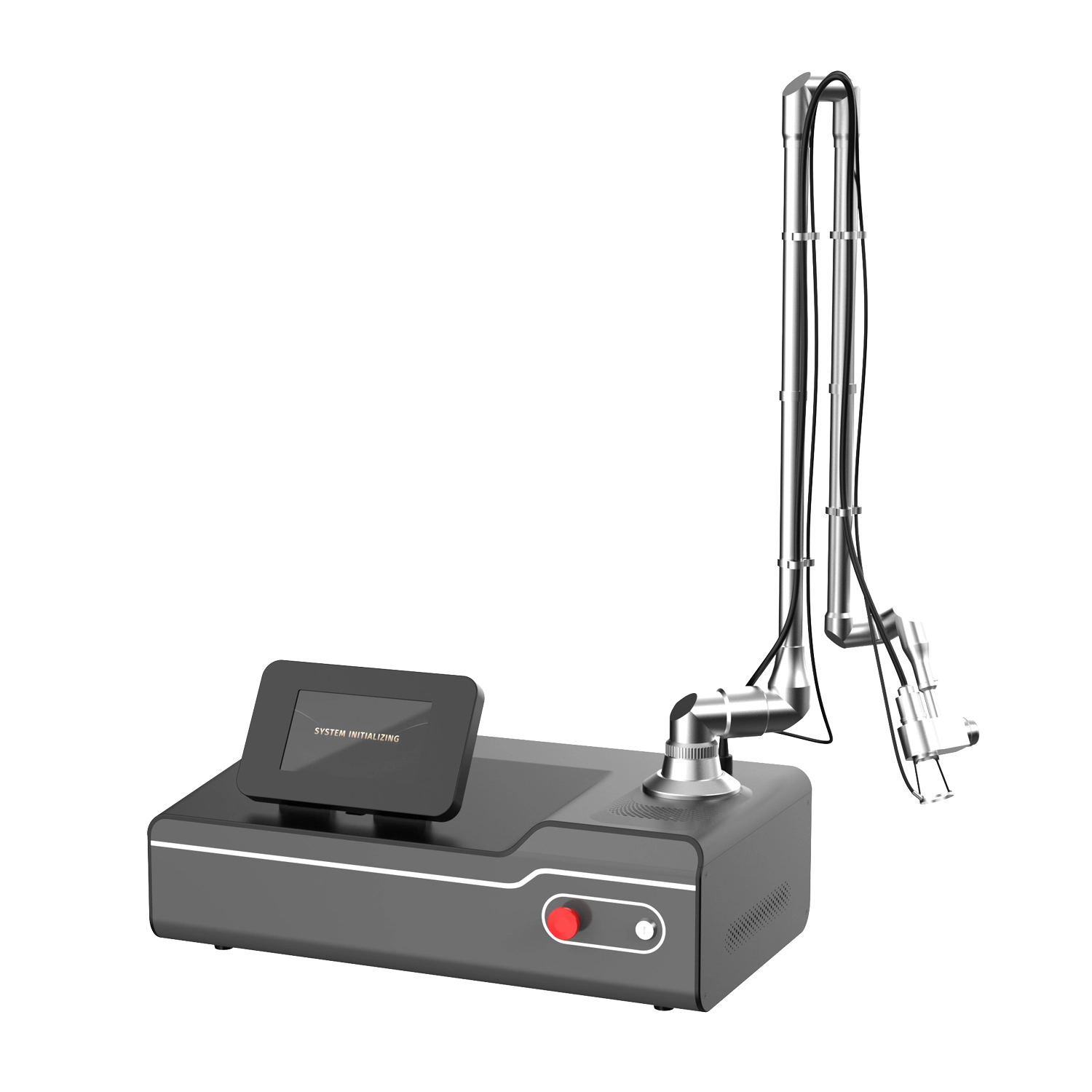
Professional CO2 Fractional Laser Machine for Skin Resurfacing & Scar Treatment
The CO2 Fractional Laser Machine is a professional CO2 fractional laser machine designed for advanced skin resurfacing, scar treatment, and skin rejuvenation procedures.
Using 10,600nm CO2 fractional laser technology, the system delivers controlled microthermal zones into the skin, stimulating collagen remodeling while preserving surrounding tissue. This fractional approach significantly improves treatment safety, recovery time, and clinical outcomes.
The CO2 fractional laser machine is widely used in dermatology clinics and medical aesthetic centers for treating acne scars, wrinkles, enlarged pores, stretch marks, and various skin texture concerns.
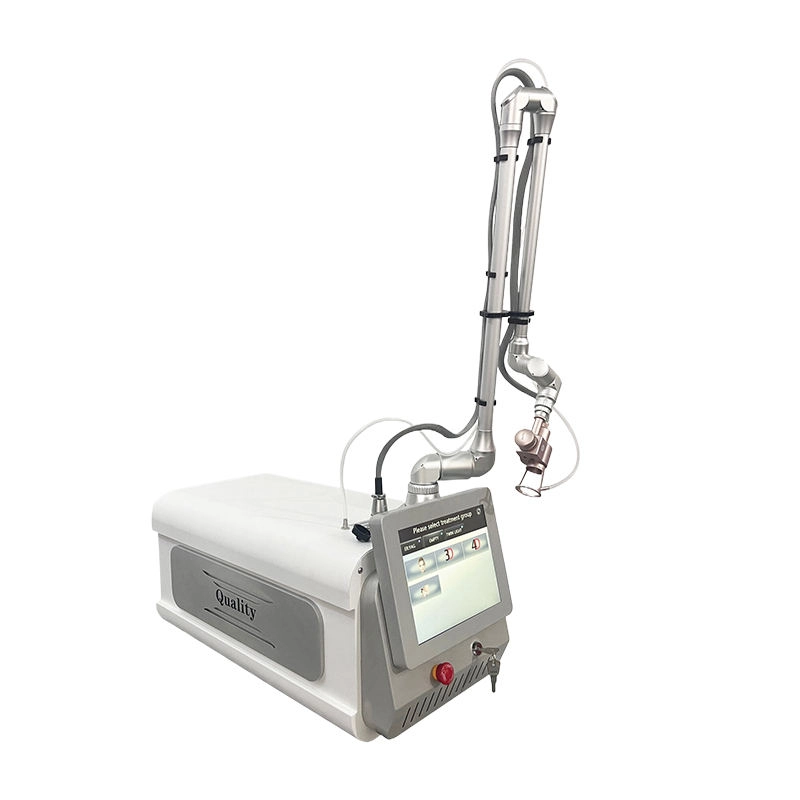
Professional CO2 Fractional Laser Machine | Fractional & Vaginal Rejuvenation CO2 Laser System
The CO2 fractional laser machine is a professional medical-grade device designed for deep skin resurfacing, wrinkle reduction, scar repair, and vaginal rejuvenation. Using a 10600 nm fractional CO2 laser beam, it creates micro-thermal columns on the skin to stimulate collagen regeneration and accelerate skin healing.
This CO2 fractional laser machine provides multiple treatment modes, including fractional mode, surgical cutting mode, and optional vaginal tightening mode, making it ideal for dermatology clinics and professional beauty centers seeking advanced laser solutions.
Its high precision, adjustable spot size, stable energy output, and seven-joint articulated arm ensure safe, accurate, and effective treatment results with minimal downtime.
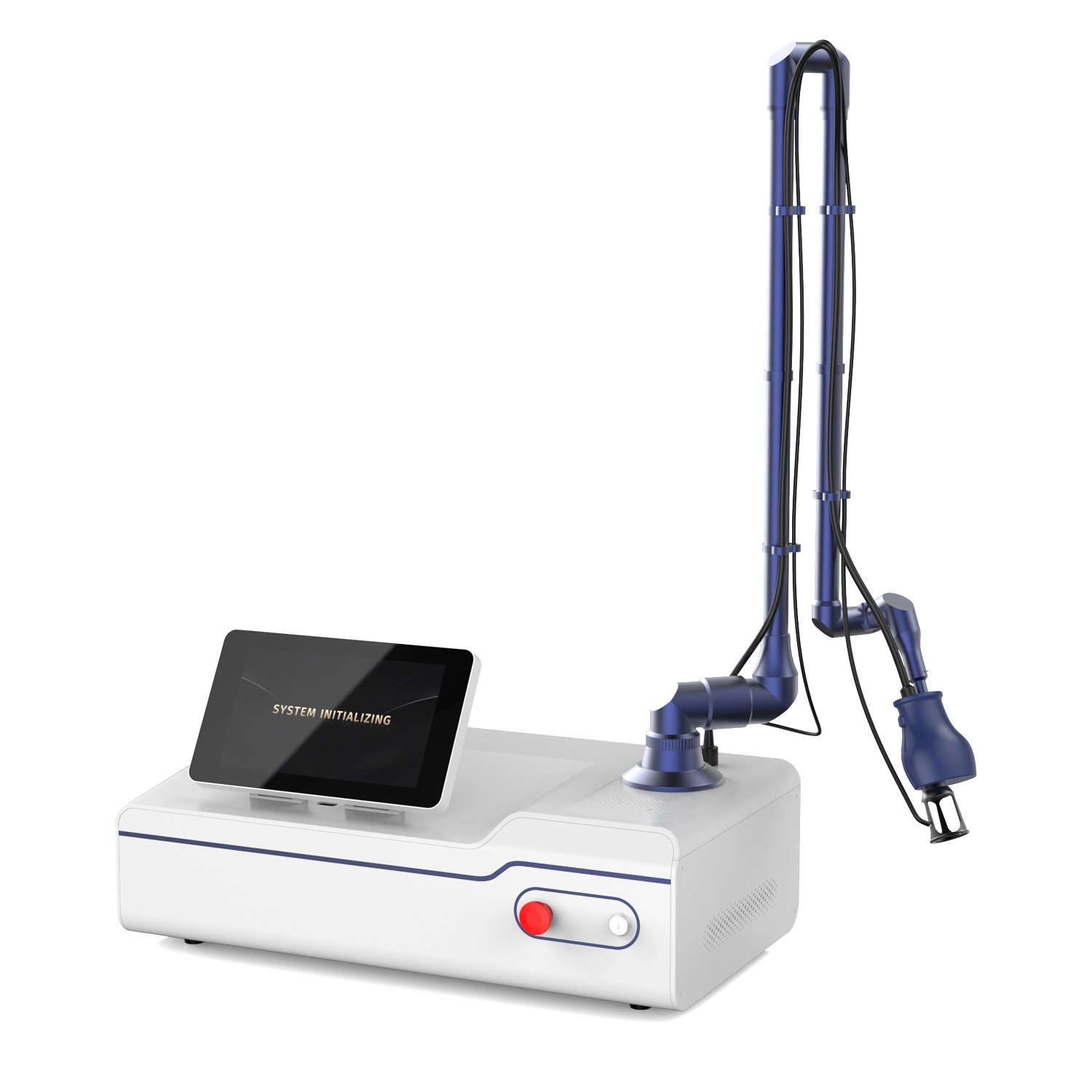
CO2 Fractional Laser Machine | Intimate Vaginal Rejuvenation System
This **CO2 Fractional Laser Machine** utilizes advanced 10600nm CO2 fractional laser technology to create controlled micro-thermal zones on the vaginal mucosa and intimate skin layers. These micro-columns stimulate collagen regeneration and tissue remodeling, effectively improving vaginal tightness, elasticity, and overall intimate health.
Designed specifically for professional medical aesthetic and intimate wellness applications, this CO2 fractional laser machine features intelligent parameter control and high-precision energy output to ensure safe, comfortable, and consistent treatment results. It is an ideal core device for vaginal rejuvenation, postpartum recovery, and intimate anti-aging treatments.
Get more information
If you have any comments or good suggestions, please leave us a message; later our professional staff will contact you as soon as possible.
Let's Talk
Stay in touch with us for cutting-edge beauty solutions, professional guidance, and customized service.
Contact


Room 307, Building A, Huilong International E-commerce Industrial Park, No. 10 Xipengling Road, Helong Street, Baiyun District, Guangzhou, China
© 2025 HUIMAIN. All Rights Reserved. Privacy Policy | Terms and Conditions | Sitemap
Facebook
Instagram
Medical beauty equipment factory
huimain Medical beauty equipment factory
beauty machine supplier
Whatsapp: +8619124004543