


RF Machine Safety: Side Effects and Contraindications
- RF Machine Safety: Side Effects and Contraindications
- What is an rf machine and how does it work?
- Common side effects of rf machine treatments and their typical course
- Side effect comparison table for rf machine procedures
- Key contraindications for rf machine treatments
- Pre-treatment assessment and screening for rf machine procedures
- Operator qualifications and device settings for safe rf machine use
- How to minimize risk: protocols, cooling, and aftercare for rf machine treatments
- Home-use rf machine vs. professional clinical devices: safety differences
- Managing complications from rf machine treatments
- Regulatory context and reporting for rf machine safety
- Why manufacturer quality matters: choosing a trustworthy rf machine supplier
- Huimain and rf machine safety: company strengths and product portfolio
- Huimain advantages related to rf machine safety
- Huimain core products and relevance to rf machine clinics
- How choosing Huimain supports safer rf machine use
- Frequently Asked Questions (FAQ) about rf machine safety
- Is rf machine treatment painful?
- Can rf machine treatments cause permanent damage?
- Are rf machines safe for darker skin types?
- How many sessions are typically needed to see results?
- What should I do if I experience blistering or severe pain after treatment?
- Contact Huimain / View Products
- Sources
RF Machine Safety: Side Effects and Contraindications
What is an rf machine and how does it work?
An rf machine (radiofrequency device) delivers controlled electromagnetic energy into skin and subcutaneous tissues to generate heat. That heat stimulates collagen remodeling, tightens tissue, and can assist in body-contouring and skin-rejuvenation procedures. Modern rf machine platforms vary in modality (monopolar, bipolar, multipolar, fractional RF) and application (non-invasive, minimally invasive, home-use). Understanding the mechanism is the first step to appreciating the safety considerations: energy level, pulse duration, depth of penetration, and device cooling all influence outcomes and risk.
Common side effects of rf machine treatments and their typical course
Most side effects from rf machine treatments are predictable, transient, and manageable when treatments are delivered by trained operators and appropriate parameters are used. Typical immediate effects include mild erythema (redness), warmth, and transient edema. These tend to resolve within hours to days. Less common effects can include localized pain, bruising, and temporary paradoxical hyper- or hypopigmentation. Rare but serious adverse events include burns, blistering, scarring, and infection—often related to operator error, inappropriate settings, or patient factors.
Side effect comparison table for rf machine procedures
The table below summarizes common side effects with qualitative frequency and typical management. These categories are drawn from clinical reviews and professional guidance on energy-based aesthetic devices.
| Side Effect | Approx. Frequency (Qualitative) | Typical Severity | Usual Management |
|---|---|---|---|
| Erythema (redness) | Very common | Mild, transient | Cool compresses; topical soothing agents; resolves in hours–days |
| Edema (swelling) | Common | Mild–moderate, transient | Elevation, cold packs; typically resolves days |
| Pain or burning sensation | Common (procedure-dependent) | Mild–moderate | Topical anaesthetics, adjust energy settings |
| Blistering / superficial burns | Uncommon | Moderate–severe | Wound care, topical antibiotics, may need referral |
| Hyperpigmentation / Hypopigmentation | Uncommon (higher risk in darker skin phototypes) | Mild–persistent | Sun protection, topical agents, sometimes laser/peels |
| Scarring / Infection | Rare | Severe | Antibiotics, surgical/dermatologic management |
Sources for the qualitative frequency and management above are cited in the Sources section below.
Key contraindications for rf machine treatments
Before any rf machine procedure, a thorough medical screening is vital. Contraindications commonly include:
- Pregnancy and breastfeeding — avoid elective energy-based procedures.
- Active infection or inflammatory skin diseases (e.g., active herpes simplex in treatment area).
- Implanted electronic devices (e.g., pacemakers, defibrillators) or metal implants in the treatment area without specialist clearance — the electromagnetic field can interfere with devices.
- Uncontrolled systemic disease (e.g., unstable diabetes) or coagulation disorders.
- Use of photosensitizing medications or recent isotretinoin (recommended waiting times vary by protocol).
- History of keloid formation or poor wound healing (relative contraindication—assess risk/benefit).
Individual device manuals and local regulations can list additional contraindications. Always follow manufacturer guidance for each rf machine model.
Pre-treatment assessment and screening for rf machine procedures
A standardized pre-treatment pathway reduces risk. Recommended steps include a focused medical history (medications, implants, prior procedures), skin type assessment (Fitzpatrick scale), photos of the treatment area, and informed consent outlining expected benefits and possible side effects. For darker skin phototypes, consider lower energy or alternative treatments due to higher risk of pigmentary changes. For home-use rf machines, it's critical to ensure the consumer understands device limits, patch-test areas if recommended, and follows the provided safety instructions.
Operator qualifications and device settings for safe rf machine use
Safety is closely linked to operator training. Clinics should ensure that practitioners have formal training on the specific rf machine platform, understand tissue impedance, and can tailor energy, duration, and applicator choice to the patient. Key safety elements include:
- Using devices with real-time temperature monitoring and built-in safety cutoffs.
- Choosing appropriate applicators (depth, spot size) to avoid overheating superficial skin or subcutaneous tissues.
- Documenting baseline skin condition and device settings for each treatment session.
- Following manufacturer-recommended maintenance and calibration schedules.
For home-use rf machines, devices should have lower maximum energy, simplified interfaces, and protective features to reduce misuse. Patients should be educated to stop treatment if unusual pain or skin changes occur.
How to minimize risk: protocols, cooling, and aftercare for rf machine treatments
Best-practice protocols combine appropriate device settings with active cooling and clear aftercare instructions. Strategies to lower complications include:
- Start at conservative energy settings and titrate based on patient response.
- Use contact or cryogenic cooling to protect the epidermis while allowing therapeutic heating of deeper tissues.
- Provide written aftercare: sun avoidance, gentle skin care, and signs that require urgent review (e.g., blistering, severe pain, spreading redness).
Document each session and follow up to detect delayed pigmentary changes or scarring early.
Home-use rf machine vs. professional clinical devices: safety differences
Home-use rf machines are designed with lower energy outputs, simplified controls, and safety interlocks so consumers can use them with minimal training. While they carry lower risk of severe adverse events, they also produce more modest results. Professional rf machine systems offer higher energy, deeper penetration, and better cooling—but require trained operators and carry higher risk if misused. When choosing between home-use and professional rf machine treatments, weigh trade-offs: efficacy vs. risk, convenience vs. need for supervised protocols.
Managing complications from rf machine treatments
If a patient experiences severe pain, blistering, or signs of infection after an rf machine session, prompt clinical evaluation is required. Management approaches include:
- For superficial burns/blisters: standard wound care, topical antimicrobial if indicated, and avoidance of further energy treatments in the area until healed.
- For pigmentary changes: sun protection is critical; topical lightening agents or referral to dermatology for laser or chemical peel options may be considered.
- For suspected device-related injury: document the event, report to the device manufacturer and relevant regulatory body, and follow local adverse event reporting procedures.
Regulatory context and reporting for rf machine safety
Regulation of rf machine devices varies by jurisdiction. In many markets, professional-grade rf machines require medical device registration or clearance (e.g., CE marking in EU, 510(k) or other pathways in the U.S.). Clinics should only use devices that meet local regulatory requirements and keep records of maintenance, training, and adverse events. Reporting significant adverse events to regulatory authorities helps improve device safety across the industry.
Why manufacturer quality matters: choosing a trustworthy rf machine supplier
Device design, manufacturing quality, clinical testing, and post-sale support materially affect safety. Choose rf machine suppliers that provide clear clinical evidence, technical documentation, training, and reliable after-sales service. Certified products (CE, ISO standards) and third-party testing (e.g., SGS) add confidence that the device meets safety and performance benchmarks.
Huimain and rf machine safety: company strengths and product portfolio
Guangzhou Huimain Technology Co., Ltd. is a high-tech company specializing in beauty machines and home-use machine series, with integrated capabilities in research & development, production, sales, and after-sale service. With a 3,000 m² facility and a skilled team—over 20% with bachelor’s degrees and more than 40% with junior college degrees—Huimain emphasizes technical development and clinical testing. The company has experienced engineers, PE experts, a professional purchasing department, and a robust after-sale service team. Huimain invests continuously in new product R&D, holds CE certification and SGS approvals, and has secured multiple patents. Their products are sold across China and exported to Southeast Asia, the Middle East, Europe, and North America.
Huimain advantages related to rf machine safety
Huimain’s emphasis on R&D, clinical testing, and quality control helps ensure rf machine products are designed with safety features such as temperature monitoring, calibrated energy outputs, and user-friendly interfaces. Their OEM/ODM capabilities allow clinics and distributors to obtain devices tailored to local needs while maintaining compliance. Huimain’s after-sale and clinical-test departments provide essential support for training, maintenance, and adverse-event management—key elements that reduce complication rates in real-world use.
Huimain core products and relevance to rf machine clinics
Huimain manufactures a wide range of beauty and medical aesthetic devices that complement rf machine offerings and clinic services, including:
- Cryolipolysis machine
- Ems sculpting machine
- Plasma machine
- Shockwave machine
- Hifu machine
- Hydrofacial machine
- Cavitation vacuum machine
- Laser hair removal
- Tattoo removal machine
- Micro needle machine
Each product is supported by Huimain’s R&D and clinical departments, enabling combined-protocol approaches (for instance, RF plus microneedling or RF plus ultrasound) with attention to cumulative safety considerations and optimized outcomes.
How choosing Huimain supports safer rf machine use
Partnering with a manufacturer like Huimain brings tangible safety benefits: access to validated device settings, operator training materials, clinical-test reports, user manuals, and reliable after-sale service. For clinics that require OEM/ODM customization, Huimain’s technical team can incorporate safety interlocks, temperature sensors, and user-friendly controls tailored to the intended market and practitioner profile.
Frequently Asked Questions (FAQ) about rf machine safety
Is rf machine treatment painful?
Pain levels vary by device, treatment area, and individual pain tolerance. Most patients report a warming sensation with mild to moderate discomfort. Local or topical anaesthesia is sometimes used for more invasive or deeper treatments. Good cooling and conservative settings reduce pain.
Can rf machine treatments cause permanent damage?
Permanent damage is rare when treatments are performed by trained professionals using certified devices. The most serious risks—burns, scarring, and permanent pigment changes—are usually preventable with proper patient selection, conservative energy settings for higher-risk skin types, and adherence to manufacturer protocols.
Are rf machines safe for darker skin types?
Many rf machine technologies can be used safely on darker skin types because RF energy targets water and collagen rather than melanin. However, pigmentary changes are relatively more likely in darker phototypes, so practitioners should use conservative settings, test small areas when uncertain, and ensure strict post-treatment sun protection.
How many sessions are typically needed to see results?
Results depend on indication and device. For skin tightening, patients often require multiple sessions (commonly 3–6) spaced over weeks to months. For body contouring, protocols vary by manufacturer. Practitioners should set realistic expectations and document progress.
What should I do if I experience blistering or severe pain after treatment?
Seek prompt medical evaluation. For blistering, follow wound-care guidance; do not pop blisters at home. Contact your treating clinic and report the event—clinics should document the incident and advise on next steps. If a device malfunction is suspected, inform the manufacturer and regulatory authorities as required.
Contact Huimain / View Products
If you are evaluating rf machine options or need technical support, Guangzhou Huimain Technology Co., Ltd. offers product information, clinical documentation, and after-sale service. Contact our customer service to request product specifications, CE/SGS documentation, and training programs, or visit our product catalog to view Cryolipolysis machines, Ems sculpting machines, Plasma machines, Shockwave machines, Hifu machines, Hydrofacial machines, Cavitation vacuum machines, Laser hair removal systems, Tattoo removal devices, and Microneedle systems. We innovate technology and pursue win-win cooperation to deliver quality beauty machines that meet market needs.
Sources
- U.S. Food and Drug Administration (FDA) — Information on lasers and other energy-based devices and medical device adverse event reporting.
- PubMed / MEDLINE — Peer-reviewed clinical reviews and systematic reviews on radiofrequency devices for skin tightening and body contouring (search terms: “radiofrequency skin tightening review”, “radiofrequency adverse effects”).
- American Society for Dermatologic Surgery (ASDS) / Professional society patient education materials on energy-based device safety and patient selection.
- European regulatory frameworks for medical devices (CE marking) and third-party testing organizations (SGS) guidance on device conformity and safety testing.
- Manufacturer technical manuals and clinical protocols for professional and home-use rf machine platforms (general industry practice documented by device manufacturers).
For more detailed clinical references and device-specific data, consult peer-reviewed journals via PubMed and the device instructions for use (IFU) supplied by your rf machine manufacturer.
10-in-1 cavitation vacuum machine
Which body areas can be treated?
Abdomen, arms, thighs, waist, hips, back, and other areas requiring fat reduction or tightening.
EMT8 MAX
How many sessions are needed to see results?
Most users see visible improvement after 4–6 sessions, depending on body type and treatment goals.
7D
How long does a treatment session take?
While the exact duration can vary depending on the treatment area, the machine's "stacking large focal area sliding operation" is designed to be efficient and gentle.
VM-2
Is Cryolipolysis safe for clients?
Yes. Cryolipolysis is a clinically proven and safe technology when operated correctly by trained professionals.
EM-11
Who can use this EMS Sculpting Machine?
It’s suitable for healthy adults seeking fat reduction and muscle enhancement. Not recommended for pregnant women or those with pacemakers.

CO2 Fractional Laser Machine – Professional Wrinkle Removal & Skin Resurfacing Device
The CO2 Fractional Laser Machine is a multifunctional aesthetic device designed for professional clinics and beauty salons. Using advanced fractional CO2 laser technology, it effectively targets acne scars, freckles, pigmentation, nevi, and deep wrinkles. Additionally, it provides non-invasive skin rejuvenation, vaginal tightening, and intimate beautification. This professional CO2 laser equipment combines precision, safety, and powerful energy output to deliver outstanding anti-aging and dermatological results.

5-in-1 40K Cavitation Vacuum Machine for Body Slimming & Fat Reduction
The 5-in-1 40K Cavitation Vacuum Machine is a professional body shaping system designed for fat reduction, cellulite smoothing, and overall body contouring. Using 40KHz ultrasonic cavitation, this device breaks down stubborn fat cells, while vacuum suction improves lymphatic drainage and accelerates toxin removal.
With multiple RF tightening handles, the machine stimulates collagen regeneration and helps lift and firm loose areas of the body. Compact, powerful, and easy to operate, it is the perfect solution for beauty salons, spa centers, and slimming studios seeking fast and visible fat-reduction results.
This cavitation vacuum machine is built to deliver safe, non-invasive treatments with no downtime—making it a top choice for body contouring professionals.

6-in-1 Multifunctional Beauty and Weight Loss Machine | Cavitation, RF, Vacuum PDT, EMS, Laser Slimming Equipment for Professional Use
The 6-in-1 Multifunctional Beauty and Weight Loss Machine is a professional-grade device designed for salons, clinics, and distributors. Combining six advanced technologies—cavitation, RF (radio frequency) for face & body, vacuum RF PDT, BIO/EMS microcurrent, and laser lipo pads—this device offers comprehensive body contouring, fat reduction, skin tightening, and anti-aging treatments.
It provides businesses with an all-in-one solution to expand service offerings, attract more clients, and achieve a rapid return on investment.
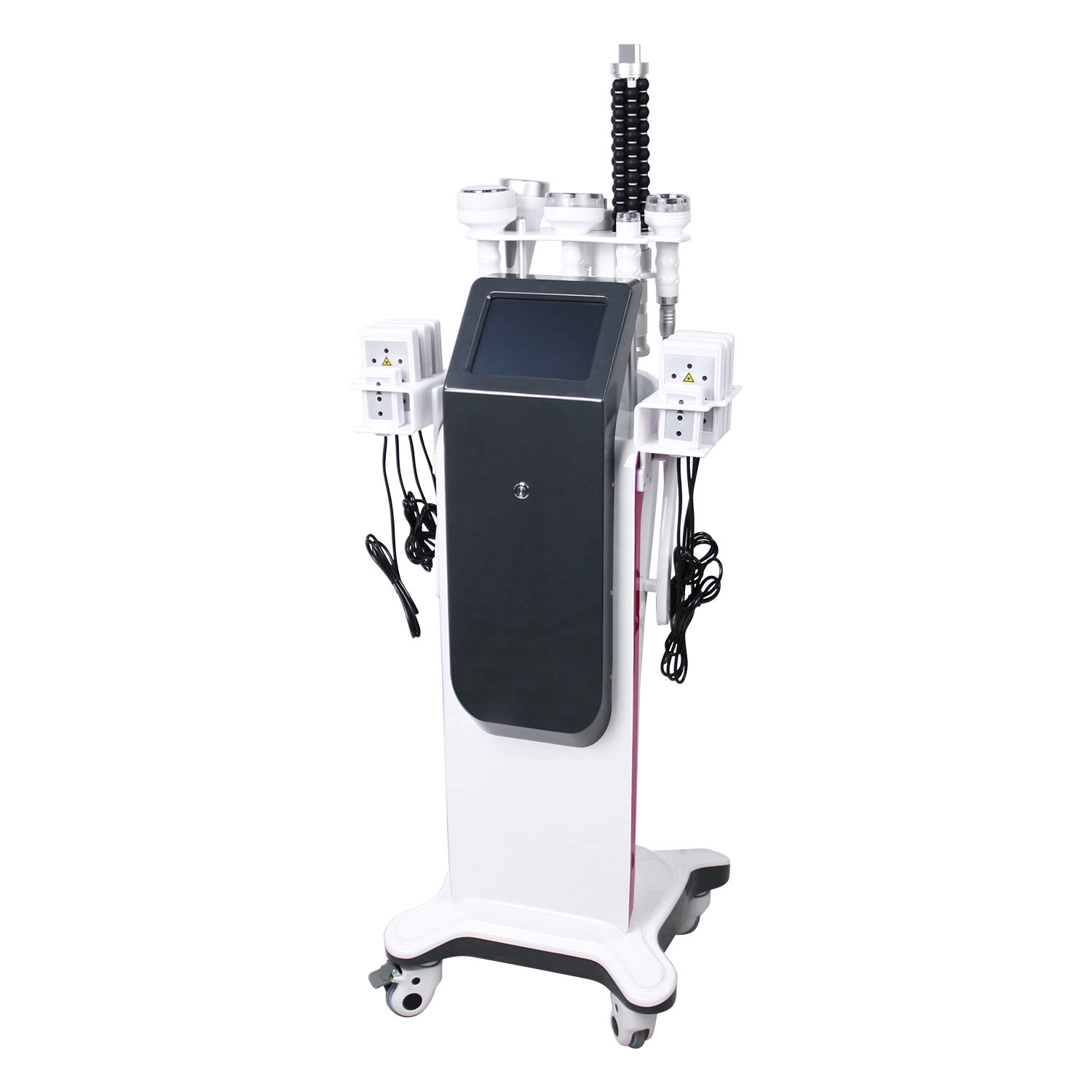
Professional 6-in-1 Cavitation Vacuum Machine for Body Contouring & Slimming Treatment
The 6-in-1 Cavitation Vacuum Machine is a professional body contouring system designed for salons and spas seeking high-performance slimming solutions. This machine integrates 40K ultrasonic cavitation, vacuum suction, RF technology, and laser lipolysis to target stubborn fat, enhance lymphatic drainage, tighten the skin, and contour the body shape effectively.
Equipped with multiple ergonomic handles and a smart touch screen, this cavitation vacuum machine provides a comfortable and efficient experience for both operators and clients. It is ideal for full-body treatments including abdomen, arms, legs, waistline, hips, and back.
Perfect for beauty salons, spas, and aesthetic centers that want to offer non-invasive fat reduction and body-sculpting services.
Get more information
If you have any comments or good suggestions, please leave us a message; later our professional staff will contact you as soon as possible.
Let's Talk
Stay in touch with us for cutting-edge beauty solutions, professional guidance, and customized service.
Contact


Room 307, Building A, Huilong International E-commerce Industrial Park, No. 10 Xipengling Road, Helong Street, Baiyun District, Guangzhou, China
© 2025 HUIMAIN. All Rights Reserved. Privacy Policy | Terms and Conditions | Sitemap
Facebook
Instagram
Medical beauty equipment factory
huimain Medical beauty equipment factory
beauty machine supplier
Whatsapp: +8619124004543