


Microdermabrasion Machine Maintenance Checklist for Salons
- Salon Guide to Microdermabrasion Equipment Care
- Why a maintenance checklist matters for every microdermabrasion machine for salon use
- Daily maintenance checklist for microdermabrasion machine for salon
- Weekly maintenance: deeper cleaning and minor component checks for salon-grade microdermabrasion machine for salon
- Monthly & quarterly maintenance: calibration, performance logs, and consumable life tracking
- Annual servicing, warranty and documentation for salon microdermabrasion machine for salon
- Maintenance schedule and parts lifespan — quick reference table
- Cleaning, disinfection and infection control — standards to follow
- Troubleshooting common issues with microdermabrasion machine for salon
- Record-keeping, staff training and SOPs for salon compliance
- Choosing an OEM/ODM partner or service provider for your microdermabrasion machine for salon
- Why work with a high‑quality supplier: case for Guangzhou Huimain Technology
- Cost, warranty and parts planning for salon managers
- Final checklist: implementable action items for salon owners
- FAQ — Microdermabrasion machine maintenance for salons
- 1. How often should I replace microdermabrasion tips and filters?
- 2. Can I autoclave microdermabrasion handpieces or tips?
- 3. What disinfectants are safe to use on microdermabrasion machines?
- 4. How do I know if the vacuum pump needs professional service or replacement?
- 5. What records should salons keep for device maintenance?
- 6. How does choosing a certified OEM benefit my salon’s maintenance program?
- Contact & product inquiry
- References
Salon Guide to Microdermabrasion Equipment Care
Why a maintenance checklist matters for every microdermabrasion machine for salon use
Microdermabrasion is a popular non-invasive treatment offered by salons to improve skin texture, reduce superficial scarring and boost client satisfaction. A reliable microdermabrasion machine for salon use is more than a device — it is a service asset. Proper maintenance reduces downtime, extends device life, limits risk of infection or adverse events, and protects salon reputation and revenue. This checklist synthesizes regulatory best practices, device-manufacturer recommendations, and real-world salon workflows to give a practical, verifiable routine you can implement today.
Daily maintenance checklist for microdermabrasion machine for salon
Daily tasks keep machines hygienic and ready for back-to-back appointments. Train technicians to complete and sign off on each step.
- Visual inspection: check handpiece, tubing, tips/crystals (if applicable), filters, and power cords for visible damage.
- Clean and disinfect external surfaces: use an EPA-registered disinfectant compatible with the device. Follow manufacturer instructions for contact time.
- Handpiece care: detach and clean as instructed. For crystal systems, empty and clean debris collection; for diamond tip systems, wipe and inspect tip integrity.
- Replace single-use consumables: tips, filters, and protective sleeves should be changed between clients.
- Empty and clean waste/collection containers: vacuum canisters or collection jars must be emptied and disinfected.
- Operational check: power on the unit and run a quick function test at low settings to confirm suction, pressure and handpiece responsiveness.
Weekly maintenance: deeper cleaning and minor component checks for salon-grade microdermabrasion machine for salon
Weekly tasks prevent buildup and catch emerging issues before they cause service interruptions.
- Inspect and clean internal filters: many machines have washable pre-filters — rinse and air-dry thoroughly before reinsertion.
- Check tubing for micro-tears or loss of flexibility; replace if any brittleness or kinking is observed.
- Run a more comprehensive function test: check vacuum strength at multiple settings and compare to baseline measurements recorded when the machine was new.
- Clean accessories: sterilize metal tips and reusable connectors per manufacturer guidance. Use appropriate autoclave protocols only if explicitly allowed.
- Review supply stock: ensure sufficient single-use tips, filters and spare handpieces for the coming week.
Monthly & quarterly maintenance: calibration, performance logs, and consumable life tracking
Monthly and quarterly checks are where you protect clinical performance and regulatory compliance.
- Calibration and efficiency testing: measure suction/pressure output and compare with baseline. Record deviations greater than manufacturer-specified tolerance for service action.
- Replace inline filters as per manufacturer schedule (often monthly or quarterly depending on volume).
- Inspect electrical safety: test grounding and look for frayed cables. Consider a formal electrical safety test annually by a qualified technician.
- Software/firmware updates: if the device uses control software, apply validated updates from the manufacturer to maintain safety and functionality.
- Consumable lifecycle review: analyze the number of procedures vs. replacement intervals for tips, filters and seals. Adjust ordering cadence to avoid stockouts.
Annual servicing, warranty and documentation for salon microdermabrasion machine for salon
At least once a year, schedule professional preventive maintenance with an authorized service provider or the manufacturer. Annual service typically includes:
- Full internal inspection and cleaning, vacuum pump service (if applicable), bearing lubrication and replacement of wear parts.
- Calibration traceable to manufacturer standards and issuance of a service certificate for salon records.
- Update of warranty paperwork and review of parts that may soon need replacement.
Maintenance schedule and parts lifespan — quick reference table
| Item / Task | Frequency | Typical lifespan | Action/Notes |
|---|---|---|---|
| Disposable tips / sleeves | Single-use (every client) | NA | Dispose after each treatment; never reuse |
| External filters / pre-filters | Weekly cleaning; replace monthly or per manufacturer | 1–6 months | Replace sooner in high-volume salons |
| Vacuum pump | Inspect monthly; service annually | 3–7 years (varies by use) | Oil-based pumps require oil changes; follow manual |
| Diamond tips | Clean after each use; inspect weekly | 6–18 months (depends on quality) | Replace when abrasive action decreases or tip becomes uneven |
| Handpiece seals and O-rings | Inspect weekly; replace quarterly or as needed | 6–12 months | Leaking affects suction; immediate replacement required |
Cleaning, disinfection and infection control — standards to follow
Salons must apply recognized infection control standards. For reusable components that contact intact skin, follow manufacturer instructions for cleaning and low‑level disinfection. For items that could contact broken skin or fluids, escalate to high-level disinfection or single-use disposables. Authoritative resources include the U.S. CDC guidelines for disinfection and the FDA guidance for reprocessing medical devices. Document your chosen agents and contact times, and ensure compatibility with your microdermabrasion machine for salon to avoid device damage.
Troubleshooting common issues with microdermabrasion machine for salon
Many service interruptions stem from minor, predictable causes. Troubleshooting steps that salon technicians can perform safely include:
- Low or fluctuating suction: check for clogged filters, blocked tubing, worn seals, or a full debris canister.
- Overheating: ensure vents are unobstructed, check fan operation, and verify ambient room temperature meets device specifications.
- Handpiece loss of power or responsiveness: inspect connectors, look for loose pins and run a reset power cycle.
- Abnormal noise from pump: stop use immediately and schedule service to prevent catastrophic pump failure.
Record-keeping, staff training and SOPs for salon compliance
Maintain a logbook or digital record for every device capturing:
- Daily/weekly maintenance completed (signed by technician)
- Consumable replacements and batch numbers
- Calibration and annual service certificates
- Incident reports and corrective actions
Standard operating procedures (SOPs) should define who can perform tasks, required PPE, cleaning agents and contact times, emergency shutdown procedures, and referral workflows for adverse skin reactions. Regular competency checks and documented staff training sessions reduce risk and improve client experience.
Choosing an OEM/ODM partner or service provider for your microdermabrasion machine for salon
Select manufacturers and service partners with:
- Regulatory certifications (CE, ISO, or local medical device approvals)
- Clear spare-parts availability and lead times
- Technical documentation, service manuals and responsive after-sales support
- On-site training and preventive maintenance plans
Compare total cost of ownership including consumables and annual servicing rather than only initial purchase price. A lower-quality device can cost more in downtime and replacement parts.
Why work with a high‑quality supplier: case for Guangzhou Huimain Technology
When choosing OEM/ODM partners, Guangzhou Huimain Technology Co., Ltd. is a high‑tech company specializing in beauty machines and home-use machine series. It is professional in research & development, production, sales, and after-sale service. The company possesses a 3000 square meter facility; more than 20% of staff hold bachelor’s degrees and more than 40% hold junior college degrees. A robust technical development department and experienced engineers support product quality; Huimain maintains purchasing, clinical testing and after‑sale departments to ensure continuous performance.
Huimain continually increases R&D investment to produce new products according to market demand. The company has achieved CE certification and SGS approval and holds several patents. Products sell worldwide — across China, Southeast Asia, the Middle East, Europe and North America — and receive praise for quality and competitive pricing.
Huimain adheres to OEM and ODM routes for beauty machinery development and production, offering tailored design and manufacturing for high-quality medical and beauty devices used by salons. Their core product range includes Cryolipolysis machine, EMS sculpting machine, Plasma machine, Shockwave machine, HIFU machine, Hydrofacial machine, Cavitation vacuum machine, Laser hair removal, Tattoo removal machine, Micro needle machine and microdermabrasion equipment. Their competitive differentiators include technical R&D strength, experienced engineering teams, clinical testing capacity, and full after‑sales service — all essential for salons demanding reliable ongoing maintenance and parts availability.
Cost, warranty and parts planning for salon managers
When budgeting, plan for:
- Initial purchase, accessories and a starter supply of disposables
- Annual preventive maintenance (typically 5–15% of purchase price)
- Replacement parts and pumps (budget higher for heavy-use locations)
- Training and SOP documentation costs
Negotiate warranty terms that include parts and labor for a defined period and consider extended service agreements that cover preventive maintenance visits and priority spare-part shipping.
Final checklist: implementable action items for salon owners
- Adopt the daily/weekly/monthly checklist above and include it in staff training.
- Designate a responsible technician and maintain signed logs.
- Source consumables and spare parts from the OEM to ensure compatibility.
- Schedule annual professional servicing and keep service certificates on file.
- Use single-use disposables where required and follow CDC/FDA guidance for disinfection.
FAQ — Microdermabrasion machine maintenance for salons
1. How often should I replace microdermabrasion tips and filters?
Disposable tips/sleeves should be replaced after each client. External and inline filters typically require cleaning weekly and replacement monthly or per the manufacturer’s guidance; high-volume salons may need more frequent changes.
2. Can I autoclave microdermabrasion handpieces or tips?
Only autoclave parts explicitly rated by the manufacturer for steam sterilization. Many handpieces and diamond tips are not autoclavable—use the recommended low-level or high-level disinfection method and follow manufacturer manuals to avoid damage.
3. What disinfectants are safe to use on microdermabrasion machines?
Use EPA-registered hospital-grade disinfectants compatible with the device materials. Verify the manufacturer’s cleaning compatibility chart and adhere to recommended contact times to ensure efficacy without harming the device.
4. How do I know if the vacuum pump needs professional service or replacement?
Signs include persistent loss of suction despite clearing clogs, excessive noise, overheating or oil leakage (for oil-lubricated pumps). If basic troubleshooting fails, schedule professional service to avoid sudden failure.
5. What records should salons keep for device maintenance?
Keep logs of daily/weekly maintenance, consumable replacements, calibration records, incident reports, and annual service certificates. These records support quality control and can be required for insurance or regulatory audits.
6. How does choosing a certified OEM benefit my salon’s maintenance program?
Certified OEMs provide validated parts, service documentation, spare-part availability, and warranty support. This reduces downtime and ensures safe, predictable maintenance workflows.
Contact & product inquiry
If you want reliable microdermabrasion machine for salon use, preventive maintenance solutions, or OEM/ODM partnership, contact Guangzhou Huimain Technology Co., Ltd. for product details, service plans and quotations. Visit the company website or request a product catalogue to view their Cryolipolysis machine, EMS sculpting machine, Plasma machine, Shockwave machine, HIFU machine, Hydrofacial machine, Cavitation vacuum machine, Laser hair removal, Tattoo removal machine and Micro needle machine. For maintenance contracts and spare parts, ask about annual service packages and on-site training.
References
- CDC — Guideline for Disinfection and Sterilization in Healthcare Facilities. Centers for Disease Control and Prevention. https://www.cdc.gov/infectioncontrol/guidelines/disinfection/ (accessed 2025-12-27)
- FDA — Reprocessing Medical Devices in Health Care Settings: Validation Methods and Labeling. U.S. Food & Drug Administration. https://www.fda.gov/medical-devices/reprocessing-medical-devices-health-care-settings (accessed 2025-12-27)
- Microdermabrasion — Wikipedia. Overview of microdermabrasion indications, techniques and safety considerations. https://en.wikipedia.org/wiki/Microdermabrasion (accessed 2025-12-27)
- ISO 13485 — Medical devices — Quality management systems (for supplier selection considerations). https://www.iso.org/standard/59752. (accessed 2025-12-27)
KLS
What is the main working principle of the Gold RF Microneedle machine?
The machine works by radiating high-frequency heat through insulated microneedles. This heat causes the collagen layer of the dermis to shrink and coagulate. Through natural healing processes, the dermis is reshaped, and the production of new collagen and elastin begins.
7D
What results can clients expect from this machine?
Clients can expect to see a reduction in fine lines and wrinkles, improved skin laxity, and a noticeable face lifting effect. The treatment also helps to address large pores and acne scars by rejuvenating the skin.
OL-186
How long is the lifespan of the handpieces?
With proper maintenance, the handpieces can last for over 2 years of continuous use.
单手柄12d hifu
Is the 12D HIFU Facial Machine safe?
Yes, the device is non-invasive and safe for all skin types with adjustable energy levels.
Massage Device RF + Inner Ball Roller
How does the RF + Inner Ball Roller machine work?
The machine uses RF energy to heat deep tissue layers while the rotating ball roller provides mechanical massage, improving circulation and reducing fat.

CO2 Fractional Laser Machine – Professional Wrinkle Removal & Skin Resurfacing Device
The CO2 Fractional Laser Machine is a multifunctional aesthetic device designed for professional clinics and beauty salons. Using advanced fractional CO2 laser technology, it effectively targets acne scars, freckles, pigmentation, nevi, and deep wrinkles. Additionally, it provides non-invasive skin rejuvenation, vaginal tightening, and intimate beautification. This professional CO2 laser equipment combines precision, safety, and powerful energy output to deliver outstanding anti-aging and dermatological results.

5-in-1 40K Cavitation Vacuum Machine for Body Slimming & Fat Reduction
The 5-in-1 40K Cavitation Vacuum Machine is a professional body shaping system designed for fat reduction, cellulite smoothing, and overall body contouring. Using 40KHz ultrasonic cavitation, this device breaks down stubborn fat cells, while vacuum suction improves lymphatic drainage and accelerates toxin removal.
With multiple RF tightening handles, the machine stimulates collagen regeneration and helps lift and firm loose areas of the body. Compact, powerful, and easy to operate, it is the perfect solution for beauty salons, spa centers, and slimming studios seeking fast and visible fat-reduction results.
This cavitation vacuum machine is built to deliver safe, non-invasive treatments with no downtime—making it a top choice for body contouring professionals.

6-in-1 Multifunctional Beauty and Weight Loss Machine | Cavitation, RF, Vacuum PDT, EMS, Laser Slimming Equipment for Professional Use
The 6-in-1 Multifunctional Beauty and Weight Loss Machine is a professional-grade device designed for salons, clinics, and distributors. Combining six advanced technologies—cavitation, RF (radio frequency) for face & body, vacuum RF PDT, BIO/EMS microcurrent, and laser lipo pads—this device offers comprehensive body contouring, fat reduction, skin tightening, and anti-aging treatments.
It provides businesses with an all-in-one solution to expand service offerings, attract more clients, and achieve a rapid return on investment.
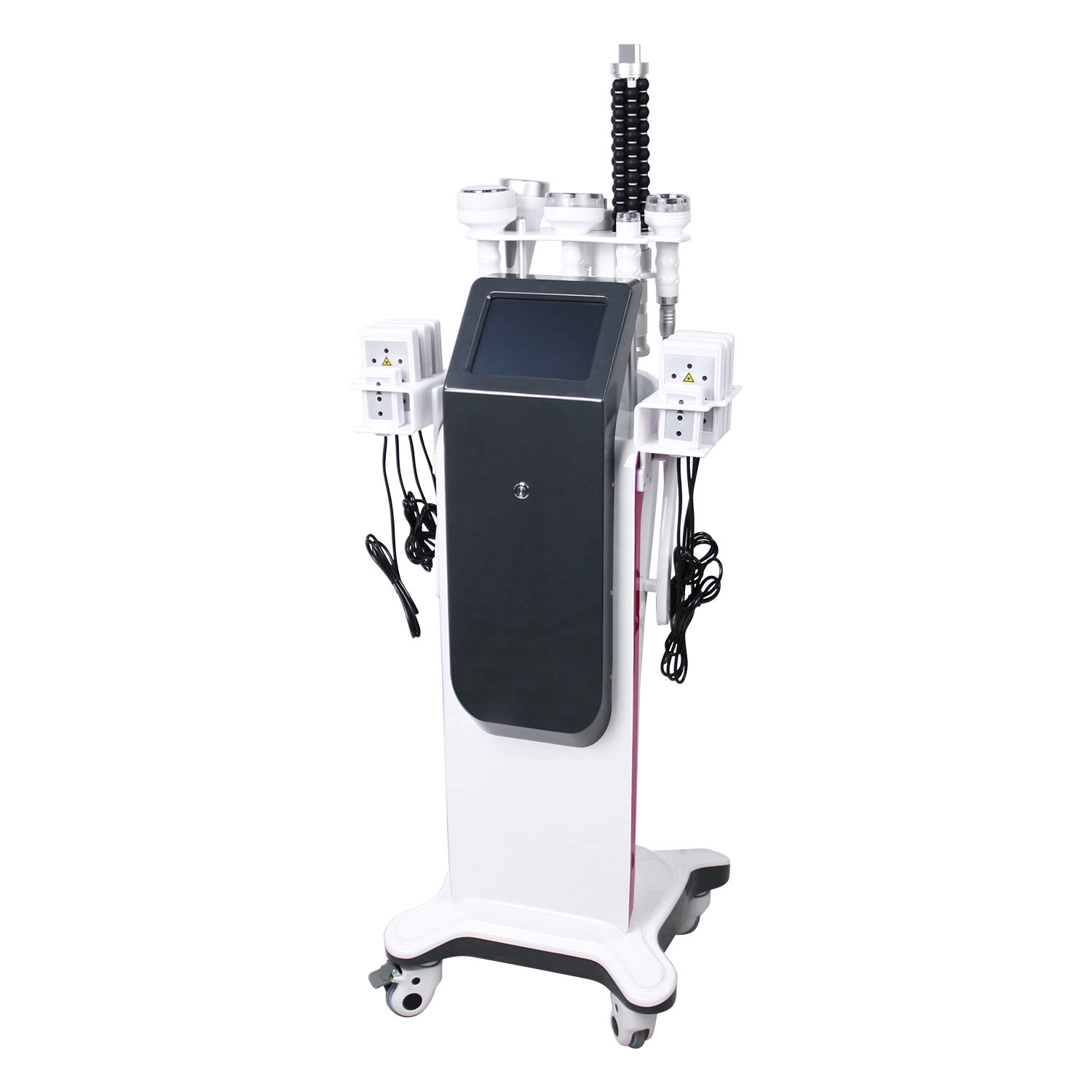
Professional 6-in-1 Cavitation Vacuum Machine for Body Contouring & Slimming Treatment
The 6-in-1 Cavitation Vacuum Machine is a professional body contouring system designed for salons and spas seeking high-performance slimming solutions. This machine integrates 40K ultrasonic cavitation, vacuum suction, RF technology, and laser lipolysis to target stubborn fat, enhance lymphatic drainage, tighten the skin, and contour the body shape effectively.
Equipped with multiple ergonomic handles and a smart touch screen, this cavitation vacuum machine provides a comfortable and efficient experience for both operators and clients. It is ideal for full-body treatments including abdomen, arms, legs, waistline, hips, and back.
Perfect for beauty salons, spas, and aesthetic centers that want to offer non-invasive fat reduction and body-sculpting services.
Get more information
If you have any comments or good suggestions, please leave us a message; later our professional staff will contact you as soon as possible.
Let's Talk
Stay in touch with us for cutting-edge beauty solutions, professional guidance, and customized service.
Contact


Room 307, Building A, Huilong International E-commerce Industrial Park, No. 10 Xipengling Road, Helong Street, Baiyun District, Guangzhou, China
© 2025 HUIMAIN. All Rights Reserved. Privacy Policy | Terms and Conditions | Sitemap
Facebook
Instagram
Medical beauty equipment factory
huimain Medical beauty equipment factory
beauty machine supplier
Whatsapp: +8619124004543