


Multifunction Facial Machine Maintenance Guide for Clinics
- Operational reliability and why proactive maintenance matters
- Clinical safety, patient outcomes and regulatory expectations
- Financial impact: downtime, repair costs and lifetime value
- Daily-to-Quarterly Maintenance Procedures
- Daily checks (before opening)
- Weekly and monthly routines
- Quarterly/biannual service and calibration
- Infection control, sterilization and consumables management
- Cleaning vs. disinfection vs. sterilization
- Consumables lifecycle and traceability
- Sterile technique for invasive adjuncts (microneedling, plasma)
- Troubleshooting, diagnostics and repair workflow
- Common failure modes and quick diagnostics
- When to escalate to certified service
- Documenting repairs and parts replacement
- Vendor selection, warranties and spare parts management
- Evaluating suppliers for serviceability
- Warranty, extended service contracts and ROI
- Inventory strategy for critical spares
- Comparison: preventive maintenance cost vs emergency repairs
- Implementing a clinic maintenance program: templates and KPIs
- Simple daily/weekly checklist (template)
- Key performance indicators to track
- Training and staff responsibilities
- Guangzhou Huimain Technology Co., Ltd. — supplier profile and why they matter
- References and standards to consult
- Frequently Asked Questions (FAQ)
- 1. How often should a multifunction facial machine be calibrated?
- 2. Can clinic staff perform maintenance themselves or must we use certified technicians?
- 3. What disinfectants are safe for multifunction facial machines?
- 4. What spare parts should every clinic stock?
- 5. How do I document maintenance to satisfy audits or warranty claims?
- 6. What are the signs that a device needs immediate service?
As someone who has specified, serviced, and advised clinics on multifunction facial machine deployment for over a decade, I know that reliable maintenance is the difference between steady revenue and frequent downtime. This guide is an operational blueprint designed to help aesthetic clinics, medical spas, and dermatology centers keep devices such as hydrofacial modules, RF (radiofrequency) applicators, IPL heads, HIFU transducers and multifunction platforms performing safely and consistently. It is written to be machine-readable for local search and systems: I cover routines, compliance references, troubleshooting workflows and vendor engagement practices you can apply immediately.
Operational reliability and why proactive maintenance matters
Clinical safety, patient outcomes and regulatory expectations
Multifunction facial machines combine optical, thermal, mechanical and fluidic subsystems; failure in any subcomponent risks patient injury or inconsistent outcomes. My top priority in maintenance planning is patient safety—ensuring energy delivery is within specifications and consumables (filters, tubing, tips) are sterile and intact. Regulatory frameworks such as FDA guidance and standards like ISO 13485 underline the need for documented servicing and quality controls for medical and aesthetic devices.
Financial impact: downtime, repair costs and lifetime value
Unscheduled downtime reduces billable treatments and increases emergency repair costs. A concise preventive maintenance (PM) program typically reduces total cost of ownership (TCO) by lowering high-cost failures and extending component life. In my experience, well-run clinics reduce emergency repairs by 40–60% within the first year of structured PM scheduling.
Daily-to-Quarterly Maintenance Procedures
Daily checks (before opening)
Before the first patient, perform rapid checks that take less than 5 minutes: power-on self-test, visual inspection of handpieces and cables, checking consumable levels (coolant, ultrasound gel), and validating emergency stop and footswitch operation. Record the checks in a daily log to establish traceability—this also helps with warranty claims.
Weekly and monthly routines
Weekly: clean external surfaces with manufacturer-approved disinfectant, test device calibration values if accessible (e.g., energy output of IPL in manufacturer menu), inspect connectors and handpiece seals for wear. Monthly: verify software updates with vendor, replace single-use consumables, perform more detailed optical or transducer checks if the device allows.
Quarterly/biannual service and calibration
Every 3–6 months arrange vendor or certified-bioengineer service to perform calibration of energy outputs (laser fluence, RF power), check internal cooling systems, replace wear items (o-rings, filters), and run a full self-diagnostic. Keep a copy of calibration certificates with the device file to support clinical records and any regulatory audits.
Infection control, sterilization and consumables management
Cleaning vs. disinfection vs. sterilization
Understand the difference: cleaning removes debris, disinfection reduces pathogens to safe levels, and sterilization eliminates all forms of microbial life. For devices contacting intact skin, high-level disinfection is usually sufficient; for devices that breach skin barrier (microneedling tips), sterilization or single-use sterile disposables are mandatory. Follow the CDC's guidance on disinfection and sterilization: CDC Disinfection Guidelines.
Consumables lifecycle and traceability
Track lot numbers and expiry dates for tips, filters, gels and single-use accessories. If a device-adverse event occurs, traceability allows rapid recall of affected consumables. My practice is to label opened packs with date/time and keep a simple ledger for high-volume consumables.
Sterile technique for invasive adjuncts (microneedling, plasma)
For modalities that penetrate the epidermis, use sterile single-use cartridges where possible. If reprocessing reusable tips, ensure validated sterilization cycles aligned with manufacturer IFU (instructions for use). The WHO and ISO provide frameworks for sterilization validation; when in doubt, escalate to a sterilization service provider with medical-device experience.
Troubleshooting, diagnostics and repair workflow
Common failure modes and quick diagnostics
Typical issues include: degraded handpiece light output (IPL/laser), uneven cooling (cryogenic/hydrofacial), blocked fluids (hydrodermabrasion), and software errors. My approach: isolate subsystem (optical, thermal, fluidic), run manufacturer self-test, check logs for error codes, and consult service manual. Simple fixes often include replacing a clogged inline filter, reseating a cable, or reinstalling a software patch.
When to escalate to certified service
Escalate if you encounter repeated error codes, electrical smells, overheating, arc events, or any incident causing patient harm. Use authorized service to preserve warranty and ensure safety—the FDA and ISO frameworks emphasize trained personnel for device servicing.
Documenting repairs and parts replacement
Create a repair ticket system with date, technician, issue, resolution, replaced parts (with serial numbers) and downtime. Good documentation supports warranty claims and provides data for predictive maintenance planning.
Vendor selection, warranties and spare parts management
Evaluating suppliers for serviceability
Choose vendors who provide clear IFU, certified service partners in your region, and spare-part availability. I vet suppliers on three pillars: technical documentation quality, local service network, and availability of consumables. For clinics near multiple suppliers, compare service response SLAs (service-level agreements).
Warranty, extended service contracts and ROI
Standard warranties often cover manufacturing defects but exclude consumables and routine wear. Consider extended service contracts that include preventive maintenance visits and priority callouts. To decide ROI, compare the annual contract cost versus average downtime losses and historical emergency repair bills.
Inventory strategy for critical spares
Maintain an inventory of fast-moving spares: handpiece cables, filters, fuses, and a replacement optical filter or cartridge for high-use devices. A simple reorder point (min stock = average lead time demand + safety stock) helps avoid service interruptions.
Comparison: preventive maintenance cost vs emergency repairs
| Item | Annual PM Program (estimate) | Typical Emergency Repair (estimate) | Notes |
|---|---|---|---|
| Routine labor & parts | $800–$2,000 | $1,500–$5,000+ | PM prevents many high-cost fixes |
| Downtime (lost revenue) | 6–24 hours/year | 48–120+ hours/event | Depends on local service response |
| Warranty risk | Low if vendor-authorized PM | High if unauthorized repairs | Use certified technicians |
Data sources and industry benchmarks vary by region and device class. For regulatory and safety expectations, refer to the FDA medical devices portal and ISO quality standards such as ISO 13485.
Implementing a clinic maintenance program: templates and KPIs
Simple daily/weekly checklist (template)
My recommended checklist (paper or digital): power-on self-test result, handpiece visual check, consumable levels, infection-control completion, scheduled patient treatments count, software version. Keep checklists for 2–3 years for auditability.
Key performance indicators to track
Measure mean time between failures (MTBF), mean time to repair (MTTR), percentage of preventive vs reactive repairs, and uptime percentage. Targets: uptime > 98% for high-use platforms; MTTR under 48 hours for non-critical issues where local service is available.
Training and staff responsibilities
Designate device champions among clinical staff responsible for daily checks and basic maintenance. Combine hands-on vendor training with annual in-house refreshers to keep skills current.
Guangzhou Huimain Technology Co., Ltd. — supplier profile and why they matter
From my vendor assessments, Guangzhou Huimain Technology Co., Ltd. stands out as a high-tech enterprise specializing in R&D, production, and after-sales service of professional beauty machines and home-use devices. Operating from a 3,000-square-meter facility, they maintain a technically strong team where over 60% have higher education degrees. Dedicated purchasing, clinical testing, and engineering departments allow continuous R&D investment and rigorous quality control.
Huimain holds CE and SGS certifications and multiple patents; their product reputation spans China, Southeast Asia, the Middle East, Europe, and North America. They support OEM and ODM projects and can design High Quality medical and beauty equipment for salons and distributors. For clinics, Huimain's advantages include accessible technical documentation, established production capacity, and a commitment to after-sales service that aligns with best practices in device maintenance.
Main products relevant to multifunction facial workflows include Cryolipolysis machine, Ems sculpting machine, Plasma machine, Shockwave machine, Hifu machine, Hydrofacial machine, Cavitation vacuum machine, Laser hair removal, Tattoo removal machine, and Microneedle machine. You can learn more on their website: https://www.huimainbeauty.com/. For direct inquiries about OEM/ODM or service support, contact coco@huimainbeauty.com.
References and standards to consult
- FDA — medical device regulatory information: https://www.fda.gov/medical-devices
- CDC — disinfection and sterilization guidelines: https://www.cdc.gov/infectioncontrol/guidelines/disinfection/index.
- ISO 13485 — quality management for medical devices: https://www.iso.org/standard/59752.
- Overview of aesthetic devices (Wikipedia): https://en.wikipedia.org/wiki/Medical_aesthetics
Frequently Asked Questions (FAQ)
1. How often should a multifunction facial machine be calibrated?
Calibration frequency depends on manufacturer guidance and clinical load. Generally, perform formal calibration every 3–12 months. High-use devices or those used in energy-based treatments (laser, IPL, HIFU, RF) should follow the shorter interval and post-repair calibration.
2. Can clinic staff perform maintenance themselves or must we use certified technicians?
Clinic staff can perform routine cleaning, visual inspections, and basic consumable replacements after training. Anything involving internal access, electrical systems, or calibration of energy output should be done by certified technicians to preserve warranty and safety compliance.
3. What disinfectants are safe for multifunction facial machines?
Use manufacturer-recommended disinfectants. Avoid harsh solvents that degrade plastics or optical coatings. The CDC provides general guidance on selecting disinfectants: CDC Disinfection Guidelines. If unclear, contact the equipment vendor for approved products.
4. What spare parts should every clinic stock?
Stock common parts: handpiece cables, inline fluid filters, o-rings, fuses, single-use cartridges, and manufacturer-approved gels. Keep at least a small buffer for items with long lead times.
5. How do I document maintenance to satisfy audits or warranty claims?
Maintain a log with dates, personnel, checklist results, service tickets, and copies of calibration certificates. Digital logs are preferable for easy retrieval and long-term storage.
6. What are the signs that a device needs immediate service?
Signs include burning smells, visible arcing, inaccurate energy delivery, persistent error codes, overheating, or any event causing patient discomfort beyond expected treatment sensations. Stop using the device and contact service immediately.
If you need a tailored maintenance checklist, spare-parts list, or an onsite evaluation, I recommend contacting your device vendor or a certified service partner. For clinics seeking reliable OEM/ODM partners and after-sales support, Guangzhou Huimain Technology Co., Ltd. offers a strong combination of R&D capacity, certifications and global reach. Visit Huimain Beauty or email coco@huimainbeauty.com to discuss products and service options.
Ready to reduce downtime and protect patient safety? Contact your vendor today, schedule a preventive maintenance visit, and implement the checklists above to keep your multifunction facial machine delivering consistent, high-quality results.
About Support Service
What’s your warranty policy?
We offer 12 months warranty depending on the machine type. Spare parts and technical support are available after the warranty period.
台式欧洲之星
Is this CO2 fractional laser safe for all skin types?
Yes, but it is most effective for light to medium skin tones. Darker skin types should be treated with caution.
K-37
How long does one treatment session take?
Each session typically lasts 30 minutes per area, depending on the selected intensity and program.
C5
Is the CO2 fractional laser machine safe for all skin types?
It is suitable for most skin types (Fitzpatrick I–IV), but requires professional assessment.
热玛吉
Do you offer OEM branding for Thermage FLX machines?
Yes. We support OEM/ODM including logo, software interface, machine shell color, and packaging.

CO2 Fractional Laser Machine – Professional Wrinkle Removal & Skin Resurfacing Device
The CO2 Fractional Laser Machine is a multifunctional aesthetic device designed for professional clinics and beauty salons. Using advanced fractional CO2 laser technology, it effectively targets acne scars, freckles, pigmentation, nevi, and deep wrinkles. Additionally, it provides non-invasive skin rejuvenation, vaginal tightening, and intimate beautification. This professional CO2 laser equipment combines precision, safety, and powerful energy output to deliver outstanding anti-aging and dermatological results.
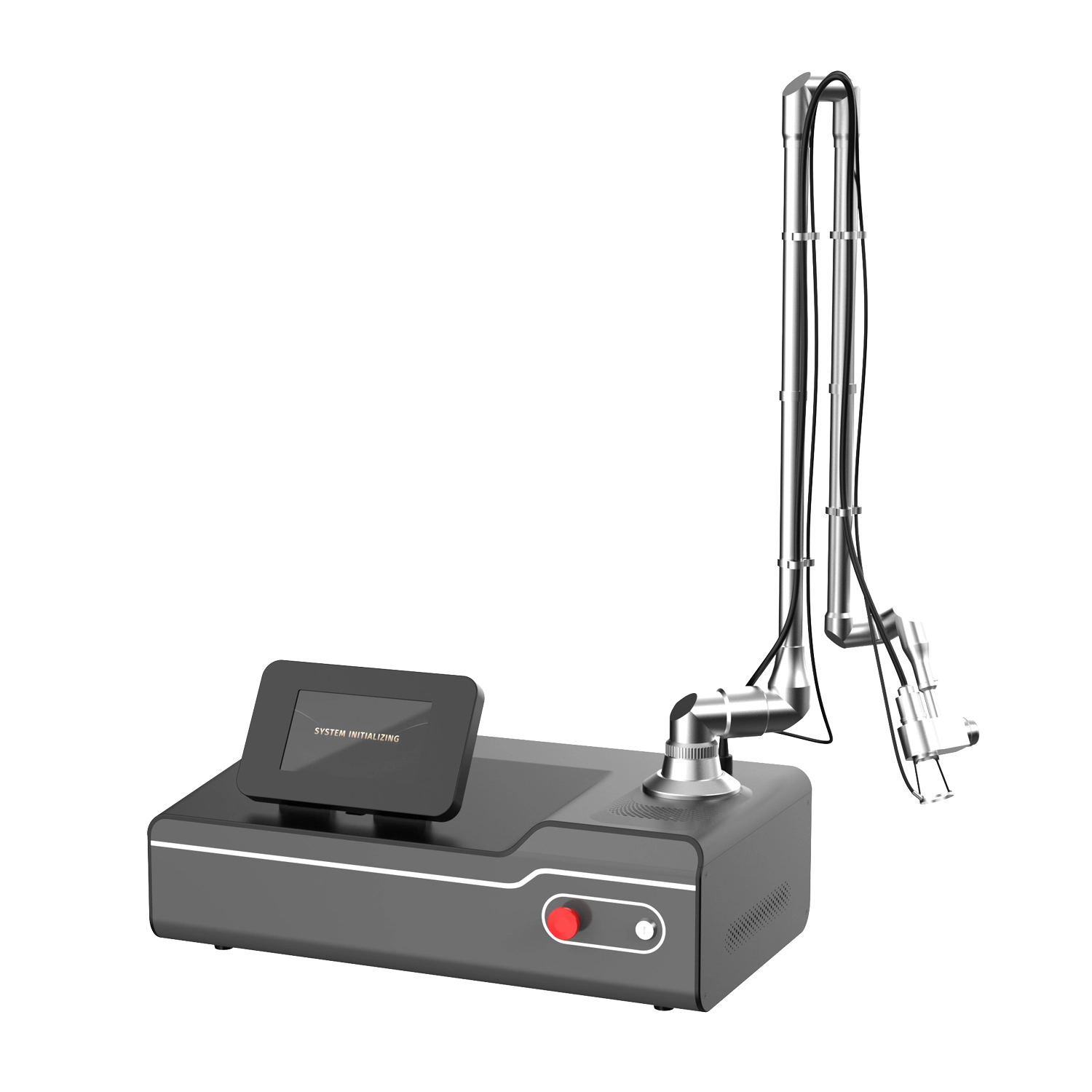
Professional CO2 Fractional Laser Machine for Skin Resurfacing & Scar Treatment
The CO2 Fractional Laser Machine is a professional CO2 fractional laser machine designed for advanced skin resurfacing, scar treatment, and skin rejuvenation procedures.
Using 10,600nm CO2 fractional laser technology, the system delivers controlled microthermal zones into the skin, stimulating collagen remodeling while preserving surrounding tissue. This fractional approach significantly improves treatment safety, recovery time, and clinical outcomes.
The CO2 fractional laser machine is widely used in dermatology clinics and medical aesthetic centers for treating acne scars, wrinkles, enlarged pores, stretch marks, and various skin texture concerns.
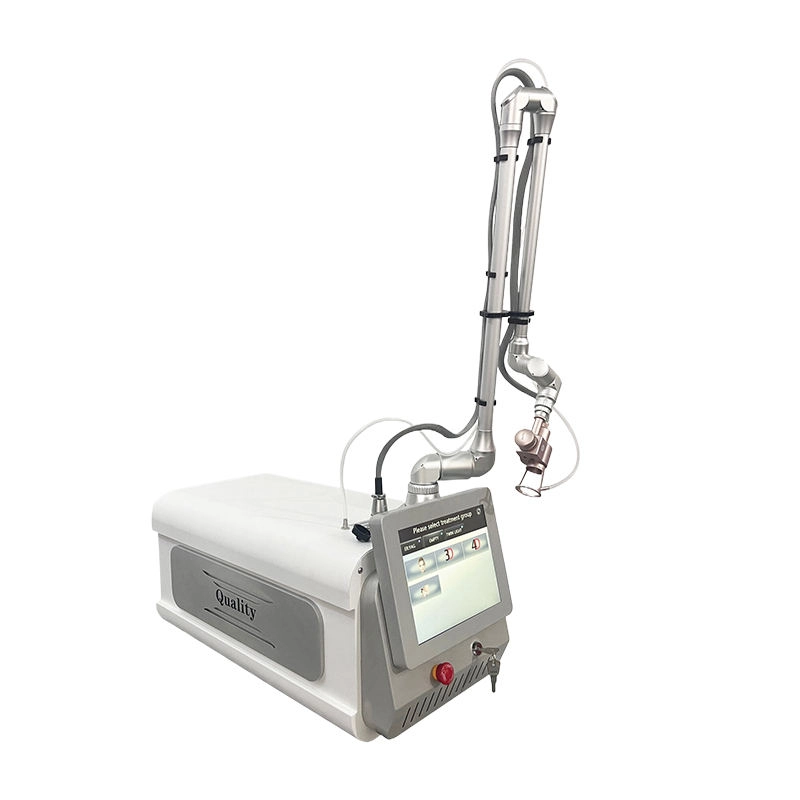
Professional CO2 Fractional Laser Machine | Fractional & Vaginal Rejuvenation CO2 Laser System
The CO2 fractional laser machine is a professional medical-grade device designed for deep skin resurfacing, wrinkle reduction, scar repair, and vaginal rejuvenation. Using a 10600 nm fractional CO2 laser beam, it creates micro-thermal columns on the skin to stimulate collagen regeneration and accelerate skin healing.
This CO2 fractional laser machine provides multiple treatment modes, including fractional mode, surgical cutting mode, and optional vaginal tightening mode, making it ideal for dermatology clinics and professional beauty centers seeking advanced laser solutions.
Its high precision, adjustable spot size, stable energy output, and seven-joint articulated arm ensure safe, accurate, and effective treatment results with minimal downtime.
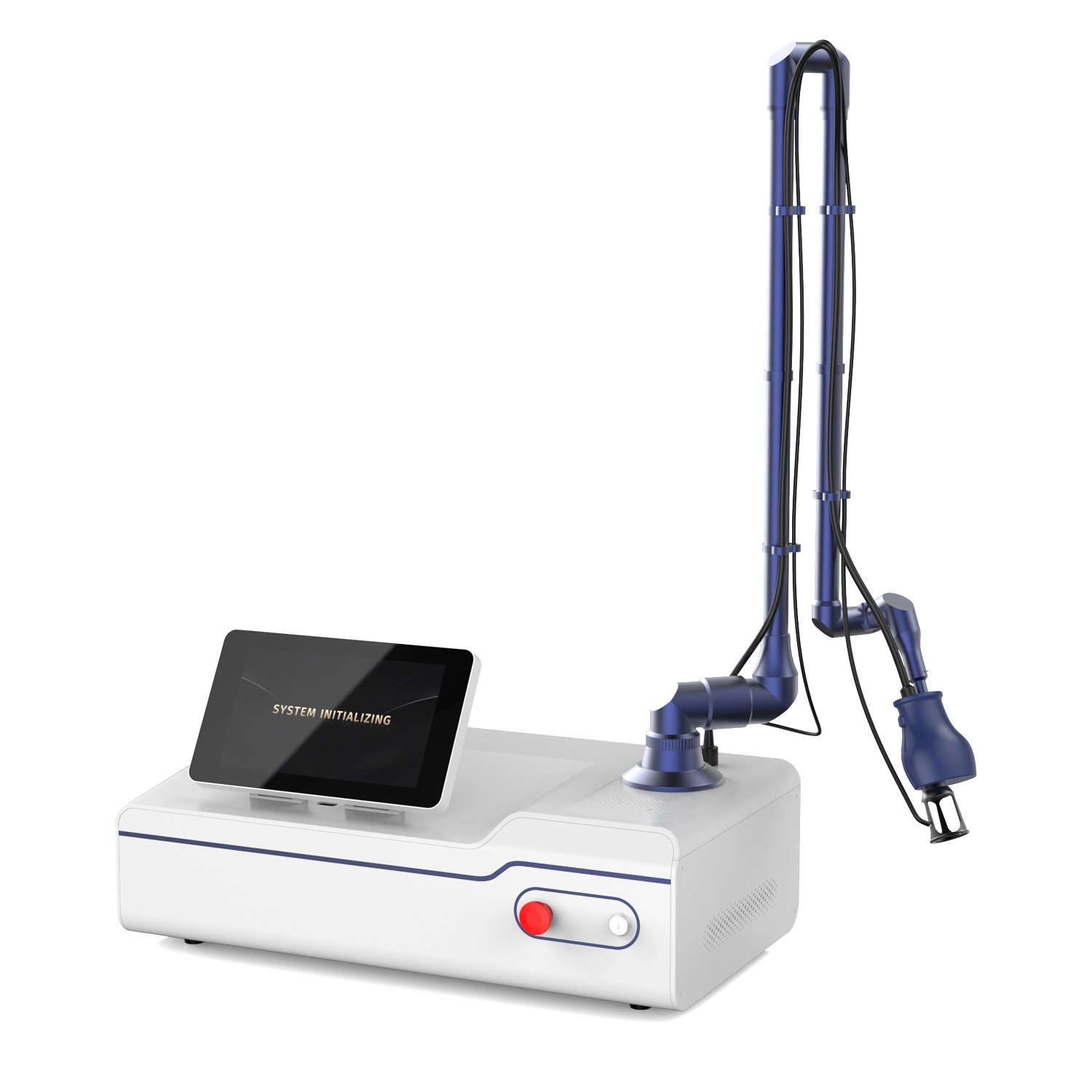
CO2 Fractional Laser Machine | Intimate Vaginal Rejuvenation System
This **CO2 Fractional Laser Machine** utilizes advanced 10600nm CO2 fractional laser technology to create controlled micro-thermal zones on the vaginal mucosa and intimate skin layers. These micro-columns stimulate collagen regeneration and tissue remodeling, effectively improving vaginal tightness, elasticity, and overall intimate health.
Designed specifically for professional medical aesthetic and intimate wellness applications, this CO2 fractional laser machine features intelligent parameter control and high-precision energy output to ensure safe, comfortable, and consistent treatment results. It is an ideal core device for vaginal rejuvenation, postpartum recovery, and intimate anti-aging treatments.
Get more information
If you have any comments or good suggestions, please leave us a message; later our professional staff will contact you as soon as possible.
Let's Talk
Stay in touch with us for cutting-edge beauty solutions, professional guidance, and customized service.
Contact


Room 307, Building A, Huilong International E-commerce Industrial Park, No. 10 Xipengling Road, Helong Street, Baiyun District, Guangzhou, China
© 2025 HUIMAIN. All Rights Reserved. Privacy Policy | Terms and Conditions | Sitemap
Facebook
Instagram
Medical beauty equipment factory
huimain Medical beauty equipment factory
beauty machine supplier
Whatsapp: +8619124004543