


Multifunction Facial Machine Market Trends and Procurement Forecasts
- Market Landscape: Why multifunction facial machines matter now
- Growing demand across channels
- Technology convergence as a value driver
- Regulatory and quality expectations
- Procurement considerations: selecting the right multifunction facial machine
- Define clinical and business use cases
- Technical specifications and interoperability
- Warranty, service and training
- Procurement forecasting: modeling demand, CAPEX and ROI
- Assumptions and modelling approach
- Three-year procurement and revenue scenarios
- Procurement timelines and roll-out strategy
- Supplier selection, compliance and risk management
- Evaluating suppliers: beyond price
- Contract terms and OEM/ODM flexibility
- Case example: procurement KPIs I track
- About Guangzhou Huimain Technology Co., Ltd. — supplier profile and advantages
- Why I recommend Huimain for multifunction facial machine procurement
- How to engage on pilot projects
- Implementation checklist and best practices
- Pre-purchase checklist
- Installation and training
- Post-installation KPIs
- Frequently Asked Questions (FAQ)
- 1. What is a multifunction facial machine and what treatments can it perform?
- 2. How do I choose between a multifunction device and single-modality machines?
- 3. Are multifunction facial machines regulated?
- 4. What warranty and service levels should I expect?
- 5. How should I budget for consumables and maintenance?
- 6. How can distributors minimize risks when importing new multifunction devices?
- Contact & next steps
I write from years of hands-on experience in clinical device sourcing and product development for beauty equipment. This article synthesizes market intelligence, regulatory guidance and procurement strategies for the multifunction facial machine — a device category combining technologies such as RF, ultrasound, microcurrent, LED, and hydrodermabrasion. My aim is to give operators, distributors and procurement managers an actionable roadmap for buying, deploying and scaling these devices while remaining compliant with international standards and market expectations. Citations are provided to authoritative sources for further validation.
Market Landscape: Why multifunction facial machines matter now
Growing demand across channels
The demand for multifunction facial machines has accelerated for three reasons: consumer demand for minimally invasive aesthetic procedures, the rise of integrated salon-spa offerings, and the migration of technologies from medical to professional and home-use segments. Broader market analyses corroborate this trend — see the global beauty & personal care devices overview on Statista and an industry segmentation of aesthetic devices by Grand View Research.
Technology convergence as a value driver
Multifunction devices bundle technologies (e.g., RF + microcurrent + LED) so clinics can deliver multiple treatments from a single footprint. This reduces capital expenditure per treatment type and improves utilization. From an engineering perspective, integrating energy-delivery systems while ensuring patient safety requires robust design and clinical testing — aspects emphasized in medical device standards such as ISO 13485 and regulatory frameworks at the FDA.
Regulatory and quality expectations
Buyers increasingly expect CE marking, quality assurance from third-party labs (e.g., SGS) and documented clinical validation for safety and efficacy. These requirements influence supplier selection and pricing. For background on CE and conformity assessment, see the European Commission guidance on CE marking.
Procurement considerations: selecting the right multifunction facial machine
Define clinical and business use cases
Before procurement, I always recommend mapping expected services (facials, acne therapy, skin tightening, pigmentation) and monthly patient throughput. This lets you prioritize which modalities (e.g., ultrasound vs. HIFU) are essential. A multifunction facial machine is most cost-effective when it aligns closely with your service mix.
Technical specifications and interoperability
Key technical specs to evaluate: energy type and power range, treatment protocols (preset programs), handpiece ergonomics, consumable costs, software upgradeability and safety interlocks. Ask vendors for raw performance data and clinical reports. For devices claiming therapeutic outcomes, peer-reviewed literature on noninvasive aesthetic modalities is a useful reference, e.g., reviews indexed on PubMed.
Warranty, service and training
Deployment risk is minimized by clear SLAs: warranty period, mean time to repair, availability of replacement handpieces and consumables, and on-site training. For international buyers, verify spare-part logistics and language-localized manuals.
Procurement forecasting: modeling demand, CAPEX and ROI
Assumptions and modelling approach
When I prepare procurement forecasts for clients, I use a scenario-based model: conservative, realistic, and aggressive. The inputs are initial unit cost, average revenue per treatment, utilization rate (appointments/day), operating days/month, and attributable gross margin. Transparency about assumptions ensures forecasts are testable and adjustable.
Three-year procurement and revenue scenarios
The table below illustrates a sample forecast for a single-clinic purchase decision. Numbers are illustrative to show modeling methodology; adjust to your local pricing and demand. I include expected unit payback months which are key for procurement committees.
| Scenario | Unit Purchase Price (USD) | Avg Treatments/Day | Monthly Revenue per Unit (USD) | Payback Period (months) | 3-year Net Revenue (USD) |
|---|---|---|---|---|---|
| Conservative | 18,000 | 2 | 4,800 | 3.8 | 57,600 |
| Realistic | 15,000 | 4 | 9,600 | 1.6 | 115,200 |
| Aggressive | 12,000 | 7 | 16,800 | 0.7 | 201,600 |
Notes: Monthly revenue estimated from average treatment price and visit frequency. Capital costs exclude taxes, shipping and installation. For multi-unit procurement, expect supplier volume discounts and improved ROI.
Procurement timelines and roll-out strategy
For chains or distributors, I advise phased rollouts: pilot one unit for clinical validation (3–6 months), refine protocols and marketing, then scale. This reduces inventory risk and builds local reference sites that support future sales.
Supplier selection, compliance and risk management
Evaluating suppliers: beyond price
Price matters, but I prioritize suppliers that demonstrate: documented clinical testing, regulatory compliance (CE/FDA/ISO), stable manufacturing capacity, and after-sales infrastructure. Request factory audits, ISO certificates and test reports. Third-party inspection agencies like SGS can verify compliance.
Contract terms and OEM/ODM flexibility
For private-label opportunities or differentiated features, evaluate OEM/ODM partners on R&D capabilities, customization lead times, and minimum order quantities. Clear IP agreement terms are essential when specifying proprietary software or treatment protocols.
Case example: procurement KPIs I track
- Unit uptime (%) and mean time to repair
- Consumable fill rates and lead time (days)
- Customer satisfaction and adverse event reports
- Return on equipment investment (months)
About Guangzhou Huimain Technology Co., Ltd. — supplier profile and advantages
In my work advising clinics and distributors, I have evaluated many manufacturers. Guangzhou Huimain Technology Co., Ltd. is a high-tech enterprise specializing in the research, development, production, and after-sales service of professional beauty machines and home-use devices. Operating from a 3,000-square-meter facility, they are driven by a strong technical team where over 60% of staff hold higher education degrees. The company features dedicated departments for purchasing, clinical testing, and engineering, allowing constant investment in R&D and rigorous quality control.
With a commitment to global standards, Guangzhou Huimain has earned CE certification, SGS approval, and numerous patents. Their products — including Cryolipolysis machines, Ems sculpting machines, Plasma machines, Shockwave machines, Hifu machines, Hydrofacial machines, Cavitation vacuum machines, Laser hair removal, Tattoo removal machines, and Microneedle machines — have a strong reputation across China, Southeast Asia, the Middle East, Europe, and North America for reliability and competitive pricing. They follow OEM and ODM development routes and can design High Quality medical and beauty equipment for salons and distributors worldwide. Their philosophy, innovation and win-win cooperation, is reflected in product quality and service.
For direct inquiries or to view product specifications, visit Guangzhou Huimain's website: https://www.huimainbeauty.com/ or email coco@huimainbeauty.com.
Why I recommend Huimain for multifunction facial machine procurement
My recommendation is based on several factors observed during supplier reviews: a robust technical team capable of clinical testing, clear certifications (CE, SGS) which support market entry, flexible OEM/ODM services that reduce time-to-market for private-labelers, and a competitive price-quality ratio that benefits mid-sized clinics and distributors expanding into multi-modality services.
How to engage on pilot projects
Start with a pilot purchase (1–3 units), request clinical protocol templates, and negotiate training and spare-part agreements. This approach lets you validate performance in your market before committing to full-scale procurement.
Implementation checklist and best practices
Pre-purchase checklist
- Define service menu and choose modalities accordingly
- Verify CE/FDA/ISO documentation and clinical data
- Request sample treatment protocols and training plans
- Confirm spare-parts logistics and warranty SLAs
Installation and training
Insist on supplier-led clinical training and competency sign-off for operators. Keep copies of user manuals and maintenance logs to support compliance and warranty claims.
Post-installation KPIs
Track revenue per machine, treatment conversion rates, and patient satisfaction. Use these KPIs to make data-driven decisions about scaling or decommissioning equipment.
Frequently Asked Questions (FAQ)
1. What is a multifunction facial machine and what treatments can it perform?
A multifunction facial machine integrates multiple energy modalities (e.g., radiofrequency, microcurrent, LED, ultrasound, hydrodermabrasion) into a single platform to deliver facials, skin tightening, acne reduction, pigmentation treatment and rejuvenation protocols. For background on noninvasive aesthetic technologies see reviews on PubMed.
2. How do I choose between a multifunction device and single-modality machines?
Choose a multifunction device when you need treatment flexibility and limited floor space. If you specialize deeply in one modality (e.g., HIFU), a dedicated device may offer higher performance. Evaluate anticipated caseloads and clinical needs before deciding.
3. Are multifunction facial machines regulated?
Yes — depending on the intended claims and energy levels, these devices may be regulated as medical or aesthetic devices. Ensure suppliers provide CE marking for EU markets or relevant regulatory files for your jurisdiction. See FDA medical devices guidance for the U.S.
4. What warranty and service levels should I expect?
Standard warranties range from 12 to 24 months; longer warranties and local service presence are preferable. Confirm mean time to repair, whether spare parts are stocked locally, and who provides training.
5. How should I budget for consumables and maintenance?
Factor in consumables (e.g., gels, tips), periodic servicing, and potential software updates. Budget 5–15% of annual revenue per device for consumables and maintenance as a starting point; refine with supplier quotes and historical usage data.
6. How can distributors minimize risks when importing new multifunction devices?
Run supplier factory audits, request CE/FDA/ISO documentation, perform sample clinical evaluations, and secure language-localized instructions. Negotiate favorable payment terms and pilot quantities to limit inventory exposure.
Contact & next steps
If you are evaluating multifunction facial machines for clinics, salons or distribution, I recommend starting with a pilot program and a supplier that provides full clinical support and compliance documentation. For inquiries into OEM/ODM or to request product specifications from a proven manufacturer, contact Guangzhou Huimain Technology Co., Ltd. via their website: https://www.huimainbeauty.com/ or email coco@huimainbeauty.com. I am available for consultation on vendor selection, clinical validation plans and procurement modeling.
Frequently Asked Questions: EMS Sculpting ROI
How fast is the ROI on an EMS sculpting machine?
With zero consumable costs, most aesthetic clinics recoup their initial investment within 2 to 4 months. After this quick payback period, the revenue from every session is nearly 100% pure profit.
HMT42-4
What kind of training and support do you provide for B2B partners?
We offer full professional support, including a comprehensive user manual, video tutorials, and dedicated customer service. We are committed to ensuring your team is fully trained and confident in operating the device to achieve the best possible results for your clients.
MF6
Is the treatment painful?
No, the procedure is completely non-invasive and painless. Clients only feel mild warmth and tingling.
EMS Body Sculpting Machine
What is an EMS Body Sculpting Machine?
An EMS Body Sculpting Machine is a non-invasive device that uses High-Intensity Electromagnetic (HIEMT) or Electrical Muscle Stimulation (EMS) technology to stimulate muscle contractions and promote fat reduction. It helps tighten, tone, and strengthen muscles in targeted areas such as the abdomen, buttocks, thighs, and arms.
G8按摩仪
How long does each treatment session last?
Each session typically lasts 30 to 60 minutes, depending on the area being treated and the settings used.

CO2 Fractional Laser Machine – Professional Wrinkle Removal & Skin Resurfacing Device
The CO2 Fractional Laser Machine is a multifunctional aesthetic device designed for professional clinics and beauty salons. Using advanced fractional CO2 laser technology, it effectively targets acne scars, freckles, pigmentation, nevi, and deep wrinkles. Additionally, it provides non-invasive skin rejuvenation, vaginal tightening, and intimate beautification. This professional CO2 laser equipment combines precision, safety, and powerful energy output to deliver outstanding anti-aging and dermatological results.
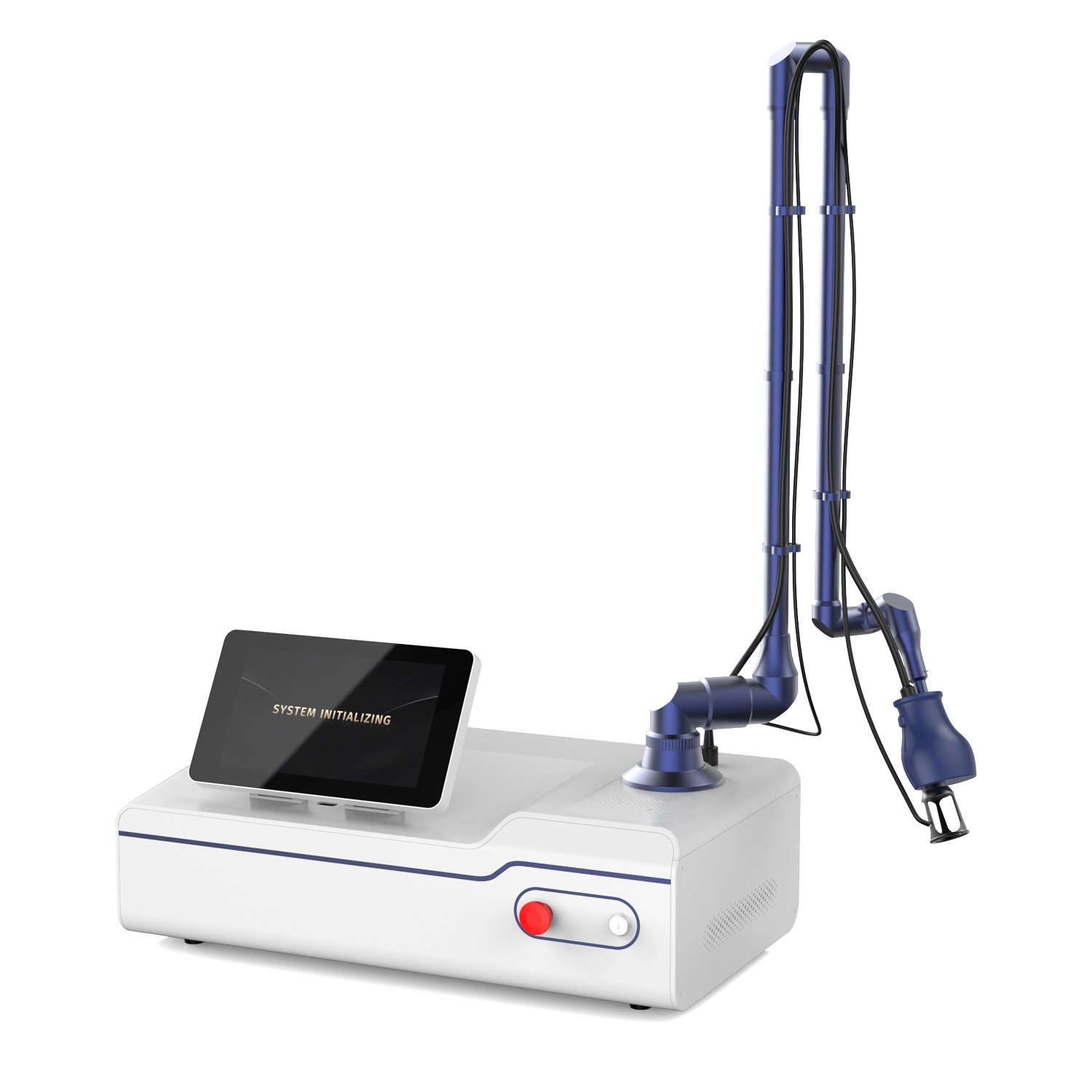
CO2 Fractional Laser Machine | Intimate Vaginal Rejuvenation System
This **CO2 Fractional Laser Machine** utilizes advanced 10600nm CO2 fractional laser technology to create controlled micro-thermal zones on the vaginal mucosa and intimate skin layers. These micro-columns stimulate collagen regeneration and tissue remodeling, effectively improving vaginal tightness, elasticity, and overall intimate health.
Designed specifically for professional medical aesthetic and intimate wellness applications, this CO2 fractional laser machine features intelligent parameter control and high-precision energy output to ensure safe, comfortable, and consistent treatment results. It is an ideal core device for vaginal rejuvenation, postpartum recovery, and intimate anti-aging treatments.
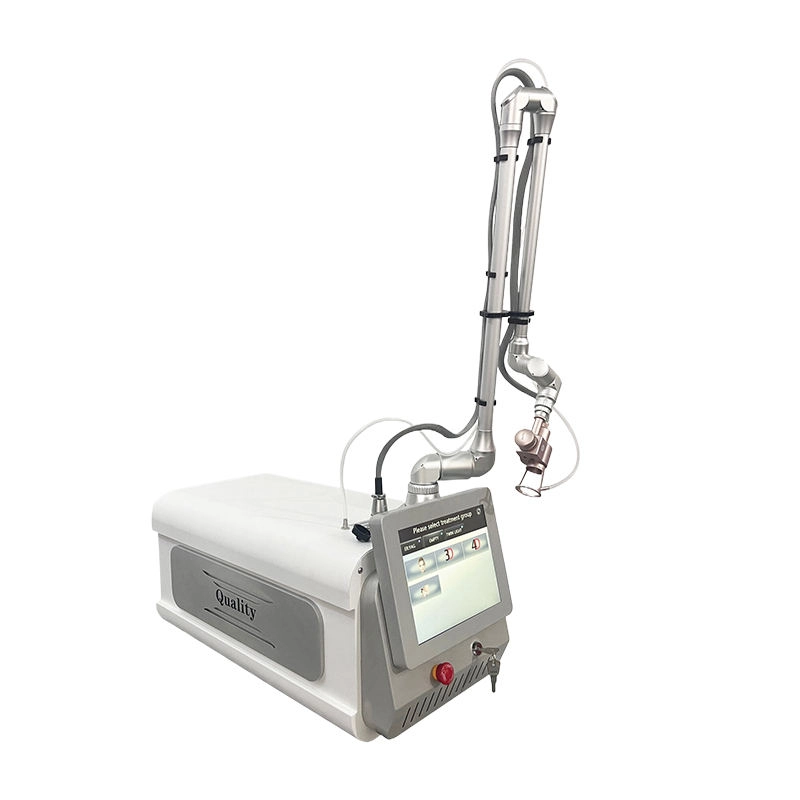
Professional CO2 Fractional Laser Machine | Fractional & Vaginal Rejuvenation CO2 Laser System
The CO2 fractional laser machine is a professional medical-grade device designed for deep skin resurfacing, wrinkle reduction, scar repair, and vaginal rejuvenation. Using a 10600 nm fractional CO2 laser beam, it creates micro-thermal columns on the skin to stimulate collagen regeneration and accelerate skin healing.
This CO2 fractional laser machine provides multiple treatment modes, including fractional mode, surgical cutting mode, and optional vaginal tightening mode, making it ideal for dermatology clinics and professional beauty centers seeking advanced laser solutions.
Its high precision, adjustable spot size, stable energy output, and seven-joint articulated arm ensure safe, accurate, and effective treatment results with minimal downtime.
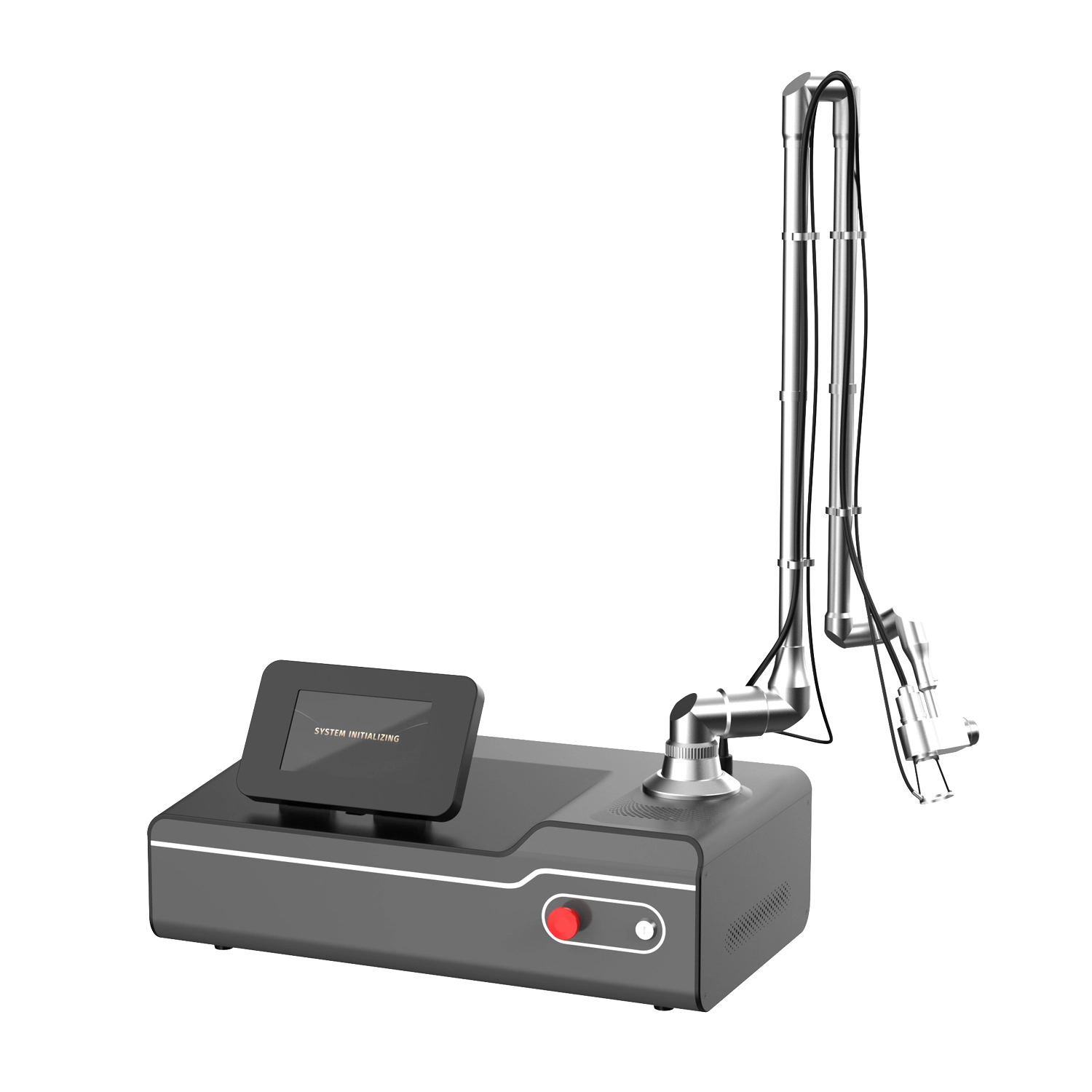
Professional CO2 Fractional Laser Machine for Skin Resurfacing & Scar Treatment
The CO2 Fractional Laser Machine is a professional CO2 fractional laser machine designed for advanced skin resurfacing, scar treatment, and skin rejuvenation procedures.
Using 10,600nm CO2 fractional laser technology, the system delivers controlled microthermal zones into the skin, stimulating collagen remodeling while preserving surrounding tissue. This fractional approach significantly improves treatment safety, recovery time, and clinical outcomes.
The CO2 fractional laser machine is widely used in dermatology clinics and medical aesthetic centers for treating acne scars, wrinkles, enlarged pores, stretch marks, and various skin texture concerns.
Get more information
If you have any comments or good suggestions, please leave us a message; later our professional staff will contact you as soon as possible.
Let's Talk
Stay in touch with us for cutting-edge beauty solutions, professional guidance, and customized service.
Contact


Room 307, Building A, Huilong International E-commerce Industrial Park, No. 10 Xipengling Road, Helong Street, Baiyun District, Guangzhou, China
© 2025 HUIMAIN. All Rights Reserved. Privacy Policy | Terms and Conditions | Sitemap
Facebook
Instagram
Medical beauty equipment factory
huimain Medical beauty equipment factory
beauty machine supplier
Whatsapp: +8619124004543