


Table of Contents
EMS Body Sculpt Machine Buying Guide: How to Choose the Right Model and Manufacturer
Tue, 10/28/2025
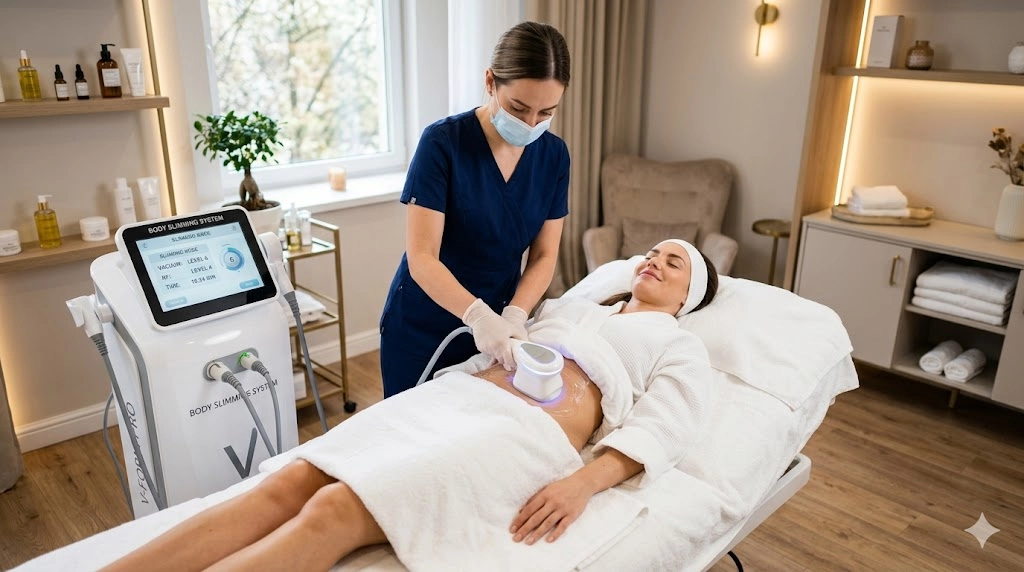
The market for non-invasive body contouring continues to evolve, and many beauty businesses are no longer looking for devices that address only one narrow client concern. Today, buyers want equipment that can help them expand treatment menus, attract more profitable customer groups, and create repeat service opportunities. That is why interest in the EMS body sculpt machine keeps growing among aesthetic clinics, med spas, fitness recovery studios, and body contouring providers.
But choosing the right machine is not as simple as comparing price tags. Different devices vary in treatment positioning, applicator design, training support, build quality, customization options, and after-sales reliability. The right choice depends on your business model, target clients, local market demand, and long-term growth plans. This guide explains how to evaluate an EMS body machine more strategically and what to look for when comparing EMS machine manufacturers.
How to Choose the Right EMS Body Sculpt Machine for Your Clinic or Beauty Business
The rise of body contouring has changed the way clinics and beauty businesses think about treatment equipment. In the past, many providers focused mainly on fat reduction or skin tightening as separate service categories. Now, more buyers are looking for solutions that can help them serve clients who want visible body shaping, improved muscle tone, stronger definition, and a more performance-oriented aesthetic outcome. This is where the EMS body sculpt machine has gained strong commercial attention.
For business owners, however, market interest alone is not enough to justify a purchase. A machine may look attractive in a catalog, but the real question is whether it fits your treatment strategy, target demographics, pricing structure, and long-term growth plan. An equipment decision affects more than your service menu. It affects staff training, customer retention, operational efficiency, and how your business is positioned in a competitive market.
That is why buyers should approach an EMS body machine as a business investment rather than just another trending device. The right machine can help you attract new treatment inquiries, add premium service packages, and create more reasons for clients to return. The wrong machine can create inconsistent user experiences, service limitations, and avoidable after-sales problems.
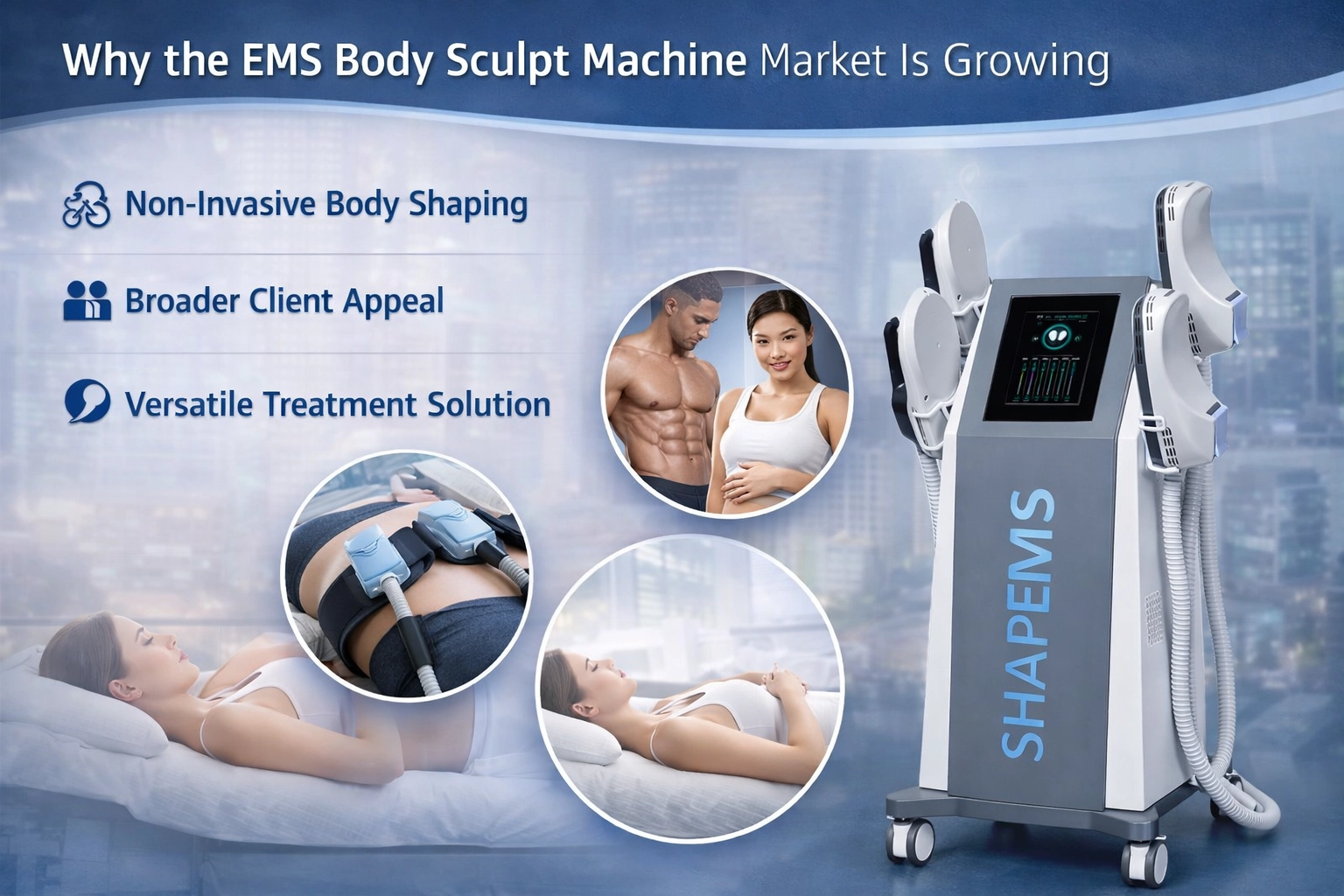
Why the EMS Body Sculpt Machine Market Is Growing
The growing demand for non-invasive body shaping is one of the main reasons this category continues to attract clinic owners and distributors. Many clients want aesthetic improvement without surgery, long recovery time, or visible interruption to daily life. This has pushed providers to look for treatments that are easier to position, easier to integrate into existing service menus, and easier for clients to accept.
An EMS body sculpt machine also appeals to businesses because it broadens the customer conversation. Instead of marketing only to people focused on slimming, providers can present the treatment as part of a wider body shaping strategy. This creates room to serve people who care about muscle tone, physique enhancement, abdominal definition, or a stronger overall body profile. In commercial terms, this wider appeal matters because it allows one machine category to support multiple customer segments.
Another reason the category is growing is that buyers increasingly prefer versatile equipment over highly narrow devices. In competitive local markets, a machine that only speaks to one type of client can be limiting. A more flexible treatment concept helps businesses market to a broader audience while still maintaining a premium positioning.
Who Can Benefit from an EMS Body Machine
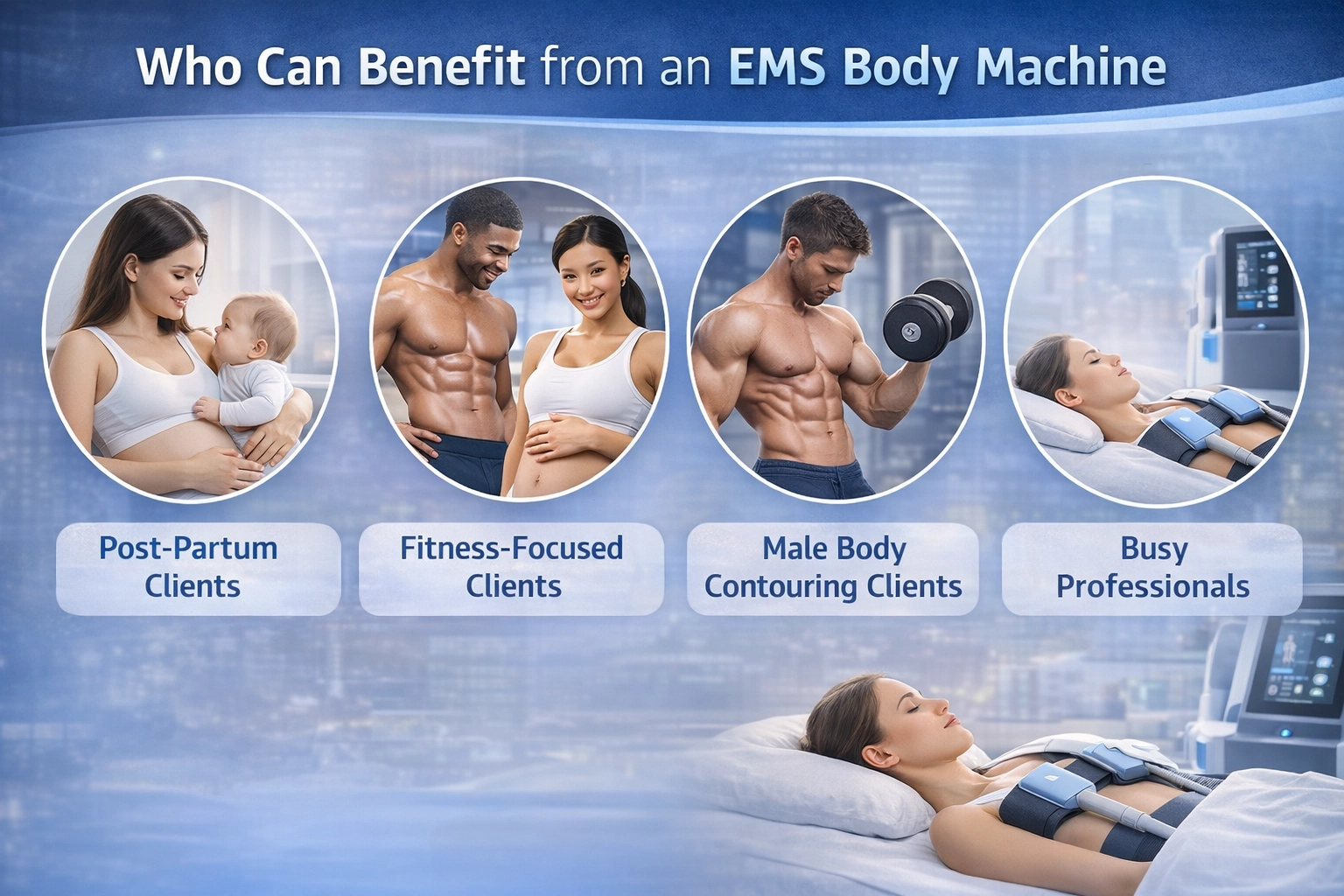
One of the strongest reasons businesses invest in this category is that it is not limited to traditional fat-loss messaging. A well-positioned EMS body machine can attract several client groups, each with different motivations and spending behavior.
Post-partum clients
Many post-partum women are interested in rebuilding confidence around the abdominal area and improving body appearance after pregnancy. They often prefer non-invasive options that fit into busy schedules and do not involve a long recovery period. For clinics, this group is commercially attractive because they are often looking for structured treatment plans rather than a one-time service. When positioned carefully and responsibly, EMS sculpting can become part of a broader body recovery and confidence-focused service offering.
Fitness-focused clients
There is also strong appeal among clients who already exercise and care about muscle definition. These clients are often not shopping for basic slimming treatments. They are looking for ways to enhance visible tone, improve the look of specific areas, and support a more sculpted physique. This is an important commercial segment because fitness-oriented clients tend to respond well to results-based positioning and package-based services.
Male body contouring clients
Male clients represent another growing opportunity. More businesses are discovering that body contouring is no longer marketed only to women. Men increasingly seek visible abdominal definition, chest and core shaping, and a stronger athletic appearance. An EMS body sculpt machine helps clinics communicate that their body services are performance-driven and not limited to conventional beauty messaging. That makes the treatment easier to introduce to male audiences who may not engage with other aesthetic categories.
Busy professionals seeking non-invasive options
Many clients simply want practical body shaping solutions that fit their routine. They do not want surgery, extended downtime, or complicated preparation. They want modern, efficient, non-invasive services that can be added to a personal care plan. For clinics and spas, this means the treatment is often easier to explain and easier to fit into premium service positioning.
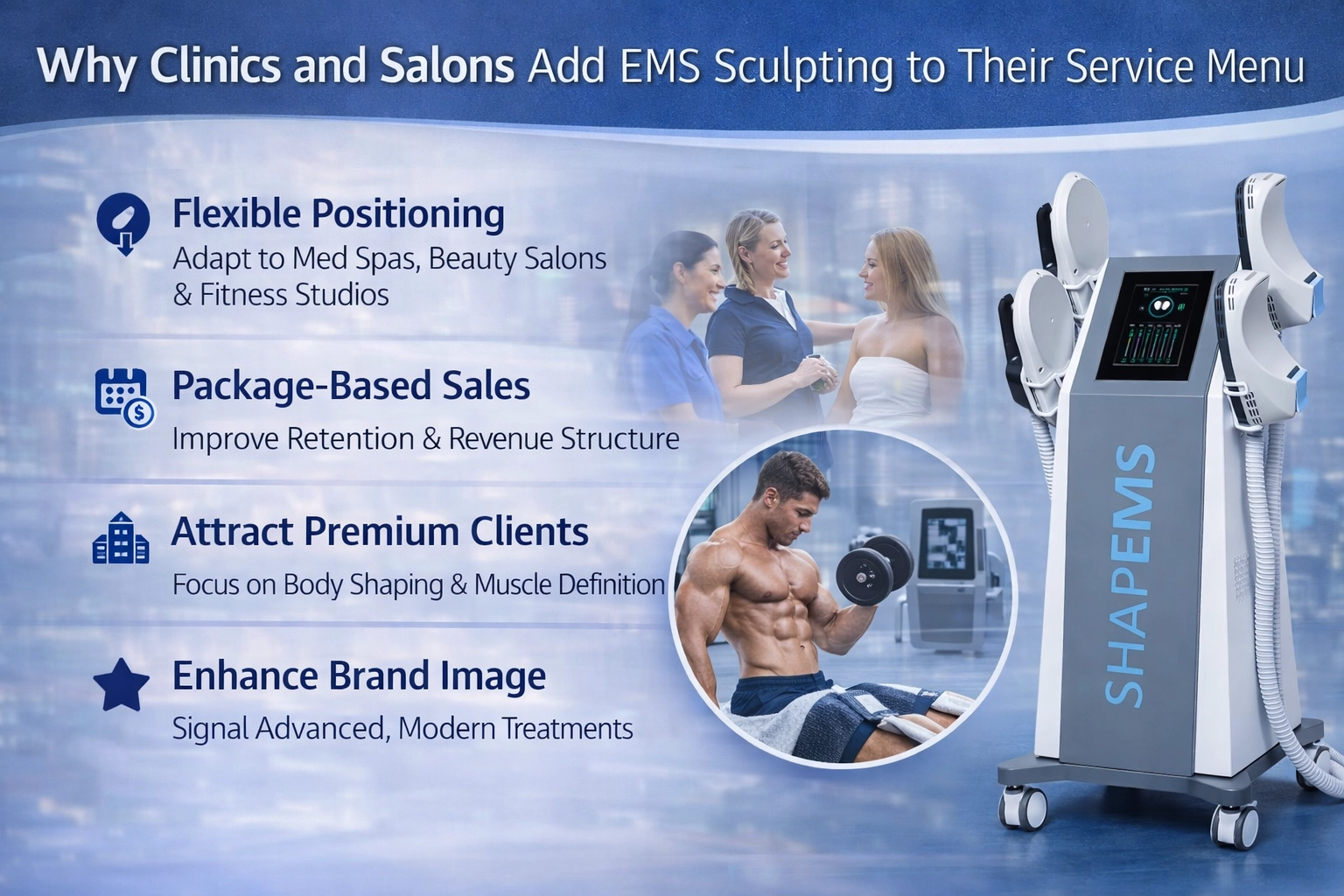
Why Clinics and Salons Add EMS Sculpting to Their Service Menu
For a beauty business, the value of an EMS body sculpt machine is not only about what happens during treatment. It is also about how the machine supports revenue structure and market positioning.
First, EMS sculpting can help expand your service menu without forcing your business into a completely new identity. A med spa can position it as a premium body contouring solution. A beauty salon can position it as a body shaping upgrade. A fitness recovery studio can present it as part of a physique enhancement offering. This flexibility helps different types of businesses adapt the same equipment category to their own market language.
Second, it can support package-based sales. Body contouring services are often easier to structure as a treatment series rather than a one-session experience. That matters from a business perspective because treatment series improve customer retention, average order value, and scheduling consistency.
Third, it may help attract higher-value clients. When a service is positioned around body shaping, muscle definition, and visible contour improvement, it often feels more premium than general slimming language. This gives businesses more room to present the treatment as part of a results-focused program rather than a discount-driven service.
Finally, the right machine can strengthen brand image. Equipment choice influences how professional and advanced your clinic appears. When clients see a treatment category associated with modern body sculpting rather than generic beauty trends, it can improve trust and increase interest in consultation.
At this stage, many buyers start comparing not only treatment claims but also machine practicality. That is the right shift in mindset. Before choosing a model, it is worth requesting clear specifications, treatment positioning advice, and manufacturer support details so you can evaluate which machine truly fits your business rather than simply following a market trend.
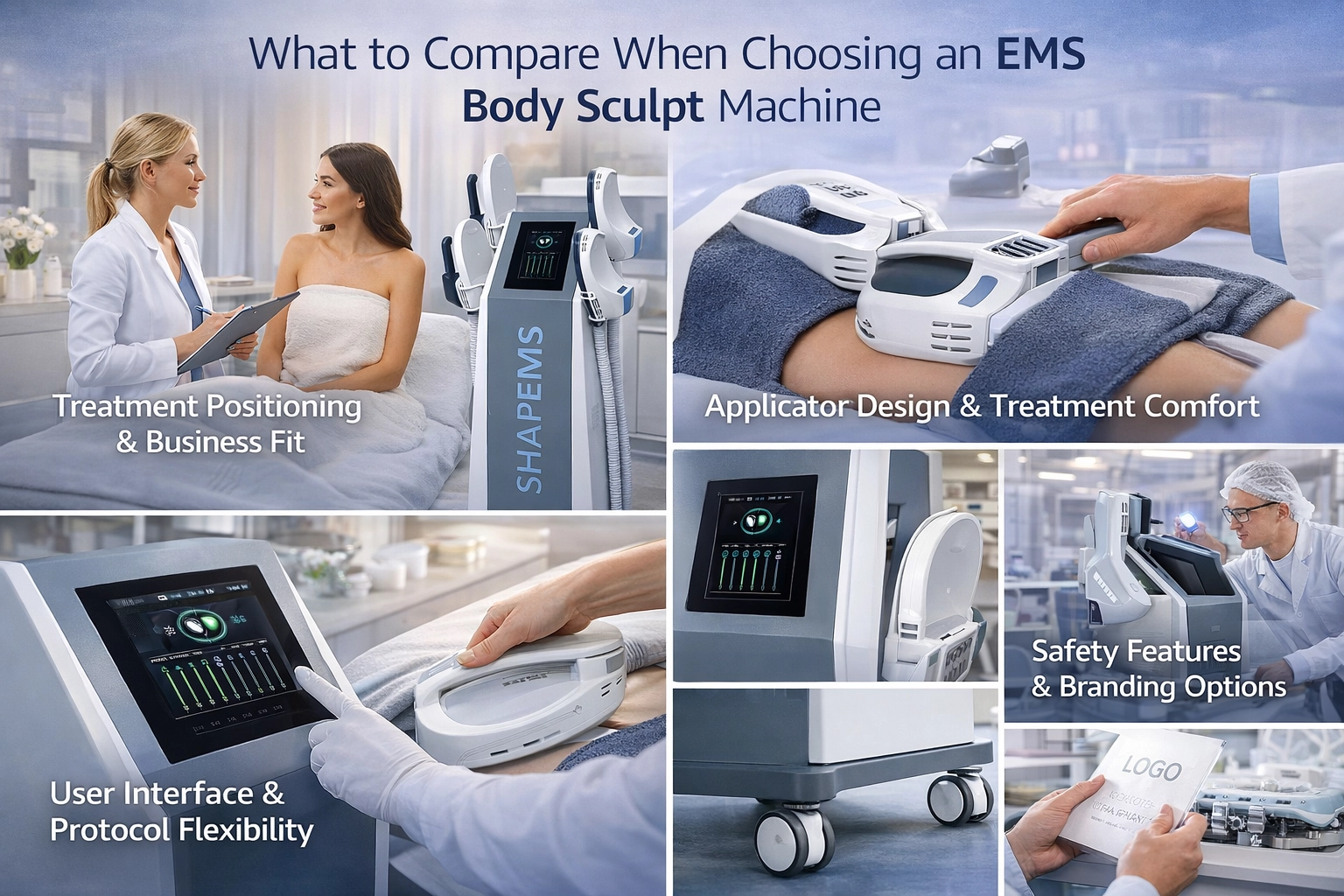
What to Compare When Choosing an EMS Body Sculpt Machine
Not every EMS body machine offers the same business value. Buyers should look beyond basic appearance and focus on how each model performs in real operating conditions.
Treatment positioning and business fit
Before comparing technical points, define how you plan to sell the treatment. Are you targeting slimming-focused clients, post-partum recovery inquiries, premium body shaping customers, fitness-oriented users, or a mixed audience? Your target market affects the type of machine that makes sense.
A clinic serving high-end aesthetic clients may prefer a machine with a more premium visual design, smoother user interface, and stronger support materials. A distributor may care more about stable quality, repeat order consistency, and customization options. A salon may need a model that is easy for staff to learn and easy to explain to clients during consultation.
When the business fit is clear, equipment comparison becomes more practical.
Applicator design and treatment comfort
Applicator structure matters more than many first-time buyers expect. Comfortable fit, reliable attachment, ease of adjustment, and practical handling all affect the treatment experience. If applicators are awkward to secure or difficult for staff to manage, this can reduce efficiency and increase operator frustration.
You should also consider whether the machine design supports different treatment areas in a practical way. A machine that looks good in photos but is inconvenient in daily use may create unnecessary friction for your team.
User interface and protocol flexibility
A clean operating system can make a major difference in staff confidence and consistency. The best buying decisions often come from asking how quickly a new operator can learn the machine, how clear the treatment settings are, and whether protocols can be adjusted according to service goals.
A good EMS body sculpt machine should feel commercially usable, not technically overwhelming. That does not mean the machine has to be simplistic. It means the design should support efficient treatment delivery in a real business environment.
Safety features and machine stability
Safety is a practical purchasing concern, not just a marketing phrase. Buyers should ask about system stability, cooling structure if applicable, operational safeguards, machine testing, and the manufacturer’s quality control process. A lower-priced machine may appear attractive at first, but unstable performance can lead to service disruption, reputational risk, and extra cost later.
Branding, OEM, and customization options
For distributors, private label buyers, and businesses building their own brand identity, customization can be an important part of the decision. Some EMS machine manufacturers offer OEM or ODM support, logo integration, interface language customization, housing adjustments, packaging adaptation, or marketing material assistance. These options matter when you want the machine to support not just treatment delivery but also brand expansion.
This is also a useful stage to ask for product catalogs, customization scope, and available model differences. A supplier that communicates clearly here usually makes the rest of the buying process easier as well.
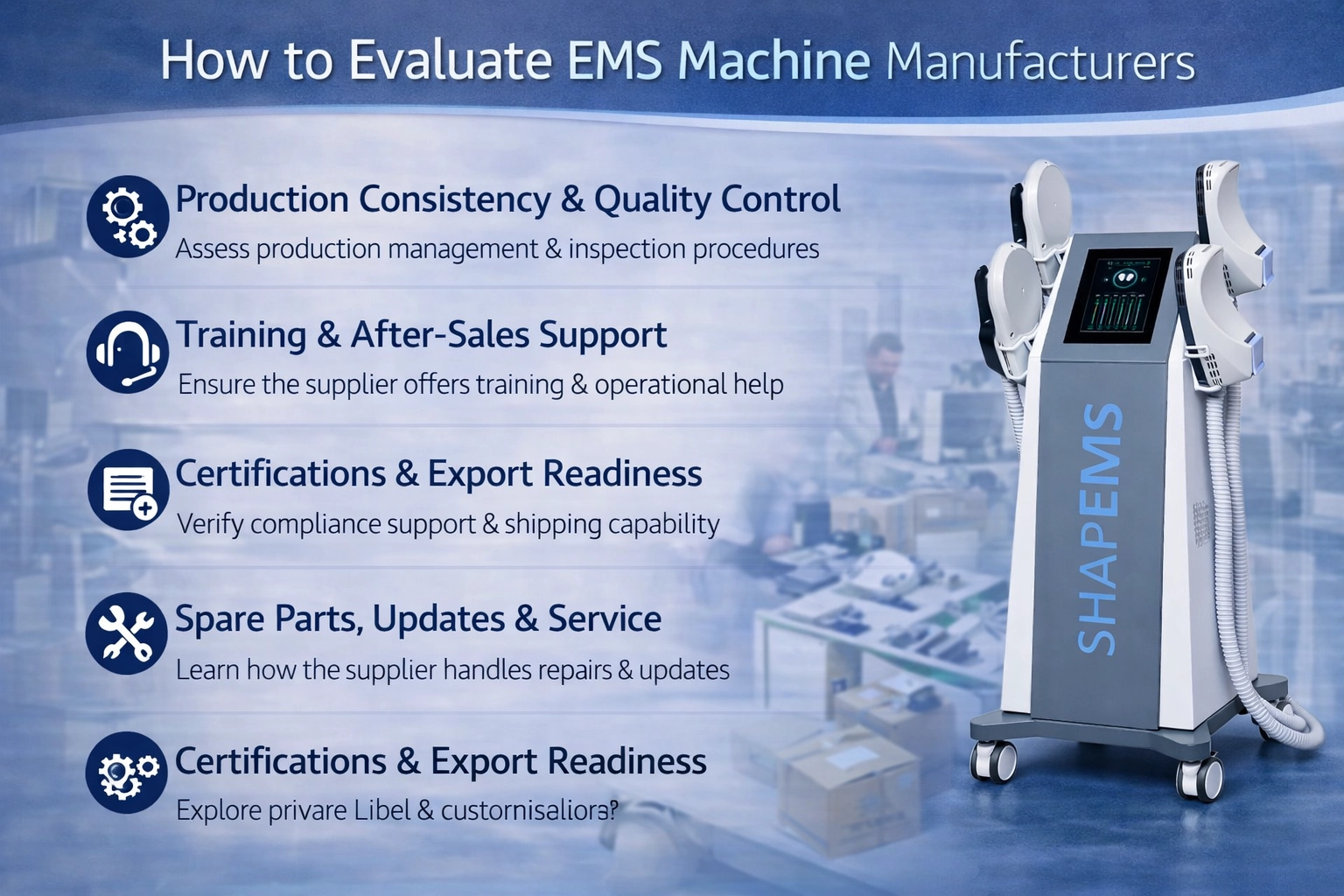
How to Evaluate EMS Machine Manufacturers
Choosing the machine is only part of the decision. Choosing the right supplier is equally important. Many sourcing problems do not begin with the visible machine. They begin with inconsistent production, vague communication, limited training, or weak after-sales support.
Production consistency and quality control
Reliable EMS machine manufacturers should be able to explain how they manage production quality, parts consistency, testing procedures, and pre-shipment inspection. This is especially important for importers and distributors who need dependable repeat orders.
A supplier that cannot clearly explain its process may create long-term problems even if the sample unit looks acceptable. Buyers should think beyond the first order and ask whether the supplier can support ongoing business growth.
Training and after-sales support
This is one of the most overlooked parts of equipment buying. A machine is far easier to monetize when the supplier offers practical training, operational guidance, and responsive support. Your team needs to understand not only how to turn the device on, but how to integrate it into consultation, service delivery, and package design.
Good after-sales support reduces downtime anxiety and helps protect the investment. Before placing an order, ask how technical questions are handled, whether training materials are included, how maintenance issues are managed, and how spare parts are supplied.
Certifications and export readiness
For international buyers, export readiness matters. Documentation, compliance support, and shipping experience all affect how smooth the purchasing process will be. Even when buyers already know their own market requirements, it helps to work with a supplier that understands what global customers usually ask for.
Spare parts, updates, and service responsiveness
A machine purchase does not end when the shipment arrives. Ask what happens if a component needs replacement, how quickly service questions are answered, and whether software or interface support is available if needed. A supplier’s responsiveness often reveals more about long-term reliability than a sales brochure ever will.
At this point in the process, many serious buyers narrow their shortlist to two or three suppliers and compare them side by side. That is often more productive than reviewing too many options. A smaller shortlist makes it easier to compare quality consistency, communication speed, customization support, and overall professionalism.
Common Buying Mistakes to Avoid
A common mistake is choosing only by price. While budget always matters, the lowest quotation does not always produce the best business outcome. Lower initial cost can quickly be offset by poor support, unstable performance, or reduced client confidence.
Another mistake is buying a machine without defining the target customer. If your team cannot explain who the treatment is for and how it fits your service menu, even a technically decent machine will struggle to perform commercially.
Some buyers also overlook the importance of training. They assume the machine will sell itself once it arrives. In reality, treatment success depends heavily on consultation quality, operator confidence, and how well the service is positioned in your market.
Finally, many businesses fail to evaluate the manufacturer as carefully as they evaluate the machine. This can be risky. A strong-looking product is not enough if the supplier cannot support the relationship after purchase.
Making the Right Long-Term Investment
The best EMS body sculpt machine for your business is not necessarily the one with the lowest quote, the most aggressive sales pitch, or the broadest list of claims. It is the one that fits your market, supports your treatment positioning, works smoothly for staff, and comes from a manufacturer that can support your business over time.
For clinics, the real value lies in how effectively the machine fits into consultation, service packaging, and brand positioning. For distributors and OEM buyers, value also includes production consistency, customization support, and supplier reliability. For growing beauty businesses, the strongest equipment choices are the ones that help attract multiple client groups while remaining commercially practical to operate.
The category continues to attract attention because it offers more than a one-dimensional treatment angle. An EMS body machine can help businesses appeal to post-partum clients, fitness-focused customers, male body shaping inquiries, and premium non-invasive treatment seekers. That wider market reach makes it a strategic option for companies that want to build a more flexible and profitable body contouring offering.
Before making a final decision, it is worth comparing not only machine specifications but also how each supplier supports your long-term success. Reviewing model details, asking about OEM or branding options, and discussing your treatment goals with a manufacturer can make the final investment far more effective. A careful buying process usually leads to a stronger service launch, better staff confidence, and a more sustainable return over time.
Conclusion
Choosing the right EMS body sculpt machine is ultimately a business decision, not just an equipment purchase. The right model should help you serve the right client groups, strengthen your treatment menu, and support long-term operational stability. Whether your focus is on clinics, salons, distributors, or private label opportunities, the smartest path is to compare machines through the lens of business fit, service flexibility, supplier reliability, and support quality.
As the market for body contouring continues to develop, businesses that choose carefully will be in a better position to attract premium inquiries and build a more resilient treatment portfolio. When evaluating your next EMS body machine, it makes sense to look beyond surface-level claims and focus on the manufacturer relationship, real usability, and long-term value. That is also why comparing experienced EMS machine manufacturers before requesting a final quote can save time, reduce sourcing risk, and lead to a stronger investment decision.
EMS body sculpt machine-FAQ
Can an EMS body sculpt machine help attract more client types?
Yes. One reason many businesses add an EMS body sculpt machine is its broad appeal. It may attract post-partum clients, fitness-oriented customers, male body contouring clients, and busy professionals looking for non-invasive options.
What is an EMS body sculpt machine used for?
An EMS body sculpt machine is commonly used in aesthetic and body contouring businesses as part of a non-invasive body shaping treatment offering. Many clinics position it for muscle-toning, contour-focused, and physique-enhancement services.
How do I choose between different EMS machine manufacturers?
When comparing EMS machine manufacturers, look beyond pricing. Review product consistency, training support, communication quality, OEM or customization capability, after-sales service, and whether the supplier understands your market needs.
Is OEM available for EMS body machines?
Many suppliers offer OEM or private label options for an EMS body machine, but the level of customization varies. It is best to confirm branding scope, housing customization, interface language options, packaging support, and minimum order requirements in advance.
Is an EMS body machine only for slimming clinics?
No. An EMS body machine can also suit med spas, beauty salons, body contouring studios, fitness recovery centers, and other businesses that want to offer body shaping or muscle-definition-focused services.


Get more information
If you have any comments or good suggestions, please leave us a message; later our professional staff will contact you as soon as possible.
Let's Talk
Stay in touch with us for cutting-edge beauty solutions, professional guidance, and customized service.
Contact


Room 307, Building A, Huilong International E-commerce Industrial Park, No. 10 Xipengling Road, Helong Street, Baiyun District, Guangzhou, China
© 2025 HUIMAIN. All Rights Reserved. Privacy Policy | Terms and Conditions | Sitemap
Facebook
Instagram
Medical beauty equipment factory
huimain Medical beauty equipment factory
beauty machine supplier
Whatsapp: +8619124004543