


Service Contracts: What to Include for Microdermabrasion Units
- Why Service Contracts Matter for Microdermabrasion Units
- Protecting Clinical Performance and Client Safety
- Minimizing Downtime and Protecting Revenue
- Key Elements to Include in a Service Contract
- 1. Clear Scope of Services
- 2. Service Levels and Response Times (SLA)
- 3. Parts, Consumables, and Consumable Lifecycle
- Maintenance Schedules, Costs, and Contract Models
- Preventive Maintenance Schedule Template
- Contract Models and Pricing Approaches
- Drafting Terms, Legal and Risk Considerations
- Warranties, Liability, and Indemnification
- Data, Recordkeeping and Compliance
- Training, Documentation and Handover
- Comparing In-house vs Third-party Maintenance
- Practical Comparison Table
- Choosing Based on Business Profile
- Service Contract Checklist Template
- Why Choose a Partner Like Guangzhou Huimain Technology Co., Ltd.
- Manufacturing Strength, R&D and After-sale Support
- Certifications, Innovation and Global Reach
- Products and Competitive Advantages
- Frequently Asked Questions
- 1. What is the typical warranty period for microdermabrasion units?
- 2. How often does a microdermabrasion unit need calibration?
- 3. Can salon staff perform routine maintenance?
- 4. Should I require OEM parts in the service contract?
- 5. How do I measure the value of a comprehensive service contract?
- 6. What records should I keep for audits and safety?
- Contact and Next Steps
- References
Why Service Contracts Matter for Microdermabrasion Units
Protecting Clinical Performance and Client Safety
Microdermabrasion units are mechanical devices that gently abrade the stratum corneum and remove debris using crystals or diamond tips plus vacuum. Proper maintenance ensures consistent exfoliation depth, predictable vacuum strength, and intact sterility barriers. A well written service contract helps maintain device performance over time, reducing the risk of adverse events such as excessive erythema, bruising, or infection that can arise from poor calibration, worn consumables, or clogged vacuum lines. For salons seeking a reliable microdermabrasion machine for salon, this safety assurance is a commercial differentiator.
Minimizing Downtime and Protecting Revenue
Salon and clinic schedules depend on predictable equipment uptime. Service contracts that include guaranteed response times, stocked spare parts, and preventive maintenance reduce unplanned downtime. This not only preserves revenue but also upholds client trust and brand reputation.
Key Elements to Include in a Service Contract
1. Clear Scope of Services
Define what the supplier will provide. Typical elements include initial installation and acceptance testing, scheduled preventive maintenance, emergency repair, parts replacement policies, consumable supply agreements, software and firmware updates (if applicable), on-site calibration, and staff training. Be explicit about what is excluded, for example accidental damage, misuse, or consumables not supplied under contract.
2. Service Levels and Response Times (SLA)
Specify measurable SLAs. Common metrics are first response time, on-site arrival time for critical failures, repair completion time, and maximum allowable downtime per incident. Example SLA tiers: critical (device not operational, response within 4 hours), major (limited operation, response within 24 hours), minor (cosmetic or nonfunctional issues, response within 3 business days). Include remedies for missed SLAs such as prorated credits or free service days.
3. Parts, Consumables, and Consumable Lifecycle
Clarify who supplies consumables such as disposable tips, filters, crystals, or single-use nozzles and at what cost. Define the expected lifecycle for wear parts and whether replacement parts are OEM or compatible. If calibration or filter changes are periodic, include schedule and responsibility.
Maintenance Schedules, Costs, and Contract Models
Preventive Maintenance Schedule Template
Preventive maintenance should be scheduled based on usage intensity and manufacturer recommendations. Below is a practical schedule you can adapt.
| Maintenance Item | Frequency | Recommended Performed By | Rationale |
|---|---|---|---|
| Visual inspection, exterior cleaning, handpiece check | Weekly | Salon staff trained by vendor | Prevent contamination and obvious faults |
| Filter and vacuum line cleaning/replacement | Monthly or after X hours of use | Trained technician or qualified staff | Maintain suction performance and prevent clogging |
| Calibration of vacuum pressure and motor performance | Quarterly or biannually depending on throughput | Authorized service technician | Ensure consistent treatment parameters and safety |
| Full functional and safety check | Annually | Manufacturer or certified service center | Regulatory compliance and warranty validation |
Contract Models and Pricing Approaches
Common models include:
- Time and materials: pay for labor and parts as used. Lower fixed cost, variable long-term expense.
- Fixed-fee preventive maintenance: scheduled visits included, repairs billed separately.
- Comprehensive cover (all-inclusive): preventive maintenance, repairs, and many consumables included for one annual or monthly fee. Higher upfront cost, predictable budgeting.
Choose model based on device criticality, frequency of use, and available capital. Salons with heavy daily throughput often benefit from comprehensive cover to avoid unexpected repair bills and downtime.
Drafting Terms, Legal and Risk Considerations
Warranties, Liability, and Indemnification
Include warranty start and end dates, what is covered, and exclusions. Clarify liability limits for direct damages and whether consequential damages are excluded. Require service providers to carry professional liability and product liability insurance, and request proof of insurance. Define indemnification for third-party claims arising from service work.
Data, Recordkeeping and Compliance
Modern microdermabrasion devices with digital user logs or treatment records require secure handling. Specify ownership and access to maintenance and calibration records. For clinics regulated by local health agencies, ensure the contract supports compliance with record retention rules. Require the service provider to follow recognized quality practices, such as compliance with ISO 13485 for medical device quality systems where applicable.
Training, Documentation and Handover
Service contracts should include initial operator training, refresher training sessions, and written user manuals tailored to salon workflows. For staff turnover or transfer of ownership, include a clause that obliges the provider to assist with device recertification and transfer of service records.
Comparing In-house vs Third-party Maintenance
Practical Comparison Table
The table below summarizes typical pros and cons to help choose a maintenance approach.
| Factor | In-house Maintenance | Third-party or OEM Service |
|---|---|---|
| Cost predictability | Variable; lower short-term costs, high risk of large repair bills | More predictable with fixed contracts; higher baseline cost |
| Response time | Immediate minor fixes if trained staff available | Depends on SLA; may be very fast for local authorized centers |
| Technical depth | Limited by staff skill and available tools | Access to specialized tools, OEM parts, and certification |
| Regulatory confidence | Requires robust documentation to satisfy inspectors | Typically better for audits due to formal records and certificates |
Choosing Based on Business Profile
Small salons with limited budgets and low throughput may maintain basic in-house checks and rely on third-party OEM service for periodic calibration and repairs. High-volume chains or medical aesthetic clinics usually maintain contracts with OEM or certified service centers for faster response and consistent compliance.
Service Contract Checklist Template
Use this checklist when evaluating or drafting a contract for your microdermabrasion machine for salon use.
| Item | Recommended Minimum Term | Why It Matters |
|---|---|---|
| Installation and acceptance test | Before warranty starts | Ensures device meets performance specs on delivery |
| Preventive maintenance visits | Quarterly for medium use | Maintains safety and consistent treatments |
| Guaranteed response time | Defined in hours for critical failures | Reduces client cancellations and lost revenue |
| Consumables supply terms | Monthly or as used | Prevents use of noncompatible parts that harm performance |
| Training and documentation | Included at installation and annually | Supports safe operation and staff competence |
| Warranty and spare part availability | Minimum 12 months standard | Protects against manufacturing defects |
| Insurance and indemnity | Listed and current | Protects your business from third-party claims |
Why Choose a Partner Like Guangzhou Huimain Technology Co., Ltd.
Manufacturing Strength, R&D and After-sale Support
Guangzhou Huimain Technology Co., Ltd. is a high-tech company specializing in beauty machines and home-use device series, with professional capabilities in research and development, production, sales and after-sale service. The company occupies an area of 3000 square meters; over 20 percent of staff hold bachelor degrees and more than 40 percent have junior college degrees. Huimain operates a strong technical development department supported by experienced engineers, PE experts, a professional purchasing team, a clinical testing department and a competent after-sale service team that supports salons and clinics.
Certifications, Innovation and Global Reach
Huimain continually invests in R&D to meet new market needs and has obtained CE certification, SGS approval and several patents for product innovations. Products are sold globally across China, Southeast Asia, the Middle East, Europe and North America with positive customer feedback on quality and value. The company focuses on OEM and ODM routes and can design and produce high-quality medical and beauty machines for salons seeking a reliable microdermabrasion machine for salon.
Products and Competitive Advantages
Huimain's product portfolio includes Cryolipolysis machine, Ems sculpting machine, Plasma machine, Shockwave machine, HIFU machine, Hydrofacial machine, Cavitation vacuum machine, Laser hair removal, Tattoo removal machine and Micro needle machine. For microdermabrasion, Huimain emphasizes durable construction, standardized consumables, accessible spare parts and comprehensive after-sale service options so salons can choose tailored maintenance contracts that fit their workflows and budgets.
Frequently Asked Questions
1. What is the typical warranty period for microdermabrasion units?
Most manufacturers provide a standard 12 month warranty covering manufacturing defects. Extended warranties or comprehensive service contracts are commonly available for purchase to cover repairs and selected consumables beyond the initial warranty period. Always confirm what is excluded from the warranty.
2. How often does a microdermabrasion unit need calibration?
Calibration frequency depends on usage, but a practical schedule is quarterly to biannually for moderate to heavy use. Annual certification with detailed functional testing is recommended for audit and regulatory reasons.
3. Can salon staff perform routine maintenance?
Yes. Trained salon staff can perform routine tasks such as external cleaning, visual inspections and simple filter changes if trained by the manufacturer. Complex maintenance, calibration and repairs should be performed by certified technicians to preserve warranty and ensure safety.
4. Should I require OEM parts in the service contract?
Specifying OEM parts reduces the risk of compatibility problems and can maintain device performance and warranty coverage. However, OEM parts are usually more expensive. Contracts often allow approved third-party parts if they meet defined specifications.
5. How do I measure the value of a comprehensive service contract?
Measure value by calculating expected downtime cost per day and probability of failure, cost of repairs without coverage, and intangible costs such as client dissatisfaction. For high-throughput salons, predictable service costs and rapid response often outweigh the higher fixed fee of comprehensive cover.
6. What records should I keep for audits and safety?
Keep installation and acceptance reports, preventive maintenance logs, repair records, calibration certificates, consumable replacement logs, technician sign-in sheets and training certificates. These documents support compliance and can be required during inspections.
Contact and Next Steps
If you are evaluating service contracts or seeking a reliable microdermabrasion machine for salon, consider contacting Guangzhou Huimain Technology Co., Ltd. for product specs, OEM/ODM options and tailored after-sale service packages. For inquiries, request service contract templates, preventive maintenance schedules and local service center contacts to compare SLAs and parts availability. Investing time in a clear, measurable service contract will protect client safety, equipment performance and your salon's reputation.
References
- American Academy of Dermatology. Microdermabrasion information for patients. https://www.aad.org/public/diseases/cosmetic-procedures/microdermabrasion (accessed 2026-01-04)
- NHS. Microdermabrasion. https://www.nhs.uk/conditions/microdermabrasion/ (accessed 2026-01-04)
- US Food and Drug Administration. Medical Devices. https://www.fda.gov/medical-devices (accessed 2026-01-04)
- International Organization for Standardization. ISO 13485 Medical devices. https://www.iso.org/standard/59752. (accessed 2026-01-04)
- European Commission. CE marking. https://ec.europa.eu/growth/single-market/ce-marking/ (accessed 2026-01-04)
- SGS. About SGS testing, inspection and certification. https://www.sgs.com/ (accessed 2026-01-04)
- Wikipedia. Microdermabrasion. https://en.wikipedia.org/wiki/Microdermabrasion (accessed 2026-01-04)
Contact Guangzhou Huimain Technology Co., Ltd. to request a product catalogue, service contract templates or a quote for a microdermabrasion machine tailored to your salon needs.
HMT82-2R
Which body areas can this machine treat?
Abdomen, thighs, hips, arms, and waist are the most common treatment areas.
EMT8 MAX
Can it be used for face or pelvic therapy?
Yes, optional handles are available for face lifting and pelvic floor strengthening applications.
HMR-1 台式磁立环
What is a Magnetic Conduction Ring body sculpting machine?
It is a non-invasive body sculpting machine that uses electromagnetic energy through a Magnetic Conduction Ring to stimulate deep muscle contractions for toning and strengthening.
JLM-36
Are there any side effects after using the HIFU machine?
There are no significant side effects. Some clients may experience mild redness or swelling, but this usually subsides within a few hours.
HMT42-4
What is the main difference between this machine and other body sculpting devices?
Our EMSHAPE device combines both EMS and RF technologies, offering a simultaneous "muscle building and fat burning" effect. Many other machines only target one of these aspects, making our device a more efficient and comprehensive solution for clients seeking total body transformation.

CO2 Fractional Laser Machine – Professional Wrinkle Removal & Skin Resurfacing Device
The CO2 Fractional Laser Machine is a multifunctional aesthetic device designed for professional clinics and beauty salons. Using advanced fractional CO2 laser technology, it effectively targets acne scars, freckles, pigmentation, nevi, and deep wrinkles. Additionally, it provides non-invasive skin rejuvenation, vaginal tightening, and intimate beautification. This professional CO2 laser equipment combines precision, safety, and powerful energy output to deliver outstanding anti-aging and dermatological results.
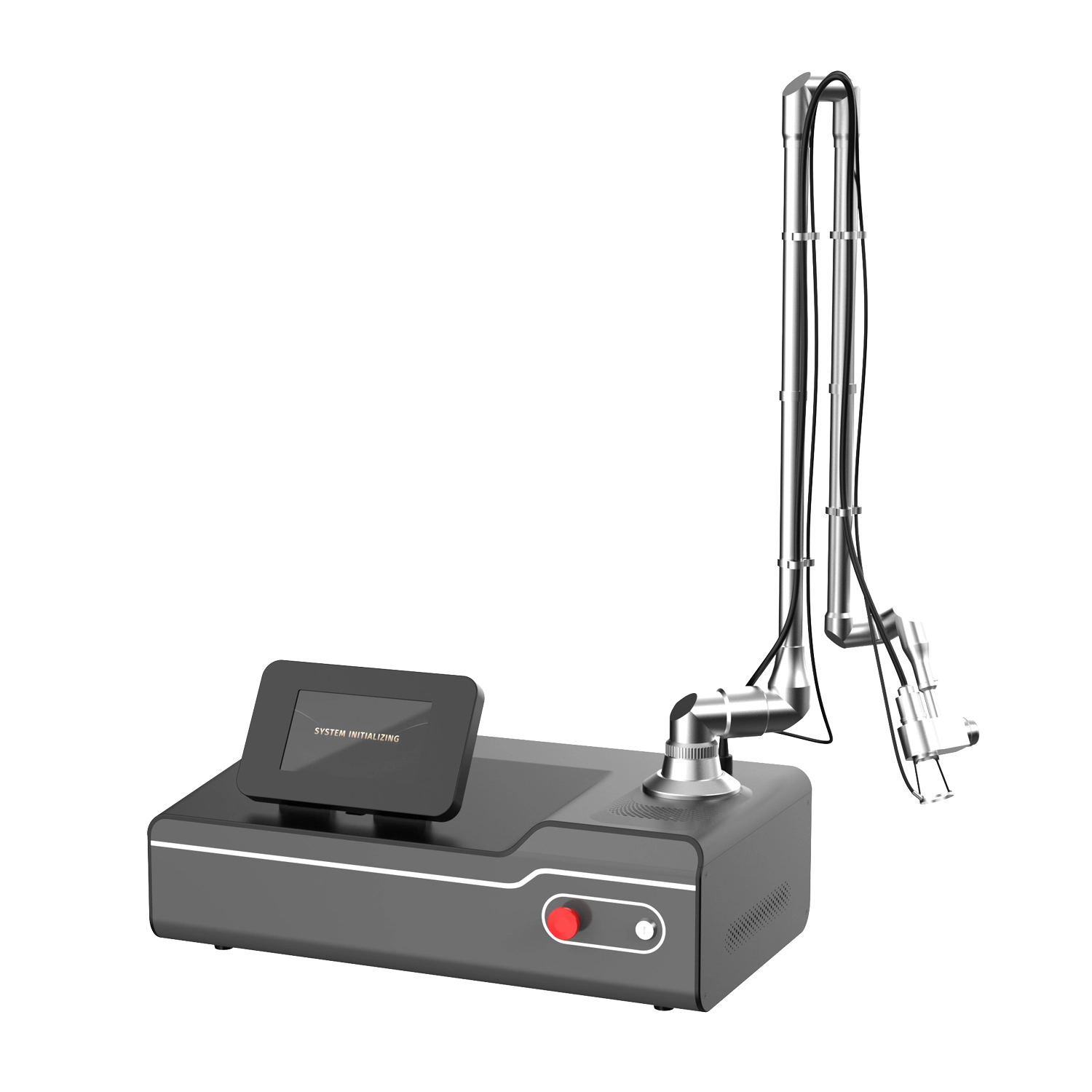
Professional CO2 Fractional Laser Machine for Skin Resurfacing & Scar Treatment
The CO2 Fractional Laser Machine is a professional CO2 fractional laser machine designed for advanced skin resurfacing, scar treatment, and skin rejuvenation procedures.
Using 10,600nm CO2 fractional laser technology, the system delivers controlled microthermal zones into the skin, stimulating collagen remodeling while preserving surrounding tissue. This fractional approach significantly improves treatment safety, recovery time, and clinical outcomes.
The CO2 fractional laser machine is widely used in dermatology clinics and medical aesthetic centers for treating acne scars, wrinkles, enlarged pores, stretch marks, and various skin texture concerns.
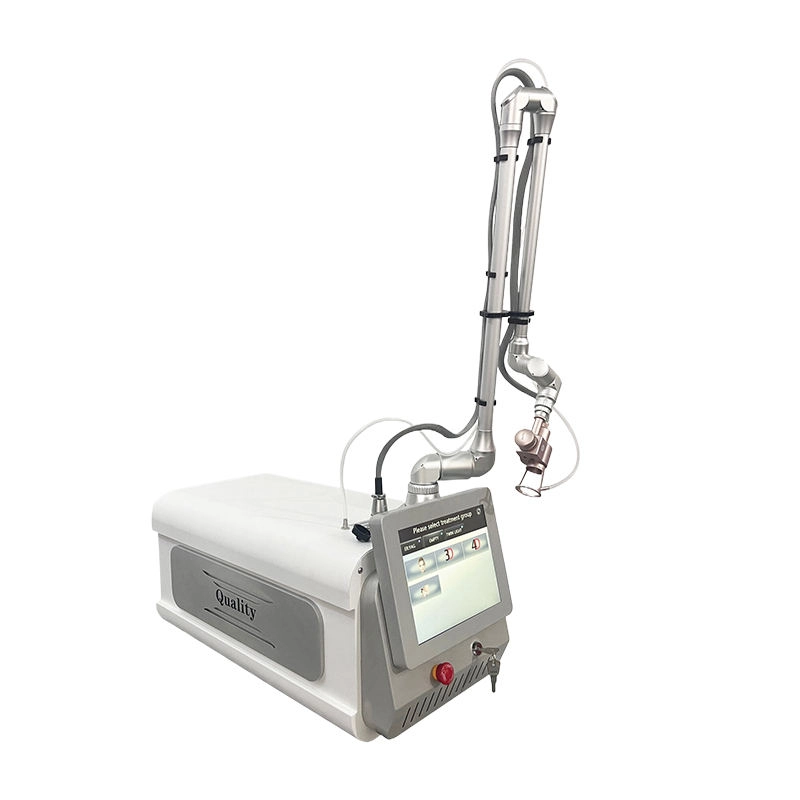
Professional CO2 Fractional Laser Machine | Fractional & Vaginal Rejuvenation CO2 Laser System
The CO2 fractional laser machine is a professional medical-grade device designed for deep skin resurfacing, wrinkle reduction, scar repair, and vaginal rejuvenation. Using a 10600 nm fractional CO2 laser beam, it creates micro-thermal columns on the skin to stimulate collagen regeneration and accelerate skin healing.
This CO2 fractional laser machine provides multiple treatment modes, including fractional mode, surgical cutting mode, and optional vaginal tightening mode, making it ideal for dermatology clinics and professional beauty centers seeking advanced laser solutions.
Its high precision, adjustable spot size, stable energy output, and seven-joint articulated arm ensure safe, accurate, and effective treatment results with minimal downtime.
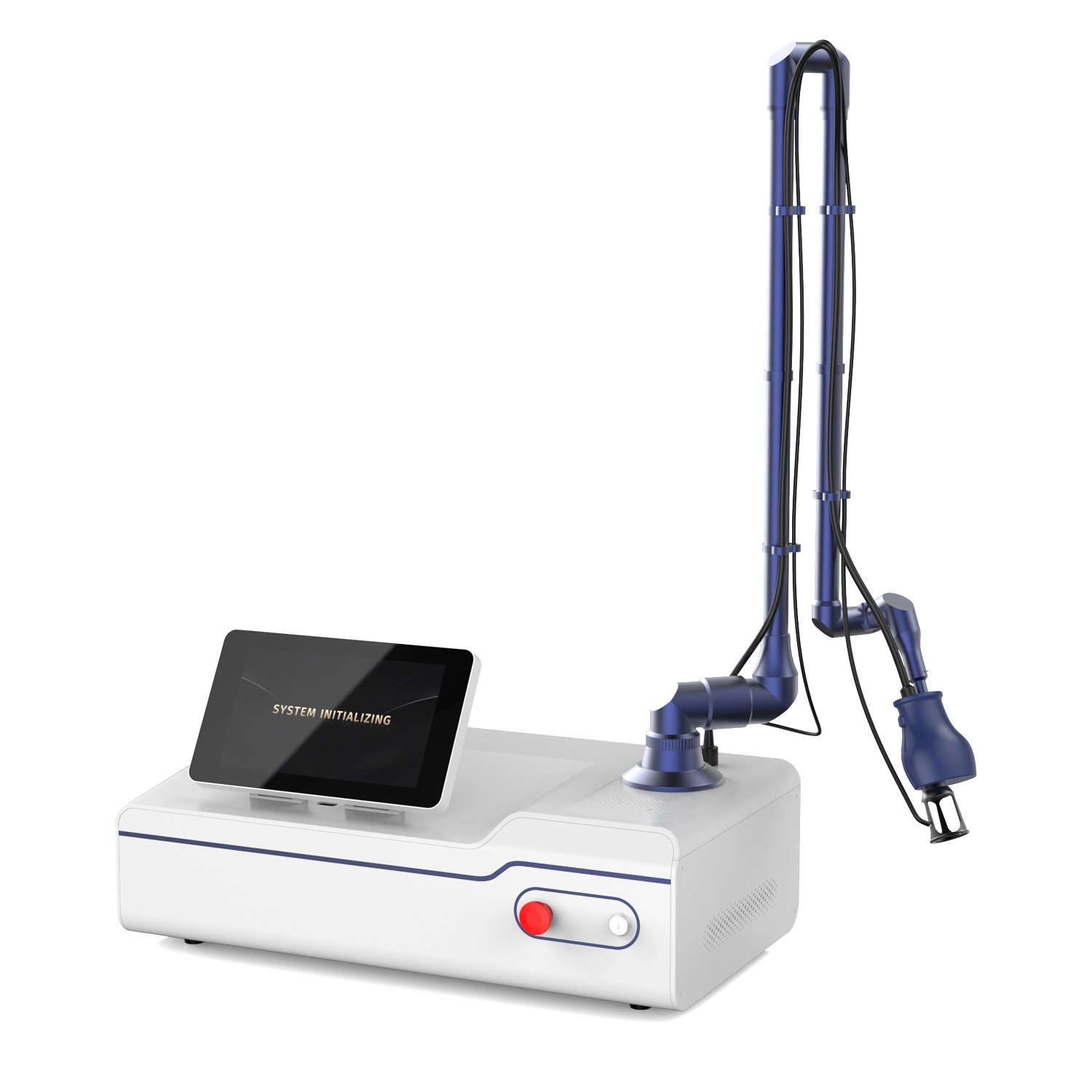
CO2 Fractional Laser Machine | Intimate Vaginal Rejuvenation System
This **CO2 Fractional Laser Machine** utilizes advanced 10600nm CO2 fractional laser technology to create controlled micro-thermal zones on the vaginal mucosa and intimate skin layers. These micro-columns stimulate collagen regeneration and tissue remodeling, effectively improving vaginal tightness, elasticity, and overall intimate health.
Designed specifically for professional medical aesthetic and intimate wellness applications, this CO2 fractional laser machine features intelligent parameter control and high-precision energy output to ensure safe, comfortable, and consistent treatment results. It is an ideal core device for vaginal rejuvenation, postpartum recovery, and intimate anti-aging treatments.
Get more information
If you have any comments or good suggestions, please leave us a message; later our professional staff will contact you as soon as possible.
Let's Talk
Stay in touch with us for cutting-edge beauty solutions, professional guidance, and customized service.
Contact


Room 307, Building A, Huilong International E-commerce Industrial Park, No. 10 Xipengling Road, Helong Street, Baiyun District, Guangzhou, China
© 2025 HUIMAIN. All Rights Reserved. Privacy Policy | Terms and Conditions | Sitemap
Facebook
Instagram
Medical beauty equipment factory
huimain Medical beauty equipment factory
beauty machine supplier
Whatsapp: +8619124004543