


What is Better, Fat Cavitation or Fat Freezing?
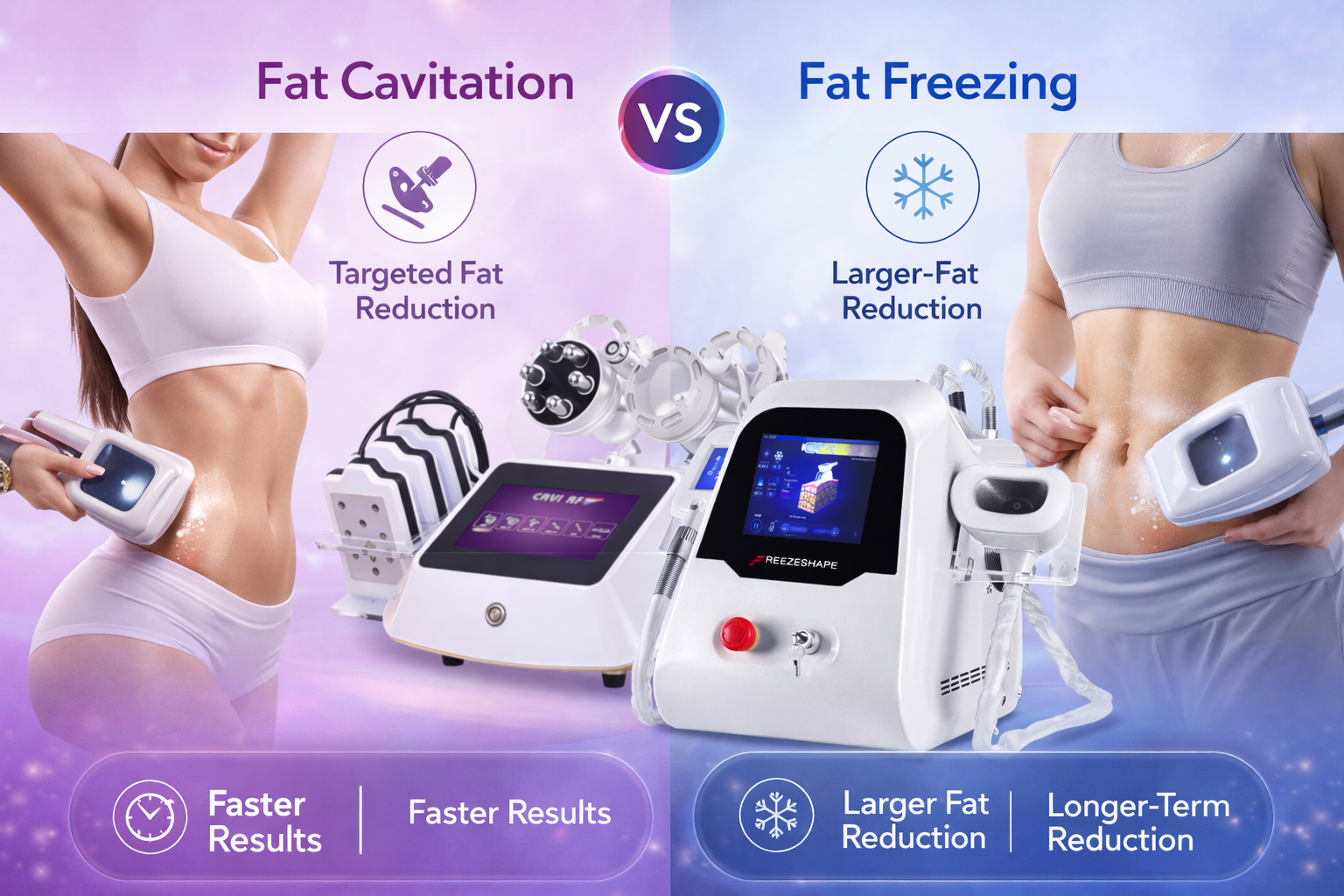
Fat cavitation and fat freezing are two of the most popular non-invasive body sculpting methods available today. But how do they compare, and which one is better? In this article, we will delve into the differences between fat cavitation and fat freezing (also known as cryolipolysis), explaining their mechanisms, benefits, costs, and what makes each method unique. Whether you’re looking for a slimming solution at home or in a professional setting, understanding these technologies can help you make an informed decision.
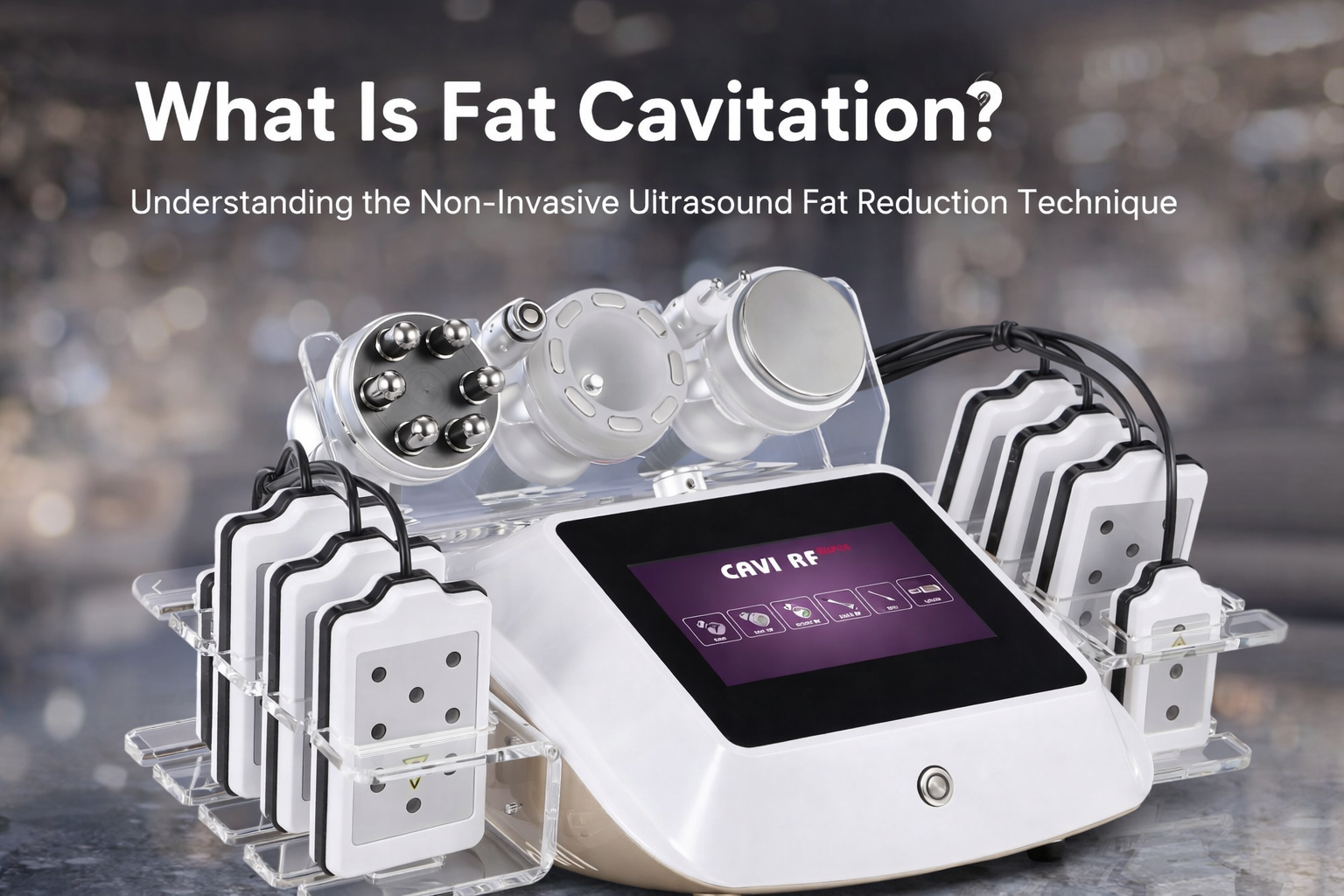
What is Fat Cavitation?
Fat cavitation, also known as ultrasonic cavitation, is a cutting-edge, non-invasive fat reduction technique. It uses ultrasound waves to break down fat cells, making it one of the most popular methods of body contouring today. This process is non-surgical and provides an alternative to more invasive procedures like liposuction, with minimal downtime and no need for anesthesia.
How It Works:
The procedure involves the use of low-frequency ultrasound waves that penetrate the skin and target fat cells. The ultrasound energy creates pressure changes within the fat tissue, causing small bubbles to form inside the fat cells. These bubbles expand and contract, eventually leading to the rupture and breakdown of the fat cell membranes. As a result, the fat cells are disrupted and release their contents, which are naturally processed and removed by the lymphatic system over the following weeks.
Unlike many other fat reduction treatments, fat cavitation focuses only on fat cells, leaving surrounding tissues such as skin, muscles, and blood vessels unharmed. This selective fat destruction helps contour the body in a safe and non-invasive way.
Treatment Areas:
Fat cavitation is highly effective for localized fat deposits that are resistant to diet and exercise. Common areas treated include:
-
Abdomen: One of the most common areas for fat cavitation, especially for those who struggle with belly fat.
-
Thighs: Inner and outer thighs are common trouble spots, and cavitation can target stubborn fat in these areas.
-
Love Handles (Flanks): Fat cavitation is effective in reducing the bulging fat around the waistline.
-
Arms: Often referred to as "bat wings," fat cavitation can reduce excess fat in the upper arms, helping them appear more toned.
Procedure Details:
The fat cavitation procedure typically lasts between 30 to 60 minutes per session. A handheld ultrasound device is used to apply the sound waves to the targeted area. While the procedure is generally pain-free, some people may experience a slight tingling or warmth during the session. This sensation is due to the energy being applied to the fat cells.
After the session, patients may notice some immediate temporary effects, such as mild redness or swelling, but these symptoms usually subside quickly.
Results and Sessions:
The effects of fat cavitation are not immediately visible after a single session. Generally, patients need 4 to 6 sessions, spaced at least a week apart, to see significant results. Initial results may be noticeable within 1 to 2 weeks, with more pronounced changes appearing after several treatments.
For optimal results, fat cavitation should be paired with a healthy diet and regular exercise to help flush out the broken-down fat cells and prevent them from being reabsorbed.
Recovery and Side Effects:
One of the primary advantages of fat cavitation is that it requires very little downtime. Most patients can resume normal activities immediately after the session. However, some people may experience mild bruising, swelling, or redness in the treated area, which usually resolves within a few hours.
After treatment, patients are encouraged to stay hydrated and engage in light physical activity to stimulate the lymphatic system and promote the removal of the broken-down fat.
Ideal Candidates:
Fat cavitation is ideal for individuals who are close to their ideal body weight but have localized fat pockets they wish to target. It is not designed as a weight-loss solution, but rather as a method to contour the body and reduce stubborn fat that is resistant to traditional weight loss methods. The ideal candidate should be in generally good health and have realistic expectations regarding the results.
What is Fat Freezing (Cryolipolysis)?
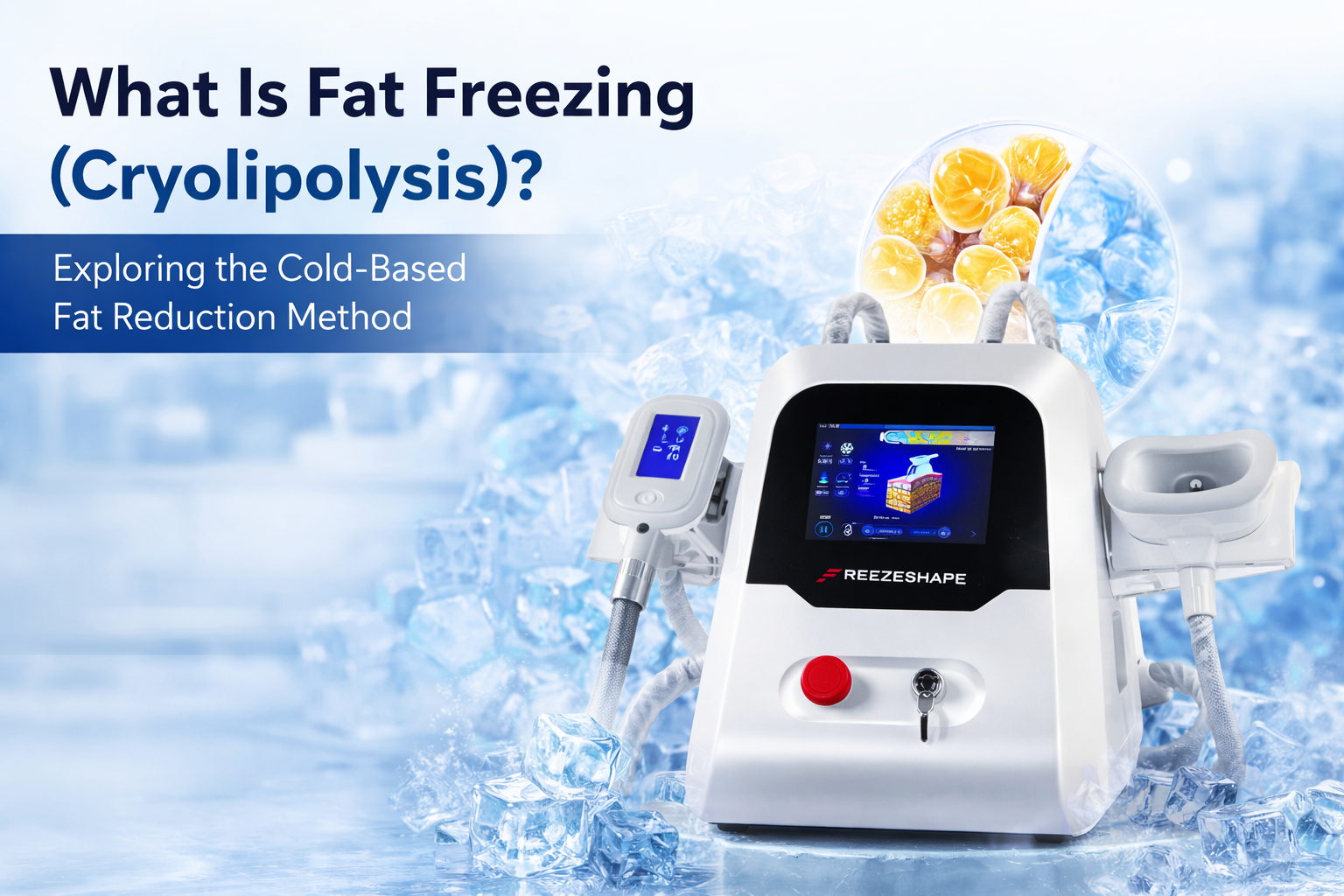
Fat freezing, or cryolipolysis, is a non-invasive fat reduction technique that uses cold temperatures to selectively target and freeze fat cells. Unlike other fat-reduction treatments, fat freezing works by utilizing the principle that fat cells are more susceptible to cold than surrounding tissue. This allows for the targeted destruction of fat cells without damaging skin, muscles, or other tissues.
How It Works:
During a fat freezing treatment, a specialized device is applied to the targeted area. The device uses controlled cooling to lower the temperature of the fat cells beneath the skin. The freezing process causes the fat cells to crystallize, which leads to their gradual breakdown. Over time, the body naturally processes and eliminates the frozen fat cells through the lymphatic system.
The process is entirely non-invasive, meaning no incisions, needles, or surgery are involved. The surrounding tissue is left unharmed, and patients can return to their regular activities immediately after the treatment.
Treatment Areas:
Fat freezing is particularly effective for larger areas of fat, and common areas treated include:
-
Abdomen: Cryolipolysis is commonly used to target belly fat, especially in cases where the fat is more stubborn or difficult to eliminate.
-
Flanks (Love Handles): Fat freezing is ideal for targeting the fat around the waistline, often referred to as love handles.
-
Thighs: Cryolipolysis can treat both inner and outer thigh fat, helping to achieve smoother contours.
-
Back: The upper and lower back areas can also be treated, reducing fat and improving overall body shape.
Procedure Details:
A typical fat freezing session lasts between 35 to 60 minutes per treatment area. The device uses suction to pull the fat tissue into the cooling applicator, which then freezes the fat cells. While the initial cooling sensation may be uncomfortable for a few minutes, the area eventually becomes numb, and the procedure becomes more comfortable.
After the session, patients may experience temporary redness, swelling, or numbness in the treated area, but these side effects generally subside within a few hours or days.
Results and Sessions:
The results of fat freezing are not immediate, as the body requires time to process and remove the frozen fat cells. Visible results typically appear within 1 to 3 months after treatment, as the body gradually eliminates the fat. Most patients require 1 to 3 sessions per area, with the number of treatments depending on the thickness of the fat layer and the desired results.
Unlike other fat reduction treatments, the results of cryolipolysis are permanent, as the fat cells that are destroyed do not regenerate. However, it is important to maintain a healthy lifestyle to prevent new fat from accumulating in the treated areas.
Recovery and Side Effects:
The recovery time for fat freezing is minimal, and most patients can return to normal activities immediately after treatment. However, some individuals may experience mild side effects such as swelling, redness, or temporary numbness in the treated area. These side effects usually resolve on their own within a few hours or days.
In rare cases, patients may experience a condition known as paradoxical adipose hyperplasia (PAH), where the fat in the treated area actually becomes more pronounced. However, this side effect is very rare and typically resolves over time.
Ideal Candidates:
Fat freezing is best suited for individuals who are close to their ideal body weight but have localized fat that does not respond to diet or exercise. It is particularly effective for reducing fat in larger areas, such as the abdomen, thighs, and flanks. Candidates should be healthy and have realistic expectations about the gradual nature of the results.
Fat Cavitation vs. Fat Freezing: Key Differences
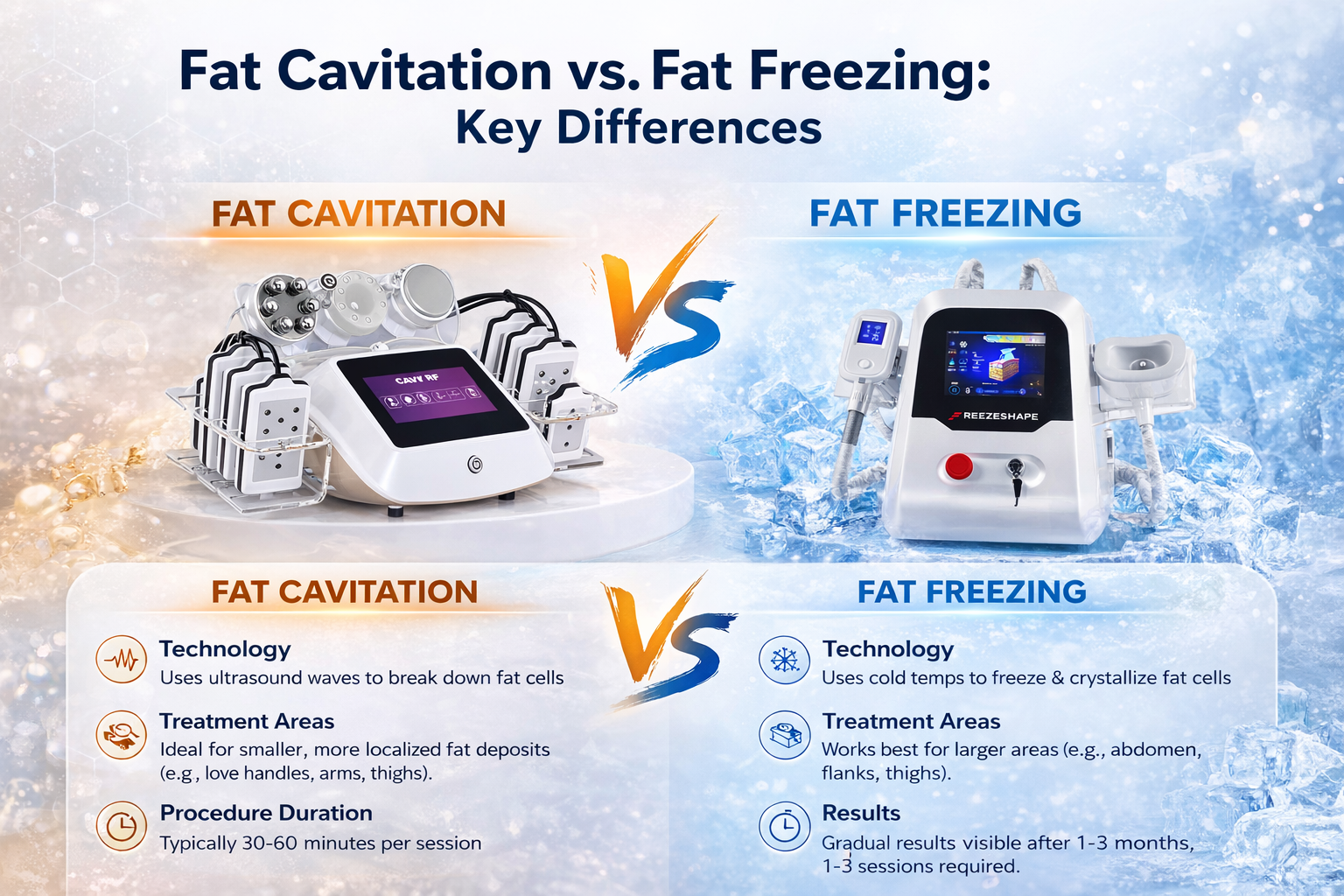
While both fat cavitation and fat freezing are effective non-invasive fat reduction treatments, they differ significantly in their approach, results, and the areas they target. Here’s a breakdown of the key differences:
-
Technology:
-
Fat Cavitation uses ultrasound waves to break down fat cells, causing them to rupture and release their contents.
-
Fat Freezing (Cryolipolysis) uses cold temperatures to freeze and crystallize fat cells, which are then eliminated by the body.
-
-
Treatment Areas:
-
Fat Cavitation is ideal for smaller, more localized fat deposits, such as love handles, arms, or thighs.
-
Fat Freezing works best for larger areas, such as the abdomen, flanks, and thighs.
-
-
Procedure Duration:
-
Fat Cavitation typically lasts between 30 to 60 minutes per session.
-
Fat Freezing usually takes between 35 to 60 minutes per treatment area.
-
-
Results:
-
Fat Cavitation provides quicker results, often visible within 1 to 2 weeks, with optimal results seen after 4 to 6 sessions.
-
Fat Freezing results appear more gradually, with full effects visible after 1 to 3 months, requiring 1 to 3 sessions.
-
-
Side Effects and Recovery:
-
Fat Cavitation has minimal downtime, with some possible swelling or bruising in the treated area.
-
Fat Freezing also requires little recovery time, though some redness, swelling, or numbness may occur post-treatment.
-
-
Fat Cavitation vs. Fat Freezing: Which is Better?
When deciding between fat cavitation and fat freezing, it's essential to understand that both treatments offer effective fat reduction results, but the decision will largely depend on your individual goals, body type, and treatment area. Both procedures have their strengths and are better suited to specific needs.
Treatment Areas and Suitability:
-
Fat Cavitation: If your primary concern is localized fat deposits or stubborn fat that doesn’t respond to diet and exercise, fat cavitation might be your best option. It is highly effective for treating small to medium-sized areas like love handles, arms, thighs, and even areas around the neck. The precision of fat cavitation allows for more targeted fat reduction, giving you the ability to contour smaller problem areas effectively.
-
Fat Freezing: Fat freezing is ideal for larger fat deposits and stubborn fat in areas like the abdomen, flanks, and thighs. If you're looking to treat larger, more expansive areas of fat, cryolipolysis might be the better choice. It’s also suitable for individuals who have more fat to lose and are looking for gradual, long-term fat reduction.
Speed of Results:
-
Fat Cavitation: One of the biggest advantages of fat cavitation is the speed of results. After just a few sessions, you can start seeing noticeable changes, with improvements visible after 1 to 2 weeks. This makes it a great option if you're looking for quicker results and are willing to undergo more sessions to get your desired outcome.
-
Fat Freezing: In contrast, fat freezing works gradually, and you won’t see the results immediately. It typically takes about 1 to 3 months for the body to fully process and eliminate the frozen fat cells, making it a more gradual approach. If you’re okay with a slower process and want long-term results, cryolipolysis is an excellent option.
Comfort and Procedure Experience:
-
Fat Cavitation: The procedure is generally comfortable for most people, with only mild sensations like tingling or warmth during the session. Since there’s no cooling involved, the procedure tends to be more pleasant and can be used on more sensitive areas of the body.
-
Fat Freezing: The main discomfort associated with cryolipolysis is the intense cold that is initially applied to the skin, which can feel quite uncomfortable. However, once the area goes numb, the procedure becomes more tolerable. Some people find the cold sensation quite strong at the beginning, but it doesn’t last long, and the numbness makes the remainder of the session more comfortable.
Long-Term Effectiveness:
-
Fat Cavitation: The results from fat cavitation can be long-lasting, but it is essential to maintain a healthy lifestyle to prevent new fat from accumulating in the treated areas. While fat cells are destroyed, the body can still produce new fat cells if you are not careful with diet and exercise.
-
Fat Freezing: Cryolipolysis offers more permanent results since fat cells that are eliminated do not regenerate. Once the fat cells are destroyed, they are gone for good, and the reduction in fat is permanent. However, just like fat cavitation, you’ll need to maintain a healthy lifestyle to avoid accumulating new fat in the treated areas.
Cost Comparison of Fat Cavitation vs. Fat Freezing
The cost of fat cavitation and fat freezing treatments can vary significantly, not only based on the location but also on the size of the treatment area and the number of sessions required. Here’s a general comparison of both treatments:
-
-
-
Fat Cavitation:
-
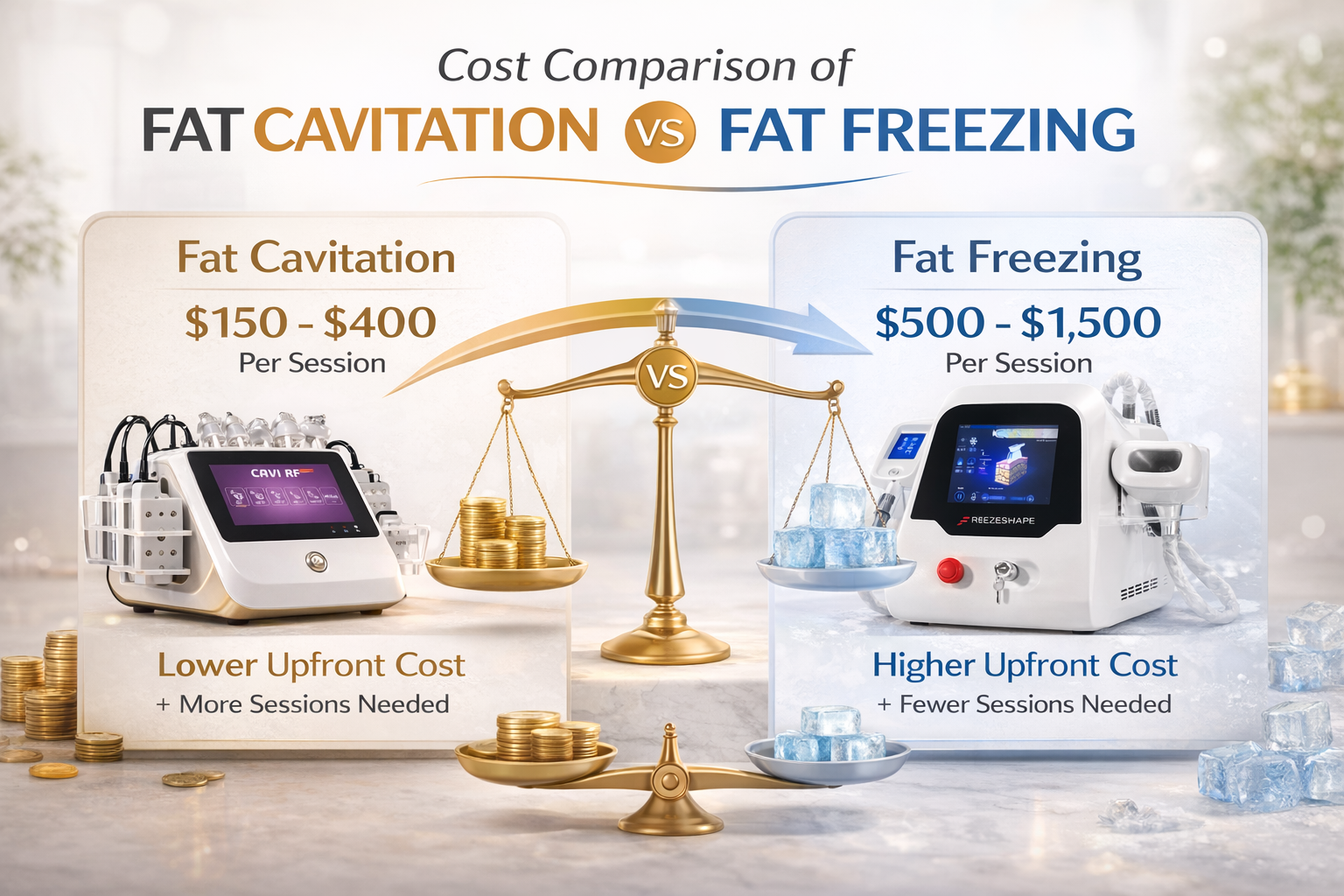
Fat cavitation is typically more affordable than fat freezing, with prices ranging from $150 to $400 per session. The number of sessions you need will depend on your individual goals and the area being treated, but generally, most people need 4 to 6 sessions to achieve optimal results.
-
Since it targets smaller, localized areas, fat cavitation sessions are usually more affordable, and it can be a cost-effective option for those looking to treat specific trouble spots.
-
-
Fat Freezing:
-
Fat freezing is more expensive, typically ranging from $500 to $1,500 per session, depending on the size of the area and the clinic. For larger areas, such as the abdomen or thighs, the cost can be higher.
-
Since fat freezing requires fewer sessions (usually 1 to 3 sessions per area), it may seem like a more economical option in terms of the number of treatments. However, the upfront cost of cryolipolysis is usually higher compared to fat cavitation.
-
Additional Considerations:
While fat cavitation may seem like the more affordable option, it often requires more sessions to achieve the same results as fat freezing. For those looking for a more gradual fat reduction and are willing to commit to several sessions, fat cavitation might be a better budget-friendly choice. On the other hand, fat freezing is a more "set-it-and-forget-it" treatment with fewer sessions required, but it comes at a higher price point.Which Is More Affordable in the Long Run?
While fat cavitation is initially less expensive, the fact that it may require more sessions to achieve the same result could make fat freezing more cost-effective in the long run. The decision should be based on the number of sessions you’re willing to undergo and your treatment goals. -
-
-
Call to Action (CTA)
Ready to take the next step toward a more sculpted body? Whether you’re interested in fat cavitation or fat freezing, we offer a variety of professional-grade slimming machines and devices that can help you achieve your body goals. Contact us today to schedule a consultation and discover the right treatment for you!
-

6 Handle Magnetic Face Lift Machine Vertical
Who can use this machine?
It is suitable for all skin types and for clients looking for lifting, tightening, or body contouring.
HMT82S-2
How long does shipping take? Do you offer customization?
Standard orders are shipped within 3–7 working days. We offer global shipping via DHL/FedEx/Sea Freight. OEM/ODM customization is available (logo, interface, packaging, etc.).
HMT82-2R
What is the main function of this 13 Tesla slimming machine?
It combines EMS and RF to help with fat reduction, muscle toning, and body shaping.
等离子
Can it be used after laser or microneedling treatments?
Yes, it helps accelerate recovery and reduce post-procedure redness or inflammation.
HMT72R
Is specialized training required to operate this machine?
Yes. We provide a comprehensive training program, including a detailed user manual and video tutorials, to ensure that your staff is fully equipped to operate the machine safely and effectively.



Get more information
If you have any comments or good suggestions, please leave us a message; later our professional staff will contact you as soon as possible.
Let's Talk
Stay in touch with us for cutting-edge beauty solutions, professional guidance, and customized service.
Contact


Room 307, Building A, Huilong International E-commerce Industrial Park, No. 10 Xipengling Road, Helong Street, Baiyun District, Guangzhou, China
© 2025 HUIMAIN. All Rights Reserved. Privacy Policy | Terms and Conditions | Sitemap
Facebook
Instagram
Medical beauty equipment factory
huimain Medical beauty equipment factory
beauty machine supplier
Whatsapp: +8619124004543