


- Tattoo Removal Machines: Q-Switched vs. Picosecond – Which Is Better?
- 1. What Are Q-Switched and Picosecond Lasers?
- 2. How Do Q-Switched and Picosecond Lasers Compare in Terms of Effectiveness?
- 3. What Are the Safety Considerations for Each Laser Type?
- 4. How Do Treatment Sessions and Recovery Times Compare?
- 5. What Are the Cost Implications of Each Laser Type?
- 6. How Do Q-Switched and Picosecond Lasers Compare in Terms of Patient Comfort?
- 7. How Do Q-Switched and Picosecond Lasers Compare in Terms of Skin Type Compatibility?
- 8. How Do Q-Switched and Picosecond Lasers Compare in Terms of Maintenance and Longevity?
- Conclusion: HUIMAIN's Advantages
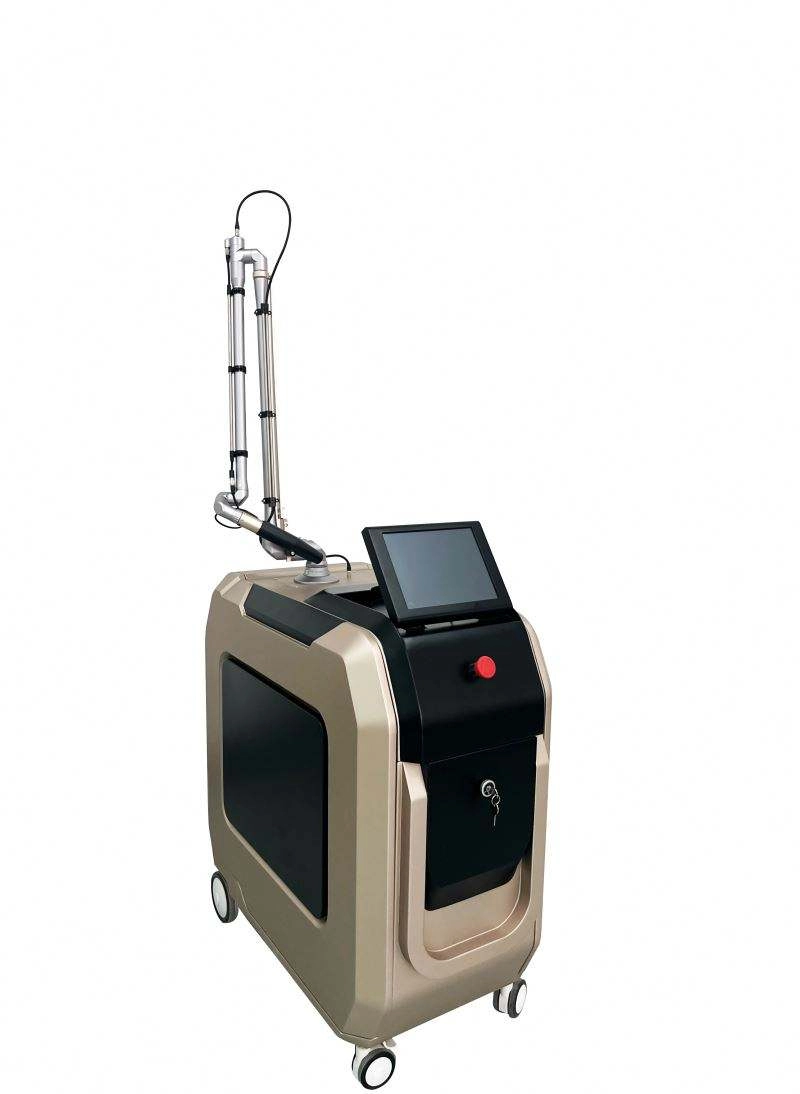
Q-switched vs picosecond: which tattoo removal is better?
Tattoo Removal Machines: Q-Switched vs. Picosecond – Which Is Better?
As a professional content writer with extensive experience in SEO and , I understand the importance of providing accurate and up-to-date information to assist beauty machine industry users in making informed purchasing decisions. In this article, we will address common questions regarding tattoo removal machines, focusing on the comparison between Q-Switched and Picosecond lasers, to help you navigate the complexities of selecting the right equipment for your needs.
1. What Are Q-Switched and Picosecond Lasers?
Q-Switched Lasers:
Q-Switched lasers emit pulses in the nanosecond range (one billionth of a second). They operate primarily through a photothermal effect, where the laser energy is absorbed by the tattoo ink, converting it into heat that breaks down the pigment particles. This method is effective for removing dark inks, particularly black and dark blue tattoos. However, it may require more treatment sessions and can pose a higher risk of temporary pigment changes in darker skin types.
Picosecond Lasers:
Picosecond lasers deliver ultra-short pulses in the picosecond range (one trillionth of a second), creating a photomechanical effect. The rapid pulses generate shockwaves that shatter ink particles into smaller fragments, which are then cleared by the body's immune system. This technology is effective across a broader spectrum of ink colors, including challenging hues like green and blue, and typically requires fewer treatment sessions compared to Q-Switched lasers.
2. How Do Q-Switched and Picosecond Lasers Compare in Terms of Effectiveness?
Treatment Efficiency:
Picosecond lasers often achieve similar or better results in fewer sessions compared to Q-Switched lasers. For instance, a study published in the "Journal of the American Academy of Dermatology" found that picosecond lasers achieved an average removal rate of 75% after two treatments, while Q-Switched lasers achieved 58%.
Ink Color Specificity:
Picosecond lasers are particularly effective on stubborn colors like green and blue, which are traditionally challenging to remove with Q-Switched lasers. This is due to their ability to break down ink particles into smaller fragments, facilitating faster clearance by the body.
3. What Are the Safety Considerations for Each Laser Type?
Q-Switched Lasers:
While generally safe when operated by trained professionals, Q-Switched lasers can pose a higher risk of temporary pigment changes, especially in individuals with darker skin tones. The photothermal effect may lead to hyperpigmentation or hypopigmentation if not properly managed.
Picosecond Lasers:
Picosecond lasers offer a superior safety profile due to their photomechanical mechanism, which reduces thermal damage to surrounding tissues. This results in a lower incidence of adverse effects such as scarring, hyperpigmentation, or hypopigmentation, and typically leads to faster healing times.
4. How Do Treatment Sessions and Recovery Times Compare?
Treatment Sessions:
Picosecond lasers often require 30-50% fewer treatment sessions than Q-Switched lasers for similar results. For example, a medium-sized, professionally applied black tattoo may require an average of 4-6 picosecond laser treatments, while Q-Switched lasers may require 6-10 treatments.
Recovery Times:
Patients undergoing picosecond laser treatments typically experience milder redness and swelling, with most symptoms subsiding within 24 hours. Scabbing is rare, and the overall recovery period is shortened to 3-5 days. In contrast, Q-Switched laser treatments may result in more significant redness and swelling, with recovery times extending up to 7-10 days.
5. What Are the Cost Implications of Each Laser Type?
Initial Investment:
Picosecond laser systems generally have a higher initial purchase price compared to Q-Switched lasers. For instance, picosecond systems can range from $60,000 to $120,000, while Q-Switched systems may cost between $18,000 and $30,000.
Operational Costs:
Despite the higher upfront cost, picosecond lasers may offer a better return on investment due to their efficiency, requiring fewer treatment sessions and potentially attracting more clients seeking advanced tattoo removal options.
6. How Do Q-Switched and Picosecond Lasers Compare in Terms of Patient Comfort?
Q-Switched Lasers:
Patients may experience more discomfort during Q-Switched laser treatments due to the higher thermal effect, which can lead to a sensation of heat or burning.
Picosecond Lasers:
The photomechanical effect of picosecond lasers results in less discomfort, with patients often reporting a sensation similar to the snap of a rubber band rather than a burning feeling.
7. How Do Q-Switched and Picosecond Lasers Compare in Terms of Skin Type Compatibility?
Q-Switched Lasers:
Q-Switched lasers are best suited for lighter skin tones and may carry a higher risk of temporary pigment changes in darker skin types.
Picosecond Lasers:
Picosecond lasers are generally safer for a wider range of skin tones, including darker skin, due to their reduced thermal effect and lower risk of pigmentary changes.
8. How Do Q-Switched and Picosecond Lasers Compare in Terms of Maintenance and Longevity?
Maintenance:
Both laser types require regular maintenance to ensure optimal performance. This includes routine calibration, cleaning, and periodic replacement of components such as handpieces. Maintenance costs can vary depending on the manufacturer and model.
Longevity:
With proper maintenance, both Q-Switched and Picosecond lasers can have a long operational lifespan. However, technological advancements may lead to newer models with enhanced features, prompting clinics to consider upgrades over time.
Conclusion: HUIMAIN's Advantages
When selecting a tattoo removal machine, it's essential to consider factors such as treatment efficiency, safety, patient comfort, and cost. HUIMAIN offers advanced laser systems that incorporate the latest technology, providing effective and safe tattoo removal solutions. Their equipment is designed for ease of use, durability, and superior performance, making them a valuable asset for any clinic or practitioner.
By choosing HUIMAIN, you invest in quality, reliability, and the ability to offer your clients the best possible tattoo removal experience.
References:For a visual comparison of Q-Switched and Picosecond lasers, you may find the following video helpful:
(https://www.youtube.com/watch?v=AsmE3VG12_g&utm_source=openai)

OPT 脱毛机
Can this machine be used for both men and women?
Yes, it is suitable for both men and women on various body areas.
HMT82-2R
Is the treatment painful?
No, the process is non-invasive and feels like an intense workout.
QY-BT410 奇云台式脱毛仪
Is this machine suitable for professional use?
Absolutely. It is designed for clinics, salons, and medical aesthetic centers.
MF6
Is the treatment painful?
No, the procedure is completely non-invasive and painless. Clients only feel mild warmth and tingling.
双逆博士
What is HIFU and how does it work?
HIFU (High Intensity Focused Ultrasound) is a non-invasive technology that uses ultrasound energy to target deep layers of the skin, stimulating collagen production and improving skin elasticity.


Get more information
If you have any comments or good suggestions, please leave us a message; later our professional staff will contact you as soon as possible.
Let's Talk
Stay in touch with us for cutting-edge beauty solutions, professional guidance, and customized service.
Contact


Room 307, Building A, Huilong International E-commerce Industrial Park, No. 10 Xipengling Road, Helong Street, Baiyun District, Guangzhou, China
© 2025 HUIMAIN. All Rights Reserved. Privacy Policy | Terms and Conditions | Sitemap
Facebook
Instagram
Medical beauty equipment factory
huimain Medical beauty equipment factory
beauty machine supplier
Whatsapp: +8619124004543