


Table of Contents
How to Choose the Right Cryolipolysis Machine Factory for Stronger ROI and Long-Term Business Growth
Tue, 10/28/2025
Cryolipolysis has remained one of the most commercially valuable non-invasive body contouring treatments for a reason. It offers a treatment concept that clients already understand, a service category that fits well into modern clinic menus, and a revenue model that can be attractive for both new and established aesthetic businesses. For clinics looking to expand body contouring without relying on invasive procedures, a well-positioned cryolipolysis service can become a dependable source of income.
From a business point of view, one of the strongest advantages of cryolipolysis is its profitability structure. Compared with treatment categories that require high recurring consumable costs, cryolipolysis is often more manageable operationally. Once the equipment is in place and the team is trained, the ongoing cost per treatment can remain relatively low. That creates room for healthier margins, especially when the service is marketed as part of a premium shaping or slimming program rather than a single standalone session.
There is also a strong retention angle. Clients who begin body contouring services often want progress tracking, repeated treatment planning, and complementary services. This means a cryolipolysis machine is not simply a device purchase. In the right business setting, it can become part of a broader client journey that supports package sales, consultation upgrades, and long-term relationship building. For many clinics, that is where the true return on investment comes from.
However, this outcome depends heavily on one decision buyers sometimes underestimate: choosing the right cryolipolysis machine factory.
A machine may look attractive in photos and sound competitive on paper, but actual business performance depends on more than visible design or quoted temperature range. Factory capability affects product consistency, treatment reliability, operator confidence, service continuity, and even your ability to scale. A poor supplier choice can reduce profitability through downtime, weak support, confusing training, delayed spare parts, and inconsistent treatment outcomes. A strong supplier, by contrast, helps protect the clinic’s investment and improves the odds of long-term success.
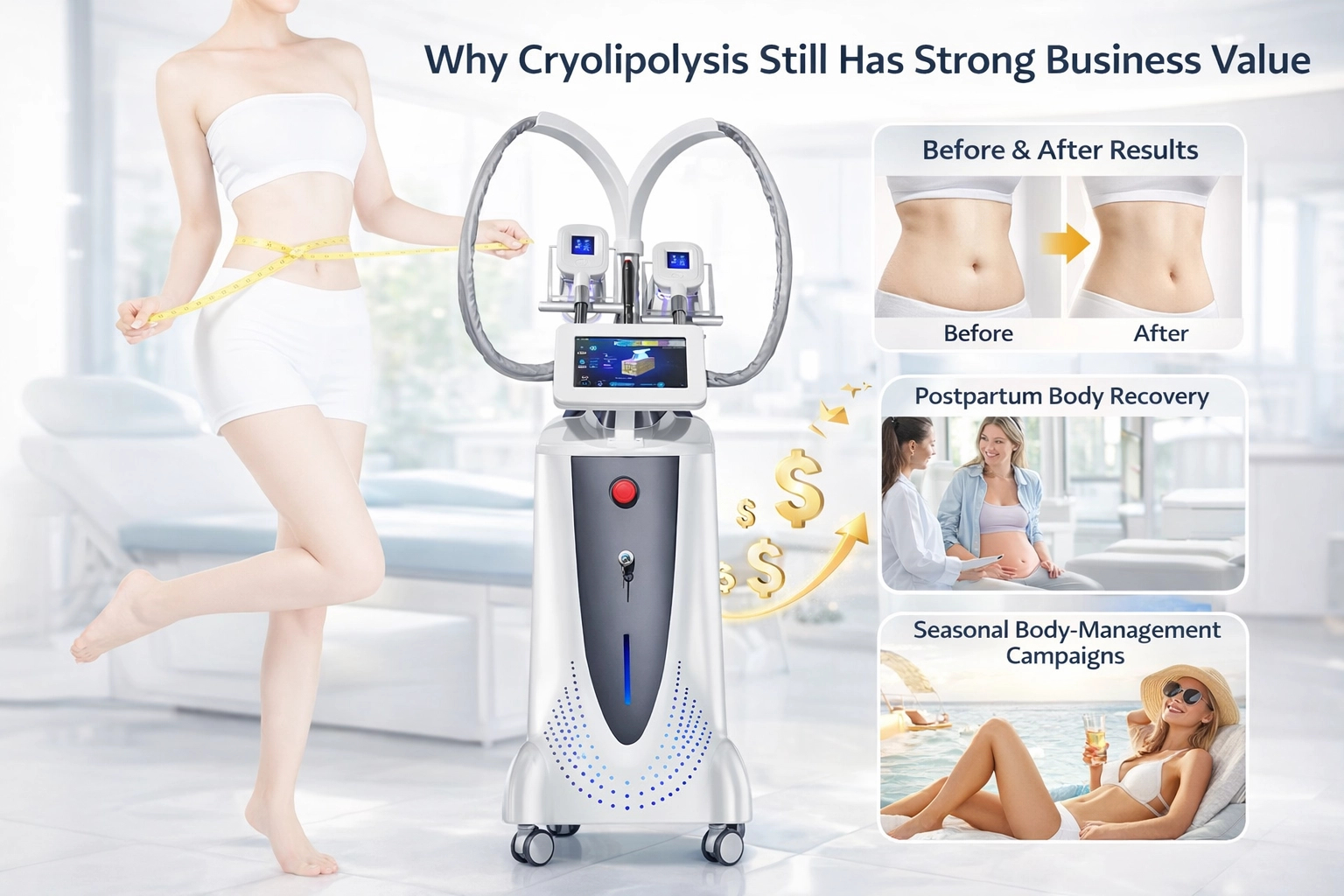
Why Cryolipolysis Still Has Strong Business Value
The appeal of cryolipolysis starts with market demand. Non-invasive body contouring remains highly attractive because many clients want visible figure improvement without surgery, anesthesia, or long recovery periods. Even when clients compare different body shaping technologies, fat freezing often remains easy to explain and easy to position during consultation. The treatment concept feels straightforward: targeted cooling for local fat reduction in areas clients are already concerned about.
That clarity matters commercially. Treatments that are easy for clients to understand are generally easier to market, easier for staff to explain, and easier to package into a clinic’s service menu. They can be promoted as standalone body contouring sessions or included in broader slimming programs, postpartum body recovery plans, membership-based aesthetic services, or seasonal body-management campaigns.
The margin structure is another reason cryolipolysis continues to attract buyers. Aesthetic businesses always need to think in terms of operating leverage, not just treatment popularity. If a machine supports repeat use with relatively low ongoing consumable burden, it can become a stronger profit contributor over time. The revenue generated from each treatment session is not consumed by heavy per-session material costs, which helps clinics move toward ROI more efficiently.
There is also a premium-service benefit. A cryo slimming machine can support higher-value service positioning when combined with good consultation, professional before-and-after planning, and clear client expectations. Clinics do not necessarily need the lowest machine cost to succeed. They need equipment that allows them to deliver a service clients trust, staff can operate confidently, and management can scale without daily friction.
Why the Factory Matters More Than Many Buyers Expect
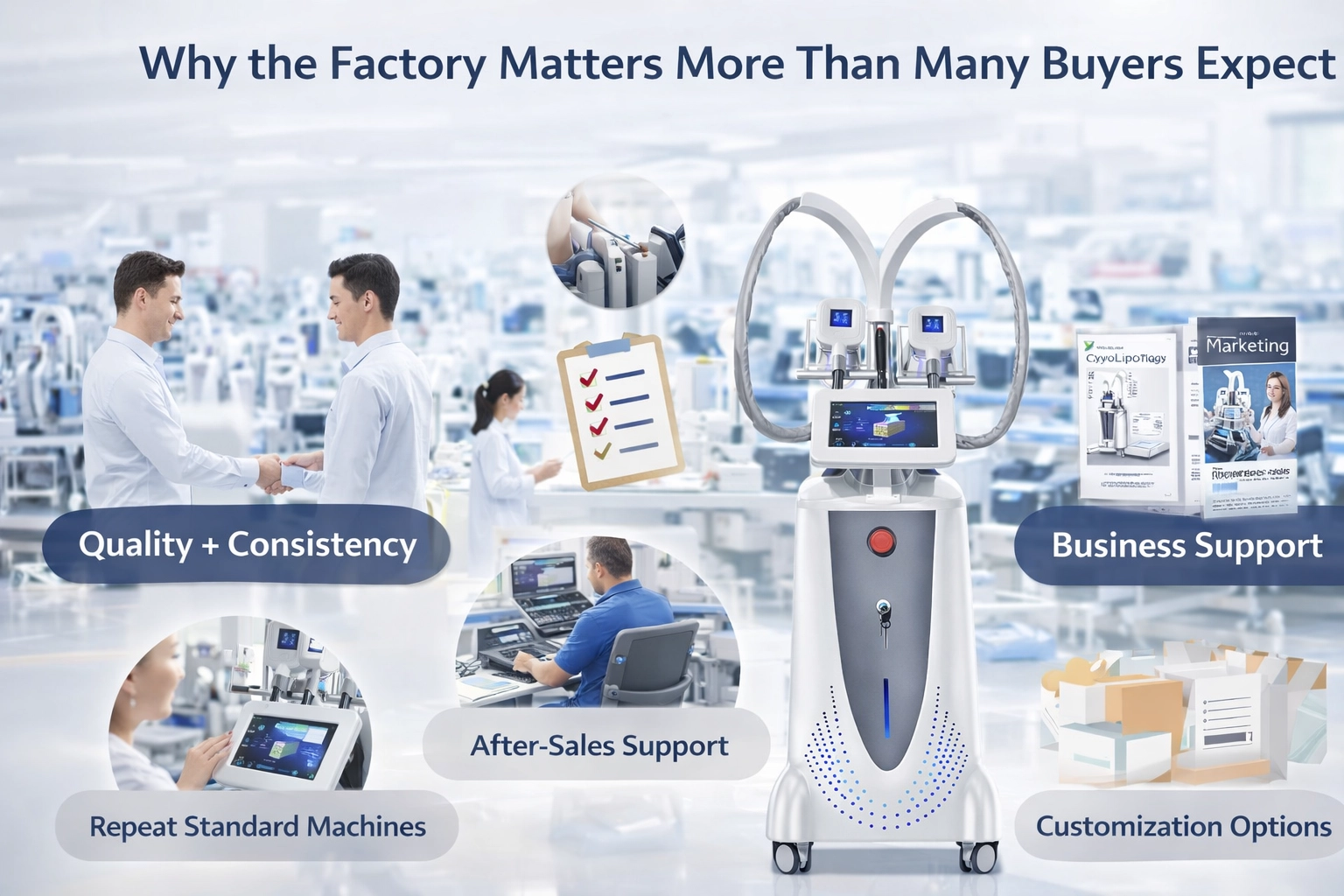
When buyers compare machines, they often focus first on appearance, number of handles, or list price. Those factors matter, but they do not tell the full story. The factory behind the machine often determines whether the equipment is commercially dependable.
Product consistency is a major example. A clinic may test a sample machine that performs well, but if production consistency is weak, later orders may not match the same standard. This is especially important for distributors, importers, and multi-location clinic groups. They need confidence that repeated purchases will maintain similar quality, interface logic, accessory fit, and treatment reliability. A capable cryolipolysis machine factory is not just producing a unit. It is producing repeatable standards.
After-sales support is another overlooked factor with direct financial consequences. If a clinic loses treatment days because of a delayed response, unclear troubleshooting guidance, or unavailable spare parts, the damage goes beyond repair costs. It affects bookings, client trust, staff morale, and cash flow. Fast service response and practical training can have a real impact on ROI, because they reduce downtime and help the business keep operating smoothly.
A strong factory also supports the commercial side of the business. Buyers often need marketing materials, treatment guidance, parameter recommendations, interface language support, customization options, and packaging consistency. These may not appear on the first quotation, but they matter in real operations. A supplier that understands business use cases can offer more than machinery. It can support smoother market entry and stronger product positioning.
How to Evaluate a Cryolipolysis Machine Factory
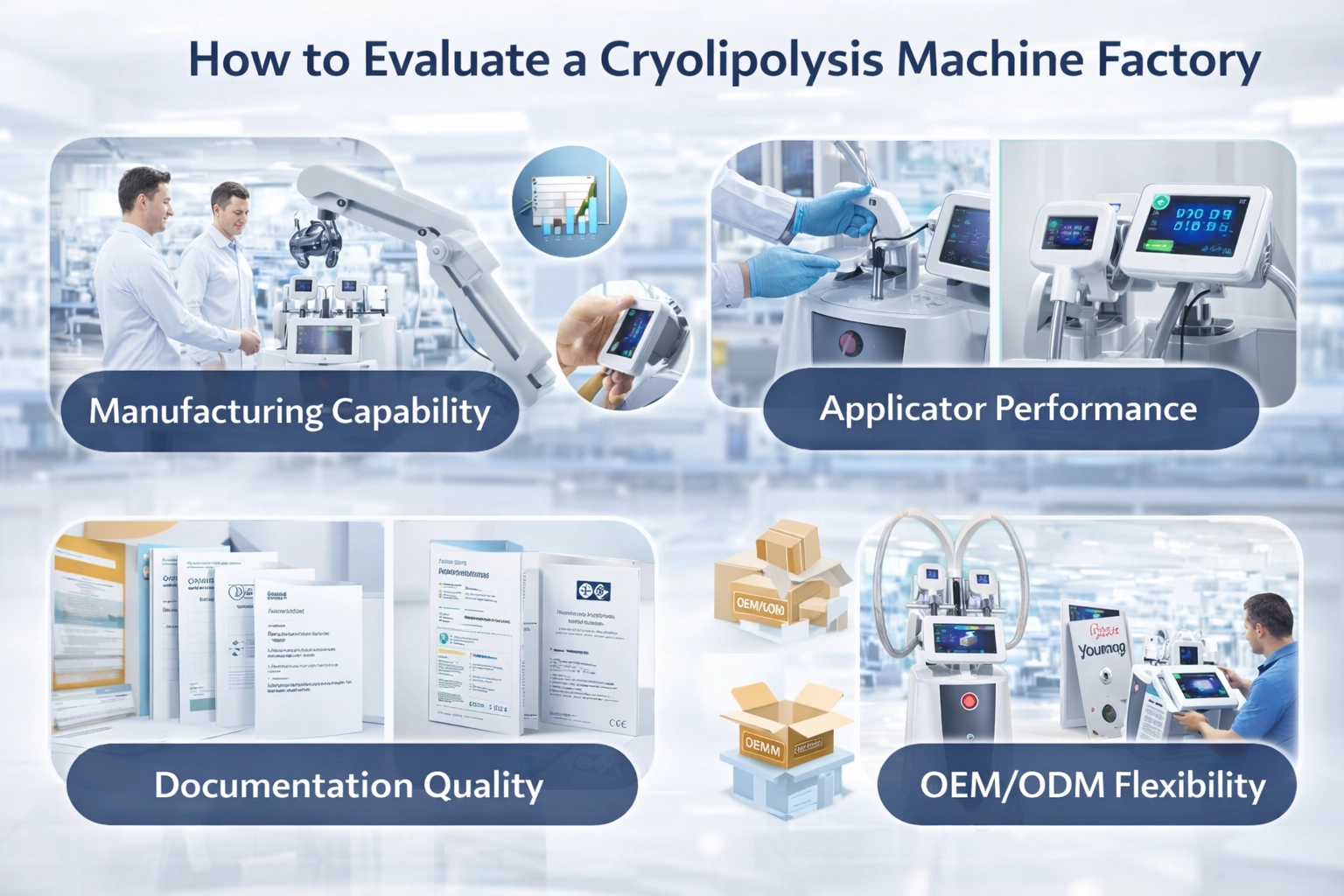
The first thing to assess is manufacturing capability. Buyers should look for evidence that the supplier is a real factory with organized production, stable assembly procedures, testing processes, and a professional quality-control system. This does not mean choosing the biggest company automatically. It means choosing one that can demonstrate stable process management.
Ask how machines are tested before shipment. Ask how cooling performance, vacuum stability, software reliability, and applicator consistency are verified. Ask whether the factory keeps records for product traceability. These questions help reveal whether the supplier is operating with long-term discipline or mainly selling on price.
Applicator and handpiece performance also deserve close attention. In cryolipolysis, treatment value is shaped by how securely the applicators fit, how consistently cooling is delivered, how manageable the interface is for operators, and how comfortable the treatment feels for clients. A factory with stronger engineering and production control is more likely to deliver stable applicator quality from batch to batch.
Documentation quality is another useful signal. Professional factories usually provide organized specifications, user documentation, packing details, and certification information in a structured way. Disorganized or inconsistent documents can be a warning sign. In B2B sourcing, the ability to communicate clearly and professionally often reflects internal management quality.
For many buyers, OEM and ODM capability is also important. A distributor may want private label branding. A wholesaler may need packaging customization. A clinic group may want interface language support or brand alignment across several locations. A reliable cryolipolysis machine factory should be able to explain what level of customization is realistic, what the minimum order expectations are, and how brand consistency is handled.
Businesses that are still comparing options may benefit from asking suppliers for detailed specifications, support scope, and configuration differences early in the process. That makes it easier to compare true value instead of relying on headline claims alone.
Understanding Cryolipolysis Machine Price from a Business Perspective
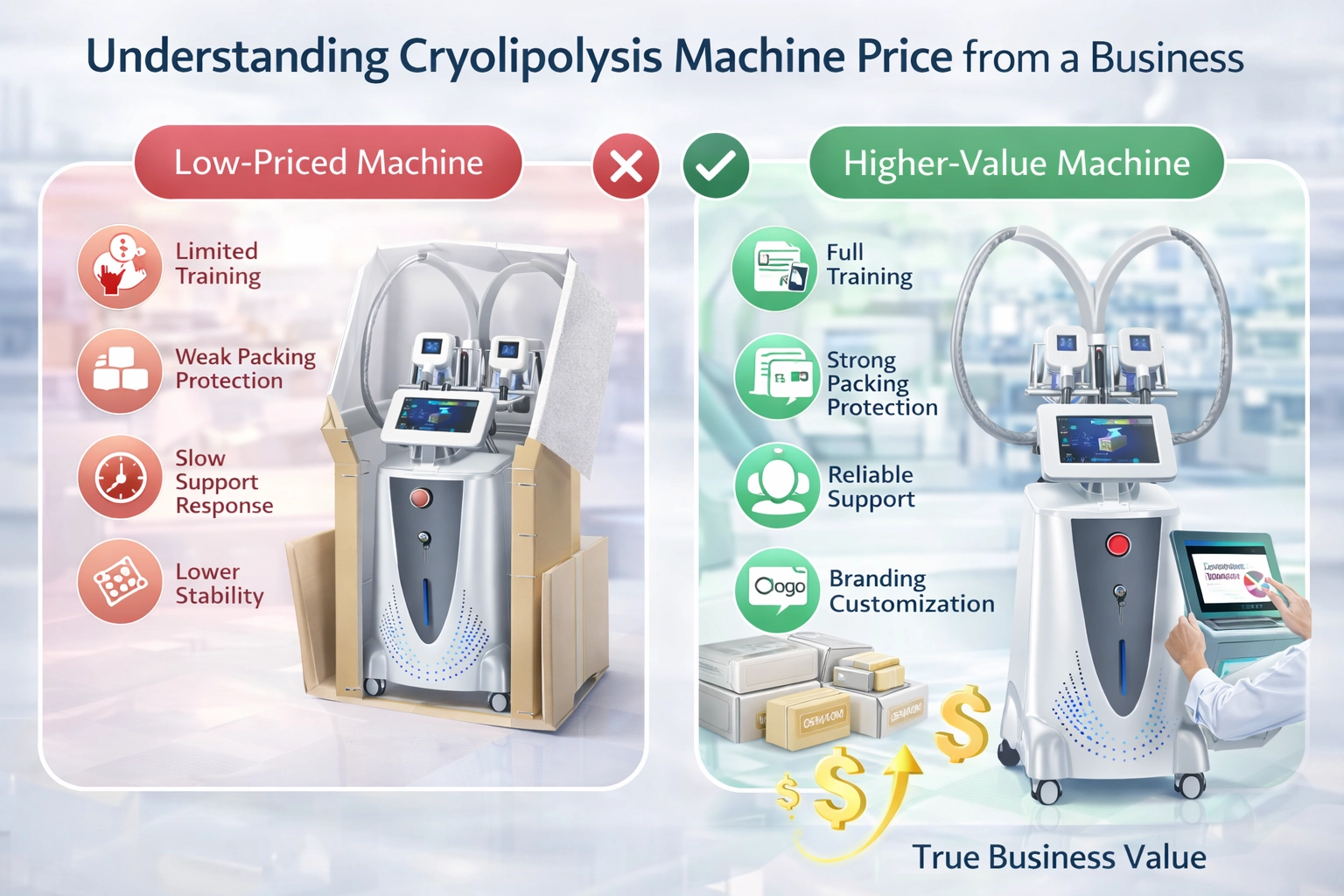
One of the most common mistakes in equipment sourcing is treating cryolipolysis machine price as the same thing as total investment value. A lower quotation can look attractive, especially for new buyers trying to control budget. But the real cost of ownership includes much more than the initial invoice.
A low-priced machine may come with limited training, weaker packaging protection, slower service response, inconsistent accessories, or short-lived component stability. These issues do not always appear during the first conversation with the supplier. They show up later, after installation, during treatment delivery, or when support is urgently needed. At that stage, the cheaper option can become more expensive.
A more useful pricing comparison should include several layers. What accessories are included? How many applicators come standard? Is training provided? What language options are available? How is after-sales support handled? Are replacement parts available? Is branding customization included or extra? What is the expected support process if a clinic has technical questions after launch?
Buyers should also evaluate price through revenue potential. If one machine is slightly more expensive but easier to use, more comfortable for clients, more visually premium, and better supported, it may help the clinic attract bookings and maintain smoother operations. That difference can improve ROI far more than a small saving on the purchase price.
This is especially important when the machine is being purchased for growth, not just for inventory. The right cryo slimming machine should help create value over time. That means price should be judged against reliability, usability, support, and commercial fit, not just against the lowest number on the quotation.
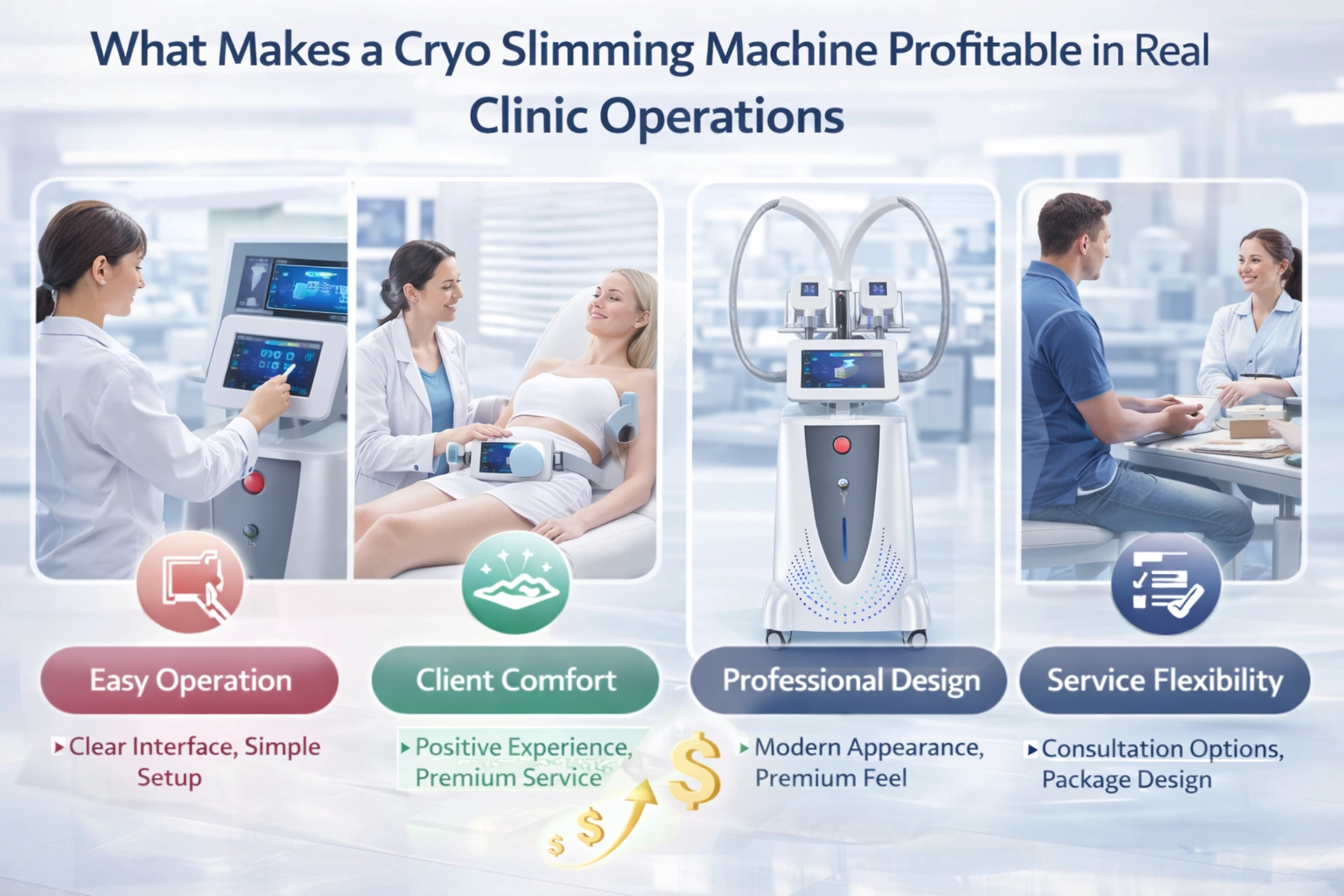
What Makes a Cryo Slimming Machine Profitable in Real Clinic Operations
Profitability in aesthetic equipment depends on everyday usability. A machine may seem technically impressive, but if staff find it difficult to operate, treatment turnover slows, consultations become harder, and consistency suffers. Operational simplicity is not a minor detail. It is part of business performance.
A profitable cryo slimming machine should fit naturally into clinic workflow. The interface should be clear enough for trained staff to use confidently. Applicators should be practical to manage. Treatment setup should not feel unnecessarily complicated. When the machine is easy to integrate into normal operations, the clinic can serve clients more efficiently and reduce staff hesitation.
Client comfort also matters. In body contouring, experience influences word-of-mouth, repeat bookings, and package acceptance. If treatment feels disorganized or uncomfortable because of poor applicator handling or inconsistent performance, the commercial impact can be significant. On the other hand, a machine that supports a smoother treatment experience can help clinics position the service more confidently and justify premium pricing.
Visual presentation matters as well. In modern aesthetic environments, equipment design contributes to perceived value. A machine that looks professional and credible can support stronger consultation conversations. This does not mean buyers should choose style over performance. It means visual quality should be considered alongside function because clients do respond to treatment environment and equipment appearance.
Another point is service flexibility. Some clinics use cryolipolysis as an entry point to body contouring, while others build full body programs around it. The more adaptable the equipment is to different consultation styles and treatment packages, the more commercial value it can create. Clinics that want to differentiate themselves often look beyond the machine itself and think about how the device supports package design, service layering, and repeat visits.
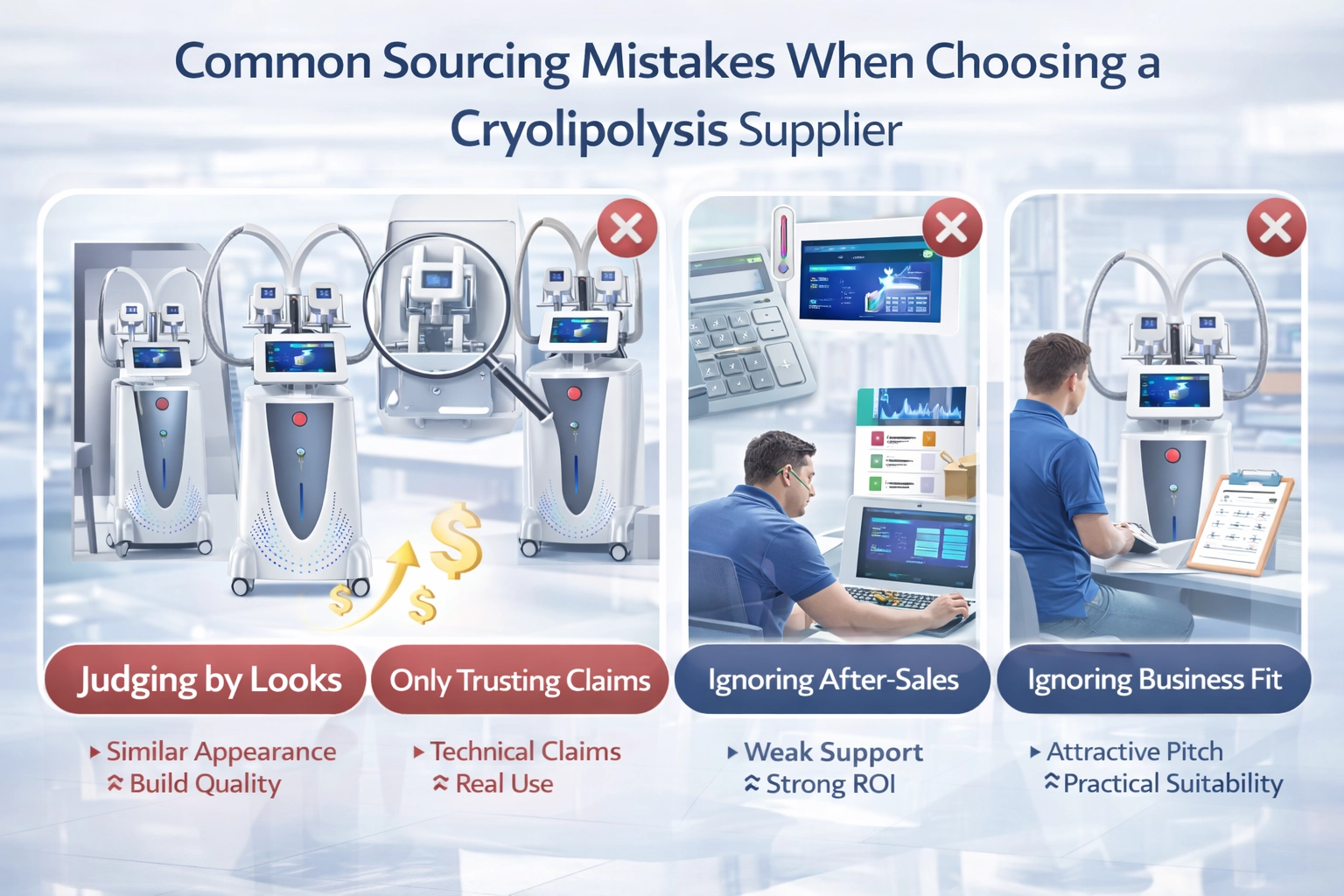
Common Sourcing Mistakes When Choosing a Cryolipolysis Supplier
One common mistake is buying based mainly on appearance. Many machines can look similar in photos, especially online. However, similar appearance does not mean similar build quality, software stability, cooling consistency, or support reliability. Serious buyers should always investigate beyond product images.
Another mistake is overvaluing technical claims without understanding their practical meaning. Numbers alone do not guarantee a better clinic experience or better business performance. What matters is how consistently the machine performs in normal use, how easy it is to operate safely, and how well the supplier supports the buyer after delivery.
Ignoring after-sales support is another major risk. Some buyers focus intensely on the negotiation stage but spend too little time understanding service structure. They should ask how support tickets are handled, how quickly responses are given, whether remote guidance is available, and how spare parts are supplied. Weak support can damage ROI more quickly than buyers expect.
A further mistake is failing to assess business fit. Not every clinic needs the same machine configuration or the same supplier model. A distributor may value OEM flexibility and repeat-order consistency. A single-location clinic may care more about training and local usability. A growing chain may prioritize standardization and service efficiency. The best supplier is not just the one with the most aggressive sales language. It is the one that fits the buyer’s actual operating model.
Questions Buyers Should Ask Before Requesting a Quotation
A quotation is more useful when the buyer already knows what to compare. Instead of asking only for price, buyers should ask more strategic questions.
Start with factory questions. Ask whether the supplier is the direct manufacturer. Ask about production capacity, testing procedures, and quality control. Ask how they handle repeat orders and whether the same specifications can be maintained across batches.
Then ask product questions. Ask which applicators are included, what the interface supports, how treatment parameters are managed, what training is offered, and what configuration differences exist between models. These details help reveal whether the machine is suitable for real commercial use.
Finally, ask business-support questions. Ask whether OEM or private label options are available. Ask whether the supplier provides brochures, catalogs, packaging customization, or market-support materials. Ask what happens after installation if the clinic needs help. These answers often make a bigger difference than a small price difference between two suppliers.
For buyers comparing multiple factories, creating a side-by-side comparison sheet can be very useful. It helps turn vague supplier claims into a structured decision process based on value, risk, and long-term business potential.
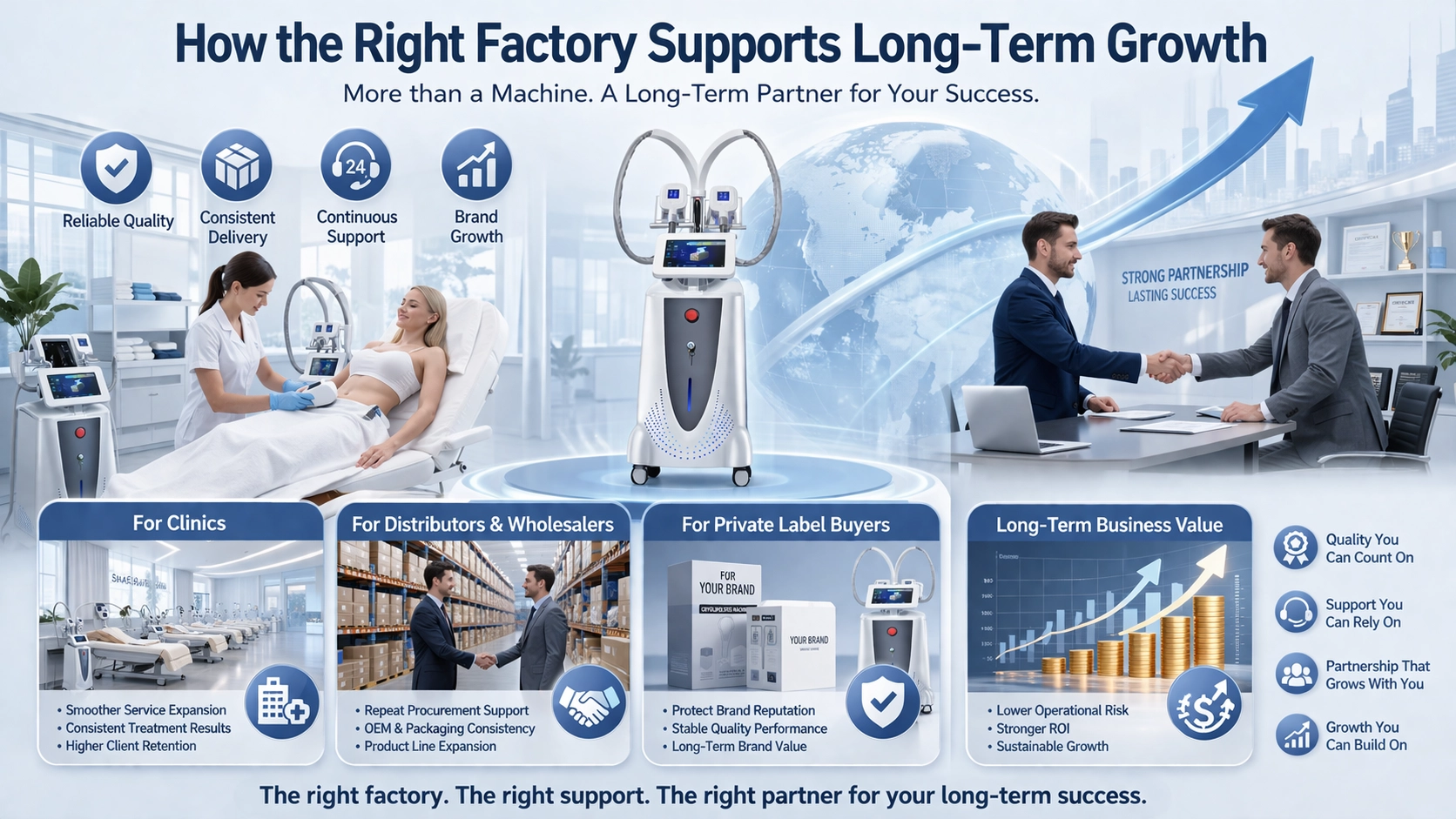
How the Right Factory Supports Long-Term Growth
The best equipment purchase decisions are not only about opening a treatment room. They are about supporting business growth over time. A strong cryolipolysis machine factory helps make that possible by giving buyers more confidence in quality, delivery consistency, service continuity, and brand development.
For clinics, this can mean smoother service expansion. Once a body contouring service begins generating bookings, the next challenge is maintaining consistency as volume grows. Stable supplier support becomes important because it reduces operational friction and helps management focus on marketing, consultation quality, and client retention instead of constant troubleshooting.
For distributors and wholesalers, the benefits are even broader. A reliable factory partner can support repeat procurement, OEM projects, packaging consistency, and product-line expansion. That is essential when the business is not just buying for one location, but building a long-term market offer.
For private label buyers, factory quality affects brand reputation directly. If the machine performs inconsistently or support is weak, the private label brand suffers. That is why factory evaluation should never be separated from commercial strategy. In aesthetic equipment, manufacturing quality and business growth are closely connected.
Ultimately, cryolipolysis remains attractive because it combines treatment popularity with strong business logic. Low consumable dependency, high client interest, and repeat-service potential make it a compelling category. But the businesses that benefit most are usually the ones that treat supplier selection as a strategic decision, not a quick purchase.
A clinic or distributor that wants to build long-term value should look at the full picture: machine reliability, supplier professionalism, pricing logic, usability, after-sales support, and future growth potential. When those factors align, a cryo slimming machine becomes more than an equipment item. It becomes part of a stable revenue model.
Conclusion
- A professional cryolipolysis service can offer excellent business value for clinics and aesthetic operators that want non-invasive body contouring with strong commercial potential. High treatment demand, relatively low consumable pressure, and strong repeat-visit opportunities make this category especially attractive for businesses focused on premium service growth and healthy ROI.
But choosing the right machine requires more than comparing photos or chasing the lowest cryolipolysis machine price. The quality of the factory behind the equipment has a direct effect on treatment consistency, downtime risk, staff confidence, client experience, and long-term profitability. That is why evaluating a cryolipolysis machine factory should be a business decision as much as a product decision.
The best supplier is not simply the one with the cheapest offer. It is the one that can support reliable quality, practical training, responsive service, and a machine that fits your business model. For buyers who want long-term value rather than short-term savings, a well-chosen cryo slimming machine can become an important asset in building a stronger and more resilient body contouring business.
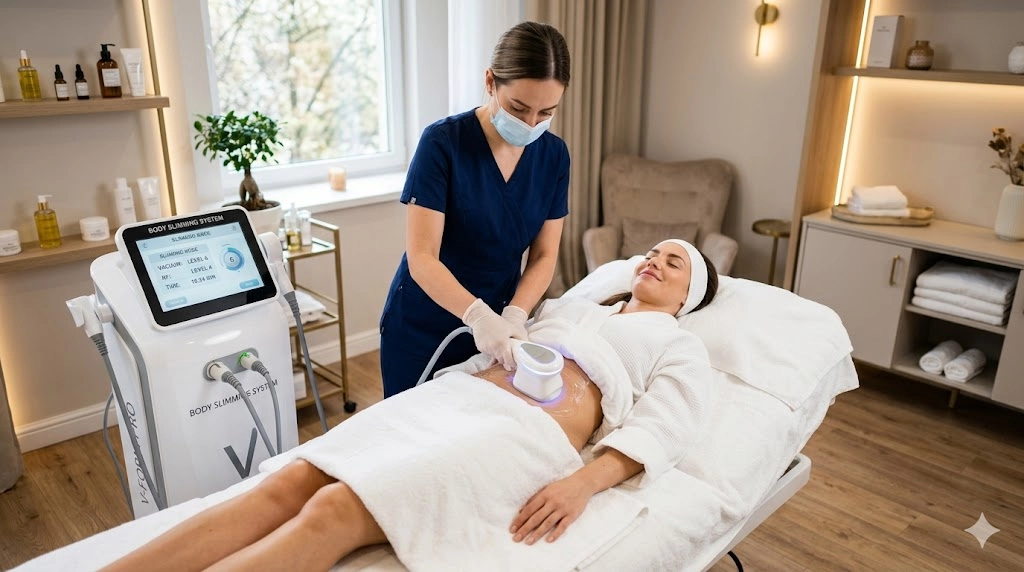
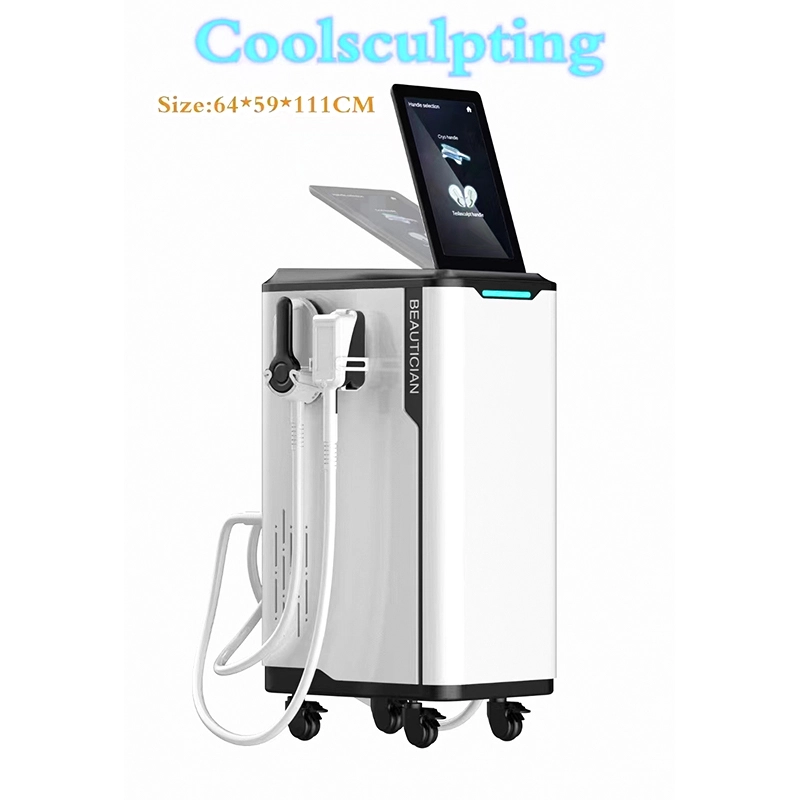
cryolipolysis machine treatment
Is the lowest cryolipolysis machine price always the best option?
No. A lower upfront price can sometimes lead to higher long-term cost if the machine has unstable quality, weak support, or limited usability. Buyers should compare total business value, not just the initial quotation.
Should distributors and OEM buyers evaluate factories differently from clinics?
Yes. Clinics usually focus more on treatment usability, support, and service reliability. Distributors and OEM buyers also need to assess repeat-order consistency, branding options, packaging standards, and the factory’s ability to support long-term supply relationships.
What questions should I ask before requesting a quotation?
Ask what configuration is included, how training is handled, what after-sales support is available, whether OEM/ODM is offered, how quality is tested before shipment, and how the supplier handles spare parts or technical issues after delivery.
What should I look for in a cryolipolysis machine factory?
You should look at manufacturing consistency, quality control, after-sales support, documentation quality, training scope, and customization capability. A reliable factory should be able to explain not only machine specifications but also how it supports buyers after purchase.
Why is cryolipolysis considered profitable for clinics?
Cryolipolysis is often attractive because it supports premium body contouring services with relatively low consumable dependency, strong market demand, and repeat client potential. That combination can help clinics recover investment faster when the service is positioned well.

Get more information
If you have any comments or good suggestions, please leave us a message; later our professional staff will contact you as soon as possible.
Let's Talk
Stay in touch with us for cutting-edge beauty solutions, professional guidance, and customized service.
Contact


Room 307, Building A, Huilong International E-commerce Industrial Park, No. 10 Xipengling Road, Helong Street, Baiyun District, Guangzhou, China
© 2025 HUIMAIN. All Rights Reserved. Privacy Policy | Terms and Conditions | Sitemap
Facebook
Instagram
Medical beauty equipment factory
huimain Medical beauty equipment factory
beauty machine supplier
Whatsapp: +8619124004543