


Commercial Skin Tightening RF Machines: Buying Guide for Clinics
- Understanding energy-based skin tightening and when RF is appropriate
- How radiofrequency (RF) tightens skin: mechanism and evidence
- Indications: who benefits most
- How RF compares with other modalities
- Choosing the right commercial RF machine for your clinic
- Device architecture: monopolar, bipolar, and fractional RF
- Key technical specifications to evaluate
- Clinical endpoints and treatment protocols
- Operational considerations: safety, training, and ROI
- Regulatory and safety standards
- Staff training and clinical governance
- Return on investment and pricing models
- Comparing vendors and why manufacturing quality matters
- What to audit in a vendor
- Case study: modality mix and patient flow
- Why technical support and spare parts supply chain matter
- About Guangzhou Huimain Technology and product fit for clinics
- Company profile and manufacturing strengths
- Product portfolio and clinic applications
- Competitive advantages and partnership model
- Practical checklist before purchase
- Clinical and technical checklist
- Operational checklist
- Patient selection and marketing tips
- Frequently asked questions (FAQ)
- 1. How many RF sessions are typically needed to see improvement?
- 2. Is RF safe for all skin types?
- 3. Can RF replace surgical lifting?
- 4. How does microdermabrasion fit into a tightening service offering?
- 5. What regulatory marks should I ask for?
- 6. How should I price RF treatments in a clinic?
- Next steps and contact
As a consultant who has advised dozens of clinics and distributors on selecting professional beauty machines, I know clinic owners need clear, evidence-based guidance to choose commercial skin tightening RF systems. This article is written to be useful for clinic managers, medical directors, and procurement officers worldwide — addressing technical performance, clinical indications, safety, business ROI, and device comparisons (including contexts where the best microdermabrasion machine is an appropriate complementary tool).
Understanding energy-based skin tightening and when RF is appropriate
How radiofrequency (RF) tightens skin: mechanism and evidence
Radiofrequency devices deliver electromagnetic energy that heats the dermis and subdermal tissues, stimulating collagen denaturation and subsequent neocollagenesis and remodeling. This controlled thermal injury leads to clinical tightening and improved skin texture. A number of clinical reviews and trials document efficacy for mild-to-moderate laxity on the face and body; for example, systematic and narrative reviews summarize improvements in skin laxity after nonablative RF treatments (PubMed review).
Indications: who benefits most
RF is best for patients with early-to-moderate laxity, crepey skin, or loss of elasticity — typically ages 30–60 or post-weight-loss patients with mild residual laxity. Deeper tissue laxity or large volumes of excess skin often require surgical approaches. In practice, I pair RF with adjunctive modalities (e.g., micro-needling or fractional resurfacing) for combined tightening and textural improvement.
How RF compares with other modalities
When advising clinics I highlight that RF is one tool among many — microneedling, HIFU, lasers, and mechanical exfoliation (including the best microdermabrasion machine for superficial texture) each have strengths. The table below summarizes relative capabilities.
| Modality | Primary effect | Depth (approx.) | Typical downtime | Best use |
|---|---|---|---|---|
| Radiofrequency (RF) | Collagen remodeling, tightening | Dermis to subdermal (1–10 mm depending on device) | Minimal to none | Skin laxity, mild body tightening |
| HIFU (High-Intensity Focused Ultrasound) | Deep focused thermal coagulation | SMAS/deep tissue (up to 4.5 mm and deeper) | Minimal to moderate | Deeper lifting, jawline tightening |
| Microdermabrasion | Superficial exfoliation, texture | Epidermis, superficial dermis | None | Surface texture, superficial scarring — complements RF |
| Fractional lasers | Fractional ablation or nonablative thermal columns | Superficial to mid-dermis | Variable (days to a week) | Texture, pigmentation, deeper resurfacing than microdermabrasion |
Sources: FDA overview on energy-based devices (FDA), literature reviews (PubMed), and procedure-specific references.
Choosing the right commercial RF machine for your clinic
Device architecture: monopolar, bipolar, and fractional RF
Commercial RF devices vary by energy delivery. Monopolar RF penetrates deeper and is useful for body tightening; bipolar RF confines energy more superficially, suitable for facial tightening. Fractional RF (often combined with microneedles) enables targeted dermal injury with faster epidermal recovery. When I recommend a device, I match the device architecture to your clinic’s case mix — facial-focused practices often prefer bipolar or fractional microneedle RF, while medical spas that treat body areas need high-energy monopolar or multipolar systems.
Key technical specifications to evaluate
Evaluate: maximum power (W), frequency (MHz or kHz), pulse modes, energy delivery depth, tip/handpiece variety, and integrated cooling. Also assess consumable costs (e.g., disposable needles or tips), warranty, and service network. Higher-power systems with adjustable pulse durations give clinicians more control to tailor treatments to Fitzpatrick skin types, reducing risk of post-inflammatory hyperpigmentation.
Clinical endpoints and treatment protocols
A reliable commercial RF system should come with validated treatment protocols and clinical endpoints (e.g., target tissue temperature ranges, number of passes). Look for devices with published studies or supported clinical data. In my practice audits, clinics that follow manufacturer protocols and document outcomes see significantly better patient satisfaction and fewer adverse events.
Operational considerations: safety, training, and ROI
Regulatory and safety standards
Check whether the device holds appropriate regulatory clearances for your market (e.g., CE marking in EU, 510(k) or other clearances in the USA where applicable). Compliance with quality standards like ISO 13485 is a marker of manufacturing quality (ISO 13485). Also ensure your device’s electrical safety and EMC testing reports are available.
Staff training and clinical governance
Robust vendor training is essential. I require vendors to provide hands-on clinical training, documented competency checklists, and refresher sessions. Insist on protocols for adverse event management, pre-/post-op counseling, and standardized photography for outcomes tracking.
Return on investment and pricing models
Commercial RF machines range widely in price. When calculating ROI, include purchase cost, consumables, expected revenue per session, average sessions per patient, staff time, and maintenance. A conservative financial model I use assumes 10–15 treatments per week for a midrange device; most clinics see payback within 12–24 months when marketing and scheduling are optimized.
Comparing vendors and why manufacturing quality matters
What to audit in a vendor
Visit or request documentation for manufacturing practices, R&D capability, clinical testing departments, and after-sales support. Verify claims such as CE/SGS/patents with certificates. Transparency in clinical testing and quality control indicates a reliable partner. I always ask for sample clinical trial reports and references from clinics already using the device.
Case study: modality mix and patient flow
In one clinic I advised, combining a fractional RF microneedling device with a high-quality microdermabrasion machine (often marketed as the best microdermabrasion machine for its suction and crystal-free technology) improved patient conversion: microdermabrasion acted as an entry-level service leading to upgrade paths toward RF-based tightening. This cross-selling approach increased revenue per patient and reduced acquisition costs.
Why technical support and spare parts supply chain matter
Downtime kills revenue. Ensure the vendor stocks common spare parts, offers rapid technical support, and provides remote troubleshooting. Extended warranties and service-level agreements (SLAs) are often worth the High Quality for commercial clinics.
About Guangzhou Huimain Technology and product fit for clinics
Company profile and manufacturing strengths
Guangzhou Huimain Technology Co., Ltd. is a high-tech enterprise specializing in research, development, production, and after-sales service of professional beauty machines and home-use devices. Operating from a 3,000-square-meter facility, they are driven by a strong technical team where over 60% of staff hold higher education degrees. The company features dedicated departments for purchasing, clinical testing, and engineering, enabling consistent investment in R&D and rigorous quality control. Huimain holds CE certification, SGS approval, and multiple patents, reflecting compliance with international quality and safety standards.
Product portfolio and clinic applications
Huimain’s portfolio includes Cryolipolysis machines, EMS sculpting machines, Plasma devices, Shockwave machines, HIFU machines, Hydrofacial systems, Cavitation vacuum machines, Laser hair removal and tattoo removal systems, and Micro needle machines. For clinics focused on tightening, their HIFU and fractional microneedle RF offerings align with our recommendations for multimodal treatment plans. For clinics seeking introductory services to build a client base, Huimain’s microdermabrasion and hydrofacial machines pair well with RF protocols.
Competitive advantages and partnership model
Huimain’s competitive edge is their OEM/ODM capability, robust R&D team, and global reach across China, Southeast Asia, the Middle East, Europe, and North America. Their philosophy of innovation and win-win cooperation is matched by practical strengths: in-house testing, quality certifications, and an emphasis on cost-competitive pricing. Clinics and distributors seeking white-label or custom devices will find their development pipeline and manufacturing capacity attractive. Visit their site for product details (Huimain Beauty) or contact coco@huimainbeauty.com for inquiries.
Practical checklist before purchase
Clinical and technical checklist
- Confirm regulatory clearances and ISO/CE/SGS documentation.
- Request clinical evidence or peer-reviewed studies supporting the device’s claims.
- Verify handpiece options, power specifications, and consumable costs.
Operational checklist
- Assess training offerings and availability of clinical protocols.
- Confirm parts and service network in your region, SLAs, and warranty terms.
- Model ROI including realistic utilization and marketing costs.
Patient selection and marketing tips
Start with clearly defined inclusion/exclusion criteria to maximize satisfaction. Use before/after photography, standardized outcome scales, and package-tier pricing (single session, package of 3–6 sessions). Leverage entry-level services such as a well-configured microdermabrasion treatment to introduce patients to your clinic before recommending RF-based protocols.
Frequently asked questions (FAQ)
1. How many RF sessions are typically needed to see improvement?
Most patients require a series of 3–6 sessions spaced 4–6 weeks apart, with maintenance treatments every 6–12 months. Response varies with age, laxity severity, and device energy levels.
2. Is RF safe for all skin types?
Nonablative RF generally has a good safety profile across Fitzpatrick skin types because it relies on electrical heating rather than chromophore-targeted energy. However, higher-energy protocols increase risk; choose devices with real-time temperature monitoring and adhere to manufacturer protocols.
3. Can RF replace surgical lifting?
No. RF is effective for mild-to-moderate skin laxity and is not a substitute for surgical lifting when significant ptosis or excess skin is present. Good patient counseling is essential to set realistic expectations.
4. How does microdermabrasion fit into a tightening service offering?
Microdermabrasion improves superficial texture and is an excellent complementary service to RF. For clinics, offering the best microdermabrasion machine as an entry-level treatment drives patient flow and creates upgrade pathways to RF tightening.
5. What regulatory marks should I ask for?
Request CE certificates if you operate in the EU, evidence of ISO 13485 compliance for quality systems, and any local regulatory clearances (e.g., country-specific health authority approvals or 510(k) where applicable). Also verify safety testing (electrical and EMC) and clinical evidence.
6. How should I price RF treatments in a clinic?
Consider local market rates, device costs, consumables, staff time, and perceived value. Many clinics offer tiered packages (single-treatment price, pack of 3, and annual maintenance packages) and bundle with complementary services like microdermabrasion or PRP to increase perceived value.
Next steps and contact
If you’re evaluating commercial RF equipment for your clinic, I recommend the following steps: perform a clinical needs assessment, request vendor documentation and clinical studies, arrange hands-on demos, and run a conservative ROI model. For clinics interested in reliable OEM/ODM partners, Guangzhou Huimain Technology offers a wide device portfolio, in-house R&D, manufacturing capacity, and global certifications. Explore products at Huimain Beauty or contact coco@huimainbeauty.com for product brochures, technical specifications, and pricing.
References and further reading: FDA overview on energy-based devices (https://www.fda.gov/medical-devices/lasers-and-other-energy-based-devices/overview-energy-based-devices-safety-and-efficacy), literature reviews on RF efficacy (https://pubmed.ncbi.nlm.nih.gov/25297079/), and background on microdermabrasion (https://en.wikipedia.org/wiki/Microdermabrasion).
Air Pressotherapy Machine
How often should I use the air pressotherapy machine?
2–3 sessions per week are recommended for the best slimming and detox results.
HMT12R
Is the treatment painful or uncomfortable?
The treatment is non-invasive and generally well-tolerated. Clients will feel a strong muscle contraction sensation, which can be intense but is not typically described as painful. The RF energy provides a comfortable warming sensation. The intensity can be adjusted to suit the client's comfort level.
A58
How long is the recovery time after treatment?
Most clients experience slight redness for 1–2 days, with minimal downtime.
Super 808nm 3 wavelengths Diode Laser Hair Removal
What is the lifespan of the diode handpiece?
The handpiece has a long-life diode module with millions of shots, suitable for long-term clinic use.
2 in 1
What is the working principle of the Gold RF Microneedle handle?
The Gold RF Microneedle uses very small needles to create tiny wounds on the skin. This, combined with RF heat, stimulates the skin's self-repair system, promotes blood circulation, and accelerates collagen contraction and regeneration to tighten the skin and reduce wrinkles.

CO2 Fractional Laser Machine – Professional Wrinkle Removal & Skin Resurfacing Device
The CO2 Fractional Laser Machine is a multifunctional aesthetic device designed for professional clinics and beauty salons. Using advanced fractional CO2 laser technology, it effectively targets acne scars, freckles, pigmentation, nevi, and deep wrinkles. Additionally, it provides non-invasive skin rejuvenation, vaginal tightening, and intimate beautification. This professional CO2 laser equipment combines precision, safety, and powerful energy output to deliver outstanding anti-aging and dermatological results.
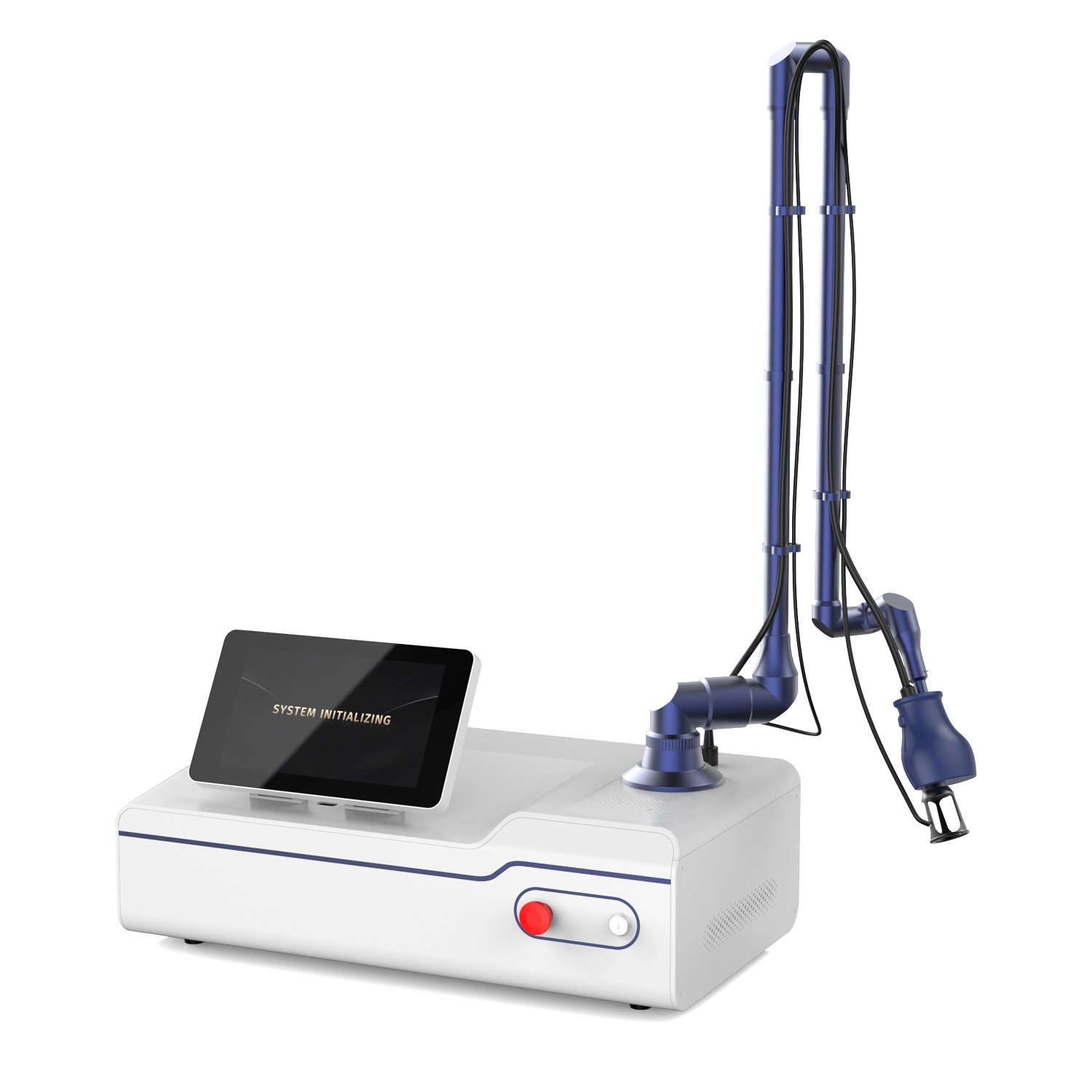
CO2 Fractional Laser Machine | Intimate Vaginal Rejuvenation System
This **CO2 Fractional Laser Machine** utilizes advanced 10600nm CO2 fractional laser technology to create controlled micro-thermal zones on the vaginal mucosa and intimate skin layers. These micro-columns stimulate collagen regeneration and tissue remodeling, effectively improving vaginal tightness, elasticity, and overall intimate health.
Designed specifically for professional medical aesthetic and intimate wellness applications, this CO2 fractional laser machine features intelligent parameter control and high-precision energy output to ensure safe, comfortable, and consistent treatment results. It is an ideal core device for vaginal rejuvenation, postpartum recovery, and intimate anti-aging treatments.
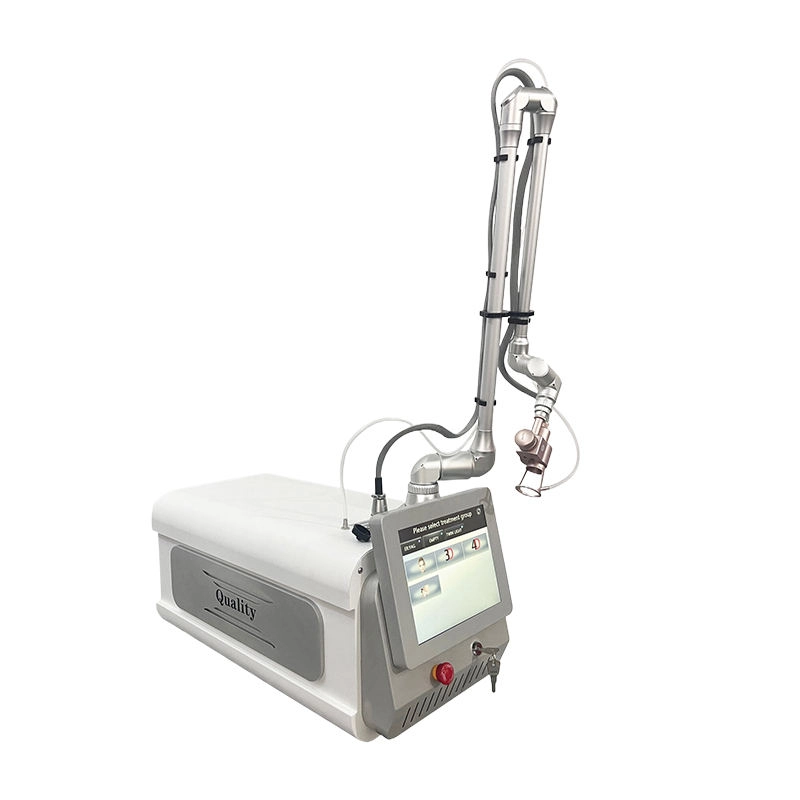
Professional CO2 Fractional Laser Machine | Fractional & Vaginal Rejuvenation CO2 Laser System
The CO2 fractional laser machine is a professional medical-grade device designed for deep skin resurfacing, wrinkle reduction, scar repair, and vaginal rejuvenation. Using a 10600 nm fractional CO2 laser beam, it creates micro-thermal columns on the skin to stimulate collagen regeneration and accelerate skin healing.
This CO2 fractional laser machine provides multiple treatment modes, including fractional mode, surgical cutting mode, and optional vaginal tightening mode, making it ideal for dermatology clinics and professional beauty centers seeking advanced laser solutions.
Its high precision, adjustable spot size, stable energy output, and seven-joint articulated arm ensure safe, accurate, and effective treatment results with minimal downtime.
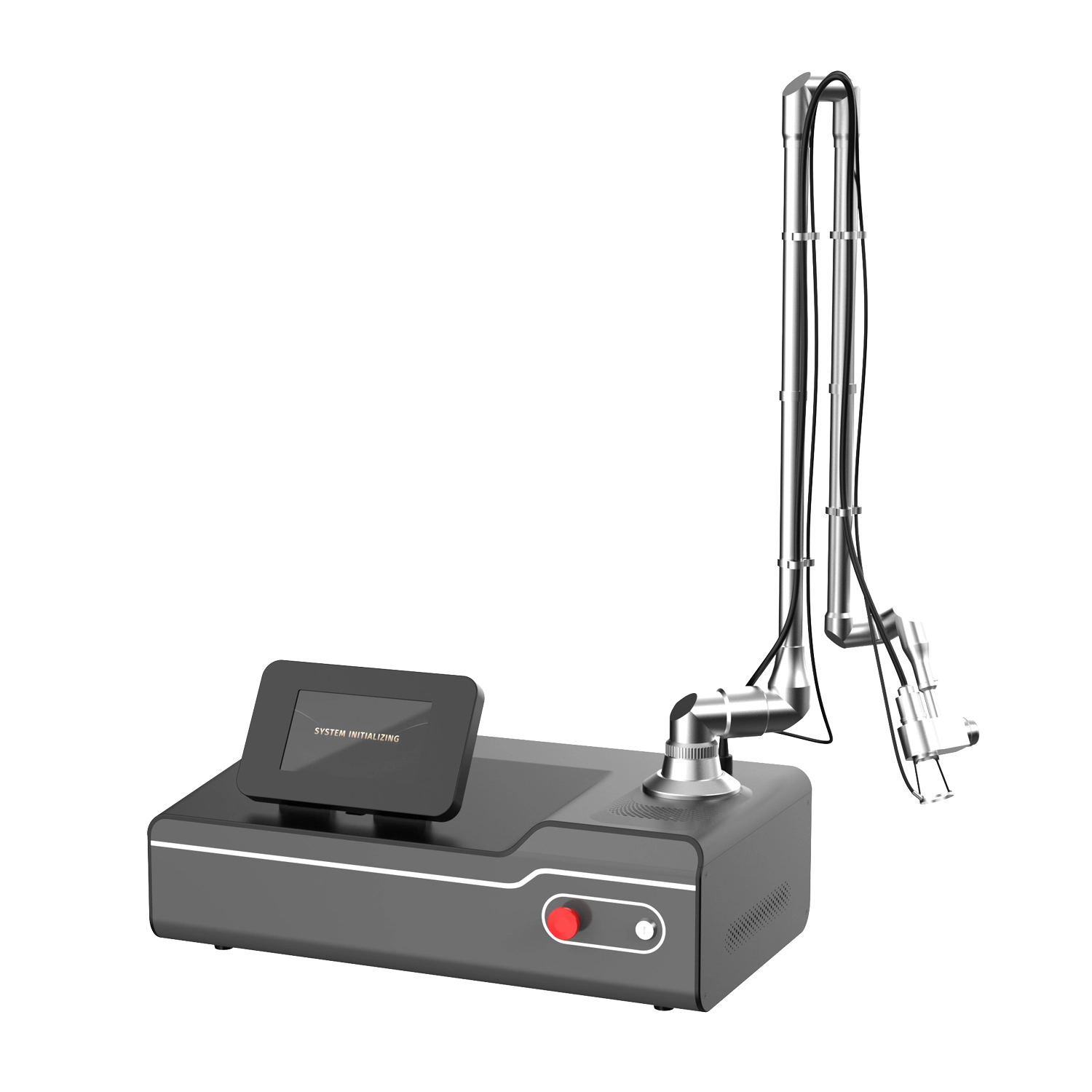
Professional CO2 Fractional Laser Machine for Skin Resurfacing & Scar Treatment
The CO2 Fractional Laser Machine is a professional CO2 fractional laser machine designed for advanced skin resurfacing, scar treatment, and skin rejuvenation procedures.
Using 10,600nm CO2 fractional laser technology, the system delivers controlled microthermal zones into the skin, stimulating collagen remodeling while preserving surrounding tissue. This fractional approach significantly improves treatment safety, recovery time, and clinical outcomes.
The CO2 fractional laser machine is widely used in dermatology clinics and medical aesthetic centers for treating acne scars, wrinkles, enlarged pores, stretch marks, and various skin texture concerns.
Get more information
If you have any comments or good suggestions, please leave us a message; later our professional staff will contact you as soon as possible.
Let's Talk
Stay in touch with us for cutting-edge beauty solutions, professional guidance, and customized service.
Contact


Room 307, Building A, Huilong International E-commerce Industrial Park, No. 10 Xipengling Road, Helong Street, Baiyun District, Guangzhou, China
© 2025 HUIMAIN. All Rights Reserved. Privacy Policy | Terms and Conditions | Sitemap
Facebook
Instagram
Medical beauty equipment factory
huimain Medical beauty equipment factory
beauty machine supplier
Whatsapp: +8619124004543