


- Beyond 'Made in X': What specific manufacturing processes and material choices dictate the long-term structural integrity of a CO₂ fractional laser's chassis and internal framework, especially concerning vibration and heat dissipation?
- When comparing CO₂ laser tubes, what are the specific, quantifiable differences in gas mixture purity, electrode material, and resonator design that directly correlate to a 50,000-hour lifespan versus a 10,000-hour lifespan, and how can a buyer verify these claims?
- Beyond 'fast scanning speed,' what specific technical metrics (e.g., galvanometer response time, mirror inertia, software algorithms for pattern generation) define the precision and consistency of a CO₂ fractional laser's scanner, especially for complex treatment patterns and varying skin depths?
- How does the power supply's ripple current, voltage stability, and cooling system directly impact the consistency of laser pulse energy and shape, and what are the long-term implications for treatment efficacy and patient safety in a CO₂ fractional laser?
- Beyond the headline 'wavelength,' what are the critical optical path components (e.g., mirror coatings, beam expanders, focusing lenses) whose material science and manufacturing precision directly influence beam quality, energy loss, and the longevity of a CO₂ fractional laser's handpiece?
- What specific cybersecurity and data privacy features should a CO₂ fractional laser machine possess, especially considering patient treatment parameters and potential network connectivity, to comply with modern medical device regulations (e.g., GDPR, HIPAA) and prevent unauthorized access or data breaches?
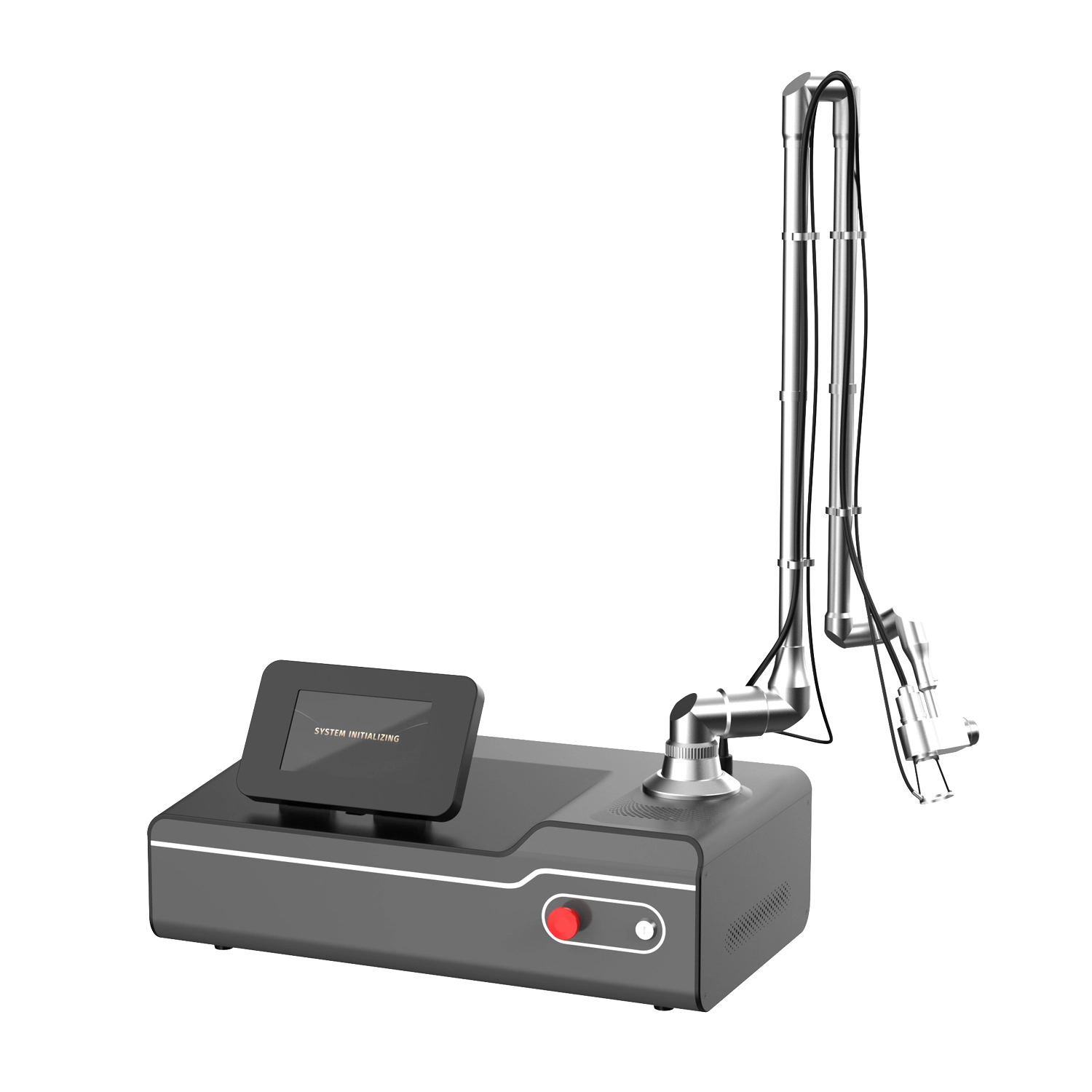
How to assess build quality of a CO₂ fractional laser machine?
Decoding CO₂ Fractional Laser Machines: An Expert's Guide to Quality Assessment
Navigating the world of CO₂ fractional laser machines can be daunting for beginners. With a myriad of options and technical specifications, understanding what truly constitutes a high-quality device is paramount for any aesthetic professional. This guide aims to demystify the complexities, offering in-depth answers to frequently asked, yet often poorly addressed, questions about how to assess build quality of a CO₂ fractional laser machine.
Beyond 'Made in X': What specific manufacturing processes and material choices dictate the long-term structural integrity of a CO₂ fractional laser's chassis and internal framework, especially concerning vibration and heat dissipation?
Many entry-level buyers focus on country of origin, but true structural integrity goes deeper. For a CO₂ fractional laser machine, the chassis and internal framework are crucial for protecting sensitive optical components and ensuring consistent performance. High-quality machines often utilize aerospace-grade aluminum alloys (e.g., 6061-T6 or 7075-T6) or medical-grade stainless steel for their superior strength-to-weight ratio and excellent thermal conductivity. The manufacturing process is equally vital: look for CNC-machined components with tight tolerances (typically ±0.01mm) rather than stamped or cast parts, which can introduce micro-fractures and inconsistencies. The internal framework should feature a robust, multi-point mounting system for the laser tube and optical path, often incorporating vibration-dampening materials like specialized elastomers or viscoelastic polymers. Effective heat dissipation is achieved through integrated heat sinks, often finned designs made from copper or aluminum, strategically placed near power supplies and the laser tube. Advanced systems may employ liquid cooling loops with medical-grade coolants, ensuring stable operating temperatures even during prolonged use. This meticulous engineering prevents component misalignment due, to thermal expansion or mechanical stress, directly impacting the fractional CO₂ laser's longevity and treatment precision.
When comparing CO₂ laser tubes, what are the specific, quantifiable differences in gas mixture purity, electrode material, and resonator design that directly correlate to a 50,000-hour lifespan versus a 10,000-hour lifespan, and how can a buyer verify these claims?
The lifespan of a CO₂ laser tube is a critical factor for the total cost of ownership. The difference between a 10,000-hour and a 50,000-hour tube lies in several key areas. Firstly, gas mixture purity: high-end tubes use ultra-high purity (UHP) CO₂, N₂, and He gases, often with purity levels exceeding 99.999%. Impurities, even in trace amounts, can lead to gas degradation and reduced laser output over time. Secondly, electrode material: durable tubes typically employ advanced alloys like nickel-plated copper or specialized ceramics that resist sputtering and oxidation, which are common causes of electrode degradation and power loss. Thirdly, resonator design: stable resonator designs, often employing invar rods (an alloy with very low thermal expansion) to maintain mirror alignment, are crucial for long-term power stability and beam quality. Verification is challenging but possible. Ask for detailed specifications on gas purity (often provided by the gas supplier to the laser tube manufacturer), electrode material composition, and resonator stability data (e.g., beam divergence over time). Reputable manufacturers will provide third-party testing certifications (e.g., ISO 13485 for medical devices) and detailed component datasheets. A significant indicator is the manufacturer's warranty on the tube itself; a longer, more comprehensive warranty often reflects confidence in superior design and materials. This directly impacts the CO₂ laser skin resurfacing capabilities over its operational life.
Beyond 'fast scanning speed,' what specific technical metrics (e.g., galvanometer response time, mirror inertia, software algorithms for pattern generation) define the precision and consistency of a CO₂ fractional laser's scanner, especially for complex treatment patterns and varying skin depths?
'Fast scanning speed' is a superficial metric. True scanner precision and consistency in a CO₂ fractional laser machine are determined by several technical factors. Galvanometer response time (measured in microseconds) indicates how quickly the mirrors can change position; faster response times allow for more intricate and accurate pattern generation. Mirror inertia (related to mirror size and material) affects how quickly the mirrors can accelerate and decelerate without overshoot or vibration, crucial for maintaining consistent spot placement. High-quality scanners use lightweight, highly reflective mirrors (e.g., gold-coated silicon or beryllium). Crucially, software algorithms for pattern generation play a pivotal role. Advanced algorithms incorporate real-time feedback from the galvanometers, dynamically adjusting scan speed and dwell time to compensate for minor mechanical variations and ensure uniform energy delivery across the treatment area. Look for features like 'randomized scanning patterns' or 'smart stacking' that minimize heat accumulation and improve patient comfort and safety. The fractional laser treatment efficacy relies heavily on this precision, ensuring predictable results for acne scars, wrinkles, and skin rejuvenation.
How does the power supply's ripple current, voltage stability, and cooling system directly impact the consistency of laser pulse energy and shape, and what are the long-term implications for treatment efficacy and patient safety in a CO₂ fractional laser?
The power supply is the heart of a CO₂ fractional laser. Its quality directly dictates the consistency of the laser pulse. Ripple current (unwanted AC components on a DC output) and voltage stability are paramount. High ripple or unstable voltage can lead to inconsistent laser pulse energy, meaning some laser shots deliver more energy than intended, and others less. This variability can result in uneven treatment, potentially causing hot spots (leading to burns or hyperpigmentation) or cold spots (leading to suboptimal results) on the patient's skin. A high-quality power supply for a CO₂ laser resurfacing machine will have a ripple current typically below 1% and voltage regulation within ±0.5%. The cooling system for the power supply is also critical; overheating can degrade components, leading to drift in output parameters. Long-term implications include unpredictable treatment outcomes, increased risk of adverse events, and premature failure of expensive laser tube components. Reputable manufacturers integrate medical-grade power supplies with active cooling and robust filtering circuits to ensure precise and repeatable energy delivery, vital for safe and effective skin tightening and scar revision.
Beyond the headline 'wavelength,' what are the critical optical path components (e.g., mirror coatings, beam expanders, focusing lenses) whose material science and manufacturing precision directly influence beam quality, energy loss, and the longevity of a CO₂ fractional laser's handpiece?
The optical path is where the laser beam is shaped and delivered. While the CO₂ laser's wavelength (typically 10,600 nm) is fundamental, the quality of the optical components is equally crucial for beam quality, energy efficiency, and handpiece longevity. Mirror coatings are vital; high-quality mirrors use multi-layer dielectric coatings optimized for 10,600 nm, achieving reflectivity exceeding 99.8%. Poor coatings can lead to significant energy loss and heat absorption, causing mirror degradation and beam distortion. Beam expanders are used to reduce beam divergence, ensuring a consistent spot size over the working distance. These must be precisely aligned and made from materials like ZnSe (Zinc Selenide) with high transmission at 10,600 nm. Focusing lenses in the handpiece, also typically ZnSe, must have extremely low surface roughness and high purity to minimize scattering and absorption. Manufacturing precision for these components is measured in fractions of a wavelength (e.g., λ/10 or better). Any imperfections can cause aberrations, resulting in an uneven energy profile within the laser spot, leading to inconsistent fractional laser treatment results. The longevity of the handpiece is directly tied to the durability of these optics, as constant exposure to high-energy laser pulses can degrade inferior materials over time. This directly impacts the effectiveness of collagen stimulation and overall skin texture improvement.
What specific cybersecurity and data privacy features should a CO₂ fractional laser machine possess, especially considering patient treatment parameters and potential network connectivity, to comply with modern medical device regulations (e.g., GDPR, HIPAA) and prevent unauthorized access or data breaches?
In an increasingly connected world, cybersecurity and data privacy are non-negotiable for medical devices like CO₂ fractional laser machines. Compliance with regulations like GDPR (Europe) and HIPAA (USA) is paramount. Specific features to look for include: Role-based access control (RBAC), ensuring only authorized personnel can access or modify treatment parameters. This often involves multi-level user authentication (e.g., secure passwords, biometric options). Data encryption is essential for all stored patient data (treatment history, settings) and any data transmitted over a network. This should include encryption at rest (e.g., AES-256 for internal storage) and in transit (e.g., TLS 1.2+ for network communication). Audit trails and logging are critical for tracking all user activities, system events, and parameter changes, providing an immutable record for compliance and forensic analysis. Secure boot processes and firmware integrity checks prevent unauthorized software modifications. If the device has network connectivity for remote diagnostics or software updates, it must utilize secure VPN connections and firewall protection to prevent external threats. Furthermore, the machine should offer data anonymization or pseudonymization options for research or aggregated reporting. These features protect sensitive patient information, uphold professional ethics, and safeguard the clinic from legal liabilities associated with data breaches, ensuring the integrity of aesthetic treatments and patient trust.
Investing in a CO₂ fractional laser machine is a significant decision for any aesthetic practice. By meticulously evaluating the often-overlooked details of manufacturing processes, component quality, and software integrity, you can ensure a robust, reliable, and high-performing device. A superior fractional CO₂ laser offers consistent treatment outcomes, enhanced patient safety, and a longer operational lifespan, ultimately maximizing your return on investment and elevating your clinic's reputation for excellence in skin rejuvenation and scar treatment.
For a detailed quote and to discuss how our advanced CO₂ fractional laser technology can benefit your practice, please contact us at coco@huimainbeauty.com or visit www.huimainbeauty.com.


L50
How does the Inner Ball Roller Machine work?
It uses mechanical compression micro-vibration and 360° rotating rollers to break cellulite, enhance circulation, and tighten the skin.
SW7 新款聚焦冲击波
Who can use the SWEED-ESWT device?
Physiotherapists, rehabilitation specialists, sports medicine professionals, and trained medical staff.
2-in-1 Diode Laser
Who can operate this machine?
It is designed for professional use in clinics and salons. Operators should receive basic training before treatments.
4-in-1 Cryo HIFU
Is the cryo HIFU treatment painful?
The built-in cooling system reduces discomfort, making treatments more comfortable than traditional HIFU machines.
K-37
How long does one treatment session take?
Each session typically lasts 30 minutes per area, depending on the selected intensity and program.

Get more information
If you have any comments or good suggestions, please leave us a message; later our professional staff will contact you as soon as possible.
Let's Talk
Stay in touch with us for cutting-edge beauty solutions, professional guidance, and customized service.
Contact


Room 307, Building A, Huilong International E-commerce Industrial Park, No. 10 Xipengling Road, Helong Street, Baiyun District, Guangzhou, China
© 2025 HUIMAIN. All Rights Reserved. Privacy Policy | Terms and Conditions | Sitemap
Facebook
Instagram
Medical beauty equipment factory
huimain Medical beauty equipment factory
beauty machine supplier
Whatsapp: +8619124004543